Old Jaffa Layover: St Peter's and HaPisga
Part of the full Tel Aviv Layover: Jaffa and Bauhaus From TLV
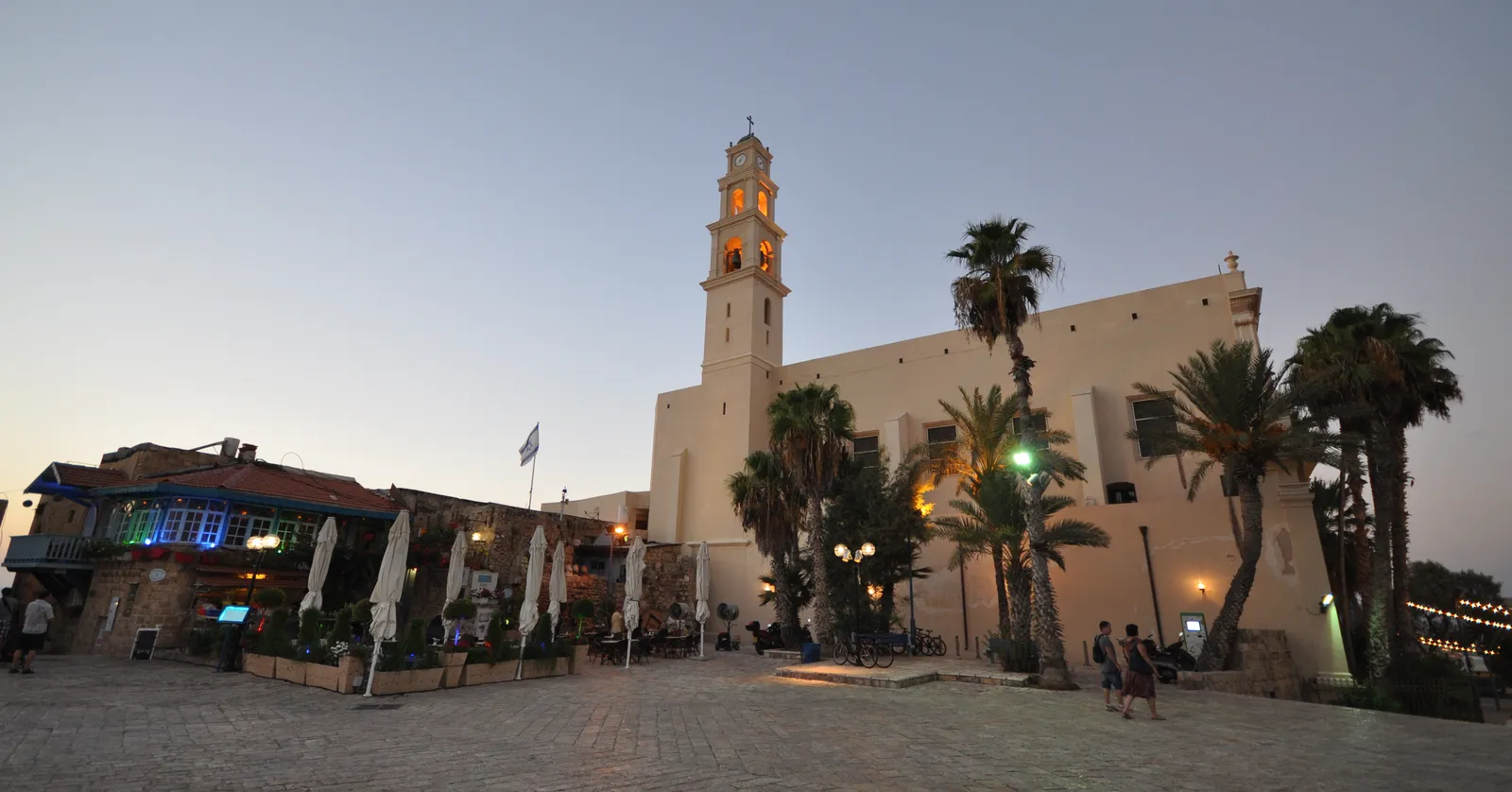
Old Jaffa, the walled town on the hill at the southern end of Tel Aviv’s coast, keeps a Franciscan church built over the citadel Napoleon slept in, a free hilltop garden with a Bronze Age gateway standing in it, and an archaeological dig under its main square, all within a couple of hundred metres of each other.
Napoleon stayed in the citadel under St Peter’s Church
Frederick I raised a fortress on this spot and Louis IX of France rebuilt it in the second half of the 13th century, and enough of it survived that when Napoleon took Jaffa after a four-day siege in March 1799 he stayed in what was left of it. The Franciscans put the present church up on top between 1888 and 1894, refitting it in 1903, and parts of the older structure are still inside the fabric. It is a working parish and opens daily, with a service schedule at the door.
The quirk worth noticing once you are in is the orientation: the building faces west toward the Mediterranean rather than east, the direction churches are conventionally oriented. A guided circuit of the old town and the coast picks up details like that one which nothing on site explains.
The Egyptian gateway standing over an open trench in HaPisga Garden
At the top of the hill, on the highest ground in the old town, a garden runs along the ridge with open lawn, benches and a view that takes in the whole curve of the shoreline north to the towers of central Tel Aviv. It costs nothing and there is no gate on it at any hour, which makes it the one stop here that works equally well at seven in the morning and ten at night.
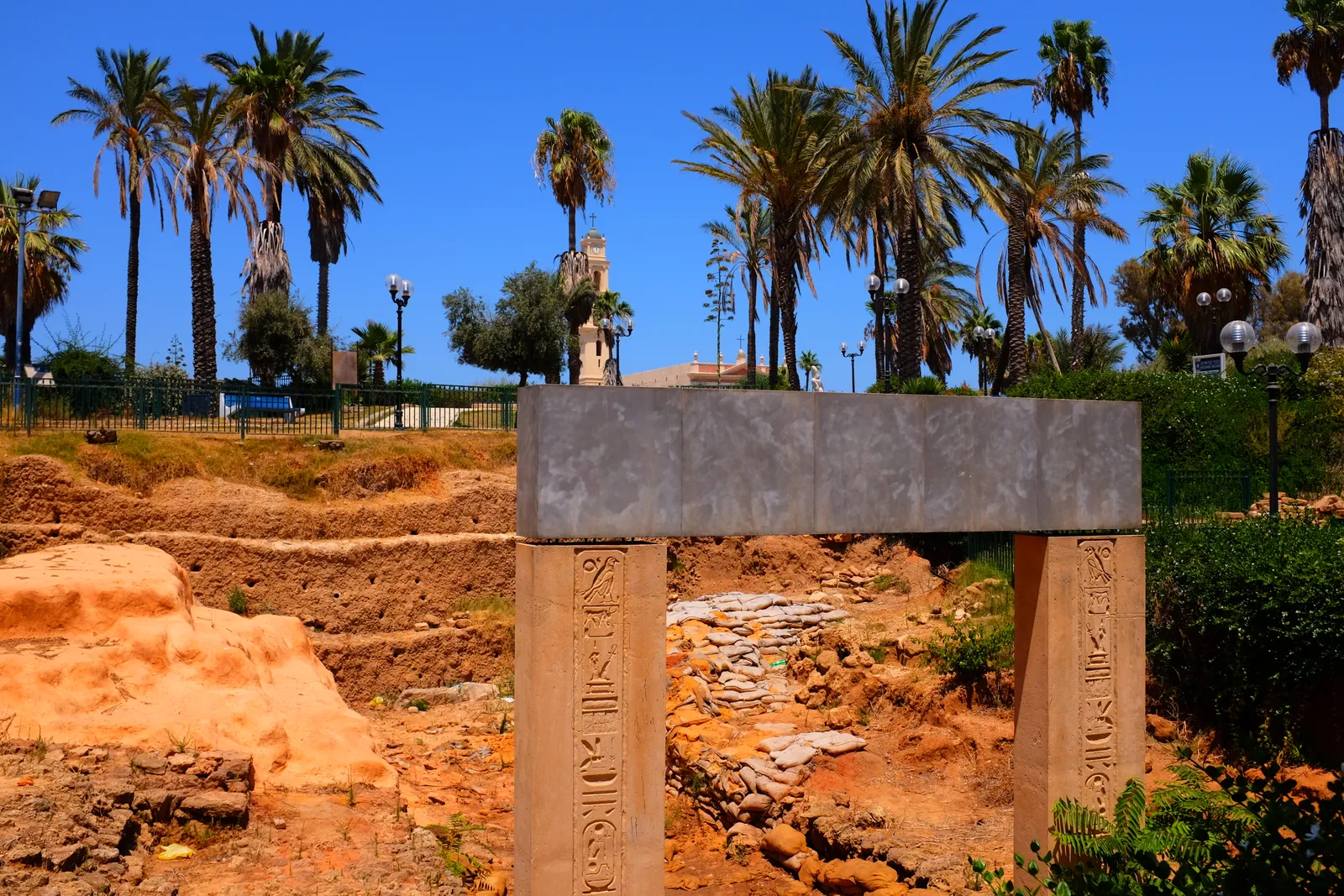
Standing in the middle of it is a reconstructed gateway from the Late Bronze Age fortress that once guarded the harbour, its jambs cut with the titles of Ramesses II, set directly over the excavation trench the originals came out of. The south-eastern corner of the garden has more open digs with stone footbridges thrown across them, so you look down into the layers rather than at a fenced-off site. The Wishing Bridge, which links the garden to the square below, carries the twelve zodiac signs along its rail.
Kedumim Square has an archaeological site underneath it
The square is the old town’s centre, a wide run of pale flagstones between sandstone walls with the church at one end and restaurants along the sides. Under it is a chamber built around an excavation, where glass walkways carry you over Hellenistic and Roman remains including a stretch of masonry and a ritual bath, with a sound and light presentation running alongside. It is worth checking ahead whether a slot is available, since entry is sometimes by arrangement rather than walk-up.
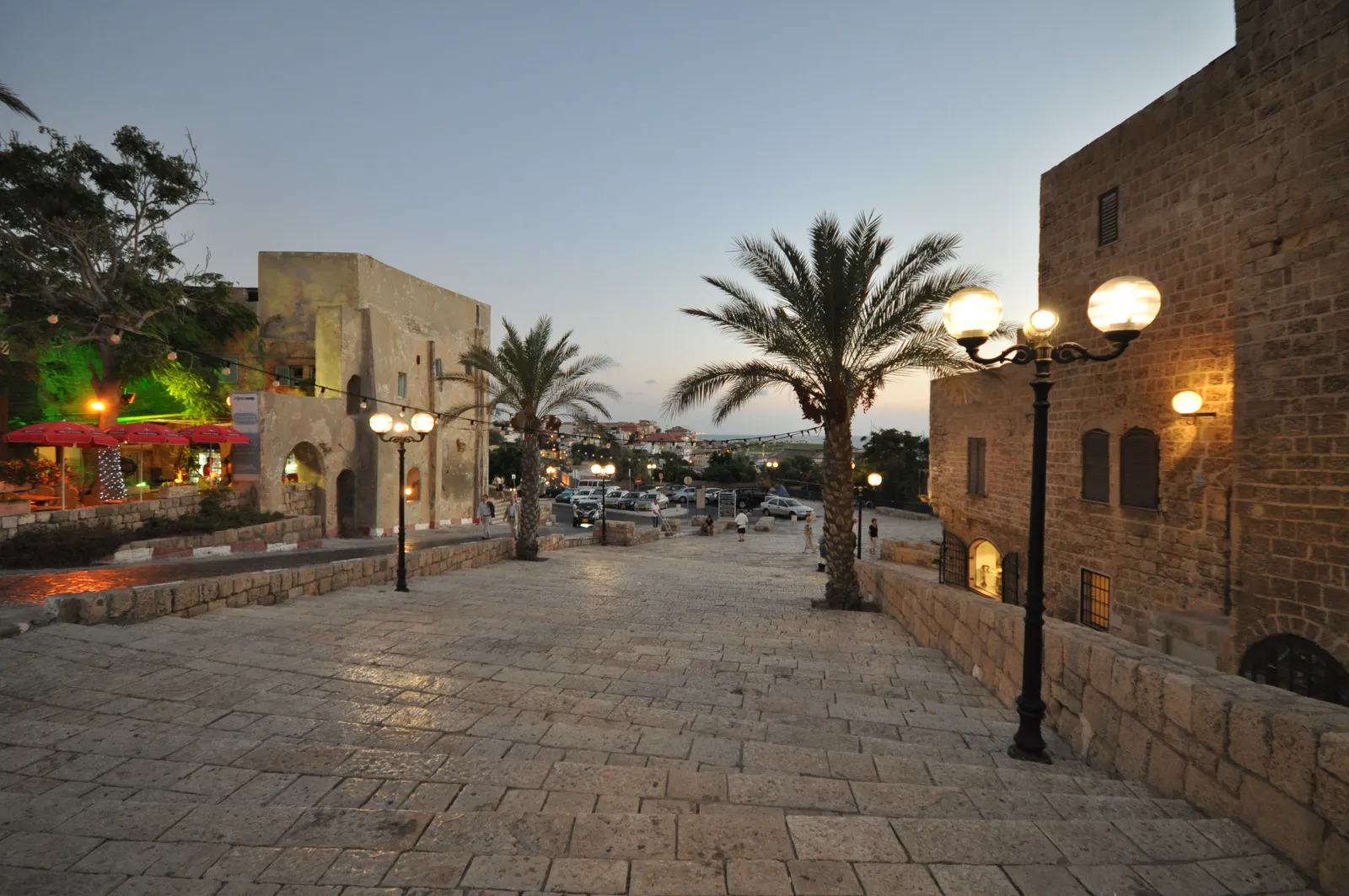
The lanes leading off the square are the part to be deliberate about: they are stone steps and worn ramps, they climb, and there is no flat way through the middle of the old town, so anything on wheels comes off the route here rather than being dragged up it.
Ben Gurion International Airport (TLV) is the awkward part of a Jaffa stop, because no railway comes anywhere near here: the nearest platform is a 25-minute taxi east across the city, and from there it is about 20 minutes and NIS 13.50 on a direct airport train. Budget an hour from the hill to the terminal door and another three once you are inside it. If the whole gap runs to eight hours or more, the old town alone undersells the trip, and the seafront path, Carmel Market and the Bauhaus streets start from the same harbour and run north.
Frequently asked questions
What should I do during a layover near Old Jaffa in Tel Aviv?
Three things sit within 200 metres of each other on the hill. St Peter's Church, finished in 1894, stands on the remains of a crusader citadel that Napoleon stayed in after taking the town in March 1799. HaPisga Garden above it is free, open at any hour, and holds a reconstructed Egyptian gateway over a live excavation trench plus the best view north along the whole Tel Aviv shoreline. Kedumim Square between them has an archaeological site underneath it with glass walkways over the dig. Two or three hours covers all of it, and only the underground centre asks for anything.
Is Jaffa a separate city from Tel Aviv?
Not since 1950, when the two were merged into a single municipality now called Tel Aviv-Yafo. Jaffa is by far the older half: there was a settlement on this hill in the Early Bronze Age and a working harbour below it for most of the time since, while the city to the north was founded in 1909. What you notice on the ground is that the two do not look or feel like one place, which is the reason the old town is worth a stop on its own rather than as an afterthought to a walk up the coast.
Can you go inside St Peter's Church?
Yes, it is a working Franciscan parish and opens to visitors every day, with a service schedule posted at the door that closes it for an hour or two at a time. The current building went up between 1888 and 1894 and was refitted in 1903, and it faces west toward the sea rather than east toward Jerusalem, which is the detail worth looking for once you are inside. Dress is the usual for a church: shoulders and knees covered.
Is Old Jaffa worth a stop with a large group?
It handles one better than most of the city does, because the fixed points here are outdoor and free. HaPisga Garden has benches and open lawn at the top of the hill, Kedumim Square is wide enough that a dozen people are not in anyone's way, and neither needs a booking or a timed ticket. The narrow lanes between them are where a group strings out and loses people, so agree on the square as the meeting point before you split up. The flea market's alleys south of the clock tower are the other spot where a group gets separated fast.