Tel Aviv Port Layover: Metzitzim and Reading
Part of the full Tel Aviv Layover: Jaffa and Bauhaus From TLV
The old Port of Tel Aviv, at the northern end of the city’s shoreline, has a sheltered swimming beach at one end of its timber deck, a covered food market in the cargo hangars behind it, and the banded chimney of the Reading power station standing over the mouth of the Yarkon river at the other.
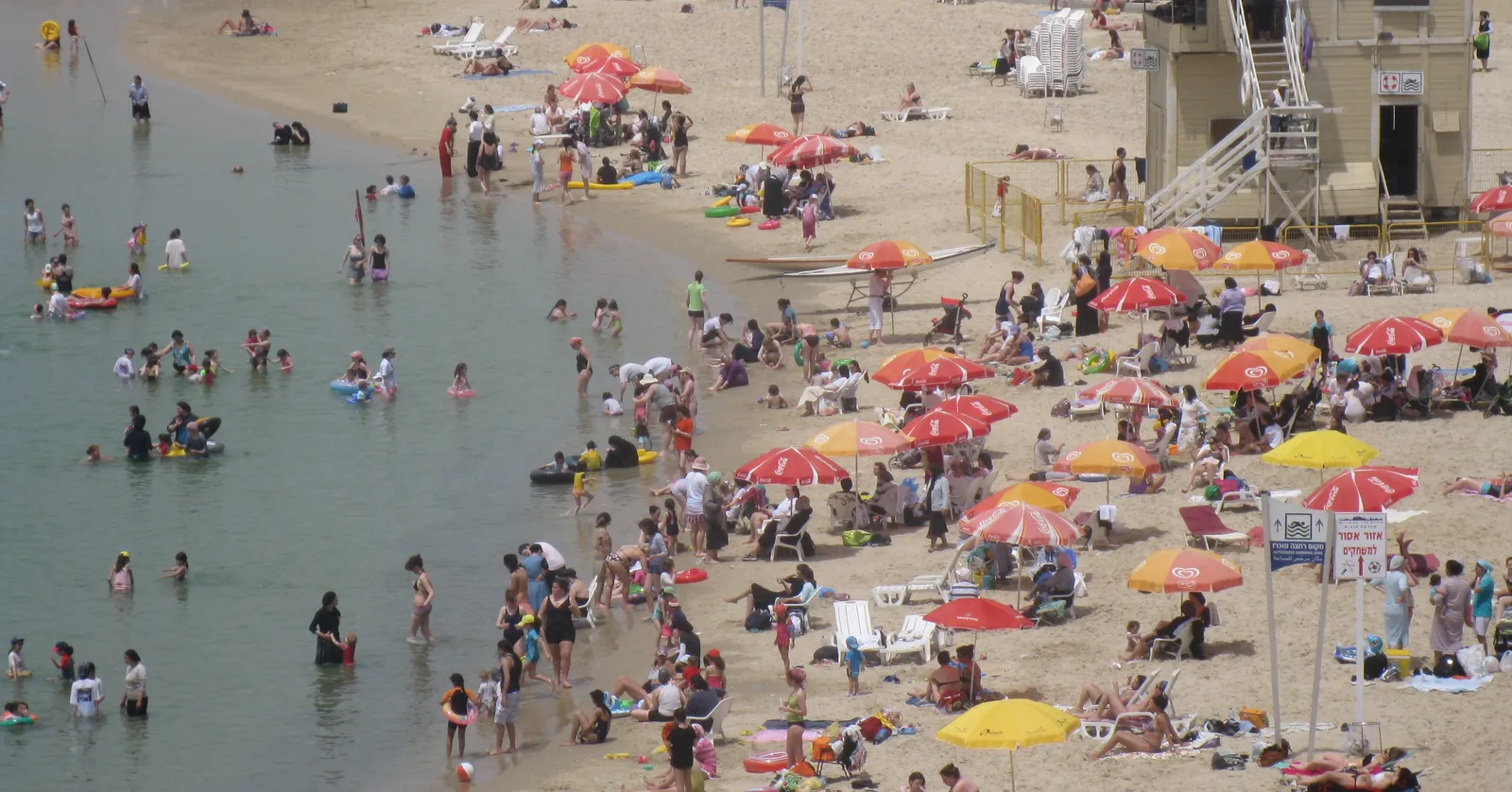
Metzitzim Beach sits behind a line of breakwaters
Stone arms built out from this stretch of shore break the swell before it lands, so the water inside them stays shallow and flat while the open beaches a couple of kilometres south get a full Mediterranean shore break. That is the whole character of the place: families with small children use it as a default, the lifeguards have less to do than elsewhere, and it carries Blue Flag certification. The name comes from a 1972 Israeli film shot on this sand, which is roughly as famous here as the beach is.
The cost of all that calm is company. On a hot Saturday the parasols run edge to edge from the water up to the promenade. If you would rather see this coast from the water than from a towel, a speedboat run along the shoreline takes about half an hour and covers the length of the city.
Nothing on rails comes closer than three kilometres
The port sits at the far north-western corner of the city and the rail corridor runs down the eastern edge, so the gap between them is a taxi or a bus of ten to fifteen minutes before any train is involved. From a platform it is about 20 minutes and NIS 13.50 direct to Ben Gurion International Airport (TLV), with nothing running from Friday afternoon until Saturday after dark, which on a Saturday makes the whole return trip a road journey.
The Reading power station’s chimney marks the mouth of the Yarkon
The plant went up in 1938 and held the country’s first turbine, rated at 12 megawatts, in a building by Ed Rosenhak with a three-storey central tower between two matching wings and its main entrance facing the city rather than the sea. Its facade has since been restored to how it looked then. Only the newest of its generating units still runs, on natural gas, and the original hall that shut down in 1967 has been kept as an exhibition space.
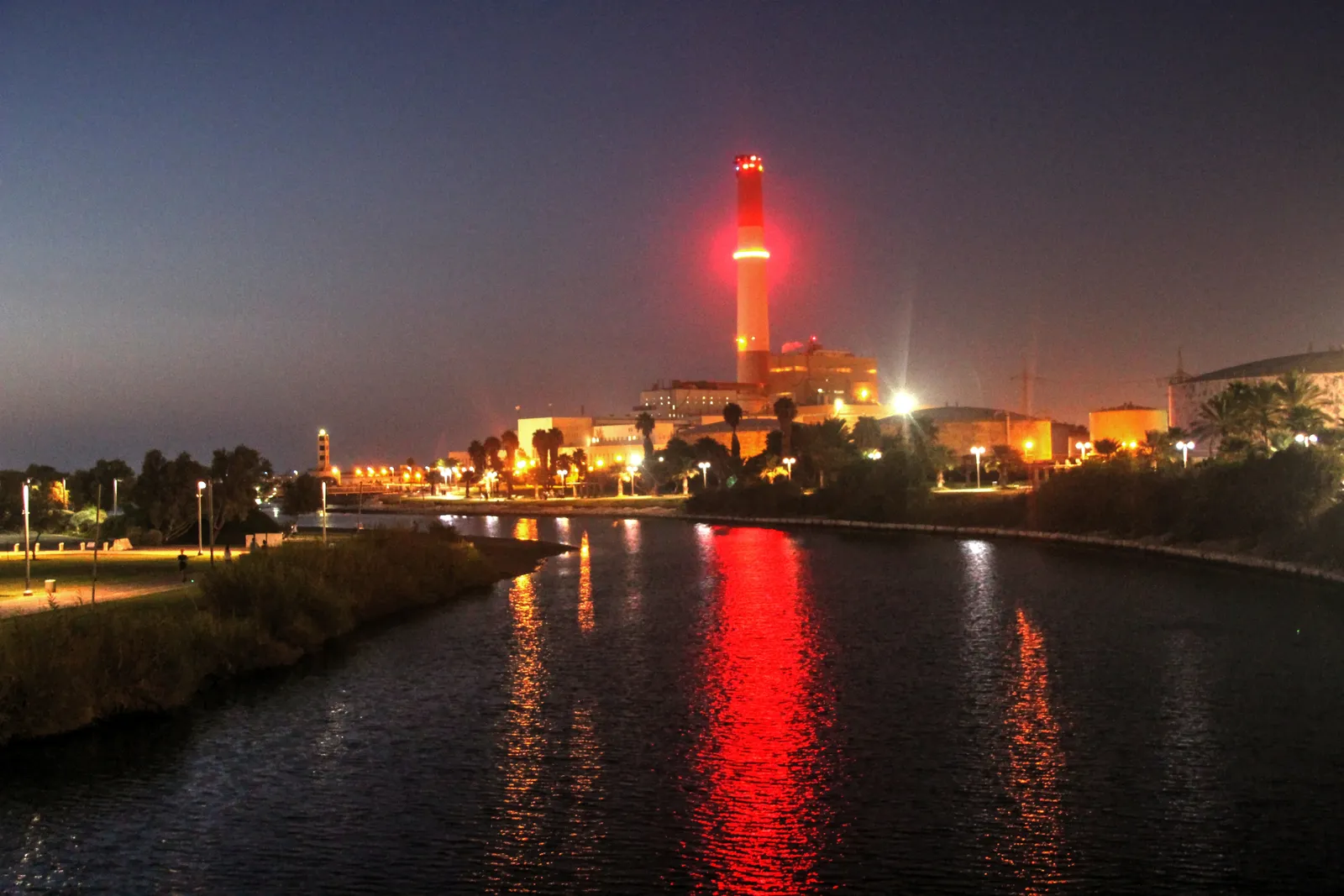
In 2011 a 60-dunam park was opened on the ground west of the plant, with paved paths tying the port deck to the northern beach boardwalk, so the walk from the port deck out to the river mouth and back is continuous and takes about twenty minutes each way. The chimney is lit after dark and reflects the length of the river, which is the version most photographs of it show.
The port was built in 1936 because Jaffa’s had stopped working
Jaffa handled everything arriving by sea until the general strike of 1936 shut its port down, and Tel Aviv responded by asking for permission to build a jetty of its own, which it got that May. The first cargo, bags of cement off a Yugoslav ship, was landed on the open beach here on 19 May 1936 before there was anything to land it onto. The port worked for not quite thirty years, closing for good on 25 October 1965, and then sat derelict for decades.
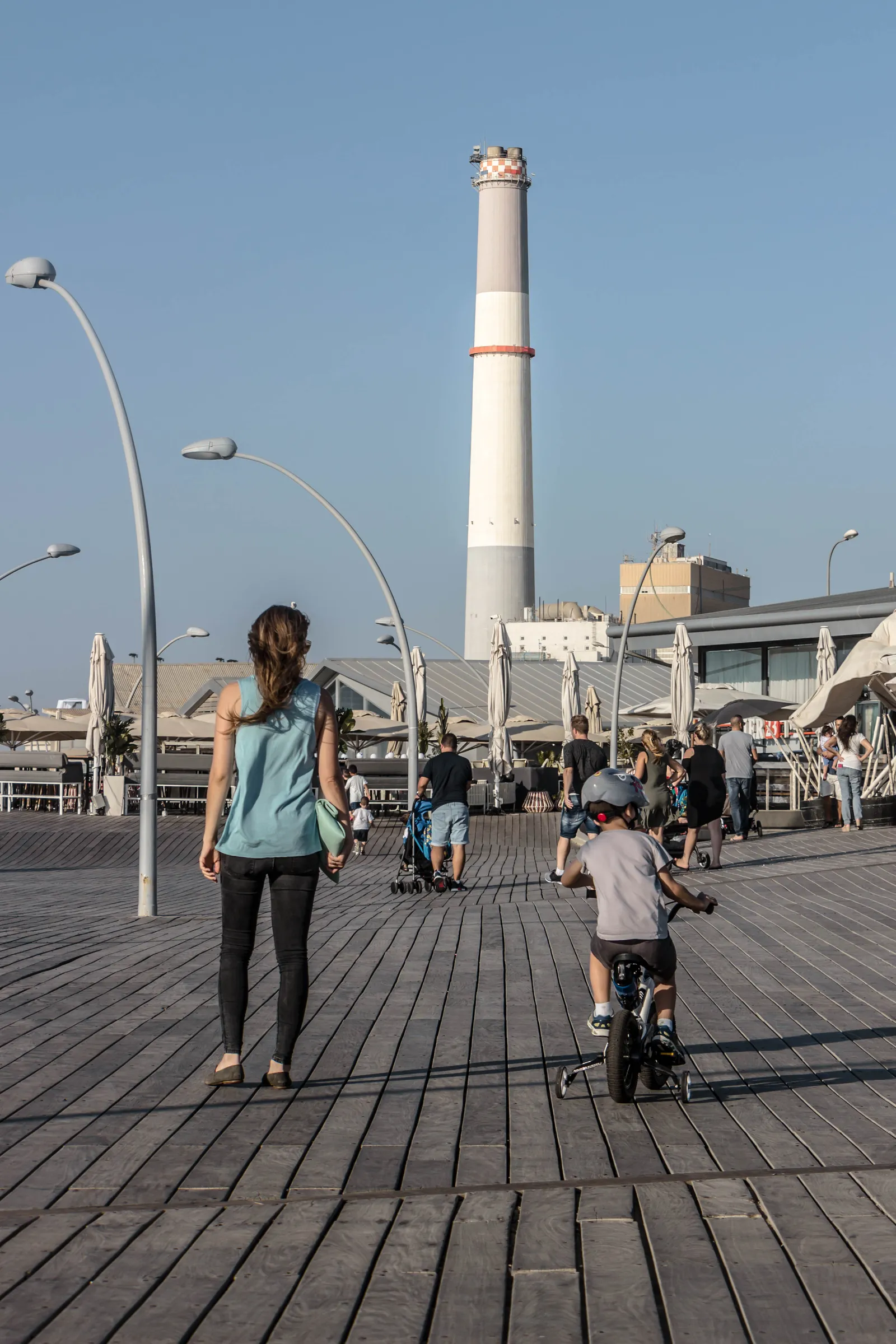
The cargo sheds are still standing and now hold shops, restaurants and a two-storey covered food market that trades Monday through Saturday, with an open-air produce market in the lot alongside on Fridays. Being open on Saturday is the thing that sets this corner apart from the rest of the city, where the markets and most of the shops shut. Underfoot, the deck is laid in long rising and falling curves with gaps between the boards, which is fine on foot and awkward on small hard wheels.
With five or six hours free, the north end alone is a narrow use of them, and the seafront path, Carmel Market and Old Jaffa run south from this same deck in one continuous line. Under that, the swim, the market and the river mouth are a complete afternoon that never needs a second form of transport.
Frequently asked questions
What should I do during a layover near the Port of Tel Aviv?
Swim, eat, and walk to the river. Metzitzim Beach sits at the southern edge of the port behind breakwaters that keep the water flat, which makes it the calmest swimming on this coast and the reason families use it over the central beaches. The port's old cargo hangars now hold a covered food market that trades Monday to Saturday, unusual in a city where Saturday closes almost everything. North of the deck the Yarkon meets the sea under the banded chimney of the Reading power station, with a park along that bank since 2011. Two to four hours covers all three.
Why is the sea calmer at Metzitzim than on the other Tel Aviv beaches?
Breakwaters. The stone arms built out from this stretch of shore take the swell before it reaches the sand, so the water inside them stays shallow and flat while the open beaches further south get a proper Mediterranean shore break. That is what makes it the standard choice for swimming with small children, and it holds Blue Flag certification with lifeguards on duty in season. The trade-off is that it fills up: on a hot Saturday the parasols run edge to edge.
Is the Port of Tel Aviv open on Saturday?
Yes, and that is the main practical argument for coming here rather than into the centre on a Saturday. The covered market in the hangars trades through the day, the restaurants and bars along the deck open, and the beach and boardwalk have no gate on them at all. The catch is getting here: no train or tram runs during Shabbat, so it is a taxi from wherever you start. Sunday is the odd one out, when the market keeps shorter hours than the rest of the week.
Is the boardwalk easy to walk on with a pushchair or a wheeled bag?
It is level but not flat. The deck was laid deliberately in long rising and falling curves meant to echo the dunes the port was built on, so it rolls gently the whole way across rather than running true, and the timber boards are laid with gaps between them. A pushchair copes fine; small hard wheels on a suitcase catch in the gaps and drag on the slopes. The paved promenade running south from the port toward the central beaches is smooth by comparison.