Carmel Market Layover: Bialik Square, Tel Aviv
Part of the full Tel Aviv Layover: Jaffa and Bauhaus From TLV
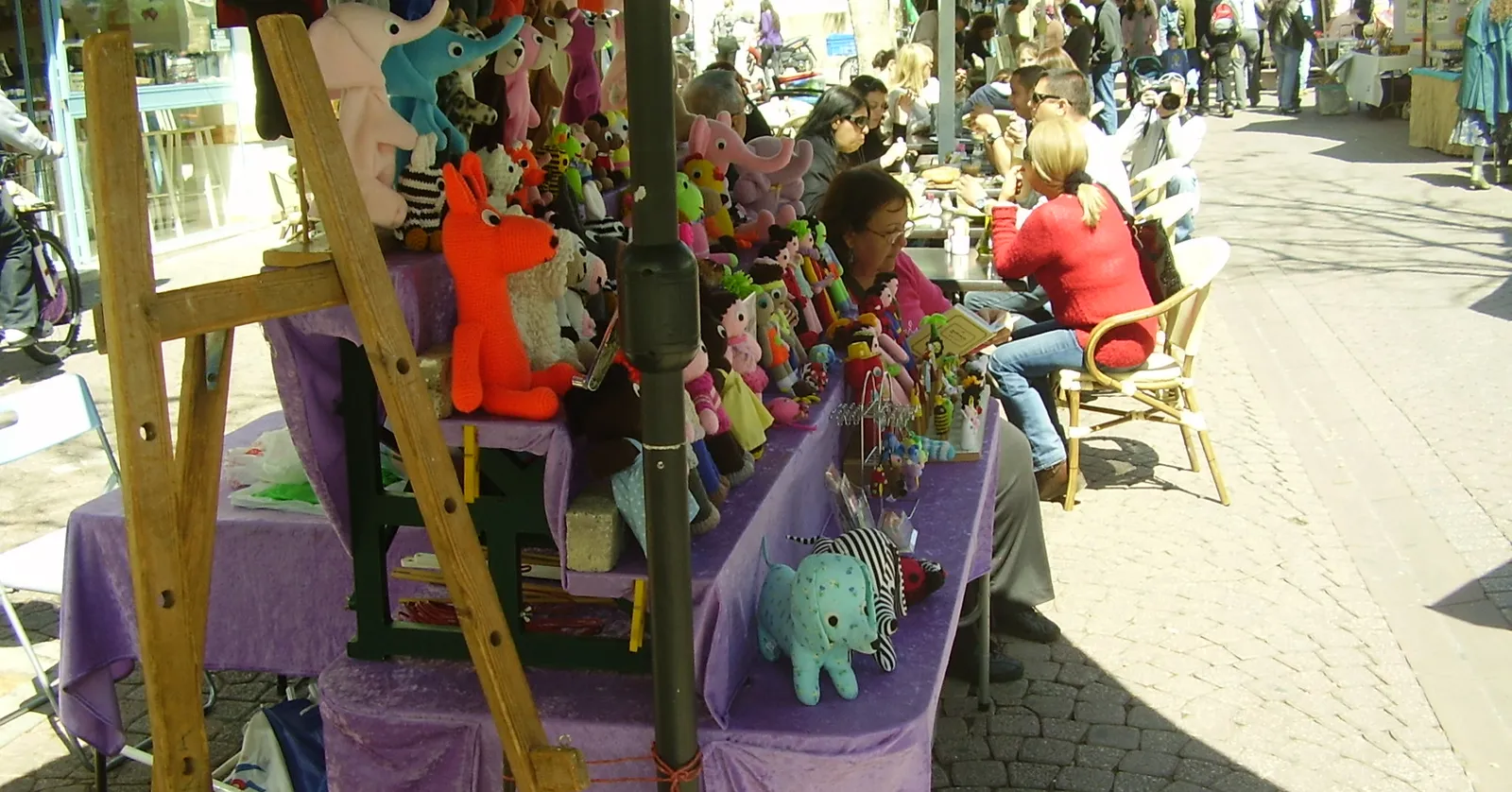
Tel Aviv’s Carmel Market is a single lane of food stalls running off Allenby Street, with a twice-weekly craft fair on the pedestrian street beside it, the tin-roofed lanes of the Yemenite quarter on its western side, and the city’s first town hall about ten minutes north-east on Bialik Square.
The craft fair on Nahalat Binyamin runs on Tuesdays and Fridays only
Nahalat Binyamin was laid out in 1909, the same year as Tel Aviv itself, and by the 1920s it was the main commercial street in the city, which is why its facades run through the whole eclectic-to-Bauhaus sequence in the space of a few blocks. The municipality pedestrianised the main stretch in 1987 specifically so it could hold fairs, and it does that twice a week: somewhere around 220 makers set out glass, jewellery, olivewood boards, ceramics and hand-sewn cloth on Tuesdays and Fridays, and on the other five days it is a quiet street with cafes on it.
The market it runs alongside is the reason most people are here in the first place, and it rewards being shown around rather than wandered: a guided tasting walk through the aisle runs about an hour and a half and gets you into the stalls a passer-by would not stop at.
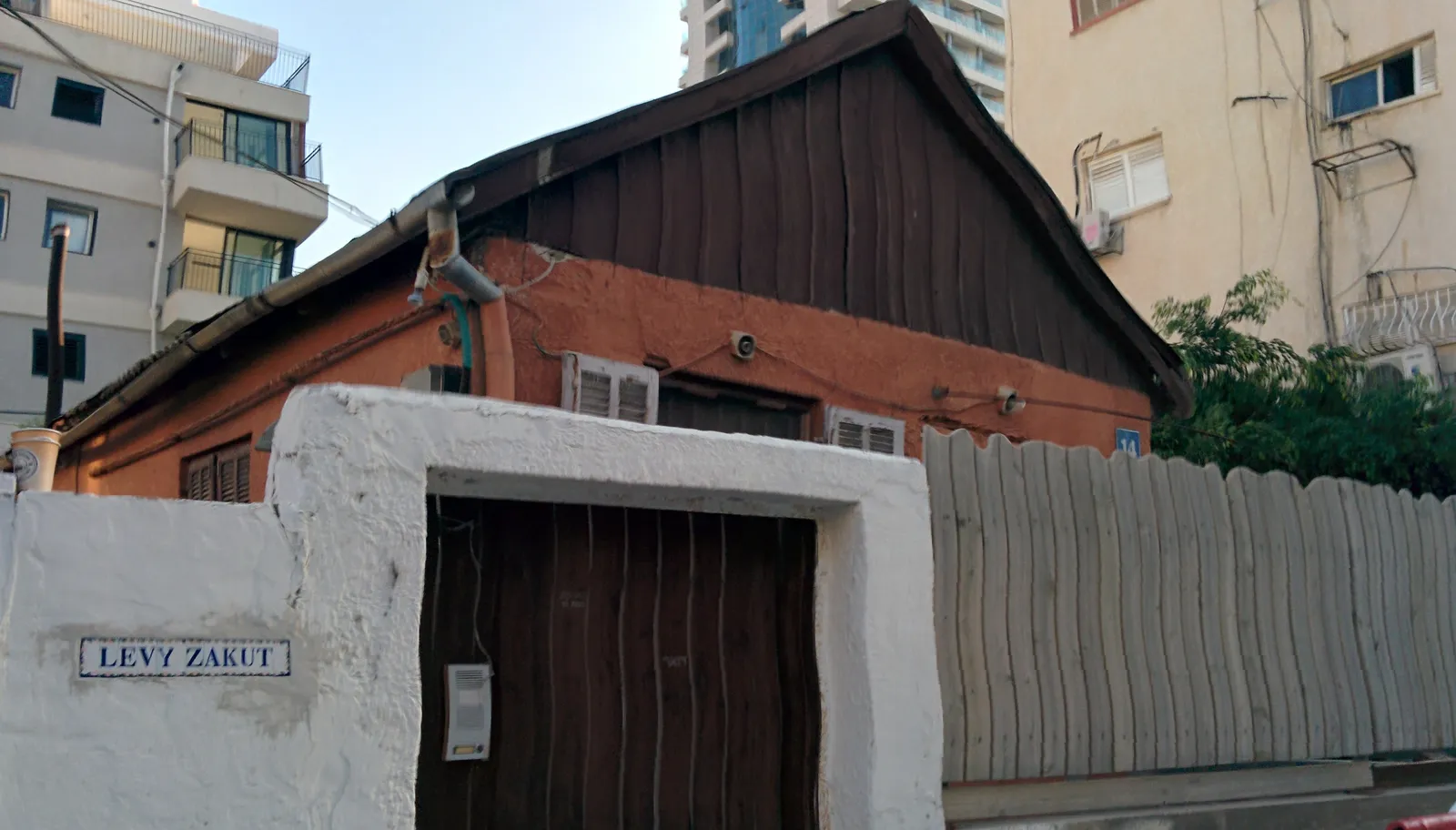
Kerem HaTeimanim’s tin roofs stand under the new towers
Yemenite Jewish families founded this quarter in 1906, on land owned by Aharon Chelouche, Yosef Moyal and Haim Amzaleg, and built it cheaply: single-storey houses of wooden beams under corrugated tin, packed into lanes narrow enough that two cars cannot pass. A good number of those houses are still standing, and since the Lev HaIr tower went up in 2004 they have been standing directly beneath apartment blocks fifteen times their height, which is the thing to look at here.
The quarter stays observant, so the Yemenite restaurants along Rabbi Akiva Street and the lanes off it shut for Shabbat while the bars a few streets away do not. That split is the clearest thing about this neighbourhood: it has gentrified around the edges without changing what it does on a Saturday.
One practical note about the market itself before you commit to walking the length of it: the aisle is one lane wide with crates and delivery pallets along both edges and few side exits, and on a Friday morning it comes down to single file.
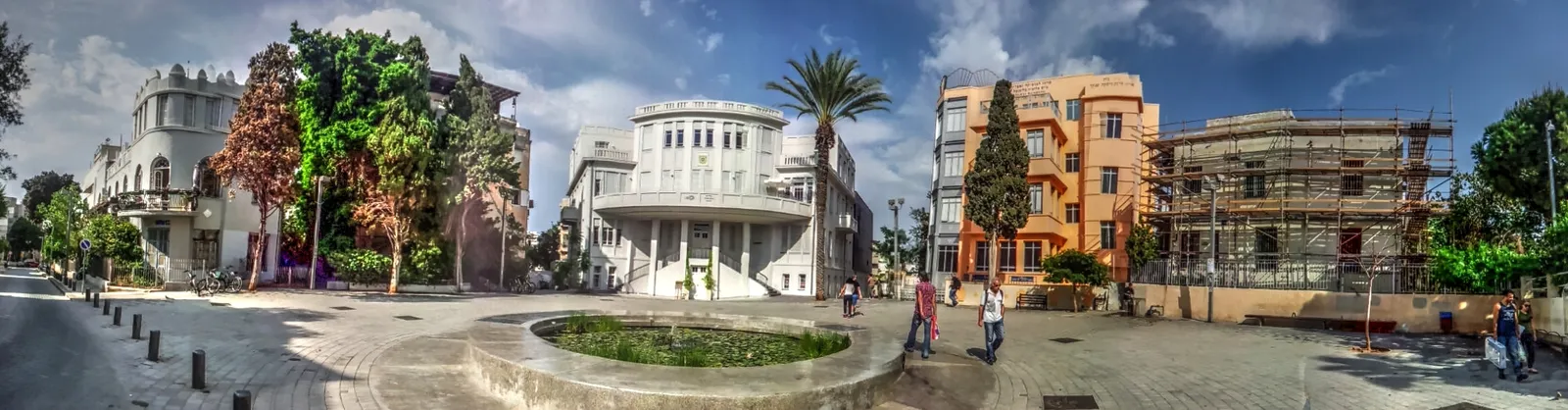
The white rotunda of Tel Aviv’s first town hall on Bialik Square
Bialik Square is a stub of a square at the top of Bialik Street with a shallow round pond in the middle of it and the old town hall standing over the far end, a white building with a curved front that ran the city’s business before the municipality moved to what is now Rabin Square. It reopened as Beit Ha’ir, a museum about the city’s own history, and it keeps hours that run against the national grain: closed Sunday, 9am to 6pm Monday to Thursday, 9am to 2pm Friday, and 10am to 4pm on Saturday, for NIS 40 with a concession at NIS 20.
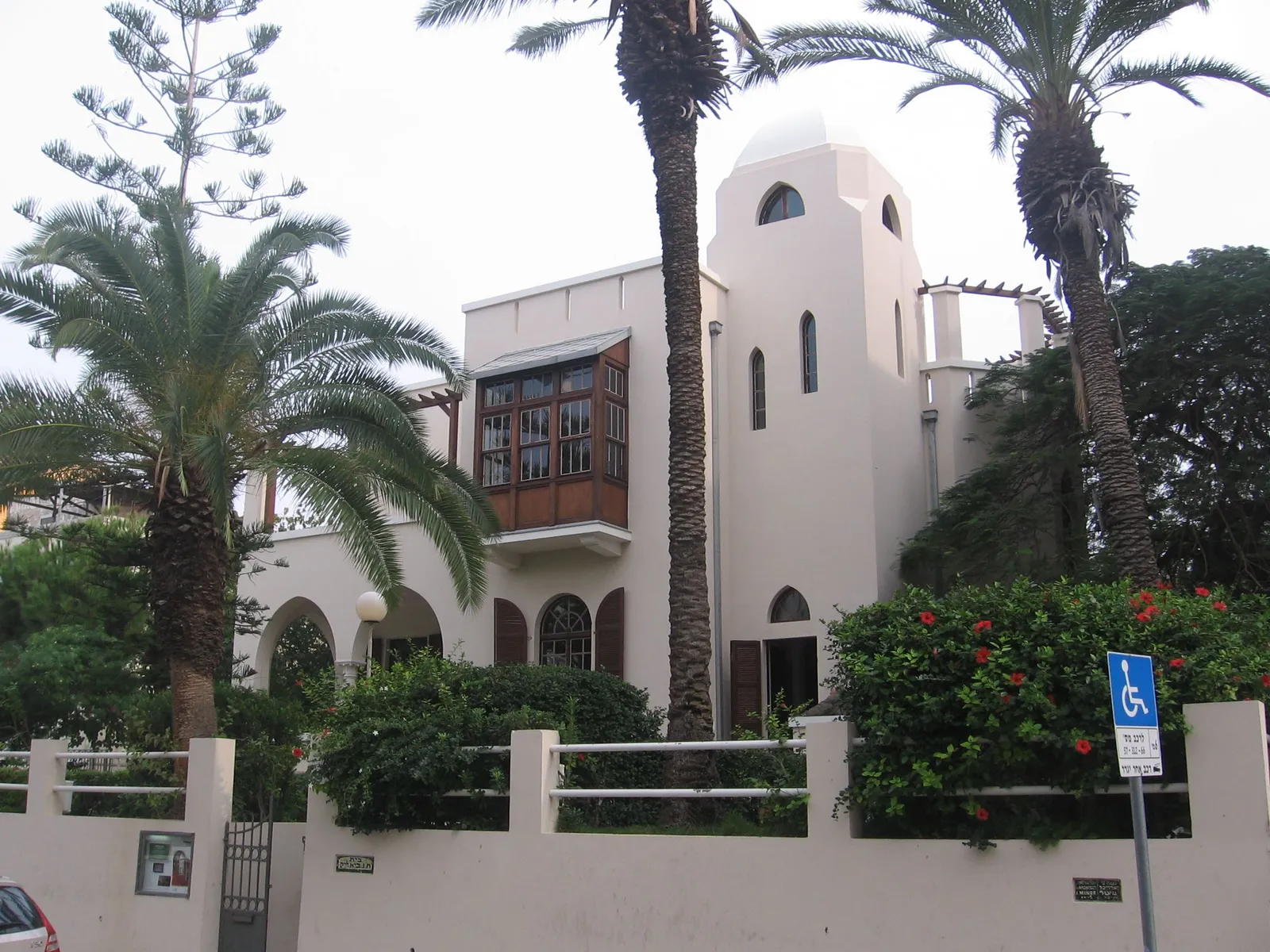
Bialik House, the villa the poet built for himself in 1925
Hayim Nahman Bialik, whose work sits at the centre of modern Hebrew literature, put up a house at the southern end of the street that now carries his name, and it borrows from Islamic and eastern European building in roughly equal measure: a domed corner tower, arched openings, a projecting wooden bay and painted ceilings inside. The rooms are kept close to how he had them, down to the study. Admission is NIS 20, and it opens 9am to 5pm Monday to Thursday and 10am to 2pm on Friday and Saturday.
No railway station comes within three kilometres of the market
Every platform in Tel Aviv sits on the Ayalon corridor at the eastern edge of the city, so the first leg of any trip out of here is the crossing east. From any of those stations a direct train runs to Ben Gurion International Airport (TLV) in about 20 minutes for NIS 13.50. The light rail’s Allenby stop is a few minutes from the market and connects to Savidor Center, at NIS 8 a ride, which is the cheap way to make that first leg; a taxi does it in ten to fifteen minutes depending on traffic. Both the train and the tram stop from Friday afternoon until Saturday after dark.
If the whole stop runs longer than three or four hours, the market and the square undersell it, and the seafront, Old Jaffa and the Bauhaus blocks on Rothschild are all within the same few kilometres. For a short gap, though, this is the densest corner of Tel Aviv: eating, a fair, a neighbourhood and two small museums inside a ten-minute radius.
Frequently asked questions
What should I do during a layover near Carmel Market in Tel Aviv?
Eat first, then walk one block in either direction. The market itself is a single lane of food stalls running off Allenby Street, and Nahalat Binyamin, the pedestrian street alongside it, fills with roughly 220 craft stalls on Tuesdays and Fridays and is an ordinary street the rest of the week. West of the market, Kerem HaTeimanim still has single-storey Yemenite houses standing between new towers; ten minutes north-east, Bialik Square holds the city's first town hall, now a museum for NIS 40, and the poet Bialik's own house for NIS 20. Two or three hours covers the lot, and the day of the week decides whether the fair is part of it.
Which day is best for Carmel Market?
Tuesday or Friday morning, for different reasons. Tuesday brings the craft fair onto Nahalat Binyamin without the pre-Shabbat crush; Friday brings both the fair and the busiest trading of the week, because the whole city shops before everything shuts. Sunday to Thursday the market runs normally and the pedestrian street beside it is just a street. Saturday is the one day to avoid entirely: the stalls are closed and so is most of what surrounds them.
Which of the two museums on Bialik Square is worth the time?
Depends what you came for. Beit Ha'ir, in the building that served as the city's first town hall, is about Tel Aviv itself, costs NIS 40 with a NIS 20 concession, and opens 9am to 6pm Monday to Thursday, 9am to 2pm Friday and 10am to 4pm Saturday. Bialik House at the other end of the same short street is the poet's own home, kept close to how he left it, at NIS 20 and open 9am to 5pm Monday to Thursday and 10am to 2pm Friday and Saturday. Neither takes more than 45 minutes, so on a tight gap pick the town hall for the city's story and the house for the atmosphere.
Is Kerem HaTeimanim worth walking into?
For half an hour, yes, mainly to see what the city looked like before it built upward. The lanes west of the market still hold single-storey houses under corrugated tin roofs from the quarter's founding in 1906, now standing directly under apartment towers fifteen times their height. The Yemenite restaurants along and off Rabbi Akiva Street are the other draw, and because the quarter stays observant they close for Shabbat while the bars a few streets away do not. It is small enough that you can cross the whole thing in ten minutes.