Neve Tzedek Layover: HaTachana, Tel Aviv
Part of the full Tel Aviv Layover: Jaffa and Bauhaus From TLV
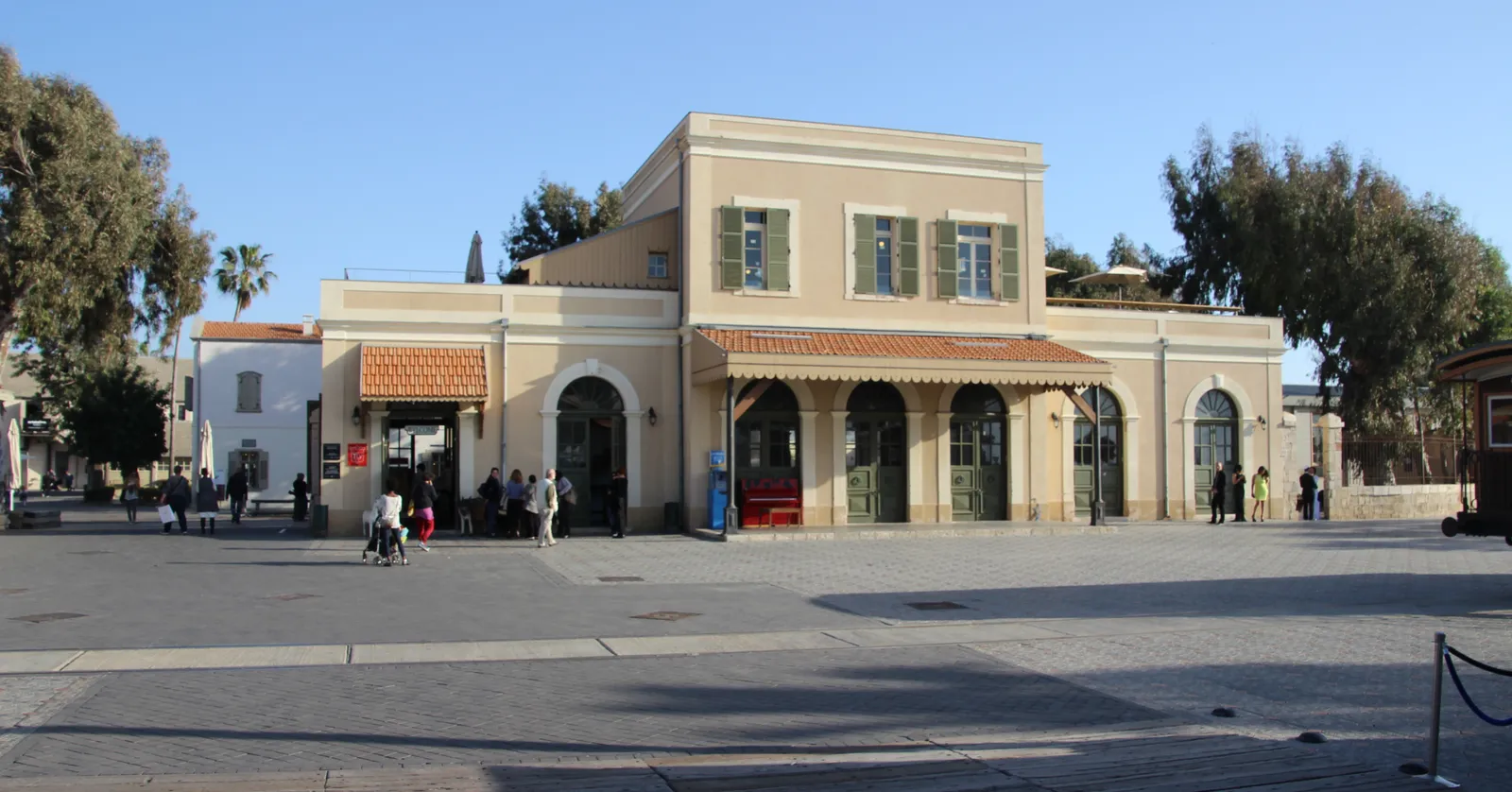
Neve Tzedek, the oldest Jewish quarter in Tel Aviv, sits inland of the beach between Jaffa and the city centre, with the restored 1891 railway terminus at its southern edge, a dance centre built into three 19th-century schools at its heart, and lanes between them too narrow for two cars.
The line from Jerusalem ended here in 1891
The Jaffa to Jerusalem railway was the first line built anywhere in the Middle East, and this building was its coastal terminus, opening on 24 May 1891 and running until it closed on 15 August 1948, when services moved to a station further south. After that it sat unused for more than half a century. The municipality restored the complex between 2004 and 2009 and reopened it as HaTachana, an open compound of shops, cafes and galleries in the original station buildings and goods sheds.
There is no admission and no gate: the plaza between the buildings is public, the original station house is the one with the arcade of awnings along its front, and some of the rolling stock has been left on the tracks. It is the easiest place in this quarter to sit down, which the lanes further in do not make simple.
Citrus trees grow out of the paving in the Suzanne Dellal courtyard
Three schools built here in the last decade of the 19th century, the Yechieli girls’ school, the Alliance boys’ school and Seminar Lewinsky, were restored and joined into a single performing arts complex that opened in 1989. Batsheva, the country’s best-known dance company, has been resident since that year, and the halls are the main stage for dance in Israel.
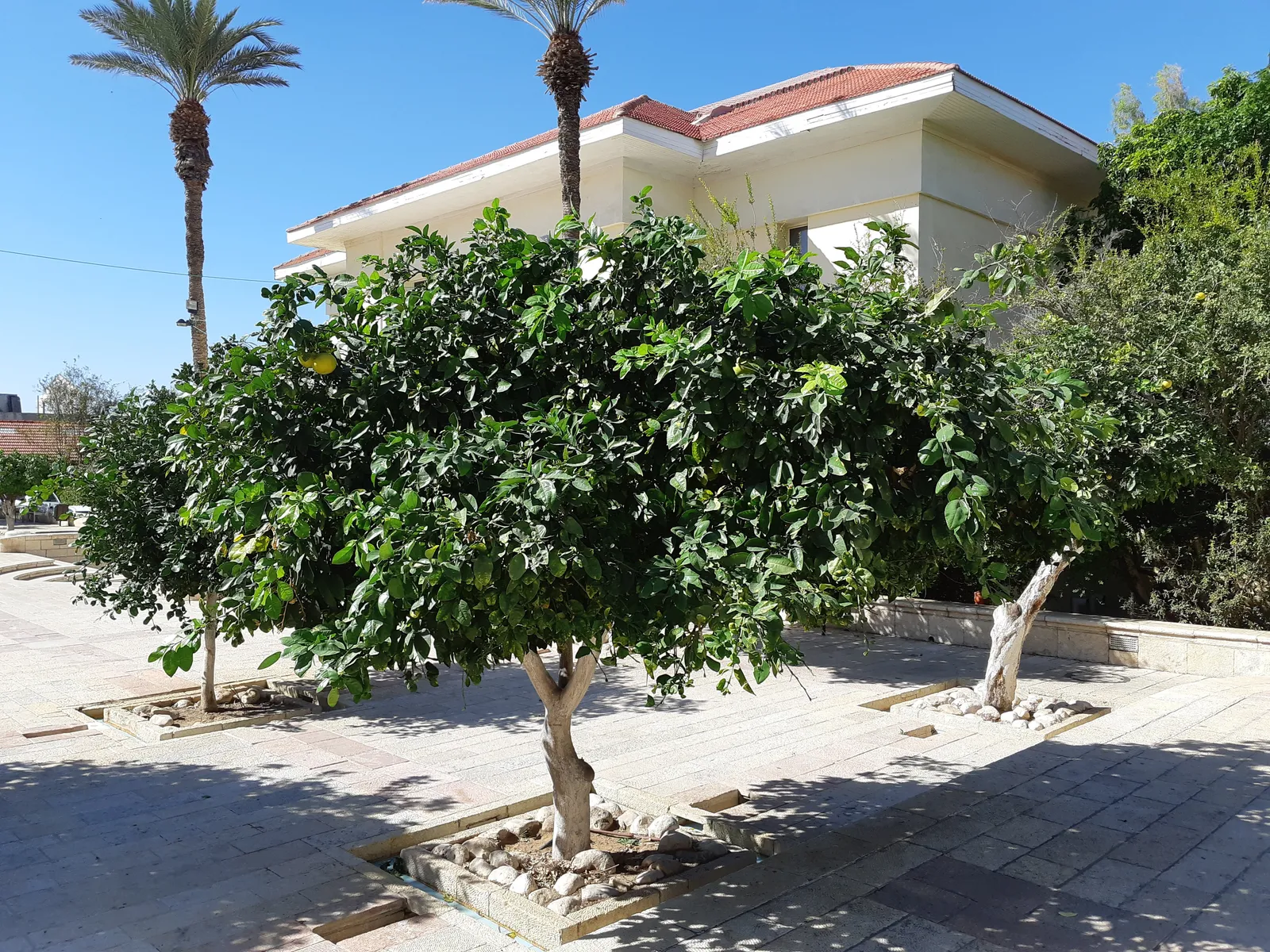
What makes the courtyard worth crossing even with nothing on stage is the planting: orange and lemon trees set directly into cut-outs in the stone paving, fruiting where you would expect gravel, with the white school facades closing the square on three sides. The plaza is public and free, it stays shaded through the afternoon, and in July the centre’s dance festival puts some performances out here at no charge.
Neve Tzedek’s lanes were laid out for people on foot
About 48 families began building outside Jaffa’s walls in 1883, and the quarter was formally established in 1887, which makes these the oldest Jewish streets in what became Tel Aviv. They were laid out at the scale of the time: one- and two-storey houses with tiled eaves and wooden shutters, set close enough that two cars cannot pass on most of the lanes. By the 1960s the whole quarter had run down badly, and the restoration that turned it into the city’s most expensive address only began in the late 1980s.
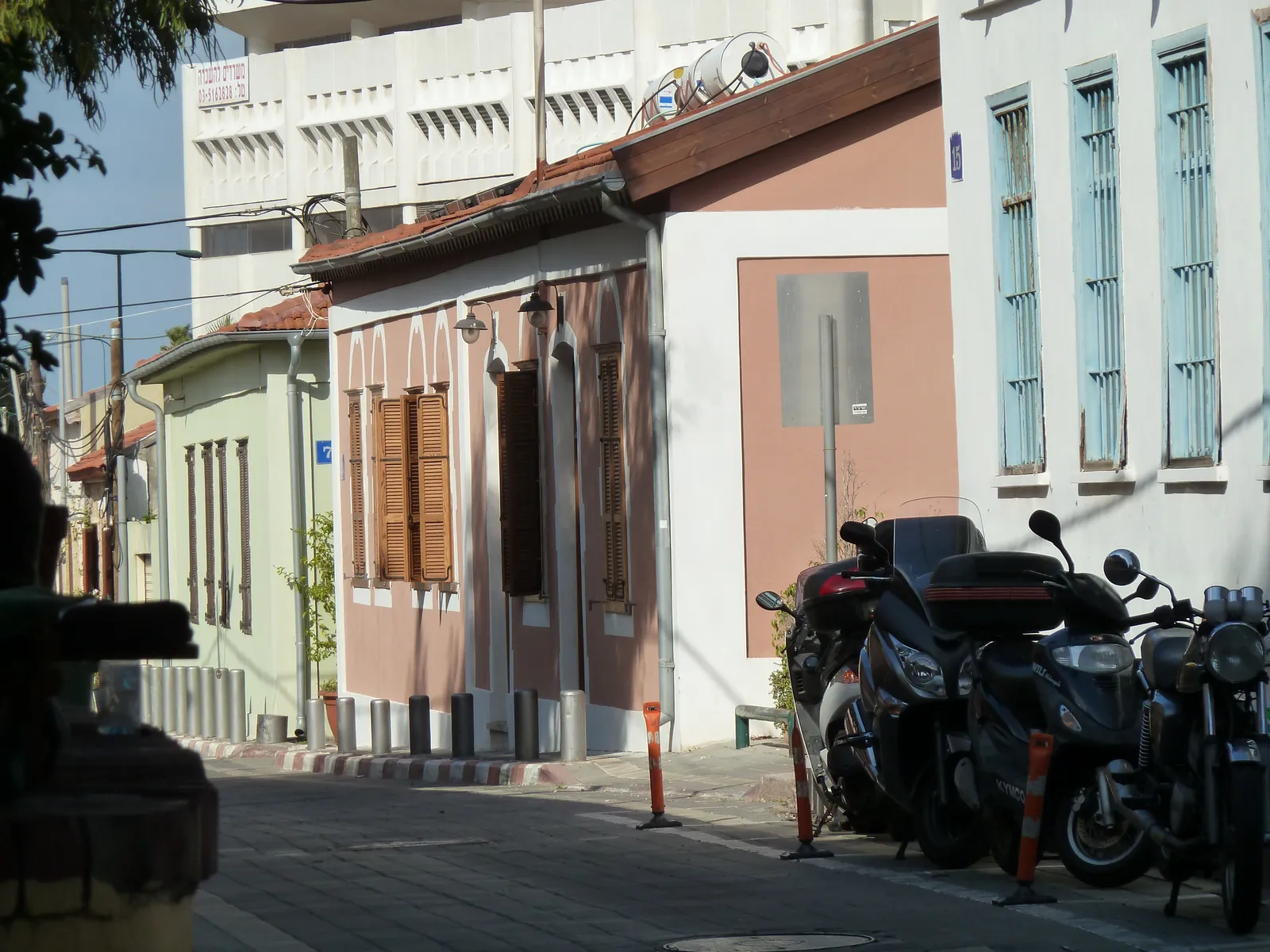
Shabazi Street is the spine of it, and the ground floors along it are now studios, galleries and small restaurants in rooms that were originally front parlours. That scale is the practical catch: most of these shops are a single room where three customers already fill the floor, and there is nowhere to set anything down.
The Red Line’s Elifelet tram stop sits within the HaTachana complex itself, which makes this one of the few parts of central Tel Aviv you can reach on rails without a taxi first. From there it runs through to Savidor Center for NIS 8, and a direct train from that station reaches Ben Gurion International Airport (TLV) in about 20 minutes for NIS 13.50. Both stop from Friday afternoon until Saturday after dark, so a Saturday departure is a road trip.
Four hours or more, and one neighbourhood is a thin use of the time: the beach is ten minutes west on foot, Jaffa fifteen minutes south, and the seafront, Carmel Market and the Bauhaus blocks all start within a couple of kilometres of these lanes. For a short gap, the quarter’s advantage is that everything in it is within five minutes of everything else.
Frequently asked questions
What should I do during a layover near Neve Tzedek in Tel Aviv?
Start at HaTachana and work inland. The old Jaffa railway terminus, which opened in 1891 as the end of the first railway line in the Middle East and shut in 1948, was rebuilt between 2004 and 2009 as an open compound of shops and cafes that costs nothing to walk into. A few lanes north, the Suzanne Dellal Centre occupies three restored 19th-century school buildings around a courtyard planted with citrus trees, free to cross whether or not anything is on stage. The lanes in between are the oldest Jewish streets built outside Jaffa. Two or three hours is enough for all of it at the pace the neighbourhood asks for.
Do you need a ticket to go into the Suzanne Dellal Centre?
Not for the courtyard, which is public space and open through the day. The centre has been the home of the Batsheva Dance Company since it opened in 1989, and performances in the halls are ticketed and often sold out, but the plaza with its citrus trees and the restored school facades around it are free to walk through. In July the centre runs a dance festival that puts some performances outdoors at no charge. If the flight is in the evening, that plaza is the most pleasant place to sit in this part of the city.
Can you drive or park in Neve Tzedek?
Barely, and that is the point of the place. The lanes were laid out in the 1880s for people on foot and are too narrow for two cars to pass in most of the quarter, so the traffic here is scooters and delivery bikes squeezed against the kerbs. Parking is street-side, scarce and metered. Come on foot or on two wheels; the light rail's stop inside the old station grounds is the practical way to arrive.
Is Neve Tzedek a good stop for a couple rather than a group?
It suits two people better than six. The lanes are single-file in places, the shops are mostly one-room studios and boutiques where three customers fill the floor, and the restaurants along Shabazi Street are small enough that a walk-in table for two is realistic while a table for a group is not. The two open spaces, the station compound and the dance centre's courtyard, are where a larger party would actually fit. For a slow hour with one other person, this is the best-scaled neighbourhood in the city.