Kamari and Ancient Thera Layover, Santorini
Part of the full Santorini's Caldera Rim on a JTR Layover
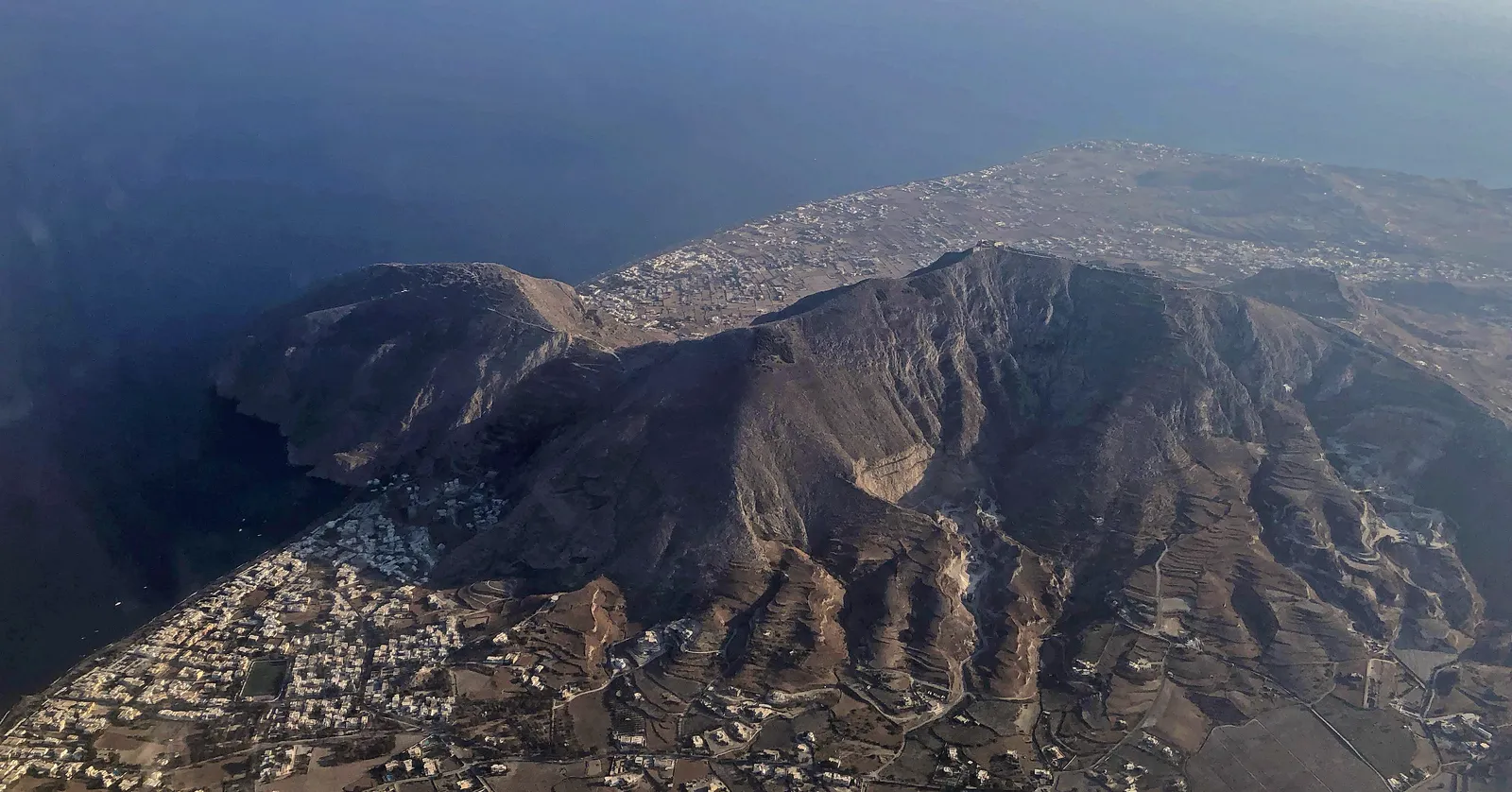
Kamari, on Santorini’s east coast, is a crescent of black volcanic sand with a stone promenade behind it, the ruins of Ancient Thera on the limestone ridge that closes the bay, and an 11th-century Byzantine church a short way inland.
Kamari’s promenade runs the length of a crescent of black sand
The village is here because of an earthquake. Episkopi Gonias, the old settlement inland, was almost entirely destroyed on 9 July 1956, and most of the people who lived there came down to the coast and built again on the flat ground by the water. What they built has since turned into a paved seafront strip several kilometres long, tavernas and hire shops on one side and sunbeds on the other.
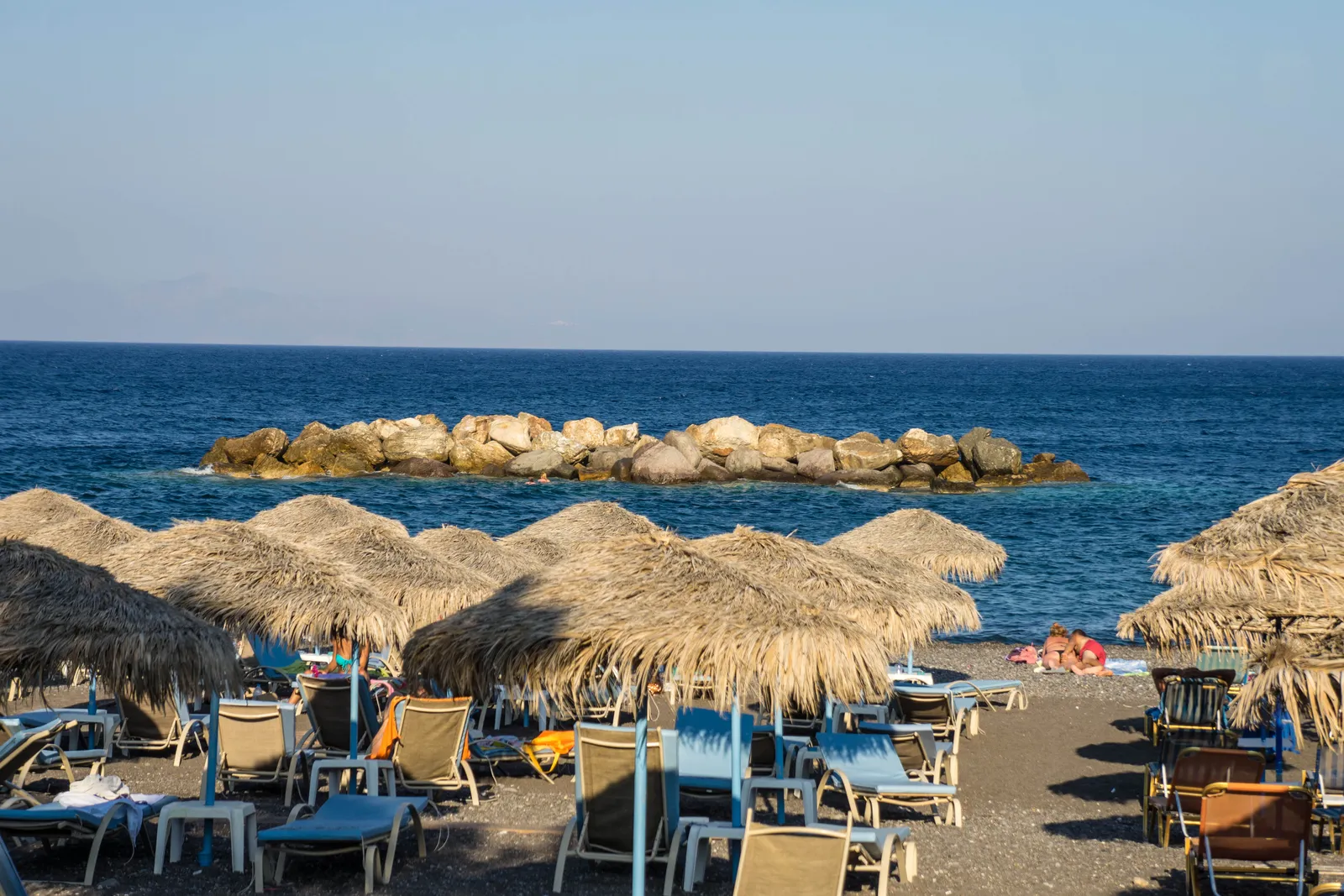
The sand is coarse dark grit rather than anything soft, it holds the day’s heat, and the shore shelves fast enough that the water is over your head a few strides out. At the northern end, near the village entrance, is the island’s only open-air cinema, running since 1987 in a walled garden with screenings starting at 21:30 across a May to October season, which is a genuinely good way to spend the last two hours before a very late flight.
Ancient Thera runs along the spine of Mesa Vouno
Spartan colonists founded the town up on the ridge in the 9th century BC and it stayed occupied through the Hellenistic and Roman periods, which is why what survives is a full street plan rather than a single monument: an agora with a stoa along it, a theatre cut into the slope with the sea directly below the stage, temple platforms, a gymnasium, a Roman bath and the guard buildings of the Ptolemaic garrison.
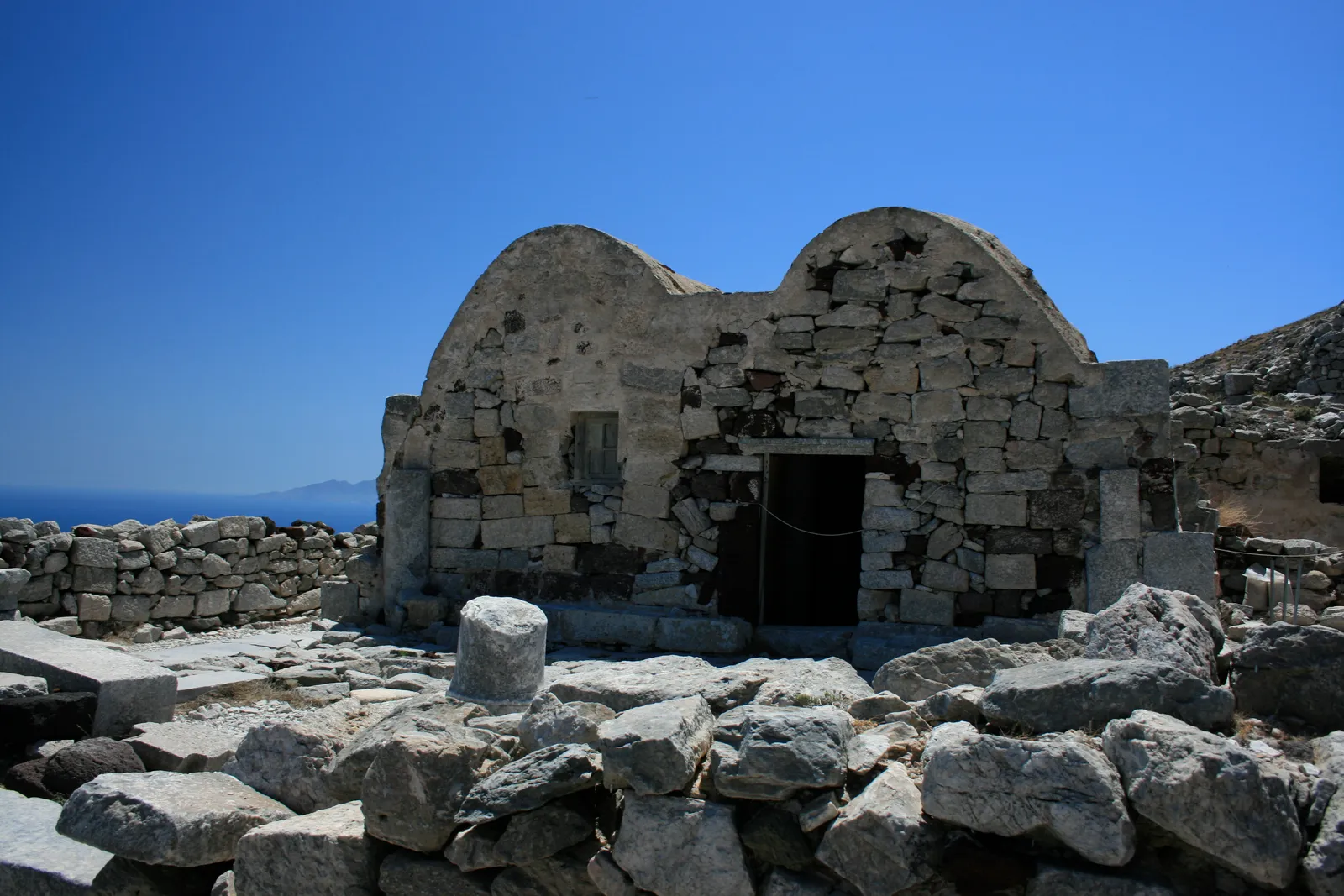
Ten euros gets you in, the gate is shut on Wednesdays, and hours run from morning to mid-afternoon with last admission twenty minutes before closing. Getting up there is the part that needs planning: a shuttle from an office near the Kamari bus stop runs the switchback road for about 10 euros, the road itself is narrow with tight bends and parking at the top runs out early, and the marked trail alongside it takes most walkers 45 to 60 minutes to climb roughly 360 metres. There is no shade on any version and nothing to buy above the village.
Perissa, the other black-sand village, sits on the far side of the same ridge and has its own path up. If the archaeology rather than the climb is the draw, a guided day led by an archaeologist takes in the Bronze Age dig at Akrotiri on the island’s southern tip and a swim at Perissa, which is a different half of the same story and needs no walking uphill at all.
Zoodochos Pigi is a cave with the island’s only natural spring
The path from Kamari up to the ruins passes a gated opening in the limestone with a small whitewashed church built against it. Inside is a cave running about 25 metres back into the rock, with stalactites and stalagmites and, at the end of it, fresh water: this is generally described as the only natural freshwater spring on Santorini, which on an island with no rivers and no lakes is why it has been a place of some significance for a very long time.
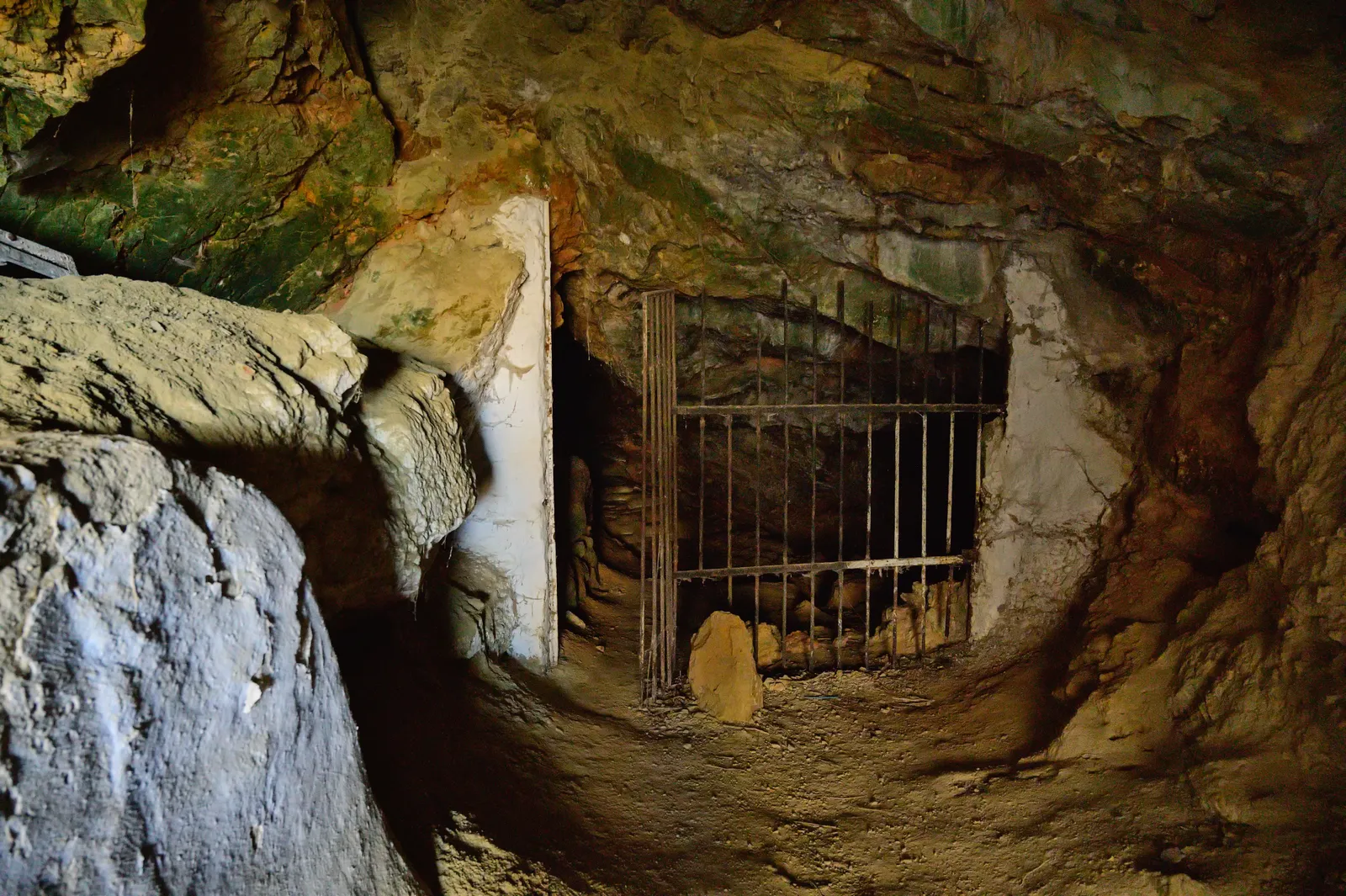
The name means the life-giving spring, and in antiquity the road running north out of Ancient Thera came down to it. There is no road to it now: reaching it means the same climb from Kamari that the ruins need, with the cave sitting partway up. The view back down over the bay from the ledge outside is the reason people who are not going all the way to the top still make the walk.
Panagia Episkopi has stood at Mesa Gonia since the 11th century
Inland from the coast, in the village Kamari’s families left after 1956, is a church that predates almost everything else standing on Santorini. Panagia Episkopi went up in the 11th century, has a carved and gilded icon screen, dark stone columns and surviving Byzantine wall painting, and is still the working parish church for the area rather than a monument with a ticket desk.
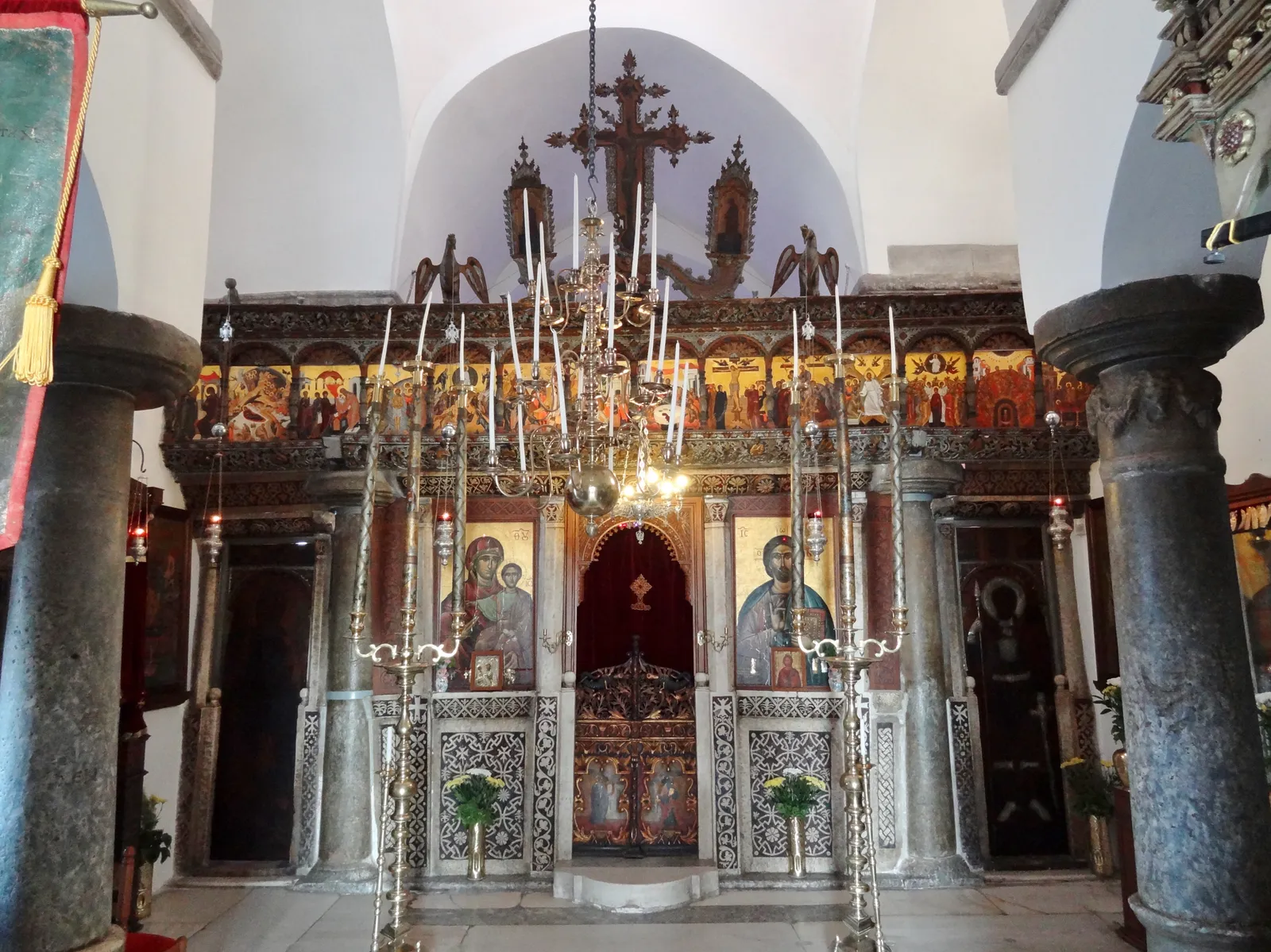
It costs nothing and twenty minutes covers it, which makes it the easiest thing to add to a beach afternoon that has run out of beach. The walk inland is uphill on a road with intermittent verges, so most people arriving without a car reach it by taxi.
Everything in this radius is within three kilometres of the terminal, which means a bag brought here never passes any of the storage points in Fira, and there is nowhere on the promenade to leave one while you swim.
Three kilometres from the terminal, and no bus that covers them
KTEL routes all terminate at Fira, so the bus version of the run out to Santorini (Thira) International Airport (JTR) goes Kamari to Fira for 2.20 euros in cash, a change at the yard, then a second 2.20 euro ticket back out to the terminal: roughly an hour and ten minutes to cover three kilometres of coast.
A taxi does it in about eight minutes, though Santorini licenses only around 40 of them for the whole island, so one is worth arranging rather than waiting for. Walking is not a serious option, because the main road has no pedestrian path along most of its length. If your window is long enough to justify going to the caldera side instead, the villages on the rim and the boats out to the volcano are covered in the full Santorini guide and reached through the same interchange at Fira’s central bus station.
Frequently asked questions
What should I do during a layover near Kamari in Santorini?
Swim first, then decide about the ridge. Kamari's black sand and its stone promenade run the length of a crescent bay and cost nothing, and the water shelves steeply enough to be deep a few strides out. Ancient Thera on Mesa Vouno above is the bigger commitment: 10 euros to get in, closed on Wednesdays, doors shut by mid-afternoon, and either a 45 to 60 minute walk up or a 10 euro shuttle from the village. Panagia Episkopi, the 11th-century church inland at Mesa Gonia, is free and takes twenty minutes. If your flight is in the evening, the open-air cinema at the village entrance starts screenings at 21:30 between May and October.
How do you get up to Ancient Thera from Kamari?
Three ways, and none of them is a public bus. A shuttle runs from an office near where the Kamari bus terminates up the switchback road to the site entrance for about 10 euros. Driving yourself means the same road, narrow with tight bends and limited parking at the top that fills early in season. On foot there is a marked trail beside the road that most people cover in 45 to 60 minutes each way, climbing to around 360 metres with almost no shade on it, so it is a morning job rather than an afternoon one. Take water; there is nowhere to buy any above the village.
Is Kamari's beach comfortable to walk on barefoot?
Not in the middle of a summer day. The sand here is dark volcanic grit rather than pale silica, and it absorbs heat all morning, which is why the sunbeds and the wooden walkways exist rather than being a convenience. Bring something on your feet for the walk from the promenade to the water. The shore also shelves quickly, so the depth changes within a few strides rather than gradually, and there is a rock breakwater lying offshore along part of the bay.
What is open in Kamari outside the summer season?
Much less than the promenade suggests. Most of the beachfront tavernas, bars and hire shops here work a May-to-October season and shutter for the winter, and the open-air cinema does the same. Ancient Thera stays open year-round but on shortened hours. The bus service to Fira thins out considerably once the season ends, with long gaps between departures, which matters more here than in the town because Kamari has no second route out. Panagia Episkopi inland is a working parish church and keeps going regardless.
Can you get from Kamari to the airport without going through Fira?
Only by taxi or a pre-booked car. Santorini (Thira) International Airport (JTR) is about three kilometres up the coast from Kamari and a taxi covers it in roughly eight minutes, but there is no public bus between the two: KTEL routes all terminate at Fira, so the bus version means Kamari to Fira, a change and a second 2.20 euro ticket, then Fira back out to the terminal, which comes to something over an hour all told for a three-kilometre hop. Walking it is not realistic either, because the main road has no pedestrian path along most of its length.