San Jose Layover: Plaza de la Cultura Museums
Part of the full San Jose Layover: The National Theatre, SJO
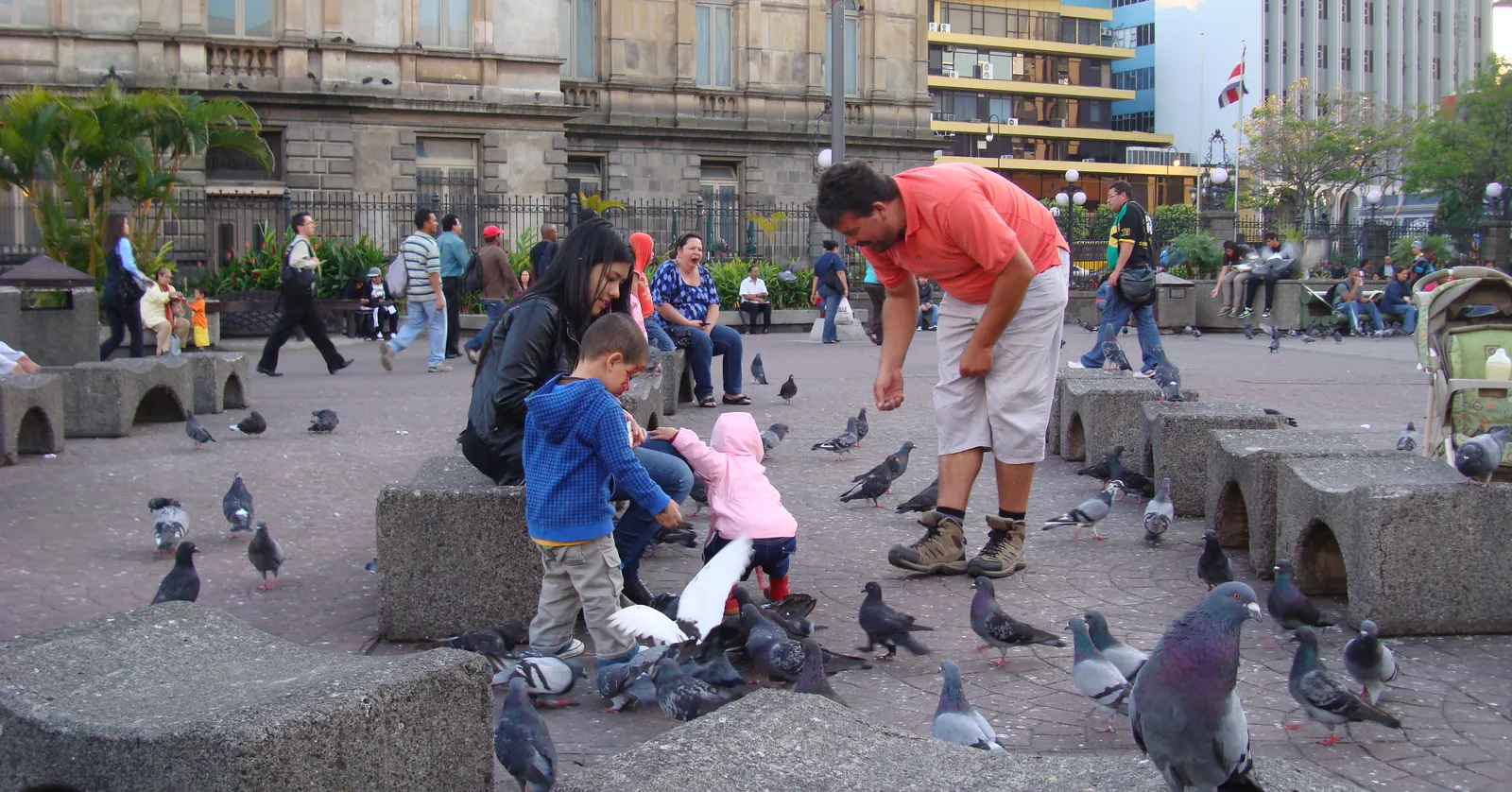
San Jose’s Plaza de la Cultura is the roof of two underground museums, and the four blocks around it hold five floors of pre-Columbian jade, a theatre built in 1928 for operetta, and the cathedral on Parque Central.
Two museums under the paving of Plaza de la Cultura
Plaza de la Cultura is flat grey paving, low concrete blocks people sit on, and pigeons working the crowd around vendors selling small bags of peanuts to feed them. Three architects, Jorge Bertheau, Jorge Borbón and Edgar Vargas, designed the square between 1977 and 1982, and the point of it was always what went underneath: three levels cut into the ground, deep enough that nothing at street level suggests a museum is down there.
The Central Bank’s pre-Columbian gold collection fills the lower floors. The level above it holds the part most people walk past on their way out, the Jaime Solera Bennett coin museum, which opened in 1990 and runs on the same ticket. Its permanent exhibition, “Del Real al Colón,” follows what Costa Ricans have used as money since 1502, and the collection behind it comes to about 5,000 objects: coins, notes, engraving dies, and the metal tokens coffee and banana estates paid their pickers in before there was small change to hand out. Foreign adults pay 8,400 colones for both, and the doors open at 9.15am every day of the week.
Five floors of jade facing Plaza de la Democracia
The jade museum stands on Avenida Central at Calle 13, looking across at Plaza de la Democracia, in a building Diego Van Der Laat cut to resemble a block of jade sawn in half, with the light coming in through the split and working its way down five exhibition floors. It opened on this site in 2014 and holds close to 7,000 pieces, the largest public collection of American jade anywhere: pendants, axe-god figures, carved stone spheres from the Diquís delta, and ceramics that track what the peoples here traded north into Mesoamerica.
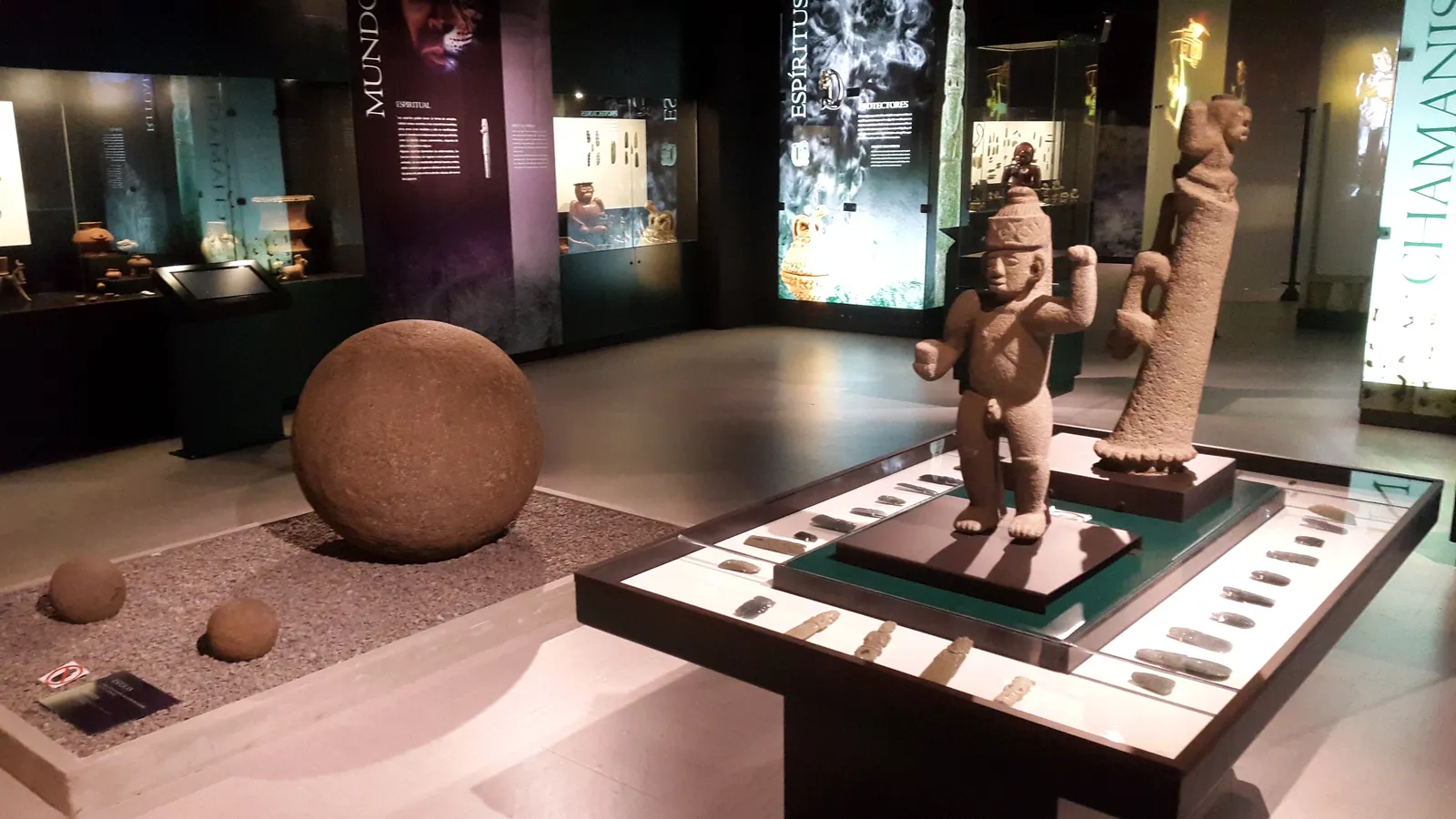
Foreign adults pay 16 dollars, students with a card 5 and under-twelves 2, and it runs eight to five, Monday through Sunday. The museum has been putting on a standing two-for-one offer, Wednesdays for foreign visitors and Sundays for nationals and residents, which is worth knowing if there are two of you and the day happens to line up. Bags and backpacks all go into the checkroom, the guardarropía, by the entrance before the exhibition floors, a rule aimed at the display cases rather than at you.
Melico Salazar, the 1928 theatre built for operetta
José Raventós bought the land on Avenida 2 wanting somewhere to stage zarzuela, the comic Spanish operetta, and the hall José Fabio Garnier Ugalde designed for him opened on 7 February 1928 with the Mexican singer Esperanza Iris on stage. It was the plainer, cheaper room in a city that already had the National Theatre, and it stayed that way: 1,040 seats, a Baroque front, and a programme aimed at whoever turned up.
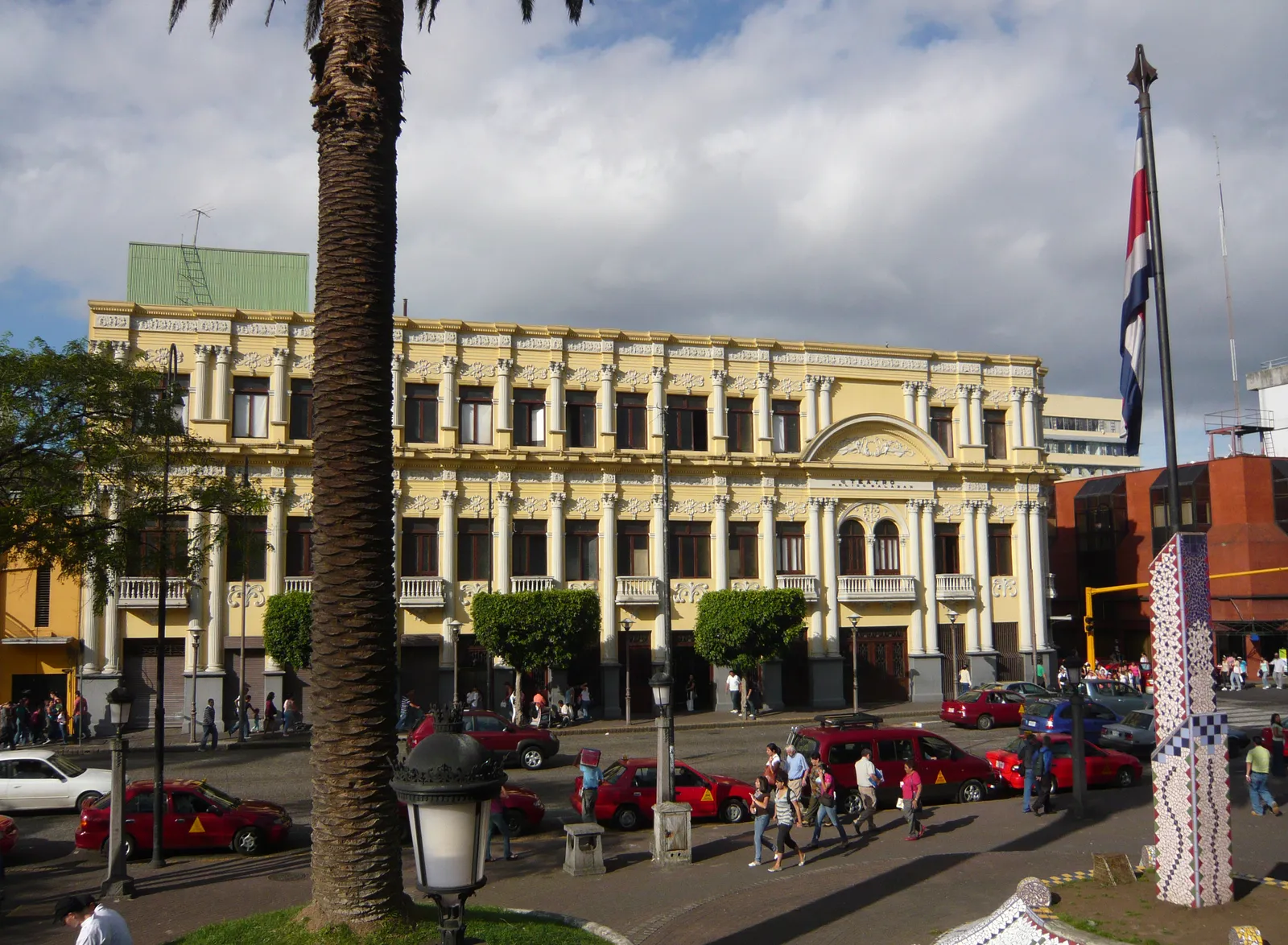
A fire gutted the gallery in 1967. The restoration took until a re-inauguration on 6 March 1985, and in 1986 the building lost the Raventós name and took that of Manuel “Melico” Salazar, the Costa Rican tenor who sang at the Metropolitan Opera and died in 1950. It belongs to the culture ministry now and keeps a full season of concerts, recitals and plays, which makes it the one stop here that is better on an evening layover than an afternoon one: the museums have shut by five, and the only way inside this building is a performance.
The Metropolitan Cathedral’s green domes on Calle Central
The cathedral fills the block on Calle Central between Avenidas 2 and 4, facing Parque Central, and the copper domes behind its columned portico have gone green. Eusebio Rodríguez built the first version between 1825 and 1827, deliberately without the gold-heavy Baroque interior of the period, and it was made a cathedral in 1850 when Anselmo Llorente y La Fuente became Costa Rica’s first bishop.
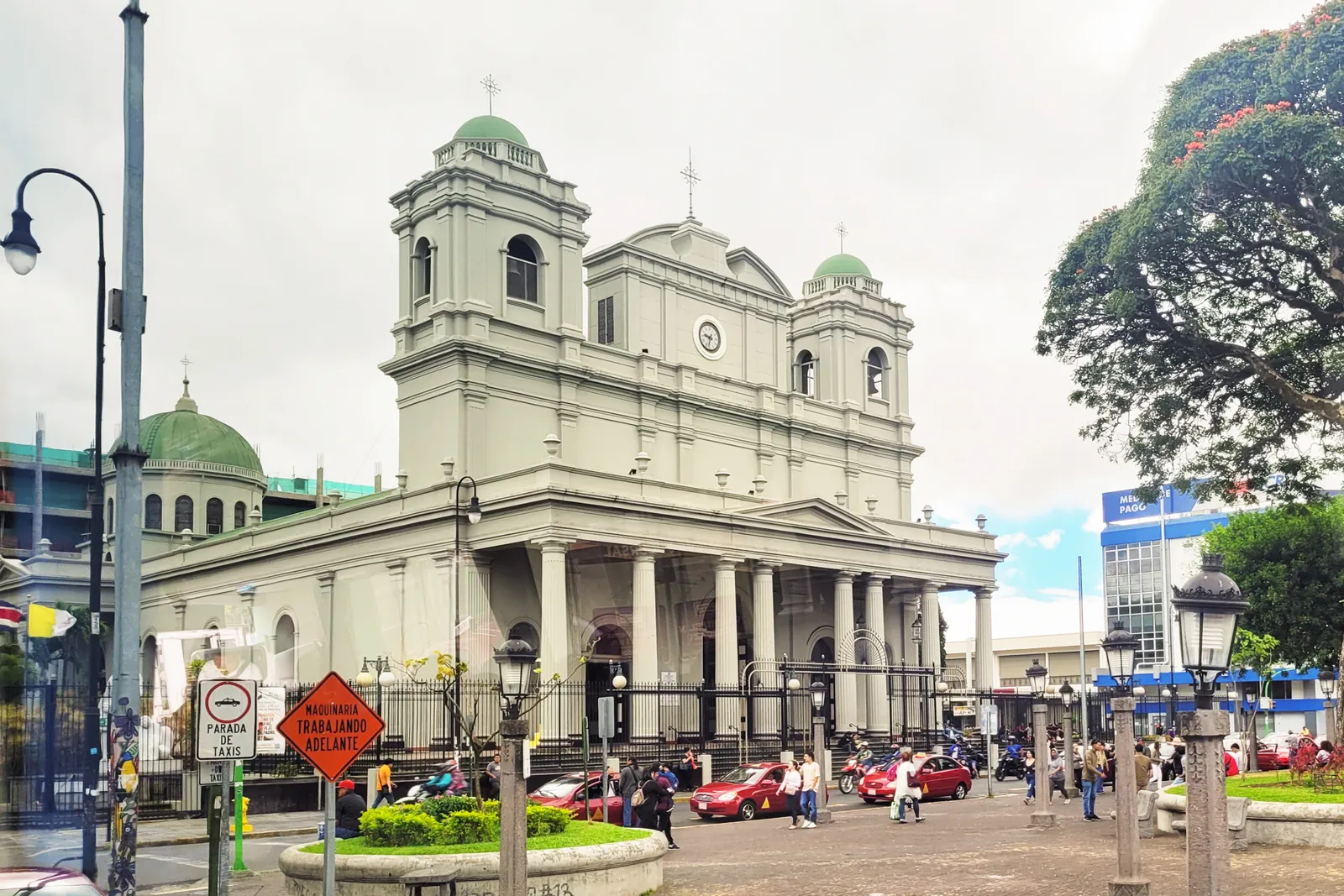
Earthquakes have rewritten it twice. The 1871 survey found the structure unsound and started a rebuild that the Guatemalan carpenter Ramón Estrada finished in 1878, dome, pulpit, choir and columns; the quakes of 1990 and 1991 took the bell towers, which came back in reinforced concrete. Going in costs nothing, and after an hour under artificial light in a basement it is a useful place to sit.
The Parque Central bandstand a Nicaraguan dictator paid for
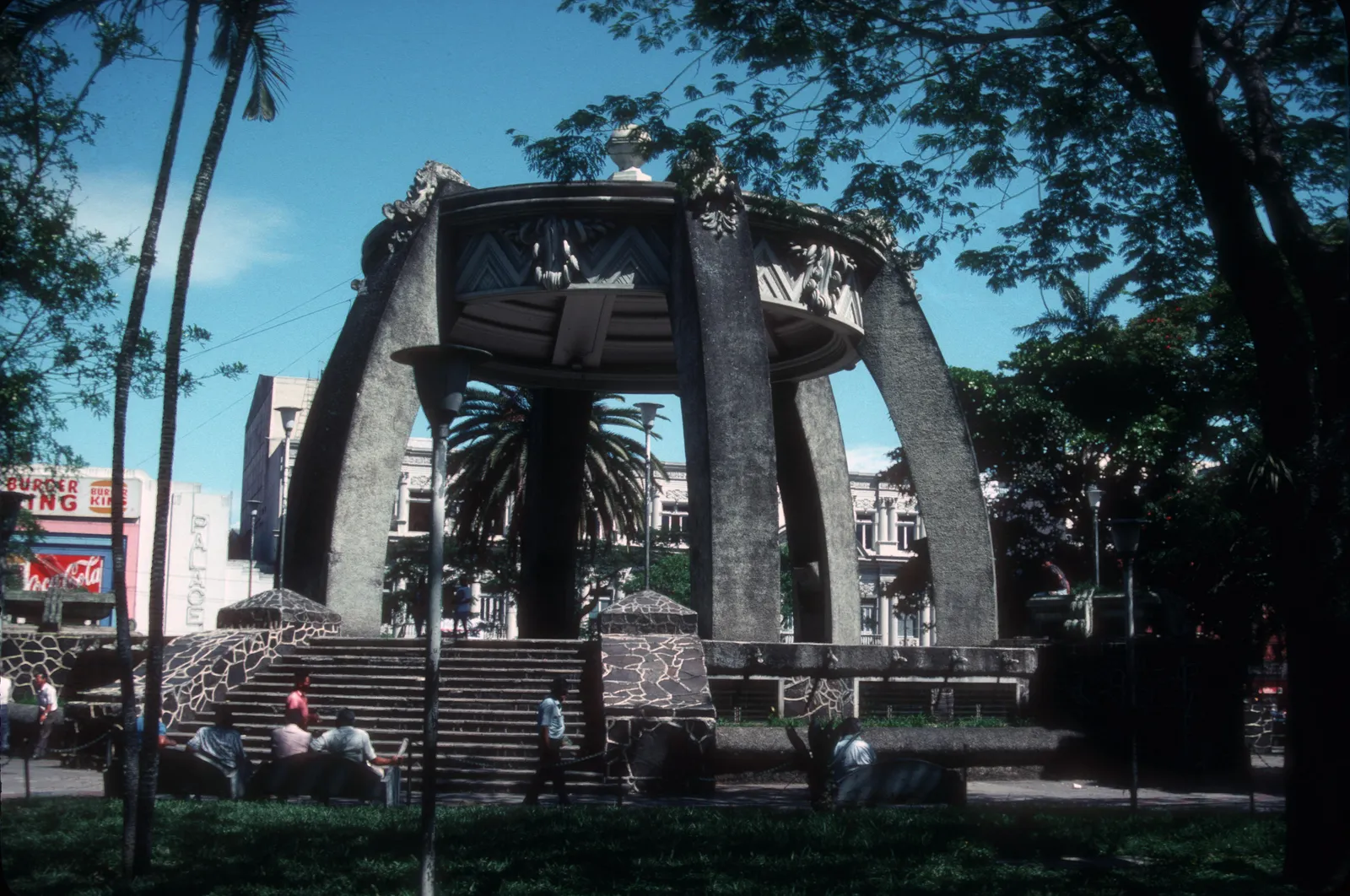
Parque Central has a concrete bandstand in the middle of it, six curved pillars leaning inward to carry a round upper platform, Art Deco and unlike anything else on the square. The Nicaraguan dictator Anastasio Somoza García offered the design to President Rafael Ángel Calderón Guardia in 1941 and formally handed the finished structure over in 1944; the Catalan architect Víctor Sabater drew it. A 1991 decree put both the bandstand and the park on the list of protected architectural heritage.
With more than five hours to spend, the obvious addition is the National Museum in the old Bellavista barracks, two blocks east of the jade museum, where the wider San Jose guide picks up the walk along Avenida Central to the covered market as well. This tighter version trades that distance for depth: four blocks, three interiors, and no stretch of the day spent getting anywhere.
No airport train, just a bus from the Merced church
The terminal for Juan Santamaría International Airport sits on Avenida 2 beside the Merced church, at Parque de la Merced, about ten minutes’ walk west of Plaza de la Cultura. TUASA runs the red buses and Station Wagon the yellow and orange ones, both from that same terminal, and the fare is 675 colones paid to the driver. Break a note first, because drivers carry little change. Departures go every 6 to 12 minutes, as often as every 4 in the peaks, from around 4am until about 10pm.
The ride is 30 to 40 minutes in ordinary traffic and longer through the evening rush, so an hour from the square to the terminal door is the honest figure once the walk and the wait are in. If you would rather start from the airport end, the Alajuela version of this trip keeps everything within three kilometres of the gate. These are ordinary city buses with no hold underneath, so a suitcase rides the whole way in the aisle beside you.
Frequently asked questions
What should I do during a layover near Plaza de la Cultura in San Jose?
The square itself is the roof of two museums: the Central Bank's pre-Columbian gold collection and, on the level above it, the coin museum that traces Costa Rican money from 1502 onward, both on one ticket. Four blocks east, the jade museum stacks five floors of pre-Columbian pieces in front of Plaza de la Democracia. Two blocks the other way, on Parque Central, stand the 1928 Melico Salazar theatre, the Metropolitan Cathedral and a concrete bandstand a Nicaraguan dictator paid for. Three hours covers the underground pair and one walk across to Parque Central; five is comfortable with the jade museum added, and the outdoor half of that list costs nothing.
Which museums near Plaza de la Cultura close on Mondays?
None of the three in this itinerary. The gold and coin museums under Plaza de la Cultura open every day of the week from 9.15am, and the jade museum in front of Plaza de la Democracia runs Monday to Sunday, 8am to 5pm. The Monday closure to watch for in this part of San Jose is the National Museum in the old Bellavista barracks, two blocks past the jade museum, which shuts for the day.
What is open around Plaza de la Cultura before nine in the morning?
The jade museum, which opens at eight, an hour and a quarter before the pair under Plaza de la Cultura. That gap is the reason an early start in San Jose usually runs east first and doubles back: you get a full hour among the jade and the stone spheres, then reach the square at about the time the gold collection unlocks. The plaza above ground is open at any hour, with peanut vendors and pigeons on it from early.
How do you get from Plaza de la Cultura back to Juan Santamaría airport?
Walk about ten minutes west along Avenida 2 to the terminal beside the Merced church, at Parque de la Merced, which is where both airport operators leave from: TUASA in red buses and Station Wagon in yellow and orange ones. The fare is 675 colones handed to the driver, departures go every 6 to 12 minutes from about 4am to about 10pm, and the ride to Juan Santamaría International Airport is 30 to 40 minutes in ordinary traffic. Counting the walk and the wait, budget an hour from the square to the terminal door.