Estación al Atlántico, San Jose: By Train
Part of the full San Jose Layover: The National Theatre, SJO
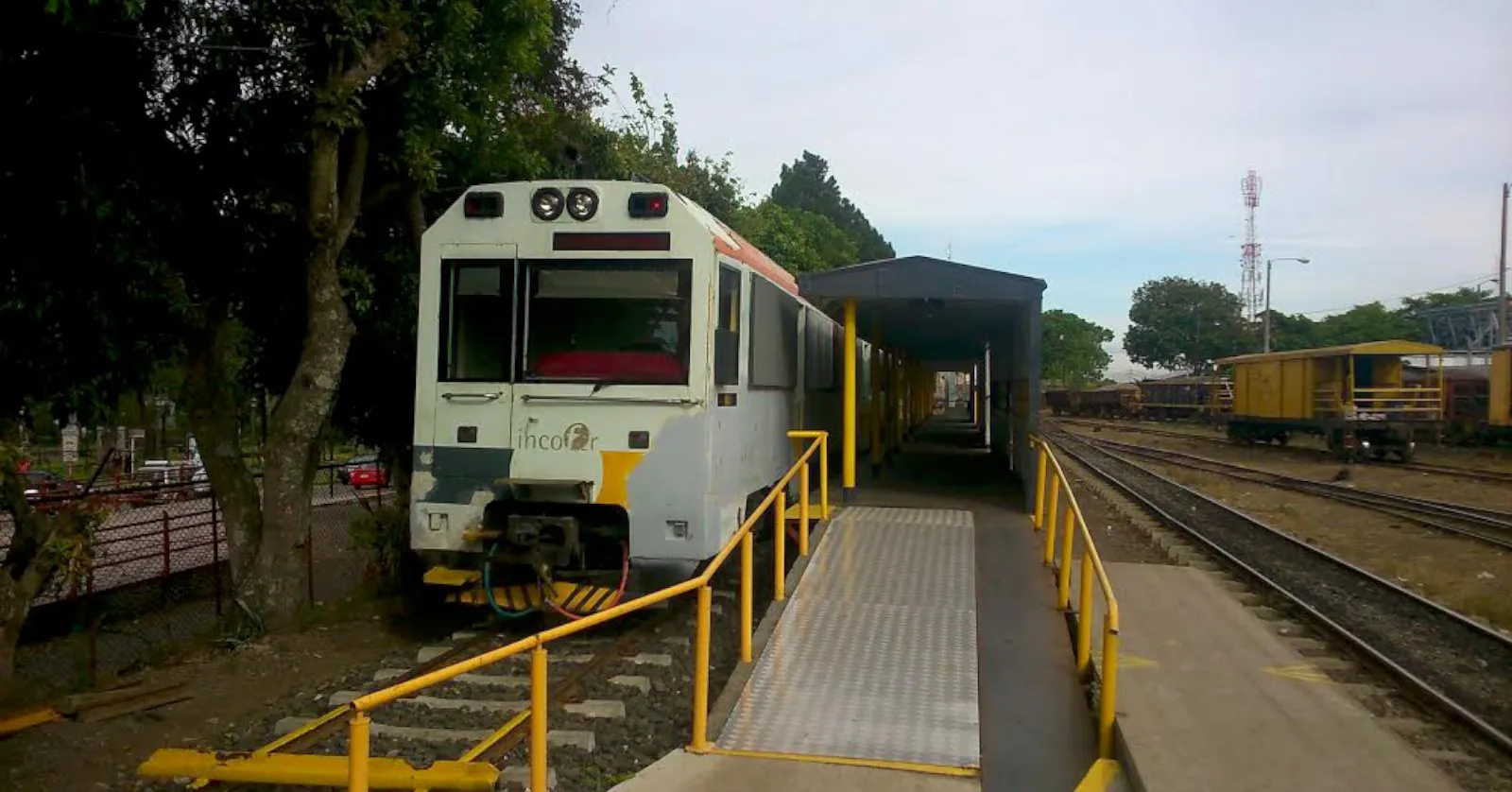
San Jose’s Estación al Atlántico has been a railway terminus since 1908 and still takes the commuter trains in from Cartago and Heredia, with an 1891 brick customs warehouse and a contemporary art museum in an old liquor works within a few blocks of its platforms.
Estación al Atlántico, San Jose’s 1908 railway terminus
Jaime Carranza Aguilar, who trained as an engineer in Hamburg, designed the building that opened here on 15 September 1908 as the head of the line down to Limón on the Caribbean coast. He mixed Victorian, neoclassical and baroque elements and finished them with Art Nouveau detail, which is a lot of decisions for one facade and is the reason the building is worth two minutes of looking at rather than none. Costa Rica listed it as architectural heritage in 1980.
Trains stopped running in 1996 when the upkeep stopped being affordable, and for six years from 2002 the hall held a museum of forms, spaces and sounds. The culture ministry restored it in 2011 and handed it back to the railway, so what stands here now is a working commuter terminus inside a heritage shell, with the modern railcars drawn up at a bay platform under yellow handrails.
Nothing on these platforms will hold a bag for you, and the departures that exist are the commuter peaks, when the carriages are at their fullest.
No trains at weekends, and none between nine and three
The timetable is built for people going to work: a cluster of departures in the early morning, another from the late afternoon, almost nothing moving through the middle of the day, and public holidays out as well. That shapes what a few free hours here can be. An arrival on the morning peak leaves the rest of the morning free and no way back by rail until the afternoon, which is why this side of the centre is worth walking rather than treating as a place to wait.
The Antigua Aduana, an 1891 customs warehouse
When the Atlantic railway opened in 1888 the country suddenly needed somewhere to put what it was shipping, and the answer was a customs house at the end of the line. Lesmes Jiménez Bonnefil, an architect and army officer, drew the plans in 1889; Minor Keith, the American who built the railway itself, took the contract and finished the work in 1891.
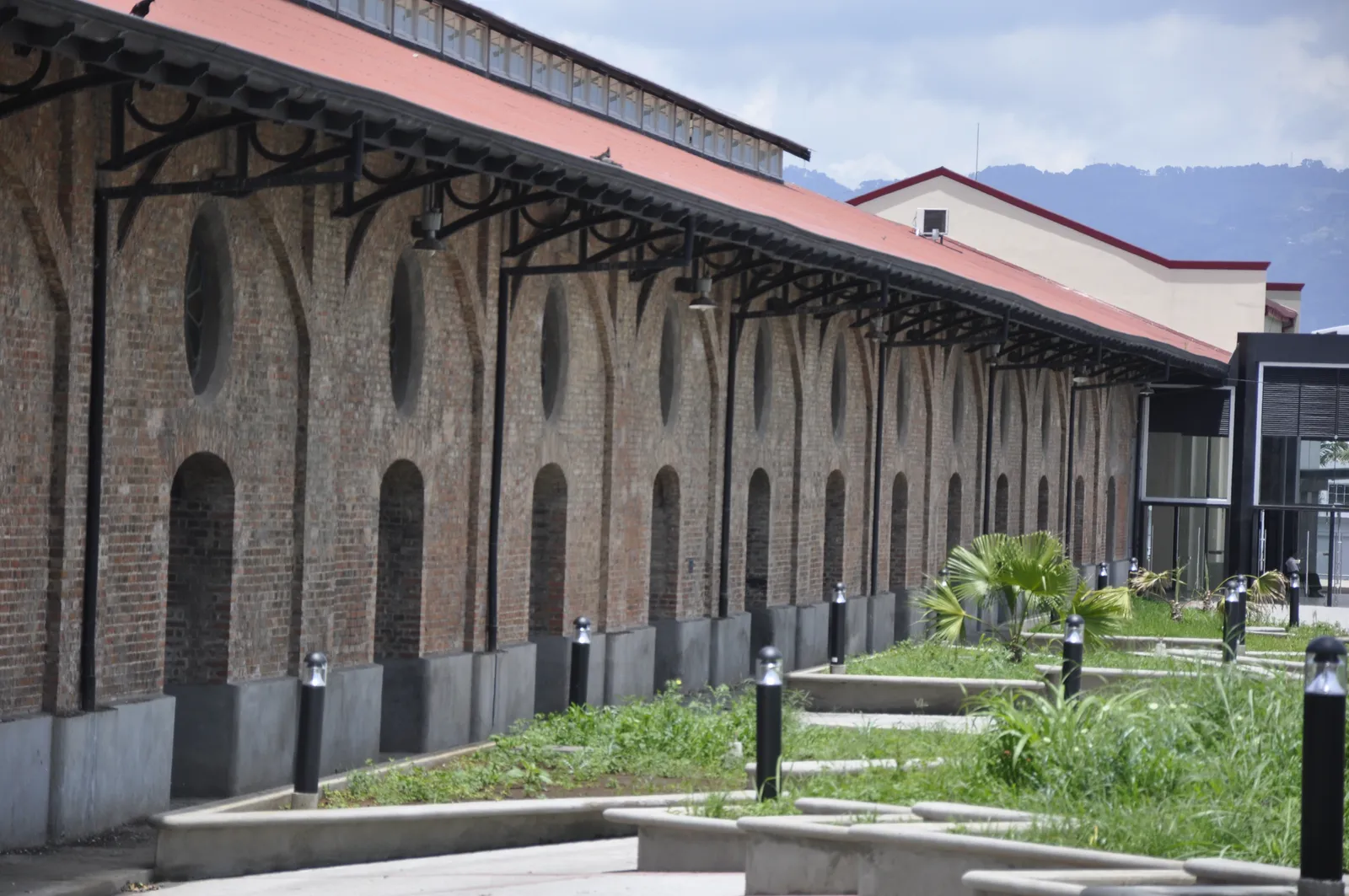
What that produced is a long brick shed with arched windows in a row under an iron-bracketed canopy, on a site of around 16,000 square metres in Barrio Aranjuez. In 1917 part of it became the Casa del Cuño, where the country struck its coins. It was declared a historic and architectural relic in 1980 and works as a cultural venue now, hosting fairs and exhibitions, so what is on inside changes but the brickwork does not.
The contemporary art museum in the old liquor works
Costa Rica’s national liquor factory was founded in the middle of the nineteenth century and ran on this block, Avenida 3 at Calle 15, until a thorough restoration in the early 1990s turned the site into the Centro Nacional de la Cultura in 1994. The gateway is the giveaway: carved stone pinnacles and iron gates set into a long ochre wall, with exhibition banners strung up either side of it.
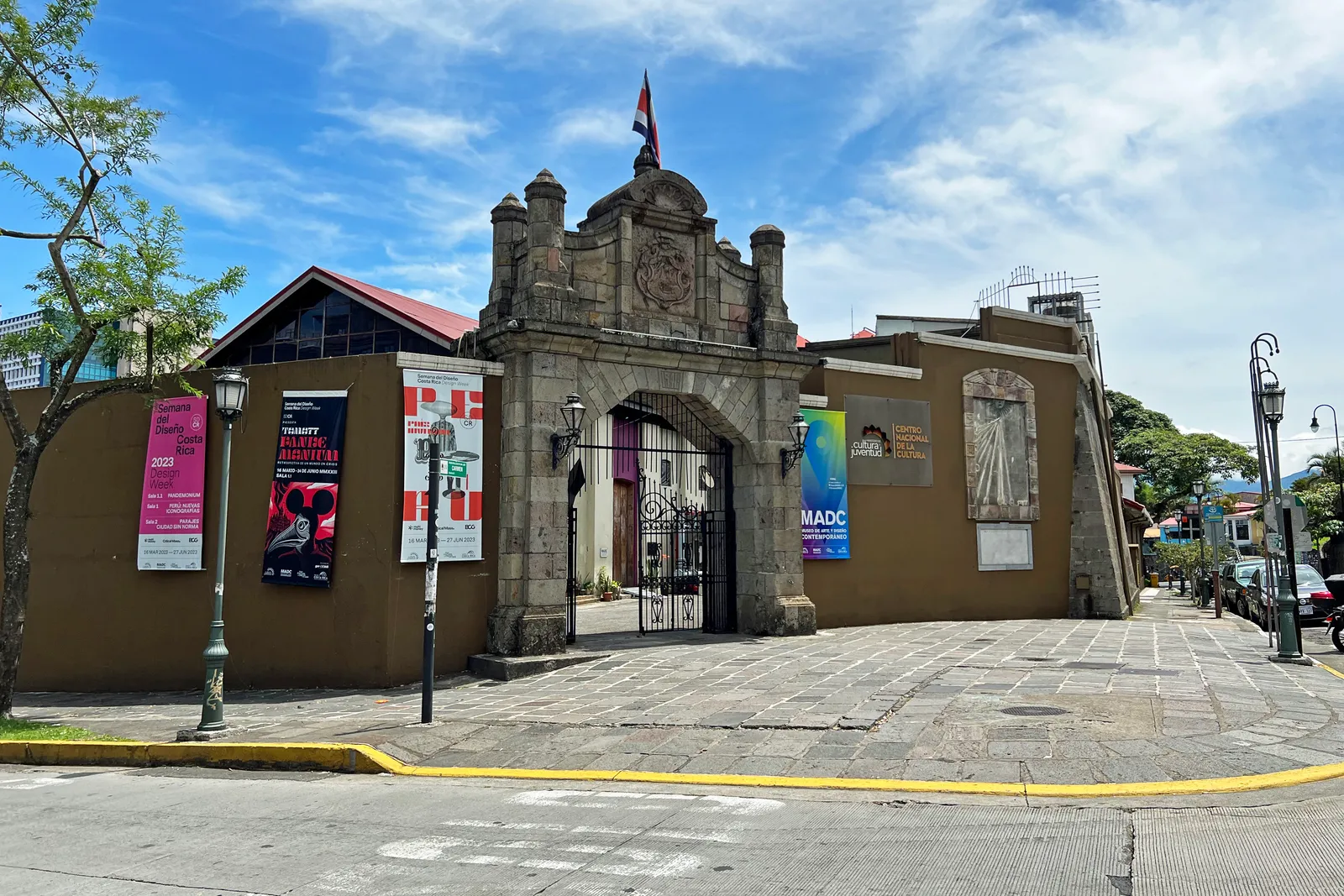
The Museo de Arte y Diseño Contemporáneo has the galleries, showing Central American work that almost nothing else in the city covers. The culture ministry lists it as open Tuesday to Saturday from half past nine until just before five, so it is a daytime stop and one to check the day for. If the free hours run to more than a few, the wider San Jose guide covers the older half of the centre, the National Theatre and the market on Avenida Central, and the bronze group in Parque Nacional two blocks west of the station gets its due in the evening walk out to Barrio Escalante.
The bus, not the train, goes out to the airport
Juan Santamaría International Airport has no rail link of its own. The line out through Heredia to Alajuela does pass a station at Río Segundo roughly a kilometre from the terminal, twelve minutes on foot, but the connection the transport ministry and the airport operator have talked about building is still a proposal, and those trains run only on weekday peaks anyway.
What works instead is the bus, from the terminal on Avenida 2 beside the Merced church at Parque de la Merced, at the far west end of the centre: TUASA in red, Station Wagon in yellow and orange, 675 colones handed to the driver, every 6 to 12 minutes from about 4am until about 10pm, and 30 to 40 minutes on the road in ordinary traffic. Allow half an hour to cross the centre to reach it, longer with a suitcase on the pavement, and remember the bus has no hold: whatever you carry rides in the aisle beside you, the same as it did on the train in.
Frequently asked questions
What should I do during a layover near Estación al Atlántico in San Jose?
Start with the station itself: Jaime Carranza Aguilar's 1908 building, opened on 15 September that year as the head of the line down to the Caribbean at Limón, listed as national architectural heritage in 1980 and back in use as a commuter terminus since 2011. A few blocks east stands the Antigua Aduana, the brick customs warehouse Minor Keith's men finished in 1891 to hold what the railway was carrying, now a cultural venue. Three blocks west, the national liquor works became the Centro Nacional de la Cultura in 1994 and holds the contemporary art and design museum. Two hours covers all three at a walk, and the two buildings are free to look at from the street.
Does the San Jose commuter train run at weekends?
No. The service is Monday to Friday and does not run on public holidays, and even on a weekday the departures cluster into the morning and evening commuter peaks, with very little moving between about nine in the morning and three in the afternoon. Arriving at Estación al Atlántico on a Saturday is not possible on the train, and a midday return to Cartago or Heredia usually is not either, which is the single thing to check before building a plan around the timetable.
What does the train from San Jose to Cartago or Heredia cost?
710 colones from Estación al Atlántico to Cartago and 550 to Heredia, paid on board, with Heredia to Alajuela charged separately at 800. Costa Rican senior citizens ride free and get priority boarding and reserved seats, which is worth knowing if you are travelling with older parents and the peak-hour carriage is full. Those are the regulated fares set by the public services authority, so they move rarely and by small amounts.
Can you reach Juan Santamaría airport by train from San Jose?
Not usefully. The line that runs out through Heredia to Alajuela passes a station at Río Segundo about a kilometre from the terminal, a walk of roughly twelve minutes, but the transport ministry and the airport operator are still at the planning stage on a proper link, and the trains that way run only on weekday peaks. The dependable route is the bus from the terminal on Avenida 2 beside the Merced church, 675 colones to the driver, 30 to 40 minutes to Juan Santamaría International Airport in ordinary traffic.