Parque La Sabana, San Jose: Lake and Art
Part of the full San Jose Layover: The National Theatre, SJO
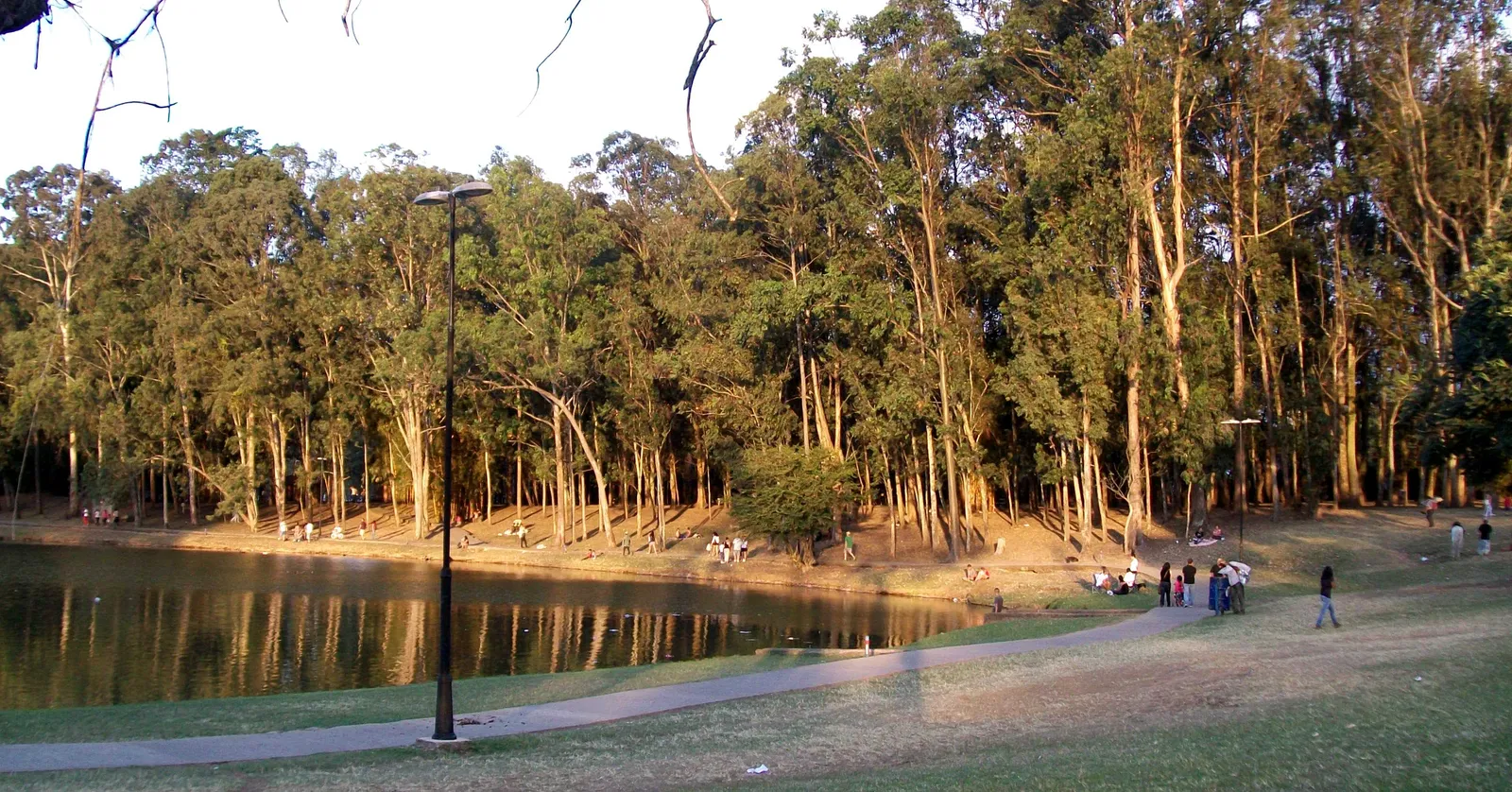
Parque La Sabana covers 72 hectares at the west end of San Jose: a lake with an island in it, Costa Rica’s first airport terminal now holding a free art museum, and the national stadium at the far corner.
An island and a waterfall in La Sabana’s lake
La Sabana was left to Costa Rica in the eighteenth century by a parish priest, Manuel Antonio Chapuí, and for a century and a half people planted it up. In 1930 the government put the country’s first international airport on it, which stopped the planting for forty years. Replanting began again in the 1960s, the lake was dug in the same works, and the ground was classified a metropolitan park in 1977 and national architectural heritage in 2001.
The lake is roughly 1,400 metres around, with an island in the middle reached by a footbridge and a waterfall between its upper and lower halves. Eucalyptus crowds the banks, some of it the rainbow-barked kind, and the grass is mown and open in a way nothing in the old centre is.
There is no gate and nothing in the park charges anything, so an early morning works as well as a late afternoon. Distance is what it does cost: the lake circuit alone is that 1,400 metres, and the park runs well past it in every direction.
Costa Rica’s first airport terminal is now its art museum
The white building with the square control tower on the east side of the park was inaugurated on 7 April 1940 as the terminal of the country’s first international airport. Flights moved out to Alajuela in the 1950s, the terminal and its tower were restored, and the Museo de Arte Costarricense opened inside them on 3 April 1978. Entry costs nothing and it runs Tuesday to Sunday, nine to four, so a Monday is the one day this stop does not work.
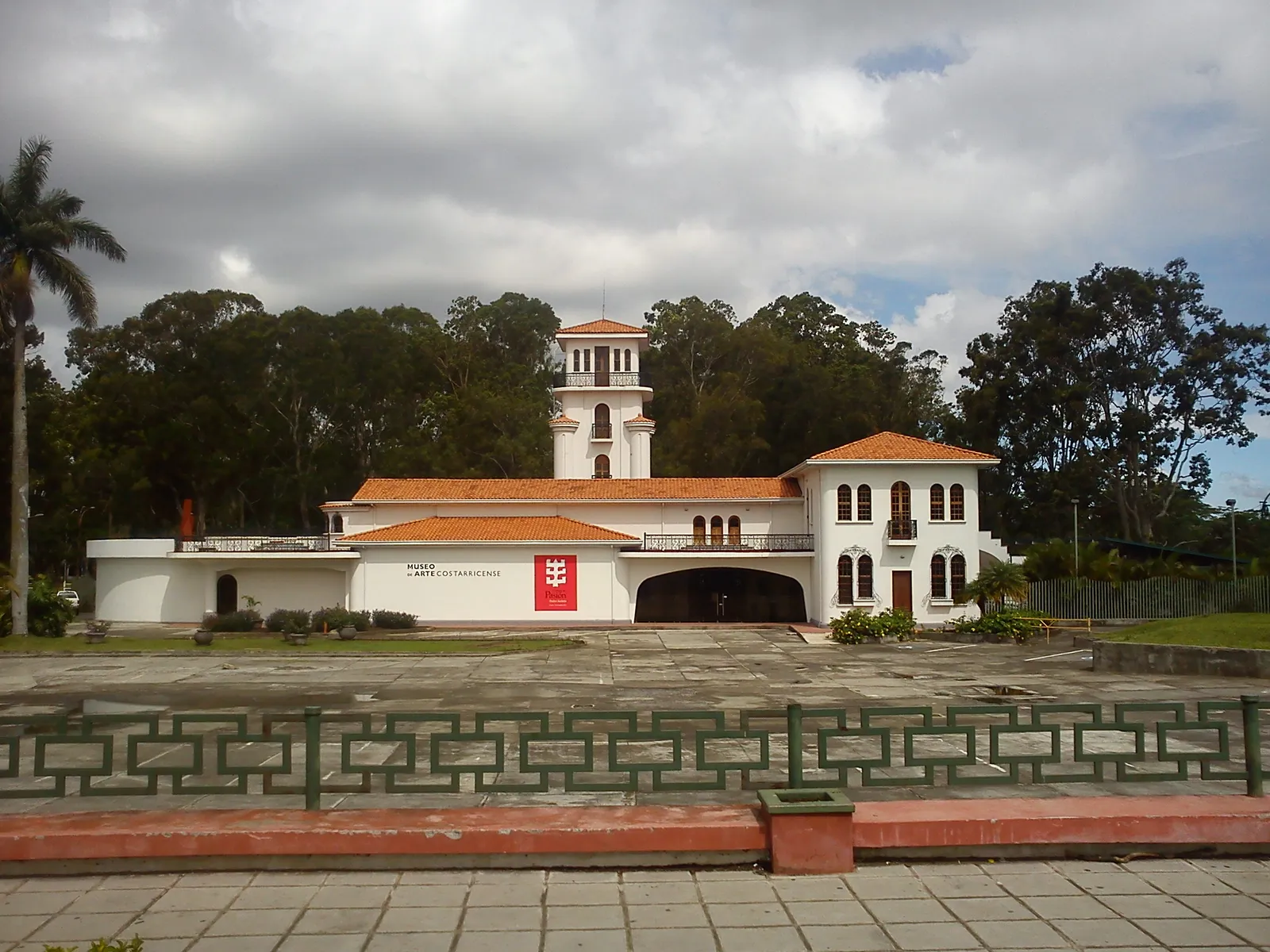
The room to find is upstairs. The Salón Dorado was the airport’s diplomatic lounge, and its four walls are one continuous relief, worked in stucco and painted the colour of bronze by the French silversmith Louis Féron between 1939 and 1940: 150 square metres running from pre-Columbian times on the west wall, through the conquest and the colony, to the year the airport opened. Féron lived in Costa Rica from 1934 to 1945 and also drew every railing and gate in the building, which is worth noticing on the way in.
China built and paid for the National Stadium
Thirty-five thousand seats sit under a curved lattice roof at the northwest corner of the park, with the mountains of the Central Valley behind the far stand. China financed the whole thing as a gift, at around a hundred million dollars, and built it with workers, materials and equipment shipped across the Pacific for the job. It opened on 26 March 2011 on the site of the stadium it replaced.
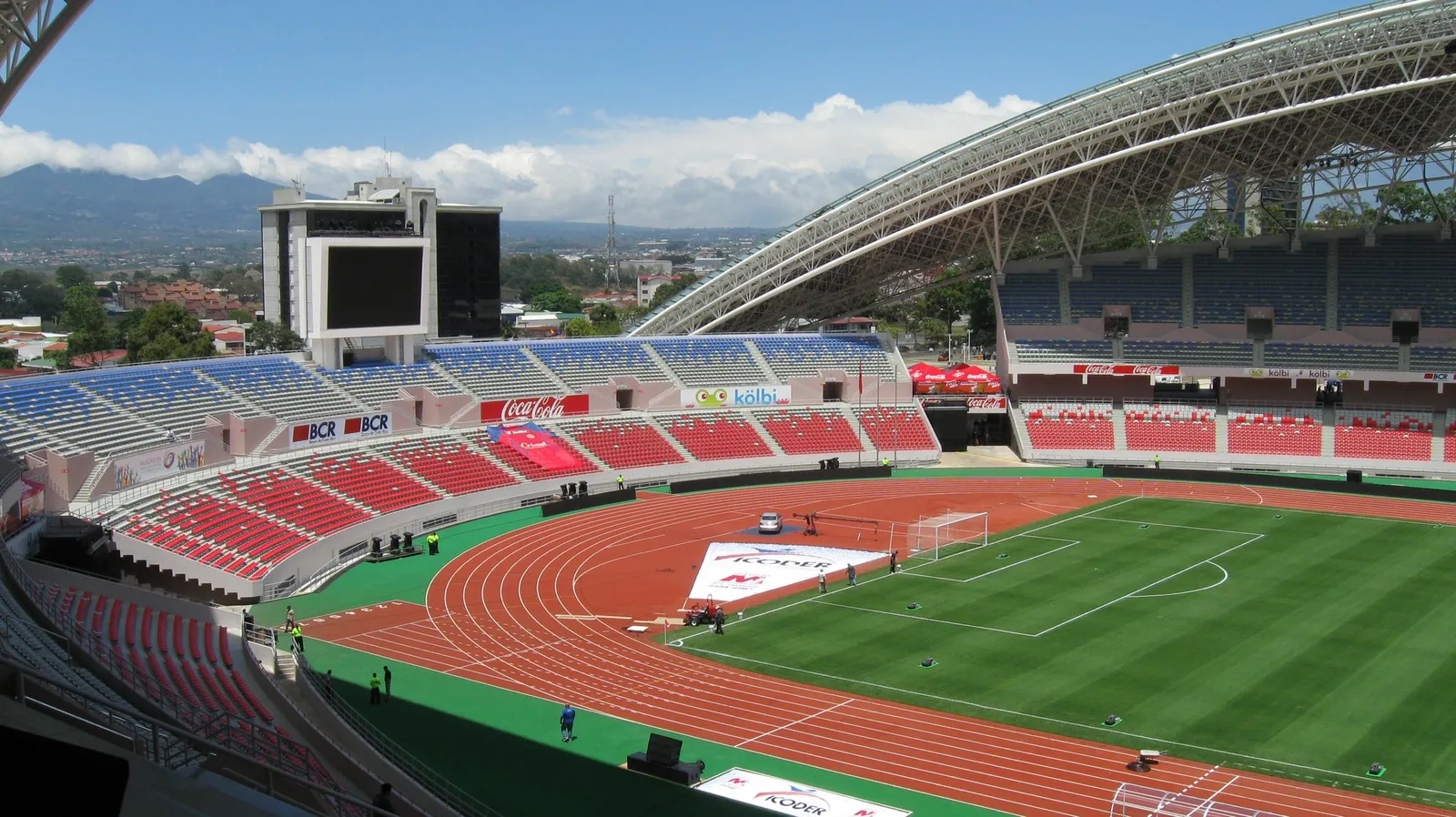
There is no general admission on a day with nothing on, so this is a building to walk round rather than go into unless a match or a concert happens to land on the right afternoon.
65,000 specimens in the La Salle natural sciences museum
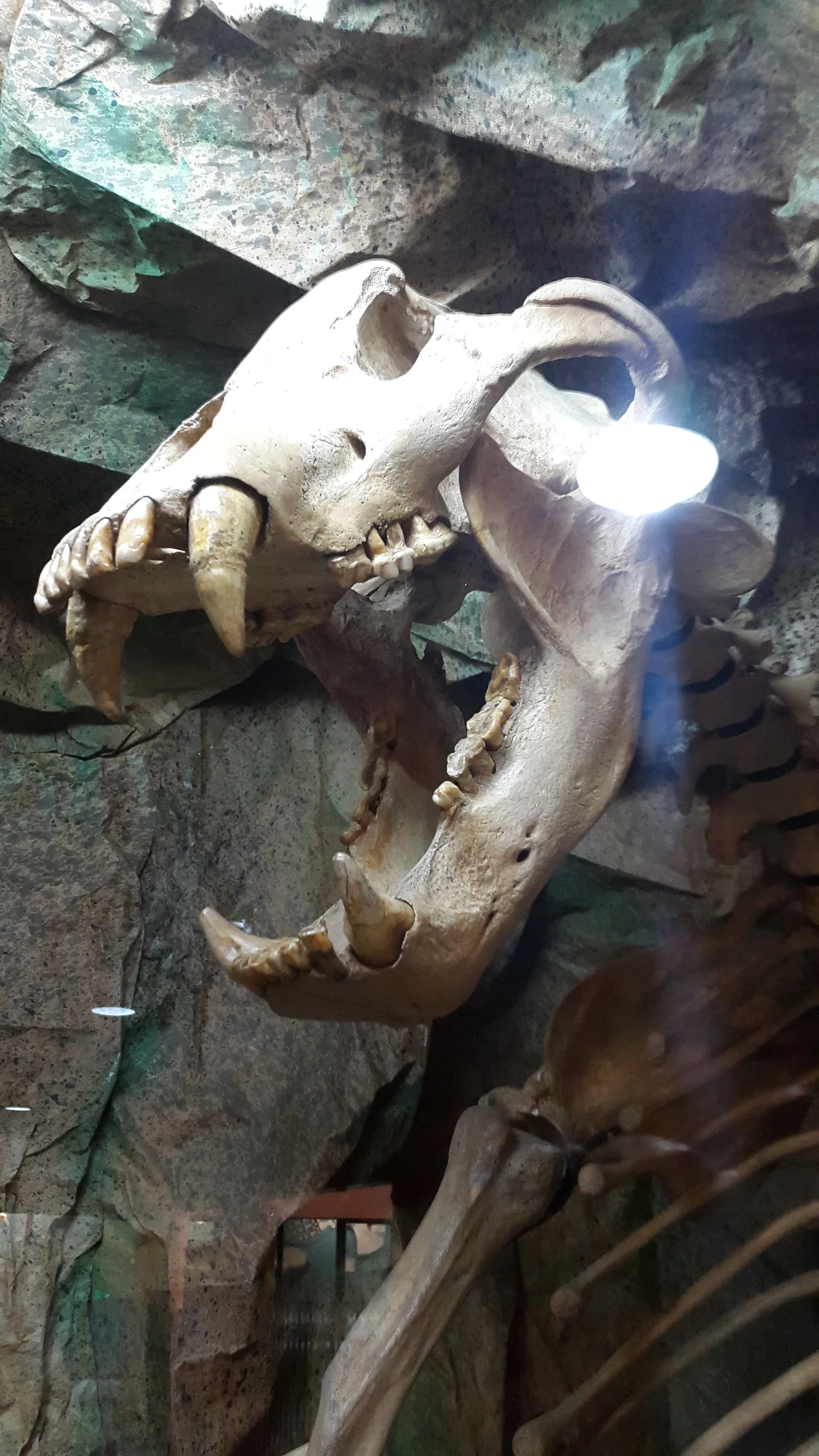
The La Salle school buildings at the edge of the park hold a natural sciences collection of more than 65,000 specimens: fossils, mounted animals, and case after case of butterflies. It runs Monday to Saturday from eight to four and Sundays and holidays from nine to five, which makes it the stop that survives a Monday when the art museum is shut.
If the day turns out to want buildings rather than grass, the old centre is the other direction entirely: the wider San Jose guide runs the National Theatre, the gold collection and the market along Avenida Central, and the museums around Plaza de la Cultura pack four of them into as many blocks.
The airport bus takes cash only, 675 colones
Paseo Colón runs east from La Sabana to the edge of downtown, about two and a half kilometres, which is half an hour walking or a few minutes on one of the city buses that work the avenue. The airport services themselves start further in, at the terminal on Avenida 2 beside the Merced church: TUASA in red buses, Station Wagon in yellow and orange ones, 675 colones handed to the driver, no cards, and little change carried on board. They leave every 6 to 12 minutes from about 4am to about 10pm, and the run out to Juan Santamaría International Airport takes 30 to 40 minutes in ordinary traffic.
Counting the trip back across town, the wait and the ride, an hour and a half from the lake to the terminal door is the realistic figure. The buses have no hold underneath either, so a suitcase stands in the aisle for that last leg, having already been wheeled across several kilometres of open park.
Frequently asked questions
What should I do during a layover near Parque Metropolitano La Sabana in San Jose?
Walk the lake first: roughly 1,400 metres around, with an island in the middle reached by a footbridge and a waterfall between its upper and lower halves. The building with the control tower on the park's east side is Costa Rica's first airport terminal, opened in 1940 and now the national art museum, which charges nothing to go in, and the old diplomatic lounge upstairs is covered wall to wall in a bronze-coloured relief of the country's history. The National Stadium, a Chinese gift finished in 2011, stands at the northwest corner. Three hours is enough for the lake and the museum; the one thing to check is the day, since the museum closes on Mondays.
Does the art museum at Parque La Sabana charge admission?
No. The Museo de Arte Costarricense has been free to enter for years, and it opens Tuesday to Sunday, nine to four, closed Mondays. That covers the permanent collection of Costa Rican painting and sculpture, the sculpture garden behind the building, and the Salón Dorado upstairs, the old airport's diplomatic lounge, whose four walls carry a 150-square-metre stucco relief of Costa Rican history painted the colour of bronze.
Is Parque La Sabana a good stop with kids?
Better than the centre, on the whole: 72 hectares of open grass, a lake to walk around and no traffic inside the park. The La Salle natural sciences museum, in the school buildings at the edge of the park, holds more than 65,000 specimens including fossils, mounted animals and cases of butterflies, and it opens Monday to Saturday from eight to four and Sundays and holidays from nine to five, so it is the one museum here that does not shut on a Monday. Nothing in the park needs a ticket.
How do you get from Parque La Sabana back to Juan Santamaría airport?
Back east into the centre first: Paseo Colón runs from the park's east side to the edge of downtown, about two and a half kilometres, half an hour on foot or a few minutes on one of the city buses that work the avenue for a few hundred colones. The airport buses themselves leave from the terminal on Avenida 2 beside the Merced church, at Parque de la Merced, 675 colones to the driver, every 6 to 12 minutes from about 4am to about 10pm. The ride to Juan Santamaría International Airport is 30 to 40 minutes in ordinary traffic.