San Jose Layover: The National Theatre, SJO
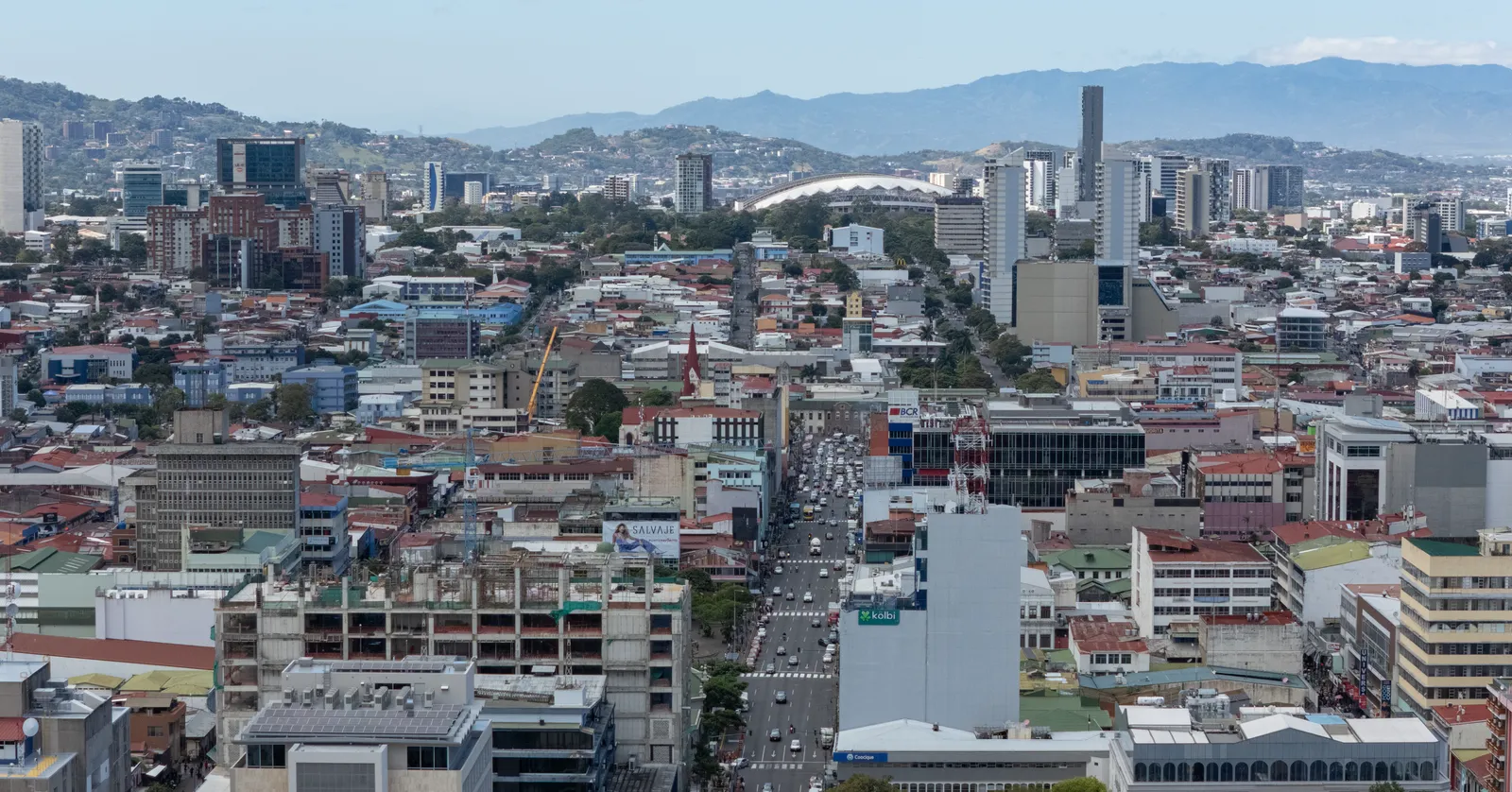
San Jose lines up its National Theatre, a gold collection dug in under the square beside it, a covered market trading since 1880 and a fortress still pockmarked from a civil war within about a kilometre of each other on Avenida Central.
A tax on coffee exports paid for the National Theatre
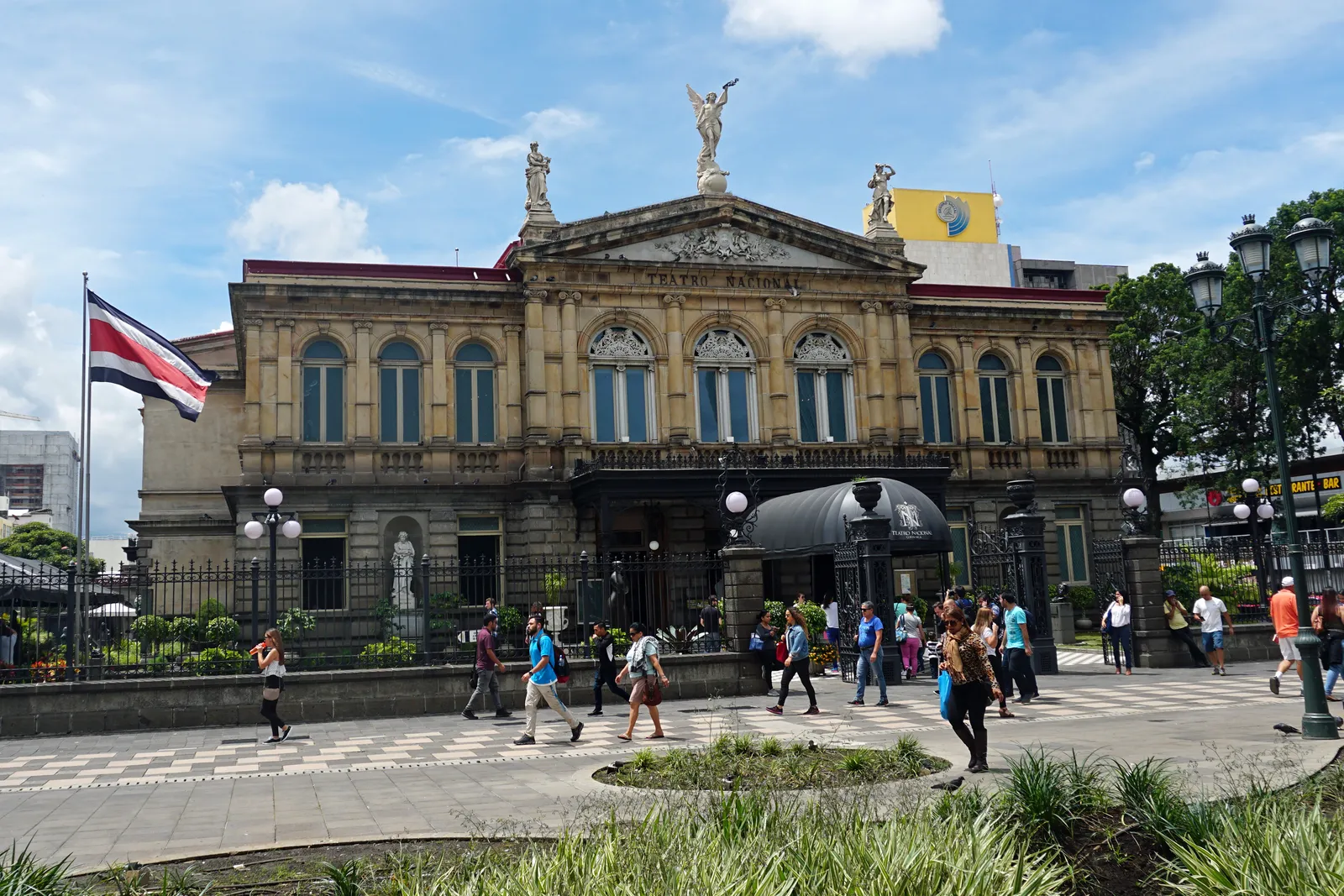
The National Theatre opened on 21 October 1897 with a performance of Goethe’s Faust, on Avenida 2 between Calles 3 and 5, filling the south side of Plaza de la Cultura. Building it took seven years and a levy President José Joaquín Rodríguez put on coffee exports, until a planter lobbied successfully to shift the tax onto rice and beans instead. The auditorium holds 1,140 people.
In the foyer, a ceiling fresco titled Alegoría del café y el banano, the Allegory of Coffee and Bananas, is the reason most people buy the tour. The Milanese artist Aleardo Villa painted it in Italy, it was shipped over in sections, and it was later reproduced on the five-colón note, which is long out of circulation.
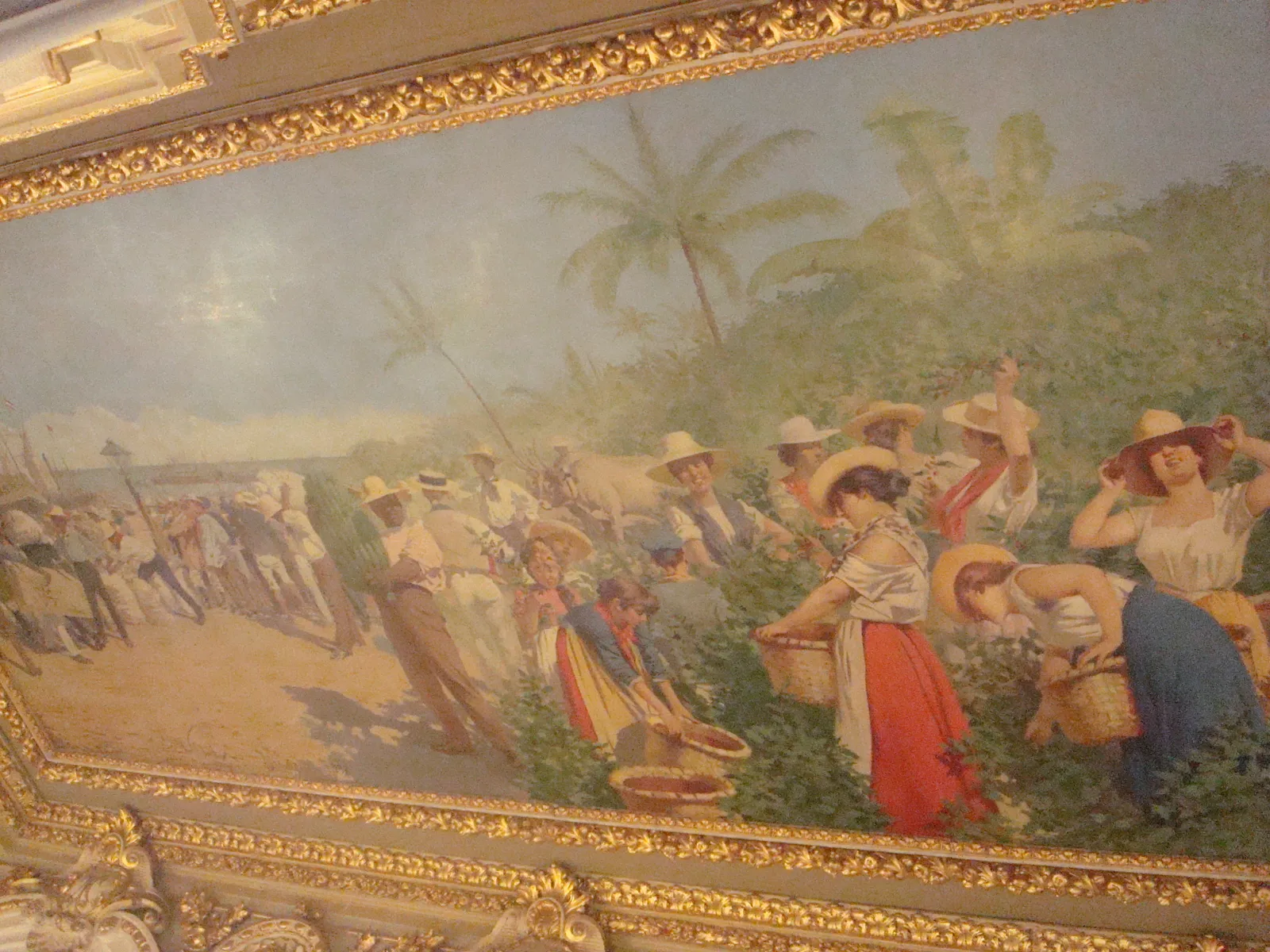
The man in the middle of it has both arms around a banana stem like a bundle of firewood, which is not how anyone who has cut bananas carries one. Guided tours in Spanish and English leave on the hour, Tuesday to Sunday, from nine in the morning until four in the afternoon. Foreign visitors pay 3,500 colones, under-twelves of any nationality pay nothing, and a guide takes no more than fifteen people at a time.
The gold museum beneath Plaza de la Cultura
The Central Bank of Costa Rica opened this collection under Plaza de la Cultura in 1985, and it runs to 3,567 pre-Columbian pieces, 1,586 of them gold, worked between roughly 300 BC and 1550 AD: frogs, crabs, eagles with their wings spread flat, shamans in gold headdresses. Nothing above ground gives it away; the square is flat paving and people cutting across it. The same ticket takes you into the coin museum on the level above, so the price covers two collections rather than one. Foreign adults pay 8,400 colones, and it opens every day at 9.15am, which makes it the reliable stop on a Monday when the National Museum is shut.
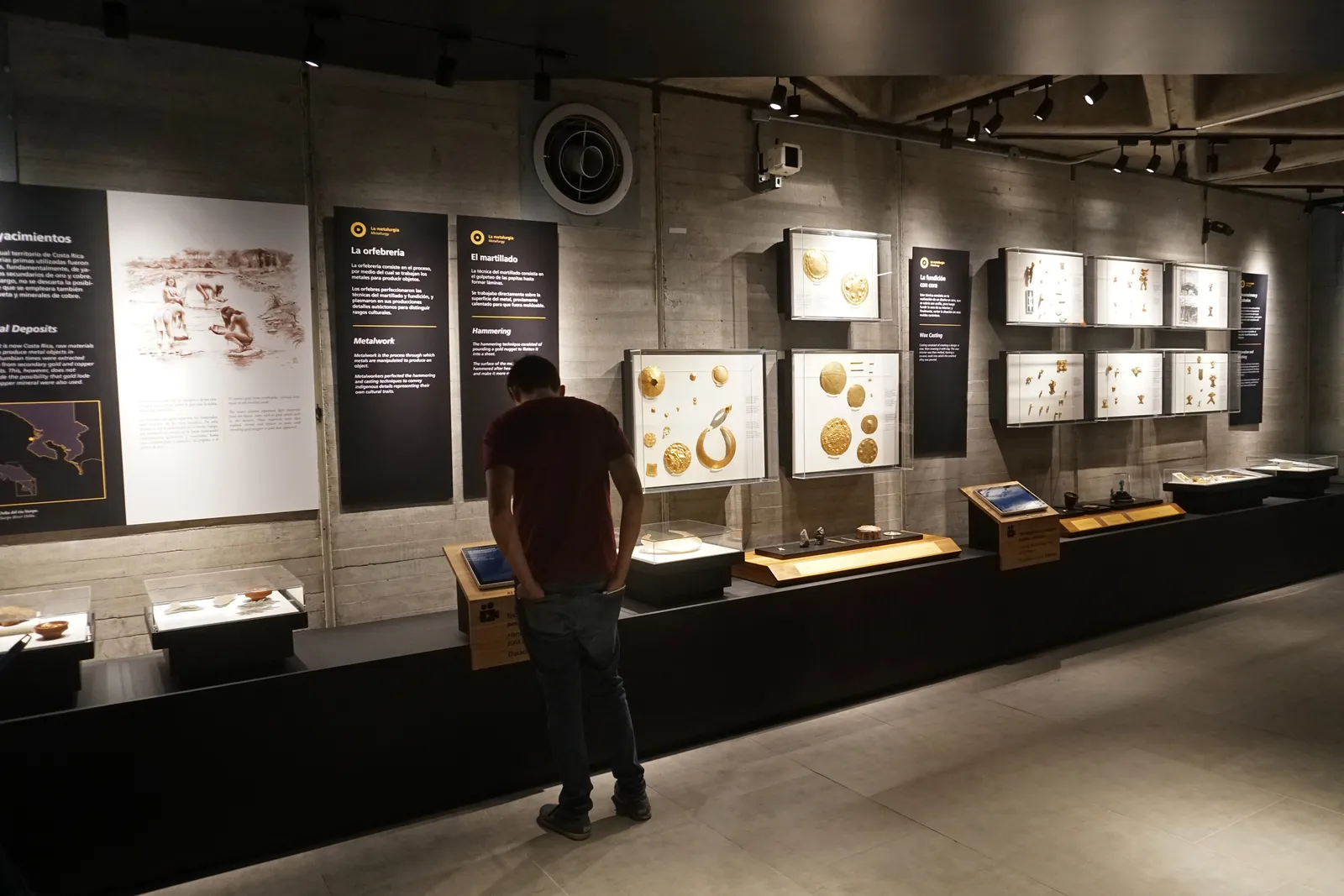
Security at the entrance is what you would expect of a building full of gold: bags go through a scanner, and anything larger gets left in the small locker room by the door, which is built for daypacks rather than suitcases.
Bullet holes on the National Museum’s yellow walls
Cuartel Bellavista went up in 1917 as barracks, on the rise above Plaza de la Democracia at Calle 17, and its walls still carry the pockmarks from the fighting of the 1948 civil war. On 1 December that year, with the war over, José Figueres took a sledgehammer to one of those walls in front of a crowd and handed the building over to be a museum, the gesture that stood for abolishing the army. The constitution made it permanent the following year, and Article 12 has said so ever since. The museum moved in during 1950 and never left.
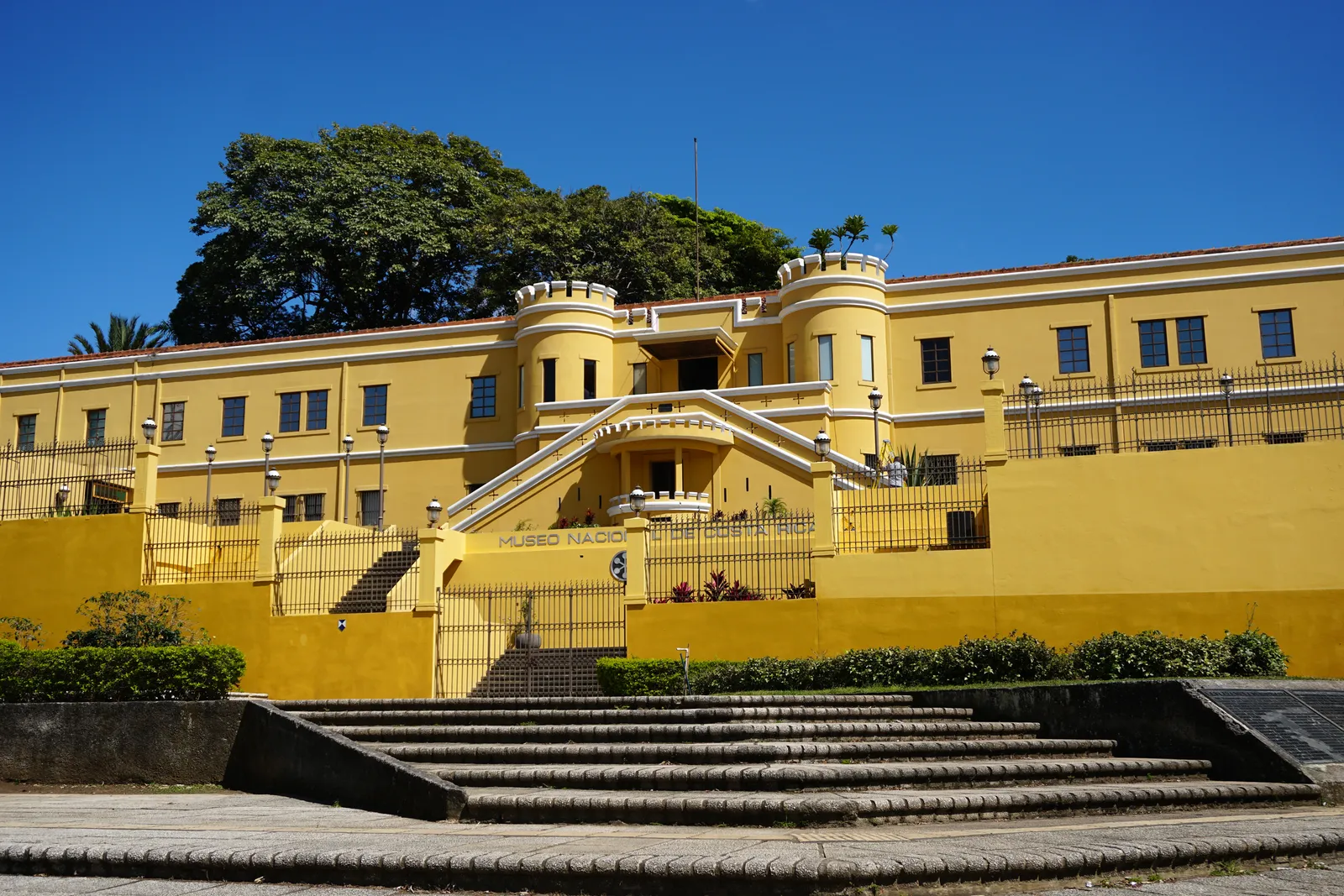
You go in through a glassed-over atrium that has been planted as a butterfly garden, which is a strange and rather good way to enter a fort. Inside are pre-Columbian stone spheres, colonial rooms and the political history that ends at the wall outside. Foreign adults pay about nine dollars, students with a card about four, and it opens Tuesday to Sunday and closes on Mondays, which is worth knowing before you build a Monday around it.
The covered market on Avenida Central, trading since 1880
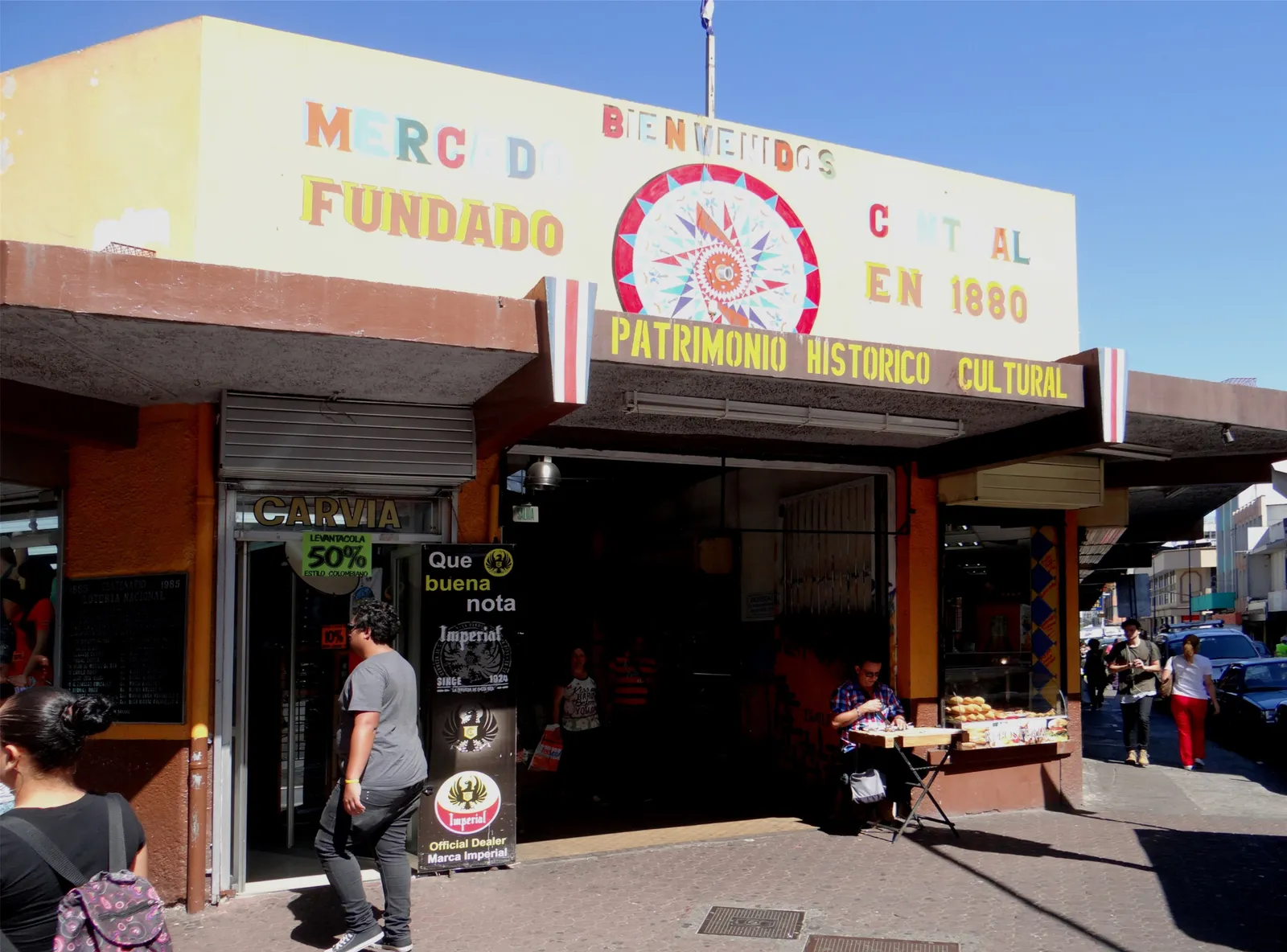
Something over 200 stalls are packed into the Mercado Central, which fills a full block of Avenida Central between Calles 6 and 8, in aisles narrow enough that two people with shopping have to negotiate: fish on ice, cut flowers, sacks of coffee, herbal remedies, leather saddles and snakeskin boots. Wedged between them are sodas, the counter-service kitchens that are the standard cheap lunch across Costa Rica, where a plate of rice, beans, plantain and meat costs a fraction of what the same thing does two streets away. It opens at six in the morning, Monday to Saturday, and starts shutting up in the late afternoon; Sundays it is closed altogether.
The central post office, on Calle 2 between Avenidas 1 and 3, keeps a stamp museum upstairs that most people walking past have no idea is there. Three rooms of it: Costa Rica’s first postal issue from 1863, world stamps sent in through the Universal Postal Union, and cases of antique telegraph keys and telephones. Admission is 775 colones, the price of a postcard, and a postcard is what you get for it, blank and ready to send anywhere. It runs weekdays only, eight to twelve and one to four, so it is a weekday-afternoon detour rather than a fixture of the day.
The Metallic Building was shipped from Belgium in pieces
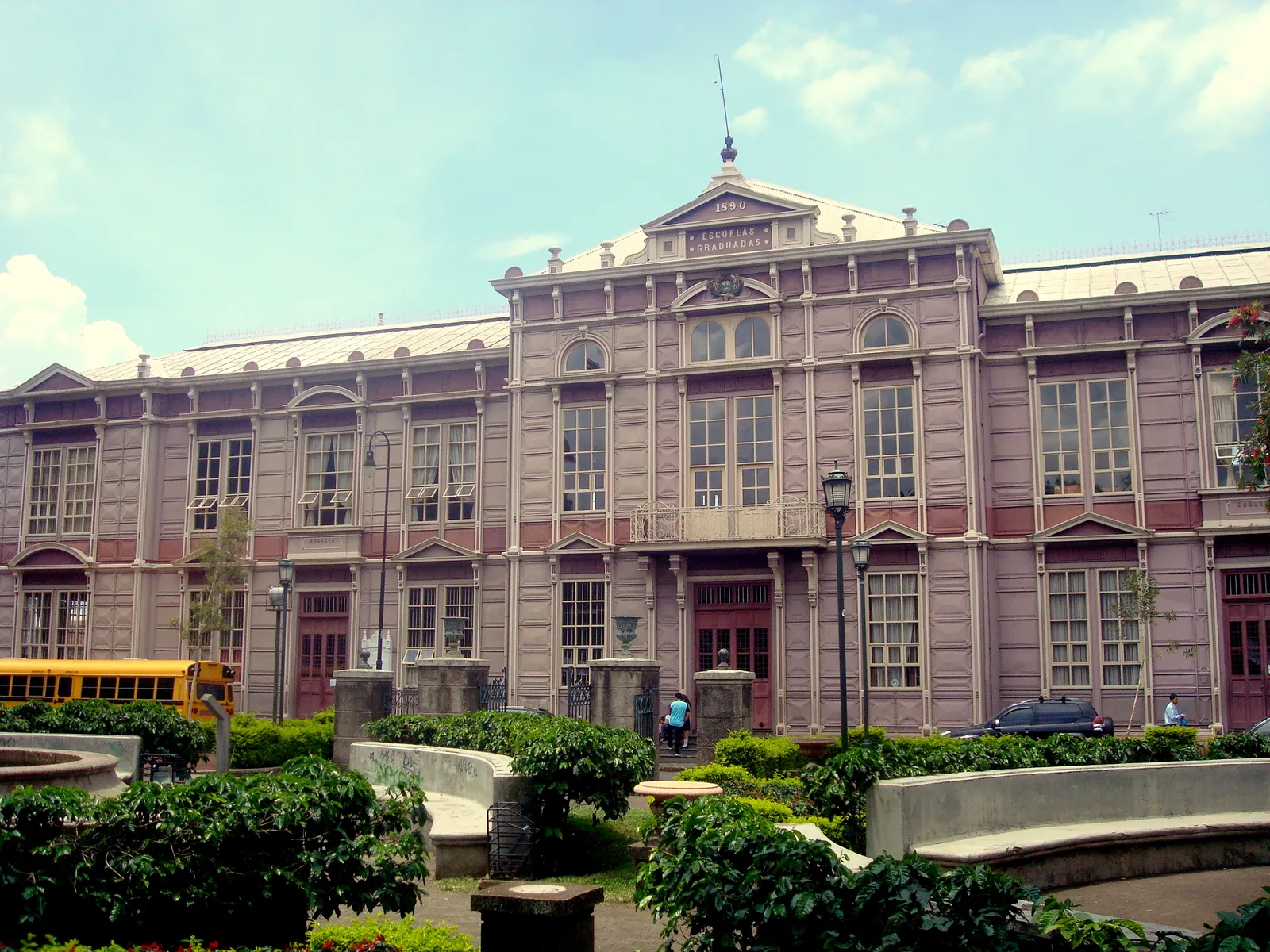
Facing Parque Morazán, at the top of the centre where Avenida 5 runs between that park and Parque España, stands a two-storey school made entirely of wrought iron. The Belgian architect Charles Thirion designed it, it was manufactured in Belgium, and it crossed the Atlantic in crates to be bolted together here and inaugurated in 1896. It has been a school the whole time since, and the Escuela Buenaventura Corrales still has children in it on weekday mornings, which is the part people find hardest to believe about it.
This corner is where the last hour goes if you have more than four hours before your flight. Parque España next door is small, dense with old trees and several degrees cooler than the street. On its northeast corner is the Casa Amarilla, a yellow mansion built in 1910 with money Andrew Carnegie gave for the Central American Court of Justice, a national monument since 1976 and now the foreign ministry, so it is a building to look at from the pavement rather than go into.
The bus back to the airport costs about a dollar
Two companies work the route out to Juan Santamaría International Airport and both leave from the same place: the terminal on Avenida 2 beside the Merced church, at Parque de la Merced, at the west end of the centre. TUASA runs the red buses, Station Wagon the yellow and orange ones, and the fare either way is 675 colones handed to the driver. Bring small notes, because drivers carry little change. Departures go every 6 to 12 minutes, dropping to every 4 in the morning and evening peaks, from about 4am to about 10pm.
The ride itself is 30 to 40 minutes in normal traffic and longer through the evening rush. Add the walk to the terminal and the wait for a departure and an hour door to door is the honest figure to budget, then whatever your airline wants on top for check-in. These are ordinary city buses with no hold underneath, so a full-size suitcase spends the trip in the aisle next to you. If the next leg connects through Miami, the Miami layover guide covers a downtown loop built around the same kind of gap.
That aisle is the argument for the whole hands-free version of this day. The theatre tour, the locker room at the gold museum, the market aisles and the bus seat back out all get easier in the same way, which is by not having the suitcase there in the first place.
Frequently asked questions
What should I do during a layover in San Jose?
Four things sit within about a kilometre of each other on and just off Avenida Central: the National Theatre on Plaza de la Cultura, the pre-Columbian gold collection dug in underneath that same square, the old Bellavista barracks that now hold the National Museum, and the covered market that has been trading on Avenida Central since 1880. Four hours covers the theatre tour and one of the two museums with the market on the way; six covers all of it plus the Metallic Building and the parks at the north edge of the centre. The theatre is the one worth checking a clock against, since guided tours run only until four in the afternoon. Everything outdoors, the boulevard, the parks, the market floor, costs nothing, so a tight visit can drop the paid stops without losing the shape of the day.
Which sights in central San Jose are closed on which days?
The National Museum shuts on Mondays, which is the closure most likely to break a plan, since it is the one building here that carries the 1948 civil war on its walls. The Mercado Central works the opposite week: Monday to Saturday from six in the morning until the late afternoon, closed on Sundays, with longer December hours some years. The gold museum under Plaza de la Cultura opens every day of the week from 9.15am, and the National Theatre runs its guided tours Tuesday to Sunday. The stamp museum inside the central post office is weekdays only, and it shuts for an hour at midday.
Can a San Jose layover be done without spending much?
The walking half of it is free outright. Avenida Central is a pedestrian boulevard through the middle of the centre, Plaza de la Cultura, Plaza de la Democracia, Parque Morazán and Parque España cost nothing to sit in, the Metallic Building is looked at from the street, and nobody charges to walk the aisles of the Mercado Central or eat at one of its counters. The paid stops are the three interiors: 3,500 colones for the National Theatre tour, 8,400 for the gold and coin museums on one ticket, and about nine dollars for the National Museum. The bus each way is 675 colones, so the cheapest version of this day comes to under 1,500 colones in fares and nothing else.
Which bus goes back to Juan Santamaría airport, and where does it leave from?
Two companies run it, TUASA in red buses and Station Wagon in yellow and orange ones, and both use the terminal on Avenida 2 on the north side of the Merced church, by Parque de la Merced at the west end of the centre. The fare toward Juan Santamaría International Airport is 675 colones, paid to the driver in colones, and drivers rarely carry much change, so break a note before you get on. Departures run every 6 to 12 minutes, as often as every 4 minutes in the morning and evening peaks, from around 4am until about 10pm. The ride is 30 to 40 minutes in ordinary traffic and noticeably longer through the evening rush.
When is Avenida Central at its busiest?
Around 5pm, when offices in the centre empty onto the boulevard and it fills with people meeting friends, eating and listening to whoever is playing that evening. The pedestrianised stretch runs about eight blocks, from Calle 6 up to Calle 9, and there are more than 200 shops and counters along it, so late afternoon is the liveliest hour on the street and the slowest one to cross it with anything on wheels. The market a block west keeps its own rhythm and starts winding down while the boulevard is still filling up.