Mercado Central, San Jose: A Market Layover
Part of the full San Jose Layover: The National Theatre, SJO
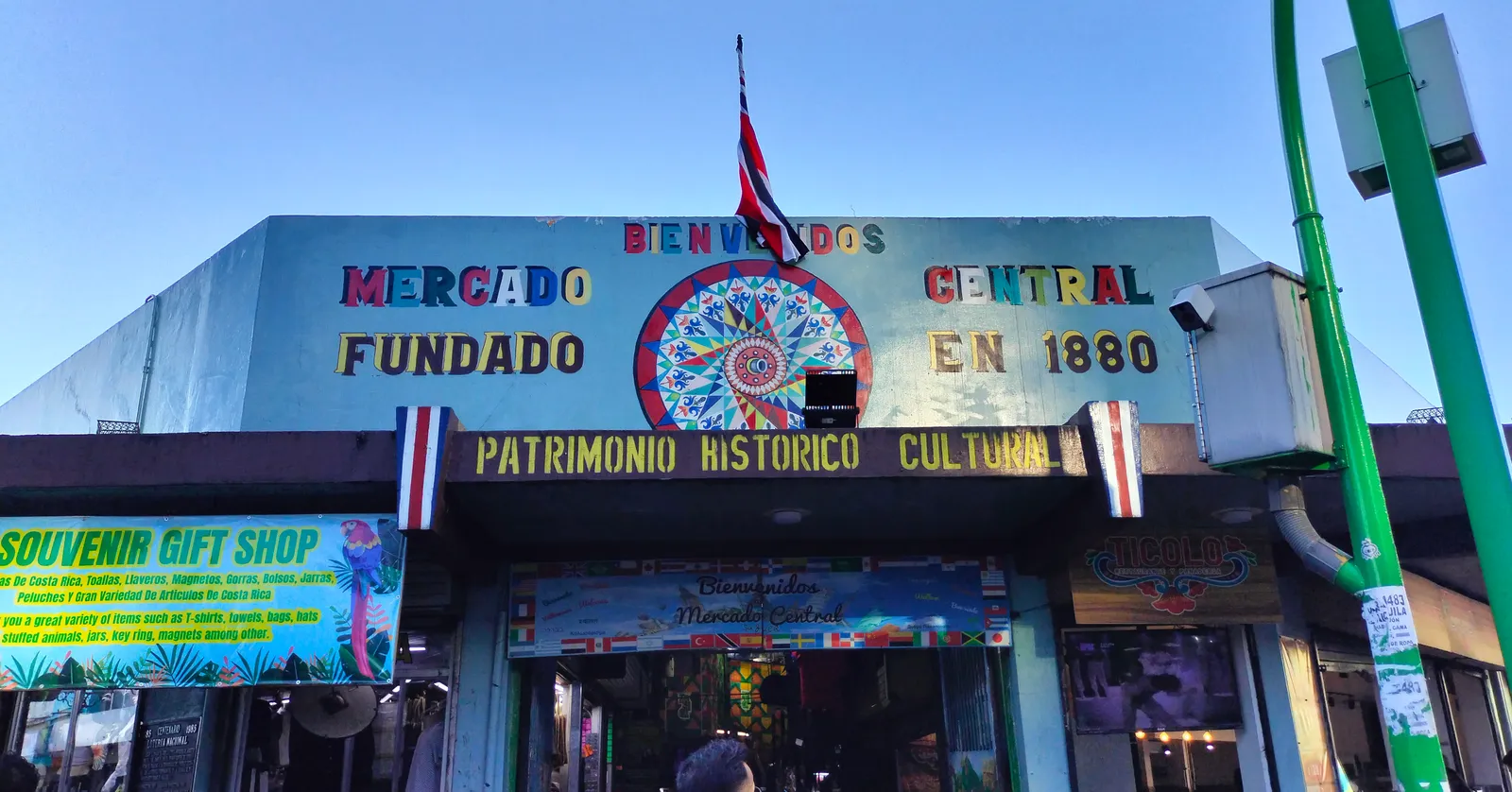
San Jose’s Mercado Central has filled a block of Avenida Central since 1880: over 200 stalls in covered aisles, with the 1917 central post office a few streets east and a car-free stretch of the avenue running between them.
Over 200 stalls under the Mercado Central’s tin roof
The Mercado Central takes up the whole block between Calles 6 and 8, under one roof, and it has been the city’s main place to buy food since 1880. Costa Rica put it on the list of cultural heritage on 26 June 1995, which in practice has meant the building stays as it is rather than being tidied into something smarter. What is sold in it has barely narrowed: fish on ice, cut flowers, sacks of coffee, herbal remedies sold by people who will ask what is wrong with you first, leather saddles and snakeskin boots.
The aisles between the stalls are the reason to come rather than an obstacle to the shopping. They are tiled, roofed in corrugated sheet, hung with cables and the occasional clock, and lined on both sides with counters trading at once.
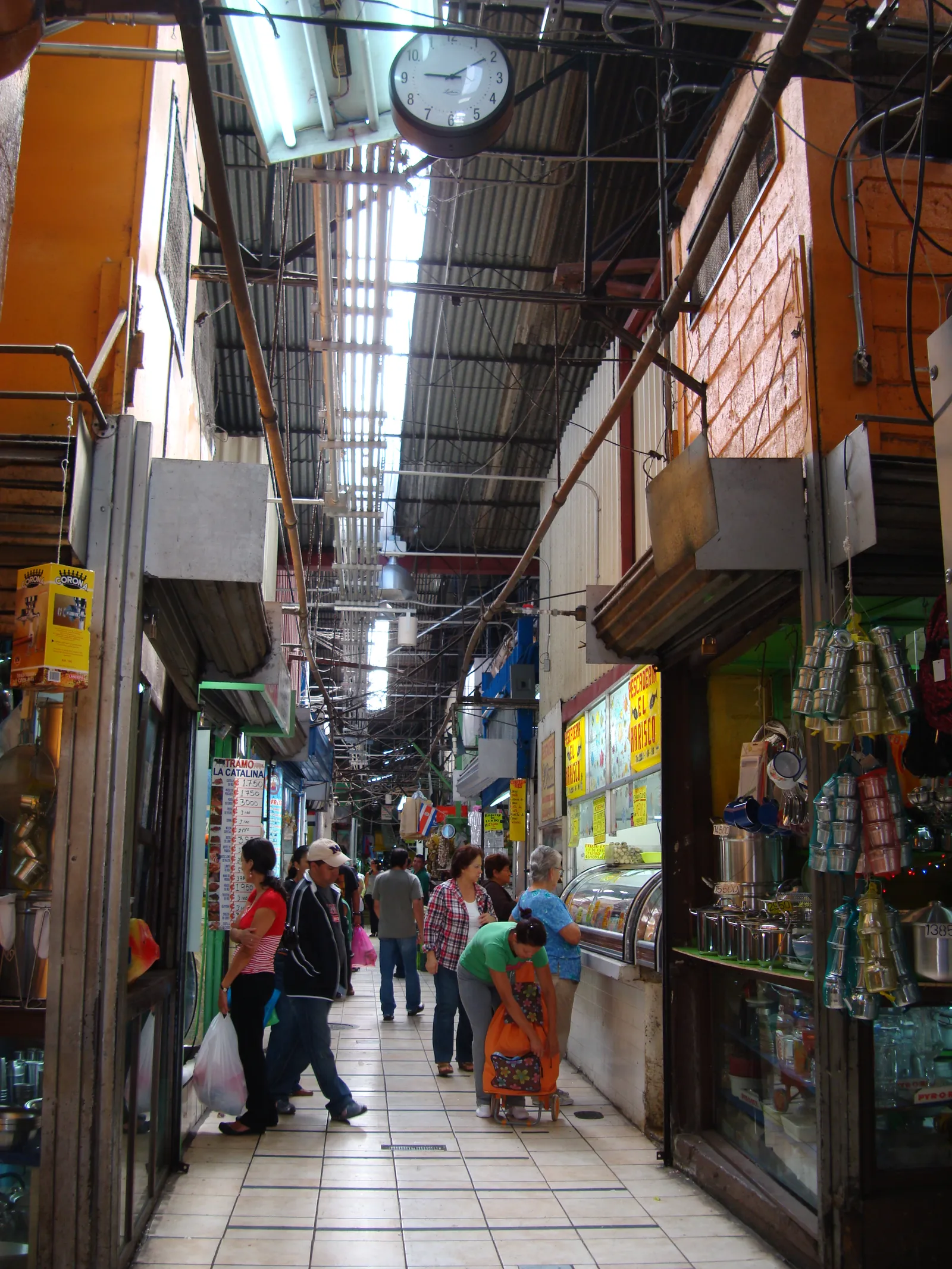
Wedged along them are the sodas, counter-service kitchens serving the casado that is the standard cheap lunch across the country, and La Sorbetera de Lolo Mora, an ice cream counter that has sold one recipe and only one since 1901: a vanilla with cinnamon and clove in it, churned in a hand-cranked drum, still run by the founder’s descendants. The market opens at six in the morning, Monday to Saturday, and starts shutting up in the late afternoon; Sundays it does not open at all. About 20,000 people come through on an ordinary day, along aisles sized for one person and a basket.
The 1917 central post office on Calle 2
Costa Rica gave the job of housing its post and telegraph offices to the Catalan architect Luis Llach Llagostera, who had arrived in the country in 1910, and an English contractor built his design in reinforced concrete between 1914 and October 1917. What went up on Calle 2 is neo-Renaissance with French leanings: a central block, matching pavilions either side, and turrets under mansard roofs at the corners.
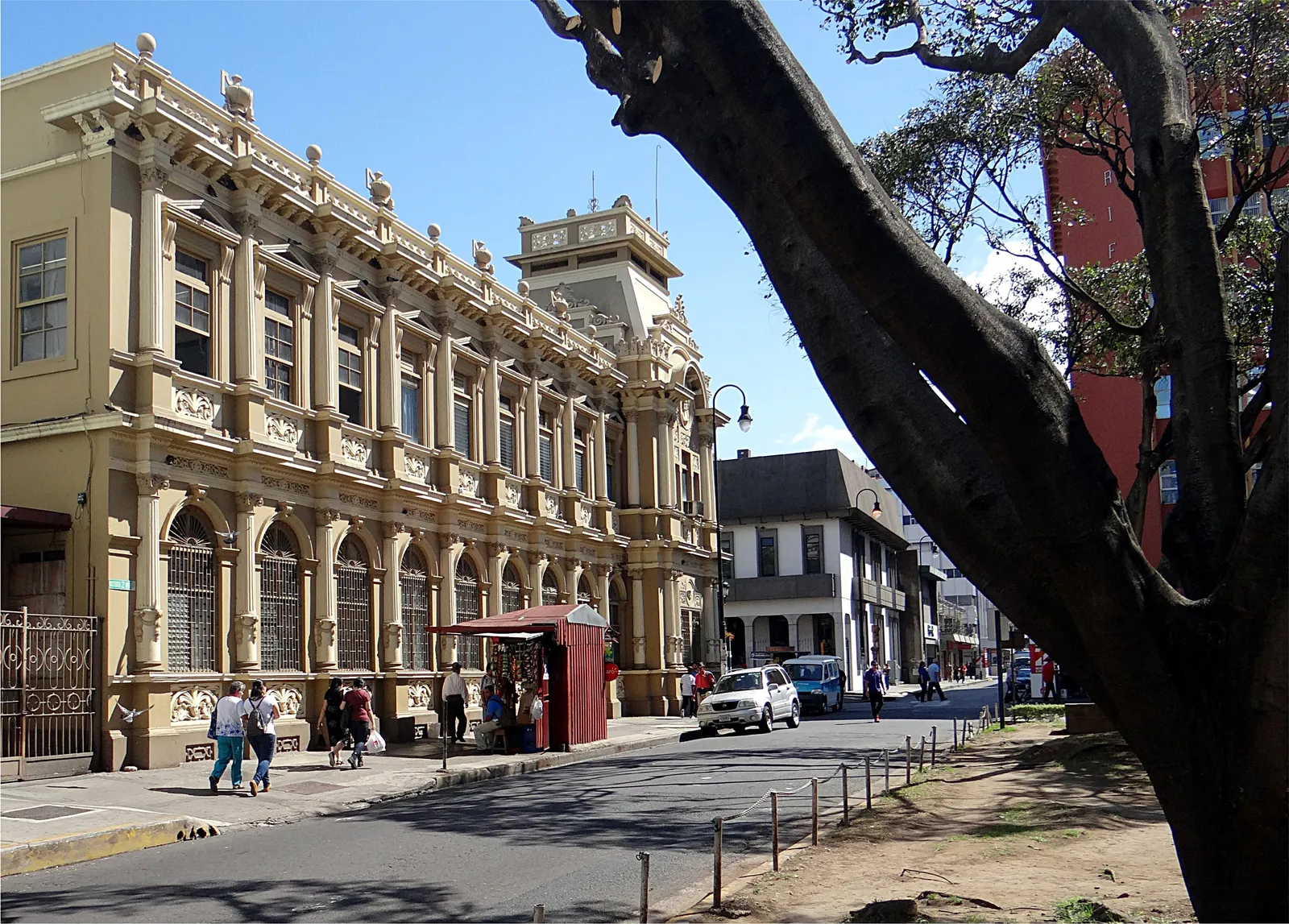
It was listed as a building of historic architectural value in 1980 and still works as a post office, which is the part worth knowing: you can walk into a functioning 1917 hall rather than a preserved one. The stamp museum upstairs opened in 1985 and costs 775 colones, and the ticket comes with a blank postcard you can send from the counter downstairs. Weekdays only, eight to twelve and one to four.
Avenida Central lost its cars in the mid-1990s
The shopkeepers along it fought the plan hard, on the grounds that nobody would drive in to shop if there was nowhere to drive to. About eight blocks of the avenue run east from the Mercado Central with no traffic on them at all, the boulevard opened regardless, and the trade on it has grown since: something over 200 shops and counters face the paving now.
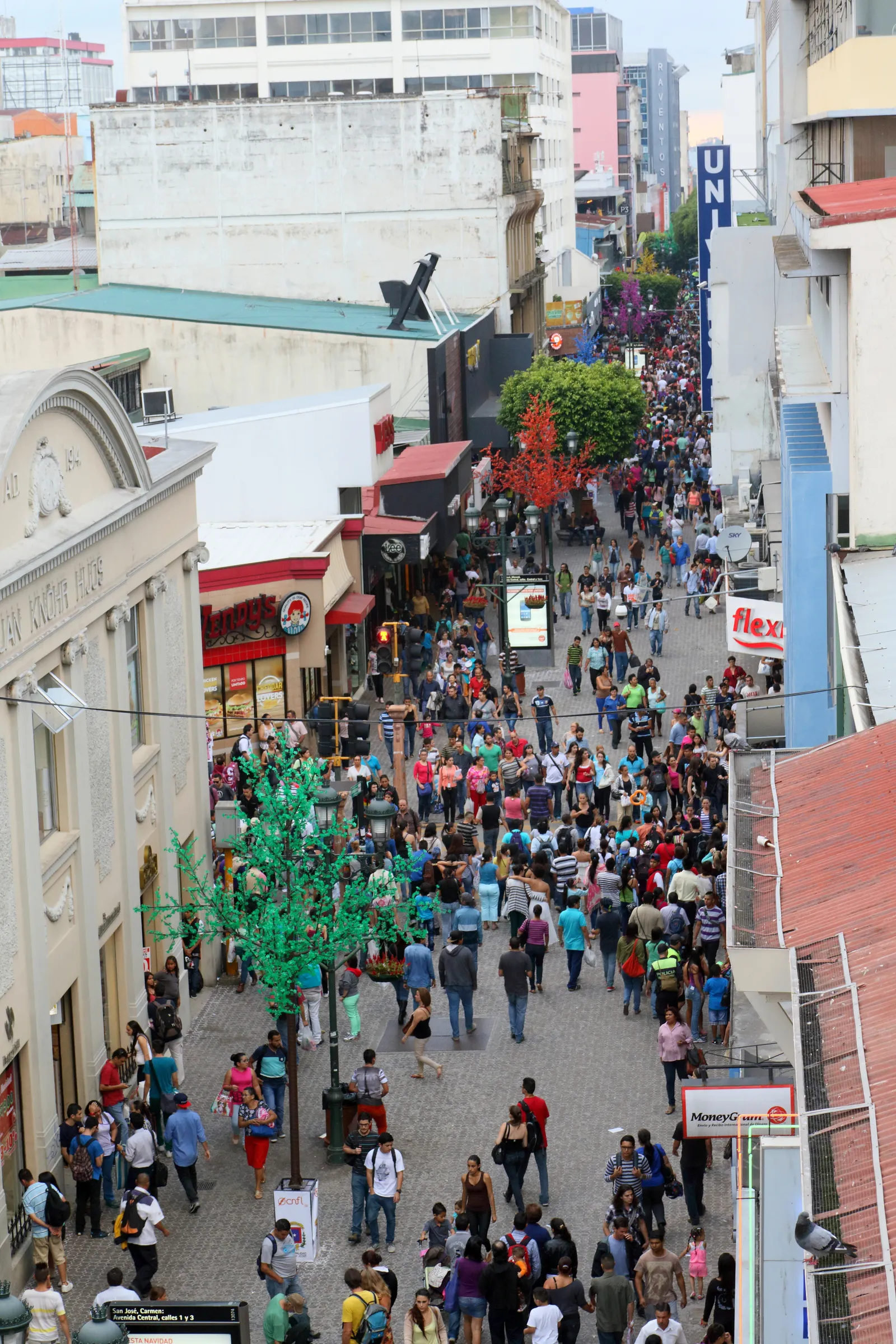
Around five in the afternoon the offices empty onto it and the paving fills with people meeting friends, eating, and standing around whoever is playing that evening. If there is time to keep walking east, the avenue reaches Plaza de la Cultura in a few minutes, where the museums under and around that square make a different kind of afternoon, and the wider San Jose guide strings both ends of the centre together with the National Theatre and the old barracks.
Every airport bus leaves from Parque de la Merced
The terminal for Juan Santamaría International Airport is on Avenida 2 beside the Merced church, at Parque de la Merced, a few streets west of the Mercado Central. TUASA runs the red buses and Station Wagon the yellow and orange ones, both from that terminal, and the fare either way is 675 colones handed to the driver in cash. Departures go every 6 to 12 minutes, dropping to every 4 in the morning and evening peaks, from about 4am until about 10pm.
Allow 30 to 40 minutes for the ride in ordinary traffic and more through the evening rush, and closer to an hour from the market door once the walk and the wait are counted. These are ordinary city buses with no hold underneath, so a suitcase spends the trip standing in the aisle beside you.
Frequently asked questions
What should I do during a layover near the Mercado Central in San Jose?
Walk the market's aisles first: over 200 stalls between Calles 6 and 8, trading since 1880, with fish, flowers, coffee, saddles and herbal remedies, and counter-service kitchens called sodas wedged between them. Eat at one of those counters, and stop at the ice cream stand that has sold the same single flavour since 1901. Then the 1917 post office building on Calle 2, whose stamp museum upstairs costs less than a coffee, and the car-free stretch of Avenida Central that runs east from the market block. Two hours covers all of it; the one thing to check is the day, since the market closes on Sundays and the stamp museum runs weekdays only.
What is worth eating inside the Mercado Central?
A casado at one of the sodas, the counter-service kitchens that are the standard cheap lunch across Costa Rica: rice, beans, fried plantain, salad and a piece of meat or fish on one plate, for a fraction of what the same thing costs two streets away. For afterwards, La Sorbetera de Lolo Mora has been churning one flavour of ice cream in the market since 1901, a vanilla carrying cinnamon and clove, made in a hand-cranked drum. The family running the counter are descendants of the man who started it.
Does the stamp museum in the San Jose post office charge admission?
775 colones, the price of a postcard, and a blank postcard is what the ticket gets you. It sits upstairs in the 1917 post office building on Calle 2 and has been there since 1985: three rooms holding Costa Rica's first postal issue from 1863, world stamps that arrived through the Universal Postal Union, and cases of antique telegraph keys and telephones. It opens weekdays only, eight to twelve and one to four, so it is a weekday detour rather than a fixture.
How do you get from the Mercado Central back to Juan Santamaría airport?
The buses leave from the terminal on Avenida 2 beside the Merced church, at Parque de la Merced, a few streets west of the market: TUASA in red buses, Station Wagon in yellow and orange ones, 675 colones paid to the driver. Departures go every 6 to 12 minutes from around 4am to about 10pm, and the ride to Juan Santamaría International Airport is 30 to 40 minutes in ordinary traffic, longer through the evening rush. Drivers keep little change, so break a note before boarding.