Barrio Escalante, San Jose: An Evening Out
Part of the full San Jose Layover: The National Theatre, SJO
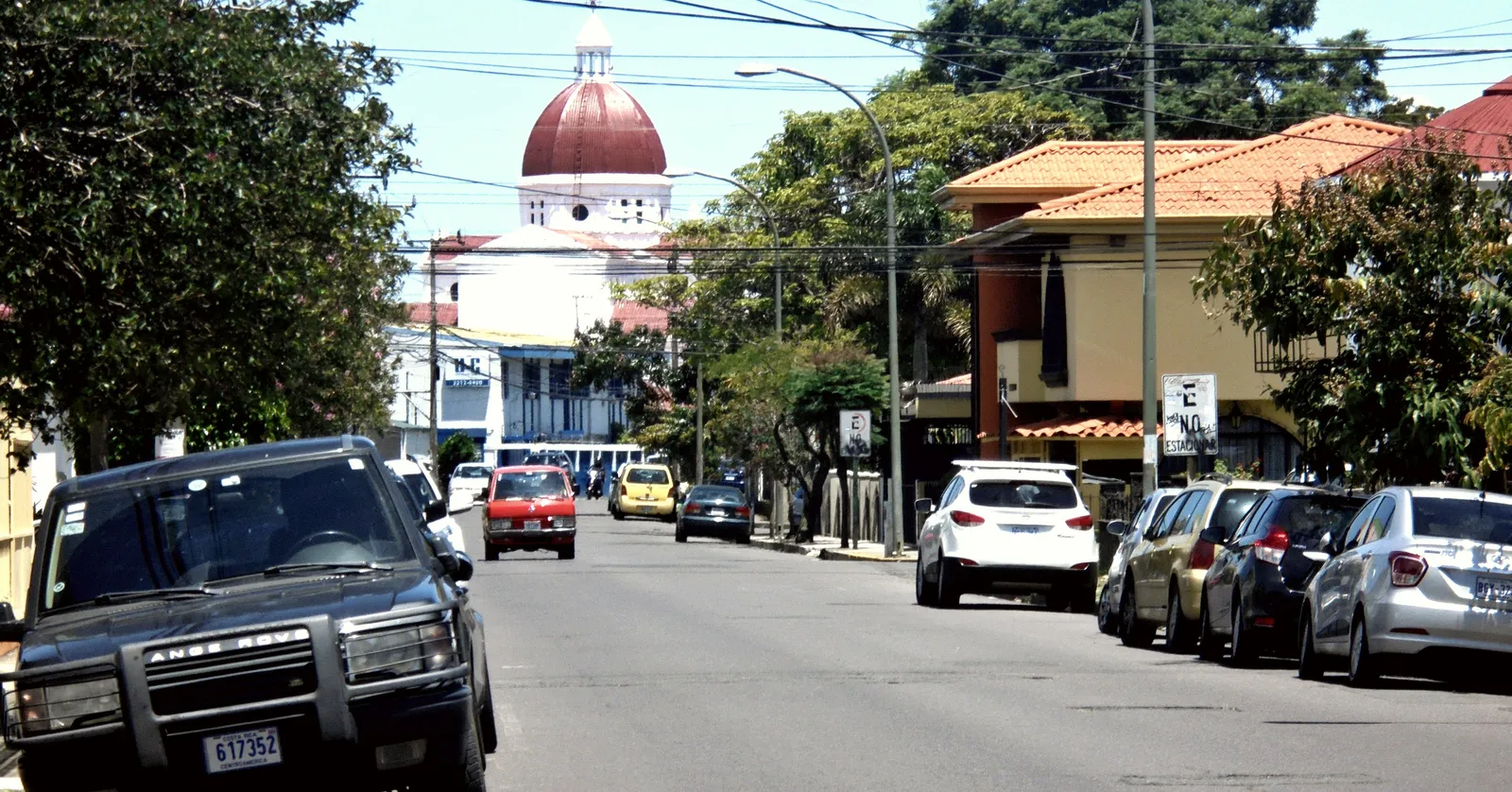
Barrio Escalante is the eating end of San Jose, east of the old centre: six blocks of Calle 33 where more than fifteen restaurants and bars open after seven, streets of 1940s houses around them, and the red dome of Santa Teresita closing the view.
Calle 33, the restaurant street called La Luz
A grocery shop that everyone used to give directions by is where the name came from, in the stretch where the last light pole in the district also stood, and it outlasted both. The street runs six blocks, between Avenidas 1 and 11, and was cut shortly after Barrio Escalante got its first plan in 1929.
What is on it now is more than fifteen restaurants, bars and coffee counters, with counts that take in the side streets running higher still, and the hour they all matter is after seven. That is the useful thing about this district on a long evening: the theatre tour, the gold collection and the market in the old centre have all shut by then, and Calle 33 is only starting.
Most people here on a weekday evening are working through a two-hour dinner rather than passing through, which makes a suitcase parked against a restaurant table a longer commitment than it would be on a museum floor.
The 1940s houses Barrio Escalante was laid out for
Barrio Escalante was a single estate for most of the nineteenth century, founded by a Frenchman, Leonce-Alphonse de Vars, who married a Costa Rican, Rita del Castillo, and passed down through daughters who married into the Escalante and Robert families. In 1866 Isolina de Ivars gave up a strip of it for the railway that would run to both coasts, which is why the area was once called Ambos Mares, both seas.
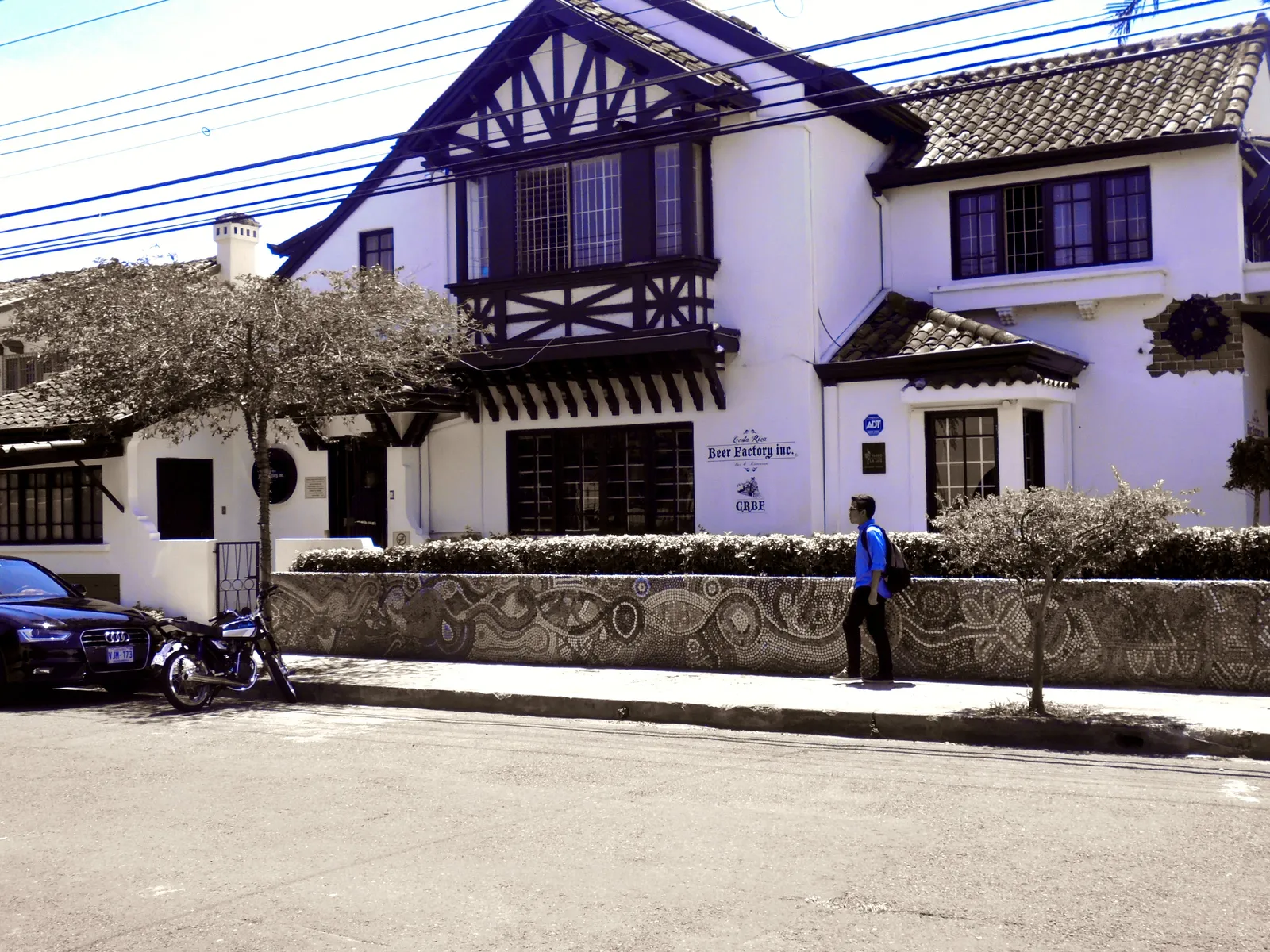
Proper urbanisation started in the late 1930s and ran at least a decade, and the houses that went up through the 1940s were built for wealthy families by architects including Teodorico Quirós and Francisco Salazar. They are still there, mostly: mock-Tudor gables, deep tiled eaves, mosaic garden walls, with a cocktail bar or a bakery behind half the front doors. Walking the blocks either side of Calle 33 before dinner is the cheapest thing to do here and the part most visitors skip.
Santa Teresita, the church with the red dome
The government handed over the plaza for this church in 1916, and it took until the 1940s to open. It stands at the Aranjuez edge of the district, and its dome is the one that closes the view down several Escalante streets, painted the deep red that carries from blocks away.
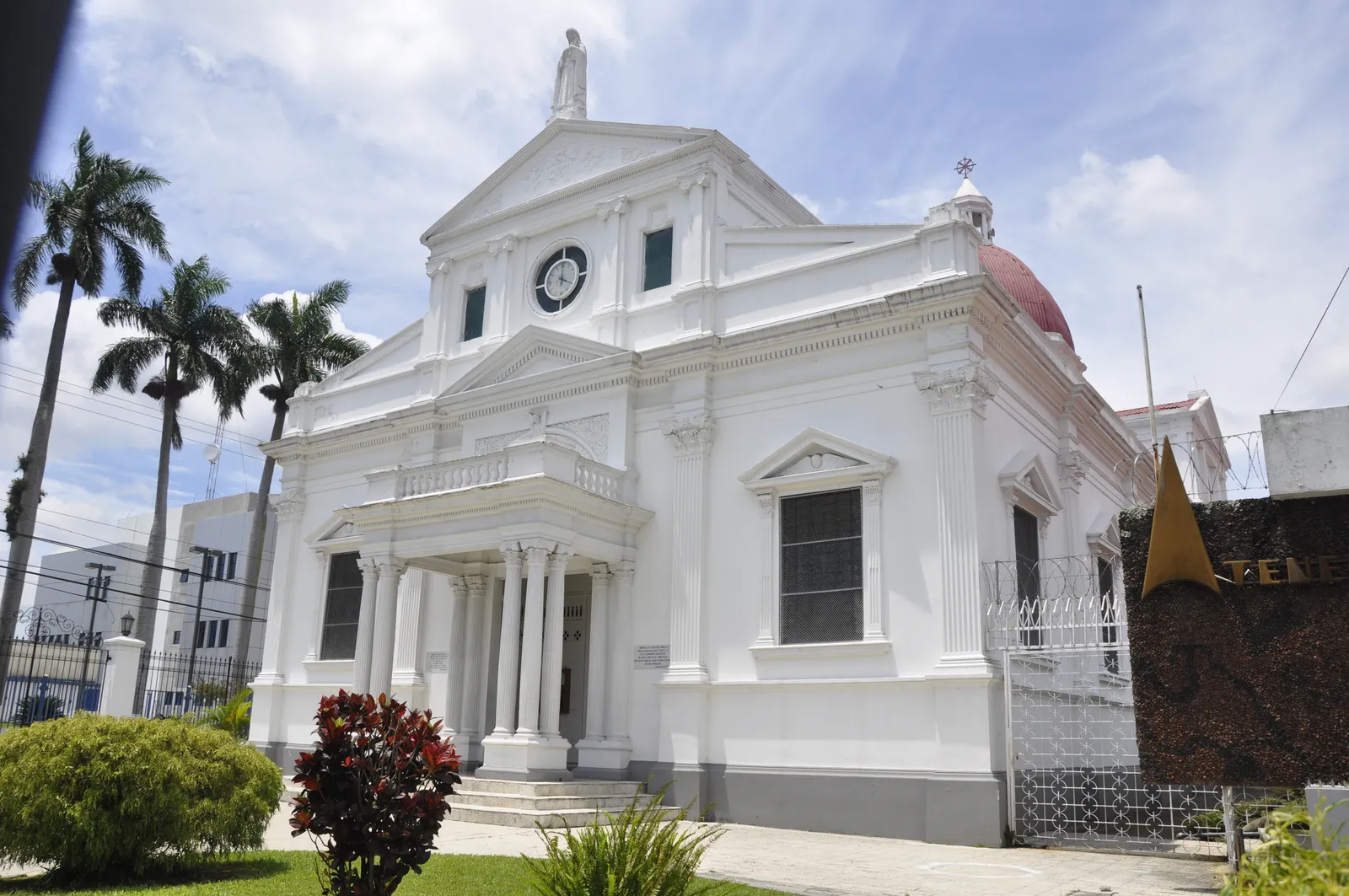
When the district needed a name, the church was the obvious candidate and residents turned it down, choosing the Escalante family instead, on the grounds that they had owned most of the ground for a century. Louis Robert Brouca, who helped pay for the church, also gave the land for Parque Francia a few streets south, which opened in 1964 and is where the neighbourhood still gathers.
The 1895 National Monument in Parque Nacional
The bronze group standing in the middle of Parque Nacional, a city park filling the blocks between Calles 15 and 19, is the National Monument. Five women stand for the five Central American republics, pressing forward together to drive William Walker’s filibusters out of the isthmus in the war of 1856 and 1857.
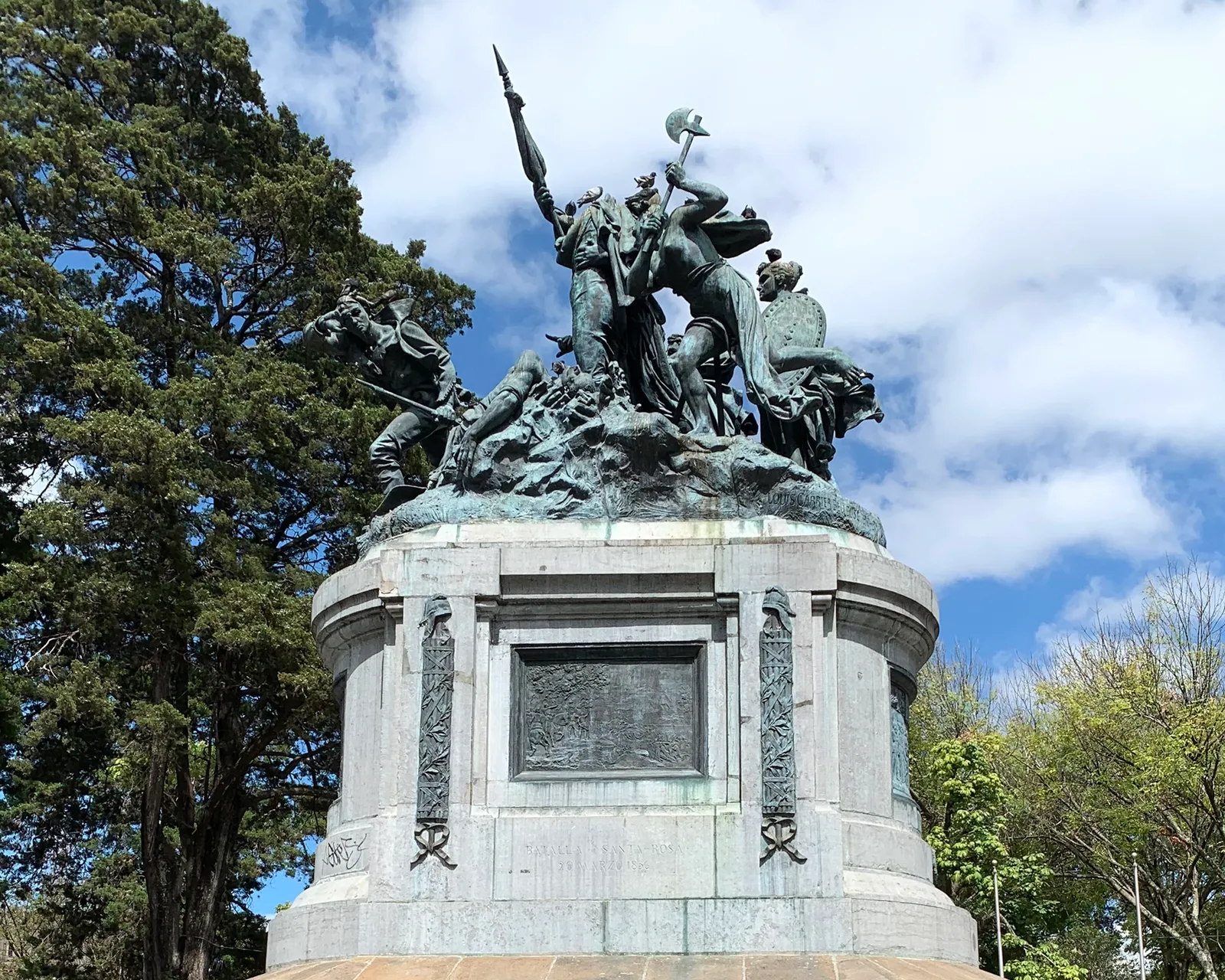
Louis-Robert Carrier-Belleuse finished it in Paris in 1891 and President Rafael Iglesias Castro unveiled it on 15 September 1895, the anniversary of independence. It is lit at night and the park is open, which makes it a reasonable thing to build the walk in around. If the free hours land in daylight instead, the wider San Jose guide covers the ticketed half of the city, and the museums around Plaza de la Cultura are the version of this trip that needs an afternoon rather than an evening.
The last airport bus leaves around ten
Buses out to Juan Santamaría International Airport run from about 4am until roughly 10pm, from the terminal on Avenida 2 beside the Merced church at Parque de la Merced, on the far side of the centre from here. TUASA runs the red ones and Station Wagon the yellow and orange ones, the fare is 675 colones in cash, and departures come every 6 to 12 minutes while the service is running. The ride is 30 to 40 minutes in ordinary traffic.
That last-departure hour is the number an evening here turns on. Getting from Calle 33 across to the Merced terminal is twenty-five minutes or so on foot and less by taxi, so a dinner that ends much after nine means taking a taxi the whole way out instead, which is the usual fallback and costs several times the bus. Either way the bus has no hold underneath, so a suitcase rides the aisle for the last half hour of the day.
Frequently asked questions
What should I do during a layover in Barrio Escalante in San Jose?
Eat, mainly. Calle 33 runs six blocks between Avenidas 1 and 11 and carries more than fifteen restaurants, bars and coffee counters that open up after seven in the evening, which is the hour this part of San Jose is built for. Around it are the streets of 1940s houses the district was laid out for, some of them by the architect Teodorico Quirós, and the red dome of the Santa Teresita church at the Aranjuez edge. On the way in or out, the National Monument stands in Parque Nacional, an 1895 bronze of the Central American republics driving out a foreign invasion. Three hours covers a walk round the houses and a long dinner.
Is Barrio Escalante worth walking through in the daytime?
The architecture is, the eating is not, yet. Most of Calle 33 is shuttered or quiet until the late afternoon and the street only fills after seven, so an afternoon here is a walk past 1940s villas and a church rather than a meal. If the free hours fall between about ten and four, the museums in the old centre are the better use of them, and this district repays a stop that runs into the evening instead.
How far is Barrio Escalante from the centre of San Jose?
About a kilometre and a half east of Plaza de la Cultura, which is twenty minutes of flat walking or a few minutes in a taxi. Parque Nacional sits roughly halfway along, so the walk in has a stop built into it. There is no metro in San Jose, and the city buses that serve this side of town run from scattered stops rather than one terminal, which is why most people walk it or take a taxi.
What time does the last bus to Juan Santamaría airport leave San Jose?
Around ten at night, from the terminal on Avenida 2 beside the Merced church at Parque de la Merced, which is the last useful departure for both operators, TUASA in red buses and Station Wagon in yellow and orange ones. The fare is 675 colones cash and the ride out to Juan Santamaría International Airport is 30 to 40 minutes. Past that hour a taxi or a ride-hail is the only option, so a dinner that runs late is a decision to make with a clock in view.