Brussels Layover: Grand-Place and Sablon, BRU
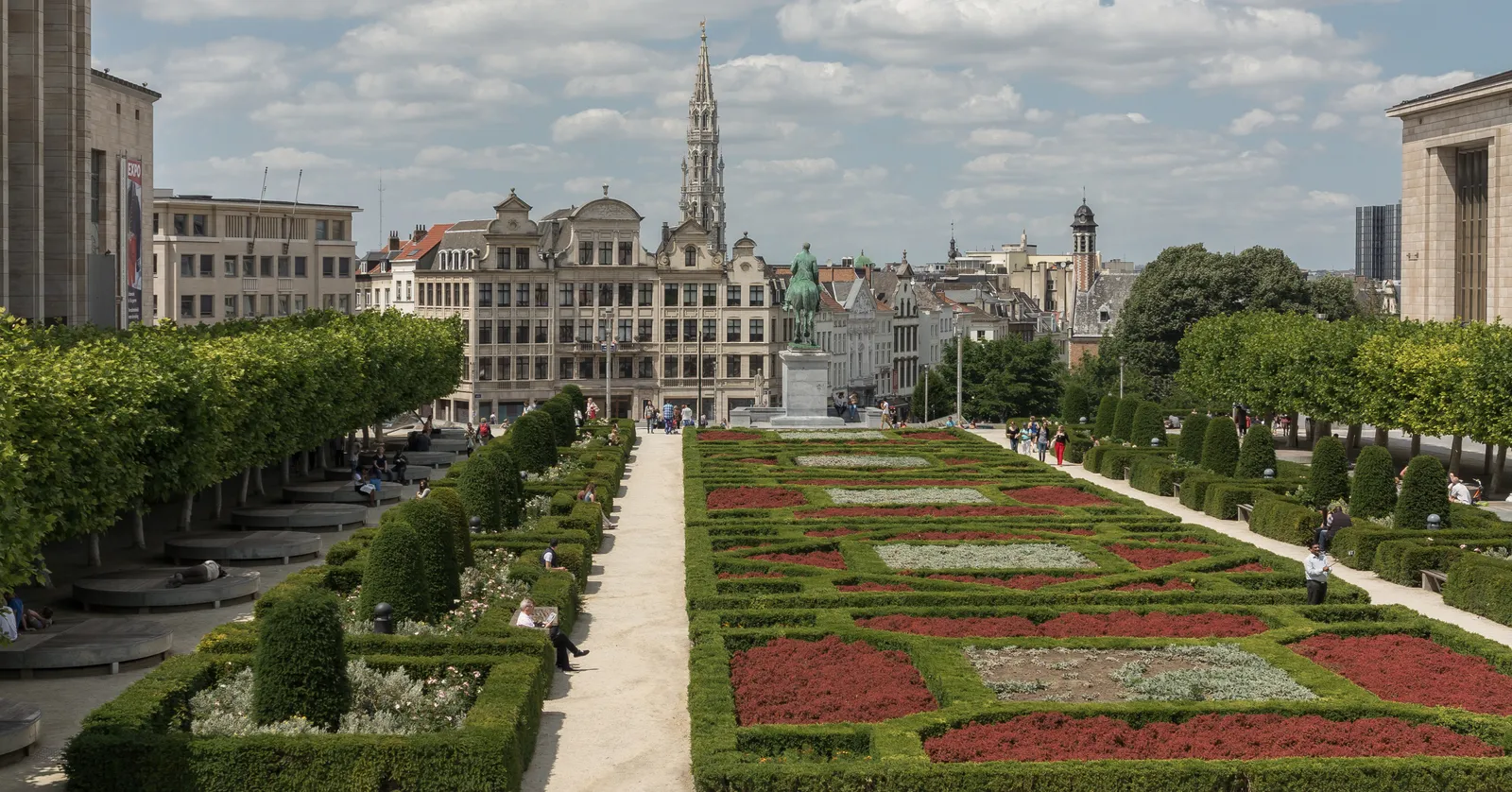
Brussels’ old center is small: the Grand-Place, the glass-roofed Saint-Hubert arcade and a Gothic cathedral all sit within fifteen minutes’ walk of one another, starting six minutes from Brussels-Central station.
The Grand-Place was rebuilt in four years
French artillery flattened most of the square over three days in August 1695. The guilds put it back up by 1699, each financing its own house, with the city approving every set of plans and fining anyone who built something other than what they had submitted. That is why a square rebuilt by dozens of separate owners still reads as one piece of design rather than a terrace of arguments. The Town Hall’s spire, 96 metres with a gilded Saint Michael on the point, came through the bombardment and is the one part older than everything around it.
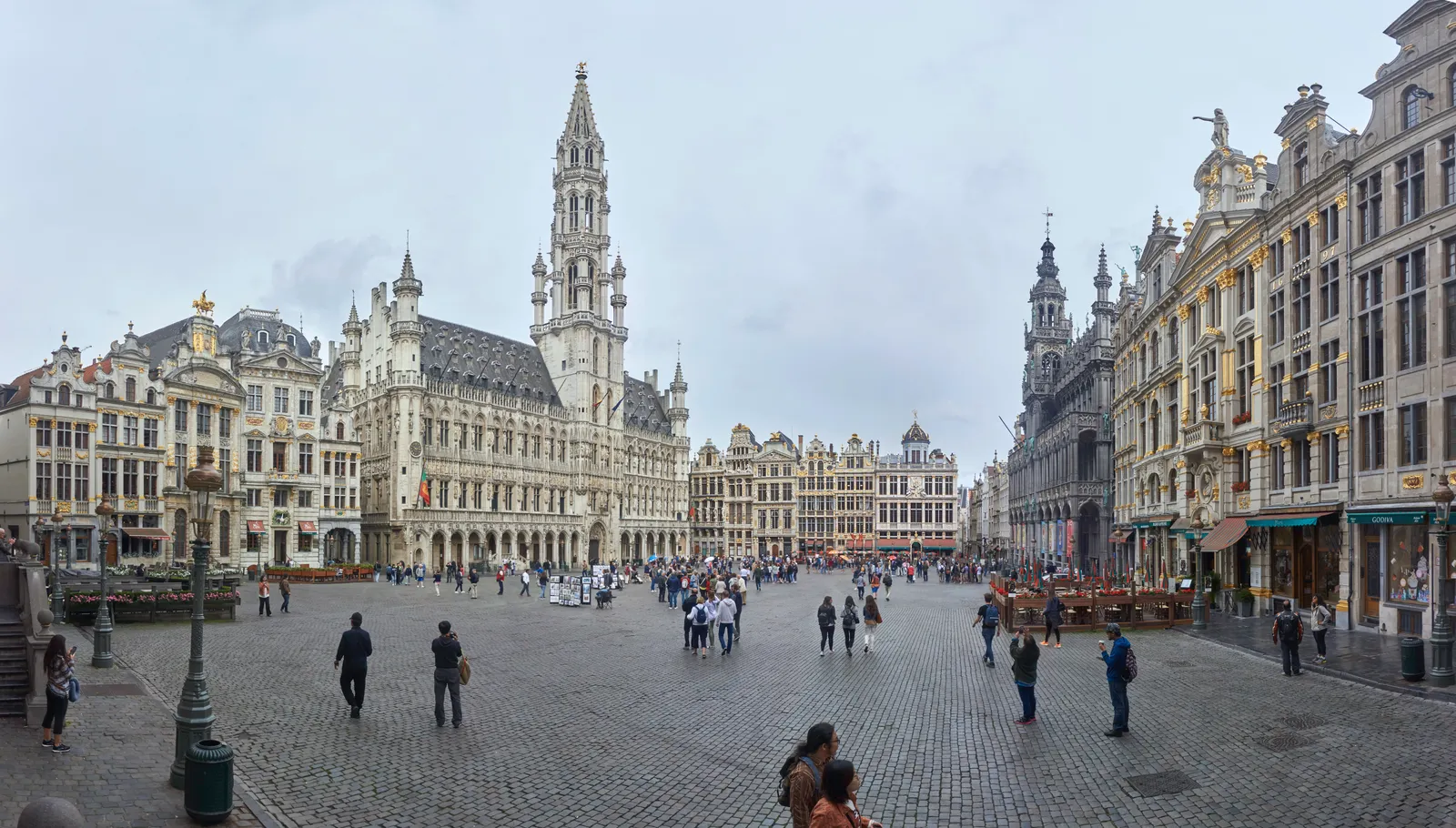
Nothing on the square charges anything. It is pedestrian, it never shuts, and UNESCO listed it in 1998. In even-numbered years, volunteers spend a long August weekend laying a carpet of cut begonias and dahlias across the middle of it; the 2026 edition has already been and gone, and the next falls in August 2028, so most of the time what you get is the cobbles and the gold, which is the better of the two for photographs anyway.
The old stock exchange reopened as a beer museum
Three minutes west of the Grand-Place, on the Boulevard Anspach, Léon-Pierre Suys built Brussels its stock exchange between 1868 and 1873, and hired well: the sculptural work on the facades was done under Albert-Ernest Carrier-Belleuse, whose young assistant at the time was Auguste Rodin. Traders left in 2015 and the building sat largely empty until 2023.
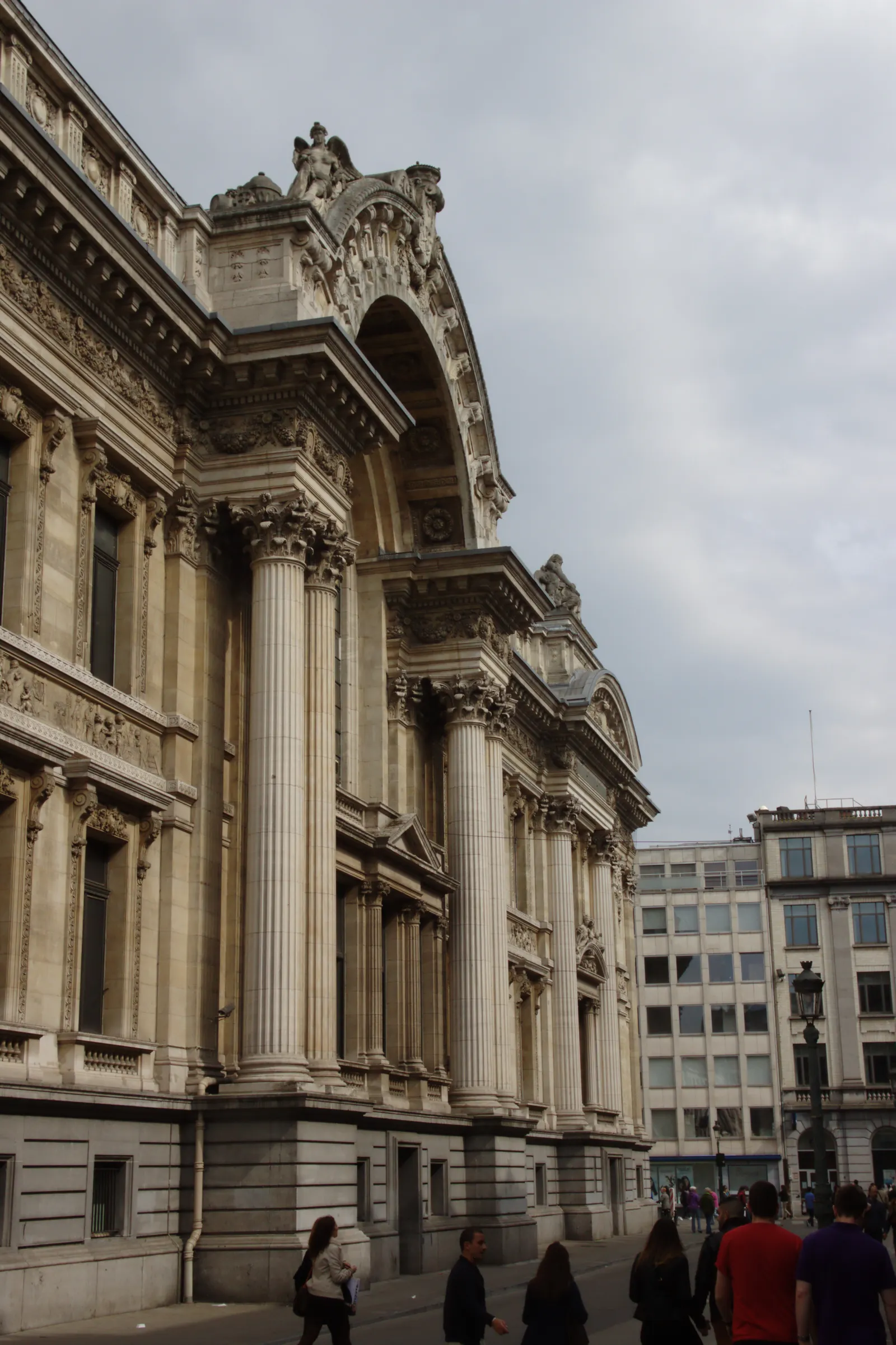
What is inside it now is Belgian Beer World, three floors on the history and the chemistry of the thing Belgium is best known for, ending on a rooftop bar with a tasting and one full beer included in the price. Adult entry is 21.50 euros and it opens every day but 25 December and 1 January, from 10:30 until 19:30, an hour later on Fridays and Saturdays, so a ticket bought ahead saves the only queue on this itinerary that regularly forms. The wide stone steps outside are free and are one of the standing meeting points in the city; people sit on them at all hours whether or not anything is happening.
Old England’s iron shopfront holds the music museum
Paul Saintenoy finished the Old England department store on Rue Montagne de la Cour in 1899, and it is the clearest piece of Art Nouveau in the center: black-painted ironwork and glass stacked five floors up a narrow plot, a domed turret on the corner, and the shop’s name still spelled out in gold across the front. The store is long gone. The Musical Instruments Museum moved in during 2000 and has been there since, with over 7,000 instruments in the collection.
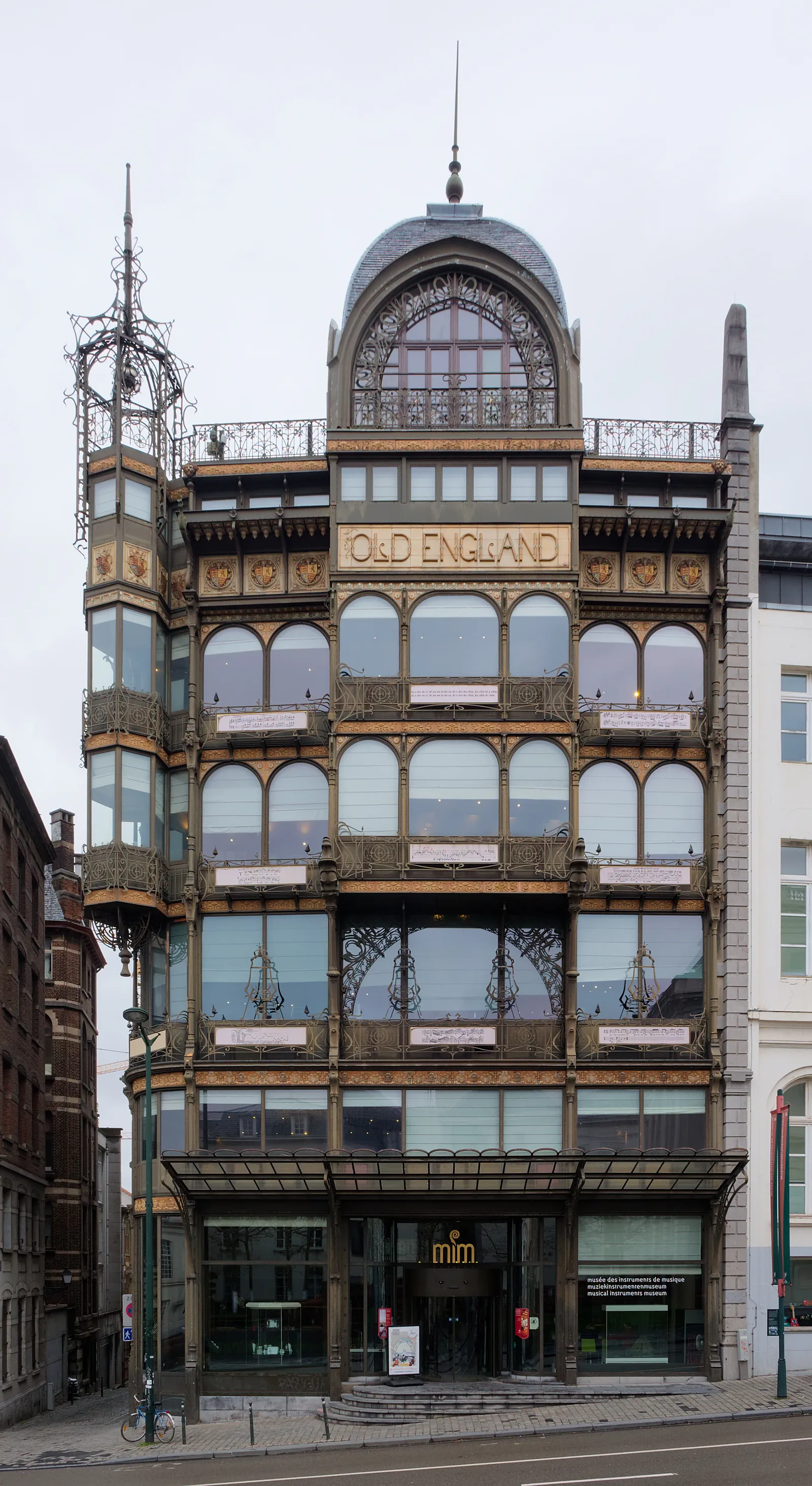
Headphones come with the ticket and the recordings trigger as you walk up to each display case, which is a better arrangement than it sounds: you hear a 1750s harpsichord instead of reading a card about one. Entry is 15 euros, free under 18, and the museum is closed on Mondays, which is the detail worth checking against your flight day before you plan around it. Otherwise it runs 9:30 to 17:00 Tuesday to Friday and from 10:00 at weekends, and entry can be booked in advance. The climb up Rue Montagne de la Cour to reach it is short but genuinely steep, and the parallel route through the Mont des Arts gardens does the same climb in flights of steps, so it is the one stretch of the day worth doing without a suitcase behind you.
The Saint-Hubert shopping arcade opened under glass in 1847
Leopold I inaugurated Jean-Pierre Cluysenaar’s arcade on 20 June 1847, three decades before Milan’s Galleria Vittorio Emanuele II opened and more than forty years before Naples got its own. It runs 213 metres in three linked stretches, the King’s Gallery, the Queen’s Gallery and the Princes’ Gallery, under a single barrel vault of iron and glass, with a cinema and a theatre tucked into the sides among the chocolatiers.
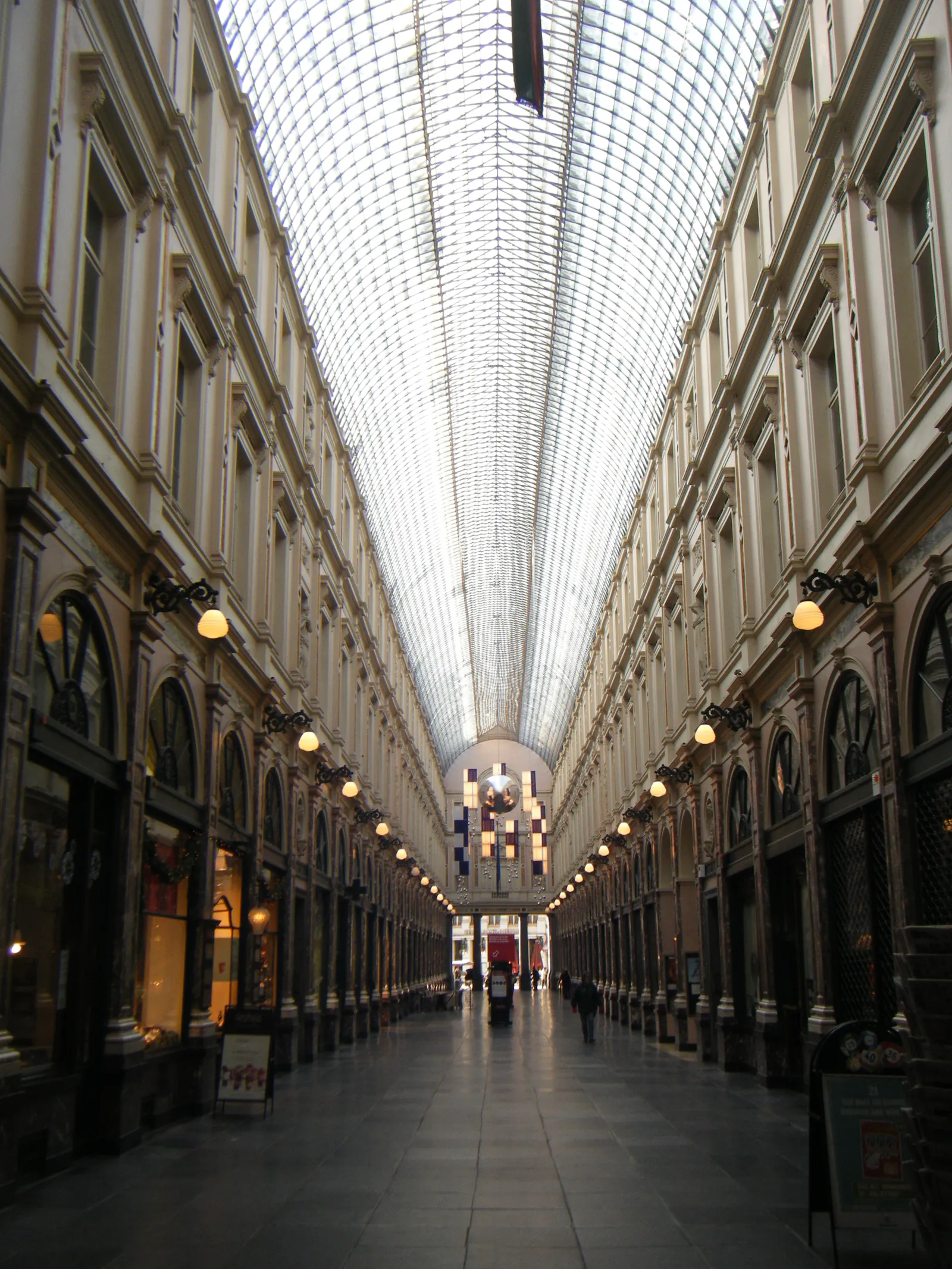
Walking it costs nothing and takes about five minutes end to end, longer if you stop, and roughly six million people a year do exactly that. The practical value on a Belgian afternoon is the roof: the arcade connects the streets north of the Grand-Place to the cathedral end of town without putting you outdoors, which matters here more often than the forecast admits.
Twelve apostles on the columns of Brussels’ cathedral
St. Michael and St. Gudula stands on the Treurenberg hill between the lower town and the upper one, a two-towered Brabantine Gothic front that took most of three centuries to finish and was structurally done by 1519. Inside, twelve apostle statues are mounted against the nave columns, carved in the 17th century by Lucas Faydherbe, Jérôme Duquesnoy the Younger and others, which gives the nave an oddly populated feel for a building this pale and this tall.
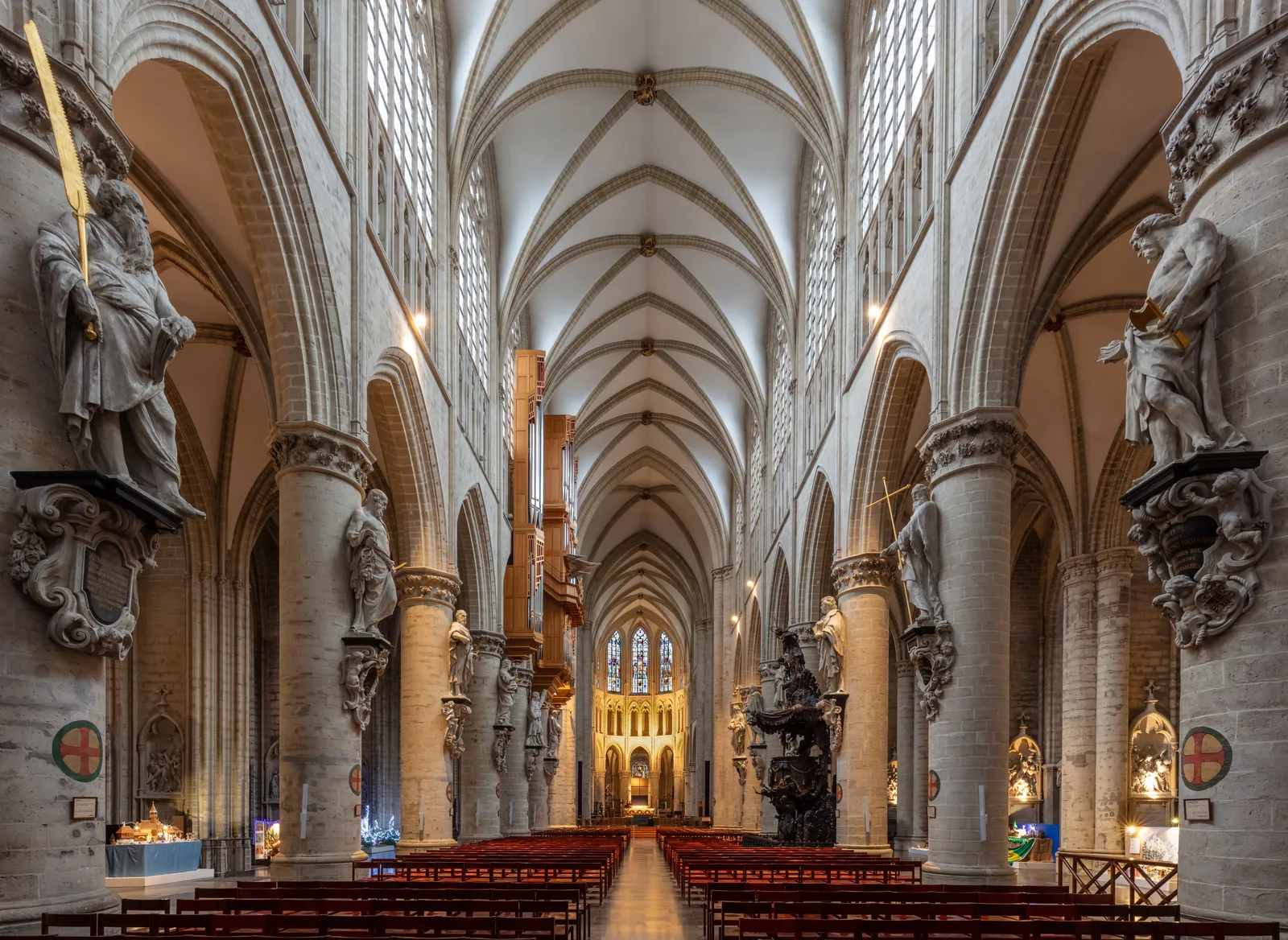
The nave is free. Doors are open 8:00 to 18:00 on weekdays, 8:00 to 17:00 on Saturdays and from 13:00 on Sundays, and visits pause during services. Three things inside are ticketed and all three are cheap: the treasury at 3 euros, the excavated Romanesque remains under the floor at 2, and the crypt at 4, which needs arranging in advance rather than paying at a desk.
Antique dealers take over the Place du Grand Sablon at weekends
The Sablon sits ten minutes uphill from the Grand-Place, and on Saturdays and Sundays around forty dealers in silver, porcelain, prints and furniture put up green tents across the square, 9:00 to 17:00 on Saturday and until 16:00 on Sunday, all year and in any weather. It is a browsing market rather than a bargain one. On weekdays the square empties back out into cafe terraces and the chocolate shops that have colonized the ground floors around it.
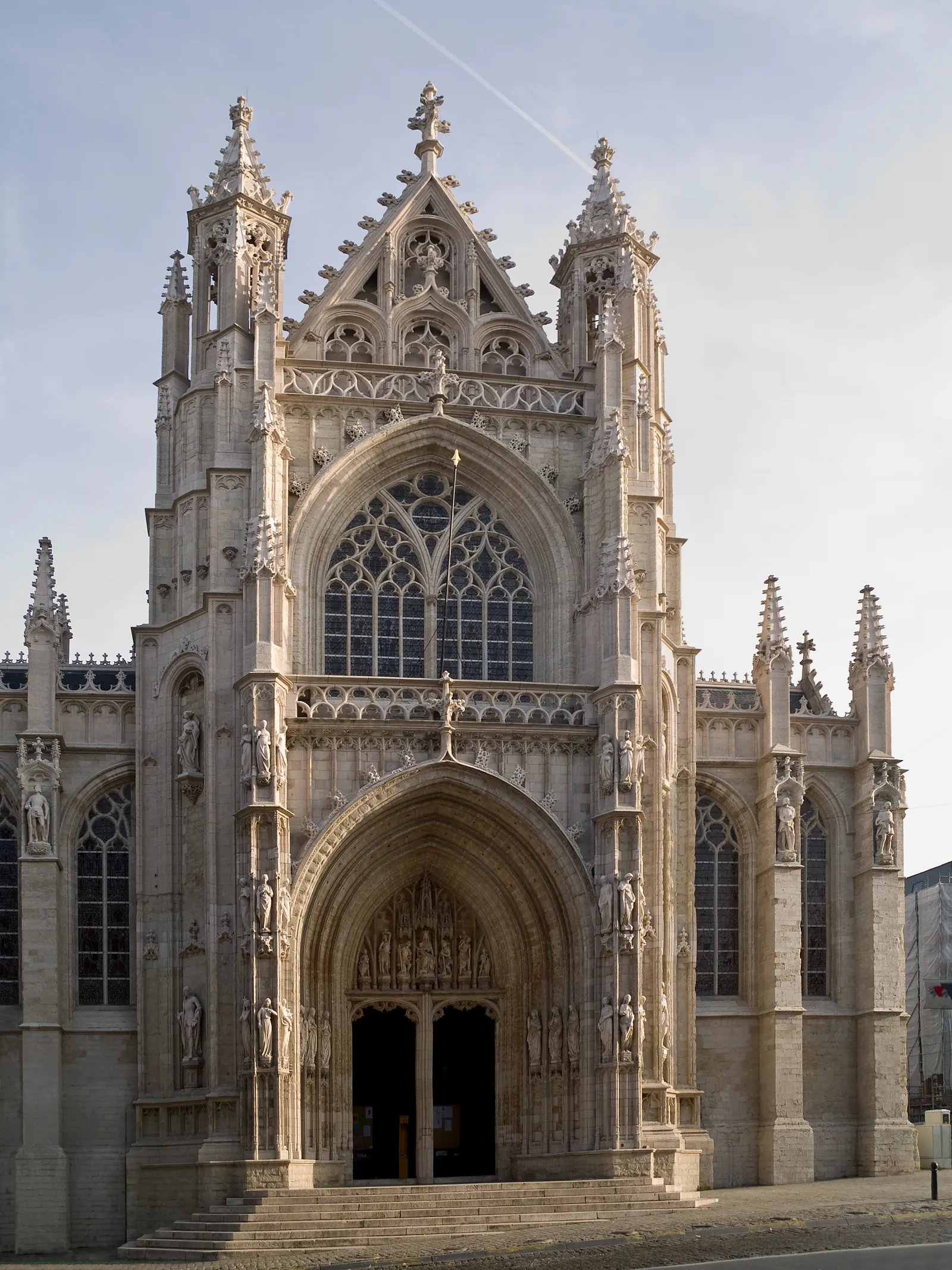
Notre-Dame du Sablon closes the southern side, free every day of the year, open from 10:00 on weekdays and 9:00 at weekends. Four minutes further up Rue de la Régence is Place Poelaert, in front of the Palace of Justice, and this is the part almost nobody arrives knowing about: two glass public lifts run down the 27.7-metre drop from the terrace into the Marolles, free, daily, from seven in the morning until about eleven at night. They were built in 2002 as ordinary municipal transport for people who live on the wrong side of the hill, and they carry about a million passengers a year. The ride up gives you the whole lower town, the Atomium and the Koekelberg basilica on a clear day, with no queue and no ticket office.
That hill is what makes Brussels a different proposition from the city two hours north by train: the Amsterdam layover guide covers a center where the only gradient is the camber of a canal bridge.
The airport train stops at all three central stations
Brussels Airport-Zaventem has its own station on level -1, directly beneath the terminal, and trains from it call at Brussels-Nord, Brussels-Central and Brussels-Midi. Reckon on about 17 minutes to Central, a couple less to Nord and five more to Midi, with four to six departures an hour from around 5:30 in the morning to around 23:30 at night. Those are ride times: door to door is closer to half an hour once you add the escalators up from the platforms and the wait for the next train, and that is the number to work backwards from.
A single from central Brussels runs a little over 11 euros, which includes the fixed 6.90-euro airport supplement charged on every journey to or from BRU. Buy it before you go back down to the platform rather than at the airport end, and give yourself the full door-to-door figure plus the time it takes to collect the bag you left behind: the cobbles that made the walk worth doing empty-handed are the same ones you have to cross again on the way back.
Frequently asked questions
What should I do during a layover in Brussels?
With four to six hours, the whole of the old center is walkable from Brussels-Central. Start on the Grand-Place, which is free and never closes, then pick one paid interior: the beer museum in the old stock exchange three minutes west, or the Musical Instruments Museum in the Old England building up the hill, which shuts on Mondays. The Galeries Royales Saint-Hubert and the nave of St. Michael and St. Gudula both cost nothing and sit a few minutes apart. If you have longer, the Place du Grand Sablon and its weekend antiques market are ten minutes uphill.
Why does a train ticket to Brussels Airport cost more than a normal Belgian fare?
Because every ticket to or from Brussels Airport-Zaventem carries a fixed supplement on top of the ordinary fare, currently 6.90 euros, which pays off the tunnel built to reach the airport station. It was called the Diabolo fee until 2020 and is now the Brussels Airport Supplement. It is already included when you buy a standard single, so a one-way from central Brussels comes to a little over 11 euros rather than the four or five the distance would otherwise suggest. Season tickets and multi-journey cards are the exception: with those you buy the supplement separately.
What is there to do in central Brussels when it rains?
More than in most compact city centers, because two of the best stops here are roofed. The Galeries Royales Saint-Hubert run 213 metres under an iron-and-glass barrel vault, so the arcade works as a dry route as well as a sight, and it links the streets north of the Grand-Place to the cathedral end of town. The nave of St. Michael and St. Gudula is free and open all day, the Musical Instruments Museum and the beer museum are both indoors, and the Grand-Place itself is worth walking across wet, since the gold on the guildhall gables reads better against a grey sky than a bright one.
Is the walk between the Grand-Place and the upper town step-free?
Partly. The Grand-Place and the streets immediately around it are flat but laid in rough cobbles, which is slow going on wheels. The climb from there to Place Royale and the Sablon is a real hill: Rue Montagne de la Cour rises steeply but has no steps, while the parallel route through the Mont des Arts gardens does the same climb in flights of stairs. Take the street rather than the gardens if steps are a problem. Between the Marolles and Place Poelaert, two free public lifts do the climb for you.
Is the Atomium worth the trip on a short layover?
Only if you have five hours or more and you specifically want to see it. The Atomium stands out at Heysel on the northern edge of the city, roughly half an hour each way from the center by metro, which is most of a short layover spent on transit for one building. It is a genuine landmark and the spheres give you a view over the whole plateau, so if it is the thing you came to Belgium for, book the entry slot before you leave the airport rather than queueing at the base. Otherwise the old center gives you far more per hour.