Brussels Layover in the Marolles
Part of the full Brussels Layover: Grand-Place and Sablon, BRU
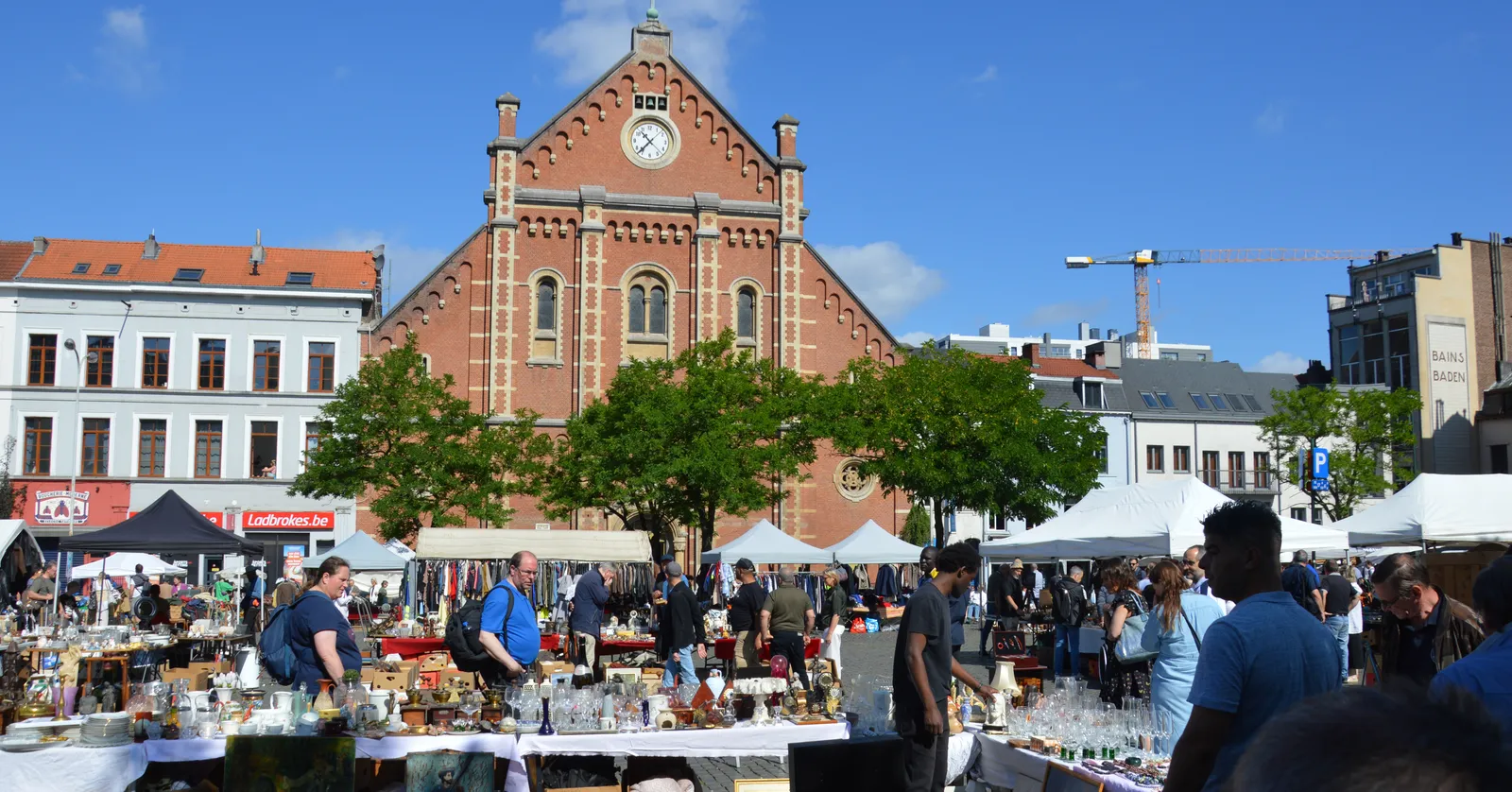
The Marolles sits on the slope below the Palace of Justice in Brussels, and its flea market on the Place du Jeu de Balle runs every morning of the year, five minutes from the church where Pieter Bruegel the Elder is buried.
The Vieux Marché runs every morning of the year
Hundreds of traders set up on the Place du Jeu de Balle at first light, and a good proportion of the stock never reaches a table: it goes straight down onto the cobbles, in heaps, and you go through it crouching. Porcelain, tools, records, chandeliers, boxes of loose keys, furniture with one leg missing. Prices are negotiated rather than marked.
It runs seven days a week, all year, which is what separates it from the weekend markets elsewhere in the city, and it costs nothing to walk through. Get there before nine if you actually want to buy something. The square is laid in rough setts and covered in other people’s stock for most of the morning, which makes it the one stretch of Brussels where a wheeled suitcase is worse than useless.
Bruegel is buried in Notre-Dame de la Chapelle
The church stands at the top of Rue Haute, a Gothic pile with a stubby black baroque bell tower dropped onto it in the 1700s after a fire. Pieter Bruegel the Elder died in 1569, a few doors down the same street, and was buried here; the funeral plaque his son put up is still on the wall.
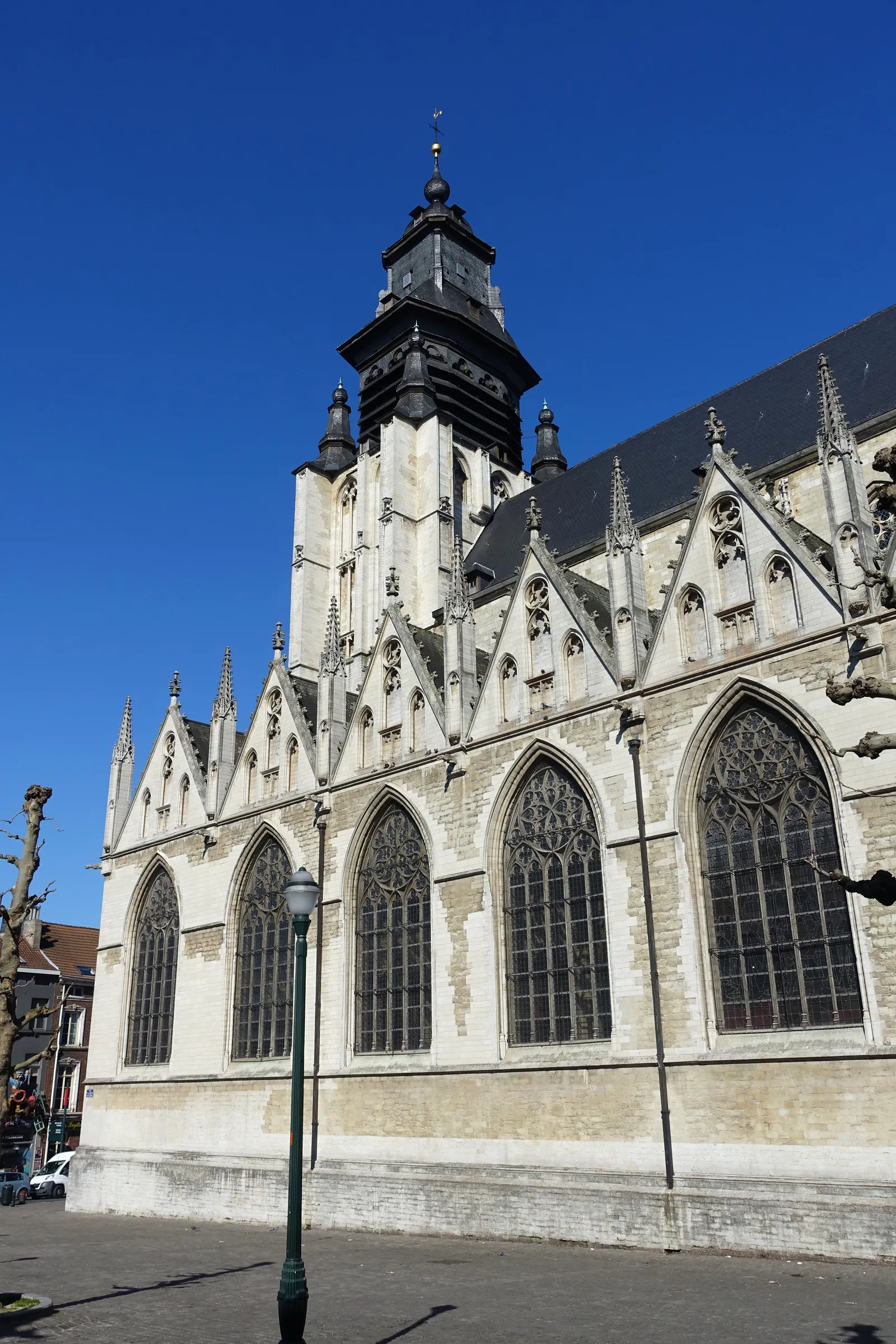
Entry is free and twenty minutes covers it. The building is worth the stop even without the grave: it is one of the oldest churches in Brussels, and the bare stone interior is a change of register after the gilding of the Grand-Place rather than a disappointment.
The Palace of Justice has stood in scaffolding since 1984
Joseph Poelaert’s courthouse went up between 1866 and 1883 on the hill above the quarter, and it flattened a chunk of the Marolles to do it: 26,000 square metres of ground, 250 rooms, the largest building put up anywhere in the nineteenth century, with a footprint bigger than St Peter’s in Rome. Around 3,000 houses came down for it and their occupants were moved out, some of them by police, which is why “schieven architek”, crooked architect, entered Marolles dialect as an insult and has stayed there.
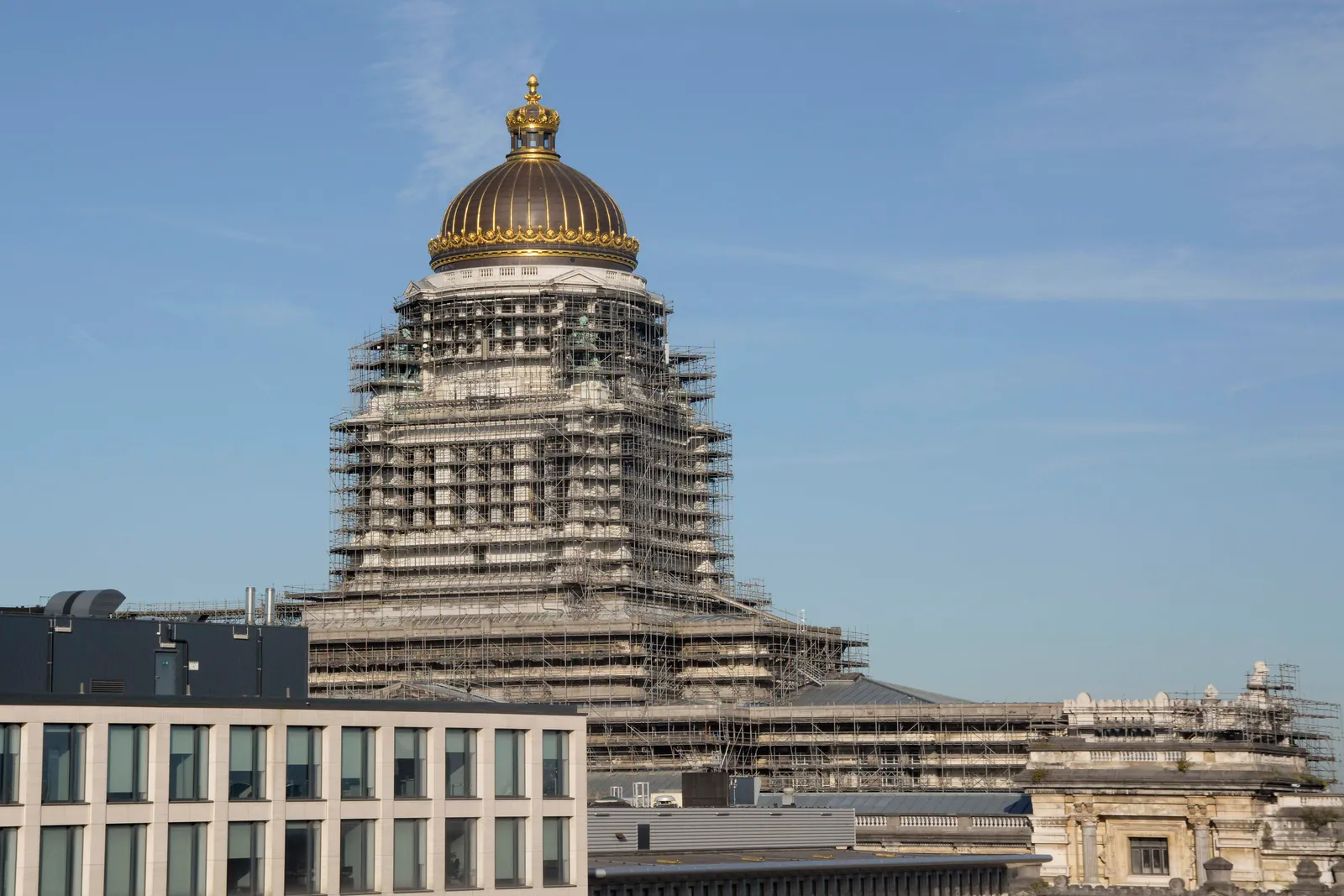
Scaffolding went up around it in 1984 to catch falling stone and has been there ever since, long enough that the scaffolding itself has needed maintenance and become part of the skyline. Restoration work started in earnest in 2023 and the first stretches of facade are coming clear, but the completion date has been pushed back more than once, so treat any published finish date as provisional. The terrace on Place Poelaert in front of it is free and open, and two glass public lifts drop from there into the lower Marolles; the main Brussels guide covers those in more detail.
The Porte de Hal is the last of seven city gates
Brussels built a second ring of walls in the 1380s with seven gates in it, and demolished six of them in the nineteenth century along with the walls themselves. The Porte de Hal survived because it was in use as a prison and then a grain store, and it stands now on a traffic island at the bottom of the quarter, restored into something more storybook than it originally looked.
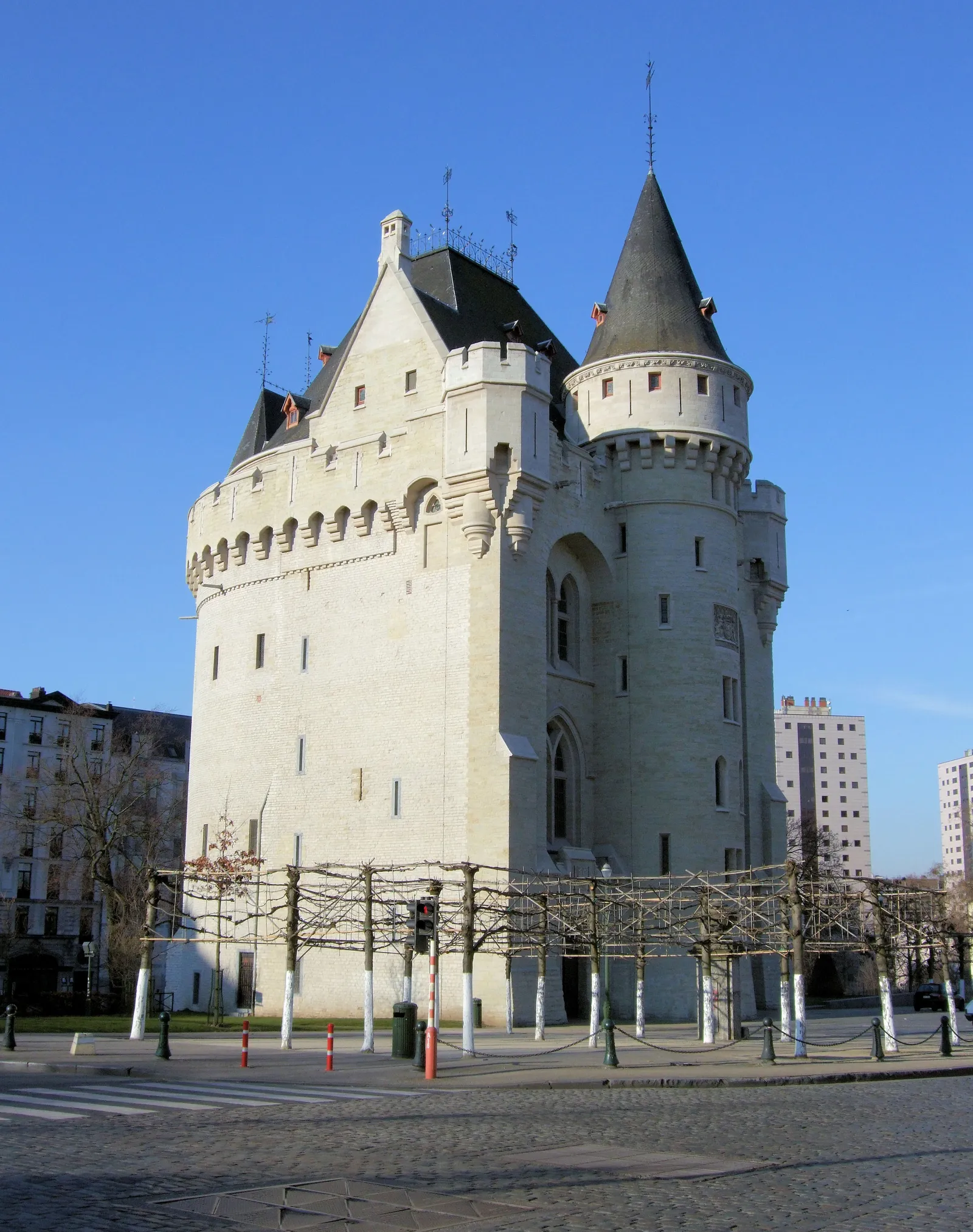
Inside is a museum of the medieval city, open since 2008: armour, weapons, the guild processions, and a walkway around the top with a view back up the hill. Adults pay 7 euros, it runs 9:30 to 5 Tuesday to Friday and from 10 at weekends, and it closes on Mondays. An hour is plenty.
The airport train goes from the stations, not from here
The Marolles has no mainline station of its own, which is the one real cost of spending an afternoon down here. Brussels-Midi is about fifteen minutes’ walk southwest and Brussels-Central about the same northeast and uphill; from either, trains reach Brussels Airport-Zaventem in about 22 and 17 minutes respectively, four to six an hour, until around 23:30.
Work backwards from the walk, not the ride. Fifteen minutes uphill on Marolles cobbles with a bag is not fifteen minutes on flat pavement, and the free lifts only cover the vertical stretch between Place Poelaert and the quarter below, not the distance to a platform. Collect your suitcase before you start, give the walk its real time, and buy the airport ticket before you get to the station rather than in the queue.
Frequently asked questions
What time does the Jeu de Balle flea market actually work?
Early. It sets up around dawn and runs through the morning, with traders starting to pack down from the early afternoon; sources disagree on the posted closing time and the practical answer is that the square is emptying by about two. Serious buyers are there before nine, when the stock has not been picked over. It runs every day of the year, which is what separates it from Brussels' weekend markets, and it is free to walk through.
Can you go inside the Palace of Justice?
The public halls, yes, on weekdays during court hours and free of charge, though it is a working courthouse rather than a museum and there is no visitor route as such. The scale is the reason to step in: Poelaert built a hall you could fit a small church inside. The terrace outside on Place Poelaert is open at all hours and gives the wider view over the lower town, which is what most people come up for anyway.
Is the Marolles walkable with a suitcase?
Less than most of Brussels. The Place du Jeu de Balle is laid in rough setts with market stock spread across them for most of the day, the streets running off it are narrow and parked solid, and the quarter sits on the side of the hill, so you are either climbing or braking. Two free public lifts do the vertical part between the lower Marolles and Place Poelaert, but the market square itself is the awkward stretch, and it is the whole point of coming.
What else is nearby if the market is not your thing?
Two churches and a gate, all within fifteen minutes on foot, and the antique and design shops that run the length of Rue Blaes and Rue Haute between them. If none of that appeals, this is the wrong corner of the city for your afternoon: the guildhall and arcade route through the old centre is twenty minutes downhill and covers the Brussels most people arrive wanting to see.