Brussels Layover at the Sablon
Part of the full Brussels Layover: Grand-Place and Sablon, BRU
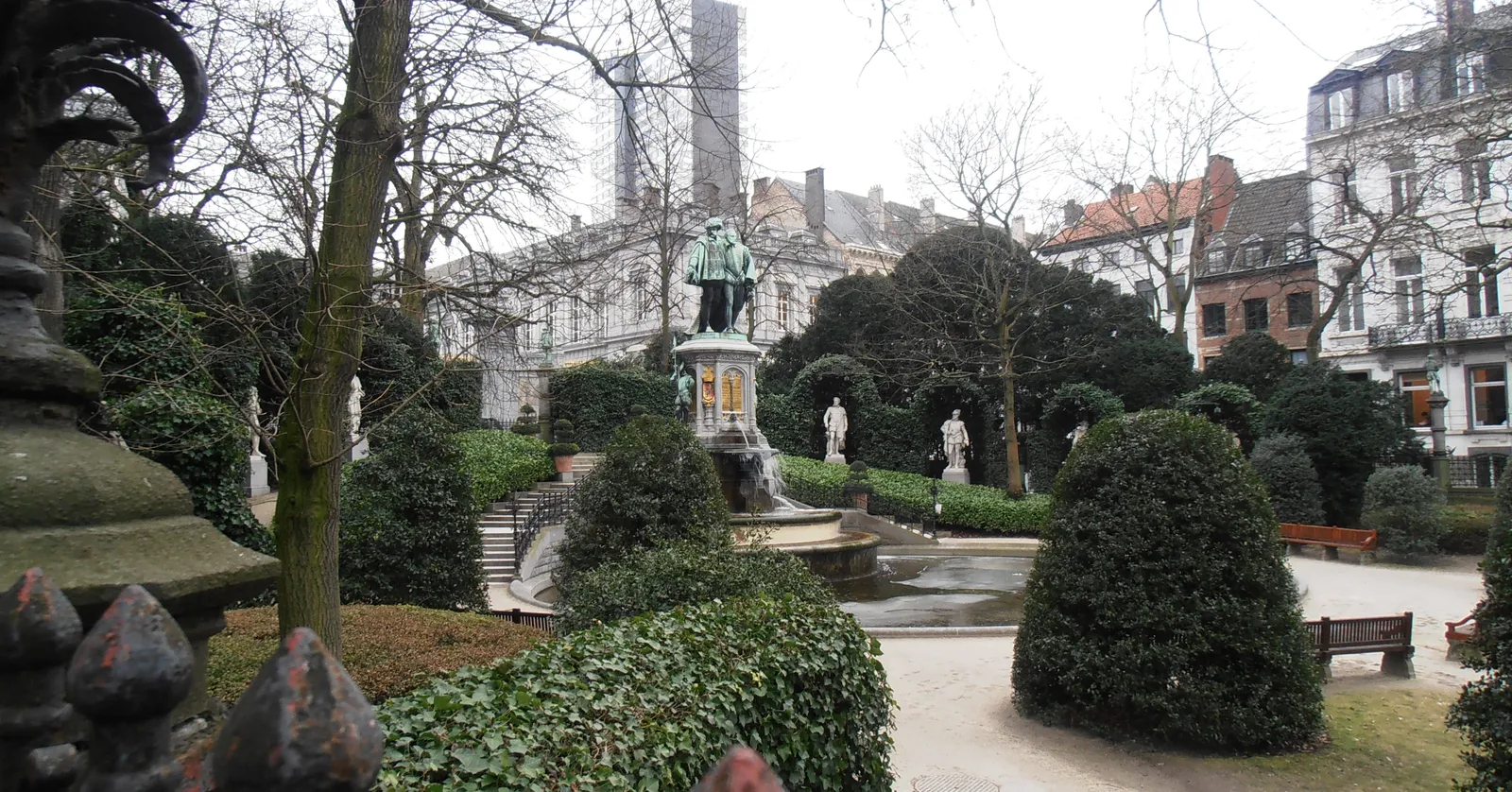
The Sablon is two connected squares in upper Brussels: a garden at the Petit Sablon ringed by 48 bronze guild statues, and the Grand Sablon a minute downhill, where the antique dealers and the city’s best-known chocolate makers keep their shops.
Forty-eight guild statues stand on the Petit Sablon’s columns
Henri Beyaert laid the garden out in 1890 on what had been a horse market, and the fence is the point of it: 48 stone columns spaced around the railing, each carrying a small bronze of a sixteenth-century Brussels trade. The cooper, the chair-maker, the fishmonger, the roofer, all at work, all about waist height, which is close enough to read the tools.
The fountain in the middle carries Counts Egmont and Hoorn, beheaded on the Grand-Place in 1568 for opposing Spanish rule in the Low Countries. Their monument stood elsewhere in the city until 1879, when Beyaert had it moved here, in front of what had been Egmont’s own palace. The garden costs nothing, has no gate on the street side, and takes about fifteen minutes.
The chocolatiers keep their flagships on the Grand Sablon
Stepped brick gables run down both long sides of the Place du Grand Sablon, and at street level under them are the two trades the square lives on: antique dealers, whose permanent galleries stay open through the week, and chocolate, which is why most people who are not buying a nineteenth-century clock end up here.
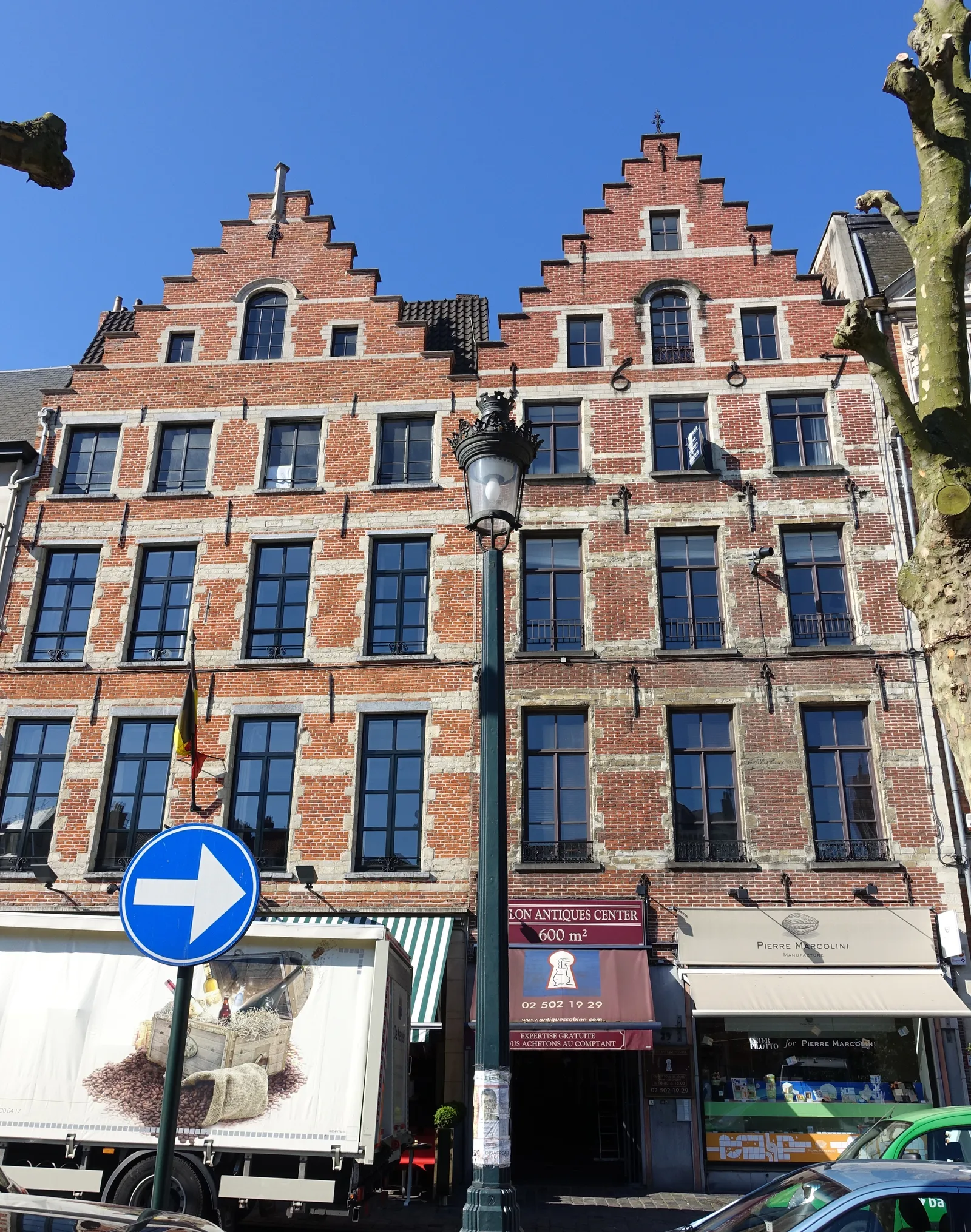
Several of Belgium’s best-known houses have their flagship on or beside this square, close enough together to compare them in half an hour, and a guided tasting walk is the efficient version if you would rather be told what you are eating than guess. On Saturdays and Sundays the dealers’ green tents fill the middle of the square from early morning, and the aisles between them are narrow enough that browsing with a suitcase means either abandoning the browsing or blocking the aisle.
The Egmont Park sits behind a wall off the Petit Sablon
Nothing on the street announces it. The park occupies the grounds of the Egmont Palace, walled on every side, with gates off the Petit Sablon and down on the Boulevard de Waterloo, and most people walking between the two squares never notice a way in.
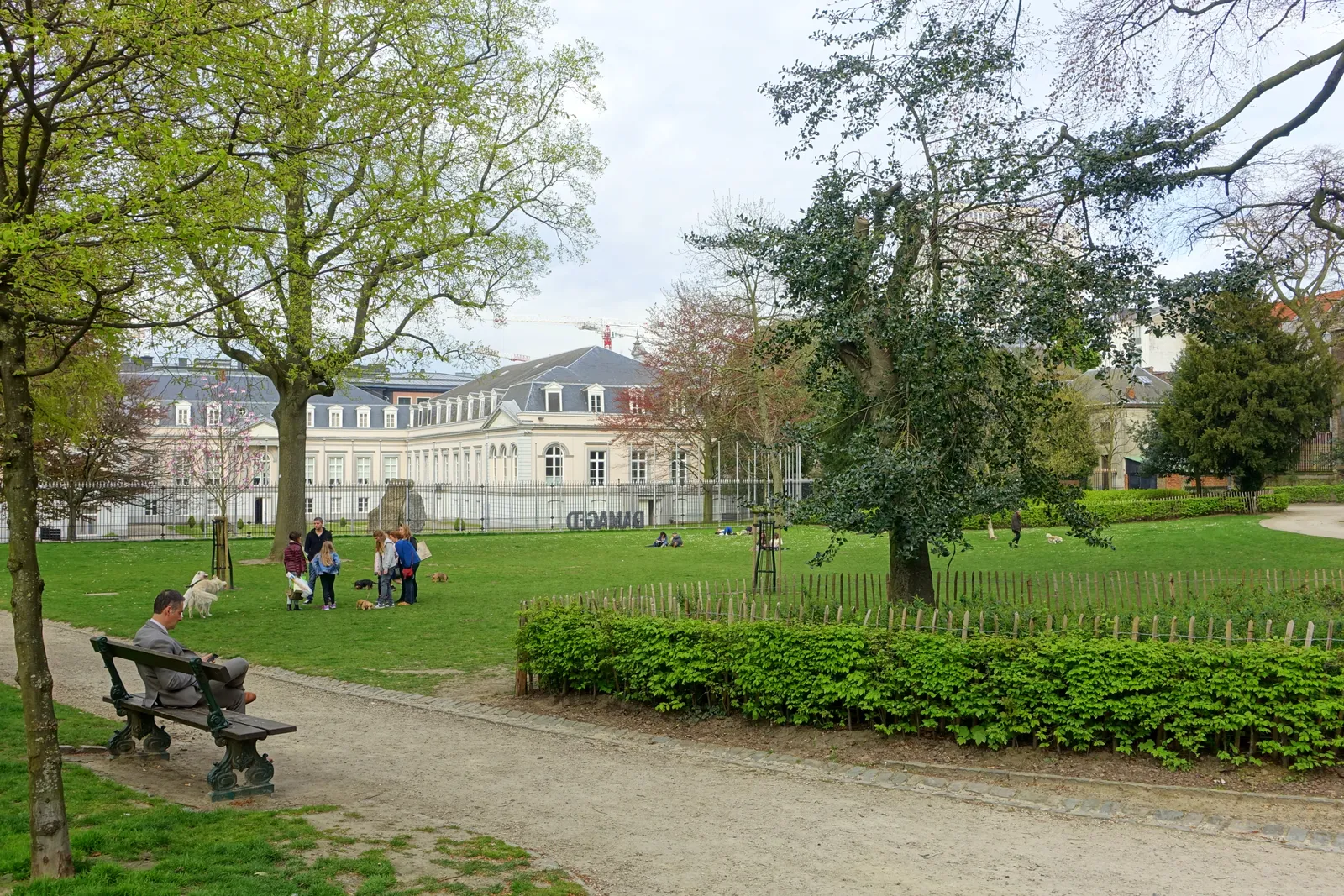
Inside is lawn, gravel, an orangery and a bronze Peter Pan under the trees, a copy of George Frampton’s Kensington Gardens figure. It is free, it closes at dusk, and on a weekday afternoon it is close to empty, which after the Grand Sablon’s terraces is the point.
The Sablon is uphill from every station that matters
There is no station on the Sablon itself. Brussels-Central is about ten minutes’ walk downhill and north, and the walk back up is the part people underestimate; from there, trains to Brussels Airport-Zaventem take about 17 minutes, four to six an hour, from roughly 5:30 in the morning until roughly 23:30 at night, at a little over 11 euros with the fixed airport supplement included.
Trams also run along the Rue de la Régence past the square if you would rather not do the climb in either direction. Whichever you pick, add the walk to the ride rather than working from the 17 minutes alone, collect your bag on the way through the centre, and buy the airport ticket before you are standing at the barrier.
Frequently asked questions
Is the Sablon worth it on a weekday, without the market?
Yes, and it is a different place. The antique dealers' tents only go up on Saturdays and Sundays, so on a weekday you get the square itself: the shopfronts, the terraces, and the two gardens with nobody queuing for anything. The dealers who keep permanent premises around the edge are open in the week regardless. If the market is the whole reason you were coming, that is a weekend trip, not an any-day one.
How long does the Sablon take?
Two hours covers the two squares, the garden and the park at a slow pace, and that is the honest size of this stop. It is the most compact thing in central Brussels: the Petit Sablon garden is a minute from the Grand Sablon, and the Egmont park gate is a minute beyond that. If you have four or more hours, spend the surplus on the guildhall and arcade walk in the lower town rather than stretching this one out.
Is the Egmont Park easy to find?
Not especially, which is most of its appeal. It sits behind walls in the grounds of the Egmont Palace with gates off the Petit Sablon and the Boulevard de Waterloo, and there is nothing on the street to suggest a park is back there. Inside it is lawns, gravel paths and benches, with a bronze Peter Pan among the trees, a copy of the Kensington Gardens one. It is free and it closes at dusk.
Can you buy chocolate to take on a flight?
Yes, and it travels better than most food souvenirs, but heat is the enemy rather than security. Pralines with fresh cream fillings have a short life and will not enjoy a warm cabin; solid bars and ganache keep far better. Shops on the square will pack a box for travel if you say it is going on a plane. Buy on the way back rather than at the start of your afternoon.