Amsterdam Layover Guide: Dam Square From AMS
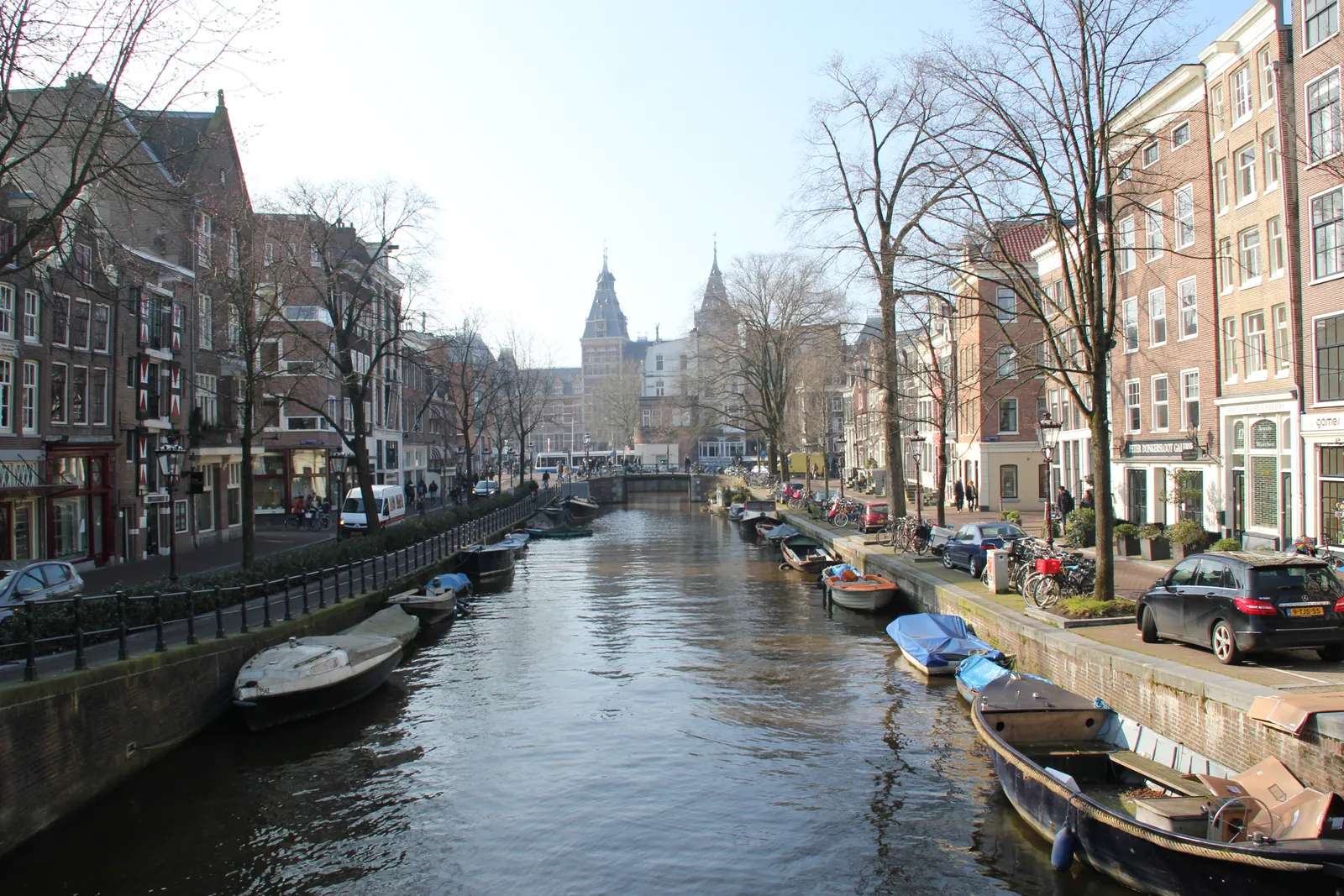
Dam Square, the walled Begijnhof courtyard, and the UNESCO-listed canal ring sit within a fifteen-minute walk of each other in central Amsterdam, all free to enter.
Dam Square, where the city started
Amsterdam Centraal, the city’s main train station, sits at the head of Damrak, which runs dead straight south to Dam Square in about ten minutes. It’s a busy, touristy stretch of waffle stands and currency exchanges, but it’s also the fastest way in: the parallel side streets add time without adding much to see.
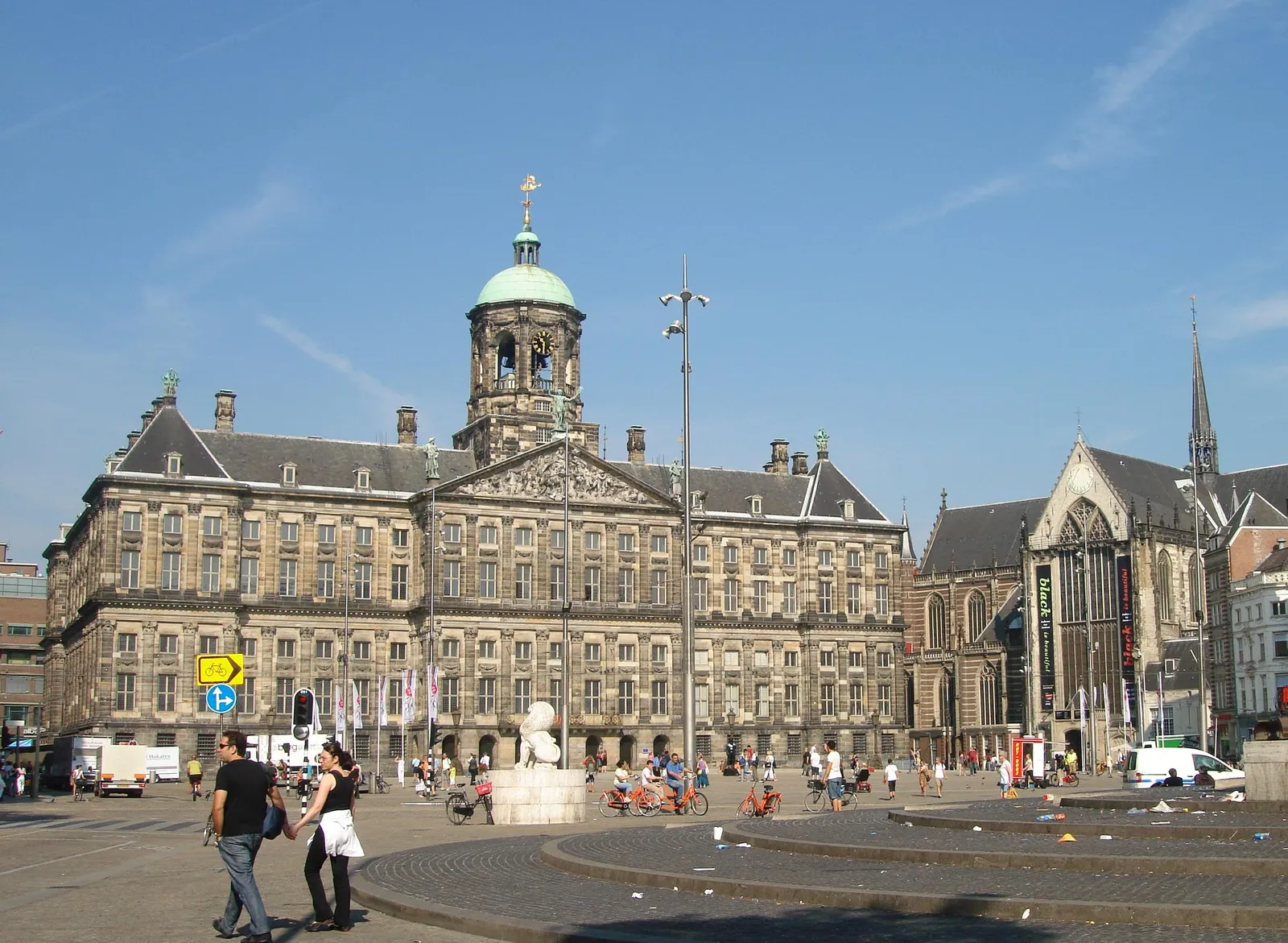
Dam Square is where the city started, on the actual dam across the Amstel that gave the place its name. The Royal Palace on the western side was not built as a palace at all. It went up in the 1660s as Amsterdam’s city hall, at the peak of the Dutch Golden Age, on nearly 14,000 wooden piles driven into the marsh, and it only became a royal residence after Napoleon installed his brother as king. Next to it, the Nieuwe Kerk stopped functioning as a parish church long ago and now runs exhibitions, though Dutch monarchs are still inaugurated inside it.
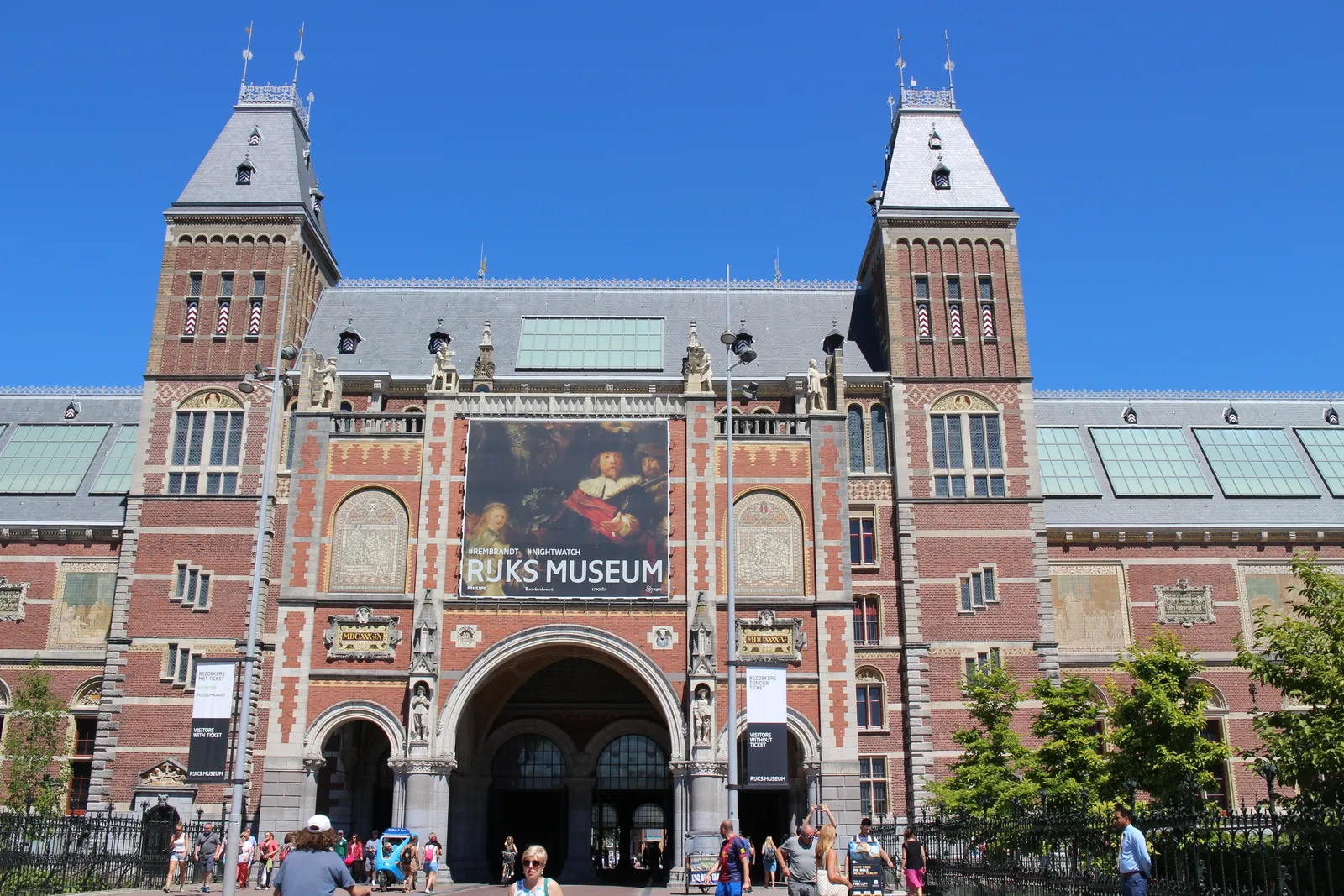
A public cycle path straight through the Rijksmuseum
A tram from Dam Square reaches Museumplein in about fifteen minutes each way, worth the detour if there’s room in the afternoon. The Rijksmuseum is worth the stop even before you buy a ticket, since a public cycle path runs straight through the archway under its centre. Inside, the Gallery of Honour and Rembrandt’s Night Watch are the reason people queue, and a timed entry slot booked ahead saves standing in line.
The Amsterdam layover built around the Rijksmuseum and Museumplein goes deeper if a museum visit ends up being the whole plan rather than an add-on. Amsterdam’s bike lanes run exactly where a distracted walker steps to get out of the way, and the canal-side pavements narrow to a person and a half wide once the parked bikes are counted.
A gate off Spui that most people walk straight past
From the Dam, head south on Kalverstraat for five minutes and then get off it. Kalverstraat is a shopping street and behaves like one. What you want is a plain wooden door in a wall just off Spui, which opens into the Begijnhof.
Inside is a lawn ringed by low houses, a chapel, and near-total silence, one block from the busiest retail street in the Netherlands. It was founded in the fourteenth century for the beguines, laywomen who lived in a religious community without taking full vows, and the last of them died in 1971. People still live in these houses, which is why the courtyard asks you to keep your voice down and stay out of the front gardens. Number 34, Het Houten Huys, dates from around 1528 and is one of only two wooden houses left standing in the centre after the city banned timber facades in the wake of its great fires.
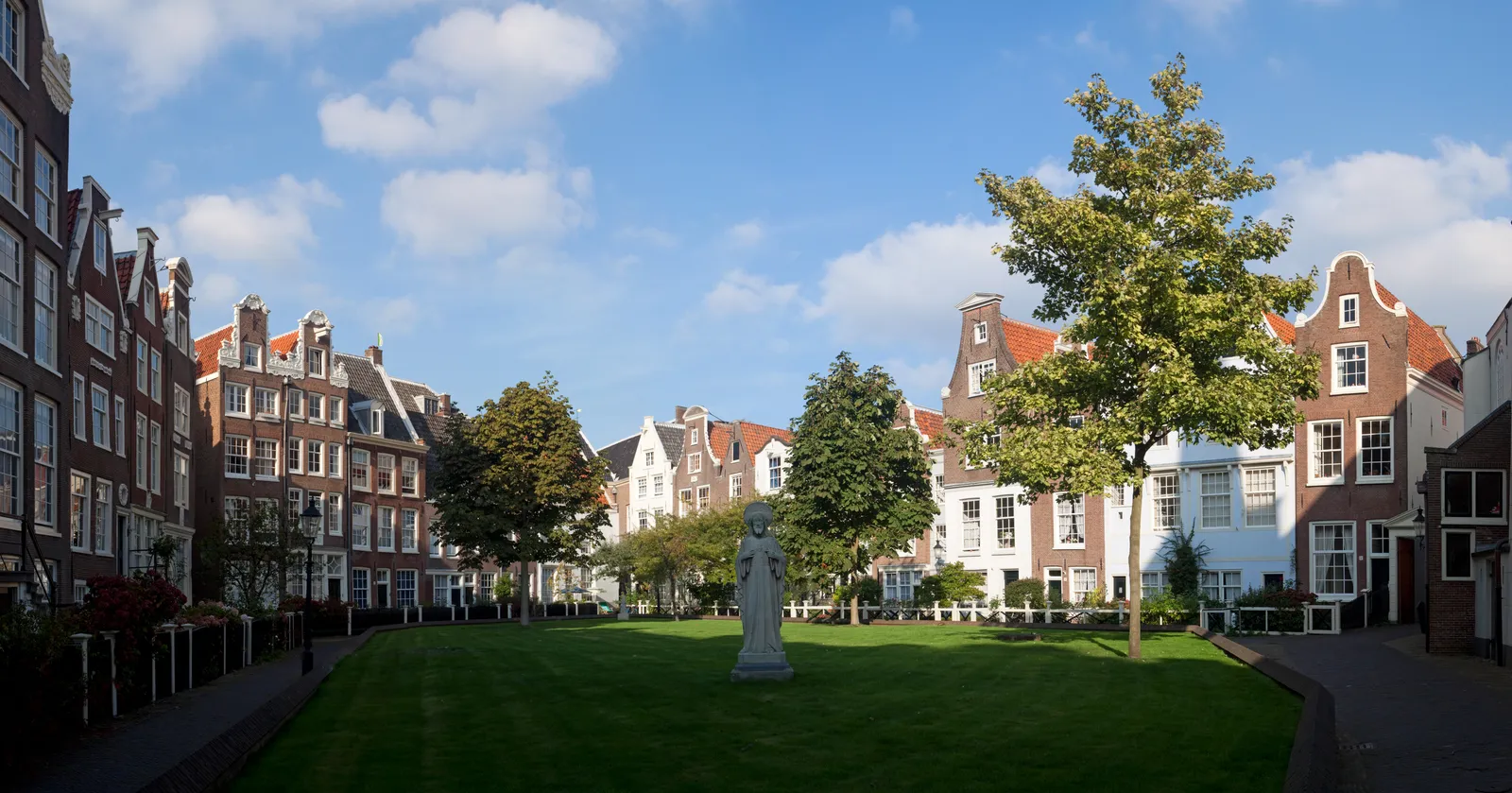
Entry is free. The gates open around 9am and close around 5pm, so if your flight window is a late-evening one, do this stop first or accept that you will be looking at a shut door.
Where the canal ring earns the UNESCO listing
Walk west from Spui and within two minutes you are crossing the three great seventeenth-century canals in order: Herengracht, Keizersgracht, Prinsengracht. This grid, dug as a single planned expansion starting in 1613 and listed by UNESCO in 2010, is the thing you actually came to see, and unlike almost everything else on this page it requires no ticket, no queue, and no opening hours.
The stretch known as the Nine Streets runs between them: nine short cross-streets of small shops and cafés that connect the canals like rungs on a ladder. Keep going west across Prinsengracht and you are in the Jordaan, built as a workers’ quarter and now a grid of narrow, tree-lined streets to walk without a plan.
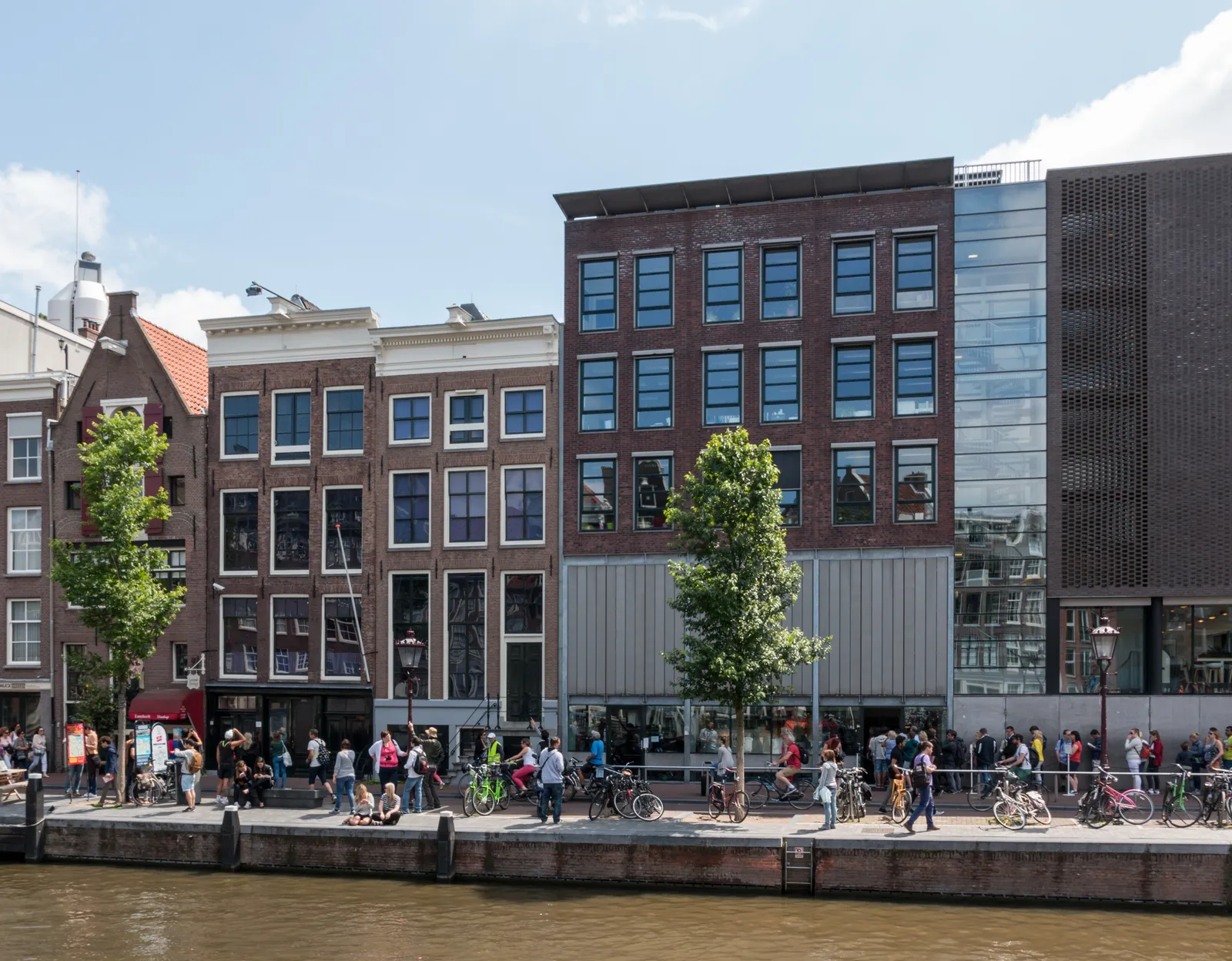
The Anne Frank House is on Prinsengracht at the edge of it, and it is worth knowing before you get your hopes up that you cannot simply walk in: tickets are online-only and most of them are gone six weeks ahead.
The OBA library’s free seventh-floor terrace
A ten-minute walk east of Centraal, the OBA central library at Oosterdok is a working public library that anyone can walk into, and the top floor has a café and an open terrace looking back over the water at the old city.
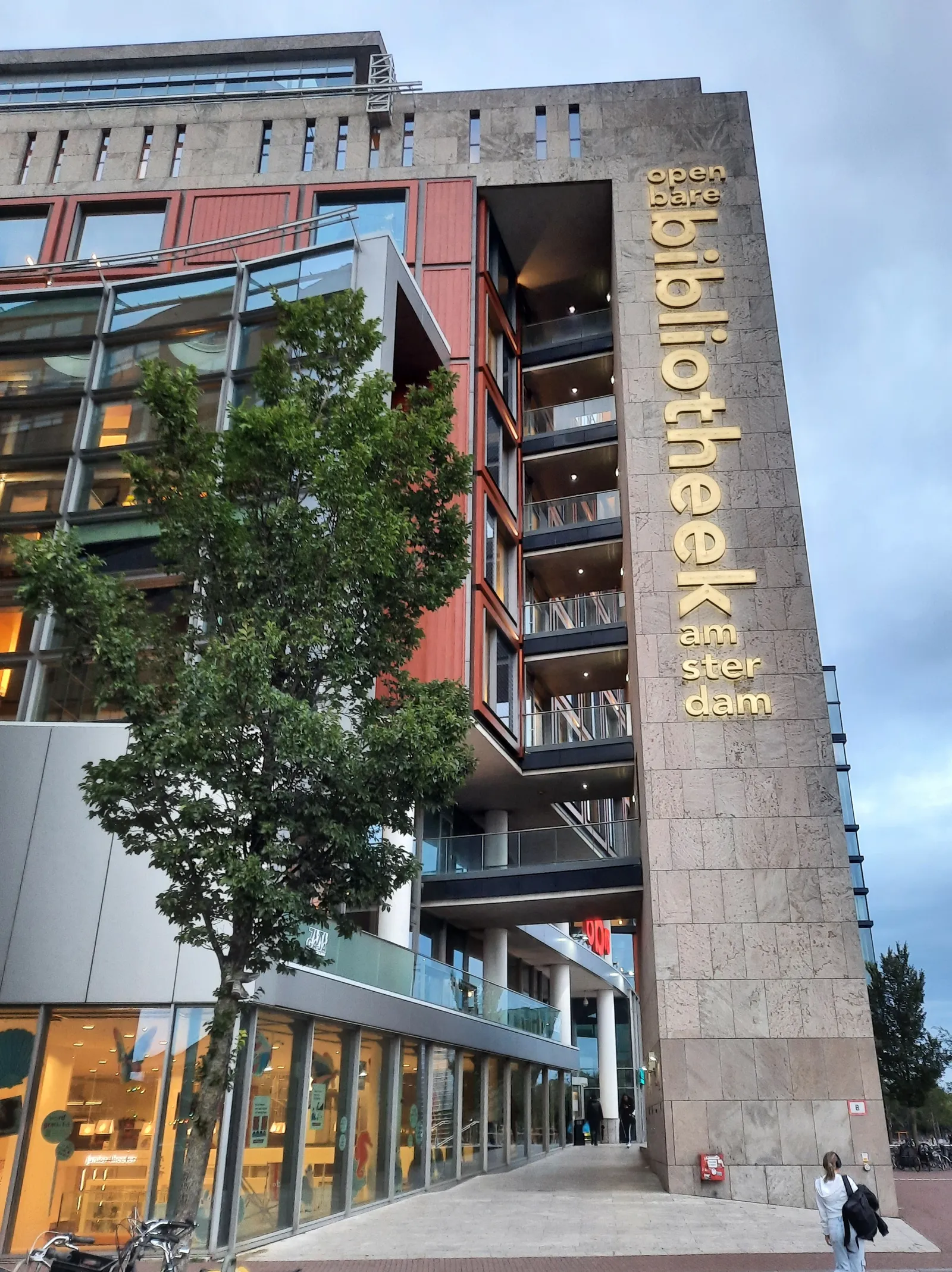
It is free to go up, it is open daily until around 10pm, and it is a genuinely useful place to sit out a rain shower before a flight, or to catch the view if the Rijksmuseum’s timed slots are gone for the day. The outdoor half of the terrace is a warm-season arrangement, roughly April to October, but the glazed floor is there year-round.
NS trains to Schiphol run every five to ten minutes
Trains run from Amsterdam Centraal to Schiphol every five to ten minutes and take about 15 to 20 minutes, on NS Intercity or Sprinter services, both valid on the same ticket at roughly 6 to 7 euros in second class. Buy from the machines or the NS app before you board; there is no on-train sales option and travelling without a valid ticket is an expensive mistake. If you spent your extra time at Museumplein instead, you do not need to double back to Centraal at all, as trains to Schiphol also run from Amsterdam Zuid, a short tram ride from the museum.
The platform at Schiphol comes up directly into Schiphol Plaza, so there is no transfer at the airport end. Collect your bag and aim to leave the centre at least two hours before departure, which on this route leaves a comfortable margin rather than a tight one.
The version of Amsterdam you can actually walk into
This city rewards the small detour: the door off Spui, the cross-street you take because it looked better than the one you planned, the bridge you stop on for no reason. All of that depends on being able to move without thinking about what you are dragging. Leave the bag somewhere central for the afternoon and Amsterdam turns back into what it is on foot, small enough to cross on a whim and free enough that nothing but time limits how much of it you see.
Frequently asked questions
What should I do during a layover in Amsterdam?
Leave your bag near Centraal or the Dam and spend the afternoon on foot: Dam Square and the Royal Palace, the walled Begijnhof courtyard off Spui, and a crossing of the canal ring into the Jordaan cover the compact centre in a few hours, all free to enter. With extra time, the Rijksmuseum is worth the short tram ride out to Museumplein, though the Gallery of Honour is best seen with a timed slot booked ahead rather than queued for on the day. Begijnhof's gates close around 5pm, so fit that stop in before the canal walk if the afternoon runs late.
How long does the train from Amsterdam Centraal to Schiphol take?
About 15 to 20 minutes, and there are trains roughly every five to ten minutes across the day, run by NS. Both Intercity and Sprinter services are valid on the same ticket, which costs around 6 to 7 euros one way in second class. The platform sits directly under Schiphol Plaza, so you walk up an escalator and you're in the departures hall.
How do I pay for a tram or the metro if I need one?
Tap a contactless Visa or Mastercard, or your phone, on the reader as you board, and tap the same card again as you get off. There is no ticket to buy and no card to load. The important half is the second tap: failing to check out generates an automatic penalty, and travelling without a valid check-in at all carries a fine of around 70 euros plus the fare. Fares are by distance, so a couple of stops in the centre costs very little.
What's still open if my free hours are in the evening?
The Begijnhof gates shut around 5pm to give the residents their privacy back, so that one is a daylight stop only. The Dam, the canal ring, and the Jordaan are streets rather than attractions and stay walkable as late as you like, and they look better once the gable lights come on. The central library at Oosterdok stays open until around 10pm, which makes it the reliable indoor option for a late window.
Can I do this whole afternoon without spending anything?
Yes, apart from the train fare at each end. The Begijnhof courtyard is free, Dam Square and the canal ring cost nothing to walk, the viewing terrace at the central library is free to go up to, and the GVB ferries across the IJ behind Centraal are free with no ticket at all. Only the Rijksmuseum and a canal boat cruise need a paid ticket.
Should I rent a bike for a few spare hours?
Probably not on a flight day. Amsterdam's cyclists move fast, in dense lanes, with right-of-way conventions that take a while to read, and rental bikes are conspicuous enough that locals actively give them a wide berth. Tram tracks in the centre are also the right width to catch a narrow tyre. The centre is small enough that walking costs you very little time and none of the stress.