Amsterdam Layover: Jordaan & Anne Frank
Part of the full Amsterdam Layover Guide: Dam Square From AMS
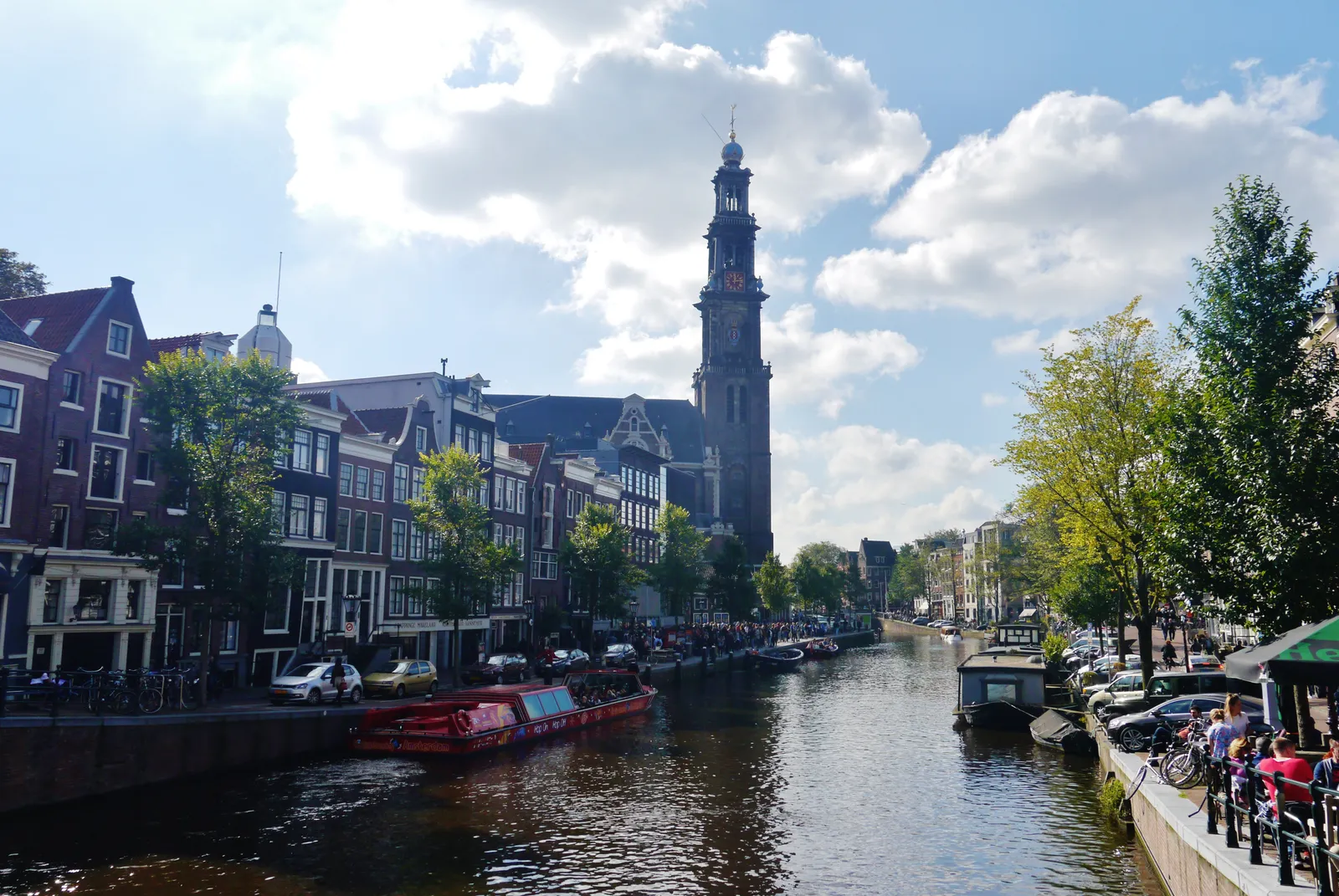
In the Jordaan, west of Amsterdam’s canal ring, the Westerkerk and the Homomonument stand a few steps from the Anne Frank House queue on Prinsengracht, with the neighbourhood’s hidden almshouse courtyards and the Noordermarkt beyond.
The Anne Frank House queue on Prinsengracht
Stand on the bridge at Westermarkt and you will see a line of people along Prinsengracht. It is worth understanding what it is before you join the end of it, because it is not what it looks like.
That queue is for the Anne Frank House, and every person in it already has a timed ticket. There is no counter, no standby, and no way to buy one at the door. Most of each day’s tickets are released six weeks ahead and disappear in minutes; a smaller batch goes on sale online at 9am on the morning of the visit itself. If you are reading this on a flight day, the honest answer is that you are almost certainly not going in, and the plan below is better than standing in the wrong line finding that out.
What you can do, for nothing, is the church next to it. The Westerkerk was completed in 1631 to a design by Hendrick de Keyser, and its tower is the tallest in the city at around 85 metres, topped with a gaudy blue and gold imperial crown. Rembrandt is buried inside, in an unmarked pauper’s grave, having died broke in 1669 in a rented house on the Rozengracht two streets away; there is a memorial on the wall because nobody knows precisely where he is. The bells in that tower are the ones Anne Frank wrote about hearing from the annexe.
Set into the pavement on the Westermarkt side, and almost universally walked over without being noticed, is the Homomonument: three pink granite triangles laid out to form one larger triangle, unveiled in 1987 to commemorate gay men and lesbians persecuted for their sexuality. It was the first monument of its kind anywhere in the world. One of the triangles steps down to the water, and there are usually flowers on it. The canal-side pavement along most of this walk is barely a person and a half wide once the parked bikes are counted, and every bridge is humpbacked with steps rather than a ramp at each end.
The Jordaan’s hidden courtyard almshouses and the Noordermarkt
Once you accept you are not getting into the Anne Frank House, this becomes a much better afternoon.
Head west off Prinsengracht into the grid of small streets, and start looking for doors that do not belong: plain, often unmarked, sometimes with a date over them.
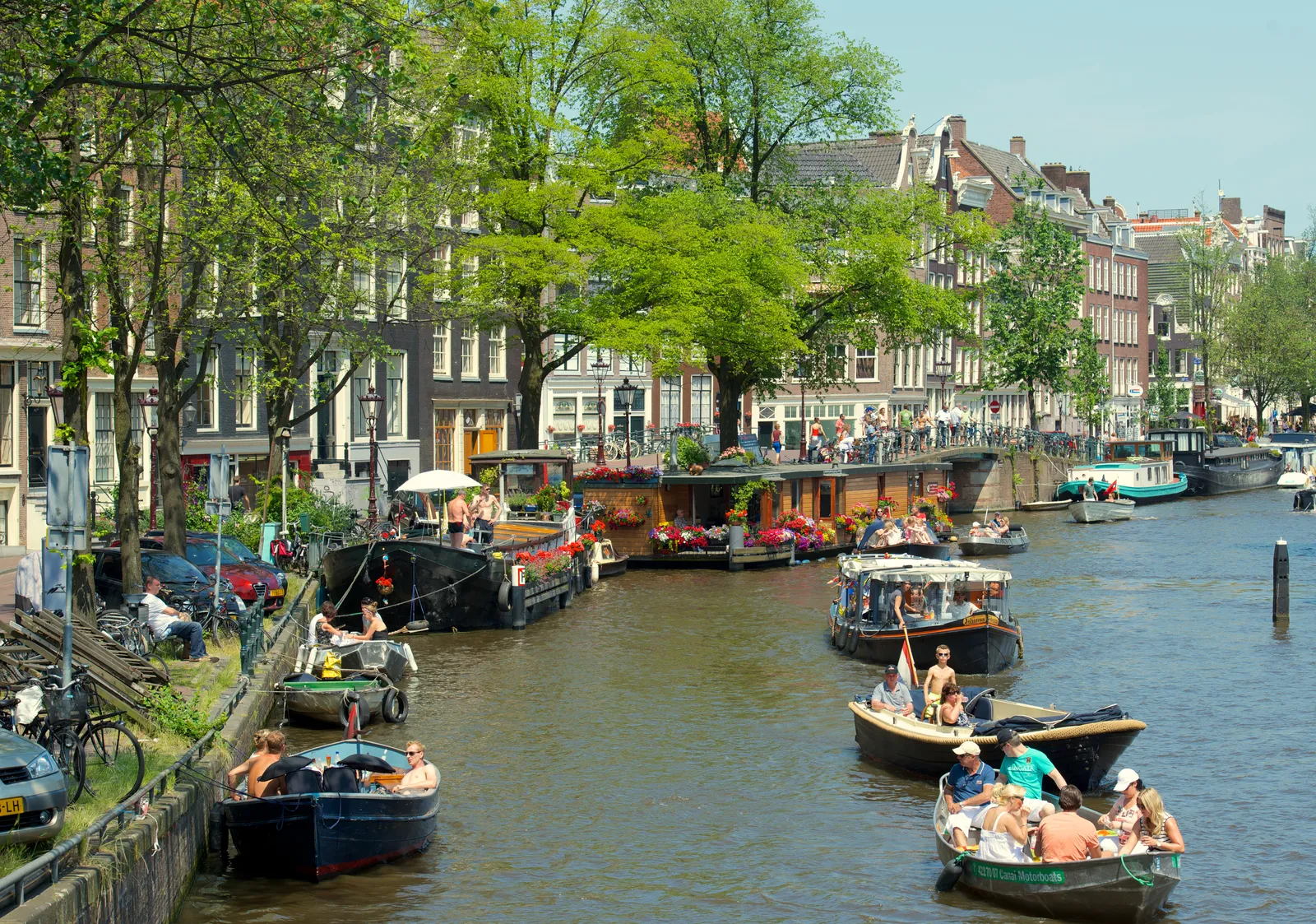
These are the hofjes, courtyards of almshouses built by rich benefactors from the seventeenth century onward to house elderly women, arranged around a garden and hidden entirely from the street. Several are open to quiet visitors during the day. People still live in them, so the rules are the obvious ones, but stepping off a busy street into a silent walled garden with no warning at all is what this neighbourhood does best.
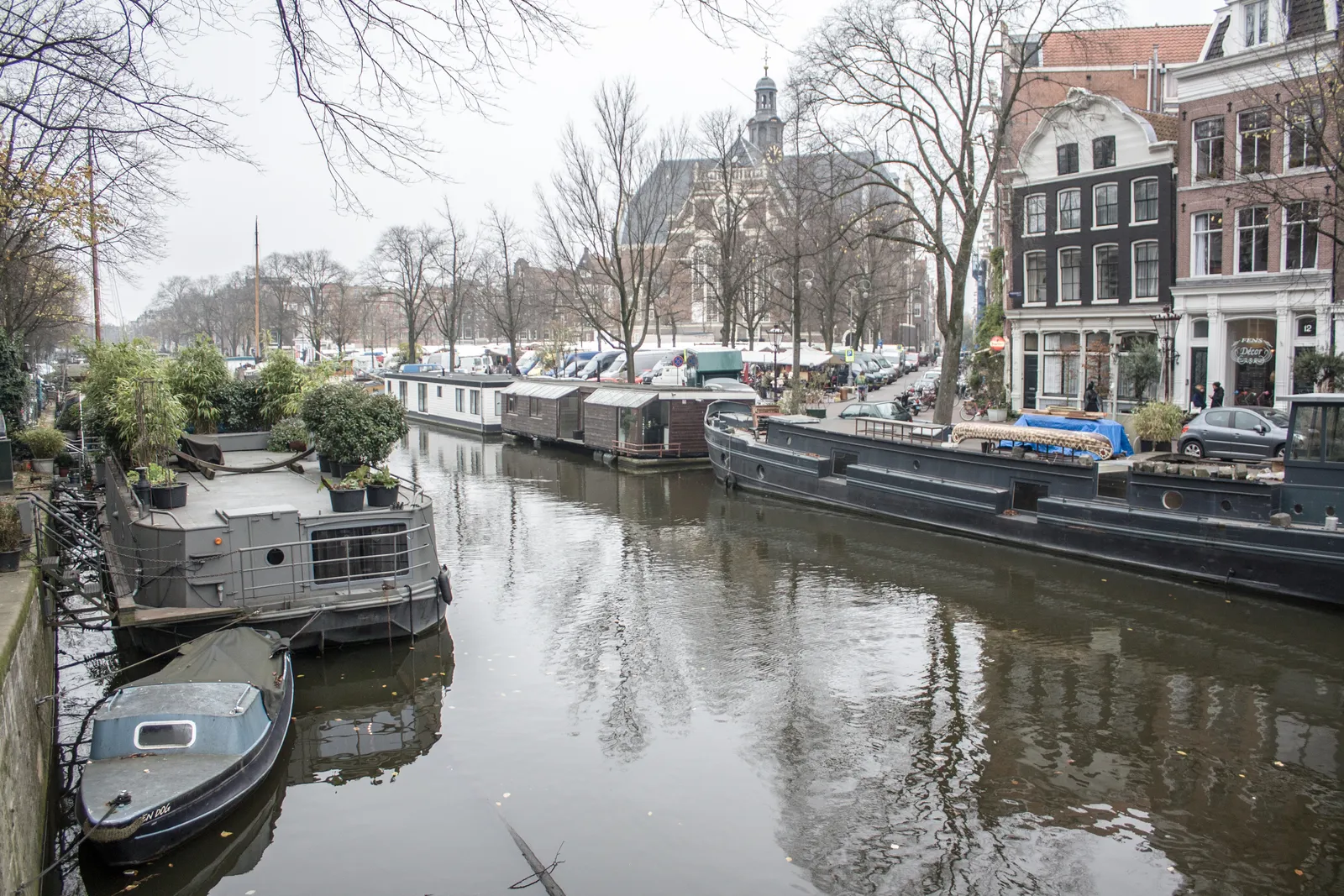
Work north and the streets open onto the Noordermarkt, the square in front of the Noorderkerk. On Saturdays it holds an organic farmers’ market from around 9am to 4pm, which is the version worth timing your day around; Monday mornings bring a flea and fabric market instead, roughly 9am to 2pm. The rest of the week it is a square with good cafés on it and the usual line of houseboats along the canal behind.
Twenty minutes on foot to Amsterdam Centraal
From the Noordermarkt it is about twenty minutes on foot east to Amsterdam Centraal, or a few minutes on tram 13 or 17 from Rozengracht, and from Centraal the airport train leaves every five to ten minutes and takes 15 to 20. Give yourself an hour and a half from the moment you pick the bag up.
The Jordaan is the part of Amsterdam that rewards having no plan, which only works if you are equipped to change your mind about which street to take. Left holding a suitcase on a single-file quay, you are committed to the route you started on, and that is the opposite of what this neighbourhood is for. For a plan that does cross the whole city, the full Amsterdam guide starts on the other side of the canal ring.
Frequently asked questions
Is it worth queueing at the Anne Frank House without a ticket?
No. There is no ticket counter and no standby line, so whatever queue you see on Prinsengracht is people who already booked. Tickets are online only and most of each day's slots go six weeks in advance. A smaller batch is released on the morning of the visit at 9am Dutch time, which is the only realistic same-day route and is gone quickly. Plan the afternoon on the assumption you are not getting in.
Can I go up the Westerkerk tower?
In the warmer part of the year, on weekdays, in guided groups of about six at a time, for somewhere around 7 to 8 euros, and you need to book a slot rather than turn up. Capacity is genuinely tiny. The church itself is free to walk into on weekday middays, which is where Rembrandt is buried.
What are the hofjes and can you go in?
They are almshouse courtyards, built by wealthy benefactors from the seventeenth century onward to house elderly women, and the Jordaan has a scattering of them behind unmarked doors. Several allow quiet visitors during daylight hours. They are still people's homes, so the etiquette is the same as the Begijnhof: low voices, no photographs into windows, and out again before evening.
When are the markets on Noordermarkt?
Saturday is the organic farmers' market, roughly 9am to 4pm, and it is the good one. Monday morning brings a flea and fabric market, roughly 9am to 2pm. On any other day the square is just a square with cafés around it, which is pleasant but not a reason to plan your route through it.
Can I take a canal cruise here instead of walking?
Yes, and Prinsengracht is one of the easier places to pick one up: several operators run short boat trips from jetties along the canal within a few minutes of the Westerkerk. It is a different pace from the walk below, sitting rather than stopping at doors, so treat it as an alternative to this itinerary rather than an add-on to it. A cruise booked ahead avoids queueing at the jetty.
How do I get from the Jordaan back to the airport?
Walk east to Amsterdam Centraal, which is about 20 minutes from the Westerkerk, or pick up tram 13 or 17 on Rozengracht. From Centraal the train to Schiphol runs every five to ten minutes and takes 15 to 20.