Amsterdam Layover: Noord & NDSM Wharf
Part of the full Amsterdam Layover Guide: Dam Square From AMS
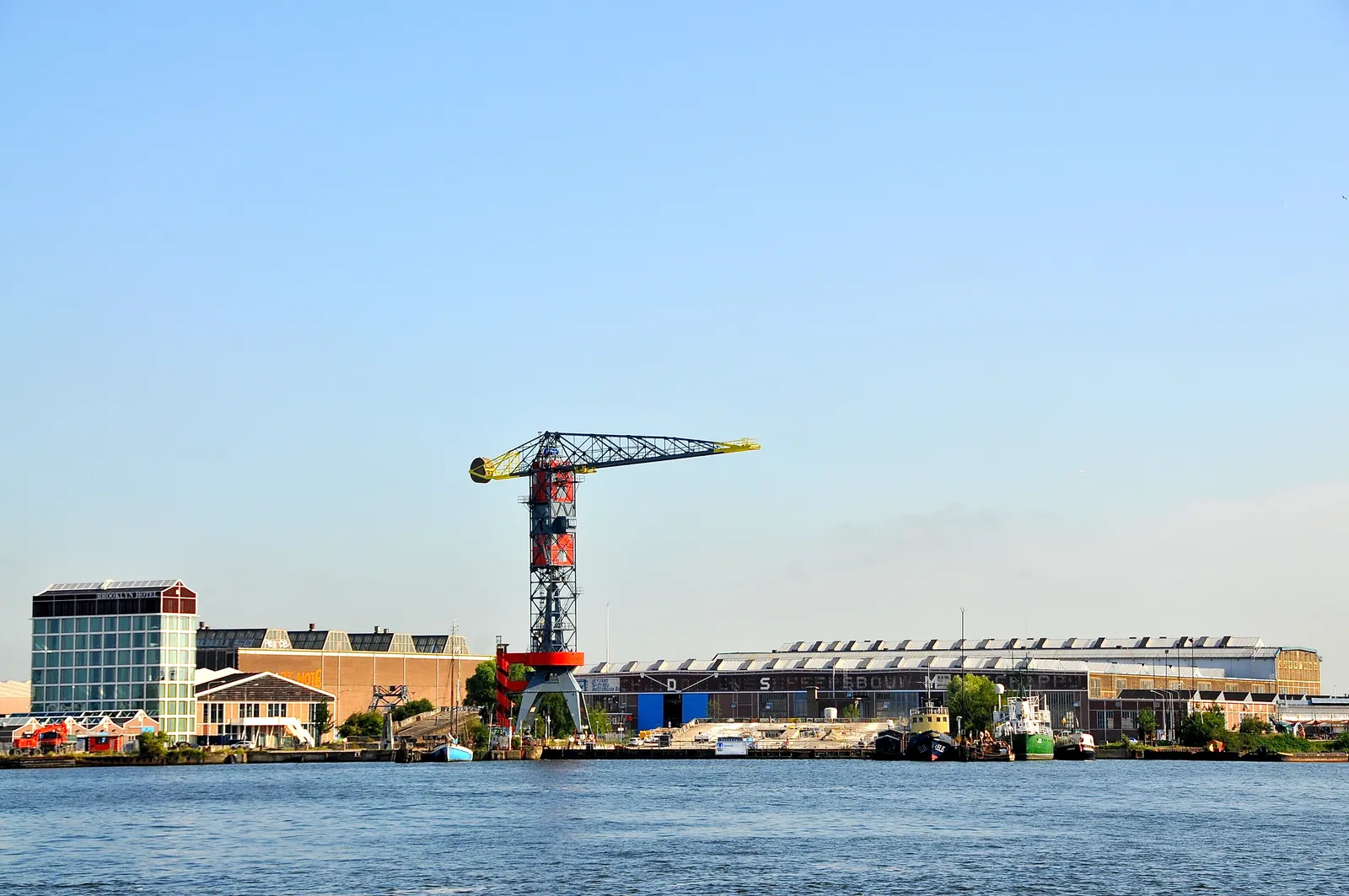
A free GVB ferry crosses the IJ from behind Amsterdam Centraal into Amsterdam Noord: four minutes to the Eye Filmmuseum at Buiksloterweg, or fourteen minutes west to the painted warehouses of the NDSM shipyard.
A free ferry behind Amsterdam Centraal
Almost everyone arriving at Centraal walks out of the front. The back of the station opens onto the IJ, the stretch of water Amsterdam actually grew up on, and a row of ferry berths with countdown boards over them.
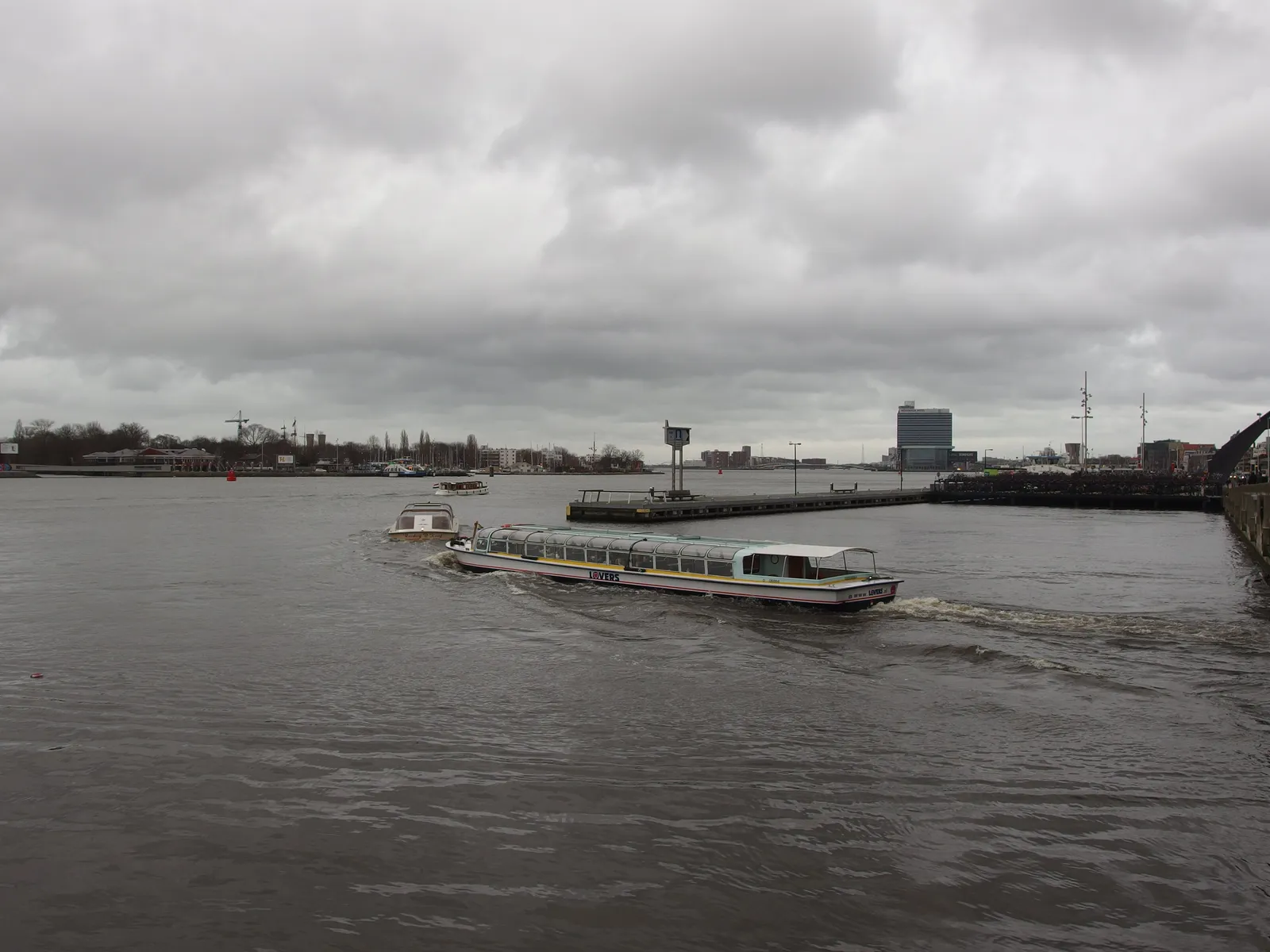
These are GVB ferries, and they are free. Not cheap, not covered by a travel card: free, with no ticket, no tap and no booking. You walk on, and bicycles come on free as well, which is why half the deck is usually bikes.
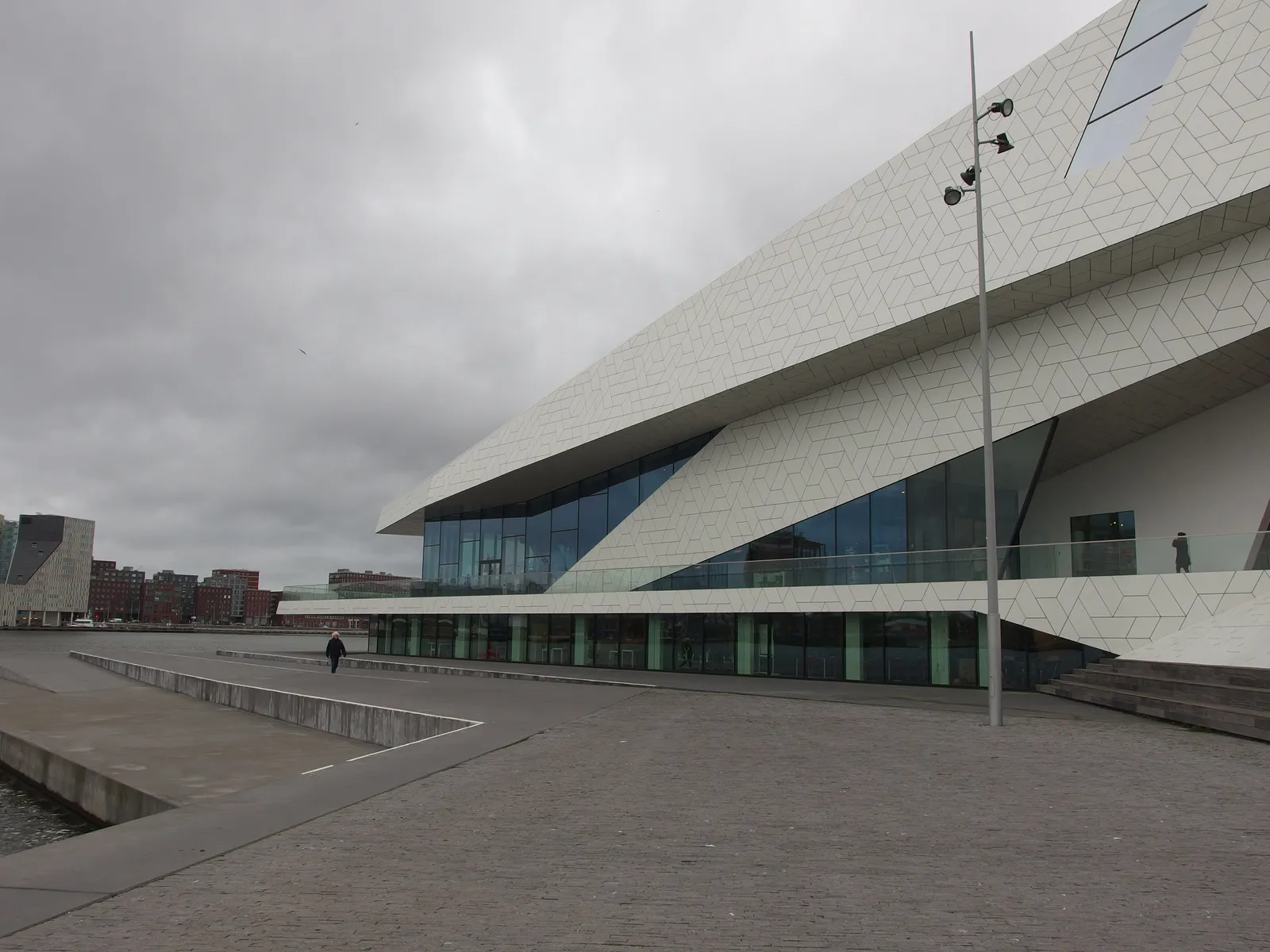
The short one is F3 to Buiksloterweg, three or four minutes across, running every six minutes or so through the day, every twelve after 9pm, and around the clock. It puts you out next to the Eye Filmmuseum, the sharply angled white building that looks like it is about to slide into the water, opened in 2012, with the A’DAM Toren next door.
The long one is F4 to NDSM, about fourteen minutes west along the water, every fifteen minutes when it is busy and every half hour when it is not. That fourteen-minute ride is, in practice, a free harbour cruise past container terminals and houseboats, at no cost next to the ticketed canal boat tours leaving from the centre.
A shipyard nobody tidied up
NDSM stands for Nederlandsche Dok en Scheepsbouw Maatschappij, and until the 1980s this was one of the largest shipyards in Europe. When it closed, the site sat derelict long enough for artists and squatters to move into the sheds, and the redevelopment that followed left most of the industrial fabric where it was rather than clearing it.
The result does not look like anywhere else in Amsterdam. Gantry cranes still stand on the quay, one of them converted into a hotel with rooms in the machinery housing. The warehouses are painted end to end. There are shipping containers stacked into studios, boats moored as homes and bars, and a lot of open, windy, unlandscaped ground between them, cracked concrete, tram rail, cobbles and gravel, since nobody paved it for pedestrians.
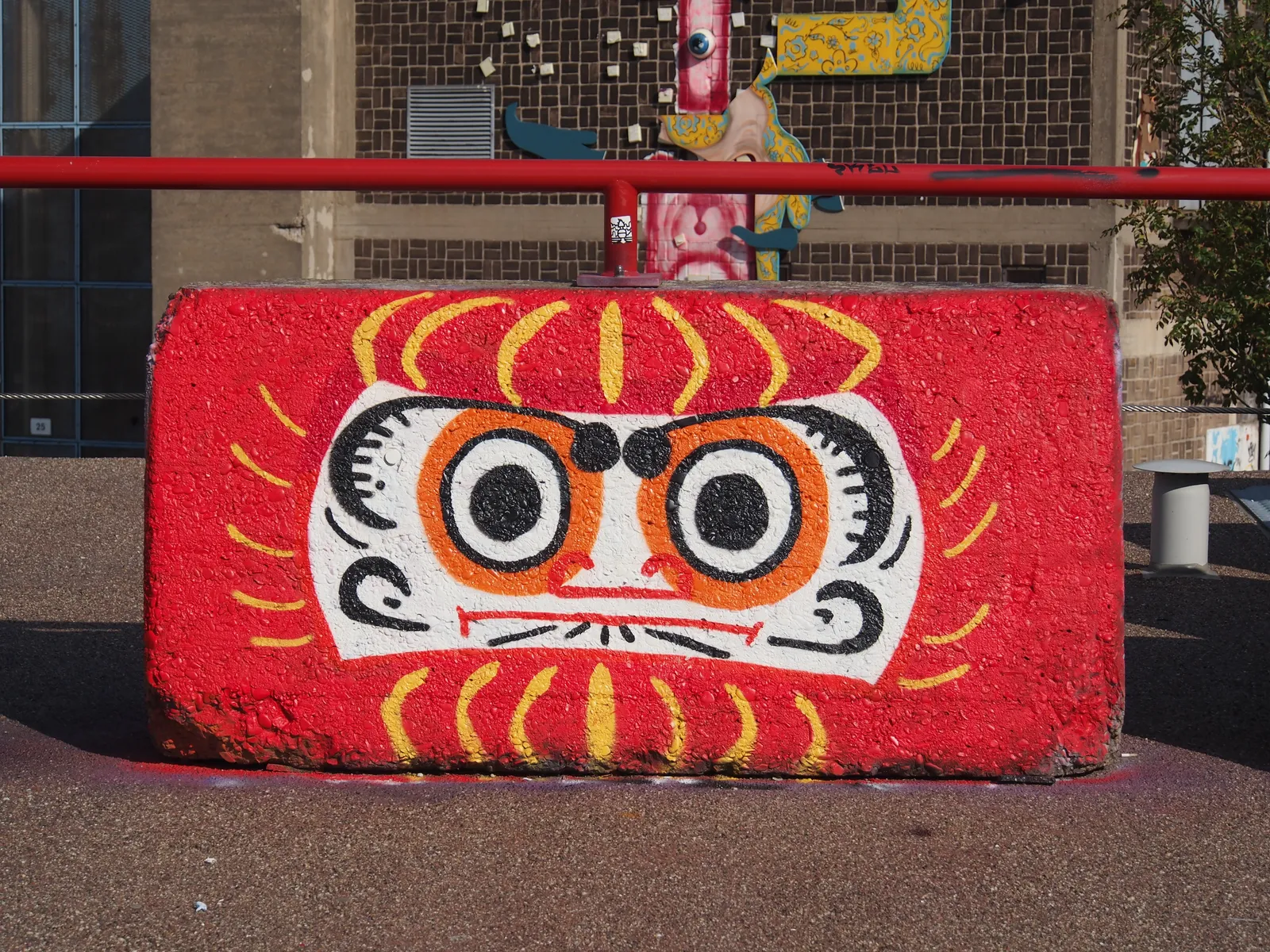
Inside one of the old sheds is STRAAT, a museum of street art and graffiti holding more than 160 very large works, all painted on site by the artists, with new ones added as the collection grows. Admission booked ahead saves time on arrival. On selected weekends the neighbouring hall hosts the IJ-hallen, routinely described as the largest flea market in Europe, which is either a reason to time your visit or a reason to avoid it depending on your tolerance for crowds. The ferries load and unload as a single fast surge with bicycles given priority off the ramp, so a wheeled case there means holding it against your legs the whole crossing rather than setting it down.
Ferries run the same frequency in both directions
The return is the outbound in reverse, and from Amsterdam Centraal the Schiphol train leaves every five to ten minutes and takes 15 to 20. The one thing to watch is the F4 timetable at quiet hours: a missed boat at NDSM costs you half an hour standing on a jetty, which is a bad half hour to lose on a flight day.
What this route offers is the ratio. It costs nothing, it takes you somewhere that looks nothing like the postcards, and the transport is the good part rather than the tax you pay to get there. Put the bag down on the city side and the whole thing becomes what it should be, a boat ride you happen to be taking on the way to an airport, a different pace from the canal ring across the water.
Frequently asked questions
Do the IJ ferries cost anything?
No. The GVB ferries across the IJ are free: no ticket, no card to tap, no booking. You walk on, and bicycles come on free too. They leave from the quay directly behind Amsterdam Centraal, on the water side of the building rather than the city side.
Which ferry do I want?
F3 to Buiksloterweg if you want the short version: three or four minutes across, roughly every six minutes during the day and every twelve after 9pm, running around the clock. F4 to NDSM if you want the shipyard: about fourteen minutes, every fifteen minutes at busy times and every half hour otherwise. They leave from adjacent berths, so check the board.
Is there anything to do at NDSM without paying?
Most of it. The wharf is an open site you can walk around: painted warehouses, gantry cranes, houseboats and a scattering of waterfront bars. STRAAT, the street art and graffiti museum in one of the old sheds, is the main paid thing, and it is worth it if you have the time to give a warehouse full of very large paintings.
How long do I need for this?
Two hours covers the Buiksloterweg crossing and a look at the north bank comfortably. NDSM needs closer to three, because you are spending nearly half an hour of it on the water, and the ferry frequency at quiet times means a missed boat costs you thirty minutes.
Can I do this late in the evening?
The F3 to Buiksloterweg runs 24 hours, so yes, though what is open on the other side is a different question. Late in the evening this becomes a boat ride and a view of the lit-up city rather than a visit to anything, which for a night flight is not the worst use of forty minutes.