Bruges Layover: The Belfry and Canals, BRU
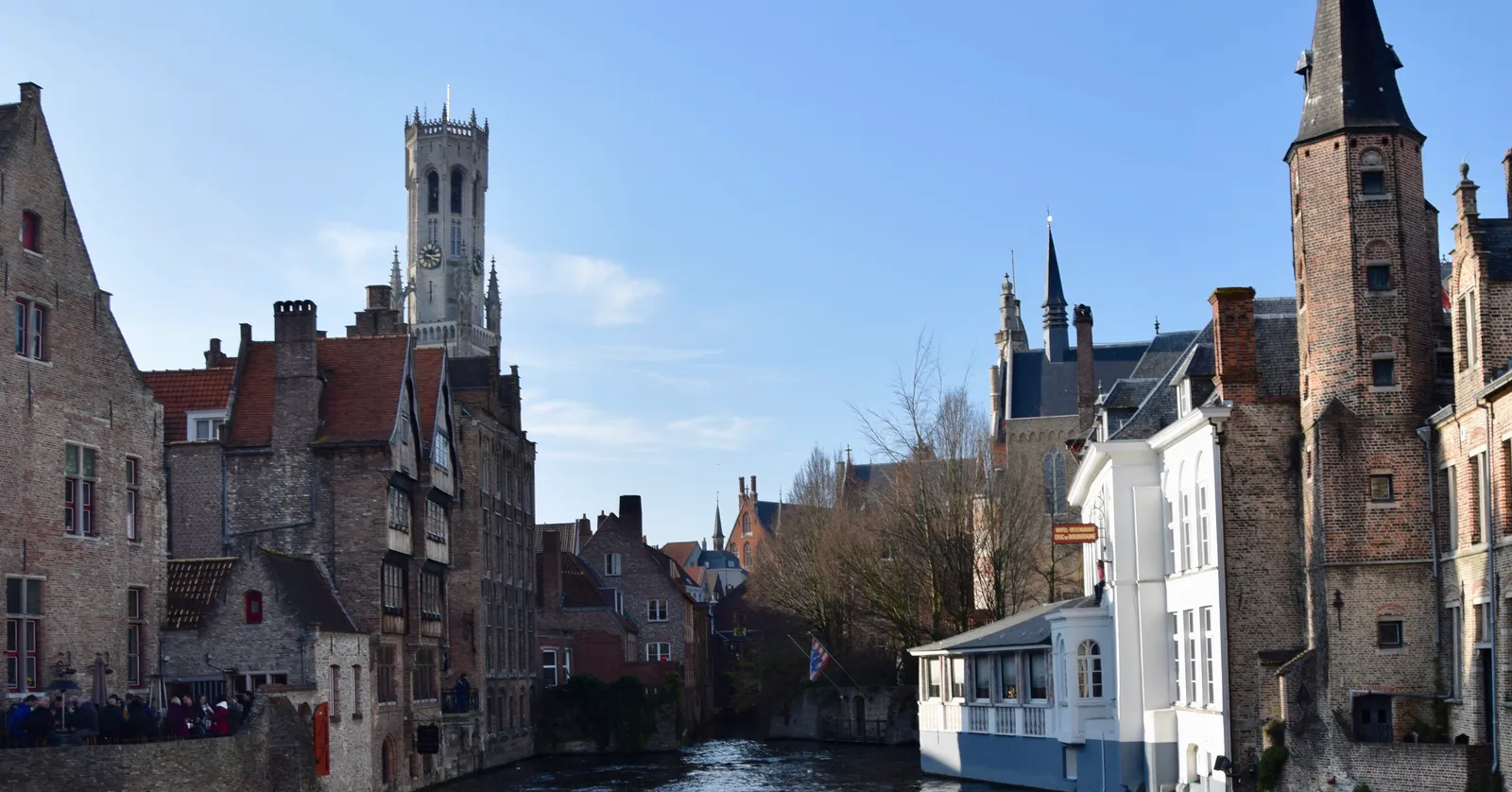
Bruges’ Burg square, the Basilica of the Holy Blood and the Beguinage garden are all free to walk into, and fifteen minutes on foot covers all three. The belfry over the main market square and a half-hour on the canals are the two stops worth paying for, and the medieval centre around them is small enough to cross without getting on anything.
A 47-bell carillon in the belfry above the market square
Bruges’ city carillonneur plays Wednesday, Saturday and Sunday between eleven and noon, and it costs nothing to listen. The sound carries across the Markt, the main square the tower stands on, and there is a bench or two in the belfry’s inner courtyard for anyone who would rather sit. Forty-seven bells hang up there, about 27 tonnes of brass in total.
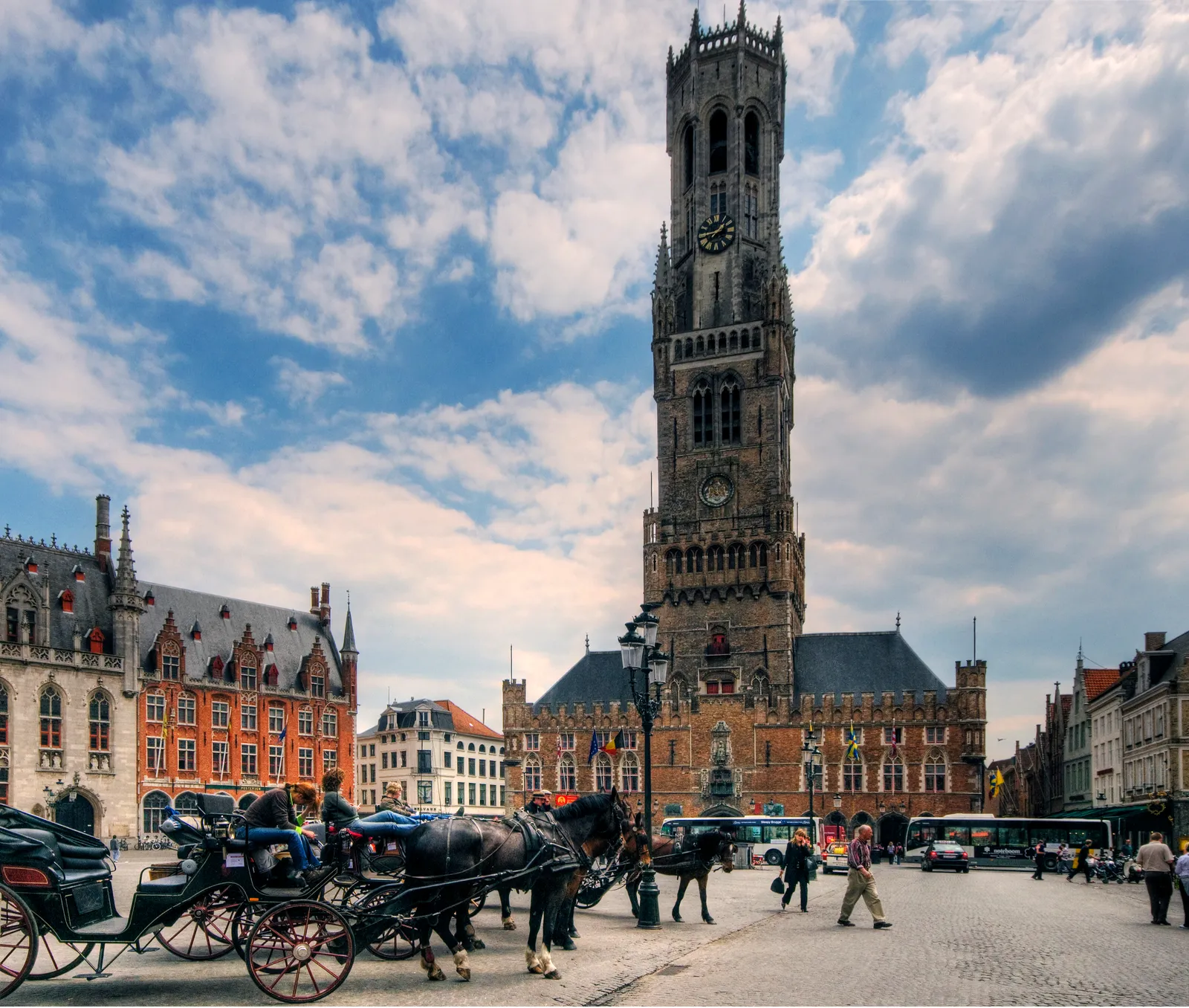
Climbing it is a different proposition: 366 steps to a platform 83 metres up, sold by timed slot at 15 euros in winter and 16 from April to early November, with numbers capped per slot to spare the stairs. If the climb is the reason you came, book a slot before you travel rather than turning up hoping. The square itself asks nothing. A neo-Gothic provincial government building fills one whole side of it, the stepped gables opposite are guild houses rebuilt across several centuries on their original medieval plots, and horse carriages still work the rank in the middle.
The canal boats at the Rozenhoedkaai quay
Five companies run the boats, from jetties on the Rozenhoedkaai, Huidenvettersplein, Wollestraat, Nieuwstraat and Katelijnestraat. They charge the same 15 euros, follow the same thirty-minute circuit and take the same photographs, so the only thing that varies between them is how long you stand there. The Rozenhoedkaai jetty is the one in every picture of the city and reliably the slowest to move in summer; the two southern jetties tend to clear faster.
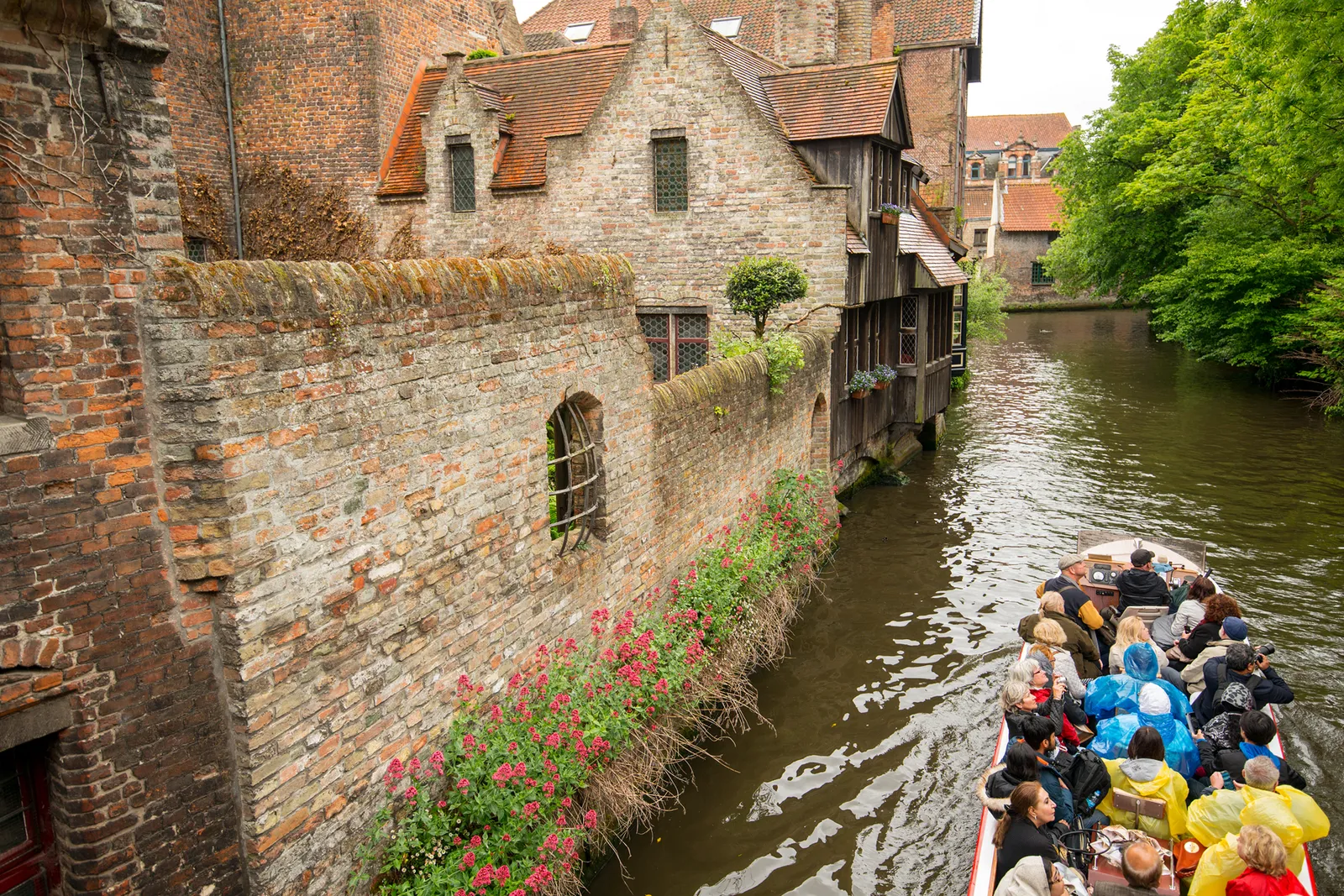
Individuals cannot reserve a seat on any of them, so it is queue-and-wait unless you take a guided walk with the boat ride built into it, which does book ahead. The lanes between the market square and the water are cobbled end to end, and a wheeled suitcase does not roll well over them.
Michelangelo’s Madonna in the Church of Our Lady
Two Bruges cloth merchants, the Mouscron brothers, bought the marble group in 1504 for 100 ducats, and it became the first of Michelangelo’s sculptures to leave Italy in his lifetime. It has been in this church ever since, apart from two wartime removals it came back from.
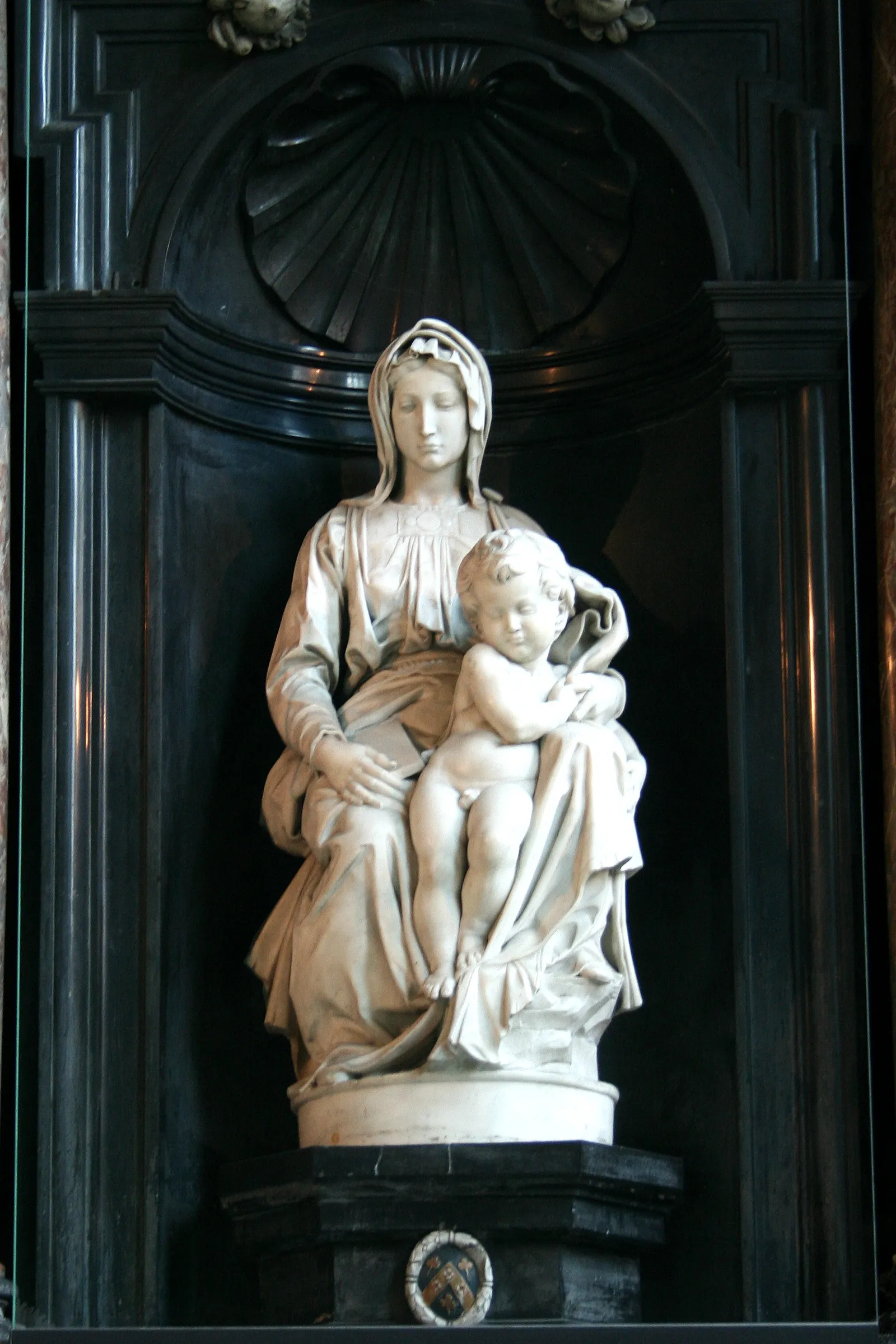
Walking into the church is free. The Madonna stands in the ticketed museum half at the east end, 10 euros, alongside the gilded bronze tombs of Charles the Bold and his daughter Mary of Burgundy. The brick tower over all of it reaches 115.6 metres, taller than anything else in the city by a wide margin. Two minutes along the Dijver, the Groeningemuseum has Jan van Eyck’s Madonna with Canon van der Paele for 15 euros and closes on Mondays through the summer season, which is the obvious answer if the weather has driven the day indoors.
The Basilica of the Holy Blood on Burg square
The relic sits in the upper chapel, reached by a wide stone staircase off Burg square, and neither level charges admission; only the treasury alongside asks anything, at 2.50 euros. It shuts from noon until two every day, which is the single most useful fact about it on a flight day.
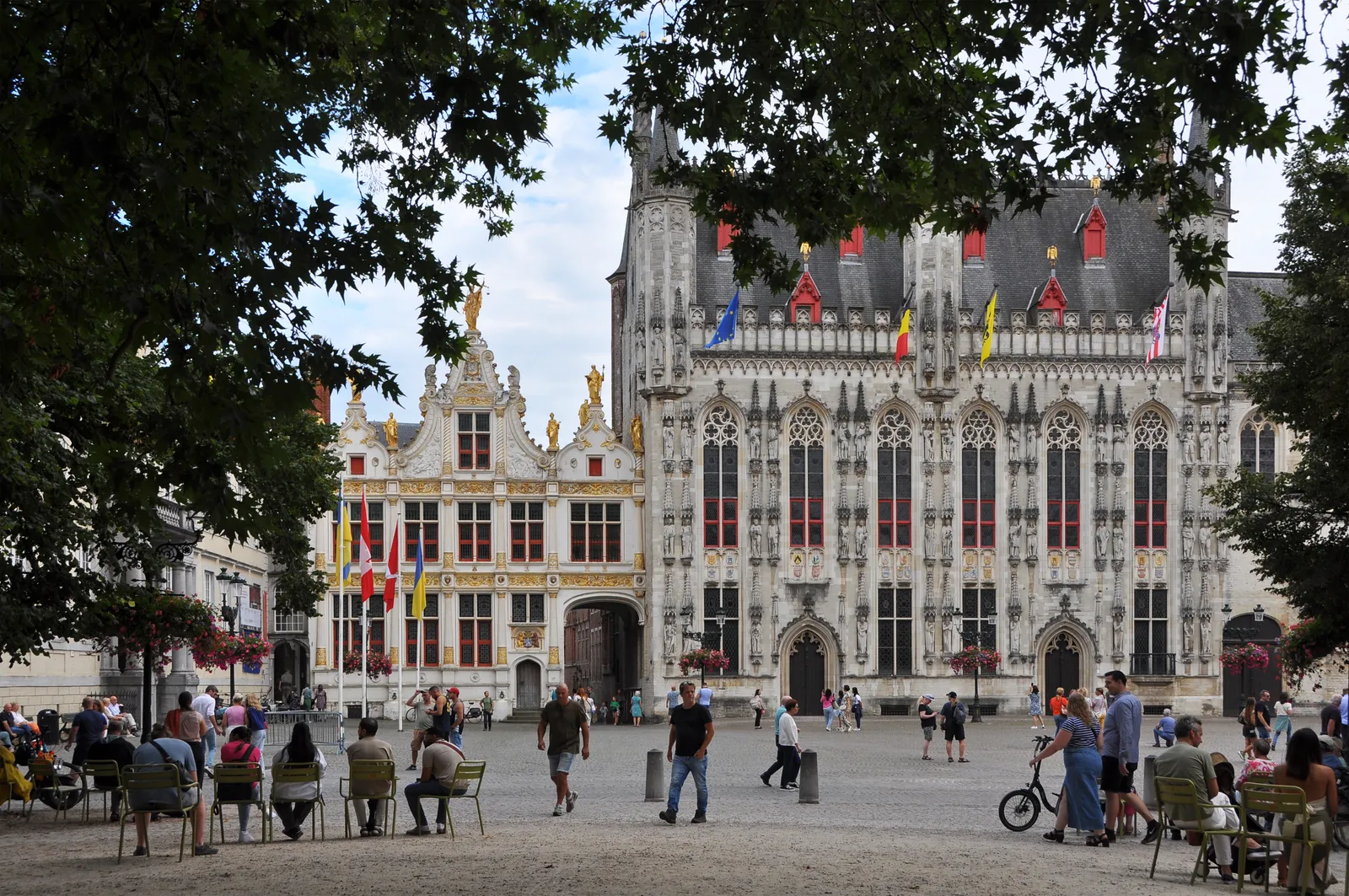
The Burg is the older of the city’s two main squares and the calmer one, a rough rectangle with no market stalls and no carriages. The white Gothic city hall on it was begun in 1376 and has been in continuous civic use since. Next door, the old recorder’s house carries a Renaissance front with gilded figures across the top, put up in the 1530s, by which point the sea channel that made Bruges rich had silted up and the trade had moved on to Antwerp.
The Beguinage garden and the Minnewater lake
The Beguinage, Ten Wijngaerde by its full name, was founded in 1245 for lay religious women who wanted a communal life without taking vows, and Benedictine sisters live in the white houses around the courtyard today. That is why the gates close in the evening, roughly half past six, and why the signs at the entrance ask for quiet. Nothing is charged to go in.
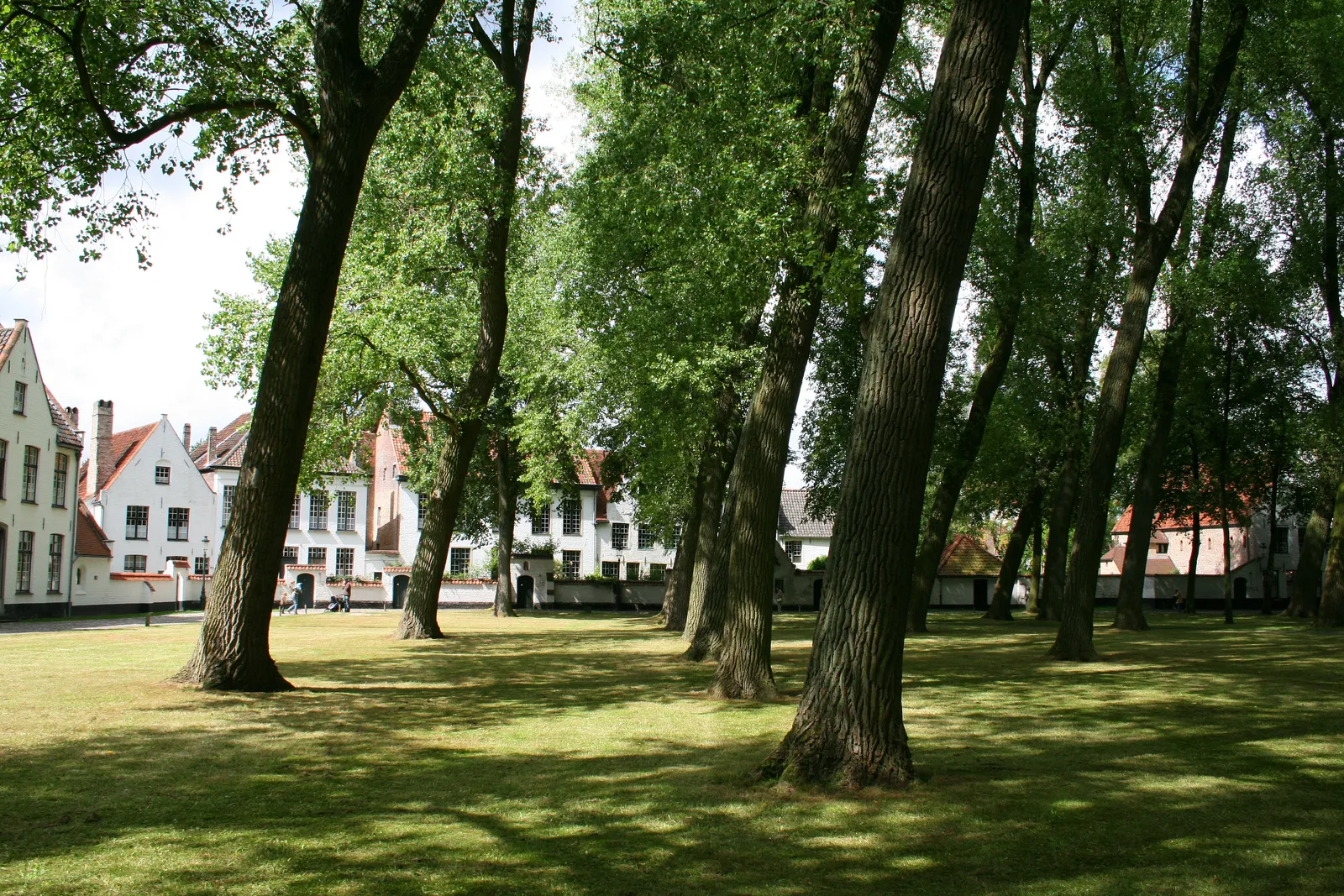
The lawn under the poplars is the largest piece of open green inside the old city, and in early spring it comes up thick with daffodils. Immediately outside the gate, the Minnewater is a rectangular lake that worked as the city’s inland harbour basin before it became a park with swans on it. Both sit at the southern end of the centre, on the natural line between the station and everything else, which is what makes them the easy thing to add when you are not counting minutes.
A direct train back, roughly hourly
Two Intercity services get from Bruges to Brussels Airport-Zaventem without a change: line 23, which starts at the coast in Ostend, and line 23A, which runs Bruges to Ghent to Brussels to the airport on weekdays. Between them that is somewhere around 23 direct departures a day, and the ride is a little under an hour and a half. The weekday timetable carries more of them than the weekend one, so check the times before a Saturday flight rather than assuming.
A single costs roughly 25 euros. That includes the 6.90-euro Brussels Airport supplement the national operator adds to every ticket to or from that station, so the fare looks higher than the distance suggests. The airport platforms are directly beneath the terminal, about five minutes from the departure hall, which means the train ride is very nearly the whole journey.
Bruges station is a twenty-minute walk south-west of the market square, past the Minnewater, or a few minutes on a bus from ‘t Zand. All of that walk is cobbled, and the belfry stair is 366 steps of narrow spiral, so a bag left at a storage point for the day costs a few euros and takes the drag out of every stretch of it.
Frequently asked questions
What should I do during a layover in Bruges?
Start on the Markt, where the belfry's carillon plays free on Wednesday, Saturday and Sunday mornings and the tower climb needs a timed ticket booked ahead. Take a thirty-minute canal boat from any of the five jetties, then walk south to the Church of Our Lady for Michelangelo's Madonna and Child. The Basilica of the Holy Blood on Burg square and the Beguinage garden at the south end are both free, and the whole route is under two kilometres. Drop the belfry climb first if you're running short: it's the one stop that eats an hour.
Is Bruges realistic on a layover from Brussels Airport?
Only with a long gap. Intercity trains run from the airport station through to Bruges without a change in a little under an hour and a half, so the round trip alone accounts for close to three hours before you have walked anywhere, and you want seven or more between flights to make it worth doing. A single is roughly 25 euros, including the 6.90-euro Brussels Airport supplement added to every ticket to or from that station. If the gap is shorter, Brussels is about twenty minutes from the same platforms and the better use of the time.
Do the canal boats run in winter?
Not dependably. The operators guarantee daily sailings only from early March to mid-November, roughly 10am to 6pm, and outside that stretch service depends on the company and the weather. One of the southern jetties on Katelijnestraat usually keeps a longer season than the rest, so it is worth walking down to check before writing the boat off, but a January layover should be planned as though there isn't one.
What can you see in Bruges without paying for anything?
Both squares, for a start: the Markt and the Burg are open ground, and the Gothic city hall and the gilded Renaissance front beside it are free to stand and look at. The Basilica of the Holy Blood charges nothing for either of its two levels. The nave of the Church of Our Lady is free, though the Madonna sits in the ticketed half. The Beguinage courtyard is free, and so is the carillon concert three mornings a week.
Is anything in central Bruges shut in the middle of the day?
The Basilica of the Holy Blood closes from noon until two every day, which catches people who arrive on a late-morning train and drift over after lunch. The Groeningemuseum is shut on Mondays through the April-to-November season. The belfry runs longer hours in summer, 9am to 8pm, against 10am to 6pm on most winter weekdays, so a winter afternoon leaves less room for the climb than the same hours in July.