Bruges Layover Near Brugge Train Station
Part of the full Bruges Layover: The Belfry and Canals, BRU
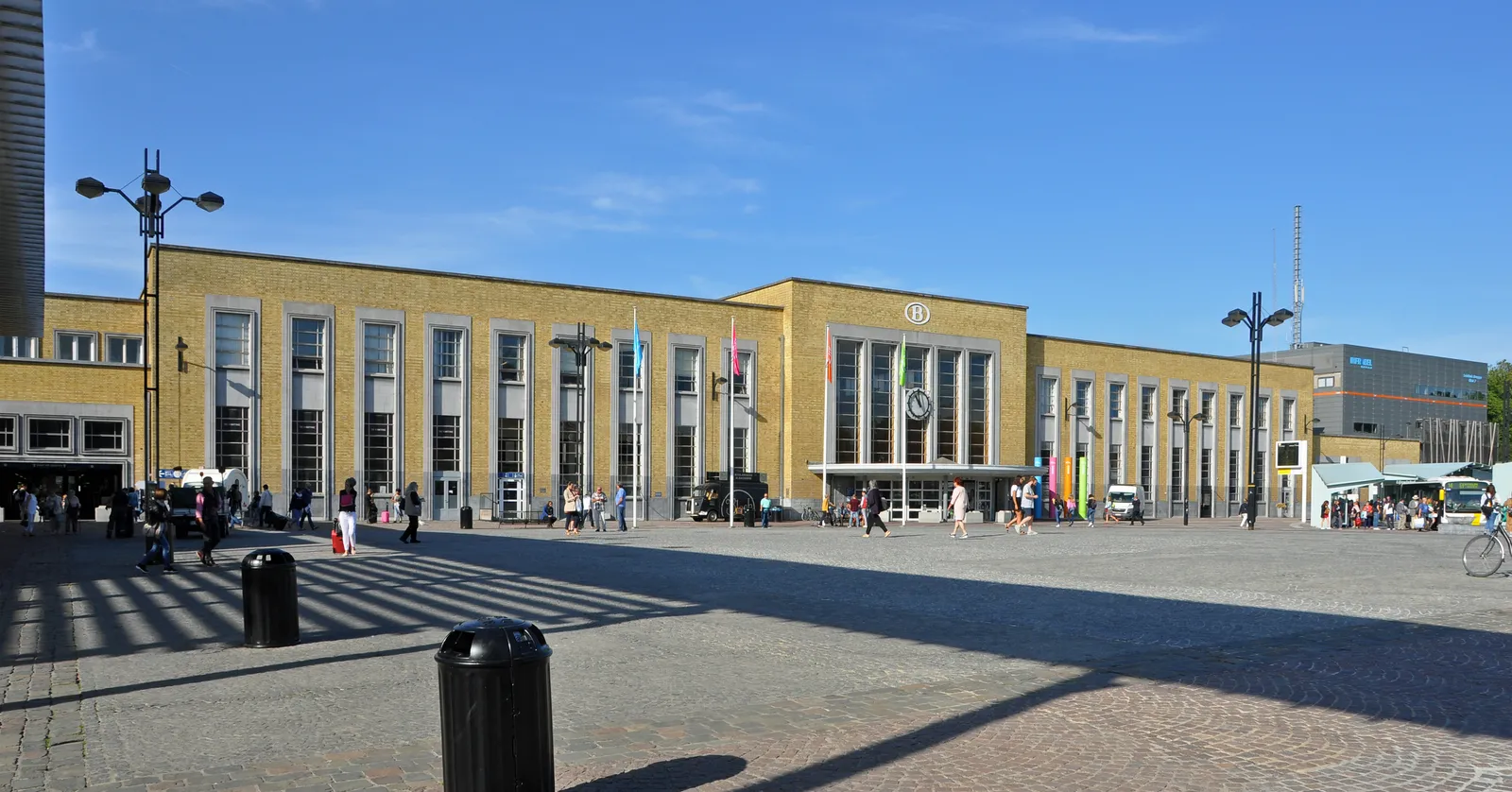
Bruges’ station hall carries an 18-metre painted mural above the ticket counters, free to stand in front of on the way through, and the Minnewater lake is seven minutes’ walk from the platforms. Saint Saviour’s Cathedral, the city’s oldest parish church, is about twelve, which puts all three inside ninety minutes without ever reaching the market square.
The 18-metre mural above Brugge station’s ticket counters
René De Pauw spent more than a year painting it and signed it off in 1939, the year the station was finished. It runs around three walls of the entrance hall, roughly 90 square metres of Flemish coast and countryside with Bruges in the middle of it, and the stretch on the south wall is made up of 56 separate panels fixed to the wall rather than painted onto the plaster. The First World War cemeteries are in there on the left.
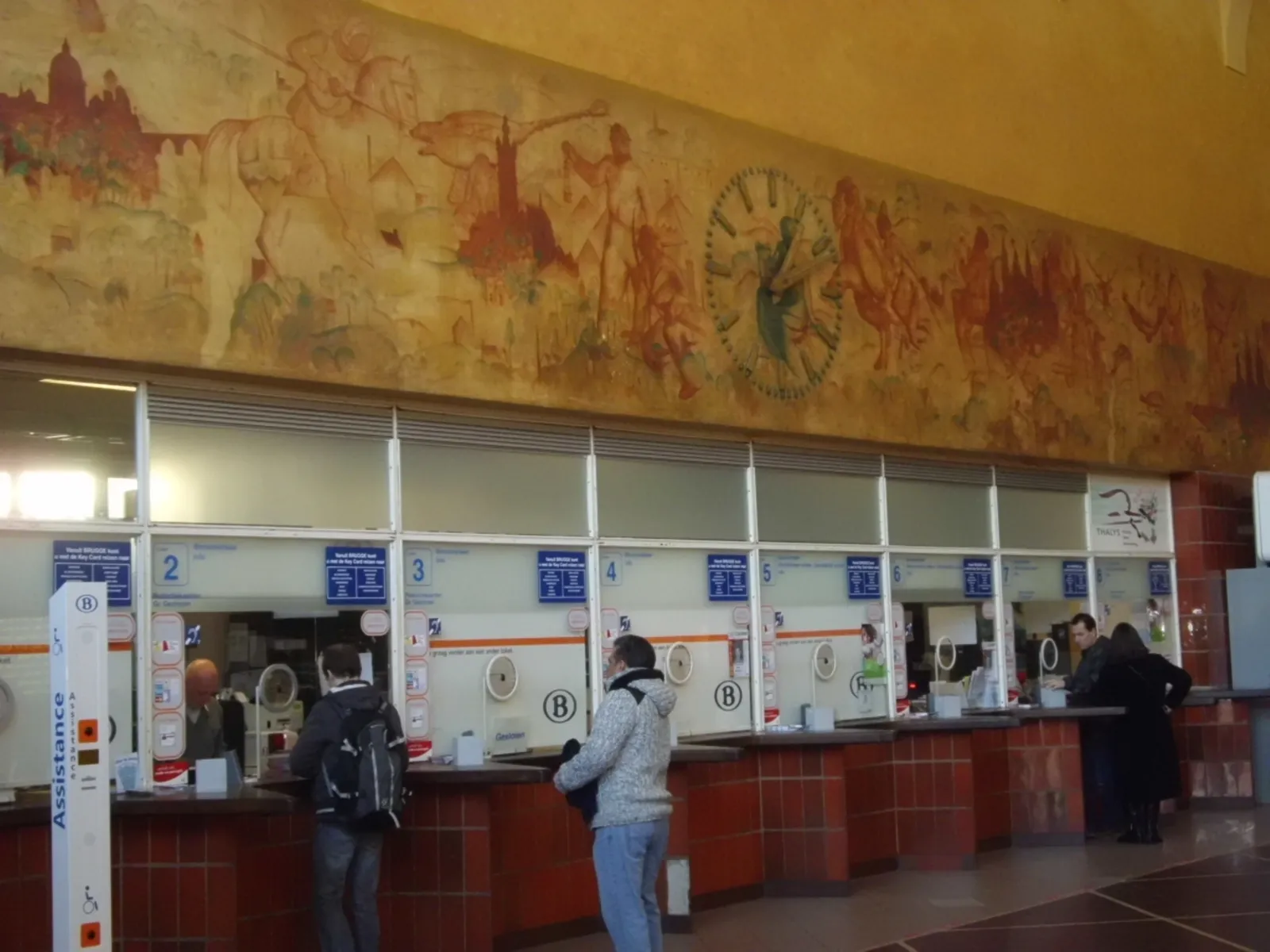
De Pauw also put himself in the bottom right corner, at his easel, with a spider’s web strung between its legs, which is as close as a 1930s state commission gets to a joke about how long the job took. Nobody sells a ticket for any of this. It is above the counters where people are queuing to buy train tickets, which is why most of them never look up.
The station building underneath it opened in 1938, designed by the brothers Josse and Maurice Van Kriekinge, and replaced an 1886 structure that had run out of room. The one before that stood on ‘t Zand square inside the medieval walls; the line was pushed outside the walls instead, which is why the walk into town exists at all.
Saint Saviour’s Cathedral, Bruges’ oldest parish church
Building started in the 12th century and carried on into the 15th, which is a longer run than the belfry or the city hall can claim, and the result is a heavy, plain brick tower with a fussy cluster of turrets and spires added on top much later. It only became the city’s cathedral in 1834, after the French pulled down the older one that stood on Burg square.
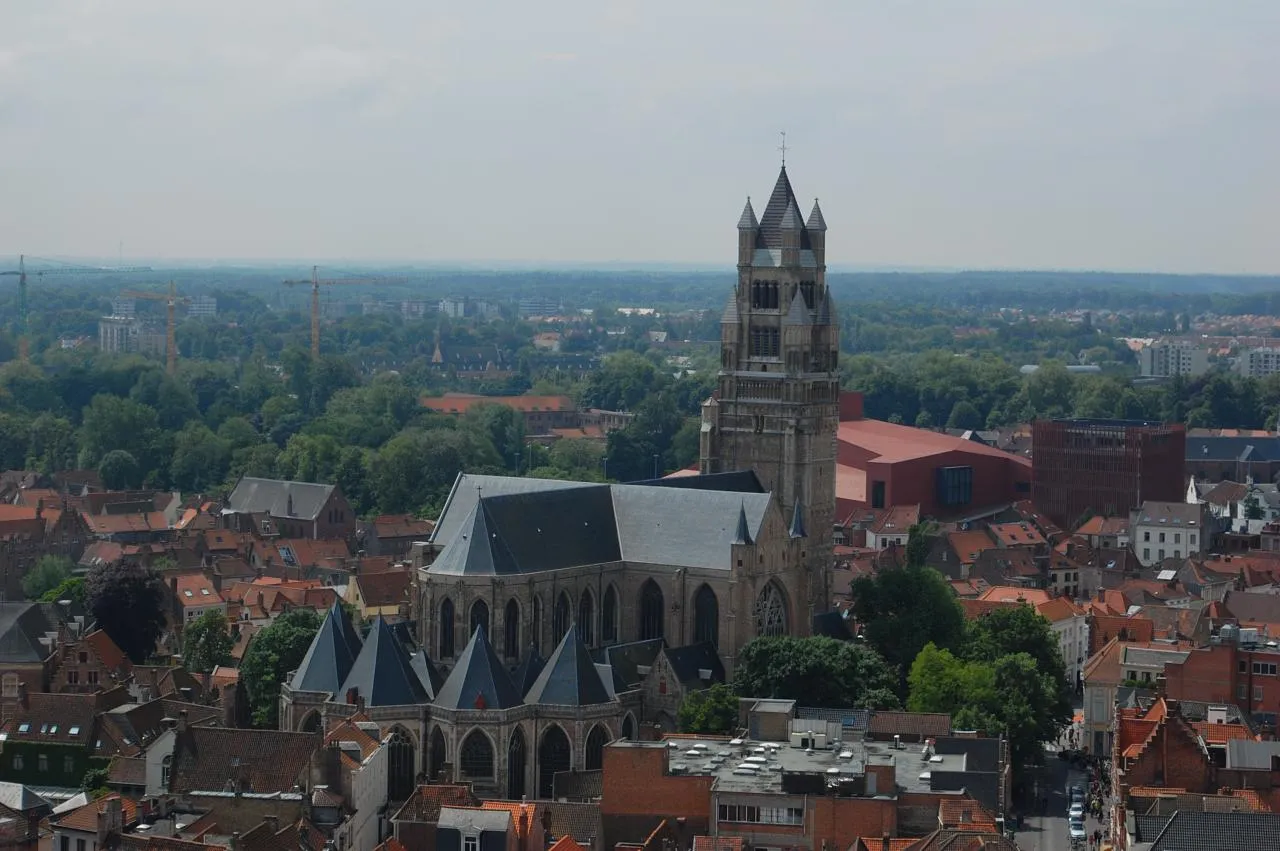
Walking in is free. The treasury off the side charges a small entry fee and holds panels by Dieric Bouts and Hugo van der Goes, which is a serious collection for a room most visitors to Bruges never find. Check the hours before committing to the walk: on weekdays it closes for a couple of hours in the early afternoon, and it is shut to casual visitors during services.
The Minnewater, the city’s medieval harbour basin
Barges once tied up here, in what was the inland end of the waterway that connected Bruges to the sea, and the rectangular shape of the water is the giveaway that it was dug rather than found. It is a park now: willows down to the edge, swans on it most of the year, and a small brick lodge sitting out over the water at the far end.
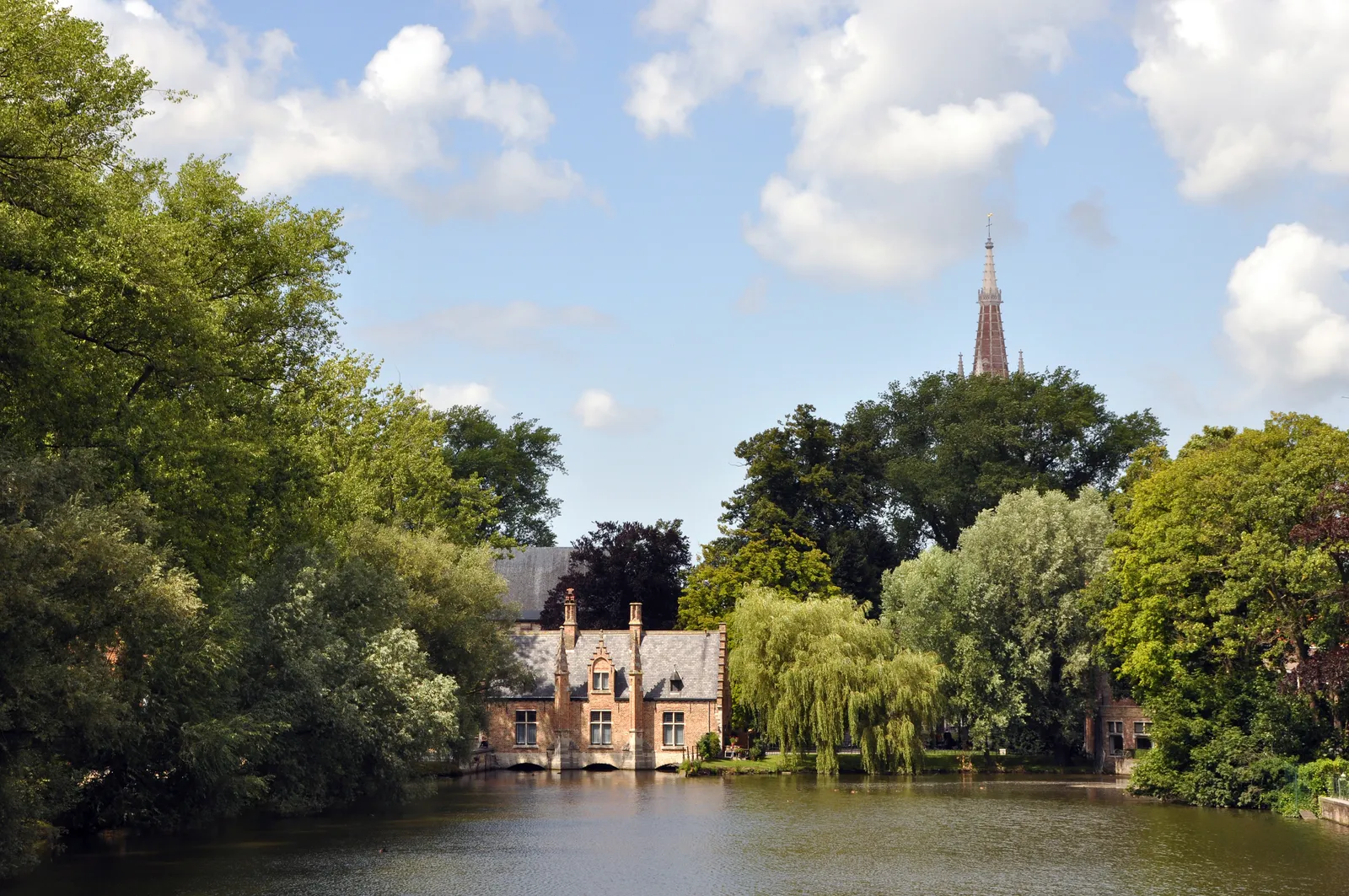
It is open ground with no gate, no opening hours and nothing to pay, which makes it the one stop on this list that works at seven in the morning or nine at night. The Beguinage gate and the brewery on the Walplein are a couple of minutes further on, and the green southern end of the old town is worth the detour if the timing suits.
The Markt and the canal jetties in the old centre
Twenty minutes north of the platforms is where the rest of Bruges is: the market square with the belfry over it, the Burg with its city hall and basilica, and the five jetties the canal boats work from. That is the full Bruges itinerary rather than this one, and it needs a gap of three hours or more to be worth starting. If you would rather not assemble it yourself, a guided walk with the boat ride included covers the same ground on a fixed clock, which is the useful part when a train time is the hard edge of the day.
The walk itself is cobbled almost the whole way, and a wheeled bag turns a twenty-minute crossing into closer to thirty in each direction.
The airport platforms sit under the terminal
Trains from Bruges to Brussels Airport-Zaventem run without a change on Intercity lines 23 and 23A, somewhere around 23 departures a day, and the ride is a little under an hour and a half. A single is roughly 25 euros, which has the 6.90-euro Brussels Airport supplement built into it. Fewer of those direct services run at weekends than on weekdays, so a Saturday flight is worth checking rather than assuming.
At the far end the platforms are directly beneath the terminal, about five minutes from the departure hall, so there is no shuttle or people mover to add on. At this end, the platforms are a lift or an escalator down from the same hall the mural is in, which makes the last ten minutes of a Bruges stop about as short as they get anywhere.
Frequently asked questions
What should I do during a layover near Brugge Railway Station in Bruges?
Give the ticket hall two minutes first: the 1939 mural above the counters is 18 metres long and most people walk straight under it. Then the Minnewater, seven minutes out and open at any hour, and Saint Saviour's Cathedral about twelve minutes in, which is free but shuts for a couple of hours at midday on weekdays. That set fits comfortably in ninety minutes. Anything beyond it means committing to the twenty-minute walk into the medieval centre and back.
Are there luggage lockers at Bruges station?
Yes, in the main concourse beside the ticket desks, in three sizes at roughly 4.50 to 5.50 euros. The catch is that the rental is priced by the day with a one-day minimum, so a two-hour stop costs the same as an overnight one, and on busy summer weekends the largest size goes first.
Is it worth walking into the centre from Bruges station, or taking a bus?
The walk is about twenty minutes and passes the Minnewater and the Beguinage, which is most of the reason to do it on foot. City buses leave from the square directly in front of the station and reach 't Zand in a few minutes, which is the better call in heavy rain or with a tight connection. There is no metro or tram in Bruges, so those are the only two options.
Does the walk from Bruges station work with a stroller or a wheelchair?
As far as the Minnewater, yes: the platform tunnel has lifts and escalators, the square outside is flat, and the park paths along the water are level and surfaced. Past that it gets harder. The lanes into the medieval centre are cobbled almost without a break, and several of the canal bridges are stepped rather than ramped.