Stockholm's Gamla Stan on an ARN Layover
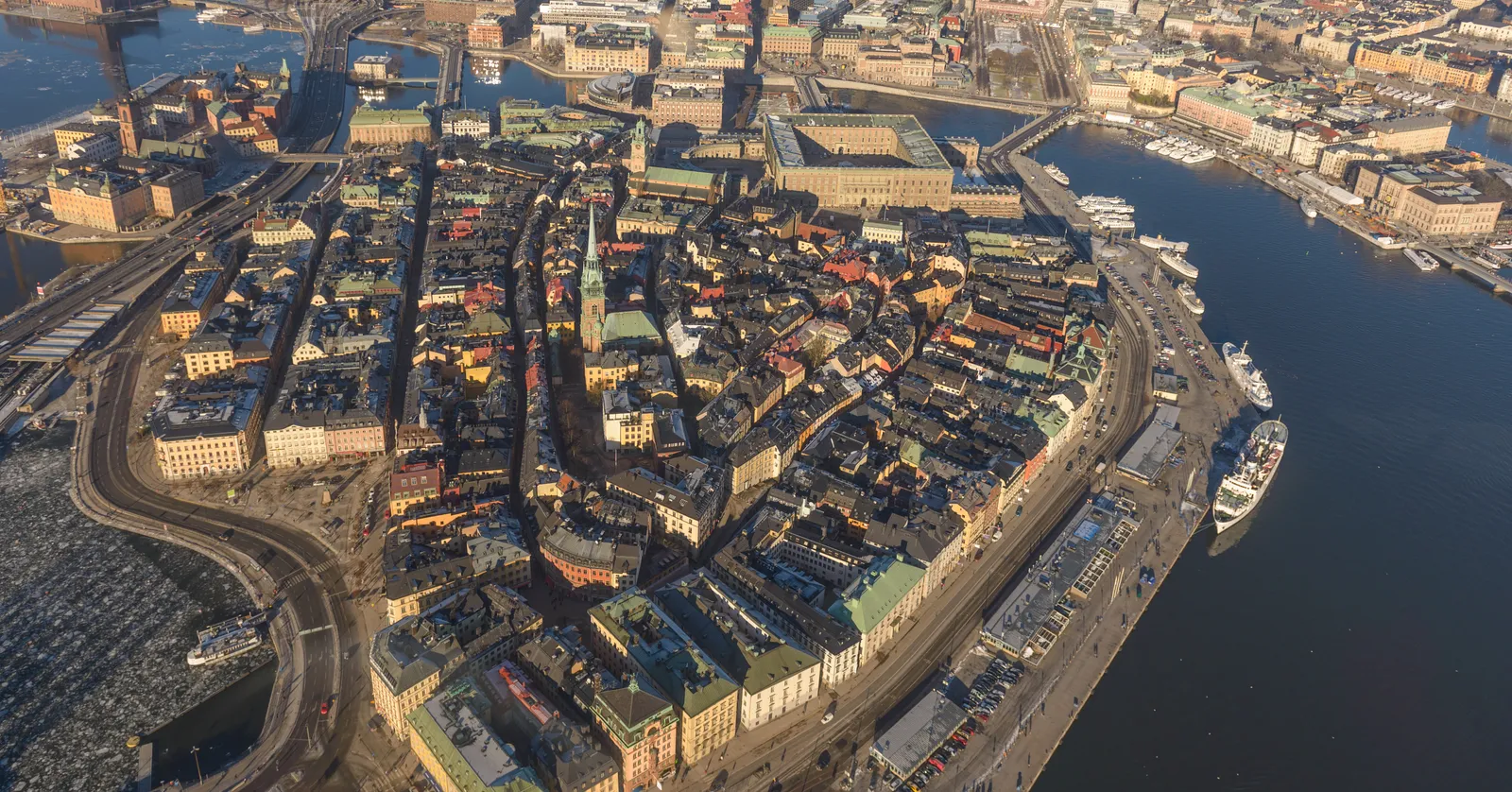
Stortorget, the oldest square in Stockholm, is twelve minutes’ walk from the main station, and the guard change at the Royal Palace, the salvaged warship Vasa and the 106-metre tower on the City Hall are each a short walk or ride on from there.
Stortorget, the oldest square in Stockholm
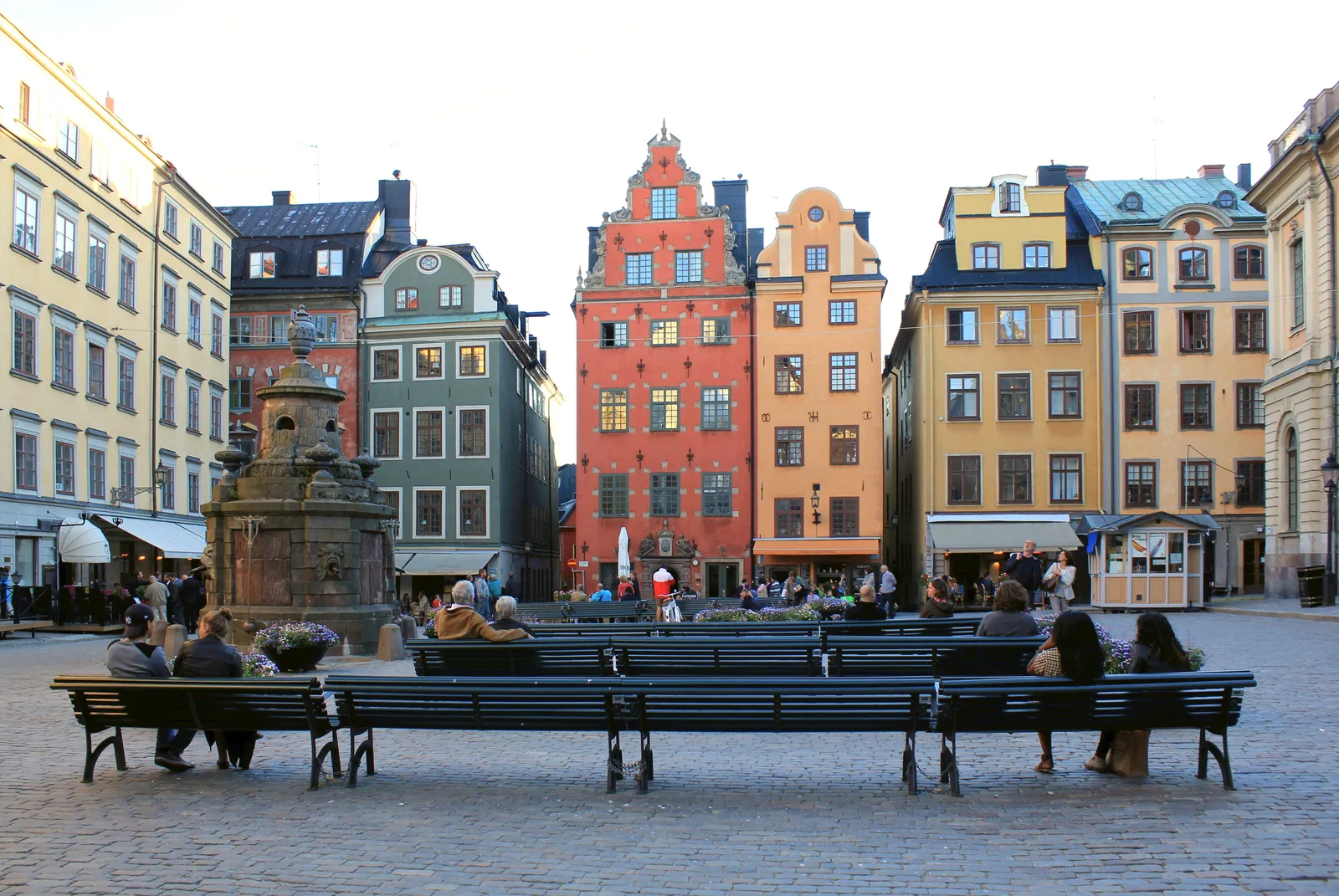
Stortorget sits at the centre of Gamla Stan, the old town, which is an island: a few compact blocks of 17th- and 18th-century streets with water on every side and Stockholm Central, the city’s main train station, twelve minutes’ walk north across the bridges. The square itself is the picture most people leave with. Merchant houses stand shoulder to shoulder around it in red, ochre, yellow and cream, none of them the same width as its neighbour, with a stone well in the middle and the Nobel Prize Museum occupying the old exchange building along the north side.
Two streets south, an alley called Mårten Trotzigs gränd runs down between Västerlånggatan and Prästgatan and narrows to 90 centimetres at its tightest point, which makes it the narrowest street in Stockholm and about the width of a set of shoulders. There are 36 steps in it. It is worth the two minutes mostly because of how abruptly the city closes in.
The Royal Palace is five minutes north of the square, and the part of it that costs nothing is the ceremony out front. The guard changes in the Outer Courtyard at 12:15 on weekdays and Saturdays and 13:15 on Sundays and public holidays, runs about 40 minutes, and is watched from the cobbles with no barrier and no ticket. Between April and August the guard often rides in rather than marches, coming down from the cavalry barracks with a music corps. The palace interiors and its four museums are ticketed separately, and if you would rather have someone walk you through the square, the cathedral and the courtyard with the history attached, a three-hour guided walk covers all three.
One short detour, if you are crossing back north over the bridge anyway: the metro station under Kungsträdgården, the park on the far bank, was blasted out of bare rock and deliberately left looking that way, with carved stonework salvaged from the demolished Makalös palace set into the walls. It is also the only place in Sweden where a cave spider called Lessertia dentichelis lives, in the damp granite down on the platforms, and how it got there is still guesswork: either it hitched in on construction machinery from southern Europe, or it was already in the foundations of the old buildings above. A metro ticket and five minutes gets you down there and back.
Skansen, the world’s first open-air museum
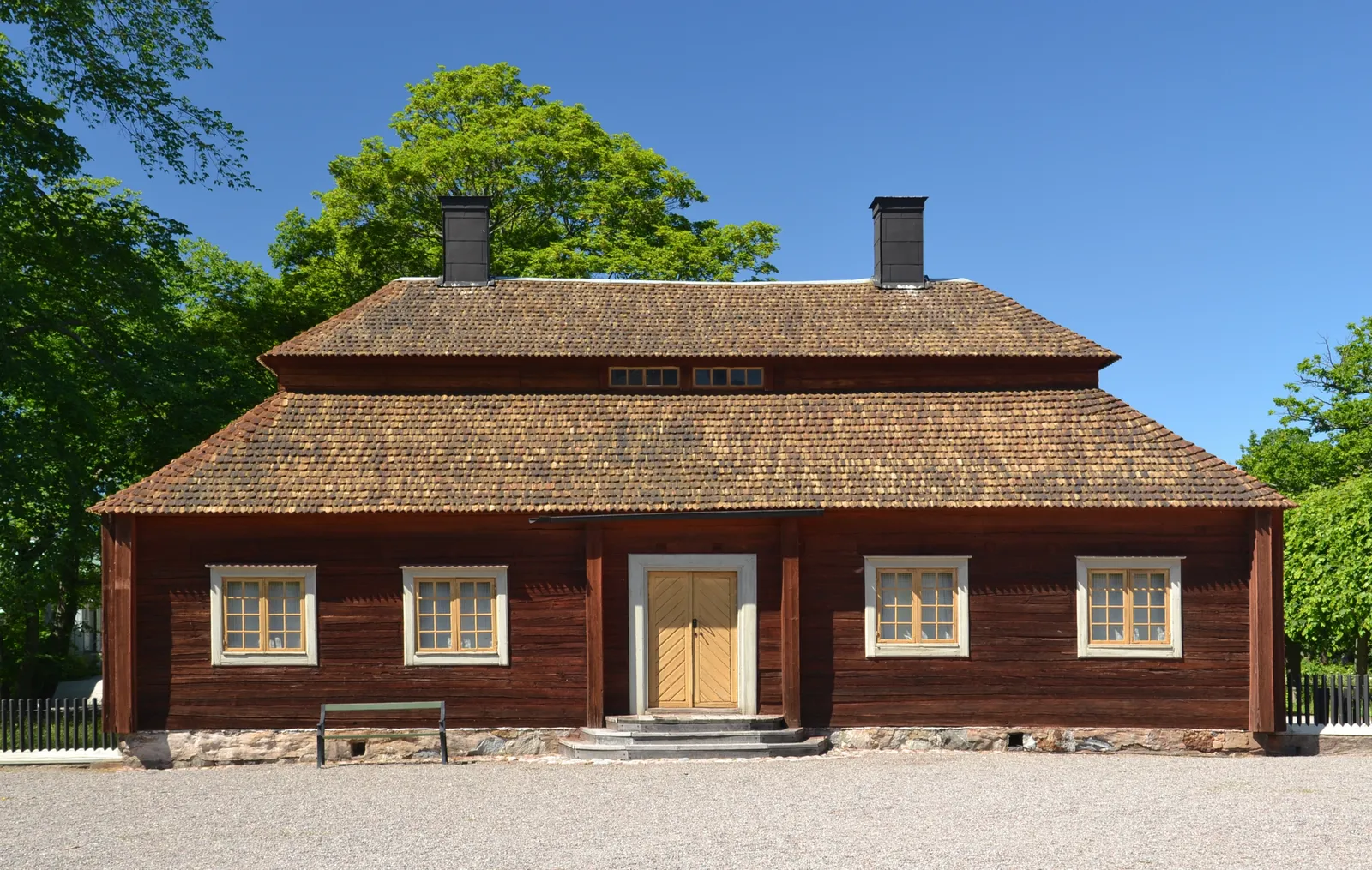
Artur Hazelius started buying Swedish farmhouses, workshops and churches in 1891, taking them apart where they stood and rebuilding them on a hill on Djurgården, the wooded island east of the centre that used to be a royal game park. The idea had not been tried anywhere before. Around 190 buildings stand there now, the oldest from the early 14th century and the newest from the 1950s, laid out as a country in miniature with a working town quarter, a Sámi camp and a zoo of Nordic animals among them.
It opens every day of the year, but the hours swing hard with the season: 10am to 6pm through June, July and August, 10am to 5pm into late September, and from the end of September only to 3pm on weekdays and 4pm at weekends. That last figure is the one that catches people out on a short winter afternoon. Children up to 15 go in free, though their tickets still have to be booked rather than collected at the gate, and adult entry can be held in advance as well. A tram from the centre reaches the island in about fifteen minutes; a ferry from the lock at Slussen takes ten and drops you an eight-minute walk short of the gates.
The Vasa, a warship raised after 333 years underwater
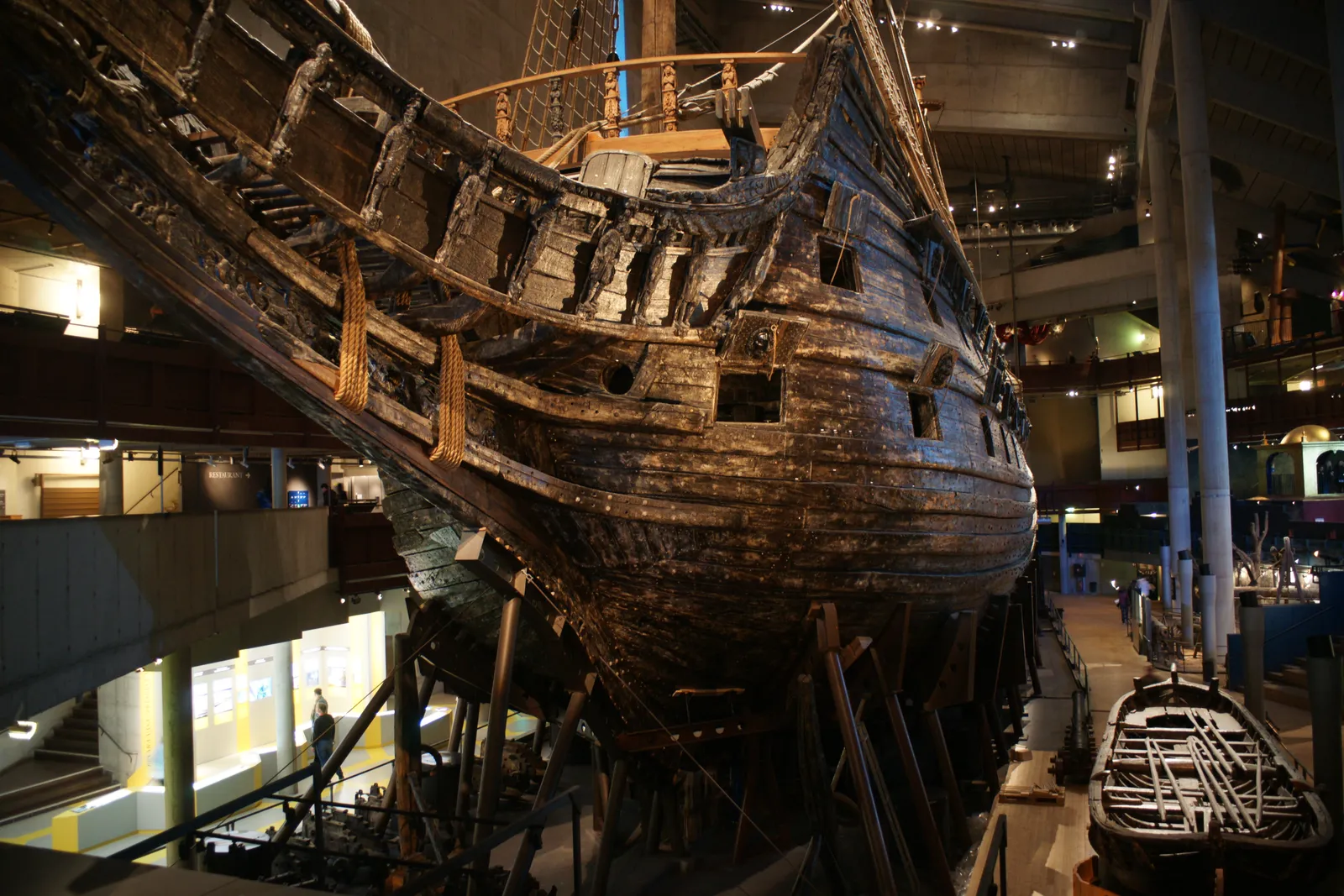
The Vasa sailed about 1,300 metres on her maiden voyage in August 1628, took a gust on the beam, heeled, flooded through her open lower gunports and sank inside Stockholm’s own harbour. She stayed there until 1961. Brackish Baltic water and an absence of shipworm left the oak almost intact, so what stands in the hall on Djurgården today is roughly 98 percent original timber: a 64-gun warship, masts and carved sterncastle and all, five storeys of blackened wood with walkways running up alongside it.
Adult entry is 240 kronor from May to September and 195 kronor across the rest of the year, and everyone 18 and under goes free. The museum opens 8:30am to 6pm through the summer and 10am to 5pm otherwise, with a late run to 8pm on Wednesdays outside the peak months. It is a few minutes’ walk from Skansen, so the two go together if the afternoon allows for it.
One rule here is worth knowing before you arrive rather than at the door: wheeled suitcases and large bags are not allowed in the museum, and there are no lockers inside, so anything bigger than a small backpack has to be somewhere else in the city first.
Stockholm City Hall’s tower, 106 metres and 365 steps
Ragnar Östberg worked on the City Hall from 1911 to 1923, on the eastern tip of Kungsholmen, the island directly west of the centre and eleven minutes on foot from the main station. Nearly eight million dark red bricks went into it, laid rough and uneven on purpose, and the square tower at the corner carries the three golden crowns of the Swedish national arms on a spire above the water.
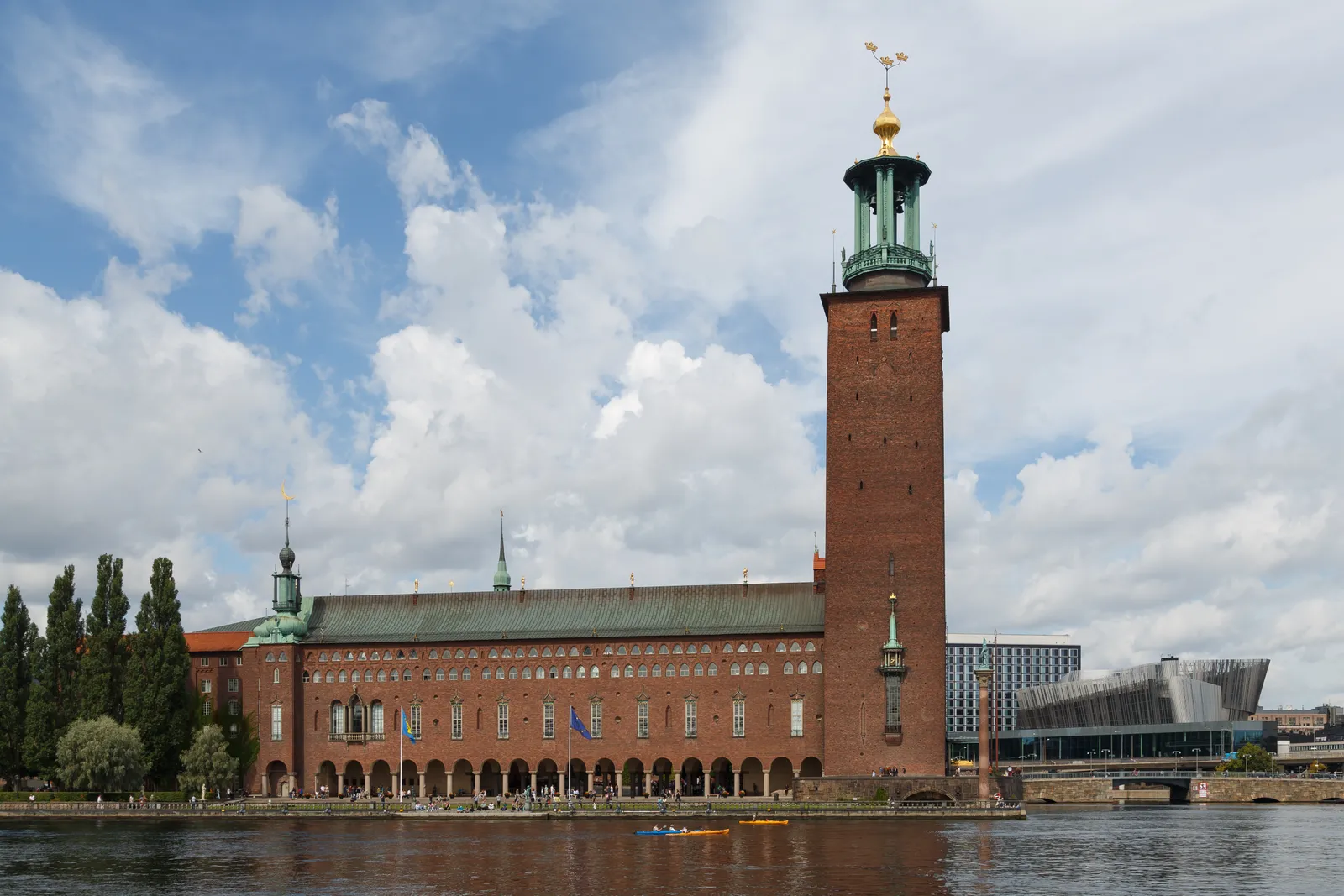
The climb is 365 steps and 106 metres, and it costs 100 kronor, free for children up to 11 with an adult. The catch is the calendar: the tower runs a summer season only, roughly May to September, and is closed for the rest of the year. The interiors are a separate, year-round proposition and guided-tour only, 150 kronor for a 45-minute round of the Blue Hall, the Golden Hall and the council chamber. The Blue Hall is where the Nobel banquet is held every 10 December, and it is not blue at all: the name carried over from Östberg’s first draft and stuck after he left the brick unpainted. The peace prize is the exception to all of it, handed over the same afternoon by a Norwegian committee in Oslo, as Alfred Nobel’s will specified.
Monteliusvägen, a clifftop walkway over the water
Södermalm, the island south of the old town, rises into a cliff along its northern edge, and a few hundred metres of wooden walkway runs along the top of it. Monteliusvägen is barely wide enough for two people. On one side there is a red timber fence and the back gardens of the houses on the ridge; on the other, a drop to the water and the whole of central Stockholm laid out across it, the old town to the right and the City Hall tower to the left.
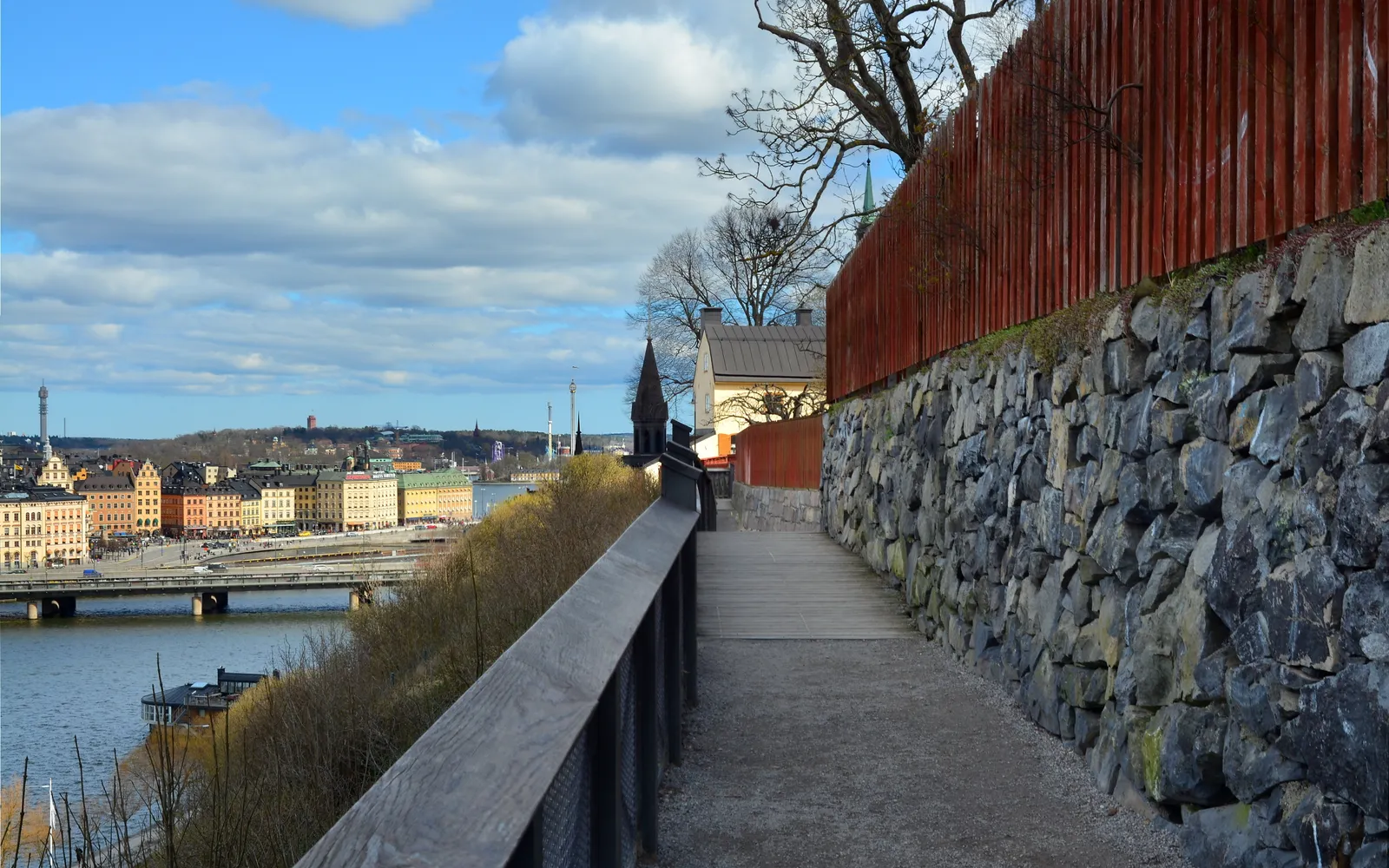
There is no gate, no fee and no closing time, which makes it a dependable stop in the hours when everything with a door has shut. Benches sit along its length and Ivar Los park opens out at the western end. With four hours or more free, Monteliusvägen and the City Hall tower are the same stretch of water seen from opposite banks: one costs 100 kronor and runs a summer season, the other neither.
Children ride the airport train free
The Arlanda Express runs from Stockholm Central to the airport in 18 minutes to Arlanda South, for Terminals 2, 3 and 4, and 19 minutes to Arlanda North for Terminal 5, with a departure every 15 minutes. An adult single is 340 kronor, 210 for over-65s and 160 between 18 and 25, and anyone under 18 travels free alongside an adult ticket. The platforms are directly beneath the terminals, so the 18 minutes is close to the real door-to-door figure: allow 35 to 45 minutes from picking your bag back up in town to standing in the check-in hall, and more at the evening peak.
Two cheaper routes exist and both cost time. The commuter train from Stockholm City station takes about 38 minutes, but Arlanda’s station charges a passage fee of 157 kronor on top of the transit ticket, which closes most of the gap. The airport coach from Cityterminalen, next to the main station, runs every 20 minutes and takes about 40 minutes, and is the cheapest of the three. None of them takes cash.
Whichever you pick, collect your suitcase before you head for the platform rather than after: the storage points cluster around the central stations and the old town, not out along the airport line.
Frequently asked questions
What should I do during a layover in Stockholm?
Start at Stortorget, the old town's main square, twelve minutes on foot from Stockholm Central and free to stand in: tall painted merchant houses on every side, a stone well in the middle, and the narrowest alley in the city a couple of streets away. The Royal Palace is five minutes further on, and the guard change in its Outer Courtyard costs nothing to watch. For one paid stop, the warship Vasa on the island of Djurgården is the one most people pick, a short tram or ferry ride out from the centre. With more than four hours free, Stockholm City Hall's tower and the clifftop path at Monteliusvägen both open up the view over the water. The tower runs on a summer season only, and Skansen needs its free children's tickets booked ahead, so both are worth checking before you build a day around them.
When is the changing of the guard at the Royal Palace in Stockholm?
12:15 on weekdays and Saturdays, 13:15 on Sundays and public holidays, in the Outer Courtyard of the palace in the old town. It runs about 40 minutes and nobody sells a ticket for it. From April to August the guard often arrives mounted, riding in from the cavalry barracks on Lidingövägen with a music corps; from November the parade usually forms up at Mynttorget in the old town instead. The Swedish Armed Forces publish the current schedule and do change it, so treat the times as the pattern rather than a promise.
Is Stockholm City Hall's tower open all year?
No. The tower runs on a summer season, roughly May to September, and stays shut the rest of the year. It is 106 metres to the top and about 365 steps, 100 kronor for an adult, free for children up to 11 with an adult. The building itself is a separate ticket: the interiors are guided-tour only, 150 kronor, and those tours run year-round, so the Blue Hall where the Nobel banquet is held on 10 December is reachable in February even when the tower is not.
What does a Stockholm layover cost with children along?
Less than you would expect, because the expensive stops are the ones that let children in for nothing. The Vasa Museum is free for everyone 18 and under against an adult ticket of 240 kronor in summer and 195 kronor the rest of the year. Skansen is free for children up to 15, though their tickets still have to be booked in advance rather than picked up at the gate. The City Hall tower is free up to 11. The airport train is free for under-18s travelling with an adult fare, and a dated Skansen ticket can be held in advance if you want the booking settled before you land.
Can I pay by card everywhere in Stockholm?
Yes, and in a lot of places you will have to. Cash is well under one percent of transactions in Sweden, the banks have stopped handling it, and a shop or a museum can legally refuse it outright as long as there is a sign at the door saying so. The Vasa Museum takes cards only. Stockholm's public transport stopped taking cash too, so tickets come from the app, a machine or a card reader rather than from a person. Arriving with kronor in your pocket and no card is the awkward combination here, not the other way round.