Värtahamnen Ferry Terminal Layover, Stockholm
Part of the full Stockholm's Gamla Stan on an ARN Layover
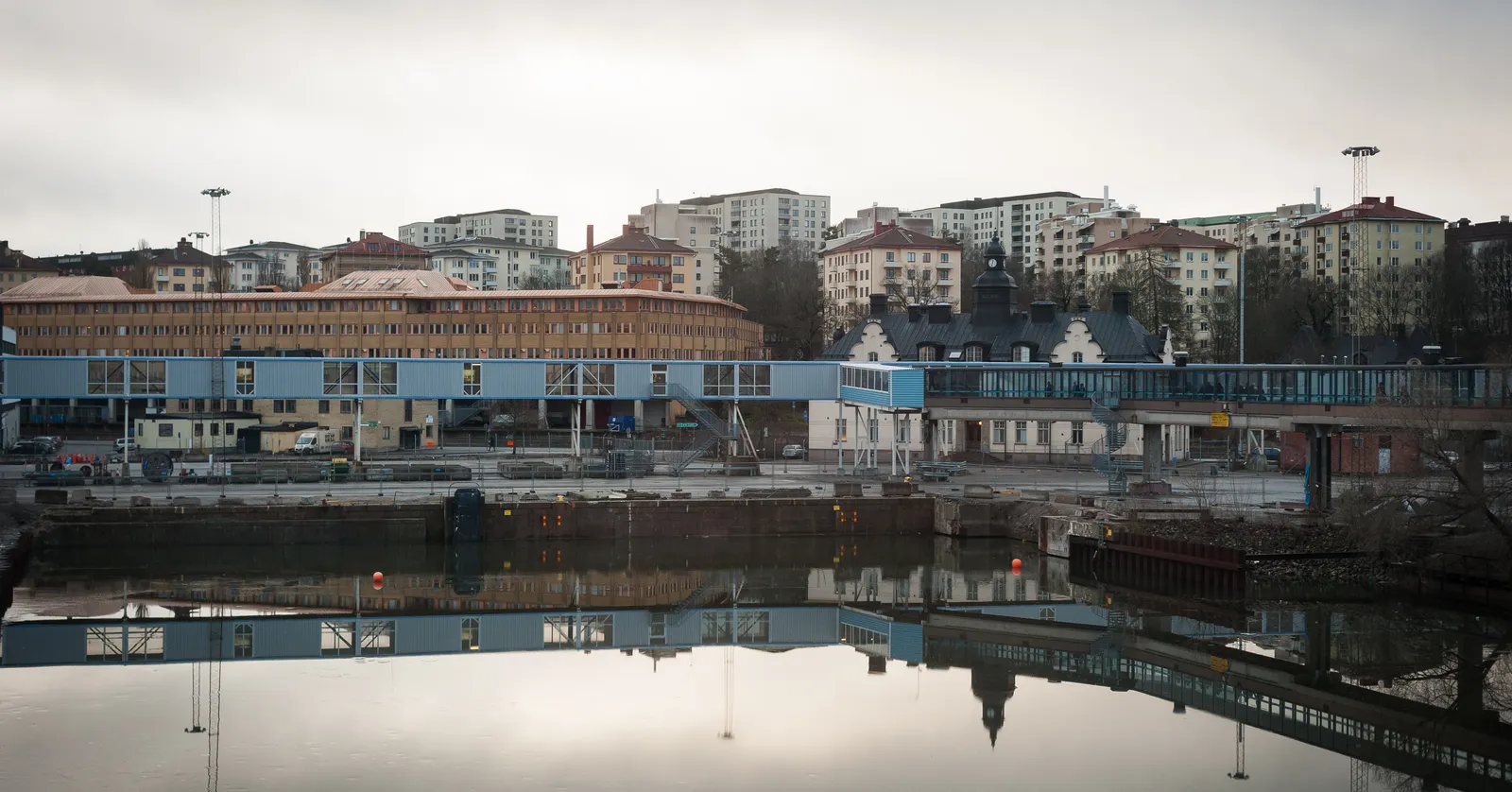
Värtahamnen is the ferry terminal on Stockholm’s north-east shore where the Helsinki, Tallinn and Riga ships dock, and the three things worth doing from it work inland: a free maritime museum across an open field, an 1888 market hall, and a waterfront boulevard with the archipelago boats tied up beneath it.
The Maritime Museum, free and closed on Mondays
Walk about twenty minutes south from the terminal and the ground opens into Ladugårdsgärdet, a field big enough to lose the city in, with a long pale building and a green copper dome at the far edge of it. That is the Maritime Museum, and Ragnar Östberg designed it between 1933 and 1936, a few years after he finished the City Hall on the other side of town.
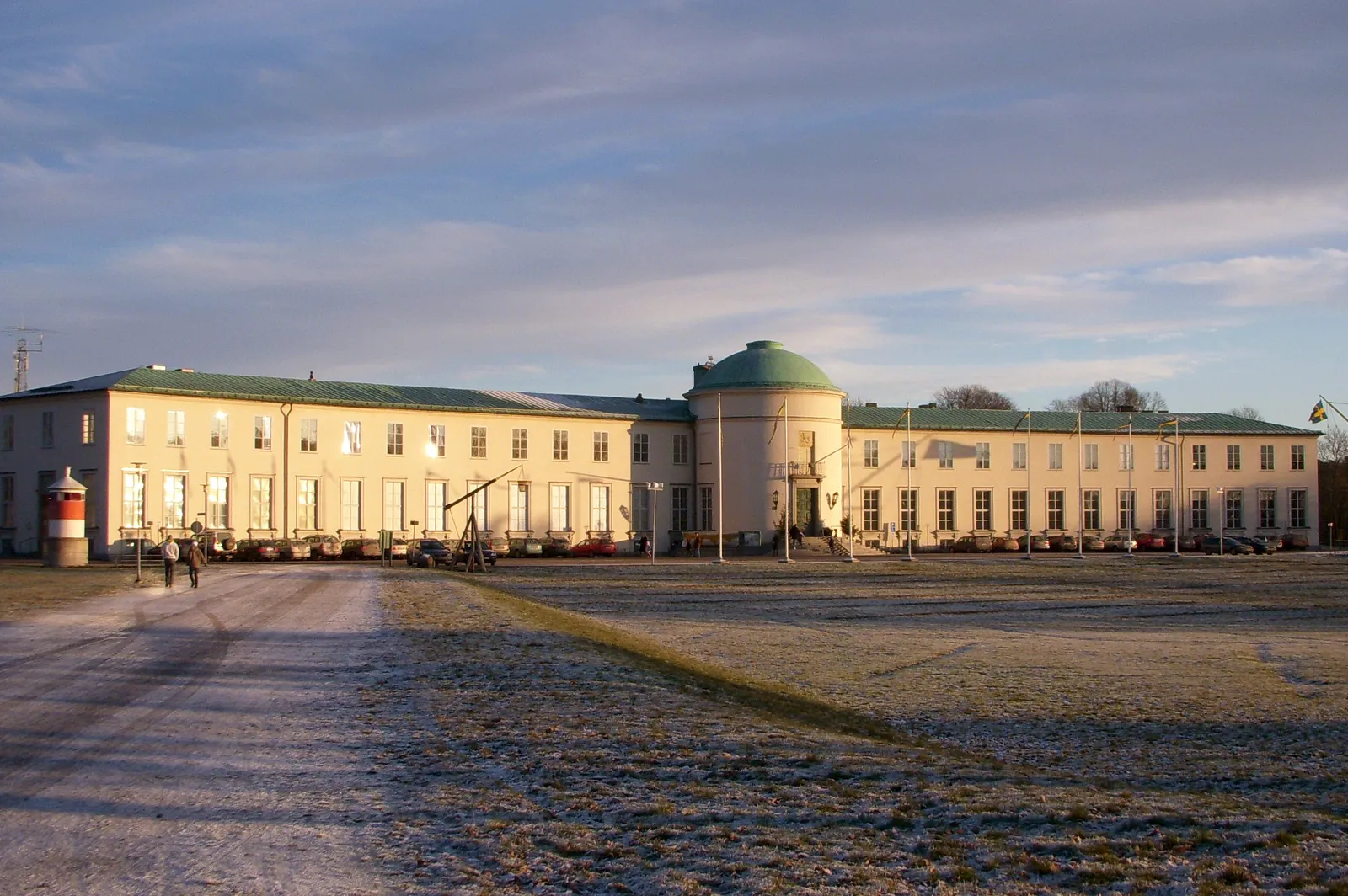
Entry costs nothing. Inside are roughly 50,000 objects, over 900,000 images and the largest collection of nautical books in the Nordic countries, along with ship models, figureheads and the stern cabin of a royal schooner. It runs Tuesday to Sunday from 10am, to 5pm most days and to 8pm on Wednesdays, and shuts on Mondays.
The field it stands on is worth a sentence of its own. Ladugårdsgärdet is part of the Royal National City Park, 27 square kilometres of protected ground running from Ulriksdal in the north down to Djurgården, which the Swedish parliament created in 1994 and the king opened on 19 May 1995. It was the first national city park established anywhere.
Östermalms Saluhall, restored to its 1888 plan
Isak Gustaf Clason and Kaspar Salin put up a red brick market hall on Östermalmstorg in 1888, with arched windows, cast ironwork and a pointed turret on the corner, and it traded continuously for well over a century before closing for restoration in 2016.
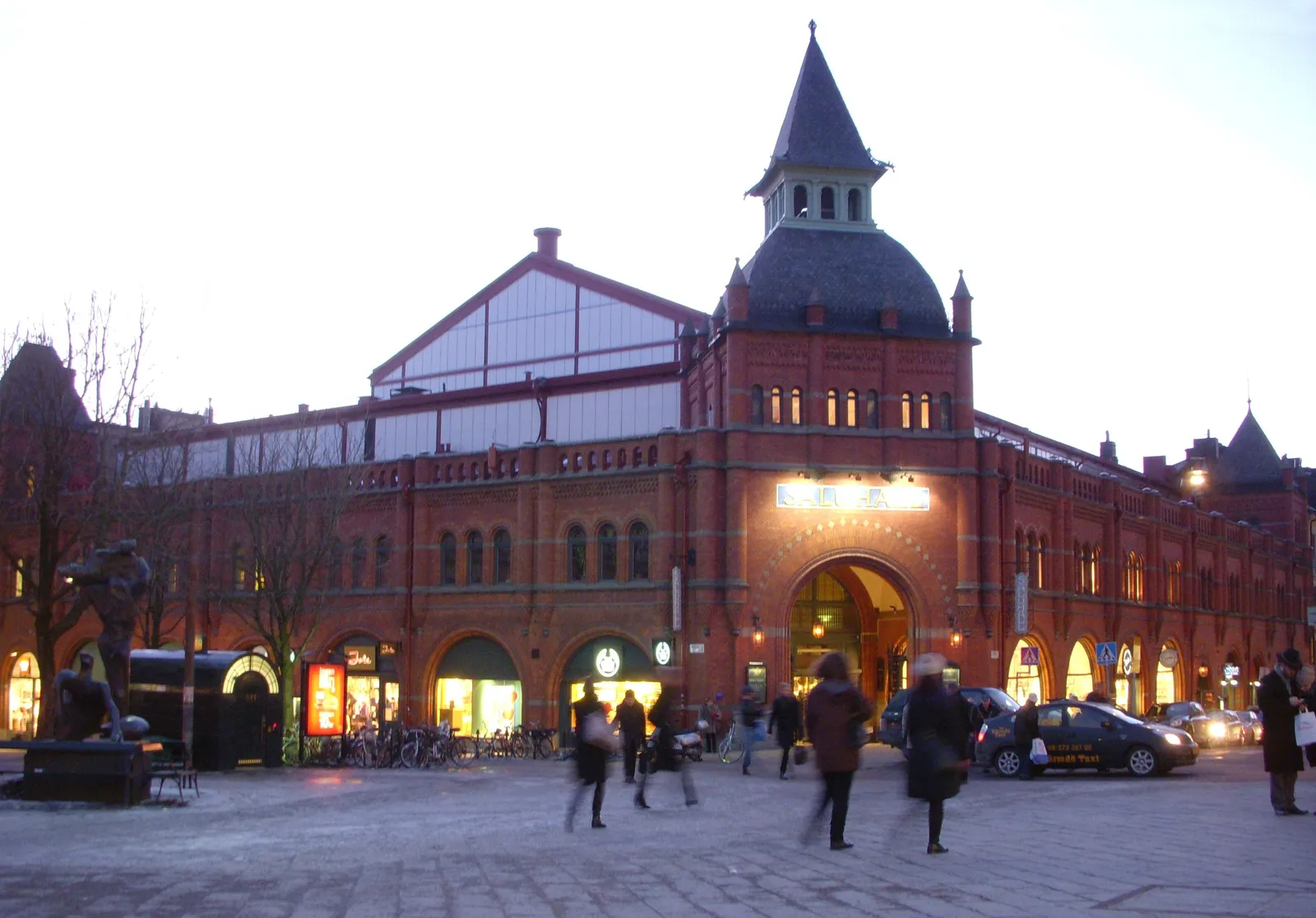
It reopened in March 2020 with the original star-shaped floor plan put back, along with the colours, friezes and carpentry the 20th century had covered over. What trades there now is a small number of stalls at the expensive end: fish, game, cheese, bread, and counters where you eat standing up. Hours are 9:30am to 7pm Monday to Friday, 9:30am to 5pm on Saturday, closed Sunday, with the restaurants running later.
The boats moored along Strandvägen
Strandvägen runs along the water on the way into the centre, a boulevard of turn-of-the-century facades with copper roofs and a working quay below them where the sightseeing and archipelago boats tie up. A bus from the ferry terminal runs the length of it, which makes the transfer into town a slow pass along the waterfront rather than a tunnel.
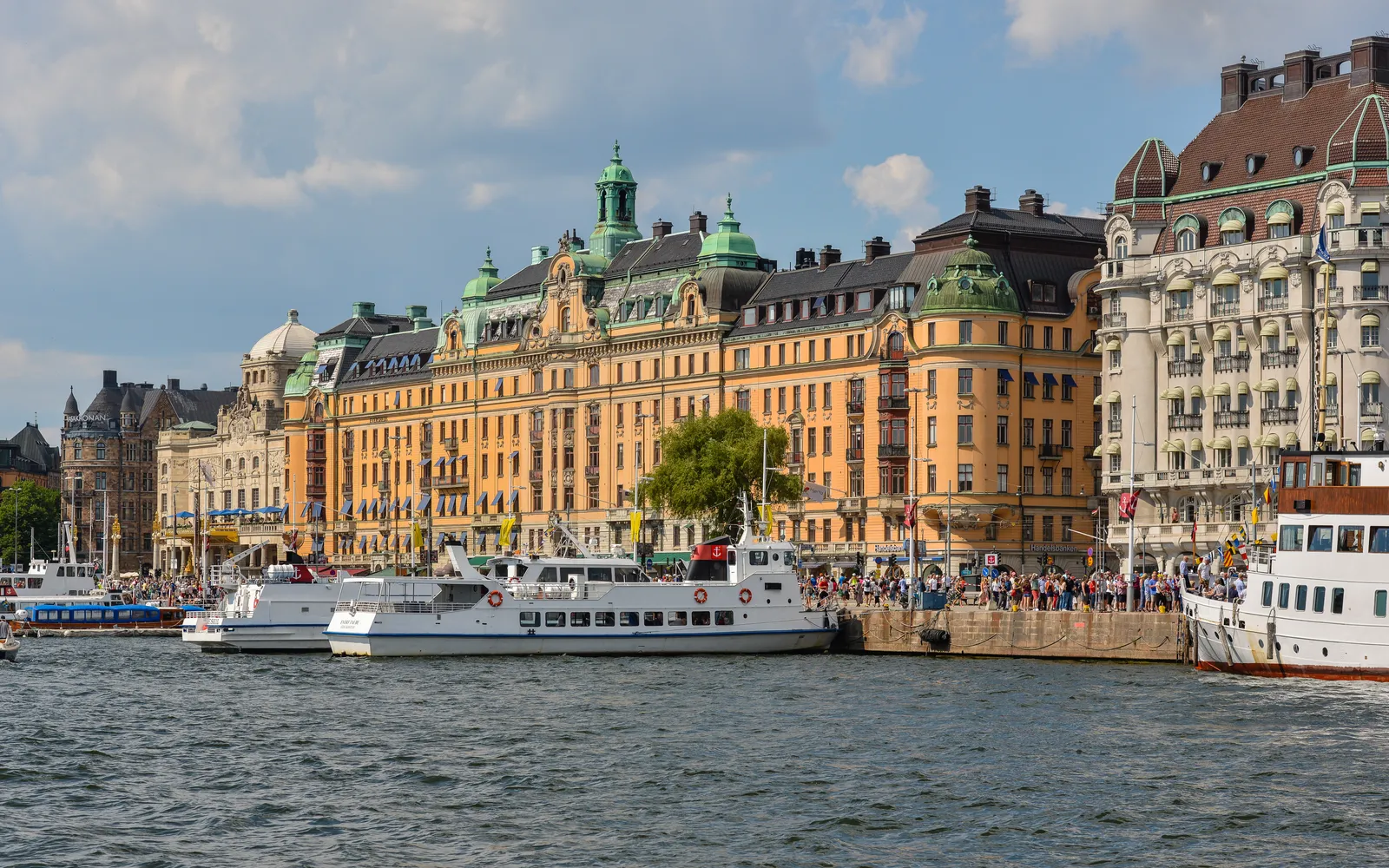
Three routes lead in from the terminal and this boulevard is on one of them. Bus 76 stops in front of the ferry berths and runs along Strandvägen and over Djurgårdsbron to Kungsträdgården, Gamla Stan and Slussen. The metro station at Gärdet is about 500 metres from the terminal on foot, on the line in from Ropsten. The ferry companies also run their own coaches direct to Cityterminalen, beside the main station, with no stops on the way.
From Stockholm Central the Arlanda Express covers the airport in 18 minutes for Terminals 2, 3 and 4 and 19 for Terminal 5, every quarter hour, 340 kronor for an adult and free for under-18s travelling alongside one. Budget an hour and a half from the ferry terminal to the check-in hall, because the first leg is the slow one.
Everything between the terminal and this quay is exposed. The walk off the berths, the crossing of Gärdet and the waterfront itself are open ground at the water’s edge with nothing to duck under, which in a Stockholm January is a different proposition with a suitcase in tow than without one.
Arriving by sea puts you on the opposite side of the centre from most of what visitors come for. The full Stockholm guide covers the old town, the salvaged warship and the City Hall tower, and the island of museums sits directly across the water from Strandvägen.
Frequently asked questions
What should I do during a layover near Värtahamnen in Stockholm?
This is the side of Stockholm you arrive at by sea, and the three stops work outward from the quay. The Maritime Museum is about twenty minutes' walk south across Ladugårdsgärdet, free to enter, in a 1936 building by the architect who designed the City Hall. Östermalms Saluhall, a red brick market hall from 1888 reopened in 2020 after four years of restoration, is a short bus ride further in. Strandvägen runs along the water beyond it, with the sightseeing boats moored below its facades. The museum closes on Mondays and the market hall closes on Sundays, so the day of the week decides the order more than the clock does.
How do you get from Värtahamnen into central Stockholm?
Three ways, all straightforward. A city bus stops in front of the terminal and runs in along Strandvägen and over the Djurgården bridge to Kungsträdgården, Gamla Stan and Slussen, which makes it a sightseeing ride as much as a transfer. The nearest metro station is Gärdet, about 500 metres away on foot. The ferry operators also run their own coaches straight to Cityterminalen beside the main station with nothing in between. The bus is the one worth taking if the weather is good and you are not in a hurry.
Is the Maritime Museum free?
Yes, with no ticket desk to clear. It opens Tuesday to Sunday from 10am, to 5pm most days and to 8pm on Wednesdays, and closes on Mondays. Ragnar Östberg designed the building between 1933 and 1936, a few years after finishing the City Hall, and it looks out over the bay at Djurgårdsbrunnsviken. The collection runs to around 50,000 objects and the largest library of nautical books in the Nordic countries.
What is there to do here with a longer gap between the boat and the flight?
Get on the water again, oddly enough. Sightseeing boats work out of the central quays and run guided trips through the archipelago that sits between the city and the open Baltic, and a two-hour guided route can be booked in advance. Two hours afloat plus the transfers needs a gap of five hours or more to be comfortable, so this is for a long wait rather than a tight one.