Odenplan Layover: Stockholm's Round Library
Part of the full Stockholm's Gamla Stan on an ARN Layover
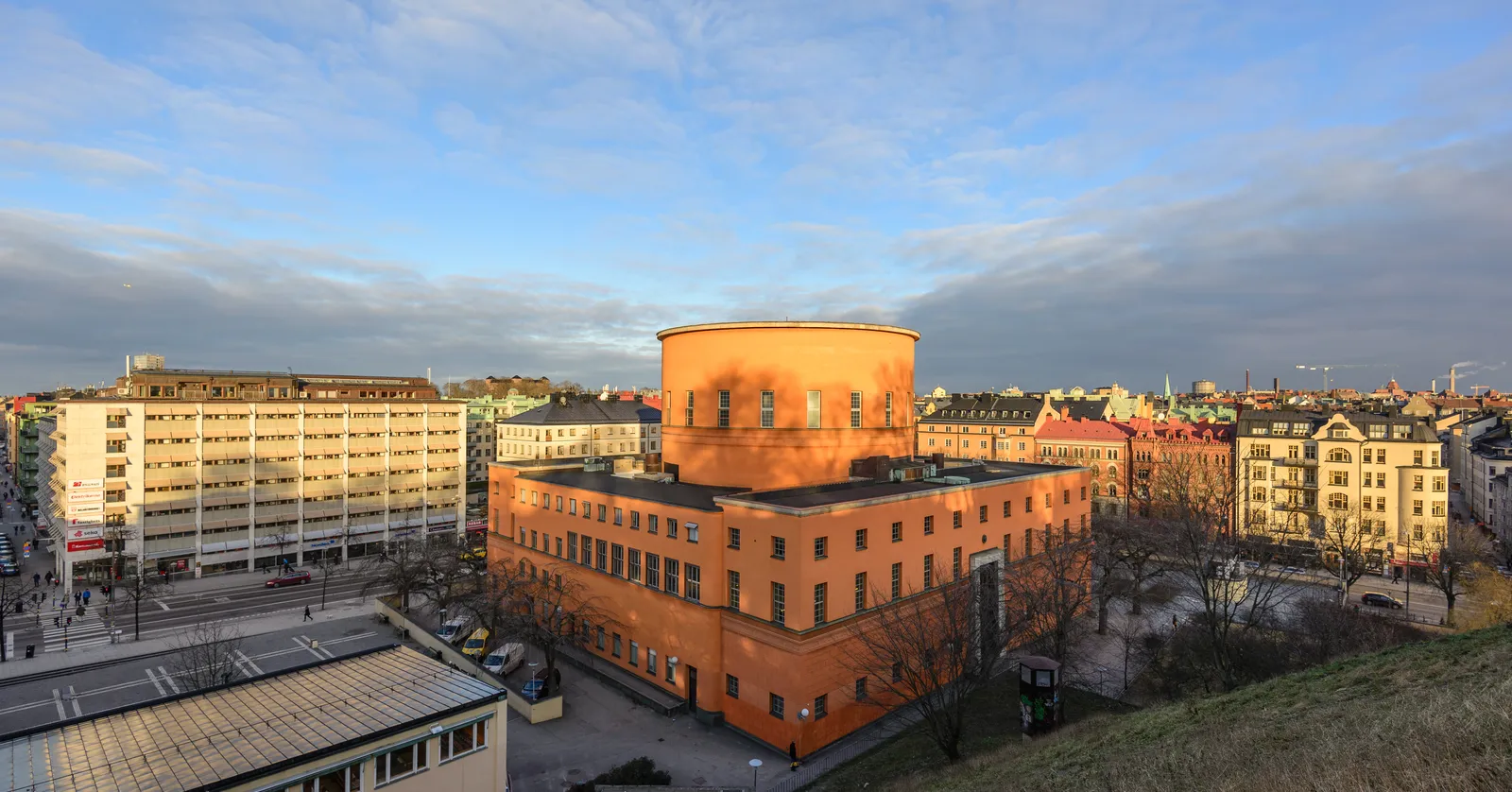
Odenplan is a square in Vasastan, north of central Stockholm, with three free stops inside five minutes of it: a library built around a room of open shelves, a church holding the largest Baroque carving in Sweden, and a 1750s observatory on a wooded hill.
The round reading room at Stockholm Public Library
Gunnar Asplund spent four years on the building that opened off Sveavägen on 31 March 1928, and what he put at the centre of it is a cylinder: a round hall whose walls are open bookshelves from the floor to the top of the third tier, lit from a band of windows above them. From outside it reads as an orange drum sitting on an orange box, which is the shape everyone photographs.
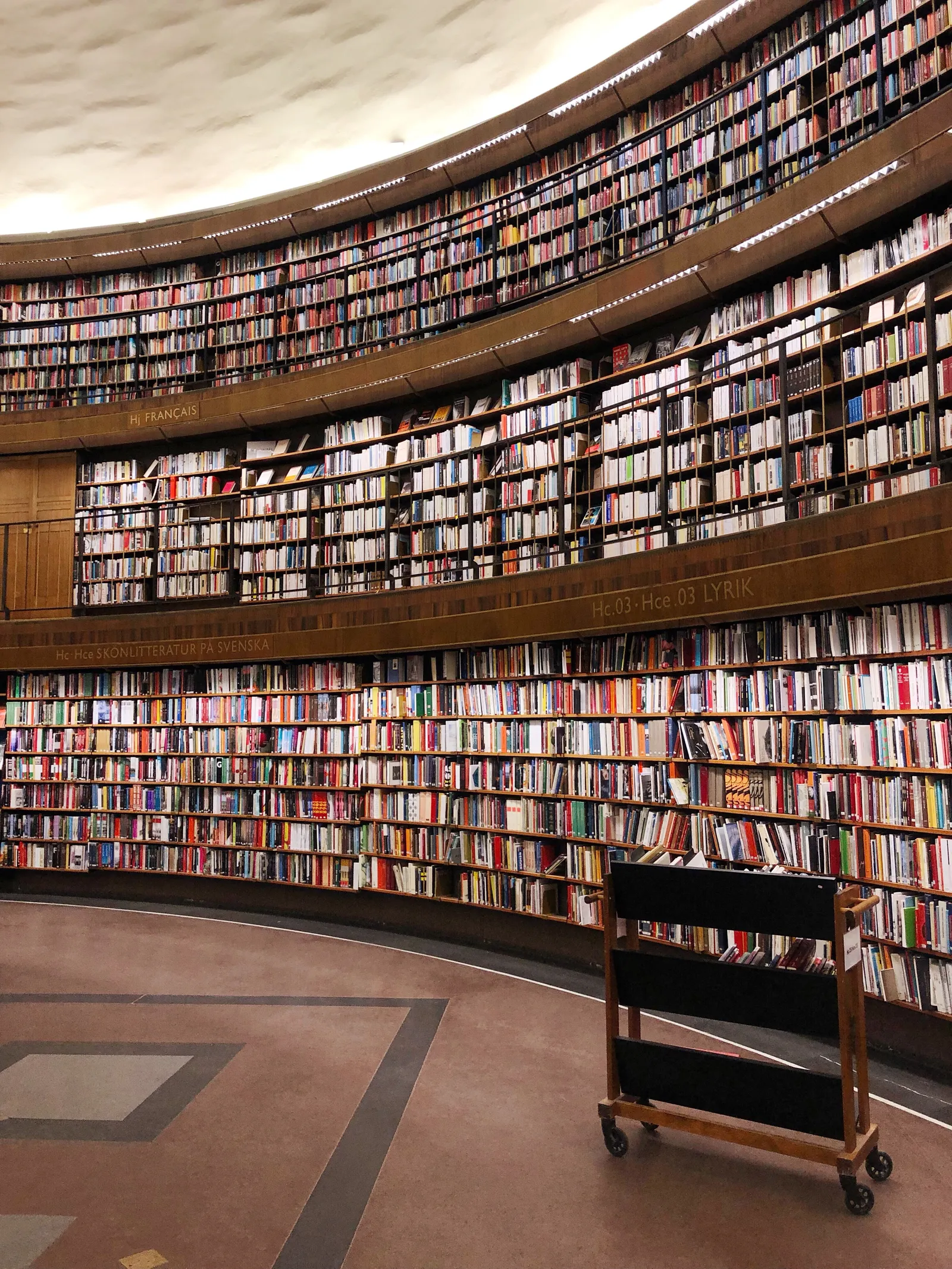
The shelves were the radical part. Asplund went to the United States while the building was going up to study how libraries there were arranging themselves, and this became the first public library in Sweden where a reader could take a book down without asking a member of staff for it. Over 1.5 million volumes are in the building now.
Walking in costs nothing and requires no card. It runs roughly 10am to 7pm on weekdays and noon to 4pm at weekends, and there is a café on the ground floor.
The 15-metre Baroque altar in Gustaf Vasa Church
Gustaf Vasa Church stands on the north side of Odenplan under a dome that goes up 60 metres, and it seats 1,500 people, which makes it the largest church in Stockholm. It was consecrated in 1906. What is inside it, though, is nearly two centuries older and was made for somewhere else entirely.
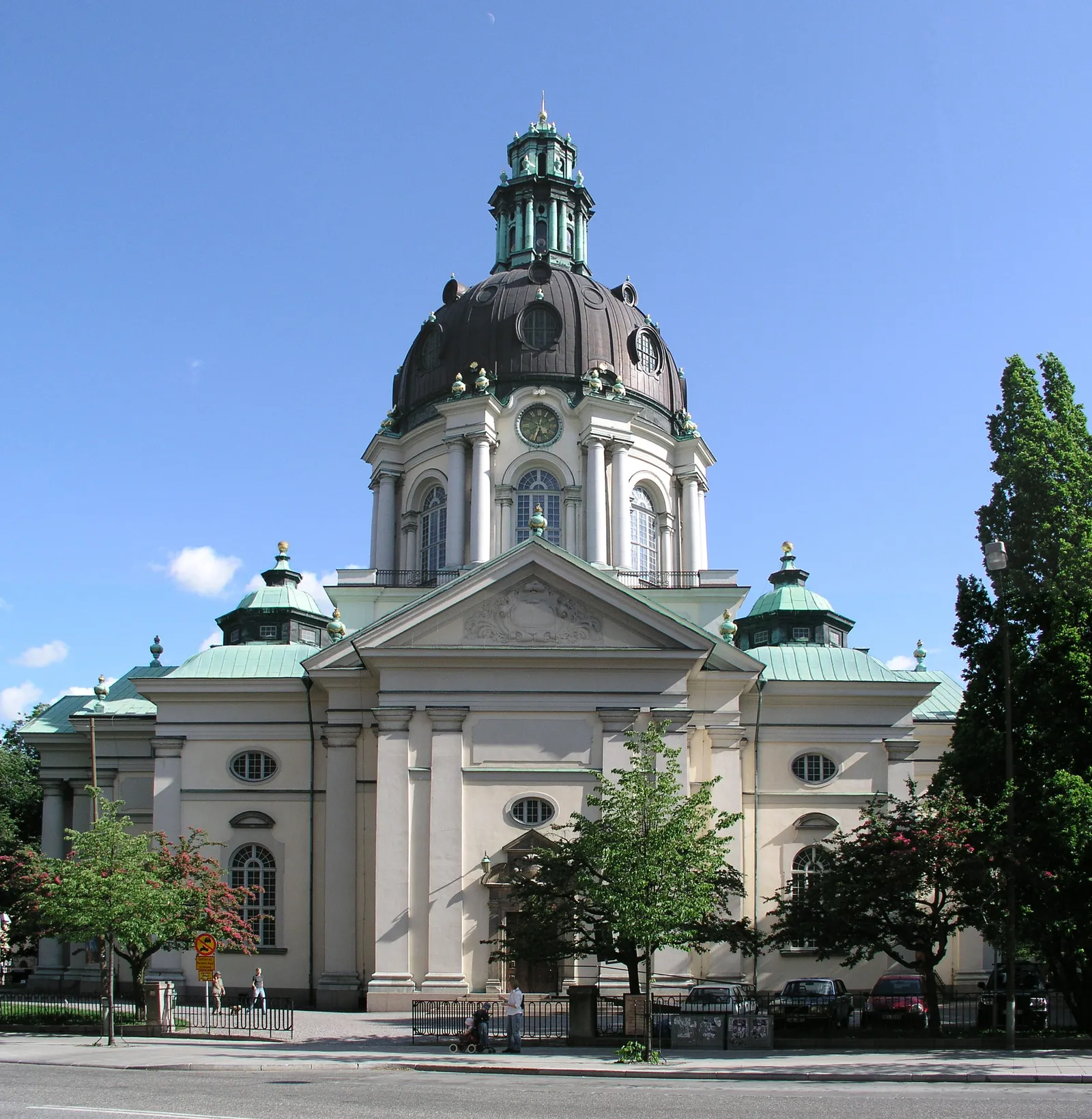
Burchard Precht carved the altarpiece in his Stockholm workshop between 1728 and 1731, for Uppsala Cathedral, where it stood until the 19th century. It is fifteen metres high, gilded and marbled, with figures crowding up around a crucifixion, and it is the largest Baroque sculptural work in the country. Entry is free. Hours are June to August daily 11am to 6pm, and the rest of the year 11am to 6pm Monday to Thursday, closing at 3pm from Friday to Sunday.
The old observatory on the hill at Observatorielunden
A wooded rock rises straight off Sveavägen between the library and Odengatan, and on top of it sits the observatory the Royal Swedish Academy of Sciences built between 1748 and 1753 to Carl Hårleman’s design. It was the Academy’s first permanent building. Weather readings have been taken there daily since the 1750s and still are, which is the sort of continuity you do not expect from a hill in the middle of a city.
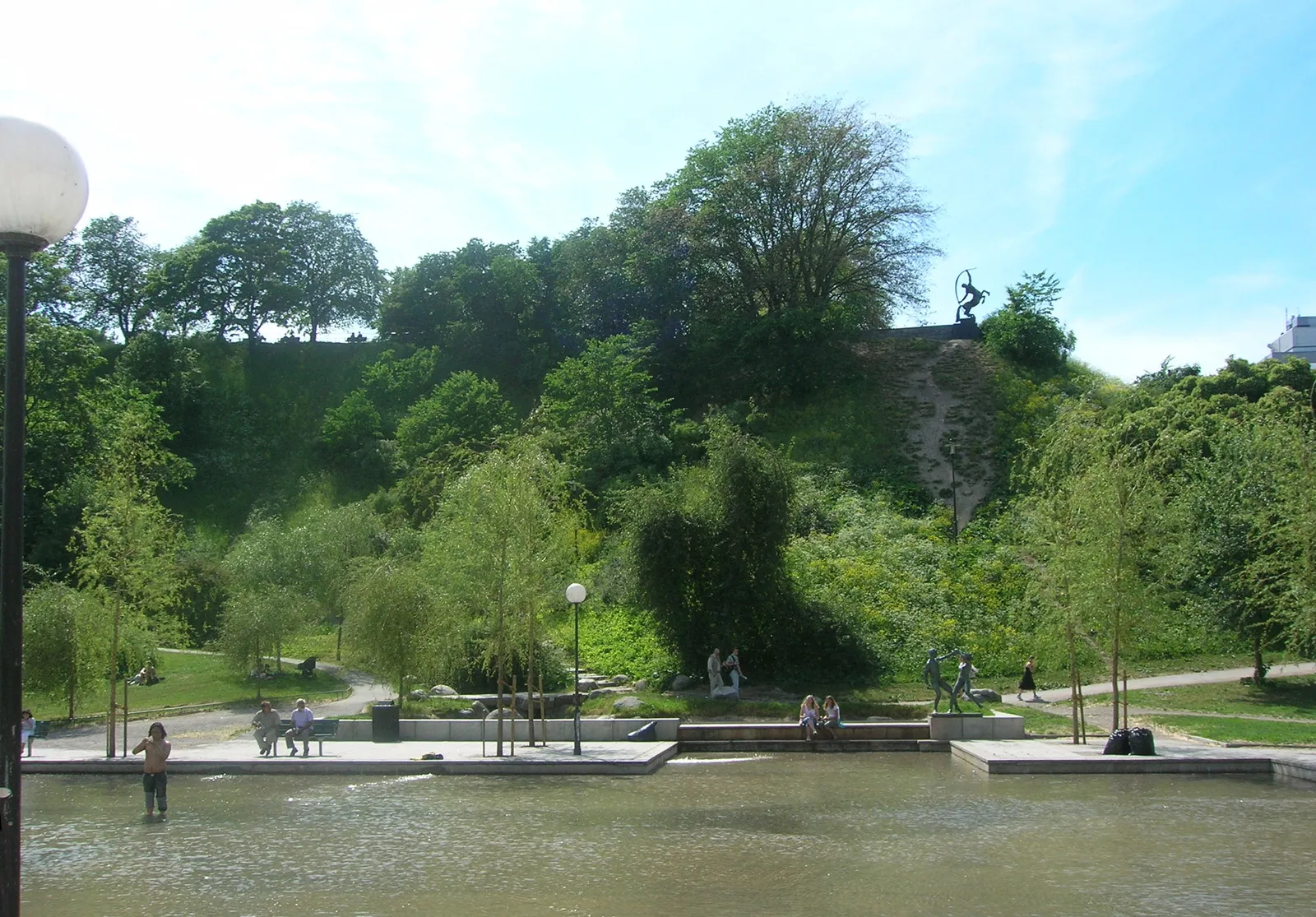
The park around it was laid out by Asplund and finished in 1931, which is why the library and the hill read as one composition rather than two neighbouring things. The view from the crest runs north and east over Vasastan’s rooftops. The observatory building itself opens as a museum on limited hours, so plan on the hill and treat the interior as luck.
The way up is a flight of steps from Sveavägen and gravel paths after that, and the way down is the same flight. That is a fifteen-minute detour with nothing in your hands and closer to half an hour with a suitcase in one, which is usually the point at which people skip it.
Odenplan’s own platforms run through to the airport
Commuter trains from the station under the square go all the way to Arlanda Central without a change, putting you in the basement of the Sky City block between Terminals 4 and 5. The catch is the airport’s own barrier fee, 157 kronor on top of the transit fare, which is what makes the “cheap” route only moderately cheap.
The faster version costs a change and more money. The metro runs to Stockholm Central in about five minutes, and the Arlanda Express covers the rest in 18 minutes for Terminals 2, 3 and 4, 19 for Terminal 5, every quarter of an hour, at 340 kronor for an adult with under-18s free alongside one. Allow an hour from the library door to the check-in hall either way.
This is a quieter half-day than the one most visitors do. For the painted square in the old town, the salvaged warship and the summer climb up the City Hall tower, the full Stockholm guide covers that route instead, and the stops around the main station sit between the two.
Frequently asked questions
What should I do during a layover near Odenplan in Stockholm?
Two hours is enough for all three stops here, and none of them charges. Stockholm Public Library is five minutes east of the square: Gunnar Asplund's 1928 building, built around a round reading room whose walls are open shelves from floor to ceiling, and the first library in Sweden where you could take a book down yourself. Gustaf Vasa Church, right on the square, is the largest church in the city and holds a 15-metre Baroque altar carved in the 1720s for Uppsala Cathedral. Observatorielunden, the hill immediately behind the library, has an observatory from 1753 on top and the view over Vasastan that comes with it. The church keeps shorter hours at weekends outside the summer, so it is the one to check first.
Is Stockholm Public Library open to visitors who aren't borrowing anything?
Yes, and there is no desk to get past. The rotunda is a public room: you walk in off Sveavägen, up the stairs into the middle of it, and nobody asks what you are there for. The library runs roughly 10am to 7pm on weekdays and noon to 4pm at weekends, and photography inside is allowed without a permit or a fee. It holds over 1.5 million books, and the spines lining the round wall are the reason people come in rather than anything on the shelves in particular.
Is the climb up Observatorielunden worth it with limited time?
It is a fifteen-minute loop if you are unencumbered and a longer one if you are not. The hill rises straight off Sveavägen behind the library and the way up is a flight of steps and gravel paths, with the same flight back down. The Royal Swedish Academy of Sciences put the observatory on the crest between 1748 and 1753, to Carl Hårleman's design, and daily weather readings have been taken there since the 1750s and still are. The view north and east over the district is the payoff; the observatory building itself keeps limited hours as a museum, so treat the interior as a bonus rather than the plan.
What is there to eat around Odenplan?
This is a residential district rather than a tourist one, which is the point of coming here: the cafés and bakeries along Odengatan and Upplandsgatan serve the people who live above them, and they open early. There is no food hall or market here, so it is individual places rather than one building to aim at. The library has a café on the ground floor if you would rather not leave the building.