Granada Layover: Alhambra and Albaicín, AGP
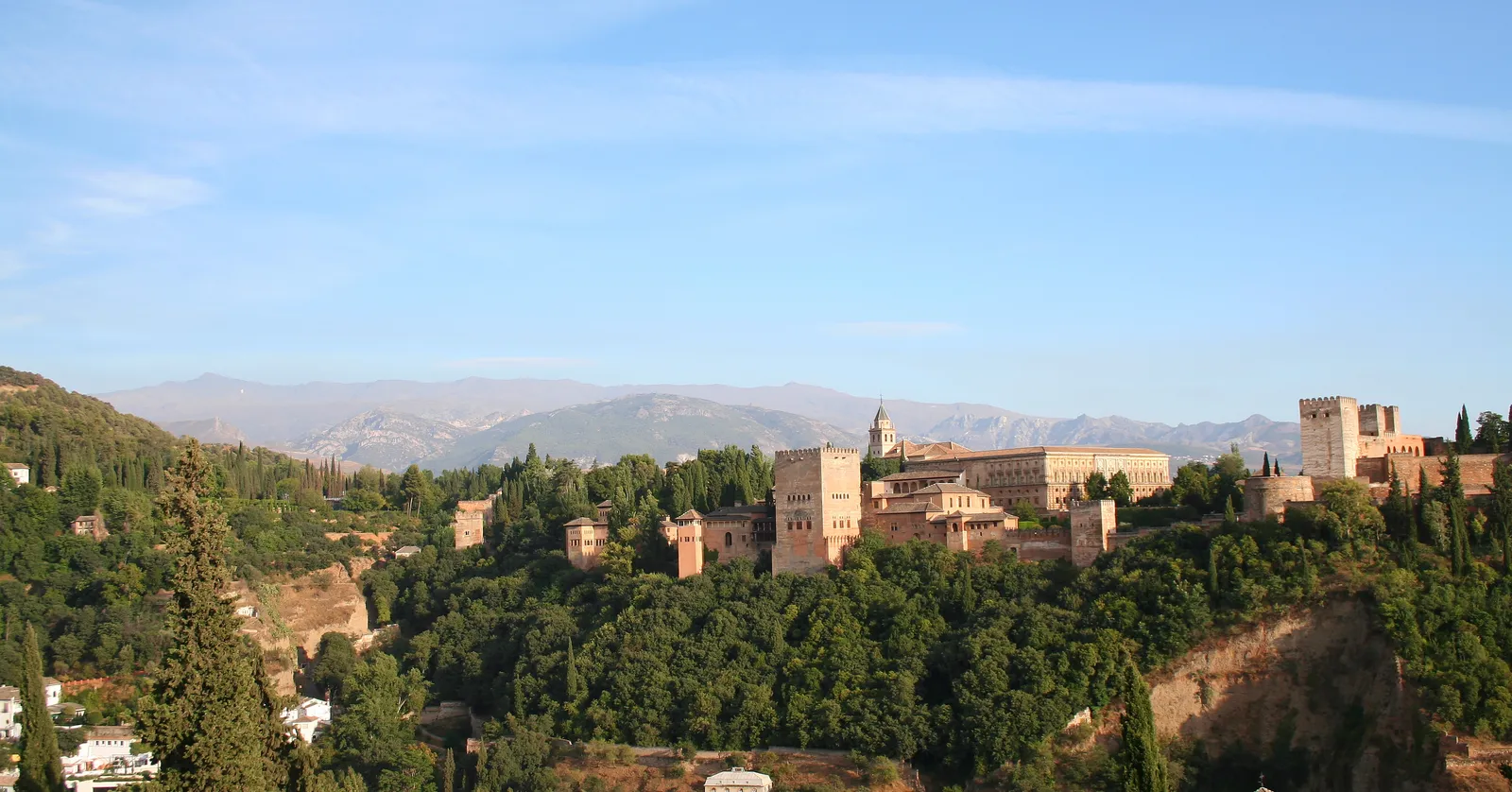
In Granada, the Alhambra’s Nasrid Palaces are the one stop worth booking weeks ahead, and most of what surrounds them, the river lane below the hill, the Albaicín viewpoint facing it and a free tapa with every drink, costs little or nothing.
The Nasrid Palaces inside the Alhambra
The Alhambra is the walled palace and fortress on the Sabika hill above Granada’s old centre, and the Nasrid Palaces at its core, built for the sultans of the last Muslim kingdom in Spain, are what most people come for. Entry is by timed slot: the general ticket is 21 euros plus a booking fee, you have to be at the palace door within half an hour of the time printed on it, and latecomers are turned away. Spring slots go two to three months ahead and summer ones six to eight weeks, so book an Alhambra ticket with a palace slot before the trip rather than hoping for returns on the day.
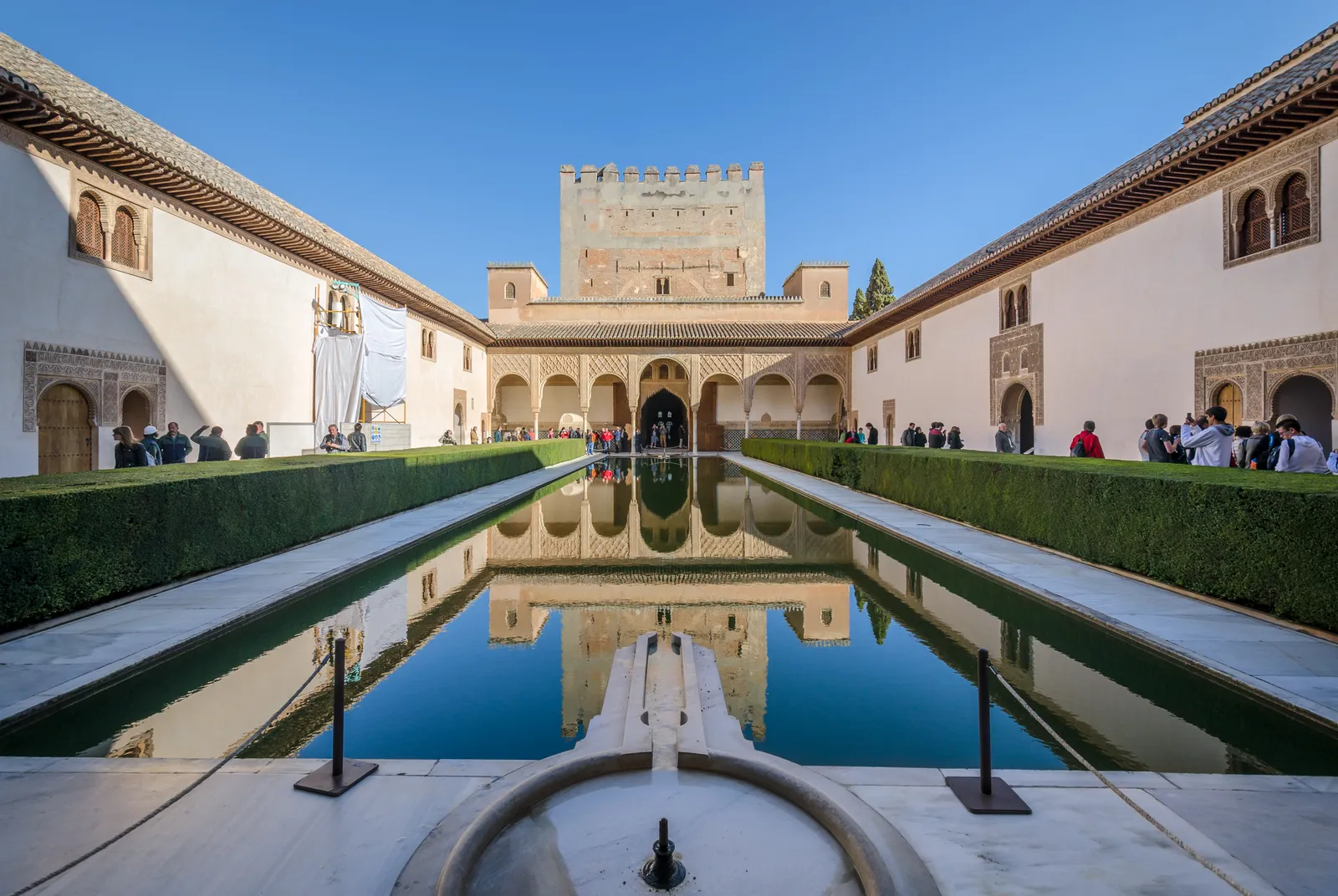
The Court of the Myrtles is the first great courtyard inside: a long pool between two clipped hedges, with the square Comares Tower mirrored in the water at one end. The tower holds the Hall of the Ambassadors, the sultan’s throne room.
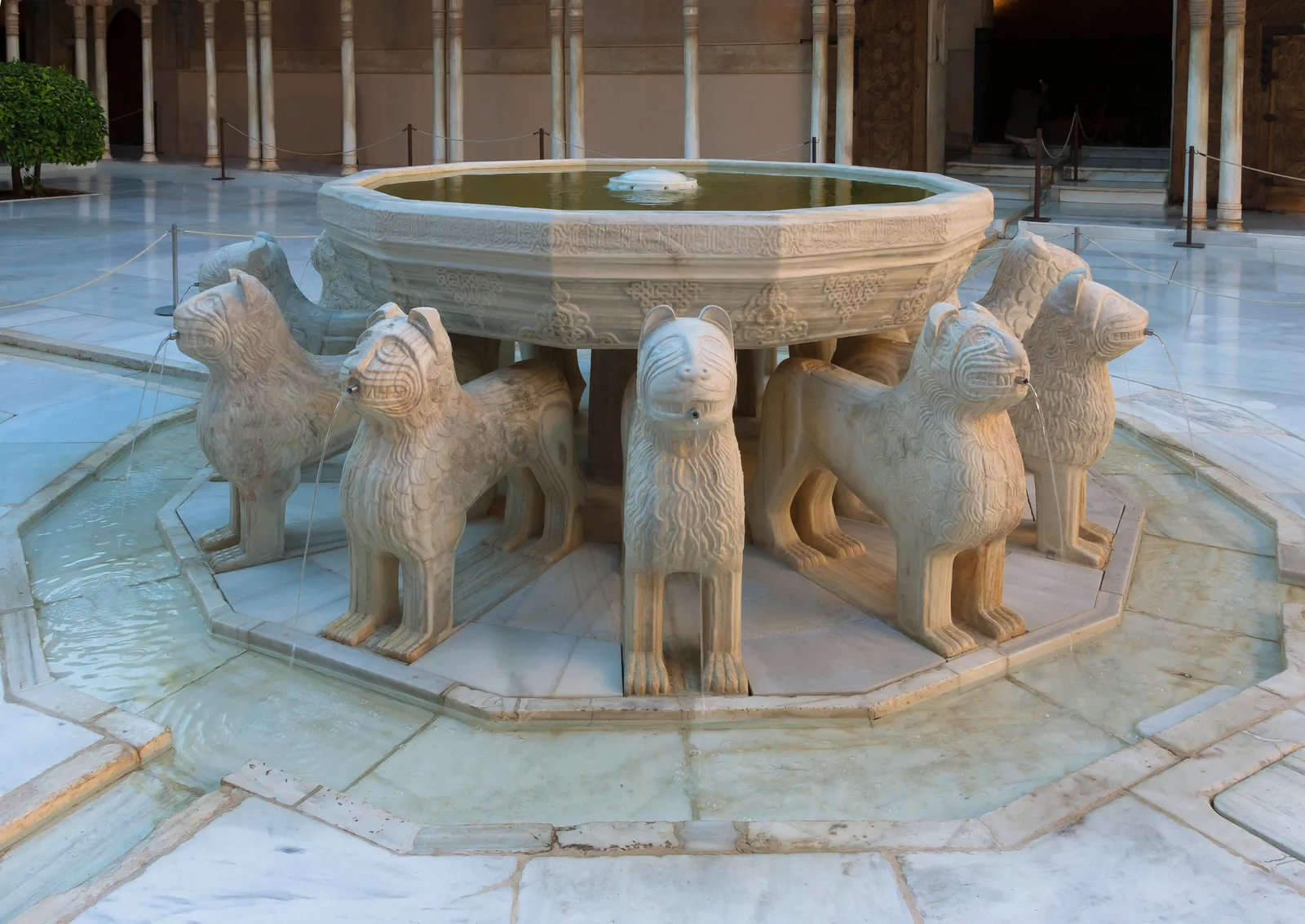
The Palace of the Lions next to it was commissioned by Muhammad V in the second half of the 14th century. Its courtyard is ringed by slim marble columns, and the fountain in the middle rests on the backs of twelve stone lions.
The free part of the hill is easy to overlook. The Gate of Justice and the Palace of Charles V need no ticket: the Renaissance palace was begun in 1527, stood roofless until 1967, and its round courtyard is open to walk into whenever the Alhambra is. Bags bigger than about 40 by 40 centimetres are not allowed into the monument at all, which means a suitcase has to be dealt with before the fifteen-to-twenty-minute climb up from Plaza Nueva.
The tombs of Isabella and Ferdinand in the Royal Chapel
The Royal Chapel is the late-Gothic burial church built between 1505 and 1517 against the side of Granada Cathedral, down in the flat lower town, and Isabella of Castile and Ferdinand of Aragon lie inside it. Their marble tomb is by the Florentine sculptor Domenico Fancelli, and a second one beside it holds their daughter Joanna and her husband Philip. Beneath both, a few steps lead down into a small, bare crypt where the actual lead coffins sit on a stone ledge, marked with each monarch’s initial.
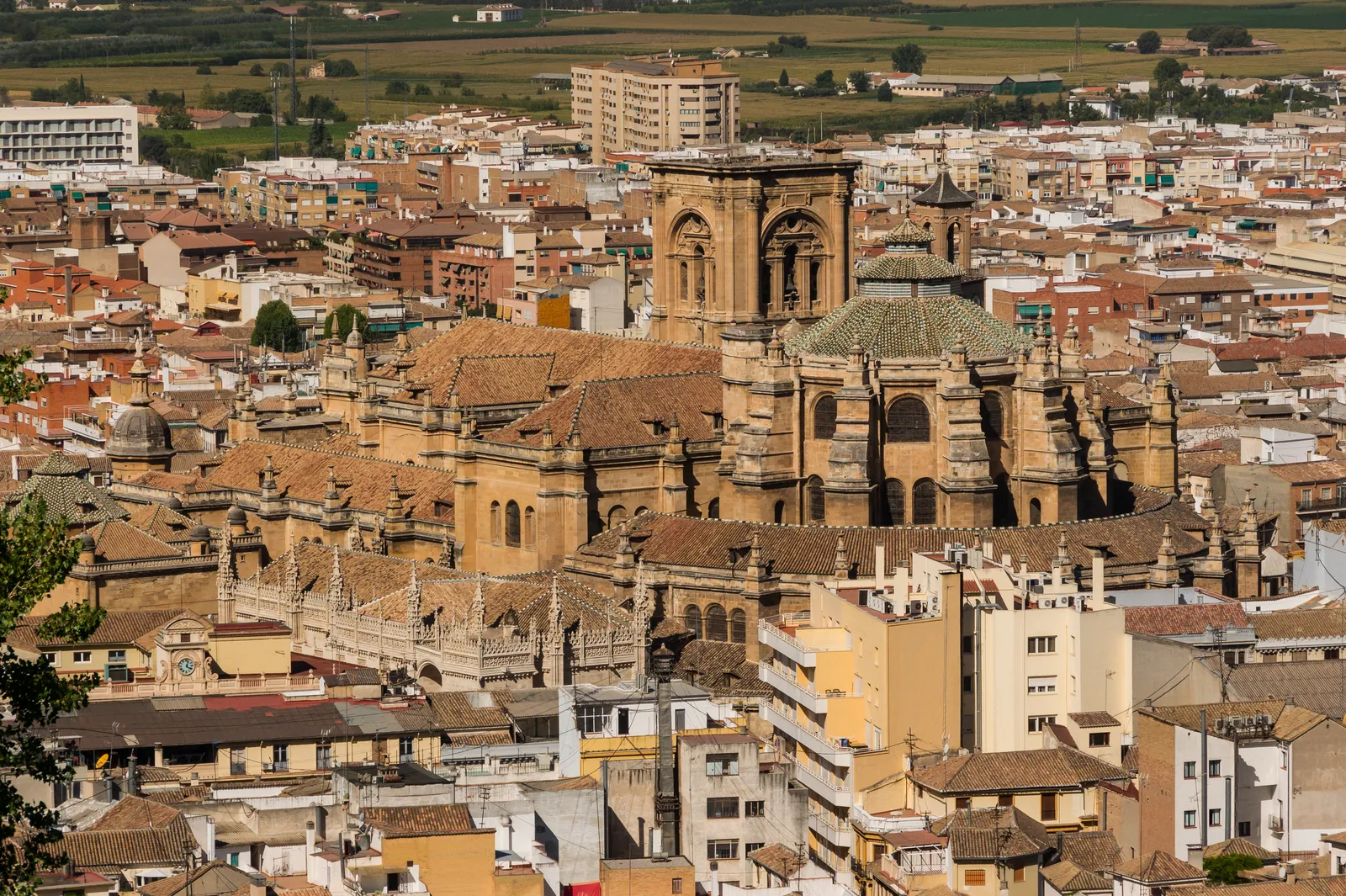
The chapel and the cathedral are ticketed separately, and a guided tour of the cathedral and Royal Chapel covers both with the history the wall panels leave out. The narrow lanes of the Alcaicería run along the chapel’s outer wall: this was the Nasrid silk market until a fire in July 1843 burned it down, and the smaller neo-Moorish version rebuilt afterwards sells ceramics, inlaid wood and brass lamps. Calle Navas, a street of tapas bars off Plaza del Carmen a few minutes’ walk away, is where Granada’s free tapa is easiest to see in action: order any drink and a small plate arrives with it.
Carrera del Darro, the river lane under the Alhambra walls
Carrera del Darro follows the Darro river east from Plaza Nueva, the square at the foot of the Alhambra hill, with the Alhambra’s walls on the wooded slope above one bank and the houses of the Albaicín stacked up the other. Small stone bridges cross over toward the Alhambra side, and the whole lane is free to wander.
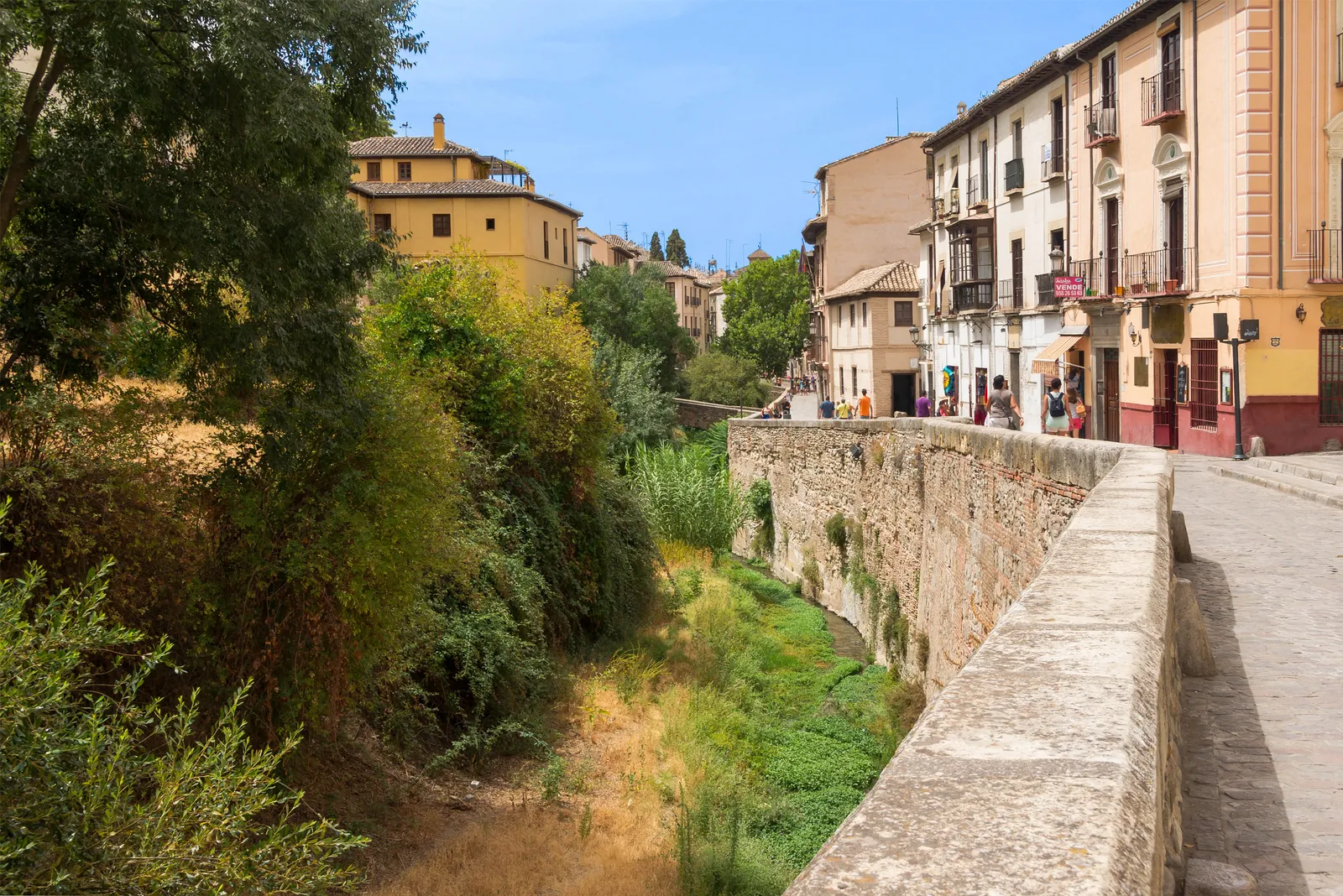
El Bañuelo, part way along, is an Islamic bathhouse from the 11th or 12th century that was used as a bath until the 16th, then turned to other uses and restored in the 20th. The lane ends at the Paseo de los Tristes, an open riverside terrace with the Comares Tower directly overhead.
The Alhambra from the Mirador de San Nicolás
The Mirador de San Nicolás is the terrace in front of San Nicolás church near the top of the Albaicín, the hillside quarter that still keeps its Nasrid-era street plan and has been part of the Alhambra’s World Heritage listing since 1994. It faces the Alhambra straight across the Darro valley with the Sierra Nevada behind, it is open around the clock, and it costs nothing. Sunset is when it fills up; early morning it is close to empty.
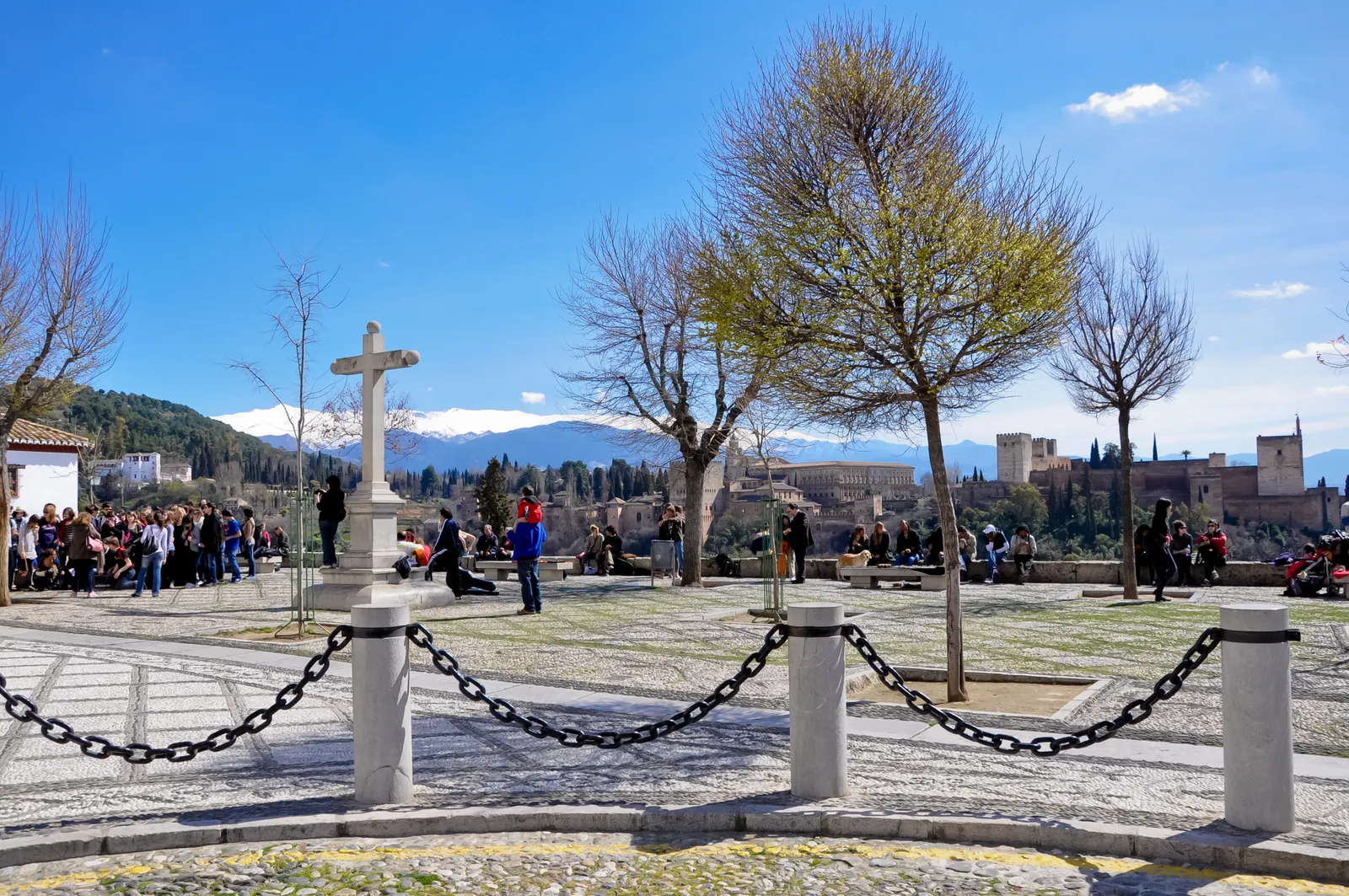
Immediately beside the terrace, the garden of the Mezquita Mayor, a mosque completed in 2003, looks out on the same view over its own wall. The garden is free to walk into, and it is usually much quieter than the terrace next door. The lanes up to both are steep and cobbled, and small city minibuses climb them for anyone who would rather ride.
The cave houses of Sacromonte
Sacromonte is the hillside quarter east of the Albaicín, facing the Alhambra across the Darro valley, where Granada’s Roma families settled after 1492 in homes dug into the slope and whitewashed at the front. With more than a morning to spare, the Museo Cuevas del Sacromonte keeps a cluster of them furnished as they were lived in, with the weaving, pottery and metalwork that went on inside.
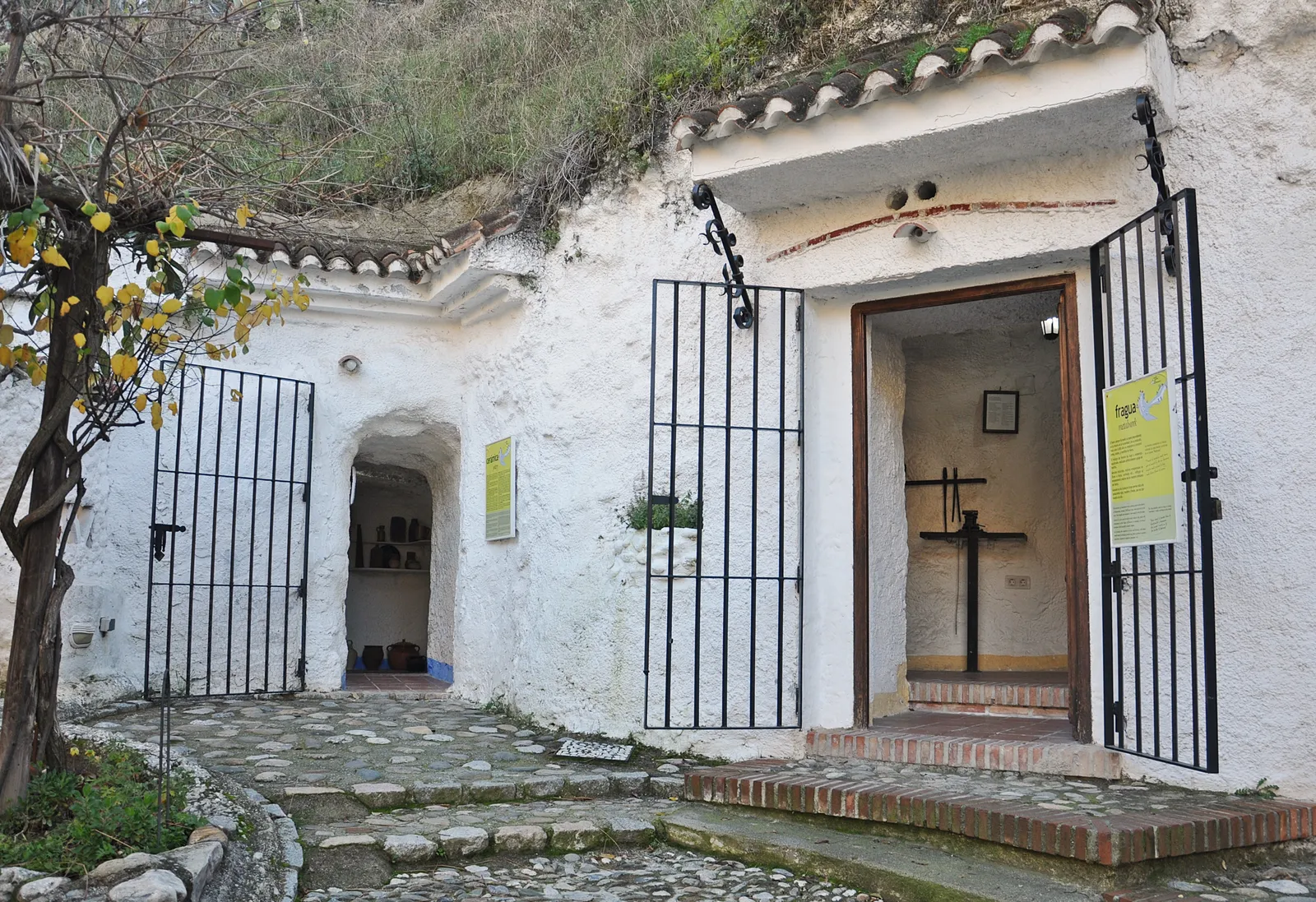
Entry is 5 euros and needs no booking, and the museum is open 10am to 6pm in winter and until 8pm in summer.
Two hours by direct coach to Málaga Airport
The direct ALSA coach from Granada’s bus station to Málaga-Costa del Sol Airport (AGP) is the simplest way back: around fifteen departures a day, no change, about two hours to two and a quarter on the road, from about 14 euros. It stops at the airport’s transport interchange on the arrivals level, a short walk from check-in. The bus station is on Avenida Juan Pablo II at the northern edge of the city rather than in the old centre, so allow for a city bus or taxi out to it, and check the day’s timetable before counting on one of the evening departures, since the last few thin out.
The train takes a similar total with a change. A handful of direct trains a day run from Granada to Málaga María Zambrano station in about an hour and twenty-five minutes, and the C1 commuter train covers the last stretch to the airport in about ten minutes for under 2 euros. Either way, leaving Granada four and a half to five hours before the flight covers the ride, the transfer across town to the station and the airport itself, which is why this trip needs nine hours or more between flights.
The palaces will not let a suitcase in, and the Albaicín and Sacromonte are cobbled climbs, so a bag left at a storage point near the cathedral or the bus station for the day is what makes all of it walkable.
Frequently asked questions
What should I do during a layover in Granada?
Put the Alhambra's Nasrid Palaces first, on a timed ticket booked well ahead, and add the free Palace of Charles V inside the same walls. In the lower town, the Royal Chapel holds the tombs of Isabella and Ferdinand beside the cathedral. Carrera del Darro along the river and the Mirador de San Nicolás at the top of the Albaicín cost nothing, and the Sacromonte cave museum is the easy one to drop if time runs short. With nine or more hours between flights, that fits without rushing.
Is Granada realistic on a layover at Málaga Airport?
Only with a long gap. The direct ALSA coach from Málaga Airport (AGP) to Granada's bus station takes about two hours to two and a quarter, around fifteen times a day, from about 14 euros, so the round trip plus airport time eats five or six hours before you have seen anything. Nine hours between flights is a sensible minimum. With less, Málaga itself is a short commuter-train ride from the terminal and the better use of the day.
Can I see any of the Alhambra without a palace ticket?
Yes. The Gate of Justice and the Palace of Charles V, the Renaissance building inside the walls with a circular two-storey courtyard, need no ticket and are open during the monument's normal hours. What you cannot do without a ticket is enter the Nasrid Palaces or the Generalife gardens, and those hold the tilework and courtyards most visitors come for.
How does the free tapa work in Granada?
Order any drink at a bar, a beer, a glass of wine, a soft drink, and a small plate of food comes with it at no extra charge. The bar chooses what it is, and a second drink usually brings a different one. Calle Navas, a street of bars off Plaza del Carmen near the town hall, is the classic place to do three or four rounds, which makes it the cheapest way to eat properly in the city on a flight day.
Is the Alhambra open every day?
Every day except 25 December and 1 January. Daytime hours run 8:30am to 8pm from 1 April to 14 October and 8:30am to 6pm the rest of the year, with the last entry to the Nasrid Palaces an hour before closing, so a winter afternoon gives noticeably less room than the same hours in summer.