Granada Layover Near the Railway Station
Part of the full Granada Layover: Alhambra and Albaicín, AGP
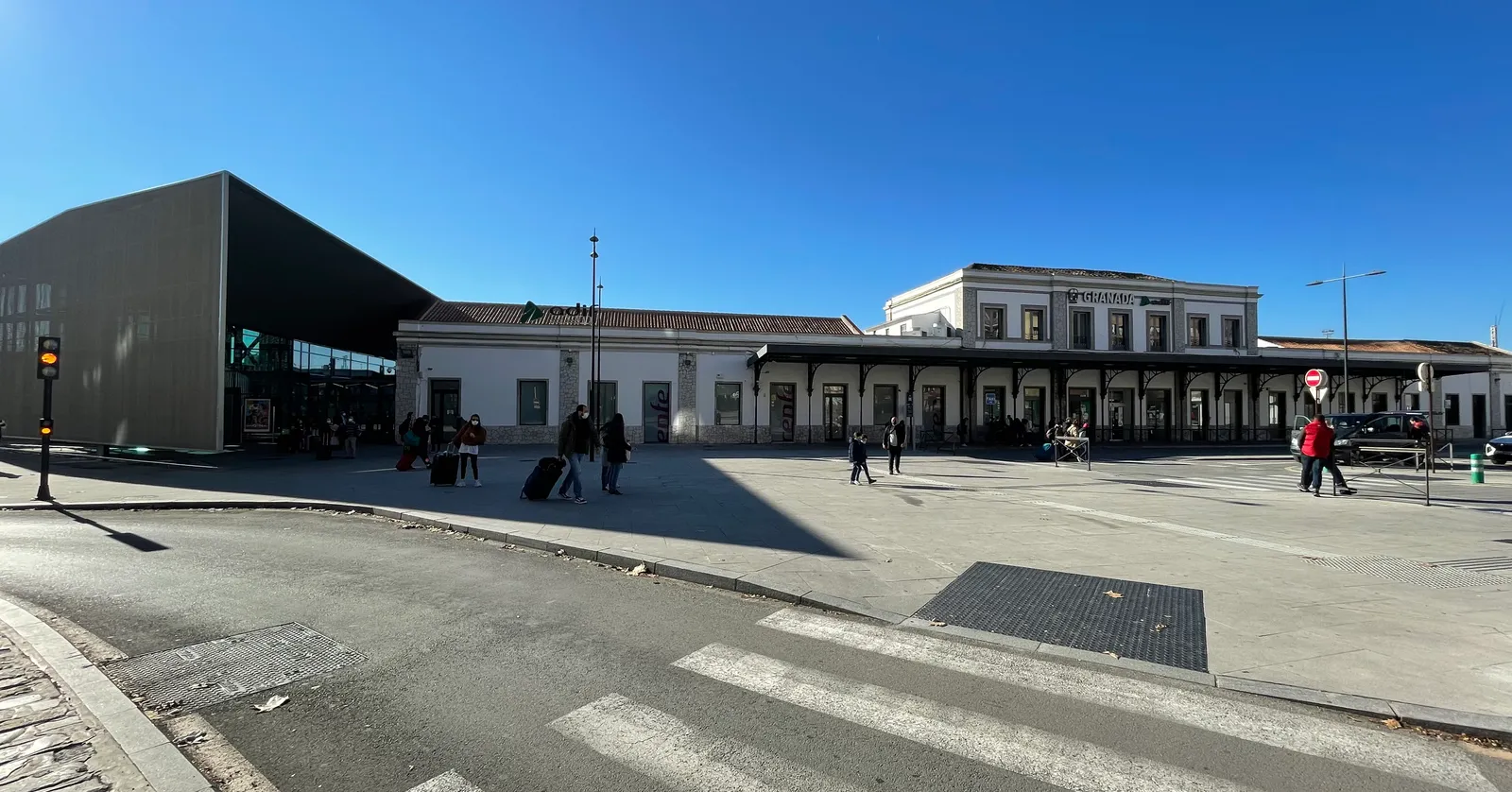
Granada’s railway station sits about twenty minutes’ walk north-west of the cathedral, and two heavily decorated church interiors are on the way in: the gilded Basílica de San Juan de Dios and the Monastery of San Jerónimo, where the Gran Capitán is buried, with the university’s old quarter just beyond.
The gold interior of the Basílica de San Juan de Dios
The Basílica de San Juan de Dios stands on Calle San Juan de Dios, beside the hospital that Saint John of God founded outside the medieval walls, and is about ten minutes on foot from the station. From the street it is a carved stone Baroque front; inside, almost every surface is carved, gilded or painted, from the side chapels to the high dome over the crossing.
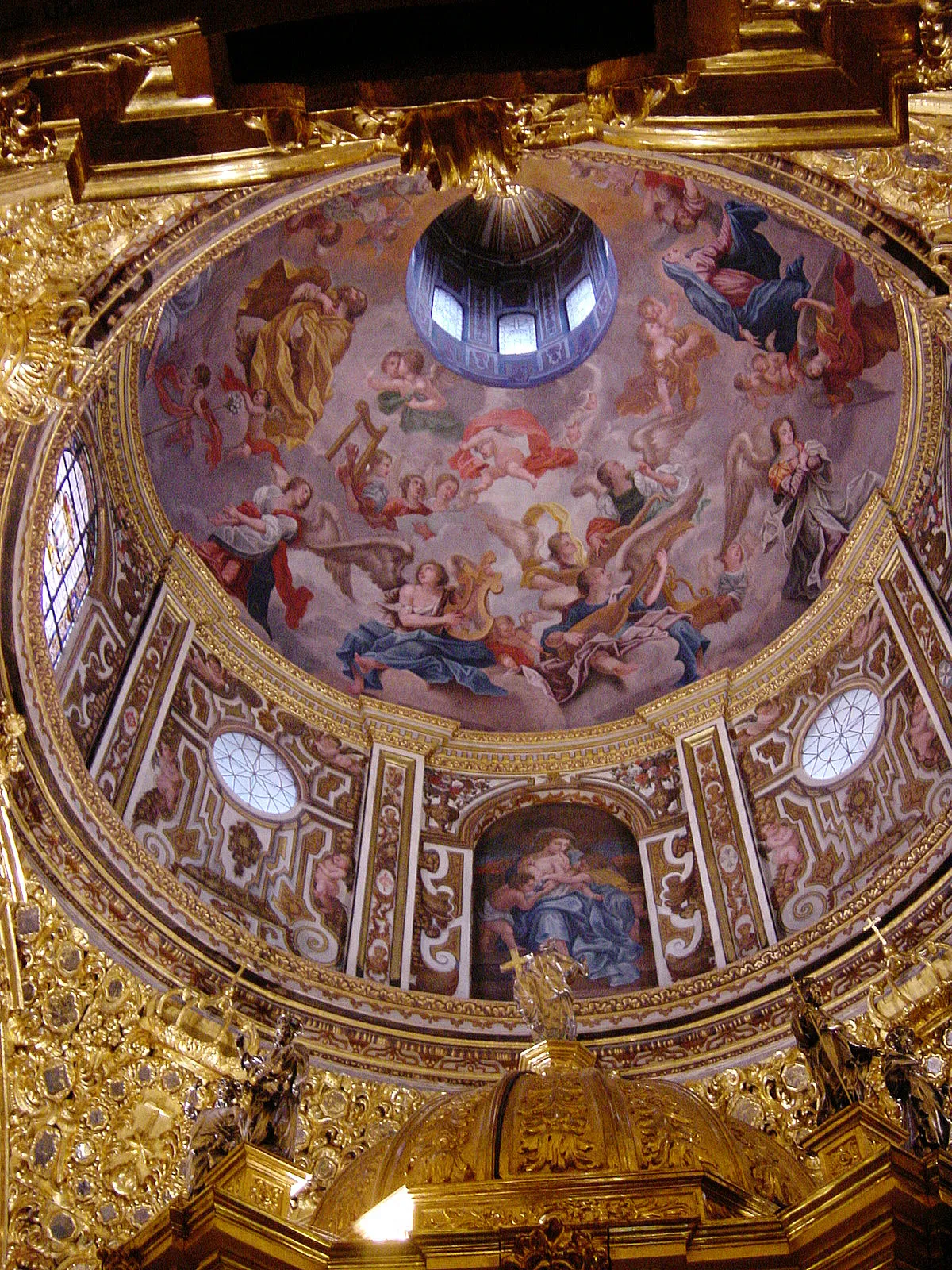
Entry is 10 euros with an audio guide in English included, and the route ends upstairs in the camarín behind the altar, a small chamber lined with marble, agate and mirrors that holds the saint’s relics. Forty minutes to an hour is enough. It opens at 9:30am Monday to Saturday, which suits an early arrival better than most of the old town does.
The Gran Capitán’s tomb at the Monastery of San Jerónimo
The Monastery of San Jerónimo on Calle Rector López Argueta, about 250 metres from the basilica, was the first monastery the Catholic Monarchs built in Granada after taking the city, with building work starting in 1504. Gonzalo Fernández de Córdoba, the general known as the Gran Capitán, is buried in the crossing of the church with his wife, and the carved Renaissance interior around them is built as a monument to his campaigns.
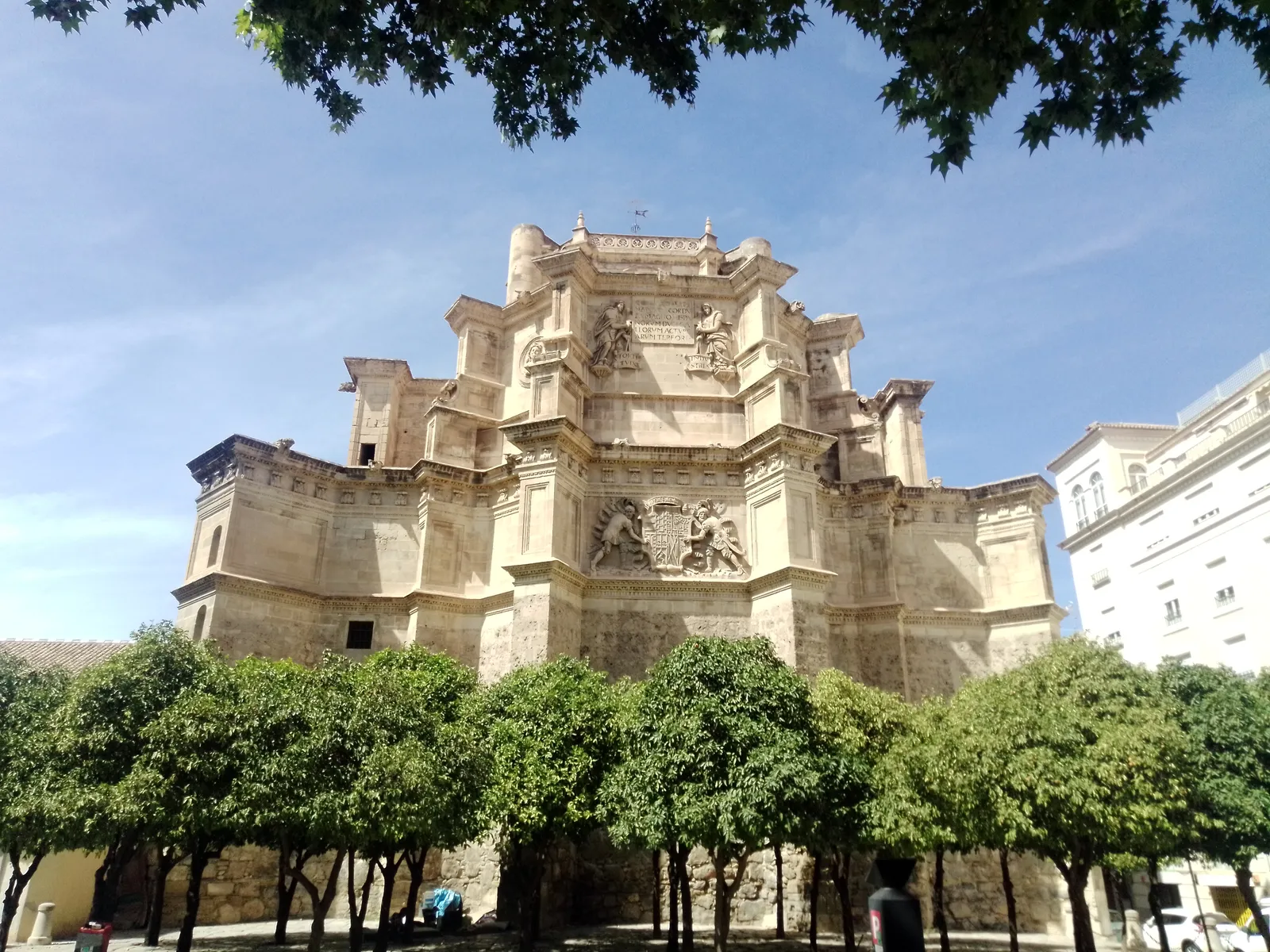
The bell tower is the newest part. French troops pulled it down during the Peninsular War and used the stone for the Puente Verde over the Genil river, and it was only rebuilt in the 1980s, finished in 1989. Entry is a few euros, and the monastery closes for a long lunch, roughly 1:30pm to 4pm in summer and 3pm in winter, so morning is the easier time. The twenty-odd minutes of pavement between the platforms and the cathedral stretch noticeably with a wheeled suitcase, and that cost is paid twice in a gap between two trains.
Plaza de la Universidad and the old Jesuit college
Plaza de la Universidad, a cobbled square in the centre of Granada, takes its name from the building along one side: the Jesuits’ Colegio de San Pablo, founded in 1556 and given to the University of Granada after the order was expelled from Spain in 1767. It houses the Faculty of Law today, and the church of Santos Justo y Pastor fills another side of the square.
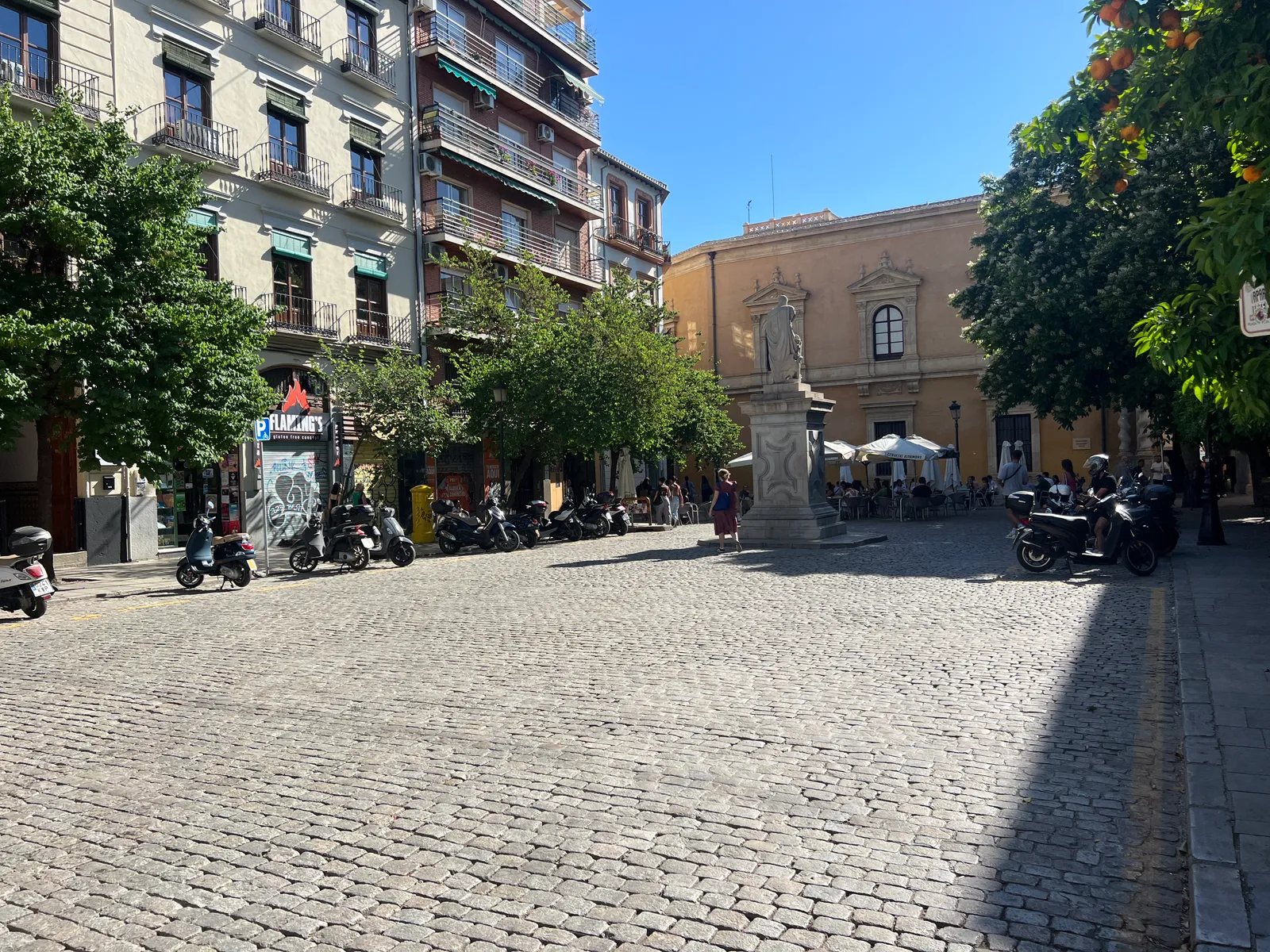
The university’s botanical garden, founded in 1783, is a small walled garden on Calle Duquesa, a minute or two away, and free to walk into on weekdays in term time. The cathedral, the Royal Chapel and the Alcaicería market lanes are about ten minutes further on, which is where the full Granada itinerary takes over.
About an hour and a half to Málaga, then a commuter train to the airport
From Granada station, a handful of direct trains a day, around three, run to Málaga María Zambrano station in about an hour and a half. At María Zambrano, the C1 commuter train covers the last stretch to Málaga-Costa del Sol Airport (AGP) in about ten minutes for under 2 euros. Check the day’s timetable before relying on one of the direct trains; with so few of them, missing one can mean a long wait.
When no train fits, the direct ALSA coach to the airport leaves from Granada’s bus station, around fifteen times a day and about two hours to two and a quarter on the road. The light metro outside this station runs straight to the bus station in five stops, so the switch costs little. Either way, allow four and a half to five hours between leaving Granada and the flight.
Frequently asked questions
What should I do during a layover near Granada Railway Station in Granada?
Walk toward the centre by way of the Basílica de San Juan de Dios, a Baroque interior covered in gold leaf, and the Monastery of San Jerónimo, where the Gran Capitán is buried, a few minutes apart and both paid. Plaza de la Universidad and the university's botanical garden, just beyond them, cost nothing. Two to three hours covers all four and the walk back. The Alhambra is a different scale of trip and needs a timed ticket, so leave it out unless the gap between trains is most of a day.
Is there a quicker way into the old town than walking from Granada station?
Yes. The city's light metro stops about fifty metres from the station entrance and runs south through the university district toward the centre, and several city bus routes stop on Avenida de Andaluces outside. On foot, the cathedral is roughly twenty to twenty-five minutes along a fairly straight run of streets, which is also where the basilica and San Jerónimo sit.
Can I fit the Alhambra into a gap between trains at Granada station?
Only with most of a day. Entry to the Nasrid Palaces is by a timed slot you must reach within half an hour, the palaces sit on a hill the far side of the old town from the station, and a proper visit takes three hours before you add getting there and back. If the gap allows it, book the palace slot in advance and follow the full Granada itinerary instead of this one.
When is the Basílica de San Juan de Dios closed?
It opens Monday to Saturday from 9:30am to 6:50pm, with last entry about half an hour before closing. On Sundays it breaks in the middle of the day, open roughly 9am to noon and again from 1:30pm, so a Sunday train arriving late morning can land in the gap. It shuts on 25 December and 1 January and opens mornings only on 24 and 31 December.