Granada Layover Near the Bus Station
Part of the full Granada Layover: Alhambra and Albaicín, AGP
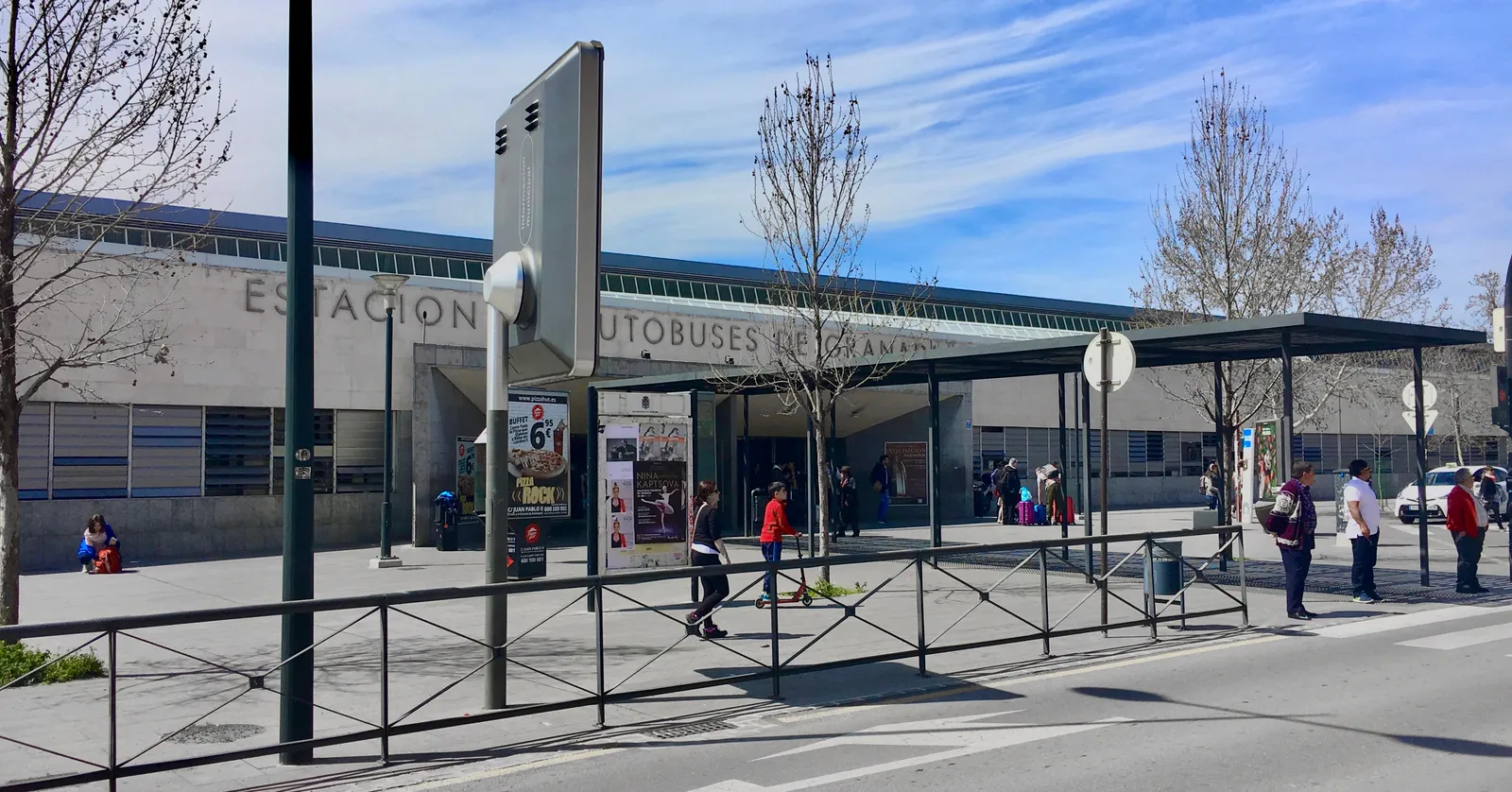
From Granada’s bus station on the city’s northern edge, three stops sit one short bus or taxi ride away: the Puerta de Elvira, the Moorish gate into the lower Albaicín, the free Renaissance courtyards of the Hospital Real beside it, and the Cartuja monastery’s Baroque sacristy a little further north.
Around fifteen direct coaches a day to Málaga Airport
Granada’s bus station, on Avenida Juan Pablo II at the northern edge of the city, is where the direct ALSA coach to Málaga-Costa del Sol Airport (AGP) both arrives and leaves. It runs around fifteen times a day, takes about two hours to two and a quarter, and costs from about 14 euros, stopping at the airport’s transport interchange on the arrivals level. The evening departures thin out and the timetable changes by day, so check the last one before settling on a plan.
Boarding a coach at least four and a quarter hours before the flight leaves room for the ride and the airport itself. From the centre, the city bus back to the station takes about fifteen minutes, which is the only other piece of the trip to budget for.
The Puerta de Elvira, the Moorish gate into the Albaicín
The Puerta de Elvira stands on Plaza del Triunfo in central Granada, about fifteen minutes by city bus from the bus station. The Zirid rulers built it in the 11th century as the city’s main entrance, and the Nasrids turned it into a small fortress in the 14th; what survives is the outer horseshoe arch between two heavy towers, with the lanes of the lower Albaicín running uphill straight through it.
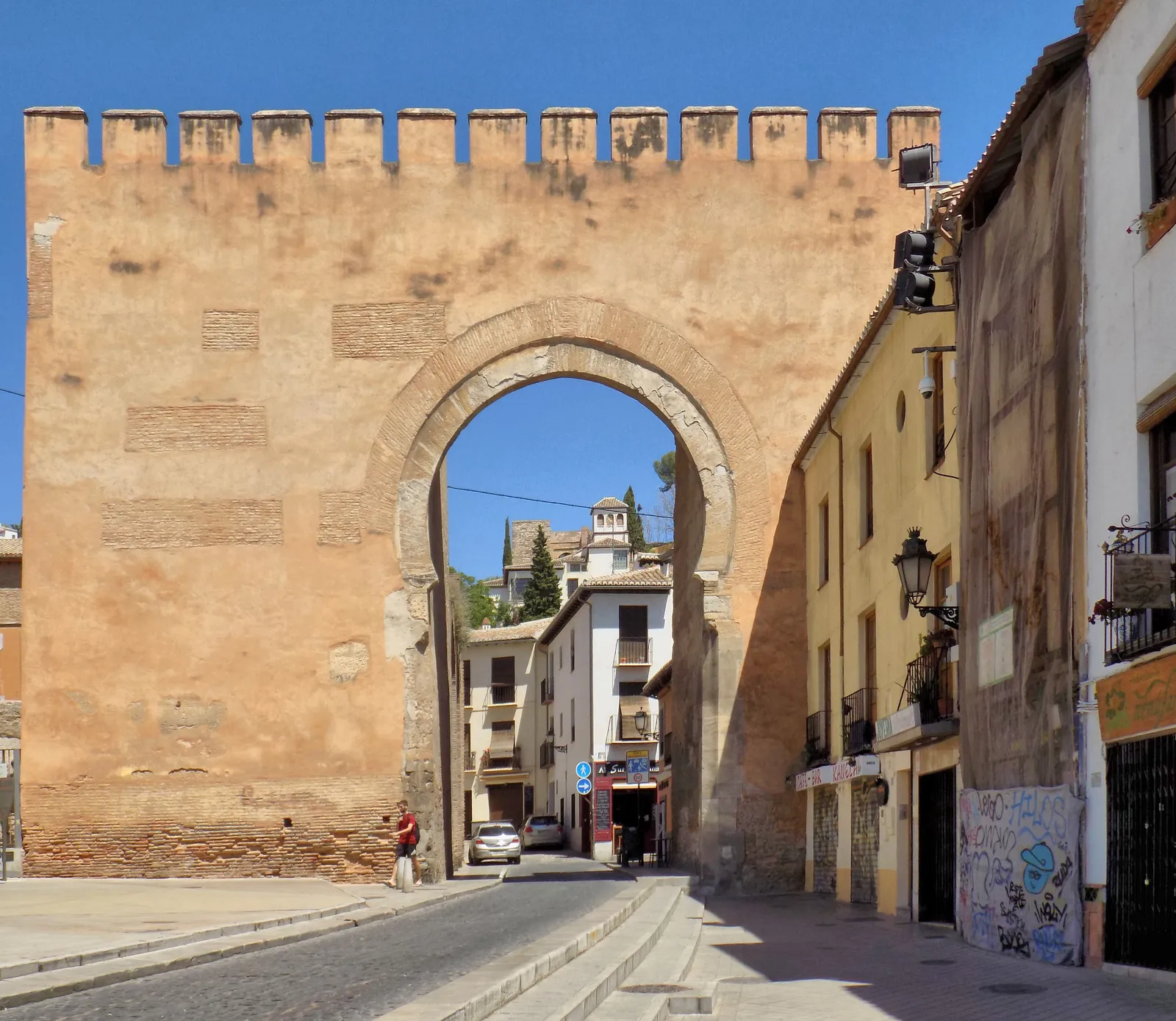
Calle Elvira, the old road the gate was built to guard, runs south from it toward Plaza Nueva. The Albaicín above is a tangle of steep, unsigned lanes, and a guided walk through the Albaicín and Sacromonte covers the quarter without the wrong turns. The Alhambra and the cathedral quarter belong to the main Granada itinerary, which needs a much longer gap than a coach turnaround.
The Baroque sacristy of the Cartuja monastery
The Cartuja is a Carthusian monastery on the northern edge of Granada, beside the university’s Cartuja campus, a short taxi ride from either the bus station or Plaza del Triunfo. It was founded in 1506 and building went on for close to three centuries, which is why the plain exterior gives little warning of the inside.
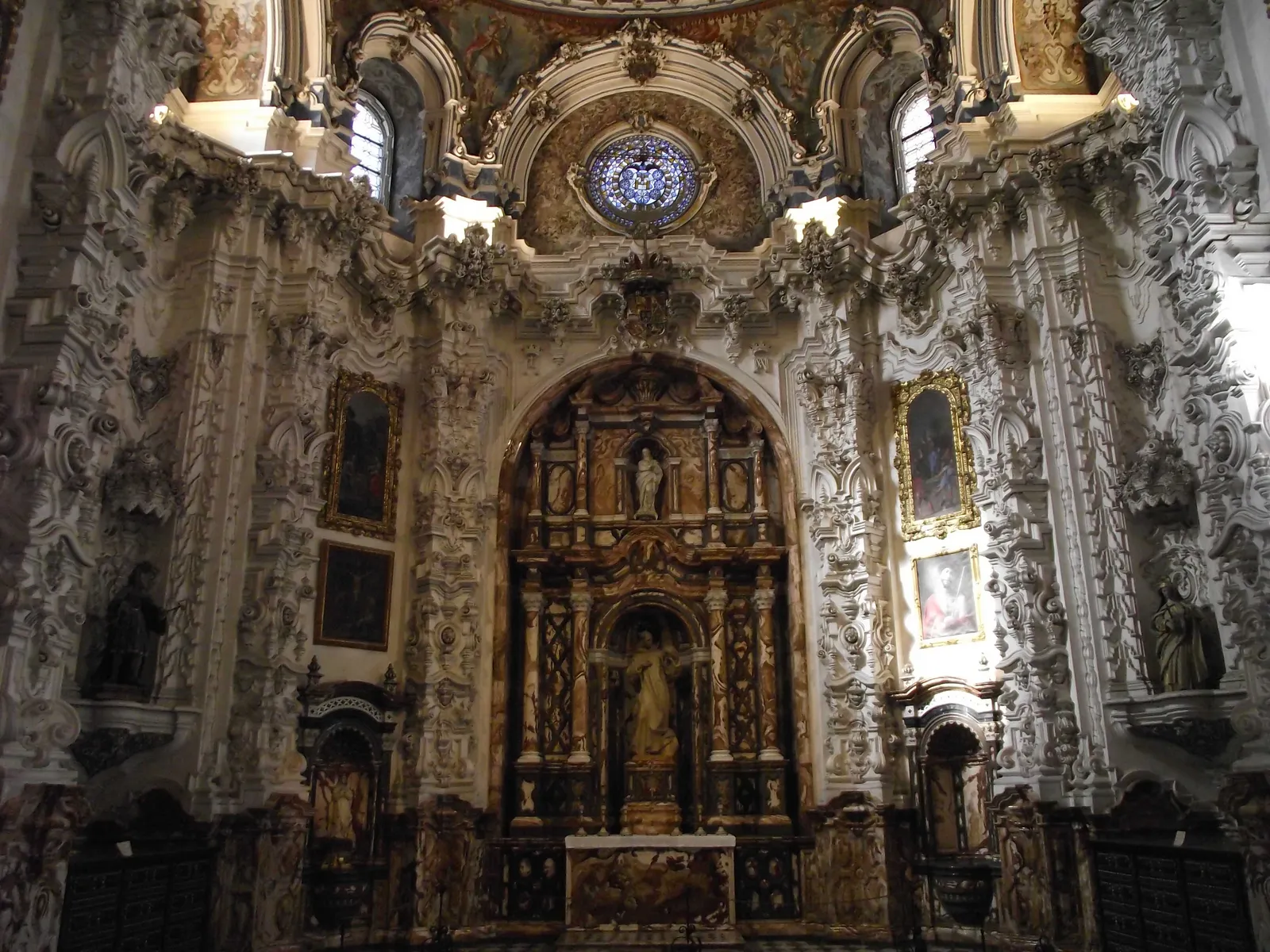
The sacristy, built between 1727 and 1764, is carved from floor to vault in dense white stucco around a gilded altarpiece; the tabernacle behind the church’s high altar was designed by Francisco Hurtado Izquierdo, and the paintings of the monk Juan Sánchez Cotán hang elsewhere in the house. Entry costs a few euros, and the monastery shuts over lunch, roughly 1pm to 4pm. Anyone who arrived on the airport coach is carrying the whole trip’s luggage, and every stop on this page is a separate ride from the last, so a bag left near the station stops it riding along on each leg.
The Renaissance courtyards of the Hospital Real
The Hospital Real stands on the Cuesta del Hospicio facing the Jardines del Triunfo, the gardens on Plaza del Triunfo, and was founded by the Catholic Monarchs in 1504. It is laid out as a Greek cross with a courtyard in each of the four corners, and today it houses the University of Granada’s rectorate and main library.
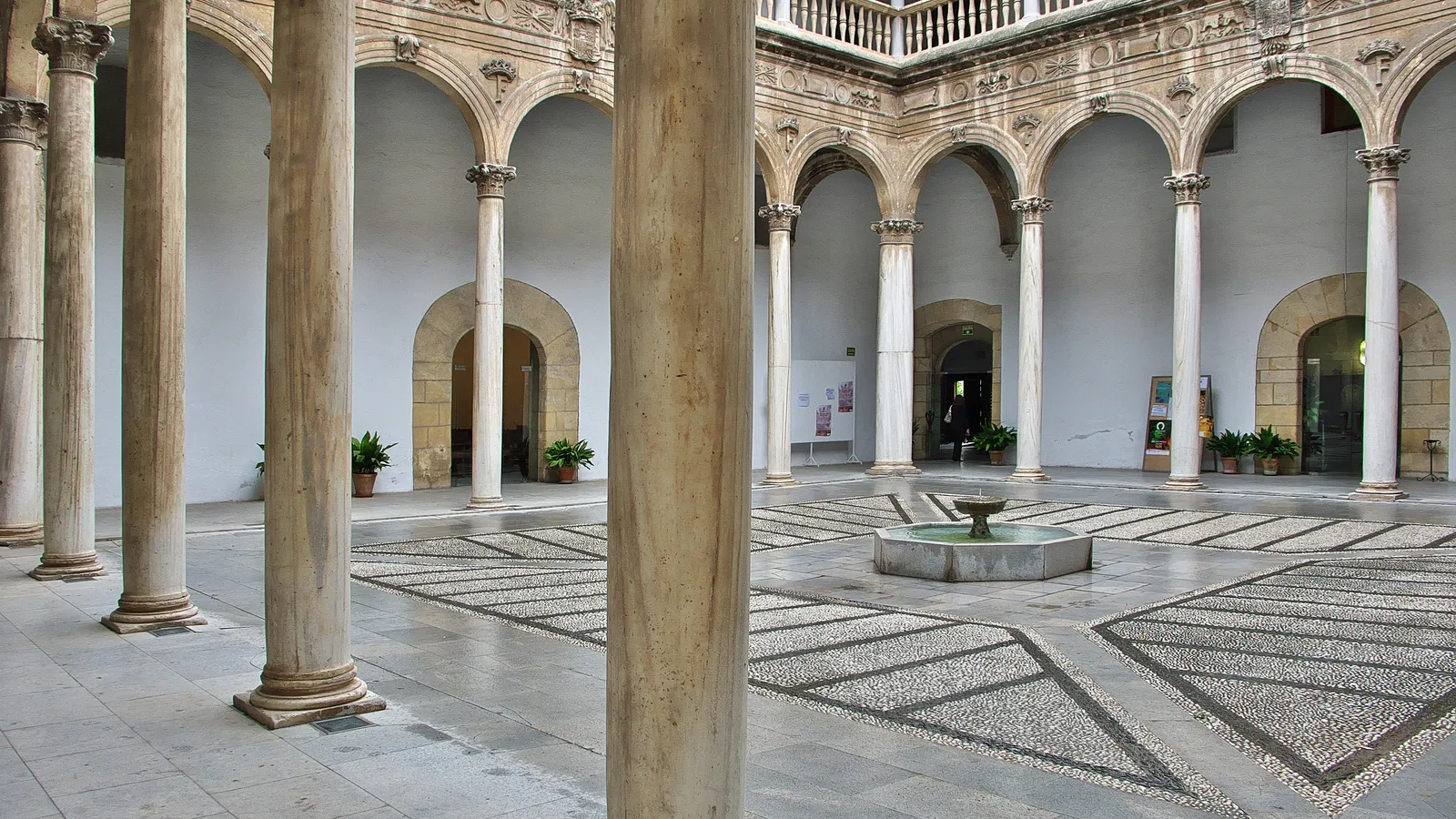
The entrance hall and all four courtyards are free to walk into on weekdays while the university offices are open. The Patio de los Mármoles has the richest stonework, and the Patio de la Capilla is the only one that was ever fully finished; the other two were planned on the same scale and left incomplete.
Frequently asked questions
What should I do during a layover near Granada Bus Station in Granada?
Take a city bus or taxi toward the centre and start at the Puerta de Elvira, the Moorish gate into the lower Albaicín, with the free courtyards of the Hospital Real a few minutes away on weekdays. The Cartuja monastery's Baroque sacristy is a separate short ride north and closes over lunch, so it fits a morning or late afternoon rather than midday. Three to five hours between coaches covers all three without cutting the return close.
How long is the coach from Granada bus station to Málaga Airport?
The direct ALSA coach takes about two hours to two and a quarter, with around fifteen departures a day and fares from about 14 euros. It stops at Málaga-Costa del Sol Airport's transport interchange on the arrivals level. Timetables vary by day and the evening departures thin out, so check the last one before building a day around it.
How do I get from Granada bus station into the centre?
A city bus from the stop in front of the main entrance reaches the centre in about fifteen minutes, and a taxi takes about the same. The light metro also has its own stop at the bus station and runs south through the city, reaching the railway station in five stops before continuing into the centre.
Can I visit the Hospital Real at the weekend?
No. The building houses the University of Granada's rectorate and main library, and it only opens to visitors while the university offices are running, on weekdays from morning into the evening. On a Saturday or Sunday the Puerta de Elvira and the Cartuja are the stops to plan around instead.