Granada Layover: Plaza Nueva and the Albaicín
Part of the full Granada Layover: Alhambra and Albaicín, AGP
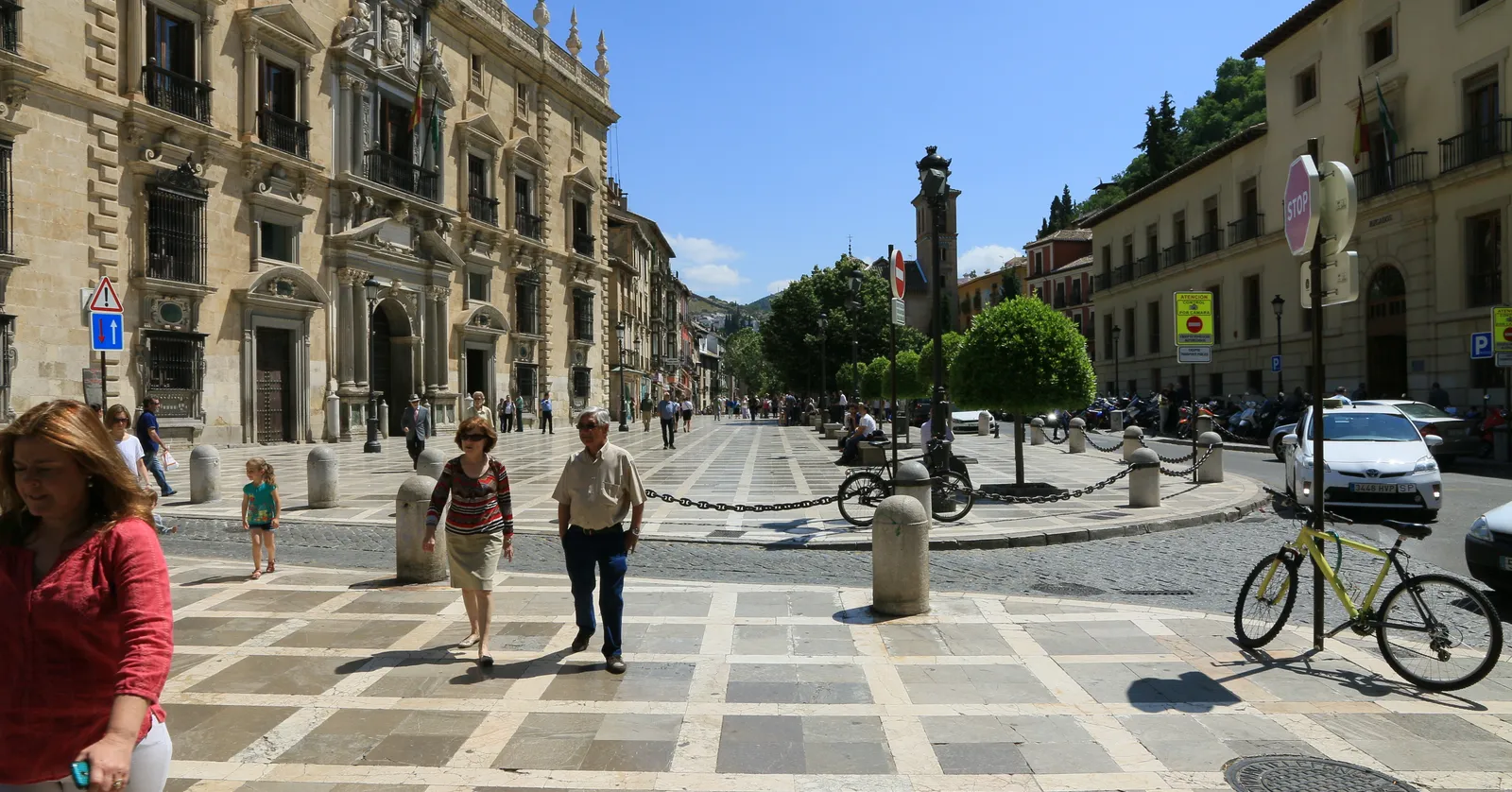
Granada’s Plaza Nueva, the square at the foot of the Alhambra hill, is the starting point for a slow climb into the Albaicín past the tea houses of Calle Calderería Nueva to the 11th-century Arco de las Pesas and Plaza Larga, with an Arab-style bath off the square as the one thing worth booking.
Plaza Nueva and the tea houses of Calle Calderería Nueva
Plaza Nueva sits in the centre of Granada where Calle Reyes Católicos meets the bottom of the Alhambra hill, and the Darro river still runs underneath it, covered over so that three smaller squares could become one. The carved stone front along its north side belongs to the Real Chancillería, the royal court of appeal begun in 1525 and still used by the region’s high court. At the east end, the church of San Gil y Santa Ana was designed by Diego de Siloé in 1537 on the site of a mosque, and its slim brick tower closes off that end of the square.
Just off the east end on Calle Santa Ana, Hammam Al Ándalus runs ninety-minute sessions in warm and cold pools under arches, roughly every two hours from morning until late at night. Capacity is small and sessions sell out, so book a hammam session with a massage before the day rather than walking in.
Calle Calderería Nueva climbs from Calle Elvira into the lower Albaicín, a two-minute walk from Plaza Nueva, and takes its name from the coppersmiths who once made and mended pots along it. Today it is a narrow, sloping lane of Moroccan-style tea rooms serving mint tea and pastries, with the shopfronts in between hung with lamps, leather bags and bolts of patterned cloth.
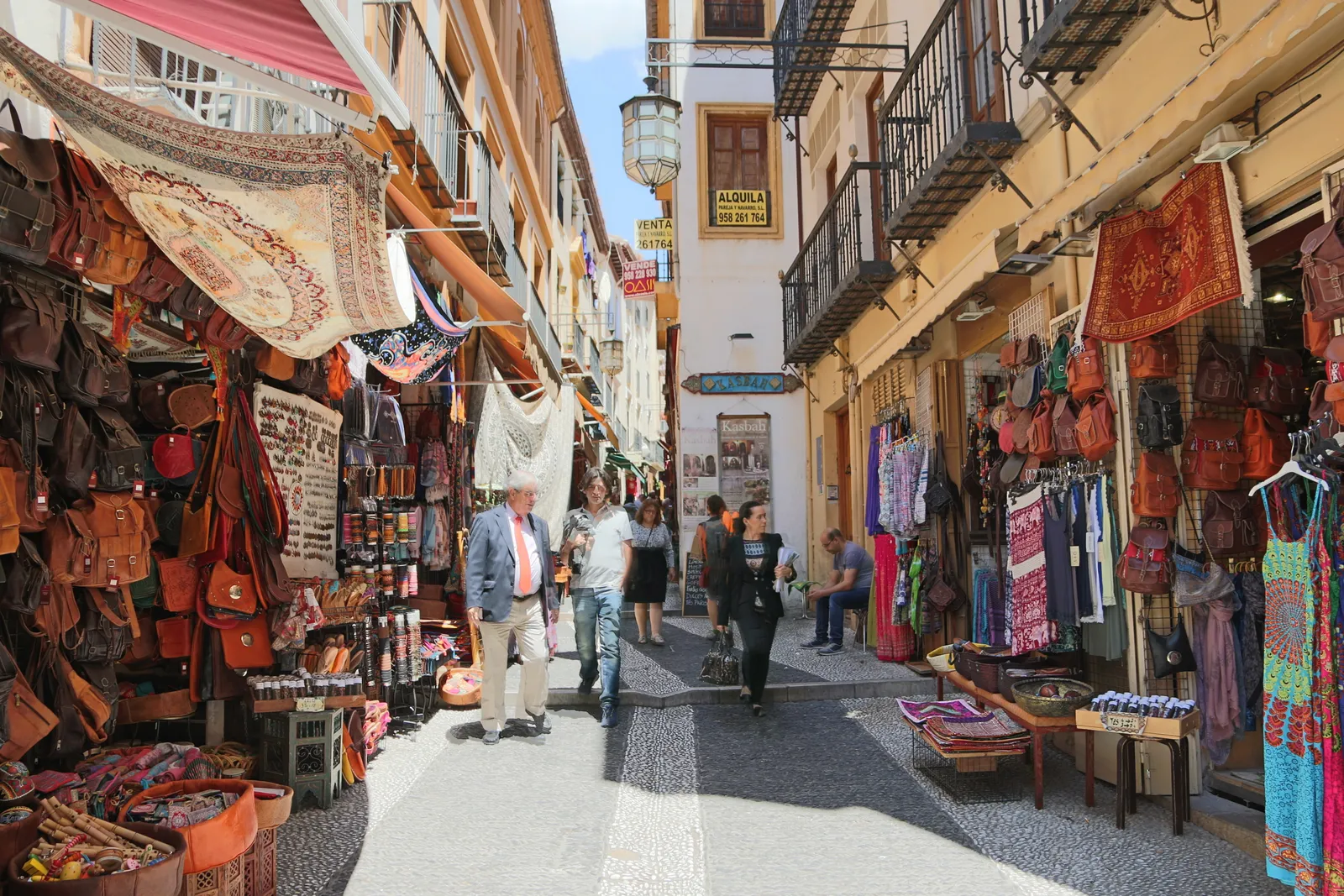
A pot of tea costs a few euros, which makes this the natural halfway stop before the steeper part of the climb. Past the top of the lane the Albaicín goes uphill in earnest on cobbles and stepped alleys, and a wheeled suitcase would have to be carried for most of it.
The Arco de las Pesas above Plaza Larga
The Arco de las Pesas is a gate in the 11th-century wall of the upper Albaicín, about fifteen to twenty minutes uphill from Plaza Nueva, and it opens straight onto Plaza Larga, the upper quarter’s main square. Its name comes from the false weights once confiscated from cheating merchants and hung on the gate as a warning.
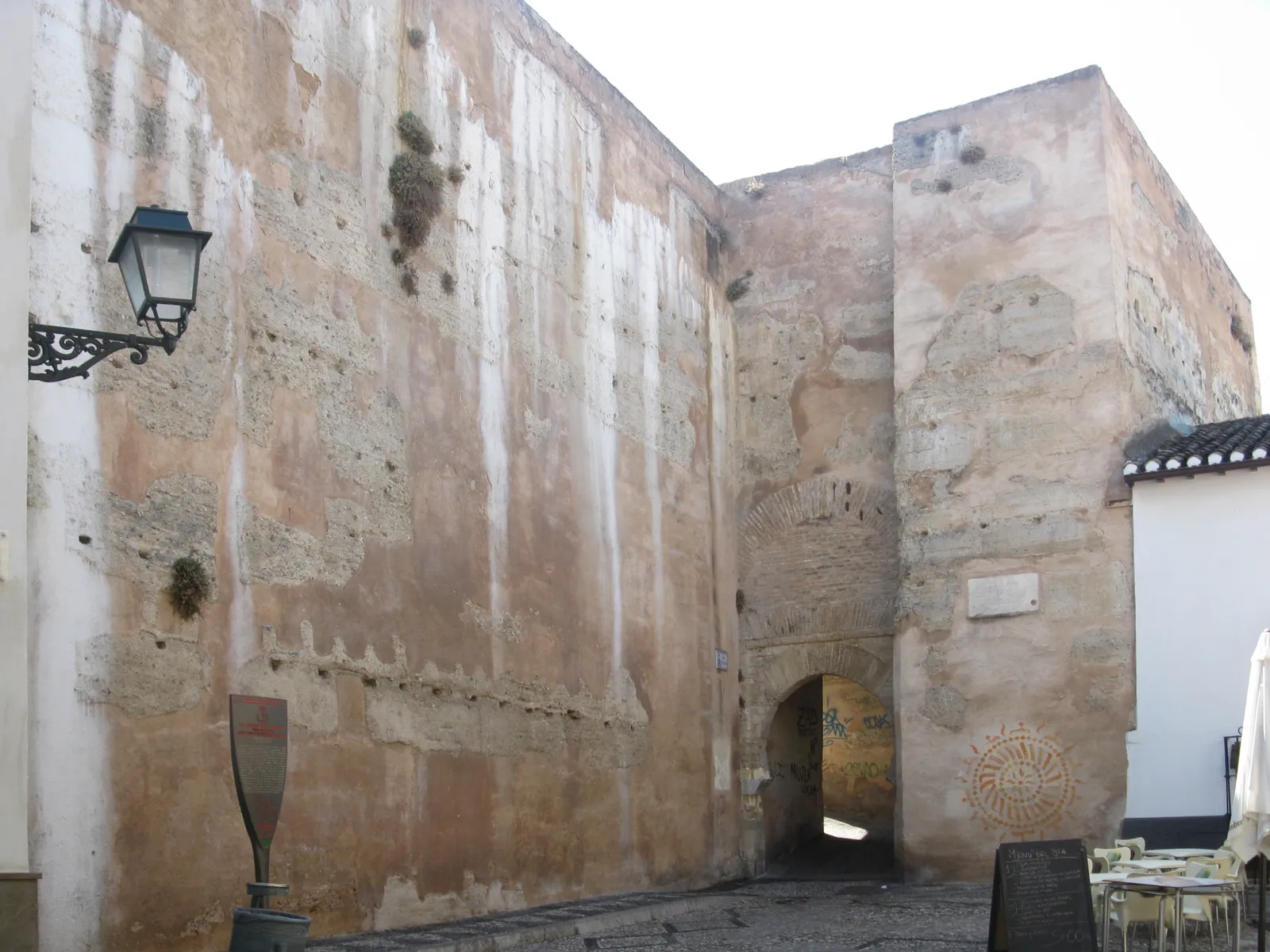
Plaza Larga is where the neighbourhood shops and sits out, with bars around the edges and a fruit, vegetable and flower market on Saturday mornings. The Mirador de San Nicolás, the terrace facing the Alhambra that the main Granada guide covers, is a few minutes’ walk further along the same ridge, so the two pair easily before walking back down.
Fifteen minutes by city bus to the airport coach
The airport coach does not leave from the centre. A city bus from Gran Vía de Colón, a few minutes’ walk from Plaza Nueva, reaches Granada’s bus station in about fifteen minutes, with route 33 among those serving it, and a taxi takes about the same. From there the direct ALSA coach to Málaga-Costa del Sol Airport (AGP) runs around fifteen times a day, takes about two hours to two and a quarter and costs from about 14 euros. Leave Plaza Nueva four and a half to five hours before the flight to cover the transfer, the coach and the airport, and check the day’s timetable first, since the evening departures thin out.
Frequently asked questions
What should I do during a layover near Plaza Nueva in Granada?
Start with Plaza Nueva itself, the square over the covered Darro river with the Real Chancillería and the church of Santa Ana, and book a hammam session just off it if you want one. Then climb Calle Calderería Nueva past the tea houses and carry on up to the Arco de las Pesas and Plaza Larga in the upper Albaicín. Everything except the hammam and the tea is free, and two to four hours covers it at an easy pace.
Is there anything to do from Plaza Nueva if it rains?
Yes, and it is close. The hammam on Calle Santa Ana is indoors by definition, with sessions through the day into the late evening, and the tea houses on Calle Calderería Nueva are a two-minute walk from the square and built for sitting a long time over a pot of mint tea. The lanes up to Plaza Larga turn slippery on wet cobbles, so the climb is the part to skip in heavy rain.
How steep is the walk from Plaza Nueva up to Plaza Larga?
Steep enough to notice. The route climbs from the valley floor to near the top of the Albaicín in about fifteen to twenty minutes, on cobbled lanes and some stepped alleys. Small city minibuses run up from the Plaza Nueva area for anyone who would rather ride up and walk down.
When is Plaza Larga at its busiest?
Saturday morning, when a fruit, vegetable and flower market sets up across the square between the café tables. The rest of the week it is a neighbourhood square with bars around the edges.