Lima Layover Near Parque Kennedy, Miraflores
Part of the full Lima Layover: Catacombs and Fountains From LIM
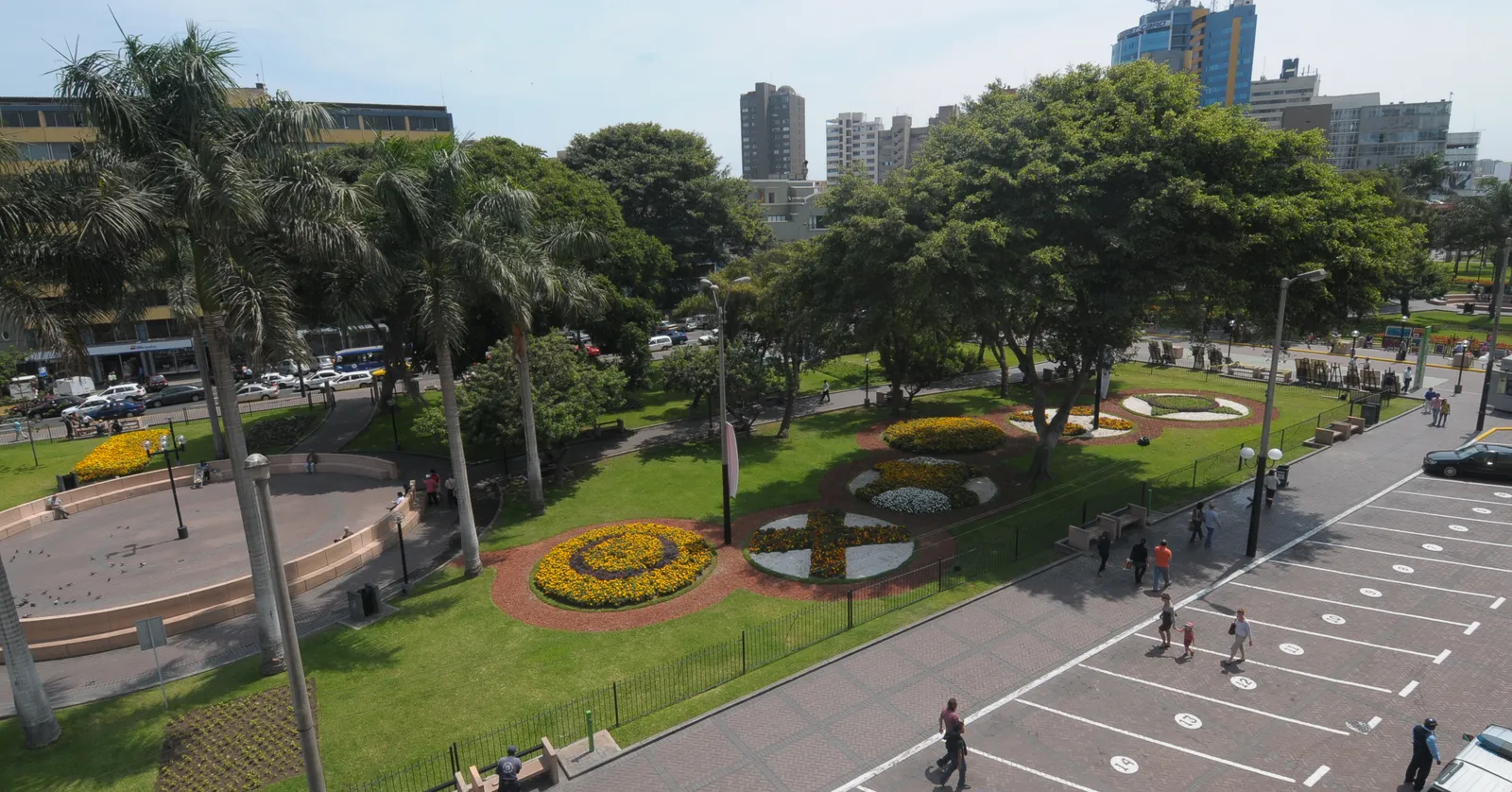
Avenida Larco runs a straight kilometre from Parque Kennedy, the central square of Lima’s Miraflores district, down to the top of the coastal cliffs, where a clifftop park, a naval lighthouse, a paraglider launch and a shopping centre built into the cliff face all sit within a walk of each other.
The Malecón’s six kilometres of clifftop park
The Malecón is not one park but a run of linked ones stitched end to end along the top of the Miraflores bluffs, roughly six kilometres of lawn, path and railing about 80 metres above the beach. It is paved, level and lit the whole way, and the entire length is free, which makes it the easiest thing in the district to do with an unplanned afternoon and no ticket. From May to November the coast sits under the garúa, a low sea fog that seldom becomes rain but takes the horizon out of the view, so those months are worth walking for the cliff itself rather than for what is visible offshore.
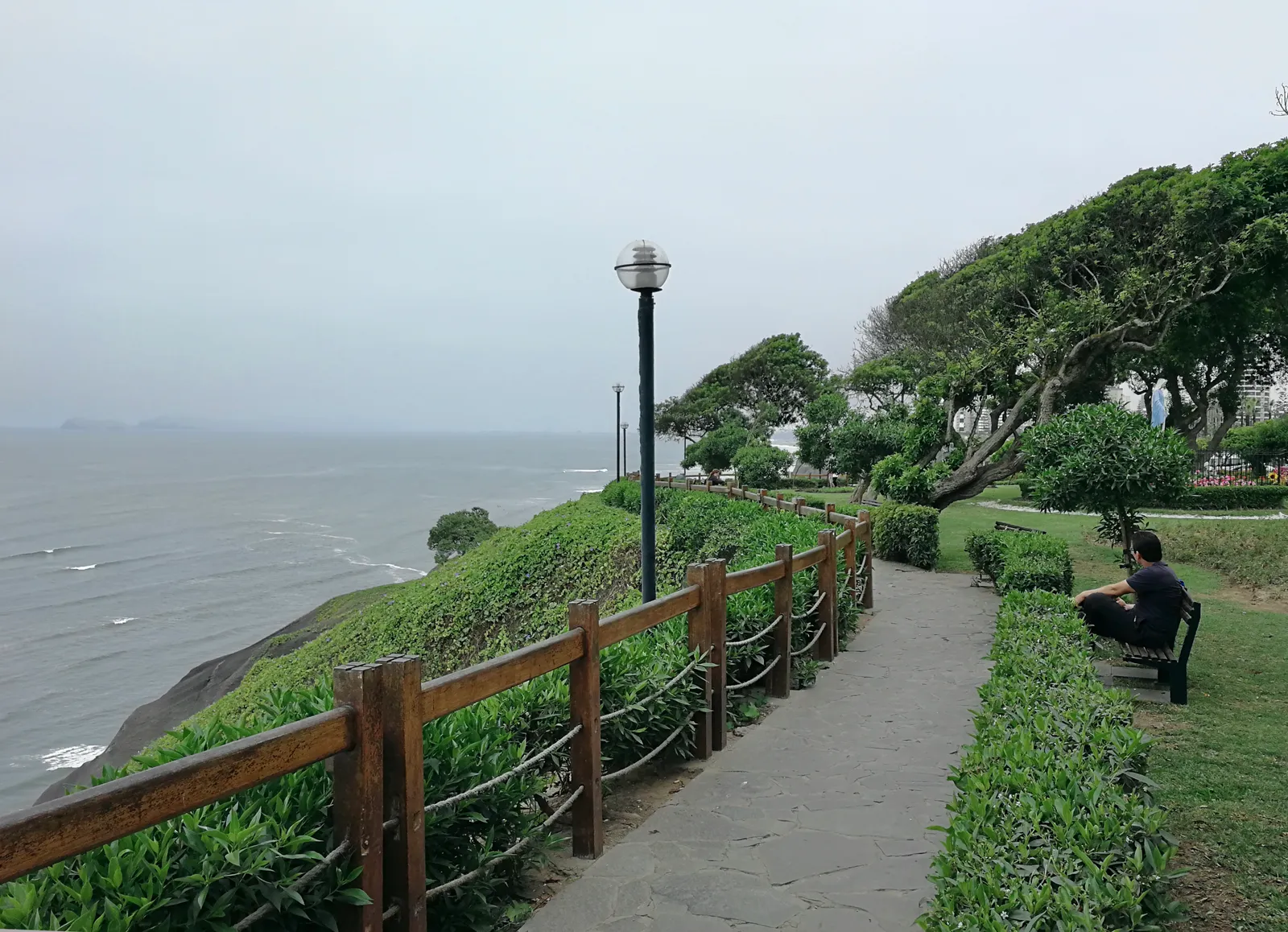
The middle stretch, the Parque del Amor, is the piece most people photograph: curving benches and walls surfaced in broken tile in the manner of Gaudí’s Park Güell, with a large sculpture of an embracing couple at the centre and lines of Peruvian love poetry worked into the mosaic. Six kilometres is more than an afternoon on foot, so a guided ride along the coast road covers the parts a walk from here would never reach.
Paragliders launch beside the La Marina lighthouse
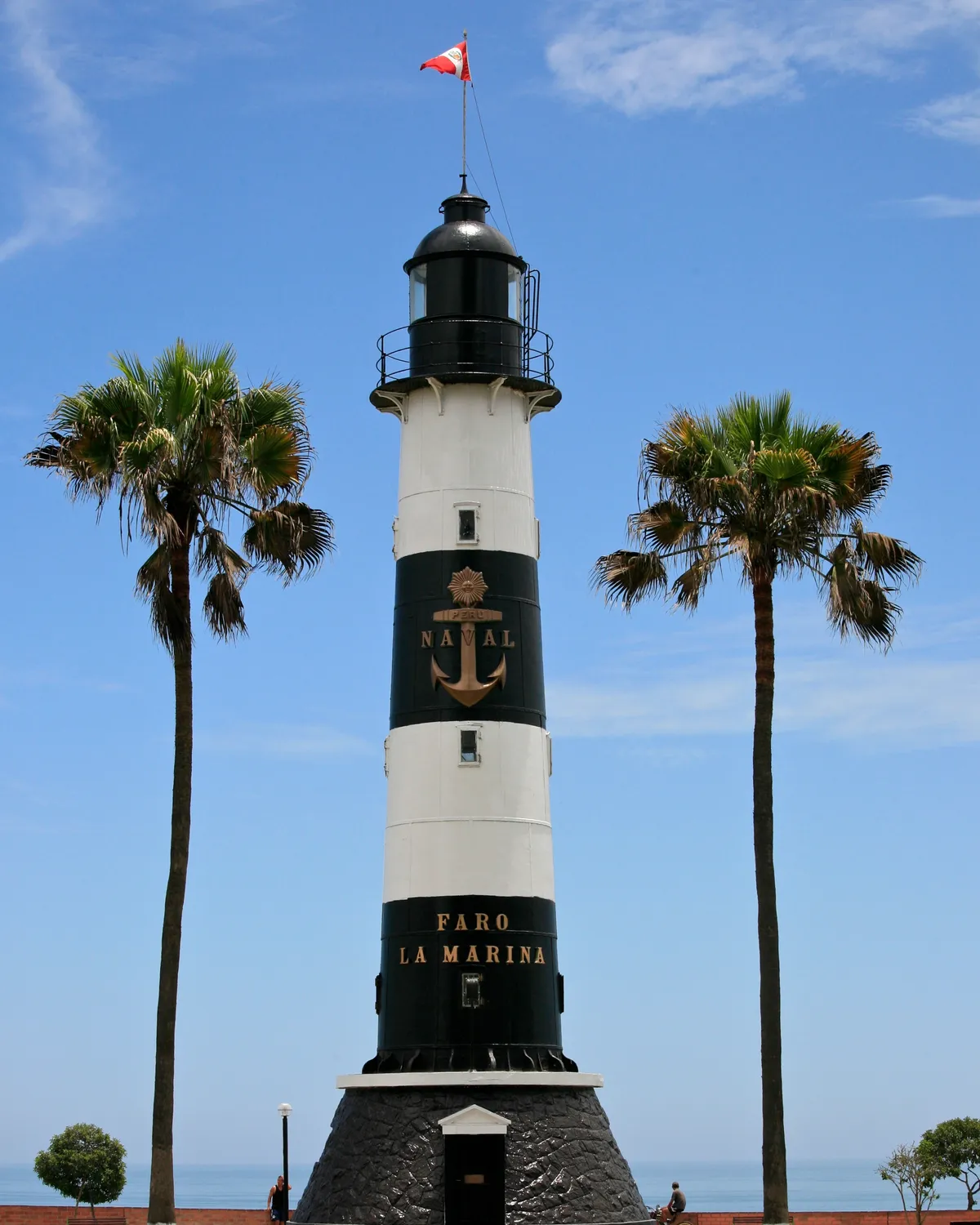
The Faro La Marina is a black-and-white banded tower standing in its own clifftop park on Malecón Cisneros, with an anchor in relief on its middle band and a Peruvian flag at the top. It was built in 1900 at Punta Coles, a headland near Ilo in the far south of the country, then dismantled and re-erected here in 1973, which is why a working navigational light sits in the middle of a residential district rather than on a rock somewhere.
Parque Raimondi, immediately alongside it, is where the tandem paragliders take off. The sea breeze hits the cliff wall and turns upward, which is enough lift to hold a wing over the rooftops for fifteen or twenty minutes at a time; pilots operate from about 10:30 until 17:30 and the wind is most dependable between two and half past four in the afternoon. Watching from the railings costs nothing, and a flight of your own over the coast runs around 260 soles when conditions allow it.
Larcomar, cut down into the cliff below Parque Salazar
Larcomar opened on 27 November 1998 at the point where Avenida Larco meets the Malecón de la Reserva, and the design, by the Peruvian architect Eduardo Figari, does the opposite of what a shopping centre normally does: the cliff was excavated and the building set into the hole, so the terraces step down towards the sea rather than up from the street. From Parque Salazar above it, the whole thing is invisible until you are standing at the edge looking down onto its roofs.
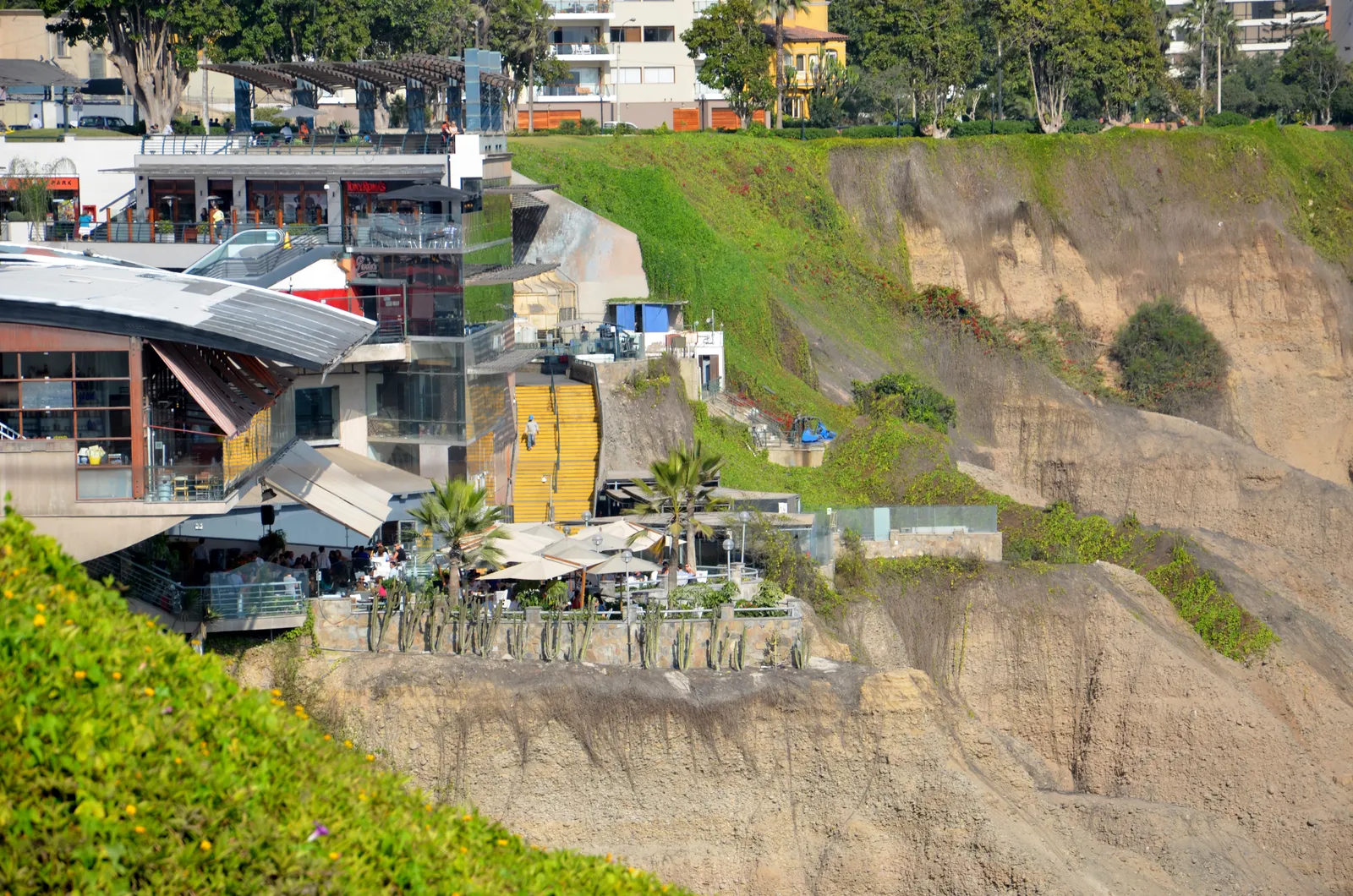
Walking in is free and nobody minds if you buy nothing. The lower terraces are restaurants and bars facing straight out over the water, and the cinema and the food court occupy the levels behind them, which makes this the one indoor stop on the cliff with a full sea view and a roof over it.
The cats of Parque Kennedy
Parque Kennedy is where Miraflores actually collects: two blocks of lawn, flower beds and mature ficus trees with Avenida Larco and Avenida Diagonal wrapped around it. The Iglesia Matriz Virgen Milagrosa, finished in 1930 to a design by the Polish-Peruvian architect Ricardo de Jaxa Malachowski, closes the eastern side.
The stray cats are the thing people remember. Nobody agrees on how the colony started, but the Miraflores municipality long ago stopped trying to clear it and now sterilises, microchips and rehomes the animals instead, with 93 of them chipped by September 2023. They sleep on the grass and under the benches in numbers that surprise first-time visitors. The park’s other habit is nocturnal: painters hang work along the Pasaje de los Pintores, and vendors set up selling picarones, rings of fried squash-and-sweet-potato dough soaked in cane syrup, from the late afternoon onward. Where Larco meets Diagonal, the pavements narrow to a couple of metres between the café tables and the kerb, and the evening flow through that corner is not somewhere to be steering a suitcase.
Huaca Pucllana, the adobe pyramid six blocks east of the park, belongs to a different kind of day out and is covered along with the colonial centre in the main Lima layover guide.
Surquillo’s produce market, Mercado Número 1
Avenida Ricardo Palma crosses the expressway from Miraflores into Surquillo, and the covered market on the far side of that bridge is where a large share of Lima’s restaurant kitchens do their buying. The aisles run to fruit most visitors cannot name, whole counters of dried and fresh chillies, and fishmongers working through the morning’s catch.
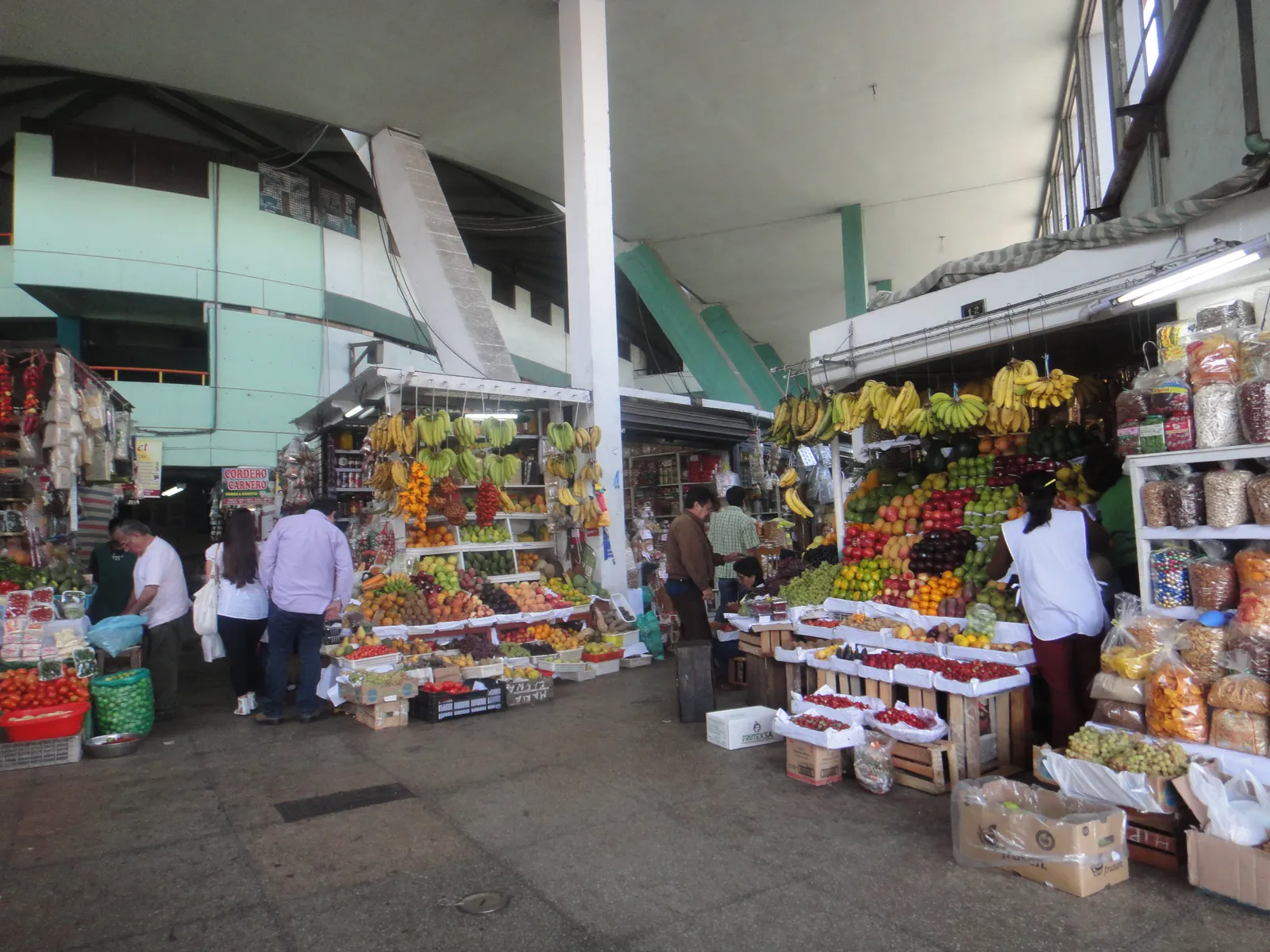
It is at its fullest and freshest before ten in the morning, which makes it a genuinely good use of an early gap rather than a late one, and it costs nothing to walk through. The cooked-food stalls along one side do ceviche and causa for a fraction of what the same plate costs four blocks west in Miraflores.
The coach to the terminal stops beside Parque Kennedy
Airport Express Lima is the direct link from Miraflores to Jorge Chávez: a coach calling at four stops along Avenida Larco and Avenida Pardo, the handiest of them at the corner of Avenida Diagonal and Calle Berlín on the edge of Parque Kennedy itself. The fare is 20 soles a head, it runs hourly through the day, and the ride takes 40 to 65 minutes depending on which stop you board at and how badly Avenida Faucett is moving.
It does not run overnight, though, which is the catch for a genuinely late departure: past the evening’s last coach the options are a taxi straight to the terminal, or a ride into the historic centre to pick up the AeroDirecto bus from Plaza San Martín, which runs around the clock for two soles. Either way the last leg starts from the same few blocks the day started in: this is a loop, not a one-way walk, so the bag can sit out the afternoon where the coach eventually picks you up instead of going a kilometre down the cliff road and a kilometre back up.
Frequently asked questions
What should I do during a layover near Parque Kennedy in Miraflores, Lima?
Walk the kilometre down Avenida Larco to the cliff edge and pick a direction along the Malecón: west past the mosaic walls of the Parque del Amor towards the La Marina lighthouse and the paraglider launch, or straight down into Larcomar's terraces cut into the cliff face. All of that is free, and none of it takes tickets or timing. Back at the park itself, the resident cat colony, the painters along the Pasaje de los Pintores and the picarones sellers fill the afternoon and evening. A tandem paraglide is the one thing here worth arranging in advance, and it is also the first thing to drop if the wind is wrong.
Is the cliff walk in Miraflores step-free?
The clifftop itself is: the Malecón is a continuous paved, level path with ramps at the road crossings, and Avenida Larco down to it is flat the whole way. Getting from the clifftop to the beach below is not. The cliff is about 80 metres high and the ways down are stairs, steep switchback paths or the Bajada Balta road, so the shore is a genuine descent rather than a detour. Larcomar has lifts between its terraces.
When can you actually watch the paragliders in Miraflores?
Flights run out of Parque Raimondi on Malecón Cisneros from about 10:30 in the morning to 17:30, and the reliable window is the middle of the afternoon, roughly 14:00 to 16:30, when the sea breeze coming up the cliff face is strongest. Wind decides it, so a flat morning or a still day can cancel the whole thing. Standing at the railings to watch costs nothing whether or not anyone is flying.
Is Parque Kennedy worth a stop with young children?
The cat colony is the draw, and it costs nothing, needs no planning and holds a small child's attention longer than anything else within a few blocks. The Miraflores municipality manages the animals rather than clearing them out: they are sterilised, given veterinary care and microchipped, 93 of them by September 2023, and rehomed through adoptions run from the park itself, so they are thoroughly used to being approached. The picarones stalls that set up from the late afternoon are the cheapest snack in the district, and the open-air amphitheatre at the park's centre puts on free events, though the programme varies.
How do you get from Miraflores back to Jorge Chávez airport?
Airport Express Lima runs a coach from four stops along Avenida Larco and Avenida Pardo, one of them at the corner of Avenida Diagonal and Calle Berlín beside Parque Kennedy, for 20 soles a head, taking 40 to 65 minutes depending on traffic. It runs hourly through the day and stops for the night, so a departure in the small hours means a taxi instead, or a ride into the centre to pick up the 24-hour AeroDirecto bus from Plaza San Martín. Either way the run up Avenida Faucett is slow at peak times, so leave more than the quoted ride.