Lima Layover Near Jorge Chávez Airport
Part of the full Lima Layover: Catacombs and Fountains From LIM
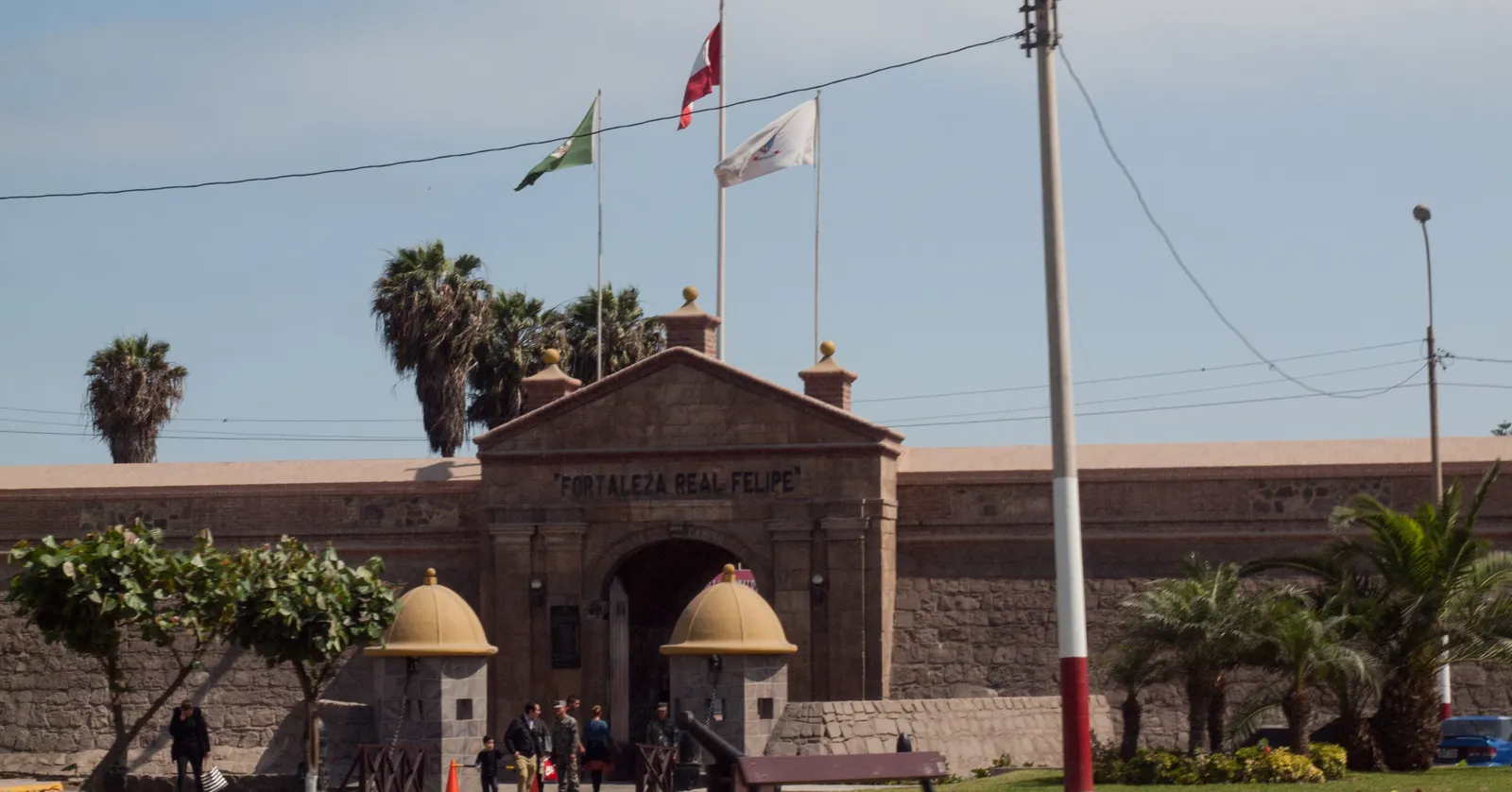
The Real Felipe fortress, more than sixty murals across the old port streets and a free seawall promenade at La Punta all sit inside Callao, the port district that wraps around Lima’s Jorge Chávez International Airport, with no need to cross into Lima proper at all.
The Real Felipe fortress on Callao’s Plaza Independencia
An earthquake and the tsunami behind it flattened Callao in October 1746 and killed most of the people in it, and the fortress on Plaza Independencia is what the colonial government built in the aftermath: first stone laid in 1747, finished in 1774, a stone pentagon covering 70,000 square metres, laid out by the French mathematician Louis Godin and named for Felipe V. It was the last piece of ground Spain held in South America, surrendered by Brigadier José Ramón Rodil in January 1826, four years after the rest of Peru had gone.
The Peruvian Army runs it as a museum now, with uniforms, weapons and the fortress itself, and you go in on a guided tour rather than wandering: an hour and a half to two and a half hours through the towers, the Patio de Armas and the underground cells. It opens Tuesday to Sunday, nine until four, and admission is 15 soles for foreign visitors and 10 for Peruvians. Plaza Independencia is about six kilometres from the terminal, fifteen to twenty-five minutes depending on how Avenida Faucett is behaving.
Sea lions and seabirds on the Palomino islands
The Palomino islands are a cluster of bare rock a few kilometres off the Callao dock, white with guano, and the draw is the South American sea lion colony hauled out on them: several thousand animals, loud from a long way off, with cormorants and pelicans working the water around them. Boats run out from the port and the standard trip includes a swim among the sea lions in a wetsuit, which is why this is the one thing in Callao you plan a whole half-day around.
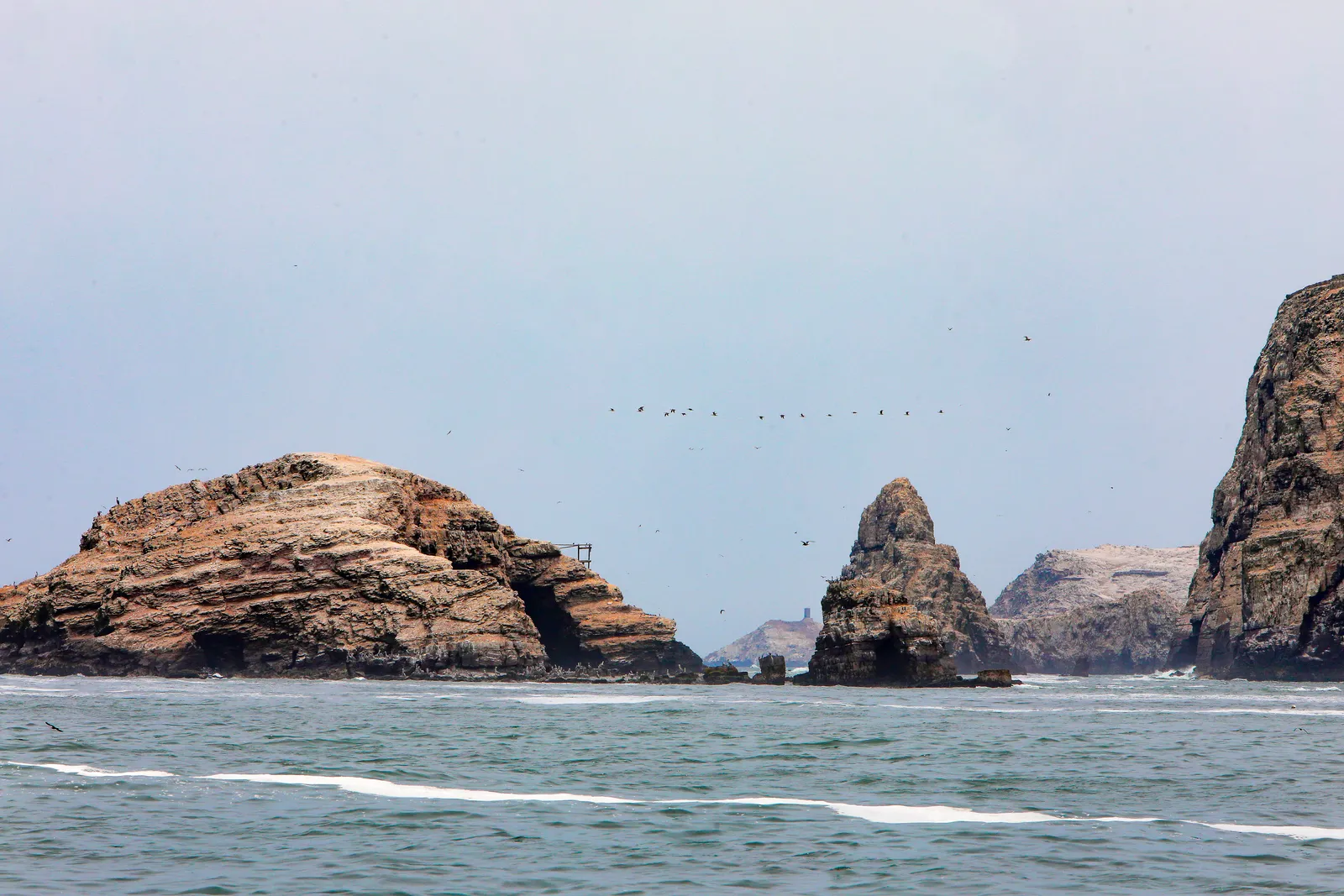
Sailings go in the morning and the boat is out for roughly four hours, so it needs a connection long enough to absorb that plus the ride each way; a boat trip with the swim included is worth fixing in advance rather than turning up at the dock, since departures are fixed and the sea decides the rest.
A 24-hour luggage counter beside international arrivals
Jorge Chávez moved into a new terminal on 1 June 2025, three times the floor area of the old one at 270,000 square metres, with a public landside concourse of shops and restaurants that needs no boarding pass. The left-luggage counter, Guardianía de Equipajes, sits on Level 1 next to international arrivals and stays open around the clock, which is the fact that decides whether leaving the terminal at all makes sense.
What it costs is the catch: it is priced by the hour and by the size of the bag, from about 8 soles an hour for a carry-on up to roughly 16 for a large suitcase, so a party of two with checked bags and an afternoon in Callao is looking at a real number rather than a rounding error.
More than sixty murals in Callao Monumental
Jirón Constitución and the streets around it hold what is now called Callao Monumental: more than sixty murals painted across the fronts and side walls of the old port’s buildings by Peruvian artists including Elliot Tupac, Jade Rivera, Decertor and Entes. The port here was among the wealthiest ground in the country a century ago and then spent decades as somewhere nobody visited on purpose, which is the history the paint sits on top of.
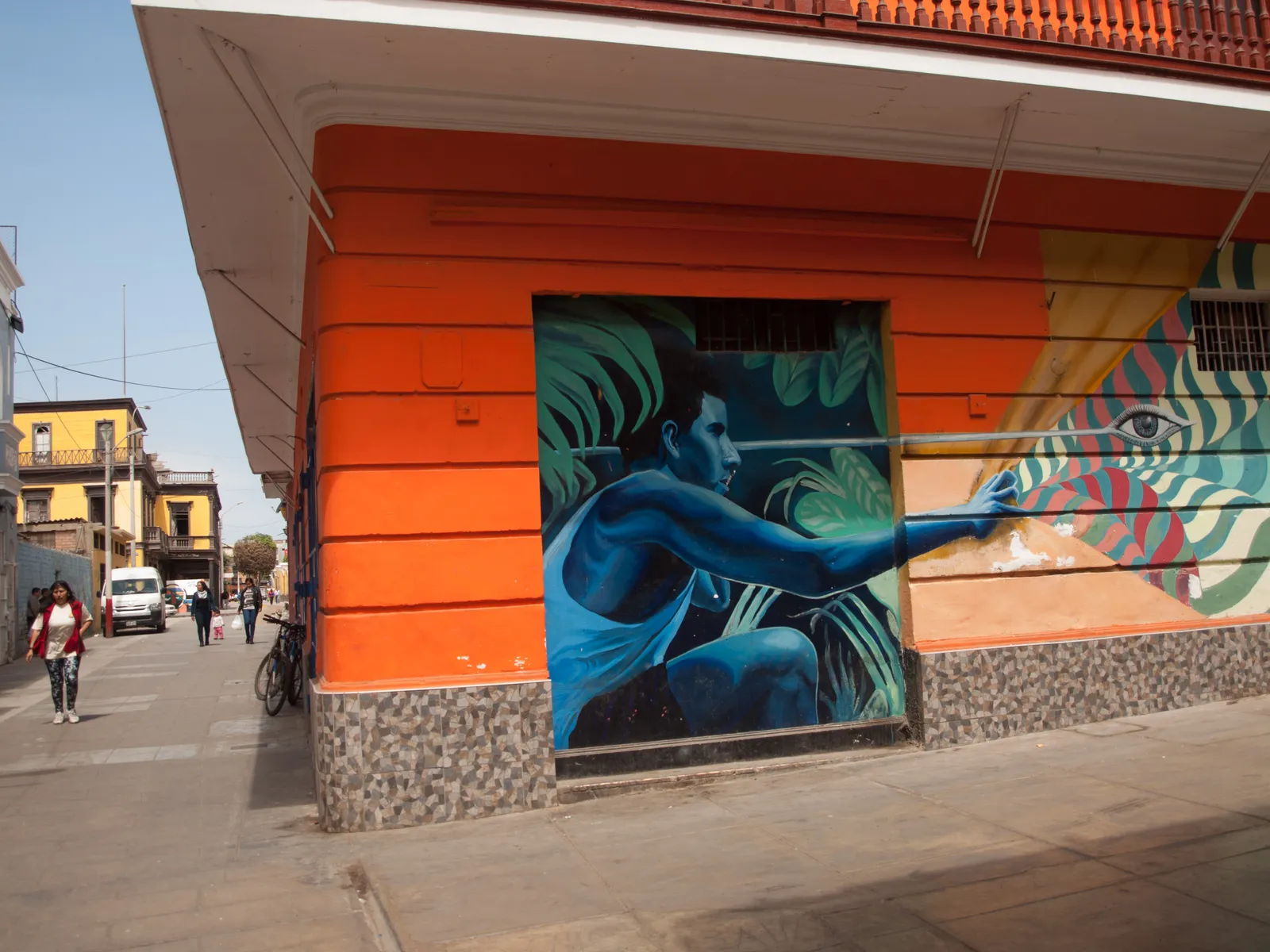
The Edificio Ronald at Jirón Constitución 250 is the middle of it, a five-storey block built between 1900 and 1928 in an English style, now full of galleries and studios. Treat the marked zone as the visit rather than the wider district: local advice is to come between about ten and five and stay inside it.
The seafront promenade at La Punta
La Punta is the narrow peninsula at the western end of Callao, a district of low houses, wooden balconies and a naval school, with a seawall path running around the tip of it. Cantolao beach takes the north shore, the Wiese promenade the south, and on a clear evening the island of San Lorenzo sits square in the view offshore. It costs nothing, it is flat the whole way, and the seafood counters on the road behind the wall are where the district actually eats.
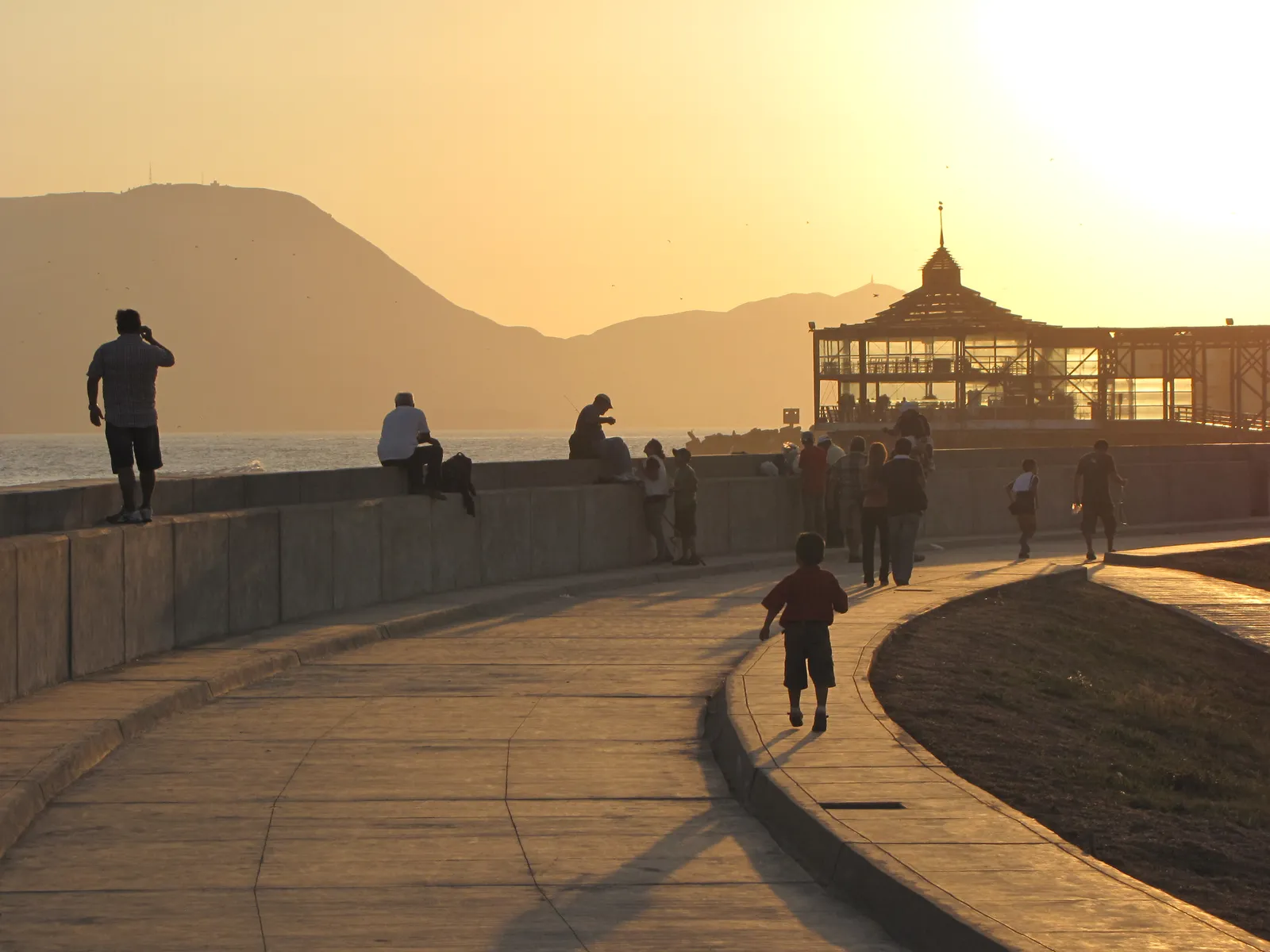
The fortress, the murals and this promenade all sit inside one district, which is the argument for Callao on a connection that would never survive the run into town and back. If your gap is long enough for that run, the main Lima layover guide covers the colonial centre, the catacombs and the fountain park instead, and the two-sol bus in from the terminal is the same one you would come back on.
Frequently asked questions
What should I do during a layover near Jorge Chávez International Airport in Lima?
Stay in Callao rather than trying for central Lima. The Real Felipe fortress on Plaza Independencia is the anchor, a 70,000-square-metre stone pentagon of 1747 that you go into on a guided tour; the mural-covered streets of Callao Monumental sit a few blocks from it; and the seawall promenade at La Punta, out at the tip of the peninsula, is free and open at any hour. A boat out to the Palomino islands and their sea lion colony is the one thing here that needs half a day and booking, so it only works on a genuinely long connection.
How long does it take to get from Jorge Chávez to Callao's old port?
About fifteen to twenty-five minutes by taxi or ride-hailing app to Plaza Independencia and the fortress, which is roughly six kilometres by road, and closer to twenty minutes out to La Punta at 12.6 kilometres. Traffic on Avenida Faucett and Avenida Guardia Chalaca is what moves those numbers, not distance. Nothing in Callao is far enough from the terminal to make the ride itself the problem; immigration and check-in queues are what eat a short connection.
Is Callao safe to walk around during a stopover?
Callao Monumental is a defined pedestrian zone rather than an open neighbourhood walk, and the standing local advice is to visit between about ten in the morning and five in the afternoon and stay inside the marked area rather than wandering the surrounding blocks. La Punta and the streets around the fortress on Plaza Independencia are ordinary residential and civic ground and read very differently. Guided walks of the mural district exist precisely because the boundary matters.
Can you go into the Real Felipe fortress on your own?
No, entry is on a guided tour, which runs roughly an hour and a half to two and a half hours and covers the towers, the parade ground and the underground cells. The fortress opens Tuesday to Sunday from nine in the morning until four in the afternoon and is shut on Mondays. Admission is 15 soles for foreign visitors and 10 for Peruvians, and there are evening tours on Fridays as well.