Lima Layover Near Museo Larco, Pueblo Libre
Part of the full Lima Layover: Catacombs and Fountains From LIM
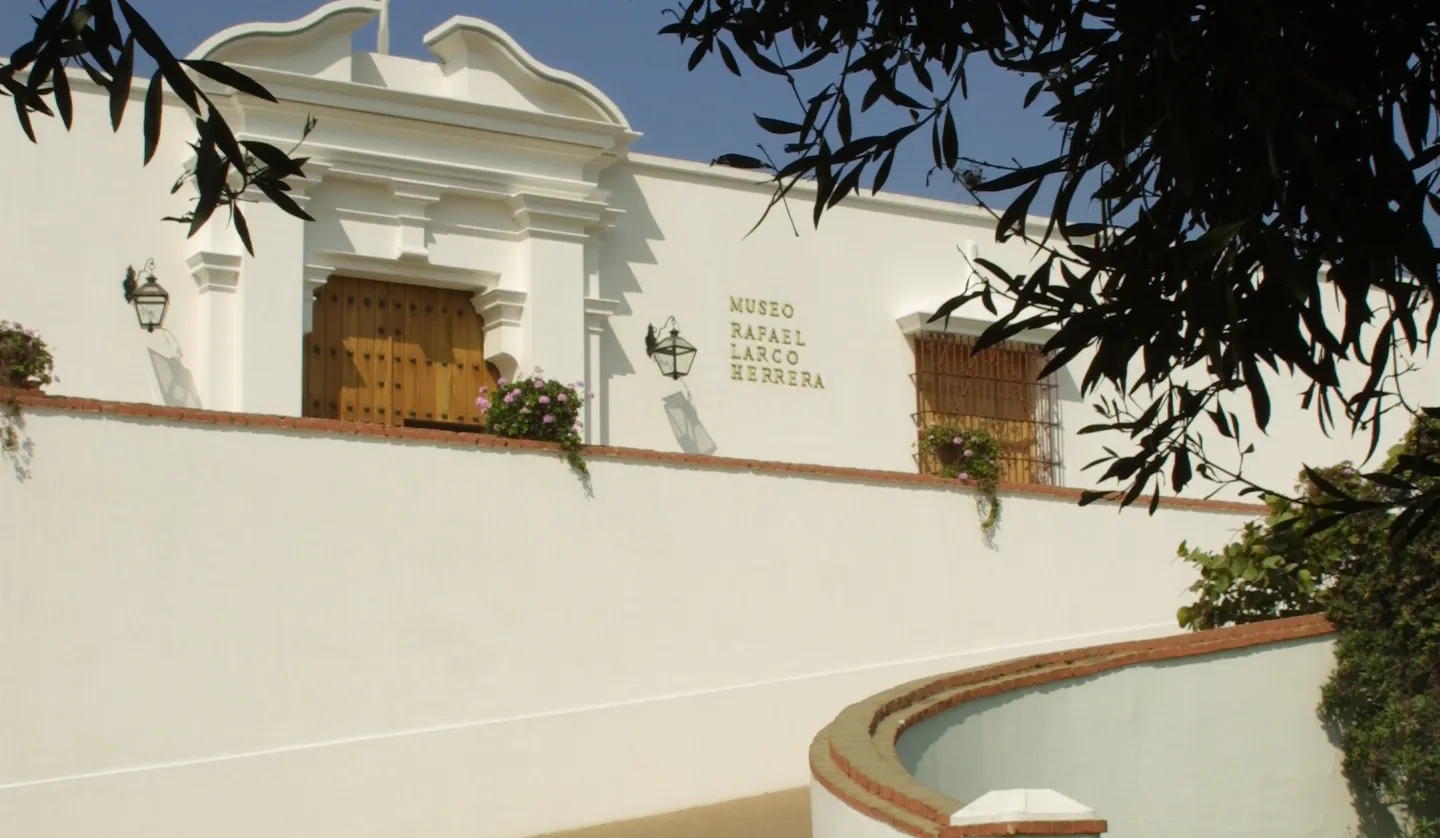
Museo Larco fills a whitewashed viceregal mansion of about 1700 on Avenida Bolívar in Lima’s Pueblo Libre district, opens every day of the week, and keeps 30,000 catalogued pots on open shelving in storerooms visitors walk straight through; the national archaeology museum sits four blocks east on Plaza Bolívar.
Museo Larco’s mansion stands on a pre-Columbian pyramid
The house at Avenida Bolívar 1515 went up around 1700, and the ground it went up on is a 7th-century adobe pyramid that was already a thousand-odd years old by then. Rafael Larco Hoyle opened the collection to the public here on 28 July 1926, working outward from the 600 ceramic pieces his father had bought the year before and then buying in thousands more from other collectors. The result is whitewashed walls, a carved wooden door, bougainvillea over the terraces and gardens deep enough that the traffic on Avenida Bolívar stops registering a few metres in.
General admission is 50 soles, 35 for over-60s, 25 for students and 9-to-17s, and 1 sol for children of three to eight, with a discount for buying online rather than at the window. Ramps run through the galleries and the gardens and there are free wheelchairs on the ground floor. If the colonial centre is on the list as well, a half-day tour that takes in the museum and Plaza Mayor together is the version that handles the crossing between them for you.
Thirty thousand pots on open shelving in the storerooms
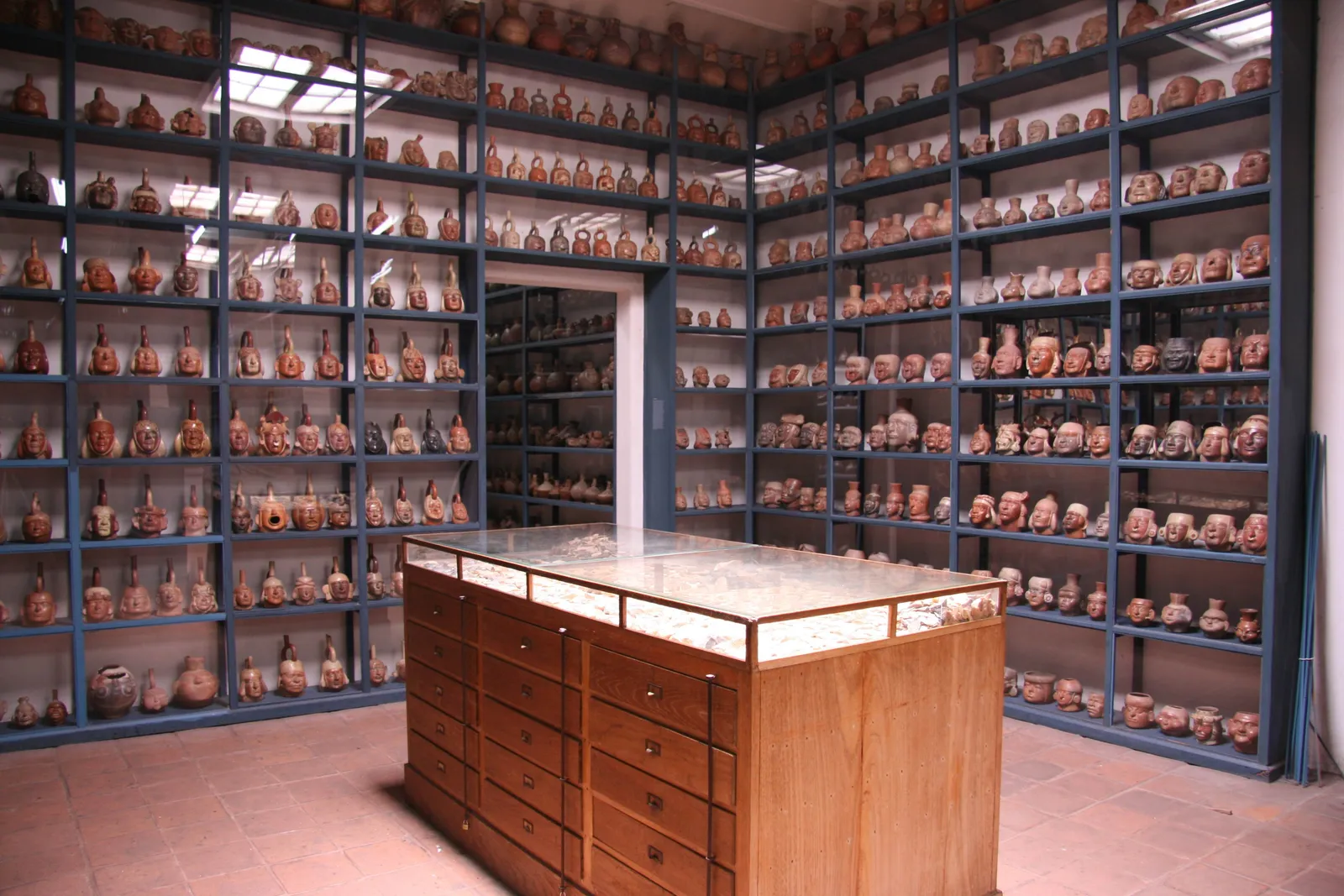
Museo Larco put its reserve collection on metal racks in rooms the public can walk into, rather than behind a door marked staff only: roughly 30,000 catalogued vessels sitting in rows, Moche portrait jars, stirrup-spout bottles, whole shelves of near-identical forms lined up so the variations between them show. Nothing is arranged to make a point, which is what makes it worth the walk through; it reads like being let into the back of the building rather than shown around the front of it.
The other well-known room is at the back of the garden, in a building of its own: the pre-Columbian erotic ceramics that Rafael Larco Hoyle catalogued and published in 1966, still the largest collection of its kind anywhere. Nothing over 40 by 40 centimetres comes into the galleries, so backpacks, carry-ons and suitcases go into the free bag check at reception, and that arrangement lasts exactly as long as you are inside the museum.
Plaza Bolívar holds the national archaeology museum
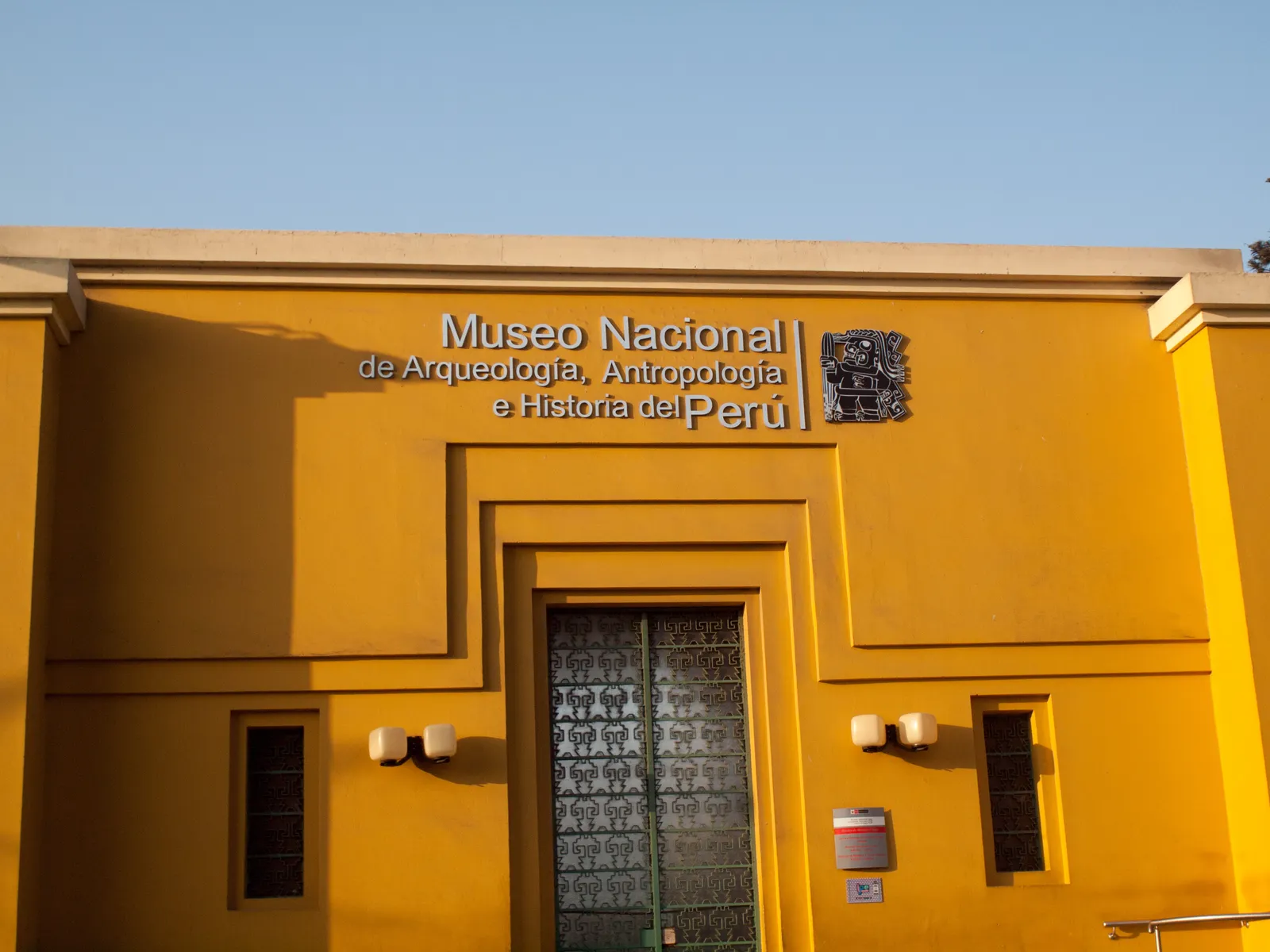
Plaza Bolívar is Pueblo Libre’s main square, and the long ochre building on its north side is the Palacio de la Magdalena, where Peru’s national archaeology, anthropology and history collection has been since the state started assembling it in 1822. The Raimondi Stela and the Tello Obelisk, both carved granite from the Chavín culture, are in here, along with Paracas textiles and a scale model of Machu Picchu, out of a holding of more than 100,000 objects. General admission runs 10 soles, a fifth of the Larco ticket, and the halls open Tuesday to Sunday from nine until half past seven and from midday on Mondays.
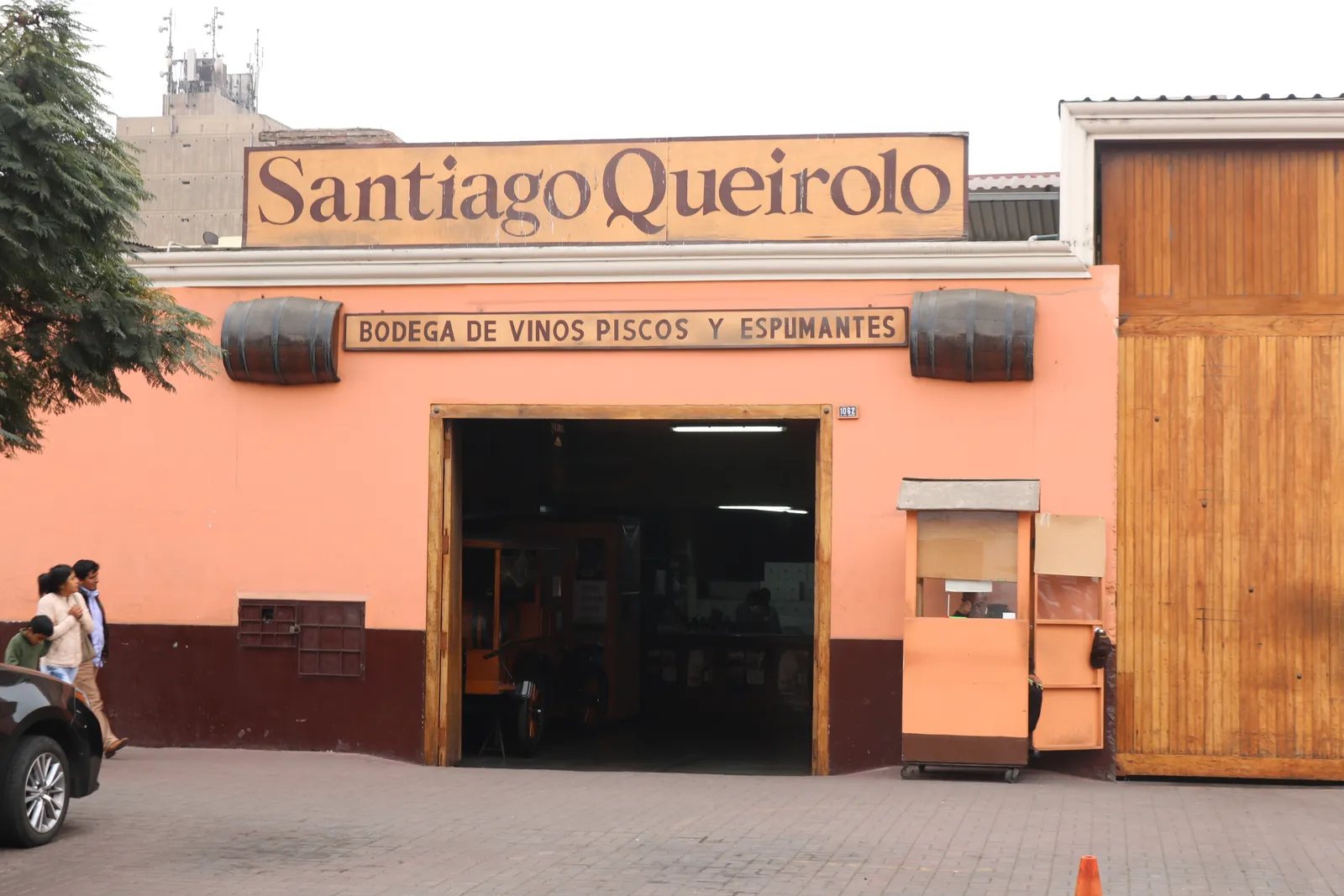
On the corner of Avenida San Martín, the Antigua Taberna Queirolo has been open since 1880, when Santiago Queirolo Raggio arrived from Italy and started out selling octopus off a cart before taking the corner as a shop. The family picked that corner for a reason worth knowing: a horse-drawn streetcar ran from it as far as Avenida Brasil, where a second one carried on into central Lima. The bar is attached to the pisco and wine bodega that supplied the haciendas around here, and it still pours the house pisco by the glass.
Two big collections and a plaza is the whole of it, which is the point of coming out this way rather than into town: one district, mostly under a roof. If being outside and moving between stops is what you actually want from the afternoon, the main Lima layover guide runs the colonial centre and the fountain park instead.
The two-sol airport bus starts on Avenida Brasil
AeroDirecto Sur is the route out of this side of the city: it begins at Galerías Brasil on Avenida Brasil and runs to Jorge Chávez along Avenida La Paz, Avenida Venezuela and Avenida Faucett, with stops at San Felipe, Javier Prado, La Marina and Quilca on the way. The fare is 2 soles paid to the conductor on board, in cash, by Visa card, by Yape or by Plin; the Lima Pass card used on the city’s busway is not accepted on it.
It runs around the clock, every 15 to 25 minutes through the day and every half hour to hour between eleven at night and five in the morning. Faucett is the slow part at peak times whichever service you are on, so treat the timetable as the ride and not the journey. Pueblo Libre is quiet enough that the walk between the two museums and the plaza is four blocks of low houses and no crowd at all, which is a different afternoon from the one the historic centre gives you.
Frequently asked questions
What should I do during a layover near the Museo Larco in Pueblo Libre, Lima?
Give Museo Larco the bulk of the time: the mansion and its gardens, the Cultures Gallery, the storerooms where 30,000 catalogued pots sit on open shelving, and the erotic pottery in its own building at the back. Plaza Bolívar is four blocks east, with the national archaeology museum on one side of it holding the Raimondi Stela and the Tello Obelisk, and the Antigua Taberna Queirolo on the corner of Avenida San Martín. The plaza half is easy to drop if the museum runs long, and none of it needs booking ahead unless you want a guide.
Is Museo Larco open on Mondays?
Yes, and that is the main reason to point a Monday layover at Pueblo Libre. Museo Larco runs Monday to Sunday from nine in the morning until seven in the evening, public holidays included, while most of Lima's museums take Monday off. The national archaeology museum on Plaza Bolívar opens later on Mondays, at midday rather than nine, but it does open.
Can you take a backpack or a suitcase into Museo Larco?
Not into the galleries. Anything over 40 by 40 centimetres, backpacks, carry-ons and suitcases included, has to be handed in, and the museum runs a free bag and coat check at reception that takes them. That covers your time inside the building only, so anything else planned in Pueblo Libre means picking the bag back up and carrying it.
Does the same airport bus serve Pueblo Libre as the historic centre?
No, it is a different route with the same fare. The AeroDirecto Sur service starts at Galerías Brasil on Avenida Brasil and runs to Jorge Chávez by way of Avenida La Paz, Avenida Venezuela and Avenida Faucett, for 2 soles paid on board in cash, by Visa card, Yape or Plin. It runs 24 hours a day, every 15 to 25 minutes through the day and every 30 to 60 minutes overnight, so a departure in the small hours is covered.