Mexico City Layover Near the Zócalo
Part of the full Mexico City Layover: The Zócalo From MEX
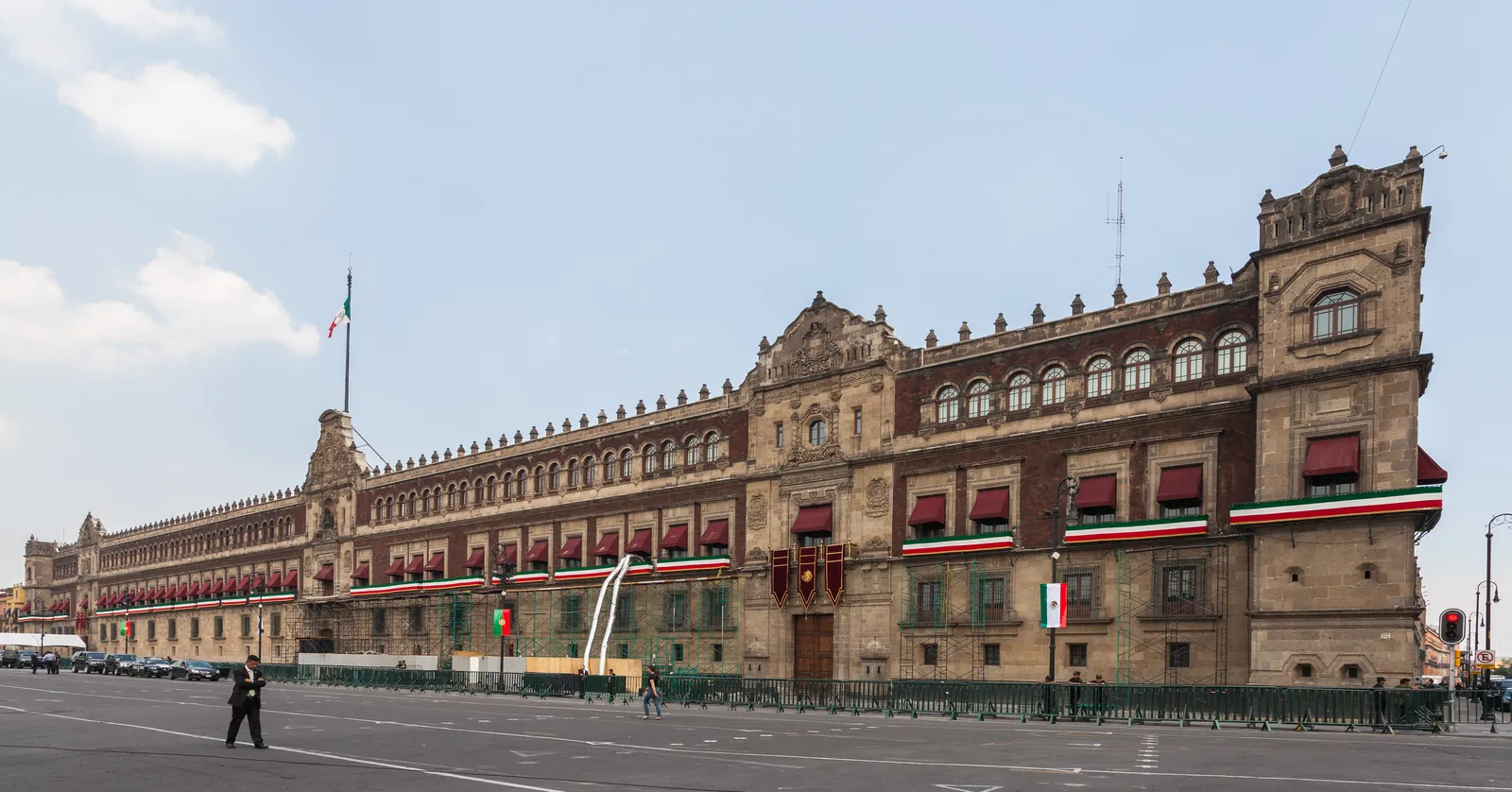
Mexico City’s Zócalo is a bare paved square with something different on each of its four sides: a government palace east, a cathedral north, a pawnshop older than the country on the north-west corner, and a hotel lobby roofed in coloured glass on the south-west.
Palacio Nacional lets visitors in free, on a booked tour
The palace running the whole east side of the square stands on the ground Moctezuma’s own palace occupied, and Diego Rivera painted the main stairway between 1929 and 1935 with the Epic of the Mexican People, from the Aztec cities through the conquest and independence to the revolution. It costs nothing to see. It is also the hardest thing on this square to actually get into: entry is by guided tour at set times, Tuesday to Sunday between 9am and 5pm, booked ahead by email or in person at the finance ministry museum’s door, and a passport or government photo ID is taken at security and handed back on the way out.
If the day’s tours are full, a guided walk around the historic centre covers the same ground outside the palace walls without the reservation problem. Either way, security here screens every bag on the way in and will not take large luggage through the door, which is worth knowing before you drag a suitcase across the square.
The stained-glass canopy over the Gran Hotel’s lobby
The building on the square’s south-west corner went up between 1895 and 1899 as the Centro Mercantil, a department store, and became a hotel in 1968 for the Olympics. What survived both lives is the roof: a barrel vault of coloured glass installed over the central well in 1908, made by the French artisan Jacques Gruber in the Art Nouveau manner, with wrought-iron balconies stacked four floors below it and two original cage lifts still working the corners.
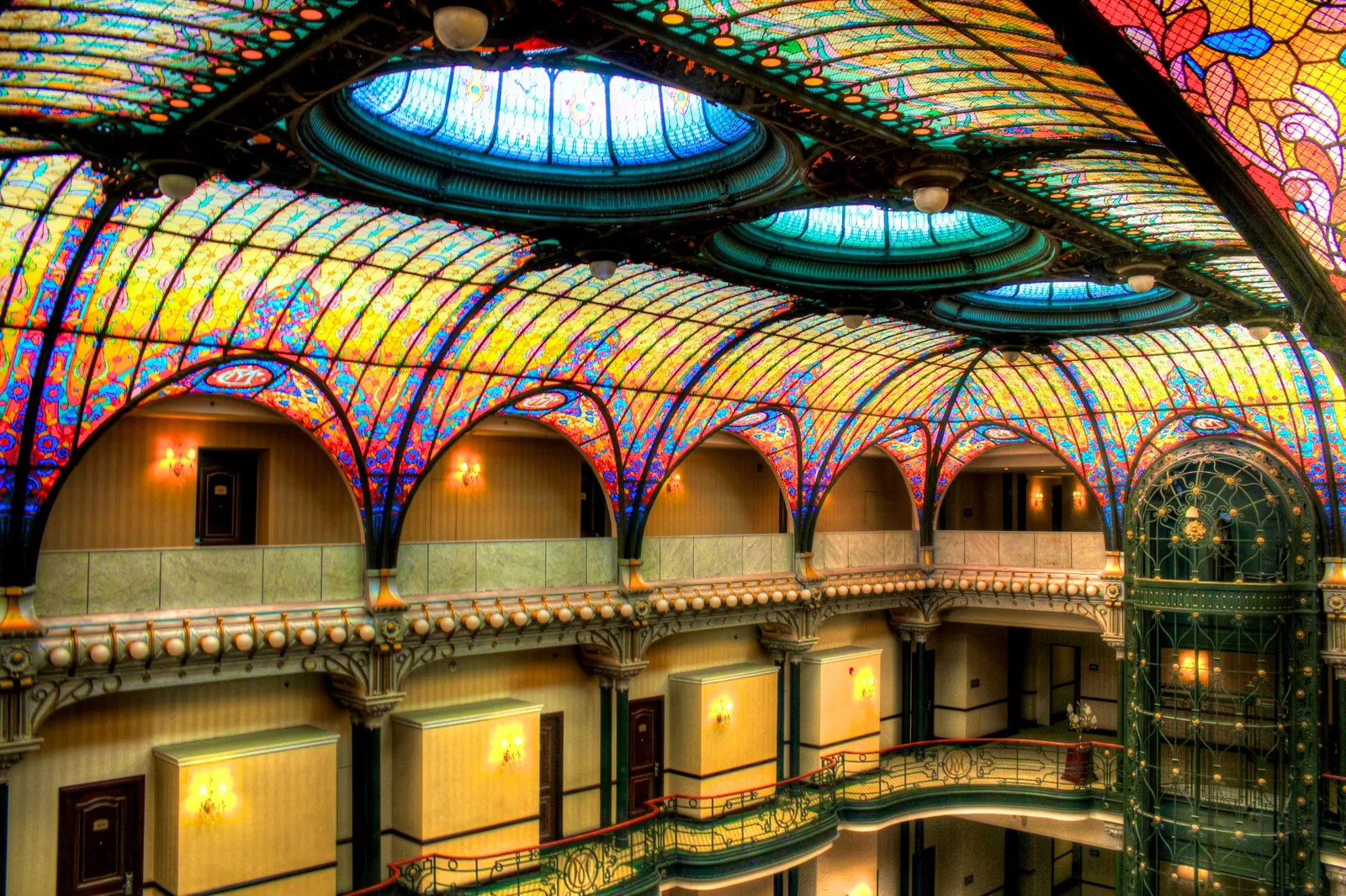
This is a working hotel and not a monument, so there is no admission desk, no ticket and no published visiting hours; the ground floor is as far as a visitor goes, and how welcome a look upward feels depends entirely on how busy reception is.
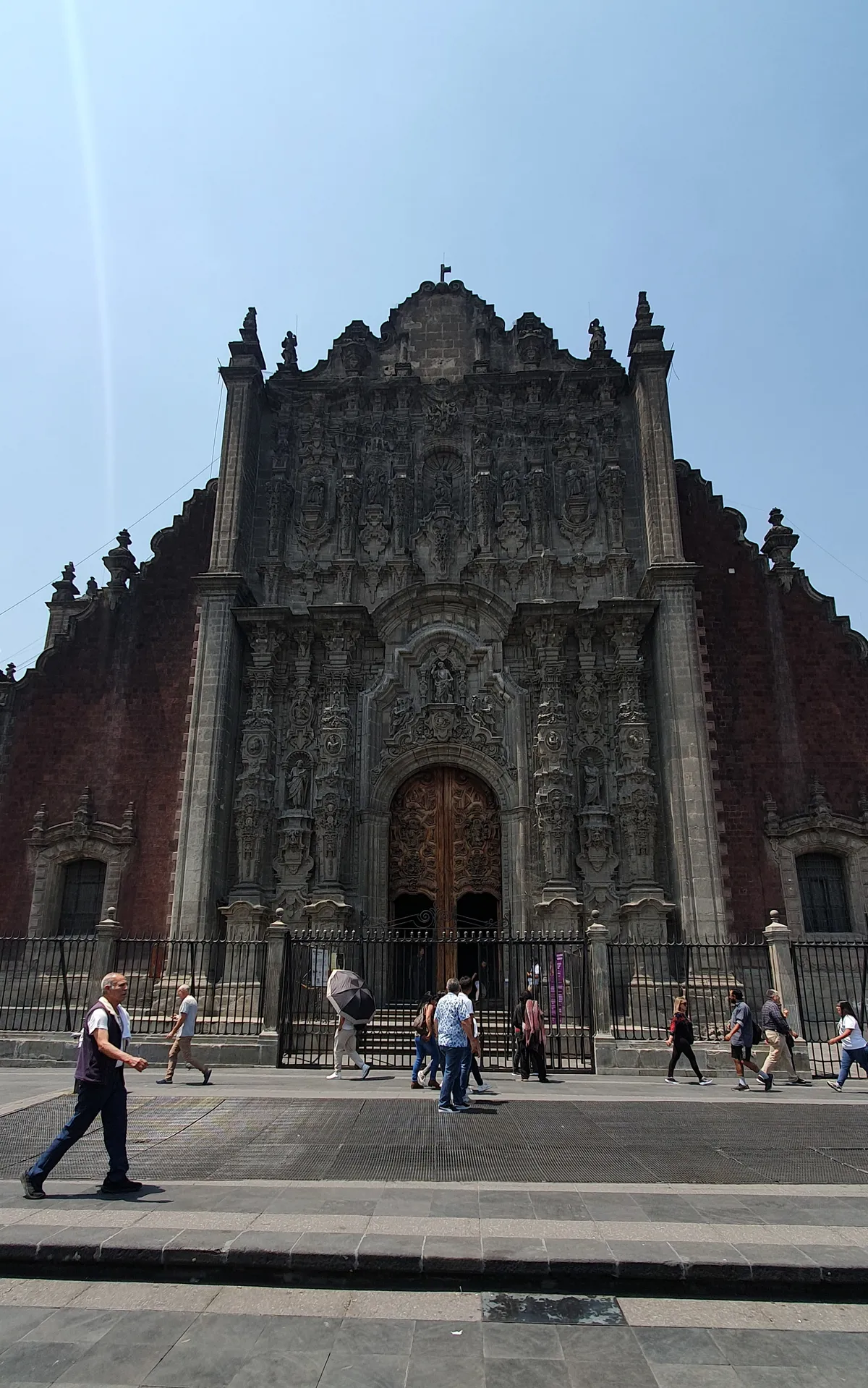
The Sagrario Metropolitano’s carved stone front
Attached to the cathedral’s east flank is a separate parish church, finished in 1768 by Lorenzo Rodríguez, and its front is the most heavily worked stone surface on the square: a Churrigueresque screen of pale chiluca cut into walls of dark red tezontle, layered with saints, columns and broken cornices to the roofline. It reads as a completely different building from the cathedral it is bolted onto, which is roughly what it is.
The pawnshop on the north-west corner opened in 1775
Pedro Romero de Terreros, Count of Regla, started lending money against pledged goods on this corner in February 1775, on ground that had been part of Axayácatl’s palace, and the Nacional Monte de Piedad has never moved or changed trade. What you walk into is still a working pawnshop: a large showroom of unredeemed second-hand goods, from watches to furniture, with the count’s coat of arms over the main door and a small museum in the room that served as the chapel until 1926.
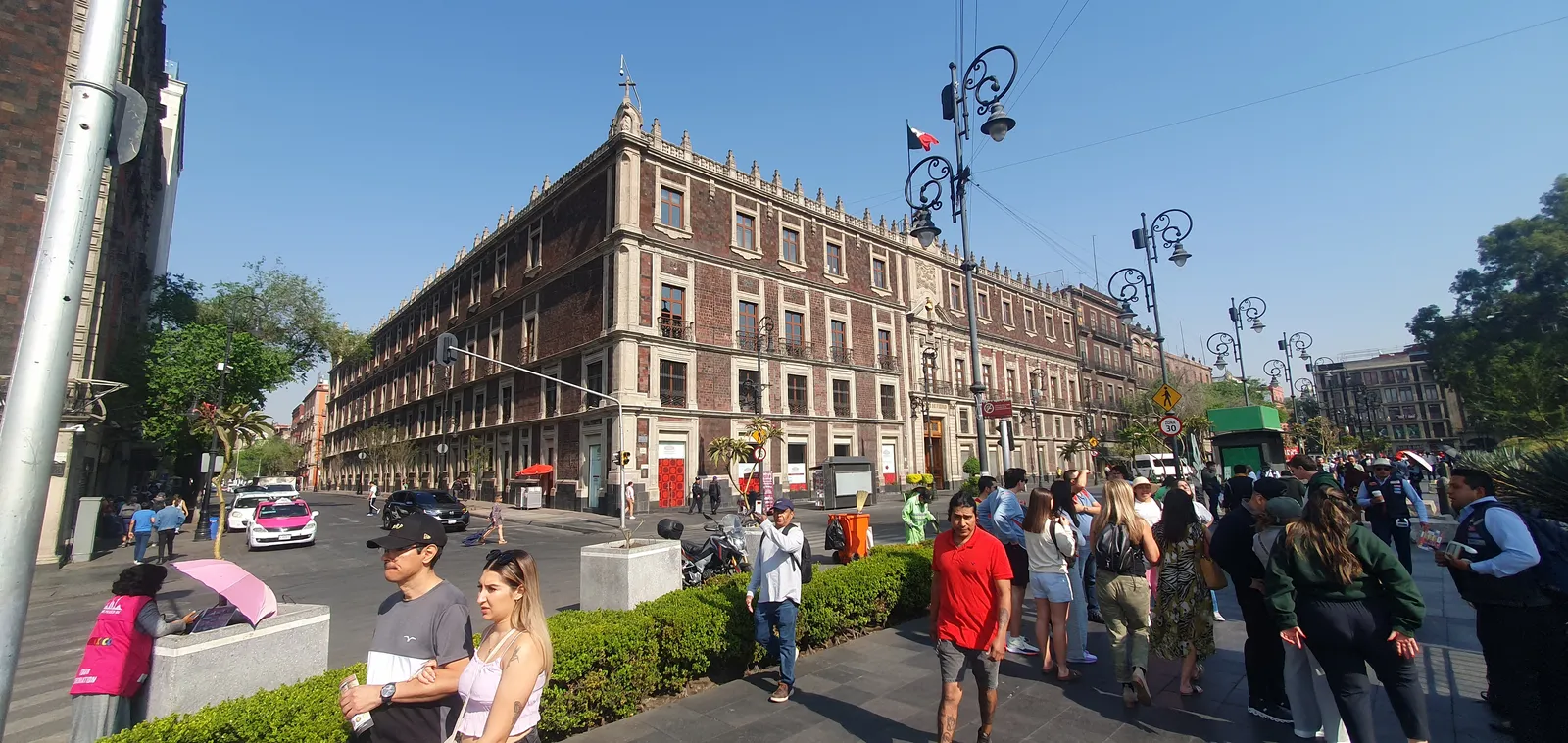
There is no admission desk and nothing to book. If you would rather cover more ground than a walking radius allows, the open-top bus circuit stops in the historic centre and runs roughly 9:15am to 8pm.
20 de Noviembre and Pino Suárez are the airport bus stops
The Quetzalcóatl route on Metrobús Line 4 passes two blocks south of the square, and those two stops are the closest thing the Zócalo has to a direct link with Mexico City International Airport. The fare is 30 pesos, cash is refused, and you tap a contactless bank card, a phone or a Movilidad Integrada card at the turnstile. Buses run every seven to ten minutes and the ride to Terminal 1 takes roughly 45 minutes to an hour, so leave the square about two and a half hours before you need to be at the gate.
Two or three hours is all this square asks for, which makes it the right amount of city when the connection is short. If you have five or more, the wider Centro Histórico route picks up the Templo Mayor excavation, the Bellas Artes lobby and the 44th-floor deck on Torre Latinoamericana, none of which fit inside a walk around four sides of one plaza.
Frequently asked questions
What should I do during a layover near the Zócalo in Mexico City?
Work around the four sides of the square. The cathedral on the north side is free and open through the day, and the Sagrario Metropolitano next to it carries a carved stone front worth a few minutes on its own. The National Palace on the east side is also free but runs on booked guided tours, so it is the one to check before you build a plan around it. On the south-west corner, the Gran Hotel's lobby is roofed with a stained-glass canopy from 1908, and the old pawnshop on the north-west corner has been lending money on the same spot since 1775. Two hours covers all of it at a walk.
Can I get into Palacio Nacional without booking?
Not reliably. Entry costs nothing and the building opens Tuesday to Sunday, 9am to 5pm, but visits run as guided tours at set times through the day and you are expected to have reserved by email to visitas_guiadas@hacienda.gob.mx or in person at the finance ministry museum's entrance. Turning up and asking sometimes works when a group has spare places and often does not. Bring a passport or government photo ID, which is checked and held at security.
Which buildings on the Zócalo can I actually walk into?
The cathedral and the Sagrario beside it, both free, both open through the day. The Gran Hotel's ground floor, which is a working hotel rather than an attraction, so there is no ticket and no set visiting hours. The Nacional Monte de Piedad on the north-west corner, which is a functioning pawnshop with a second-hand showroom and a small museum in its former chapel. The National Palace only with a booking, and the old city hall on the south side is government offices with no public route through.
Is the Zócalo ever closed off to visitors?
Several times a year, and two of them are predictable. The square is fenced and heavily policed around 15 and 16 September for independence night and the parade the following morning, and the metro station beneath it shuts for the ceremony itself. From roughly the last week of October to 2 or 3 November the city builds a monumental Day of the Dead offering across the paving, which is free to walk through but changes the space completely. Concerts and state events take the square at other times with less warning.