Mexico City Layover Near Buenavista Station
Part of the full Mexico City Layover: The Zócalo From MEX
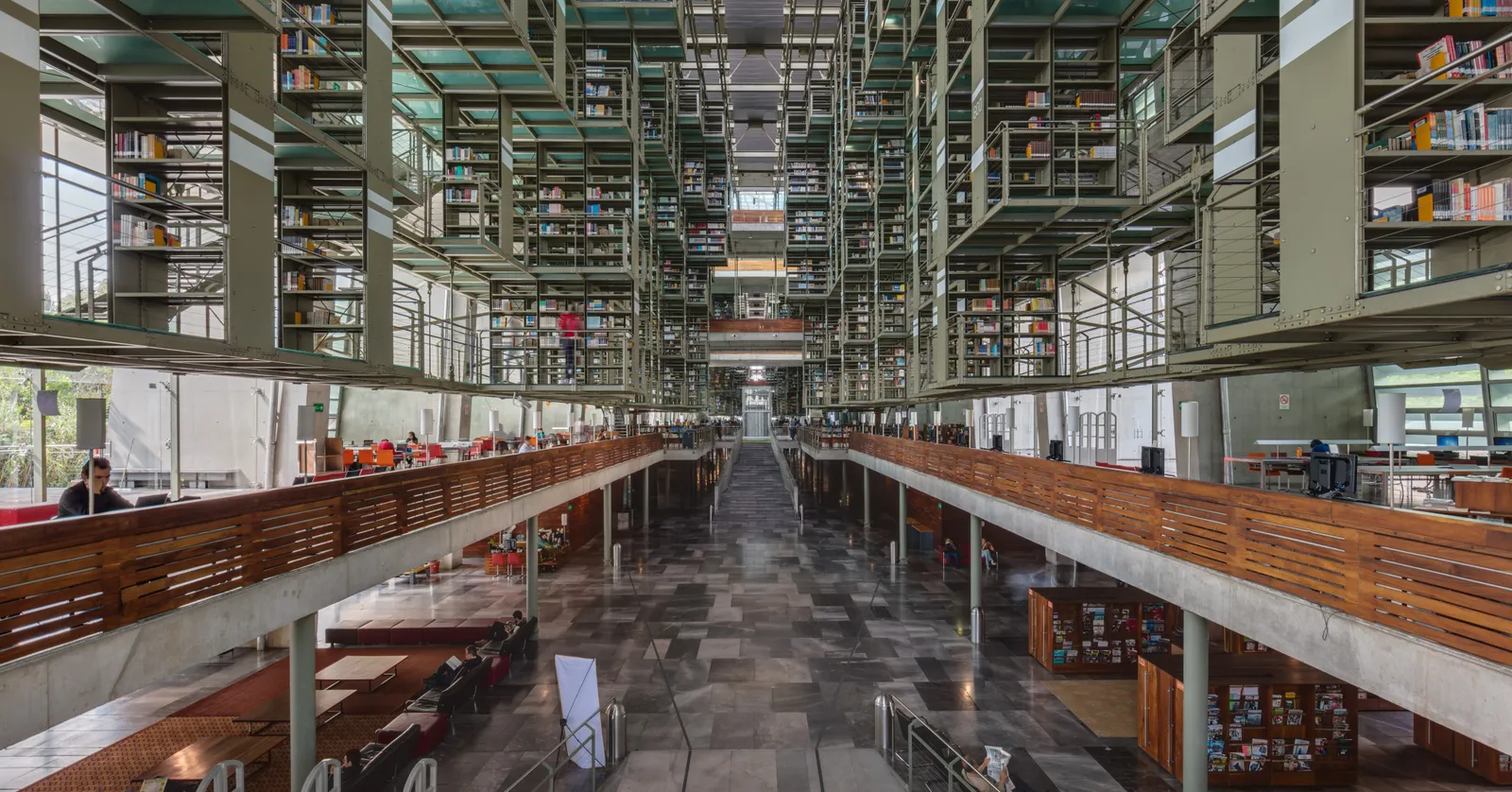
Buenavista, the commuter-rail terminus on the northern edge of Mexico City’s centre, stands beside a free public library whose book stacks hang off the walls of one glass-roofed hall, and Santa María la Ribera’s wrought-iron pavilion is ten minutes’ walk west of the same forecourt.
The Vasconcelos library hangs its book stacks off the walls
Alberto Kalach finished the Biblioteca Vasconcelos in 2006 on old railway land immediately east of the station. Rather than shelving books on floors, he hung the stacks in tiers off the side walls of one long hall and left the middle open from the ground to a glass roof, so the reading floor looks down a canyon of steel and paper with the light coming from directly overhead.
Entry is free and there is no ticket or registration to get past the door. It opens 8:30am to 7:30pm, Monday through Sunday, which makes it one of the few things in this city not shut on a Monday, and a botanical garden wraps the building for anyone who would rather sit outside. Almost everyone inside is a student or a local reader, not a visitor.
The iron pavilion in Santa María la Ribera, cast in Pittsburgh
The Kiosco Morisco has crossed the Atlantic more often than most travellers reading this. José Ramón Ibarrola designed it in a neo-Mudéjar style for Mexico’s pavilion at the 1884 world’s fair in New Orleans, and the whole thing, wrought iron with a glazed openwork dome, was cast and assembled in Pittsburgh before being shipped south. It went on to Paris in 1889 and St Louis in 1904, came home in 1906 to stand in the Alameda Central where the national lottery draws were held under it, and was moved out to this neighbourhood’s own Alameda in 1910.
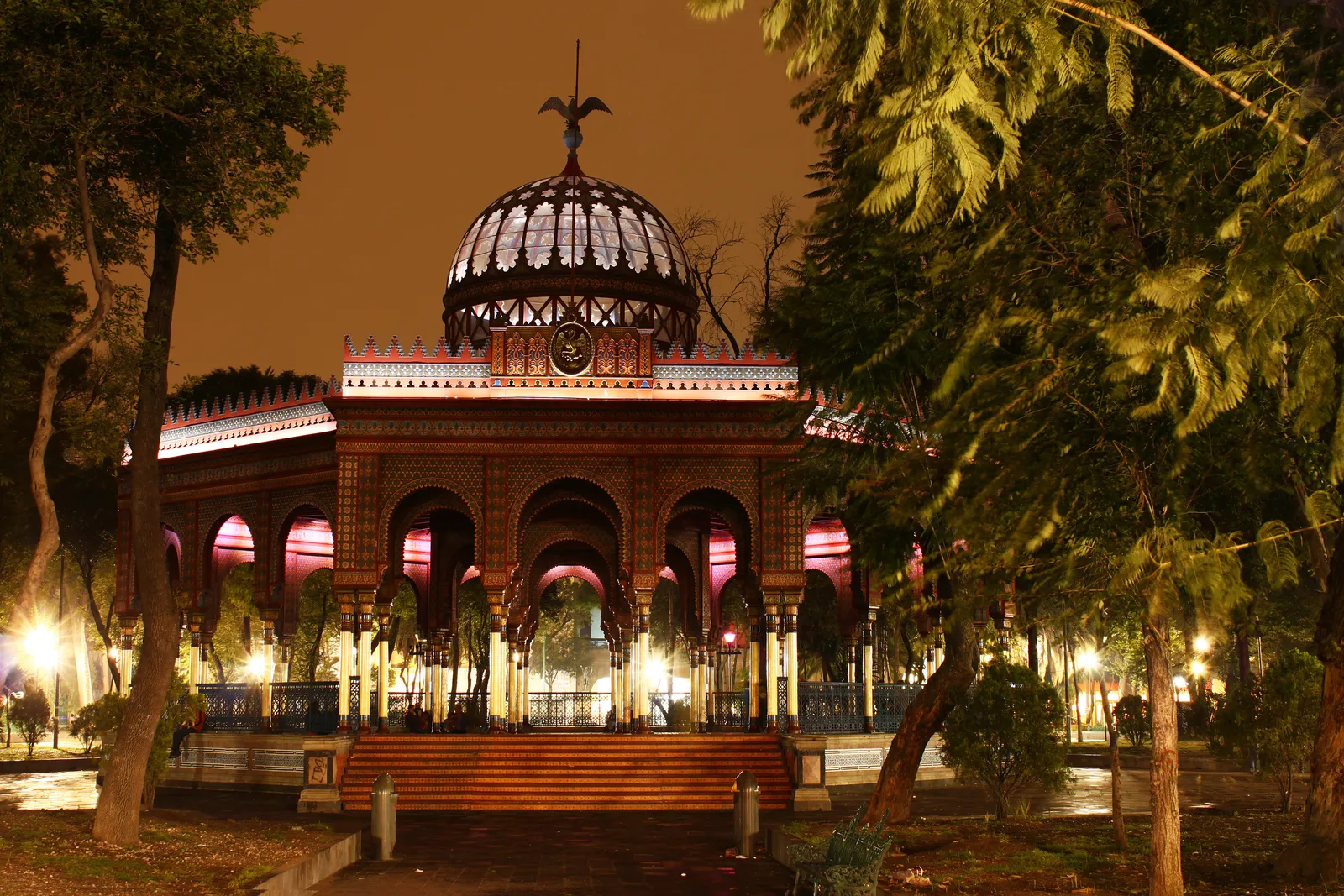
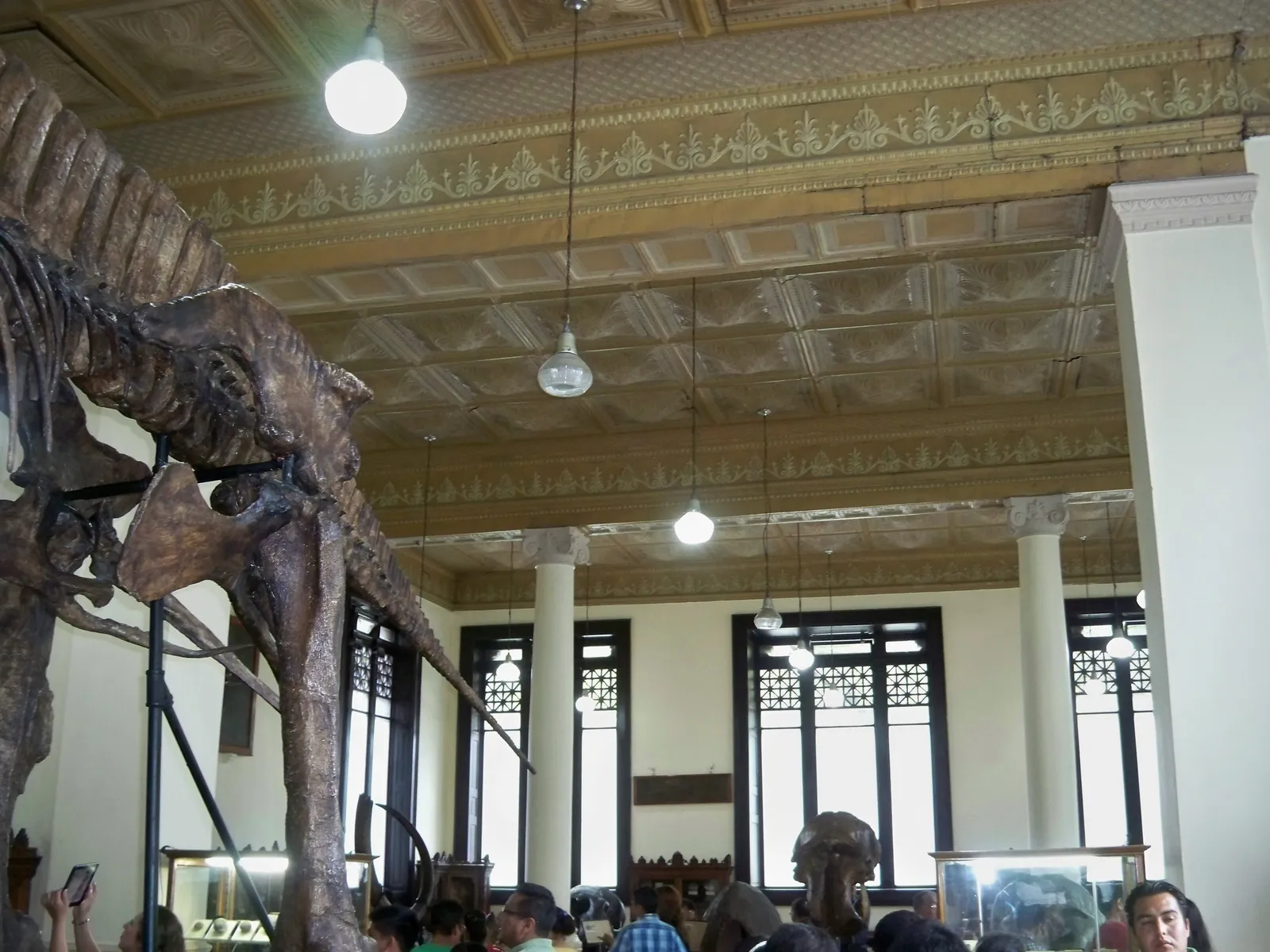
It has stood at the corner of Dr. Atl and Salvador Díaz Mirón ever since, in the middle of a square lined with benches and food carts, and it costs nothing to walk under. On the north side of the same square, the UNAM geology museum occupies a Porfirian building inaugurated in September 1906 for the International Geological Congress, with an Art Nouveau iron staircase, meteorites and mounted skeletons under a stencilled ceiling. It charges 30 pesos and opens Tuesday to Sunday, 10am to 5pm.
The Chopo museum’s hall was built in Germany and shipped over
Bruno Möhring designed a glazed iron exhibition hall for a 1902 art and textile show in Düsseldorf; the ironwork was made in Oberhausen, taken apart, sent to Mexico, and put back up here between 1903 and 1905, with two open lattice towers flanking the gable. It has been a Japanese art gallery, a natural history museum and a warehouse since, and is now a UNAM contemporary art museum showing exhibitions, film and performance.
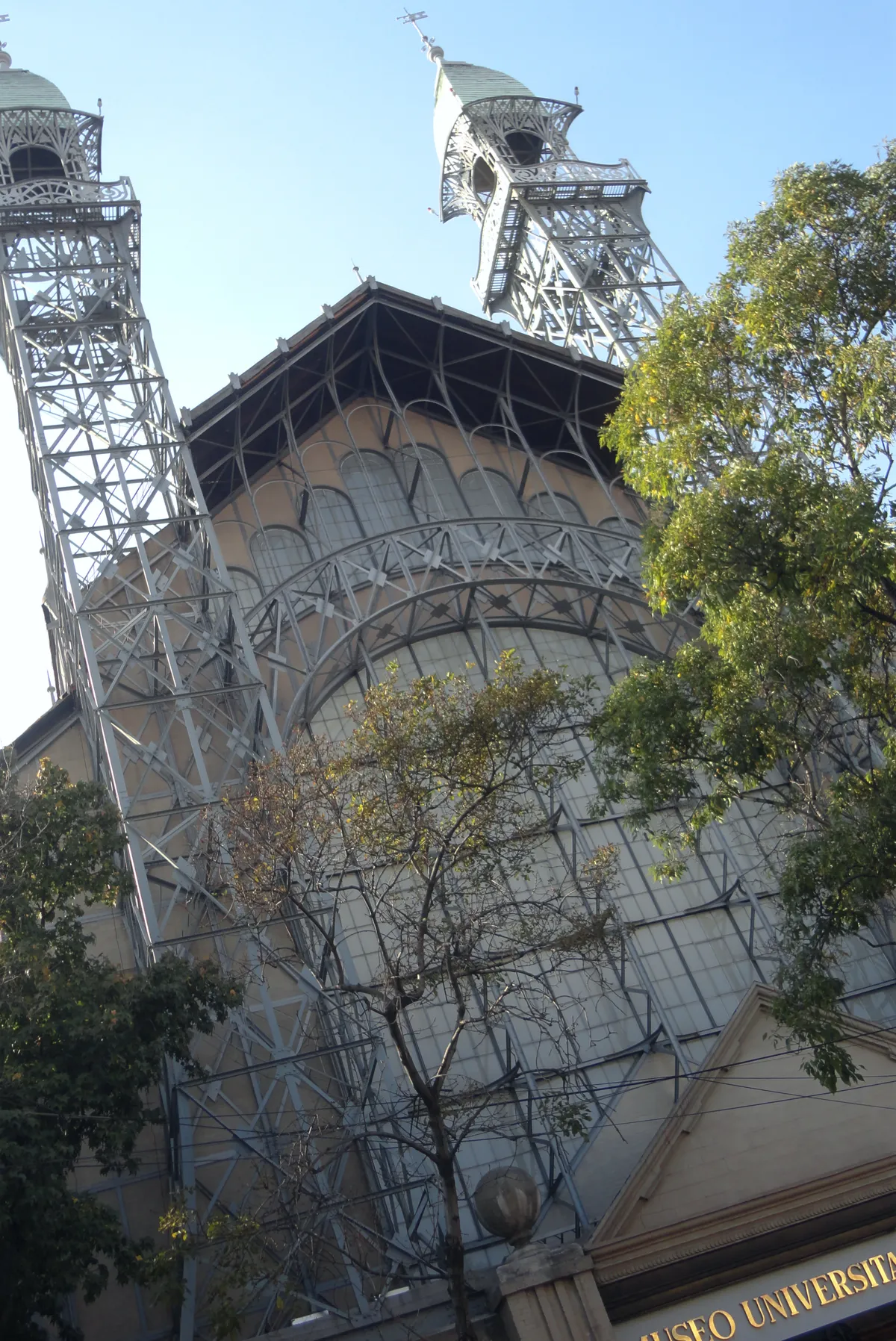
It opens Wednesday to Sunday, 11am to 6pm, at 30 pesos, and Wednesdays are free. If you arrive on a Saturday, the street outside is the better story: the Tianguis Cultural del Chopo runs along Calle Juan Aldama between Mosqueta and Luna from roughly 10am to 5pm, a market of vinyl, band shirts, patches and tattoo work that began in 1980 as a record swap outside this building and moved to its current street in 1988.
Buenavista is the slow part of any of this. The commuter rail hall, the metro platforms and the bus stops sit on separate levels joined by stairs and long passages, so a bag costs you minutes on every leg through it rather than a single carry.
The airport bus does not start at Buenavista
Line 4 of the Metrobús ends here, which makes it look like the airport service should too. It does not: the Quetzalcóatl route out to Mexico City International Airport begins at Amajac on Paseo de la Reforma, four stops south of Buenavista on the same line, so the trip is a 6-peso ride down to Amajac and then a separate 30-peso fare for the airport leg, tapped with a contactless card or the city’s transport card at each turnstile. Budget an hour and a half from library door to Terminal 1, and more in the evening peak.
If the walking here feels too specialised, the route around the Zócalo and the Centro Histórico starts from the same Line 4 platform in the other direction and covers the cathedral, the Templo Mayor excavation and the Bellas Artes lobby instead. It is the safer choice on a Monday, when both museums in this neighbourhood are shut and the library is the only thing here still open.
Frequently asked questions
What should I do during a layover near Buenavista Station in Mexico City?
Start next door at the Biblioteca Vasconcelos, which is free, open every day of the week from 8:30am to 7:30pm, and worth twenty minutes for the hall alone. Santa María la Ribera begins about ten minutes west, and its central square holds the Kiosco Morisco, a wrought-iron pavilion cast in Pittsburgh in 1884; the UNAM geology museum stands on the same square and the Chopo museum's imported iron hall is a few streets back toward the station. The geology museum shuts on Mondays and the Chopo museum on Mondays and Tuesdays, so on those days the library and the square carry the whole visit.
How do I get from Buenavista to Mexico City airport?
Not directly, which surprises people, because Buenavista is a Metrobús terminus. The airport service on Line 4, the Quetzalcóatl route, starts at Amajac on Paseo de la Reforma, four stops south of Buenavista on the same line, so it is a 6-peso ride down and then a separate 30-peso fare out to the terminals. Allow about an hour and a half in total. The metro from Buenavista is cheaper at 5 pesos but needs two changes and the city's rules bar bulky luggage from the trains.
Is Buenavista worth it on a Saturday specifically?
More than any other day. The Tianguis Cultural del Chopo has taken over Calle Juan Aldama, between Mosqueta and Luna, every Saturday since 1988, running roughly 10am to 5pm: a street market of vinyl, band shirts, patches and tattoo work that grew out of a record-swap outside the Chopo museum in 1980. It is five minutes from the station, it costs nothing to walk through, and it does not exist any other day of the week.
What is the suburban train at Buenavista, and would I ever need it?
It is a separate commuter railway, not part of the metro, running north out of the city to Cuautitlán in the State of Mexico in about 25 minutes. It has its own fares and its own ticketing, so a metro card does not carry over, and for a visitor there is almost no reason to use it: everything on this page is within walking distance of the station itself. It matters mainly if you arrived on it, which is how a good share of the people in this hall got here.