Mexico City Layover in Chapultepec Park
Part of the full Mexico City Layover: The Zócalo From MEX
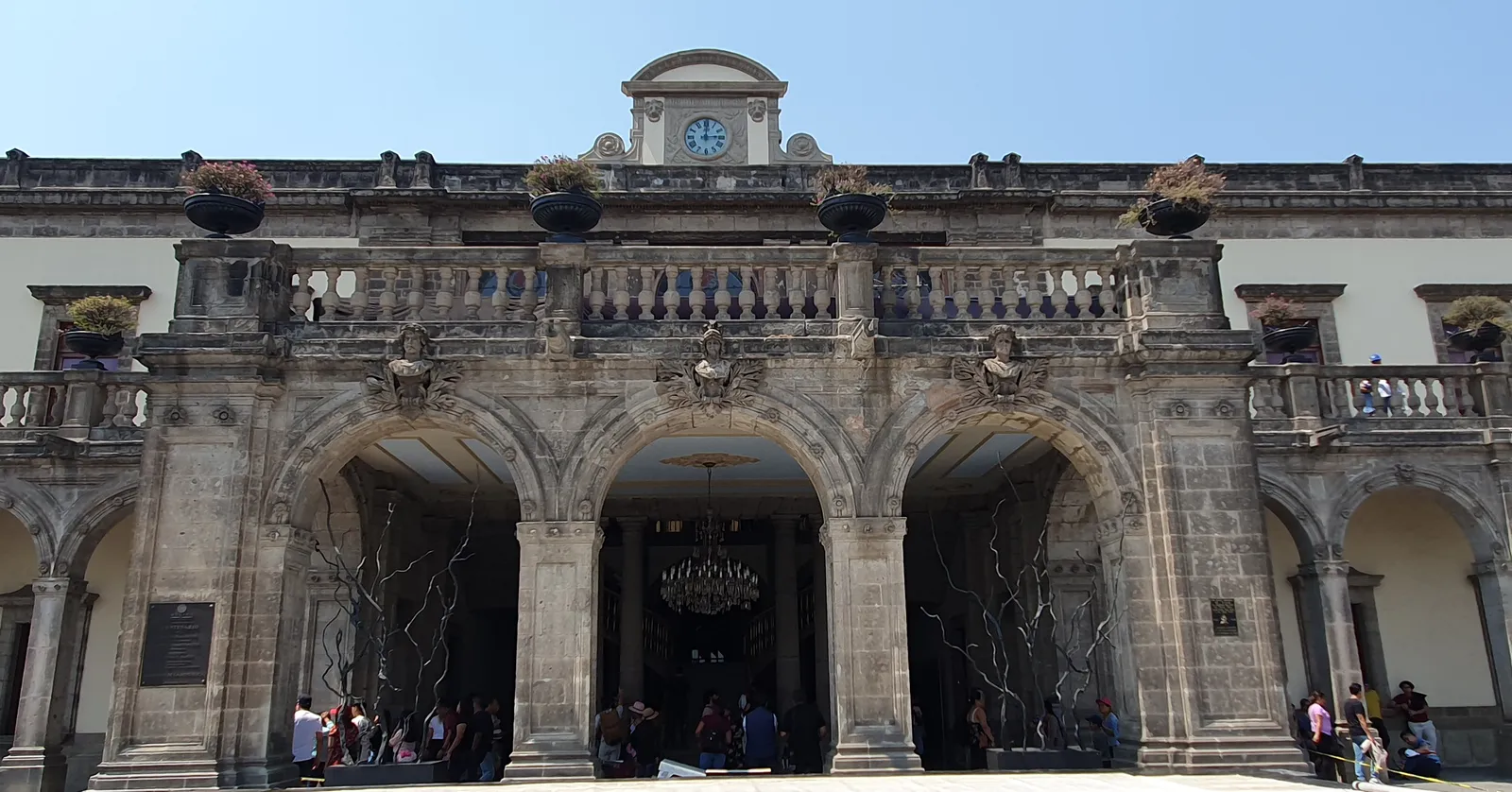
Chapultepec, the wooded park filling the western side of Mexico City, has a castle on its one hill, a free zoo and a boating lake below it, and the house Mexican presidents lived in until 2018 open to anyone in the section beyond.
Chapultepec Castle, on the hill above the park
Building started on the hilltop in 1785 as a summer house for the viceroy, and the castle went through a military academy and an observatory before Maximilian and Carlota moved in during the 1860s and had the terraces, the gardens and the malachite rooms fitted out. It has been the Museo Nacional de Historia since 1944, so what you walk through is a mix of period rooms and national history galleries, with the roof terraces looking straight down the length of Paseo de la Reforma.
Admission is 210 pesos for foreign visitors and 105 for Mexican nationals and residents, Tuesday to Sunday, 9am to 5pm with the last entry at 4:30pm; turning up at a quarter to five gets you nothing. Buying the ticket before you climb is worth it here specifically, because the queue is at the top of the hill and there is no way to check it from the bottom.
Los Pinos stopped being the president’s house in 2018
Every Mexican president from 1934 to 2018 lived on this compound in the park’s second section, behind a wall nobody outside government crossed. It was opened to the public as a cultural complex, and the residence, the gardens and the offices can now be walked through for nothing, Tuesday to Sunday, 11am to 6pm, with free guided tours and a programme of concerts and exhibitions that also costs nothing.
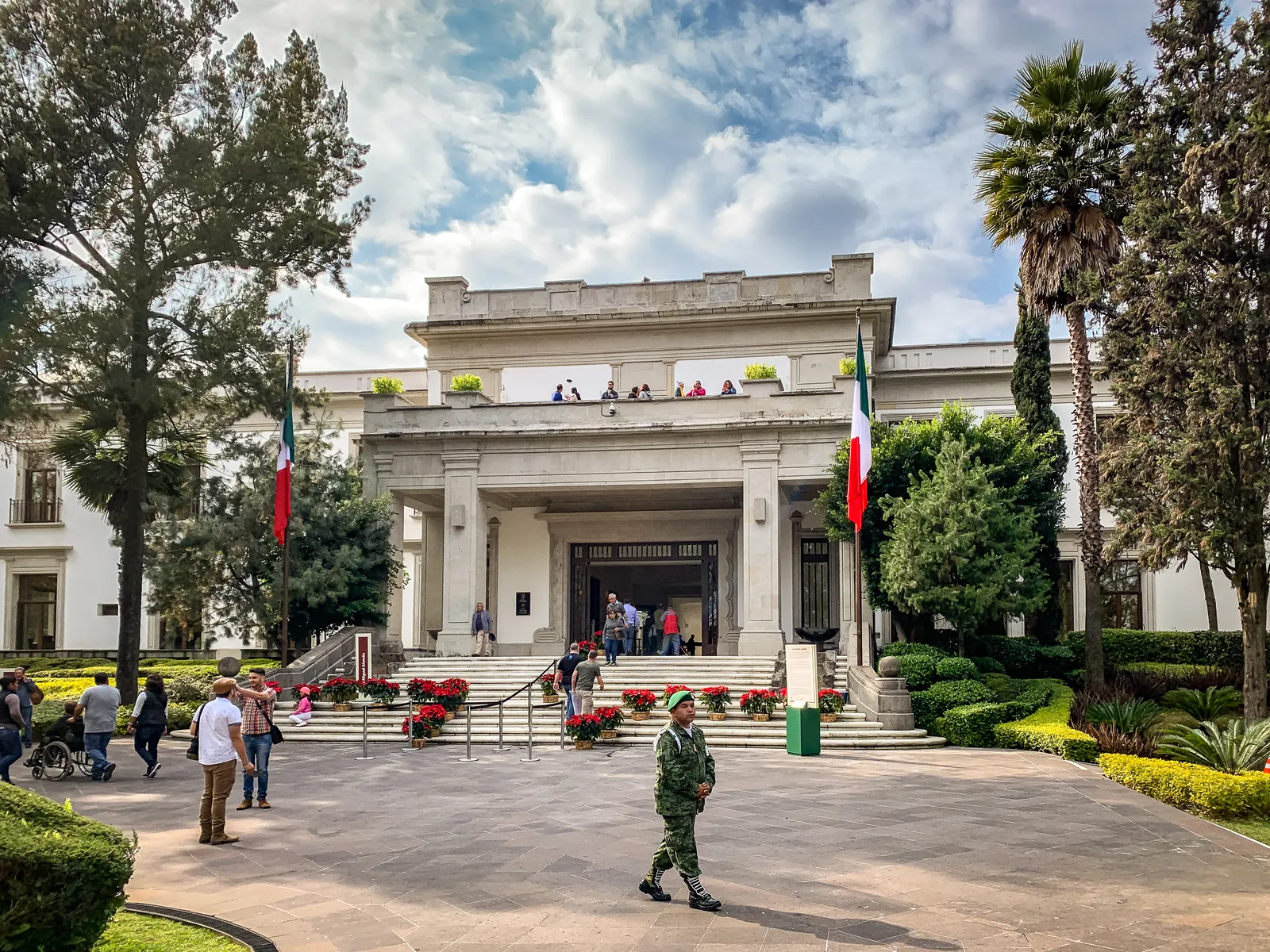
The way in is through gate 1 on Parque Lira or gate 3 from the park itself. It is a genuinely odd visit: reception rooms and private quarters left much as they were, in a compound that was a state secret in everything but location for eighty-four years.
The airport service starts on Reforma, east of the park
Paseo de la Reforma runs along the park’s northern edge and continues east into the centre, and the Quetzalcóatl route out to Mexico City International Airport begins at the Amajac roundabout on that same avenue, roughly three kilometres from the park gates. The fare for the airport leg is a flat 30 pesos, cash is refused, and a contactless bank card or a Movilidad Integrada card gets you through the turnstile; the ride to Terminal 1 takes 45 minutes to an hour. From the park, allow around two hours in total to reach the terminal.
The Museo Nacional de Antropología is inside this park too, at the Reforma end of the first section, and it is covered along with the rest of the city’s core in the wider Mexico City route, which is the better plan if your free hours fall on a Monday: the castle, Los Pinos and the zoo all shut, and the park itself is what is left.
Rowing boats on the Chapultepec lake
The lake in the park’s first section is shallow, green and rimmed with trees, with the Polanco office towers standing up behind them, and boats are rented by the half hour from the landing on its north side. It costs a few tens of pesos and it is the one thing here you do sitting down.
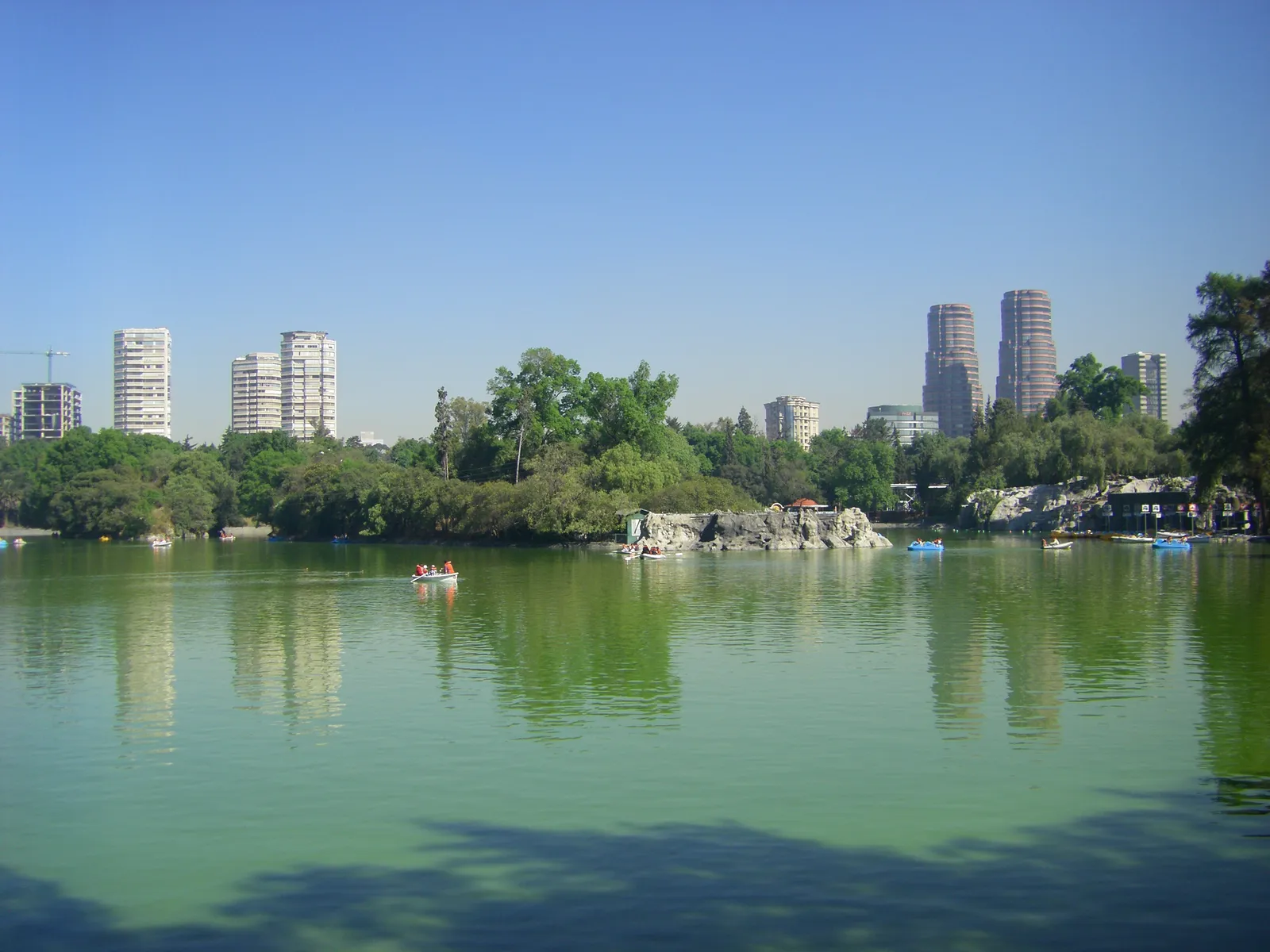
The zoo is a few minutes’ walk from the same shore and charges no admission, Tuesday to Sunday, 9am to 4:30pm. That is the part worth knowing about this park: the entry fees are small or nonexistent, and the real cost is distance. Chapultepec covers more than 860 hectares in three sections, and the gap between two named attractions is regularly a fifteen-minute walk on gravel and rising ground rather than a street crossing, which is a long way to push a suitcase for a view.
Four hours is the honest minimum here, and most of it goes on walking rather than queuing. Pick the hill or the flat, not both, and keep the return leg in mind from the moment you start climbing.
Frequently asked questions
What should I do during a layover in Chapultepec Park in Mexico City?
Pick one hilltop thing and one flat thing, because the park is too big to do both ends of. The castle on the hill is the headline, 210 pesos for foreign visitors, Tuesday to Sunday with last entry at 4:30pm, and the terraces look straight down Paseo de la Reforma. Los Pinos, the presidents' residence until 2018, is free and open Tuesday to Sunday from 11am. The lake with its rowing boats, the zoo and the Museo Nacional de Antropología all sit on the flat and cost nothing to reach. Four hours covers the castle and one other thing at a comfortable pace.
Is Chapultepec a good stop with kids?
Better than anywhere else in the city for it. The zoo charges no admission at all and opens Tuesday to Sunday, 9am to 4:30pm. Rowing boats on the lake are rented by the half hour for a few tens of pesos. The Papalote children's museum is the paid option at around 220 pesos a head, all hands-on. The castle is the one to think twice about with small children, because the way up is a long ramp and there is no shortcut back down.
How much of the park can I see in three hours?
One section of it. Chapultepec runs to more than 860 hectares across three sections, and the distances between the named attractions are real walking, ten to twenty minutes at a stretch on gravel paths and rising ground rather than a few streets. The first section, east of the Anthropology Museum, holds the castle, the lake, the zoo and the modern art museum, and that alone is a full afternoon. Los Pinos and the Papalote museum are in the second section, further west, and pairing them with the castle means a long walk or a taxi between.
Is the climb up to the castle hard?
It is a steady haul rather than a scramble. The way up from the Niños Héroes monument at the Reforma gate is a paved switchback ramp with no steps, about ten minutes at a normal pace, and it is exposed with little shade on the upper stretch. At 2,240 metres the climb takes more out of you than the same gradient would at sea level, so allow for that if you have just landed.