Mexico City Layover Near Bellas Artes
Part of the full Mexico City Layover: The Zócalo From MEX
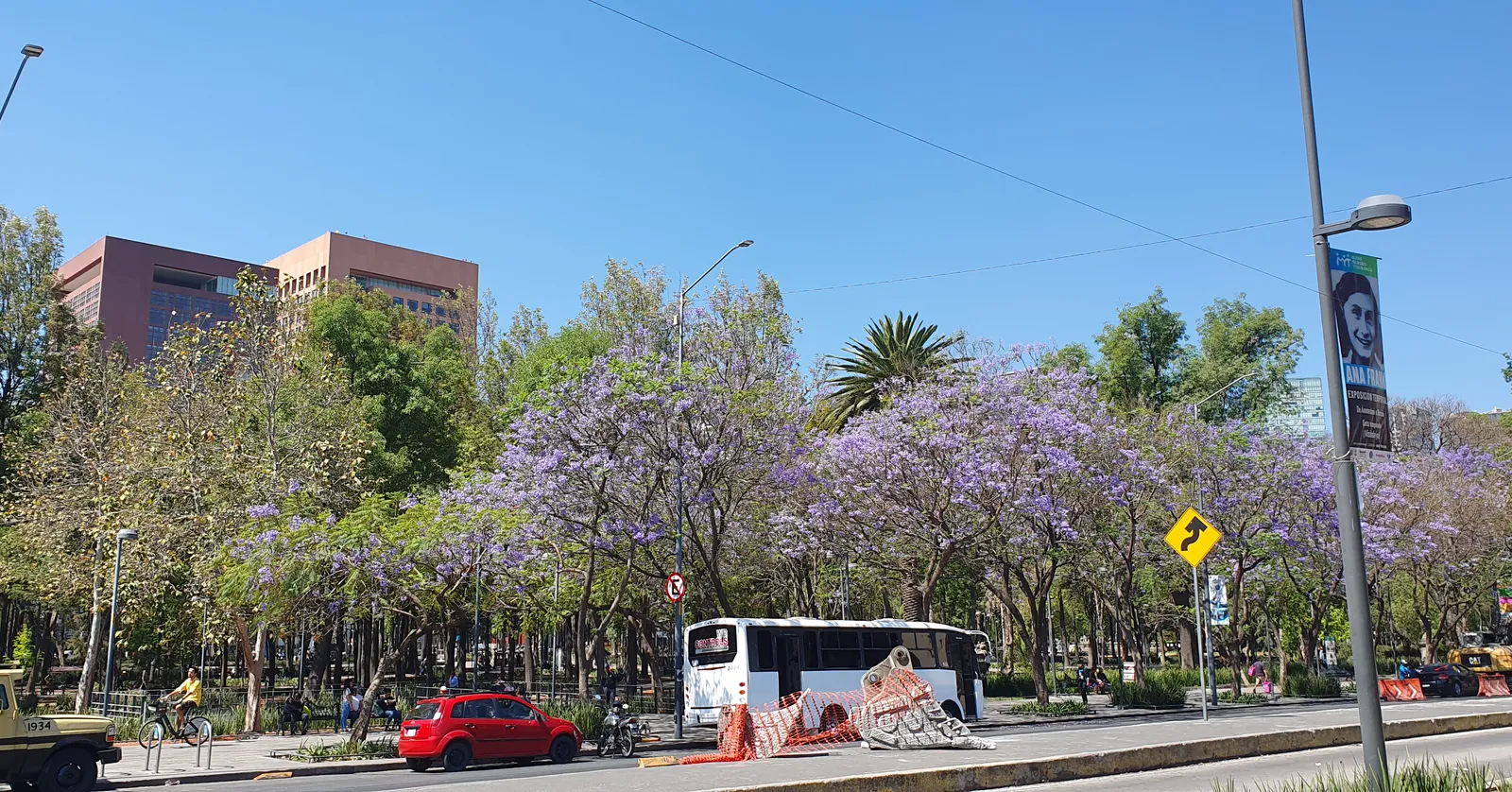
The western end of Mexico City’s Centro Histórico is built around a park and a concert hall: the Alameda Central, laid out in 1592, with the Palacio de Bellas Artes at its eastern edge and a tile-fronted palace two blocks further on down Madero.
Alameda Central has been a public park since 1592
Viceroy Luis de Velasco II ordered a green space for the city’s residents on 11 January 1592 and had poplars planted across it, which is where the name comes from: álamo. The original ground was less than half of what you walk now, running from where the concert hall stands to roughly where the white marble Hemiciclo a Juárez went up in 1910. The western half was added later, over a plaza the Inquisition had used for burnings and called El Quemadero.
It is flat, paved, fountained and free, and it is the one green thing within walking distance of the whole historic centre, so at lunchtime it fills with office workers and at weekends with families and balloon sellers. Jacarandas come into purple bloom along its edges around late March.
The art deco skylight over the Bellas Artes lobby
Adamo Boari began the Palacio de Bellas Artes in 1904 in Carrara marble and the Revolution stopped him; when it finally opened in 1934, Federico Mariscal had fitted an art deco interior inside the beaux-arts shell. The lobby is where the two eras meet, and it is free: coloured marble, geometric ironwork, and an oval glass dome overhead ringed with amber panels.
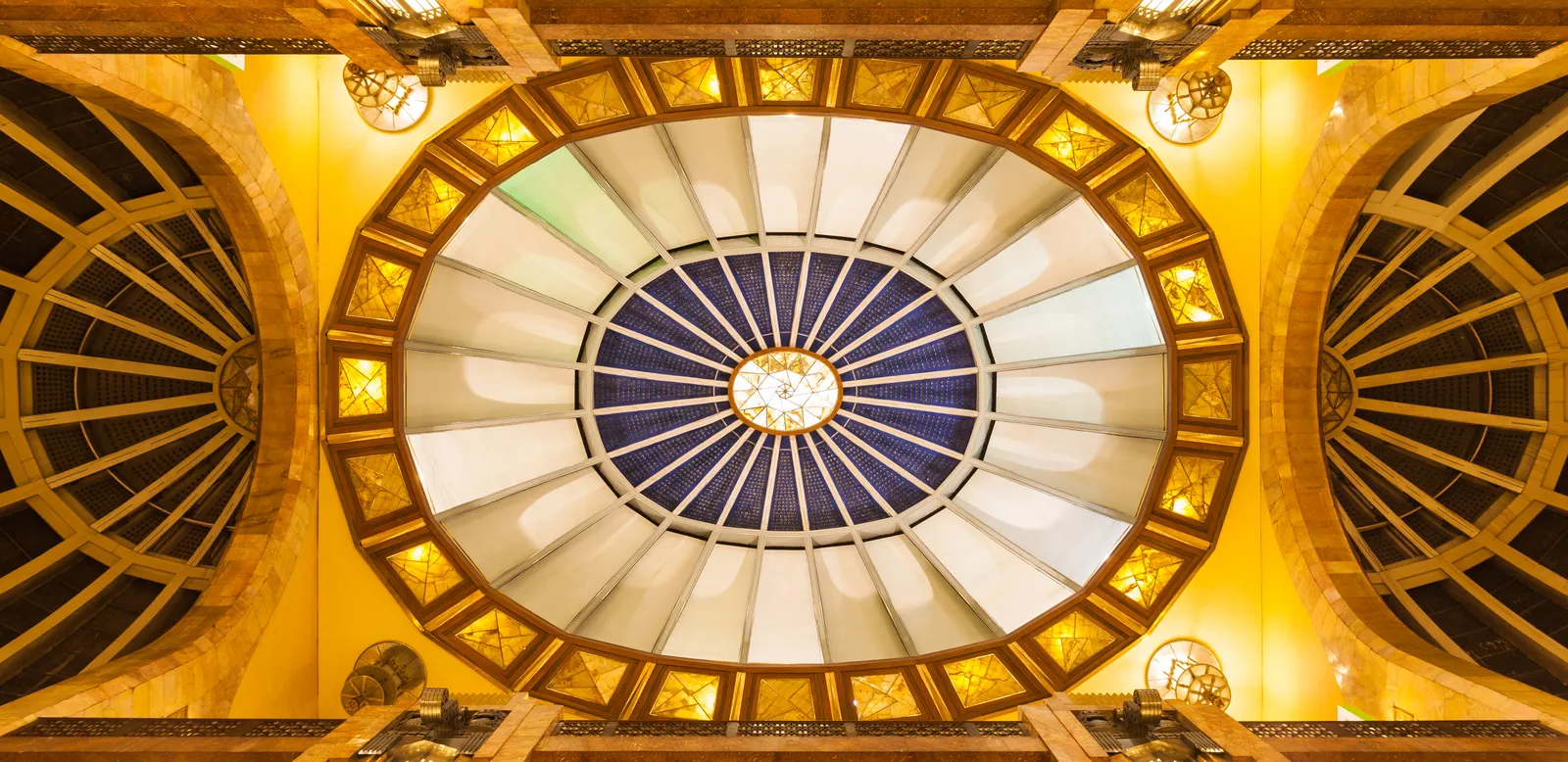
The murals by Rivera, Orozco and Siqueiros are upstairs in the ticketed museum, Tuesday to Sunday, 10am to 6pm. The Tiffany glass curtain is behind the proscenium and needs a performance or a guided tour. For an evening before a late flight, a guided night circuit of the centre starts here and covers the Zócalo end of the same walk after dark, when the buildings are lit and the museums are shut anyway.
The building has settled about four metres into the old lake bed since 1904, and not evenly, so the plaza around its base runs uphill and downhill in patches with wide joints between the slabs. It is a bad surface for small wheels.
Casa de los Azulejos, faced in blue and white tiles
Two blocks east along Madero, a house built for the Counts del Valle de Orizaba is sheathed on every exterior face in blue and white Puebla tilework, which is where the name comes from and why it stops people on the pavement. Sanborns bought it in 1917 and has run a restaurant and shop in it since 1919, so the way in is simply the door.
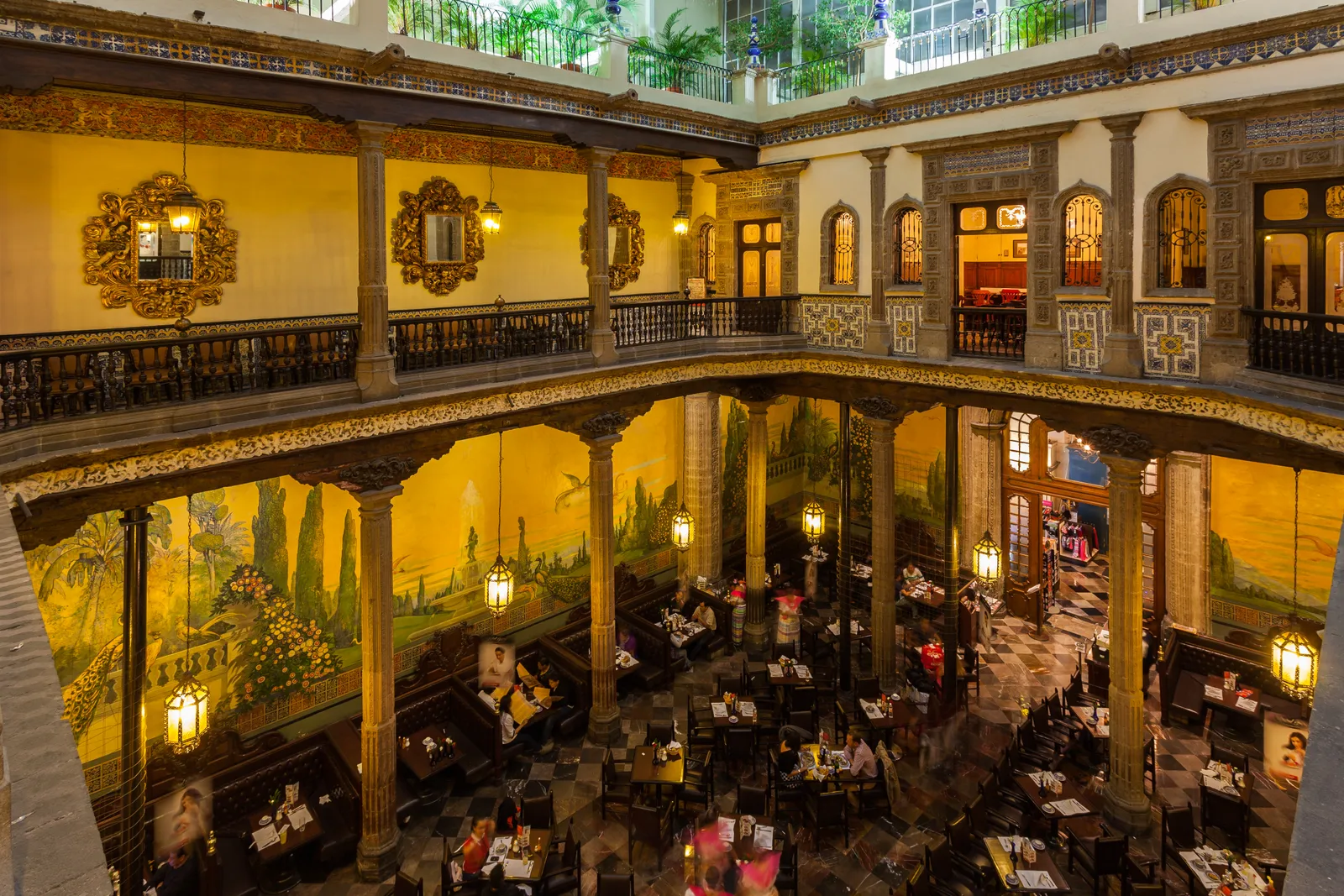
The courtyard inside is roofed in glass with a gallery of carved balustrades around it, and on the main stairwell hangs Omniscience, painted by José Clemente Orozco in 1925 and one of his earliest murals. Nothing here is ticketed; you can look at the courtyard and the stairs without ordering anything, though the tables under the glass are a reasonable place to spend half an hour.
El Caballito, a bronze Carlos IV on Plaza Manuel Tolsá
Manuel Tolsá cast his equestrian Carlos IV in 1802, and it has been moved around the city several times since independence made a Spanish king an awkward thing to display. It now stands on the square named for him, three streets north of Madero, and the horse rather than the rider is what the city calls it: El Caballito, the little horse.
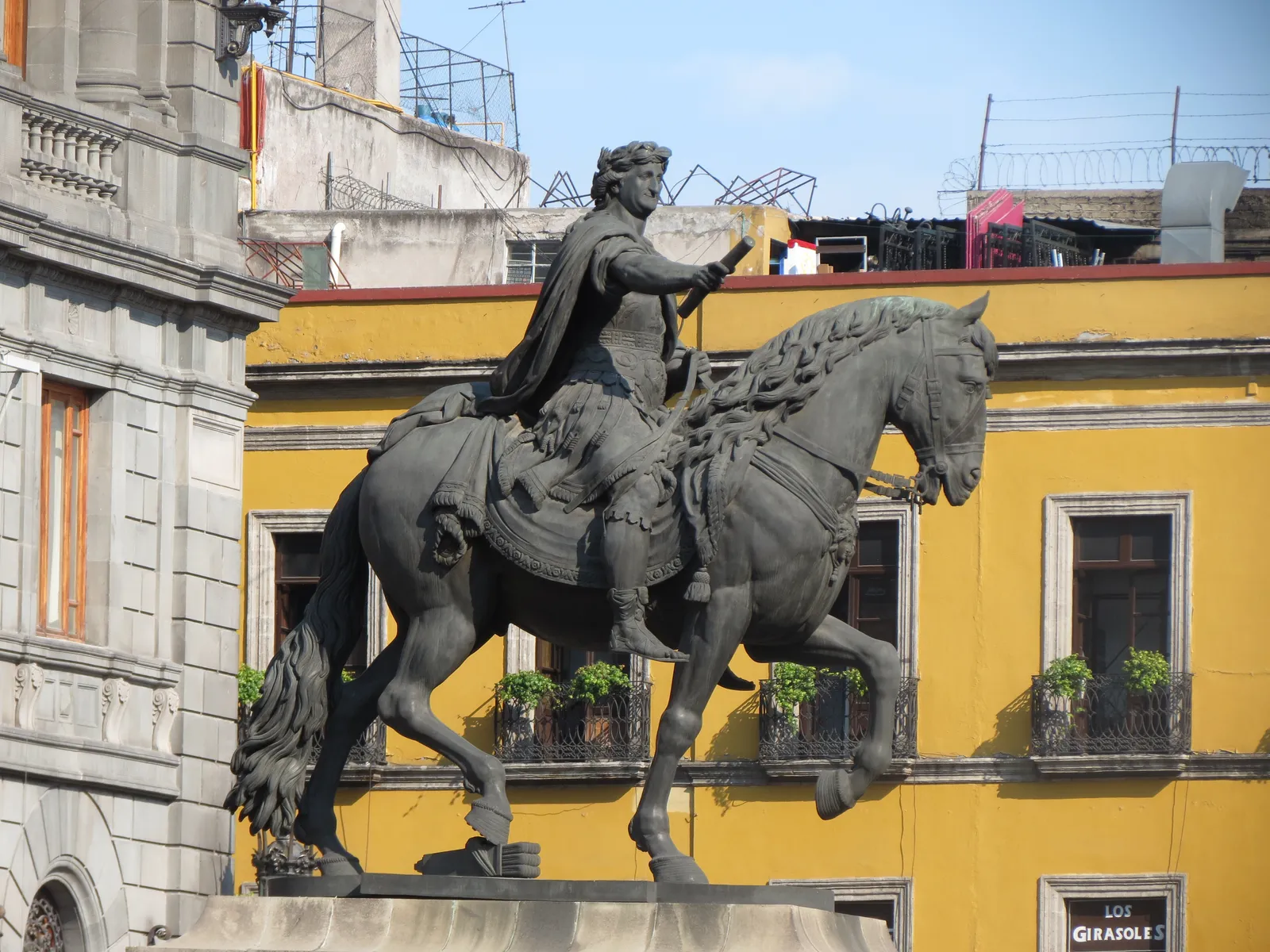
Behind it stands the Museo Nacional de Arte, in a palace finished in 1911 for the communications ministry, holding Mexican painting from the colonial period to the mid-twentieth century. The building itself is half the reason to go in: a broad marble staircase turning under a gilded coffered ceiling behind heavy wrought-iron balustrades.
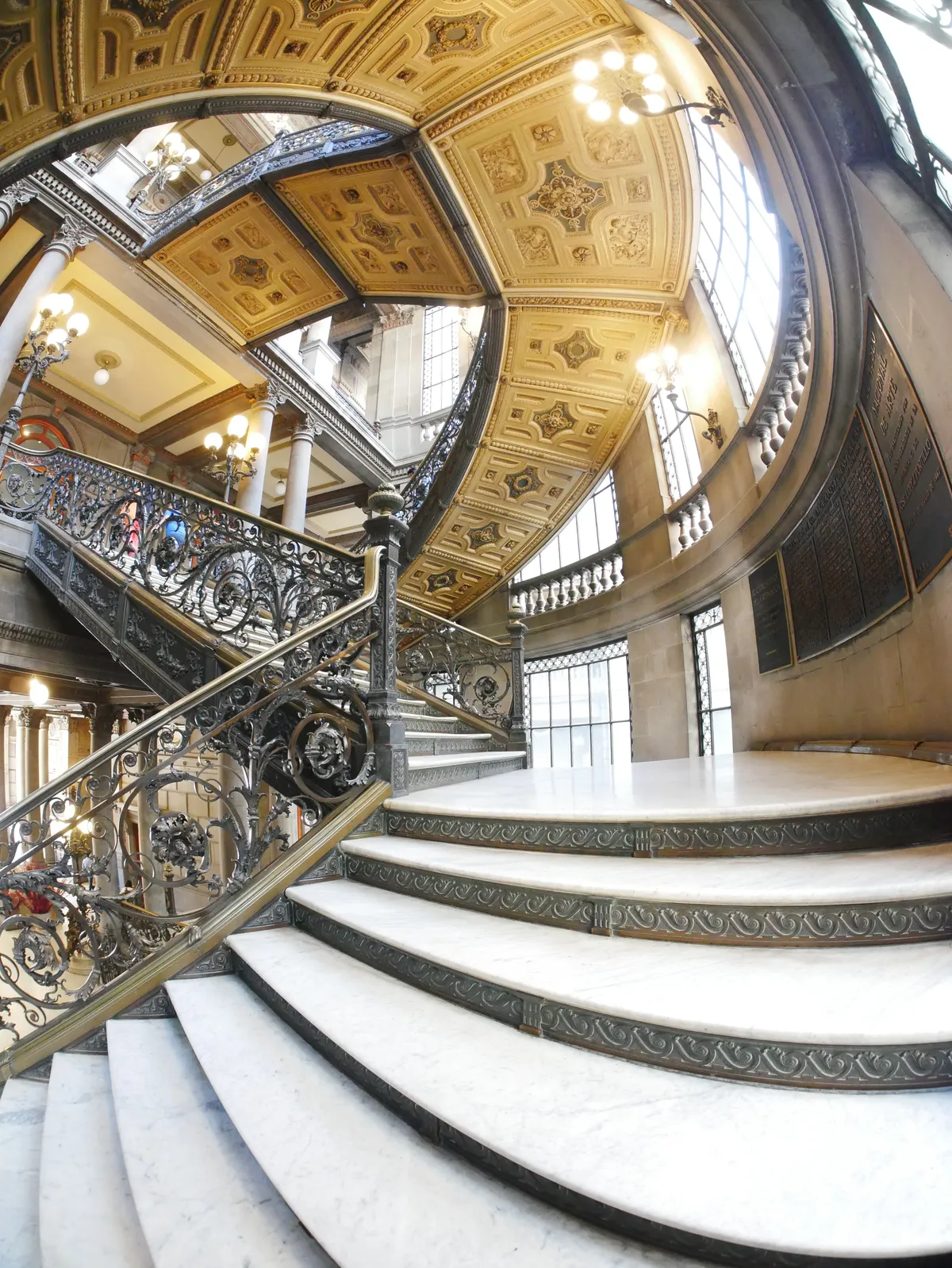
Like every national museum in this city, it shuts on Mondays.
Juárez and Eje Central are the airport bus stops nearest the park
The Quetzalcóatl route on Metrobús Line 4 runs a few blocks south of the Alameda on its way out to Mexico City International Airport, and Juárez and Eje Central are the two stops closest to this end of the centre. The fare is a flat 30 pesos, no cash is accepted, and a contactless bank card, a phone or a Movilidad Integrada card gets you through the turnstile. Buses come every seven to ten minutes until midnight, and the ride to Terminal 1 runs roughly 45 minutes to an hour.
Three to five hours is what this end of the centre wants: the park, the lobby, the tiled house and one museum, without hurrying. If your afternoon is longer than that, the full route through the Centro Histórico carries on east to the Zócalo, the Templo Mayor excavation and the 44th-floor deck on Torre Latinoamericana, which is a different half of the same walk.
Frequently asked questions
What should I do during a layover near the Palacio de Bellas Artes in Mexico City?
The lobby of the palace itself is free and open through the day, and the art deco interior is the reason to step in even if you never buy a museum ticket. The Alameda Central runs west from the front steps and costs nothing, and two blocks east on Madero the Casa de los Azulejos is faced entirely in blue and white tiles with a glass-roofed courtyard you can walk into. Plaza Manuel Tolsá, a few streets north, holds Manuel Tolsá's bronze Carlos IV and the national art museum behind it. The museums here shut on Mondays; the park, the lobby and the tiled house do not.
What is open around the Alameda on a Monday?
Less than you would hope. The museum inside the Palacio de Bellas Artes, the national art museum on Plaza Tolsá and the Franz Mayer decorative arts museum across Avenida Hidalgo all close on Mondays, which is the standard rest day for national museums in Mexico. What stays open is the palace lobby, the Alameda itself, the Casa de los Azulejos, which is a working restaurant and shop, and the streets between them. A Monday afternoon here is a walking visit rather than a museum one.
Where is there somewhere quiet to sit around the Alameda?
The Franz Mayer museum on the park's north side, across Avenida Hidalgo. It occupies a sixteenth-century hospital of the order of San Juan de Dios, and its cloister, a colonnaded courtyard with a café in it, is separated from Hidalgo's traffic by the whole depth of the building. Admission to the museum is 75 pesos, Tuesday to Sunday 10am to 5pm, and the collection is silver, Talavera ceramics, textiles and furniture. The Alameda's own benches are pleasant but rarely quiet.
Is the Tiffany stage curtain visible if I just walk in?
No. The glass curtain hangs behind the proscenium inside the theatre, and the lobby, which is the free part, does not look into the auditorium. Seeing it means a performance ticket or a guided tour of the building, both sold separately from the museum admission upstairs. If you are only passing through, the lobby's marble, ironwork and skylight are what the visit is, and they are worth the ten minutes on their own.