Mexico City Layover in Coyoacán
Part of the full Mexico City Layover: The Zócalo From MEX
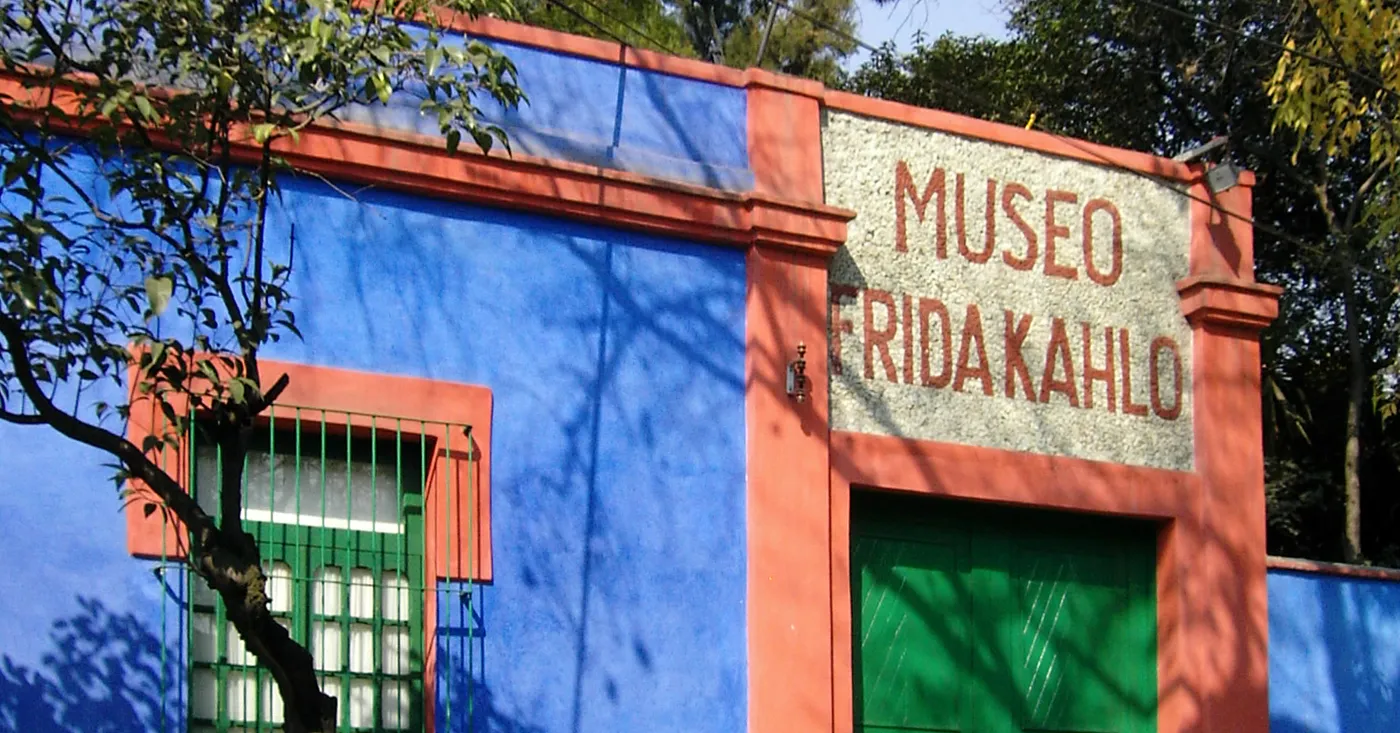
Coyoacán, a colonial village swallowed by the southern half of Mexico City, keeps Frida Kahlo’s blue house on Calle Londres, two linked plazas around a coyote fountain, and a covered market of tostada counters, all within about ten minutes’ walk of one another.
Frida Kahlo’s blue house sells out weeks ahead
Kahlo was born in the house on the corner of Londres and Allende in 1907 and died in it in 1954, and the cobalt blue walls with red trim are the reason people photograph the outside even when they cannot get in. Inside are her bedroom, her studio with the easel still at the window, her wheelchair, the corsets she painted, and the wardrobe of Tehuana dresses that stayed sealed for fifty years after her death.
Getting in is the whole problem. The museum stopped selling tickets at the door: everything is timed and bought through its own website, general admission runs around 320 pesos for foreign visitors, and popular slots go weeks or a month in advance. It is closed on Mondays. If the days you have are gone, a guided tour that includes the entrance is the usual way around it, since operators hold their own allocation of slots.
Coyoacán has no metro station of its own near the plazas
The two nearest stations, Coyoacán and Viveros, both sit about a kilometre and a half from the squares, so the last stretch is a fifteen-to-twenty-minute walk or a shared bus. From the historic centre the whole trip runs 45 minutes to an hour each way.
Getting to Mexico City International Airport from here is the long version of the same problem: there is no direct link, and the practical route is the metro north to the Centro Histórico and then the Quetzalcóatl airport service on Metrobús Line 4, a flat 30 pesos paid by contactless card at the turnstile, with the ride from the centre to Terminal 1 taking 45 minutes to an hour on top. Budget two and a half hours from the plazas to the gate. If that sounds like most of your free time, it is, and the route around the Centro Histórico keeps you within twenty minutes of the airport bus the whole way instead.
The coyote fountain between Coyoacán’s two plazas
Jardín Centenario and Plaza Hidalgo sit end to end under old trees, separated by an arch that was once the gateway of the parish churchyard, and the fountain between them holds two bronze coyotes: the village’s name comes from the Nahuatl for the place of coyotes, and the city has never let anyone forget it.
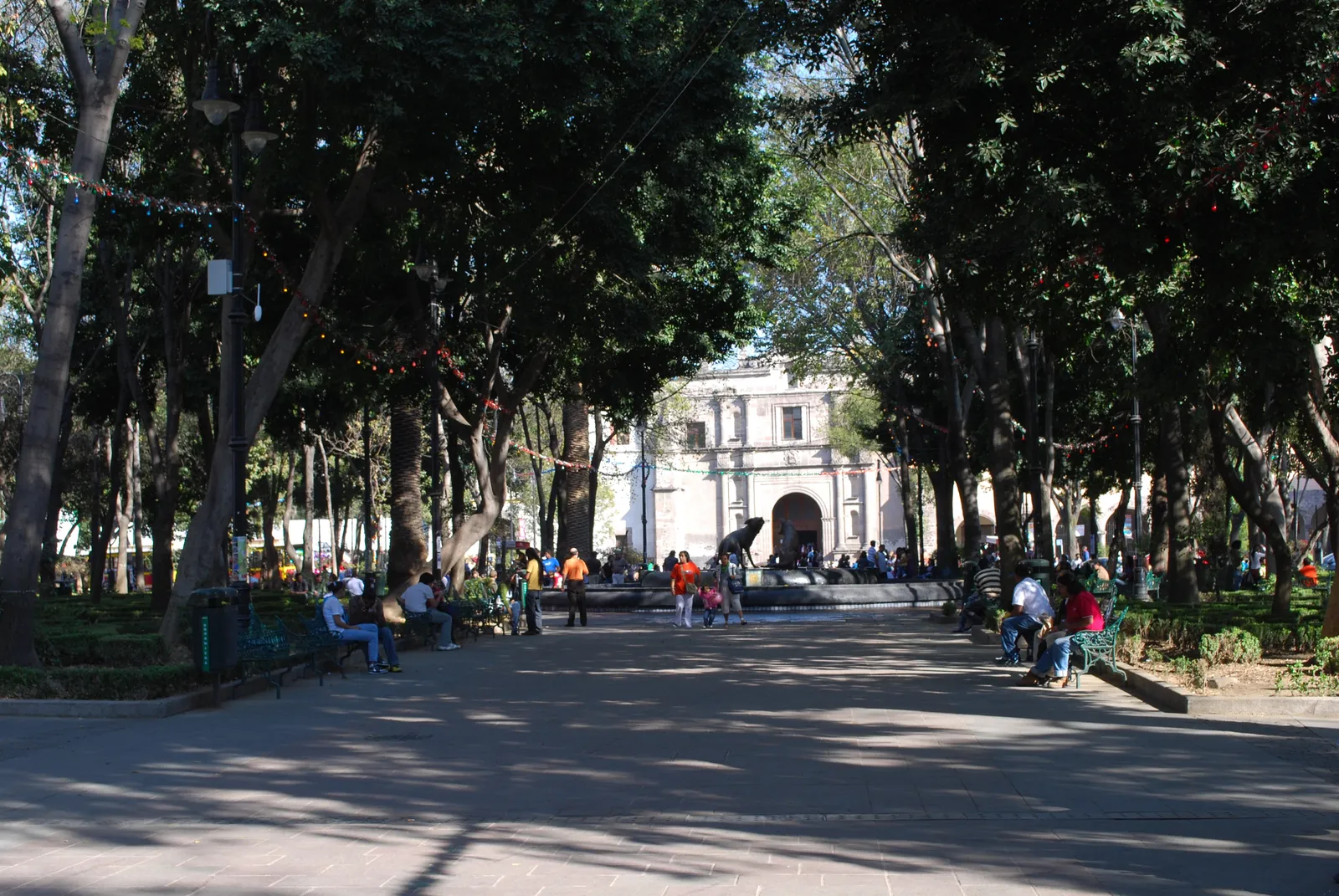
The parish church of San Juan Bautista on the far side dates from the sixteenth century and costs nothing to walk into. Around the squares are the Casa de Cortés, now borough offices, benches full of people eating ice cream, buskers, and on weekends a craft market that fills every path. Weekday afternoons are much quieter and the benches are actually free.
Tostada counters in the Mercado de Coyoacán
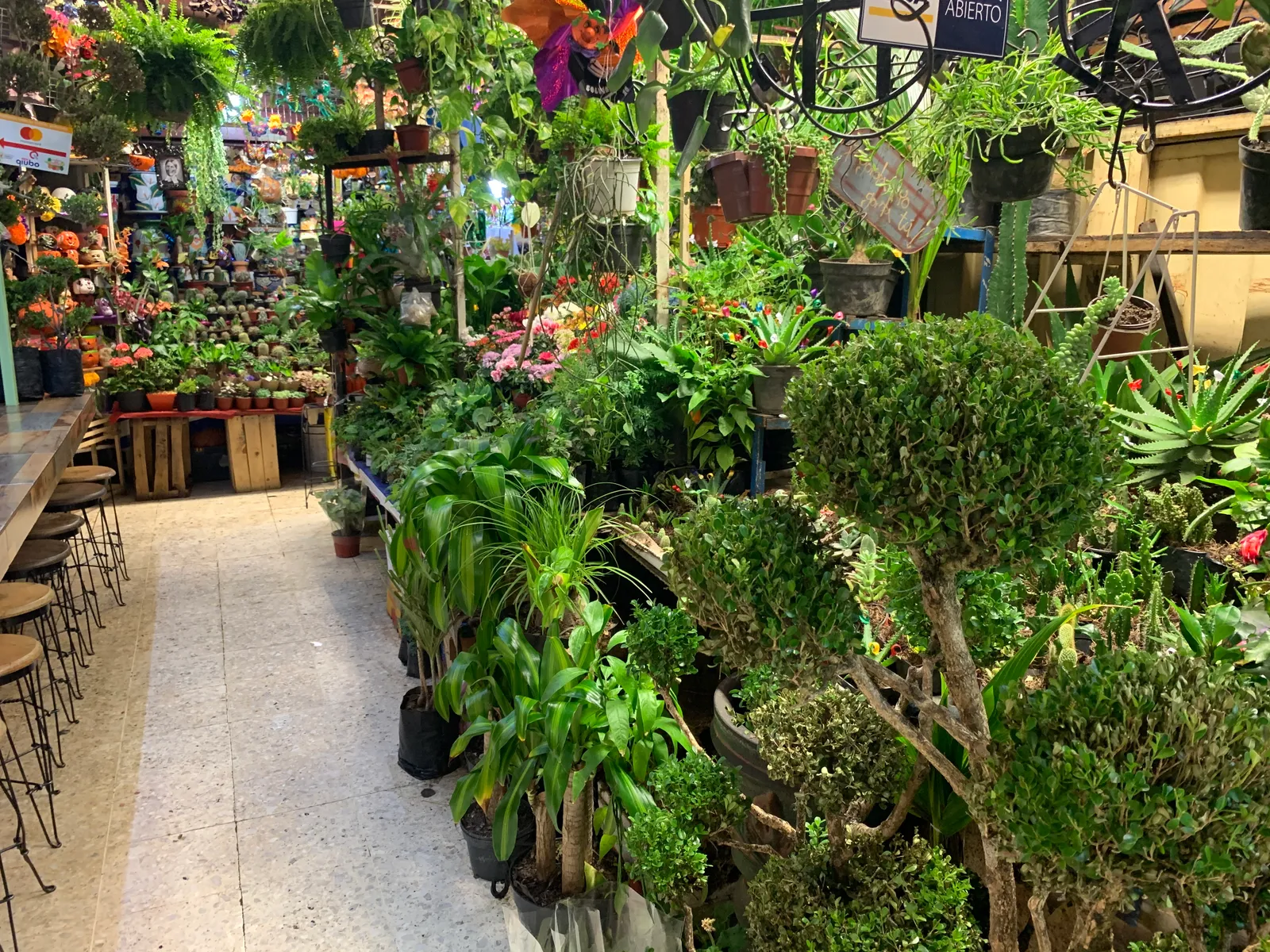
The covered market three streets north of Plaza Hidalgo is a working neighbourhood market, plants and flowers and butchers and piñatas, but the row people come across the city for is the tostada counters: crisp tortillas loaded with ceviche, octopus, shrimp or crab, eaten standing at a bar stool with a queue behind you.
The streets between here and the plazas are cobbled in rounded river stone almost the whole way, which is a surface small suitcase wheels catch on rather than roll over.
Trotsky’s study is left as it was in August 1940
Leon Trotsky spent his last years behind the walls of a house on Calle Viena, a few streets east of the plazas, after breaking with Diego Rivera and moving out of the Casa Azul. The place is fortified: raised brick guard towers, steel shutters, a blocked-up entrance, all added after a machine-gun attack in May 1940 that he survived. In August of the same year a visitor got in with an ice axe.
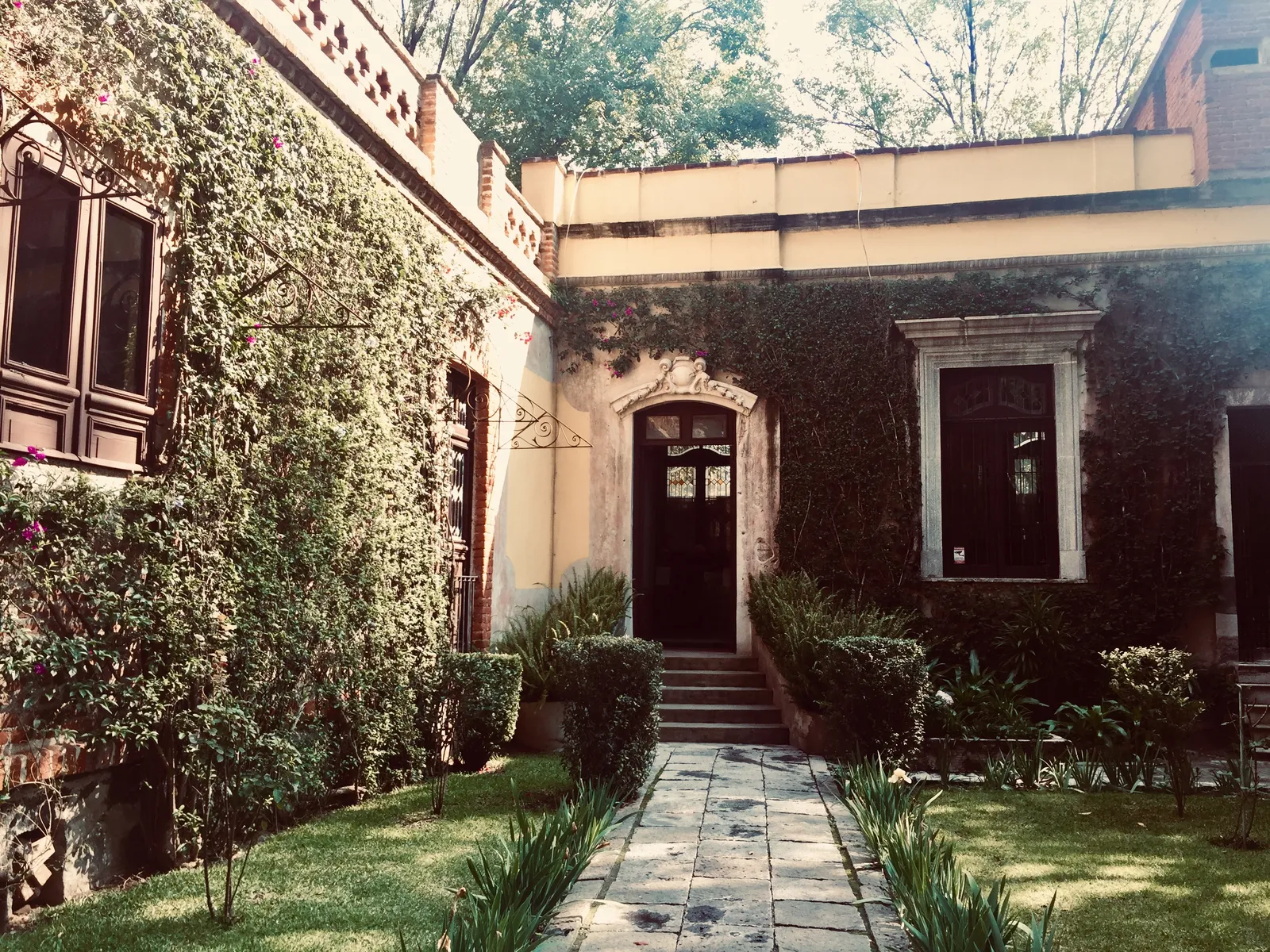
His study is kept as it was, papers and glasses on the desk, and he and his wife Natalia are buried under a stone in the garden. Admission is 50 pesos, Tuesday to Sunday, 10am to 5pm, free guided tours in English are offered at the door, and an hour covers it.
Two hours of travelling for three hours on the ground is the trade this village asks for. It is worth it when the blue house is booked and the weather holds, and it is not when the flight is anything under five hours away.
Frequently asked questions
What should I do during a layover in Coyoacán in Mexico City?
Decide about the Frida Kahlo Museum first, because everything else here is walk-up and that one is not: tickets are timed, sold only on the museum's own site, and gone weeks ahead in high season. Without it, the day is still worth the trip: the Jardín Centenario and Plaza Hidalgo run into each other around a coyote fountain and a sixteenth-century parish church, the covered market a few streets north sells tostadas piled at the counter, and Trotsky's fortified house on Calle Viena costs 50 pesos and takes about an hour. Allow five hours or more, because Coyoacán is a long way south.
Can I get into the Frida Kahlo Museum on the day?
Almost never. The museum stopped selling at the door, so a ticket has to be bought in advance through museofridakahlo.org.mx for a specific time slot, and general admission runs around 320 pesos for foreign visitors. Slots for popular days go weeks or a month out. The museum is also shut on Mondays. If it is sold out, a guided day tour that includes the entrance is the practical alternative, since operators hold their own allocation.
How long does it take to get to Coyoacán from the historic centre?
About 45 minutes to an hour, and the metro only gets you most of the way. The nearest stations, Coyoacán and Viveros, both sit on the same line but around a kilometre and a half from the plazas, so the last stretch is a fifteen-to-twenty-minute walk or a short shared-bus ride. Add the same again coming back, and the round trip on its own is close to two hours before you have looked at anything, which is why this is a five-hour plan rather than a three-hour one.
Is Coyoacán easy to walk with a wheeled bag?
Not especially. The streets around the two plazas are cobbled almost throughout, in rounded river stone rather than flat setts, and the pavements are narrow and stepped up at the corners. Nothing is far, the whole core is about ten minutes end to end, but rolling wheels over that surface is loud, slow and hard on the handle. The market's own floor is smooth and level once you are inside.