Layover Near Phoenix Park, Dublin
Part of the full Dublin Layover: The Book of Kells From DUB
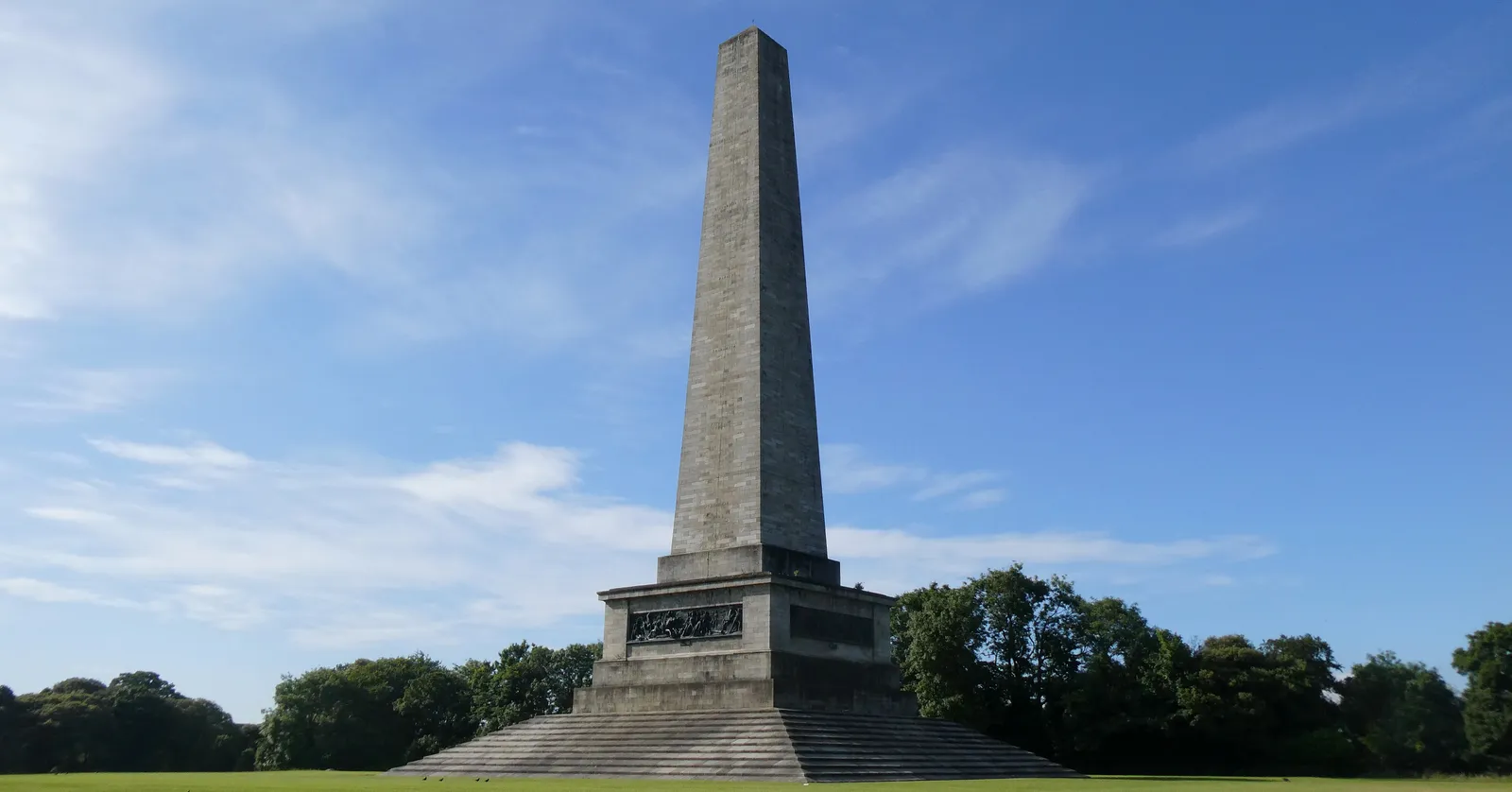
Phoenix Park covers about 707 hectares on the western edge of Dublin, with a wild fallow deer herd grazing the open ground, a 62-metre granite obelisk near the city gate, and a tower house and the President’s residence at the far end, none of them charging admission.
The wild fallow deer herd in Phoenix Park
The Duke of Ormond walled this ground as a royal hunting park in the 1660s and stocked it with fallow deer, and their descendants are still here: a wild herd, not a managed enclosure, usually out on the grassland in the western half of the park rather than near the city gate. Nobody herds them and nothing fences them in, so finding them is a matter of walking west and looking.

Do not feed them, and this is worth taking seriously rather than treating as signage boilerplate. A University College Dublin study found hand-feeding had taught the deer to approach people for food, which turns to aggression when the food does not appear, and deer in the park have tested positive for Covid-19 caught from humans. The Office of Public Works ran a campaign about it and put signs up across the park. Autumn is the rut, when the bucks are loud and unpredictable, and spring is fawning season, when a doe with a fawn in the grass will not move away from you.
The Wellington Testimonial, 62 metres of granite
Robert Smirke designed the obelisk that stands at the south-east corner of the park, overlooking Kilmainham and the Liffey, and it was meant for Merrion Square until the residents there objected. The foundation stone went down in 1817, the funding then stalled for decades, an equestrian statue of Wellington was dropped from the plan along with its pedestal, and the thing finally opened to the public on 18 June 1861, the anniversary of Waterloo. Wellington himself was born in Ireland. The Parkgate Street entrance beside it is the corner nearest the city, about ten minutes on foot from Heuston Station.
Four bronze plaques around the base were cast from cannon captured at Waterloo: three showing scenes from his career, the fourth carrying the inscription. There is no interior, no ticket and no queue, and the stepped plinth is where half of Dublin sits on a dry afternoon, with the length of the park running west in front of it.
Chesterfield Avenue runs about four kilometres from this gate to the far side, and there is nowhere along it to set anything down, so whatever comes through the Parkgate Street entrance goes the whole way and back out again.
Ashtown Castle, found inside a Georgian house in 1978
Ashtown Lodge was a Georgian mansion in the middle of the park, lived in by the Under Secretary for Ireland, and by the 1970s it was derelict enough to be pulled down. When the demolition started, a medieval tower house turned up inside the walls: the lodge had been built around it, swallowing it whole, and nobody had known.
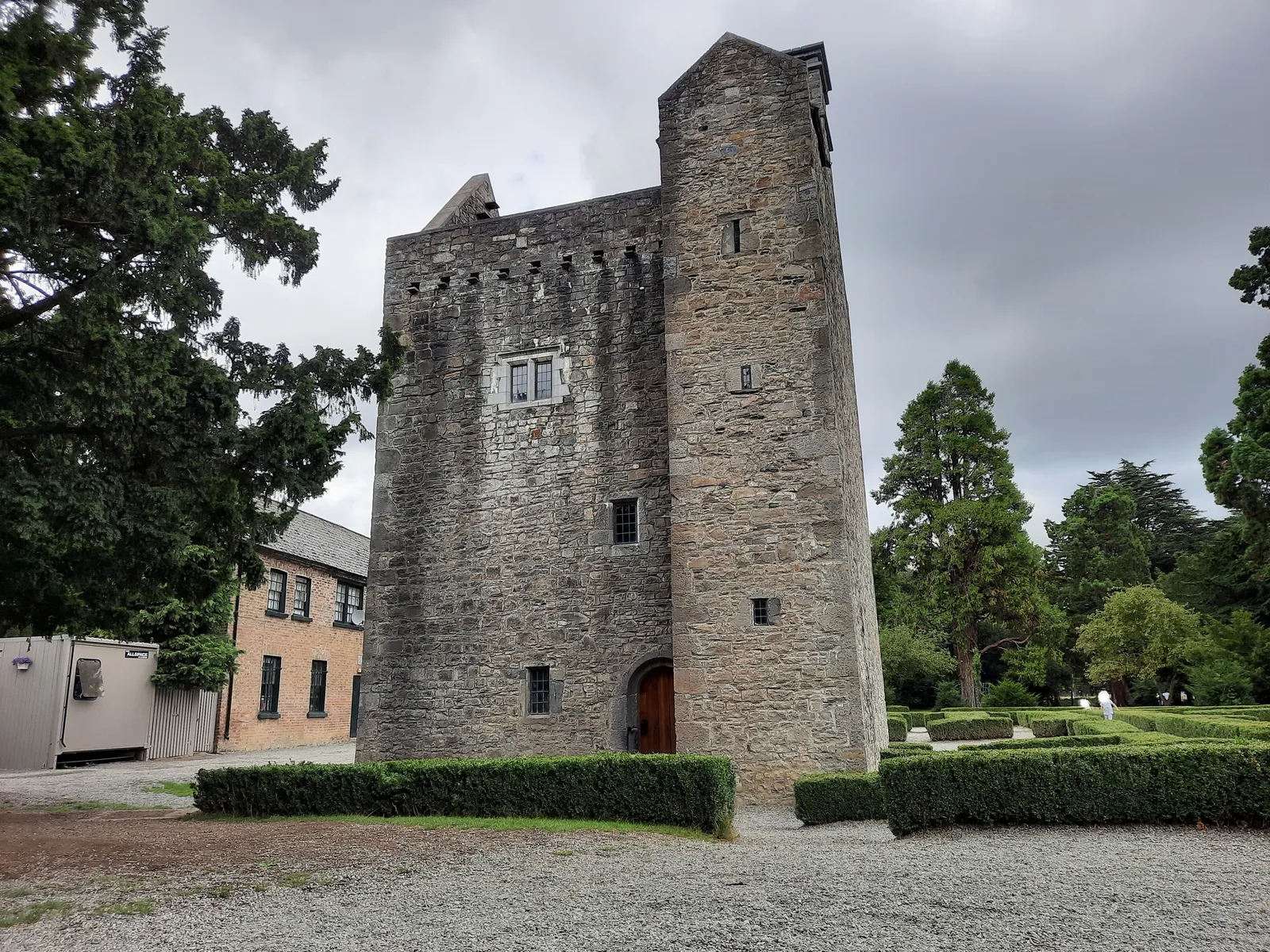
The tower was restored and now stands on its own beside the Phoenix Park Visitor Centre, both free to walk into. The Visitor Centre runs 9.30am to 6pm with last admission 45 minutes before closing, and shuts on Mondays and Tuesdays from January to the end of April. This is the far end of the park from the city, so it wants a bus along Chesterfield Avenue rather than the walk unless you have the afternoon.
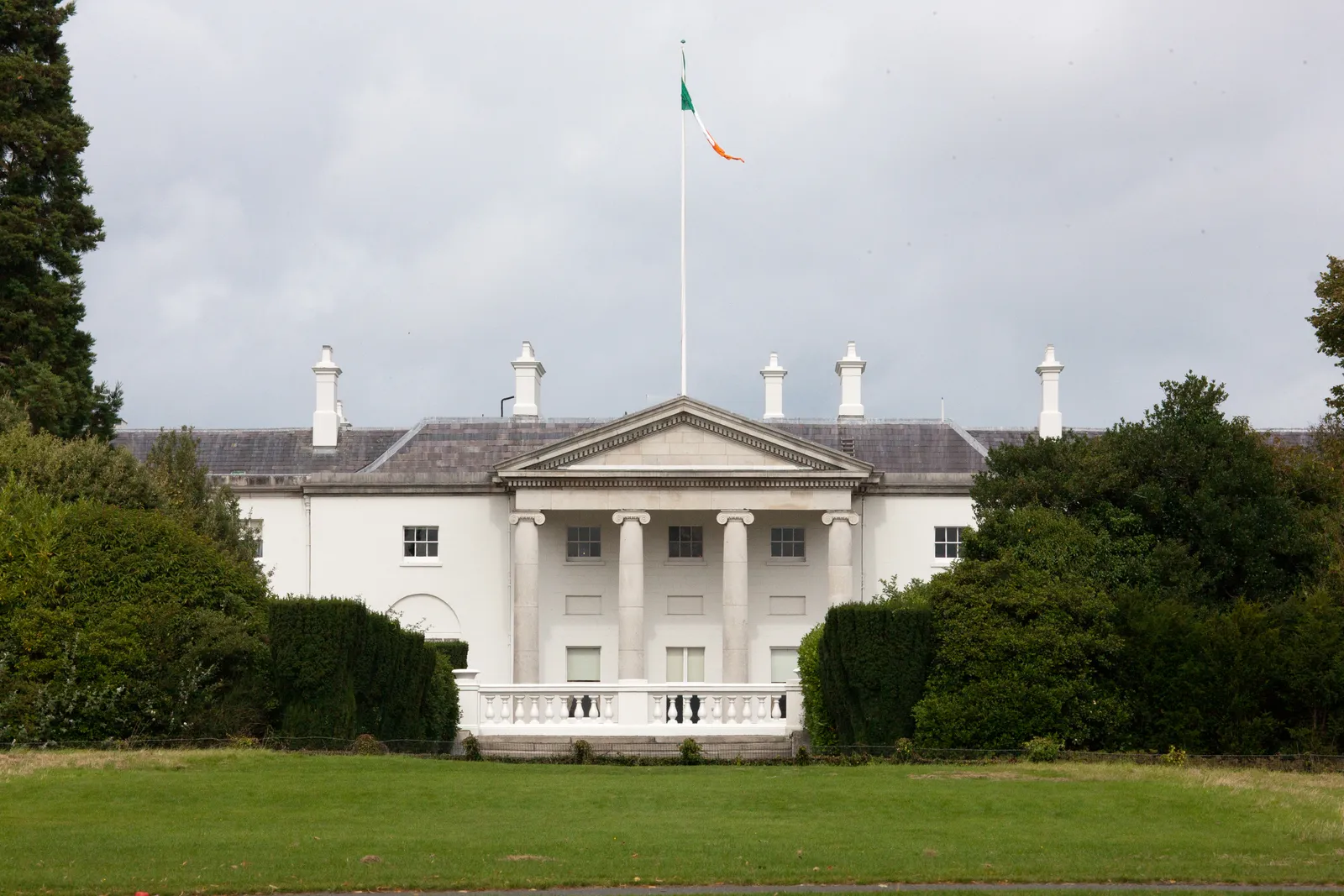
Áras an Uachtaráin, the President of Ireland’s house, stands across the avenue from the Visitor Centre, and the tours of it are free and Saturdays only. Tickets are issued at the Visitor Centre desk from 9.30am on the day, first come first served, with no advance booking and no group booking; a free bus runs from the desk to the house and the tour takes an hour and a quarter. Five tours go out, at 10am, 11.15am, 12.30pm, 1.45pm and 3pm, and in summer the 500 tickets can be gone inside an hour, so a Saturday morning arrival is the only version of this that works.
The nearest airport coach stop to the park is at Heuston
Route 782 calls at Heuston Station, about seven minutes’ walk from the Parkgate Street gate, and that is the shortest hop from park to coach anywhere on the perimeter; the alternative is another fifteen minutes east along the quays to the other Dublin Express stops. Routes 782, 783 and 784 run 102 coaches a day, €9 one-way booked online, the first out of Terminal 1 at 03:05 and the last at 00:35, taking 14 minutes through the Dublin Port Tunnel at best and 25 to 45 minutes the rest of the time.
There is no rail link to Dublin Airport from anywhere in the city. Dublin Airport asks for two hours before a short-haul flight and three before long-haul, the longer figure being real for United States departures, which clear American immigration inside Terminal 2 before boarding. If the day is wet enough to rule out four kilometres of open grass, the central Dublin route keeps to Trinity College, the National Museum on Kildare Street and St Patrick’s Cathedral, all of them indoors and within a mile of each other.
Frequently asked questions
Where are the deer in Phoenix Park?
Usually in the western half, on the open grassland either side of Chesterfield Avenue rather than near the city gate. The herd is wild fallow deer, descended from animals put here when the park was enclosed as a royal hunting ground in the 1660s, and they have been there ever since. The Office of Public Works asks people not to feed them: a University College Dublin study found that hand-feeding makes the deer approach people looking for food and turns some of them aggressive, and animals in the park have tested positive for Covid-19 passed on by humans. Watching from a distance is the whole activity, and it costs nothing.
Can you go inside Áras an Uachtaráin?
On Saturdays, free, if you get there early. Tickets are handed out at the Phoenix Park Visitor Centre from 9.30am on Saturday mornings only, first come first served, with no advance or group booking possible. Tours run at 10am, 11.15am, 12.30pm, 1.45pm and 3pm and last an hour and a quarter, and a free bus takes you from the Visitor Centre to the house. In summer the 500 tickets can be gone within an hour of the desk opening, so this is a plan for a Saturday morning arrival rather than an afternoon one.
How do you get to Phoenix Park from central Dublin?
The Parkgate Street entrance at the eastern corner is about ten minutes' walk from Heuston Station and half an hour from the middle of the city, and the Wellington Testimonial stands just inside it. There is also a tram line along the quays that stops near the gate, and city buses run the length of Chesterfield Avenue through the middle of the park, which matters more than it sounds: the park is roughly four kilometres end to end, and the Visitor Centre is at the far side from the city.
Is Phoenix Park free?
All of it, and that is unusual for a site this size. The park itself, the deer, the Wellington Testimonial, the Papal Cross, the People's Flower Gardens, the Visitor Centre, Ashtown Castle and the Saturday tours of the President's house are all free of charge. Dublin Zoo, inside the park's eastern end, is the one thing here with a gate price. The Visitor Centre runs 9.30am to 6pm with last admission 45 minutes before closing, and closes on Mondays and Tuesdays from January to the end of April.