Layover at Dublin Airport (DUB)
Part of the full Dublin Layover: The Book of Kells From DUB
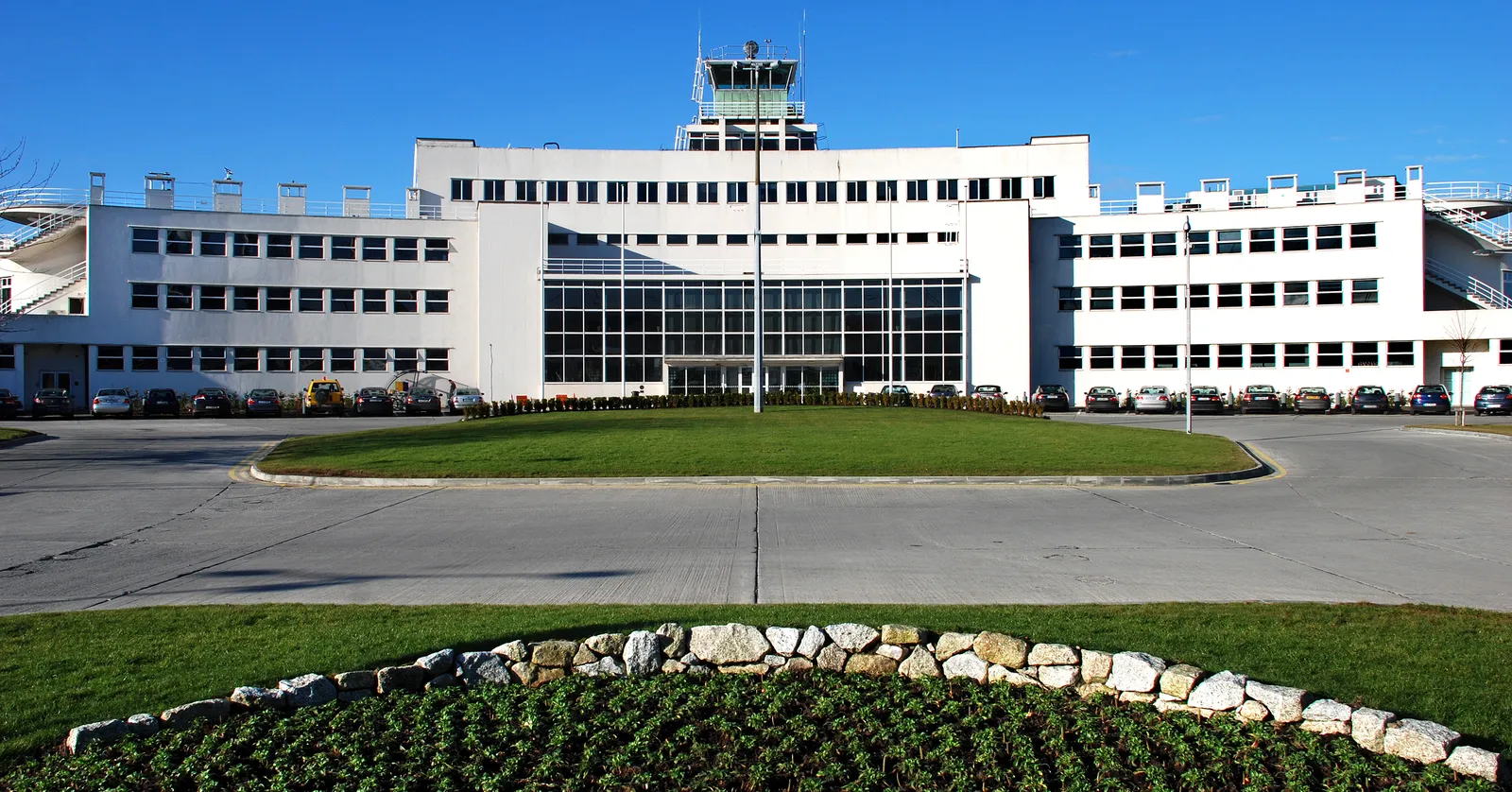
Dublin Airport still has the curved white terminal it opened with in 1940 standing on its campus, full US preclearance inside Terminal 2, and a free medieval castle at Swords a short bus ride north.
The 1940 terminal building on the Dublin Airport campus
Desmond FitzGerald designed Dublin’s first terminal for the Office of Public Works in 1937 and it opened in January 1940: five storeys of reinforced concrete curved in a long arc, with cantilevered balconies, horizontal window bands, glass-brick panels and a glazed control tower on the roof. The idea was that it should read as an ocean liner, which in 1940 was the thing air travel was trying to be.
It won the Royal Institute of the Architects of Ireland’s Gold Medal for 1938 to 1940 and it is on Fingal County Council’s list of protected structures, which is why it survived while everything around it was rebuilt twice. It has not handled a passenger in decades, it is offices now and you cannot go in, but it is visible from the campus roads and it is a genuinely strange thing to find behind two modern terminals.
Preclearance under Terminal 2’s metal shell
Terminal 2 opened in 2010 under a long curved shell of ridged metal that drops to a glass front, and the thing that makes it different from every other terminal in Europe apart from Shannon is what happens inside it: full United States preclearance.
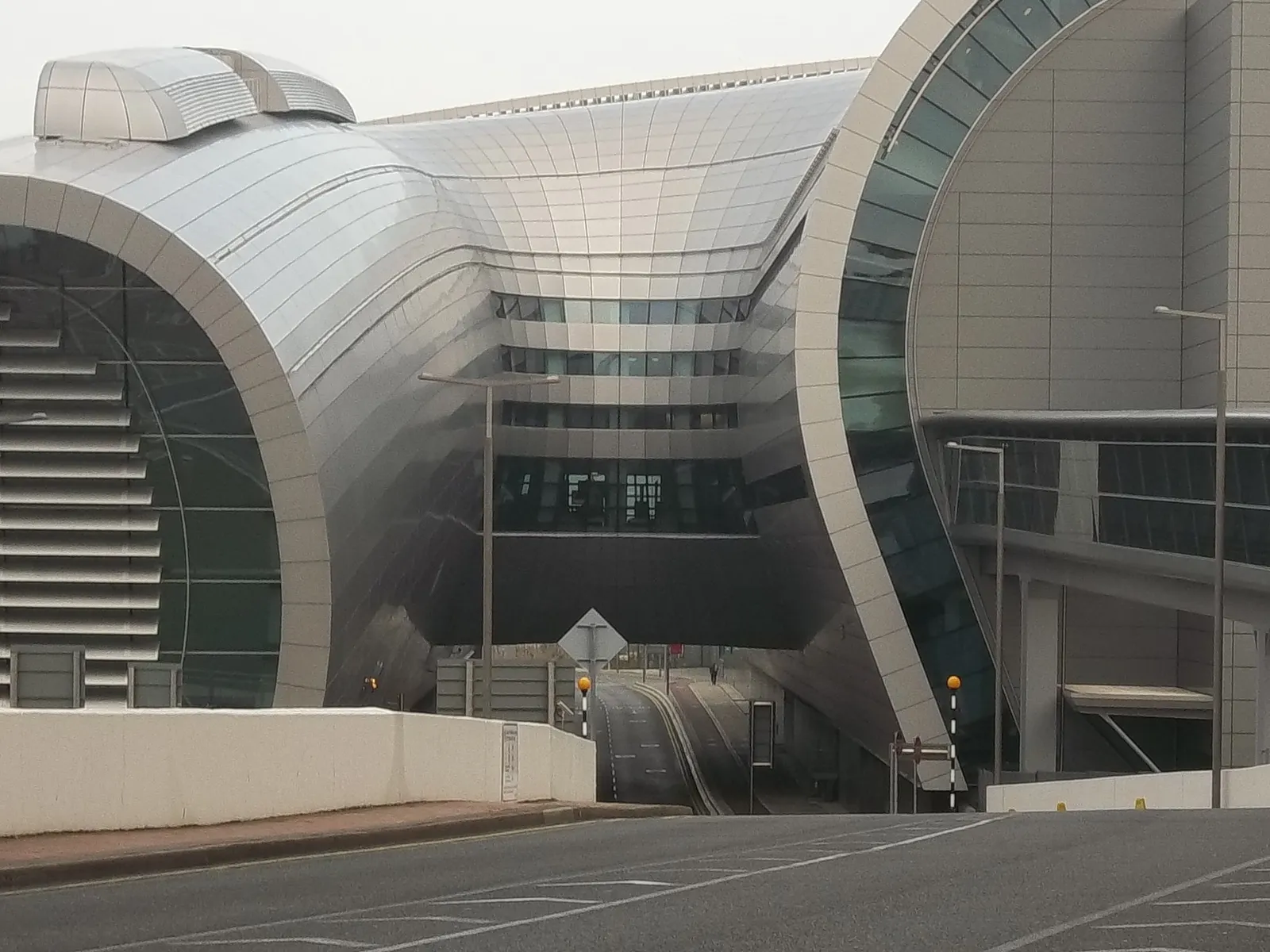
Passengers on US-bound flights check in, clear Dublin Airport security, then wait for an allocated slot displayed on the flight information screens before going through American immigration, customs and agriculture checks on this side of the Atlantic. Landing in the States afterwards is a domestic arrival: collect the bag and go. The cost is at the Dublin end, and it is why the airport asks for three hours before a long-haul departure rather than two. Terminal 2 runs heaviest between 5am and noon, when most of the transatlantic schedule leaves.
Terminal 1 opens at 02:30 and Terminal 2 at 03:30, both staying open until the last flight, and a covered walkway joins the two, roughly ten minutes end to end.
The medieval bishop’s palace at Swords Castle
John Comyn, Archbishop of Dublin, put up Swords Castle around 1200 as a residence and an administrative base, and what stands there now is a rough pentagon of about half a hectare inside a perimeter wall 260 metres long, with a constable’s tower on the far side of the courtyard from the gate.
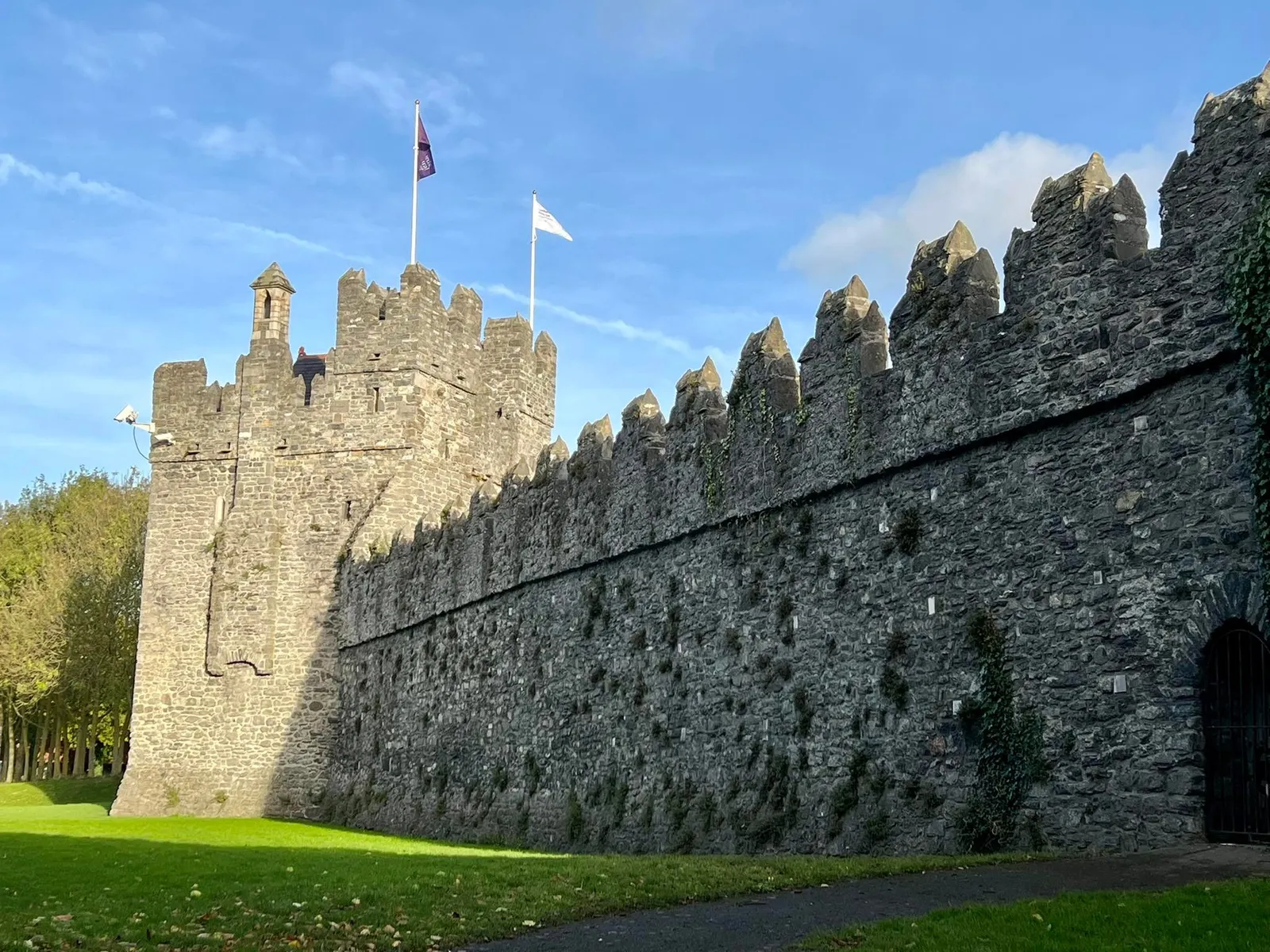
Fingal County Council restored it and charges nothing to walk in. It opens Tuesday to Sunday, 9.30am to 5pm from March to September and 9.30am to 4pm from October to February, closed Mondays, and it is the one stop here that fits a short gap: the 102 bus from the airport reaches Swords in about ten minutes, and the castle sits in a town park you can walk straight through.
Bag storage at the airport is landside at two specific desks, Terminal 1 Arrivals and Terminal 2 Departures, and the office shuts at 9pm, which is before the last departures of the night.
Malahide Castle and 800 years of one family
The Talbots held Malahide from the 12th century until 1975, which is the fact the whole place turns on: the same family, the same house, through the Reformation, Cromwell and two world wars. The story the house tells is that fourteen Talbot cousins ate breakfast together in the great hall on the morning of the Battle of the Boyne in July 1690 before riding out for James II; accounts differ on whether one of them came back or none did.
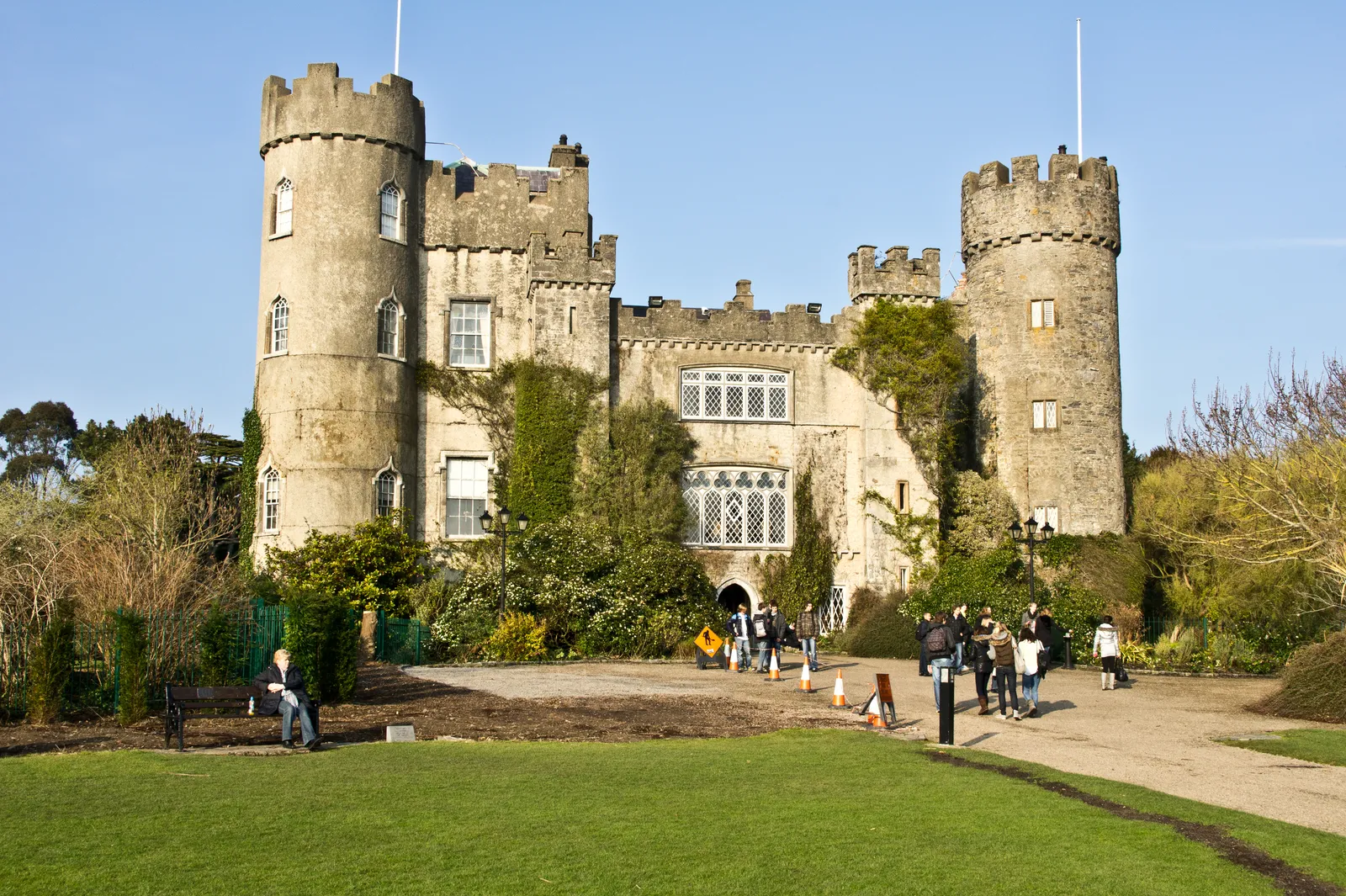
It is a fourteen-minute drive from the airport, or the same 102 bus that stops at Swords, carrying on to Malahide Station. The castle runs guided tours daily, 9.30am to 5.30pm, €16 for an adult and €11 for students and over-65s, and the ticket also covers the walled garden and the butterfly house. The botanic gardens around it hold more than 5,000 plant species. Two hours is the realistic minimum here, so this is the stop for a long connection rather than a tight one; for a gap long enough to justify the ride into the city instead, the central Dublin route covers Trinity College, the National Museum on Kildare Street and St Patrick’s Cathedral.
Frequently asked questions
Is a Dublin Airport layover long enough to leave the terminal?
Three hours is about the floor for anything beyond the airport campus itself. Swords Castle is roughly ten minutes up the road by bus and free, which makes it the only stop that fits a short gap comfortably. Malahide Castle is a fourteen-minute drive and asks for two hours once you are there, so it wants five hours or more. If you have a genuinely long wait and want the city rather than the coast, the coaches on the quays route make central Dublin a 25 to 45 minute ride each way.
Where is bag storage at Dublin Airport?
Two desks, and they are not in the same part of each building. Bag storage sits in Terminal 1 Arrivals, on the left once you are through the main doors, and in Terminal 2 Departures beside the American Airlines check-in desk. The office runs 05:00 to 21:00 seven days a week, which is earlier than the last departures of the night, so a late flight means collecting before nine. Both desks are landside, so anything dropped there has to be picked up before you go back through security.
How does US preclearance at Dublin Airport work?
You clear American immigration, customs and agriculture checks in Terminal 2 before boarding, then land in the United States as a domestic arrival with no queue at the far end. The order is check-in, Dublin Airport security, then a wait for your allocated preclearance time shown on the flight information screens. Terminal 2 is busiest between 5am and noon because that is when most transatlantic departures go, and Dublin Airport asks for three hours before a long-haul flight rather than two, which is a real requirement here rather than padding.
What is there to do at Dublin Airport without going through security?
Not a lot inside the terminals, which is why the 1940 building and the bus north are worth knowing about. Terminal 1 opens at 02:30 and Terminal 2 at 03:30, both running until the last departure, and landside there are cafés, the bag desks and not much else. The original terminal, the curved white block visible from the campus roads, is offices now and cannot be visited, but it is a five-minute detour to stand in front of. Beyond that the honest answer is the 102 bus.