Layover Near Dublin Connolly Station
Part of the full Dublin Layover: The Book of Kells From DUB
Dublin Connolly Station stands fifteen minutes’ walk from James Gandon’s Custom House, the General Post Office on O’Connell Street and a three-masted famine ship tied up on the north quays.
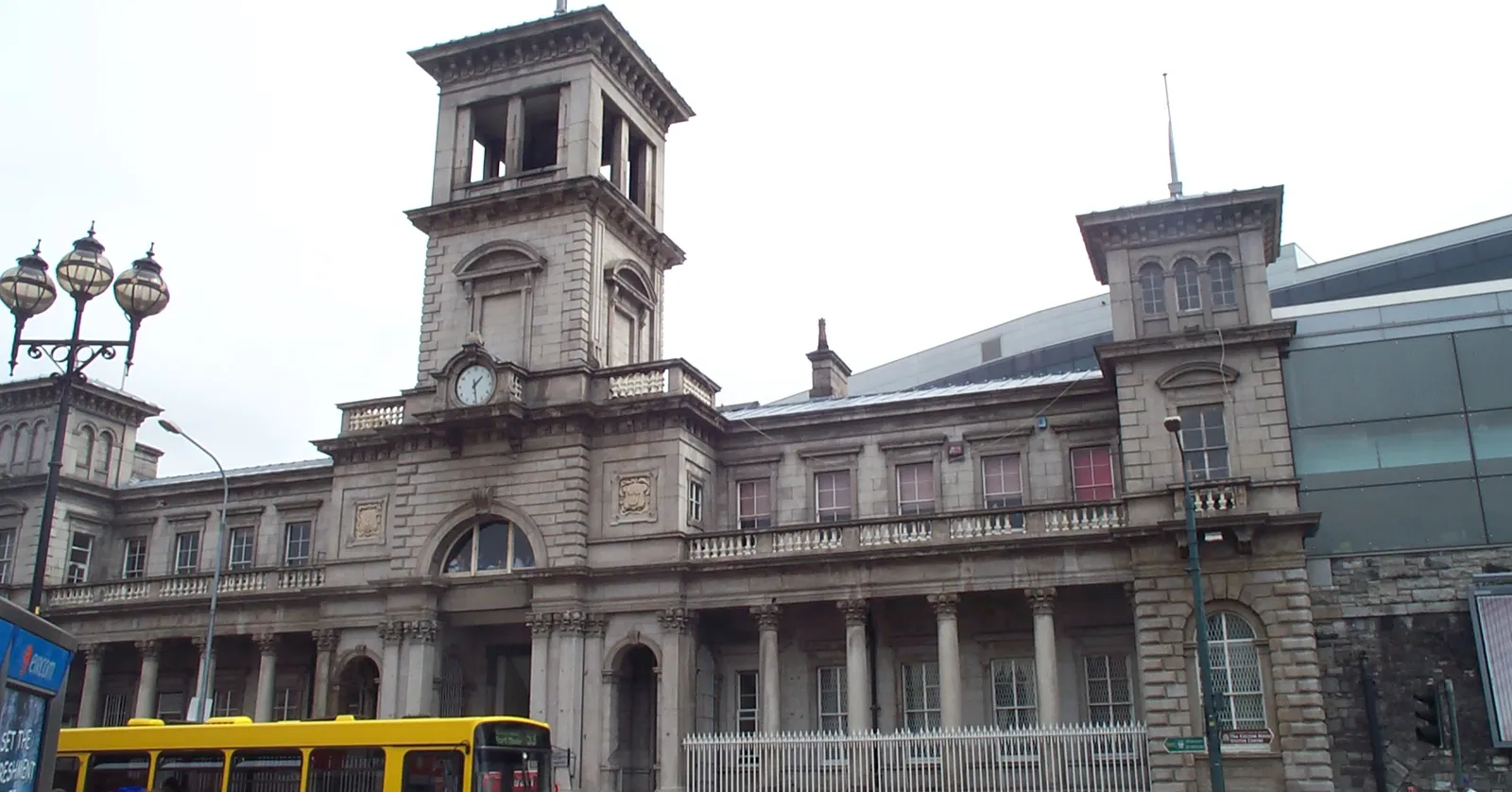
Connolly Station’s clock tower on Amiens Street
William Deane Butler designed the terminus on Amiens Street and it opened on 29 November 1844, an Italianate range of granite with a square clock tower planted at its centre. The tower was not decoration: the building sits on an axis with Talbot Street so that the tower reads as a signpost from half a mile off, which is still how you find the place on foot.
It ran as Amiens Street Station until 1966, when it was renamed for James Connolly on the fiftieth anniversary of the Easter Rising, and it has seven platforms and eleven tracks behind that front. Trains for Belfast, Sligo and Rosslare leave from here, the coastal rail line runs north and south through it, and the tram stop is out on the street. The upshot for anyone with a few hours is that everything below is on foot from one door.
The Jeanie Johnston famine ship on Custom House Quay
The Jeanie Johnston is a working replica of a three-masted barque that carried emigrants from Tralee to North America through the Famine years, and it is tied up on the Liffey about ten minutes south of the station. The original made sixteen voyages between 1848 and 1855, carrying as many as 254 people on a crossing that averaged 47 days, and no passenger or crew member died on board across any of them. That is the fact the whole tour is built around.
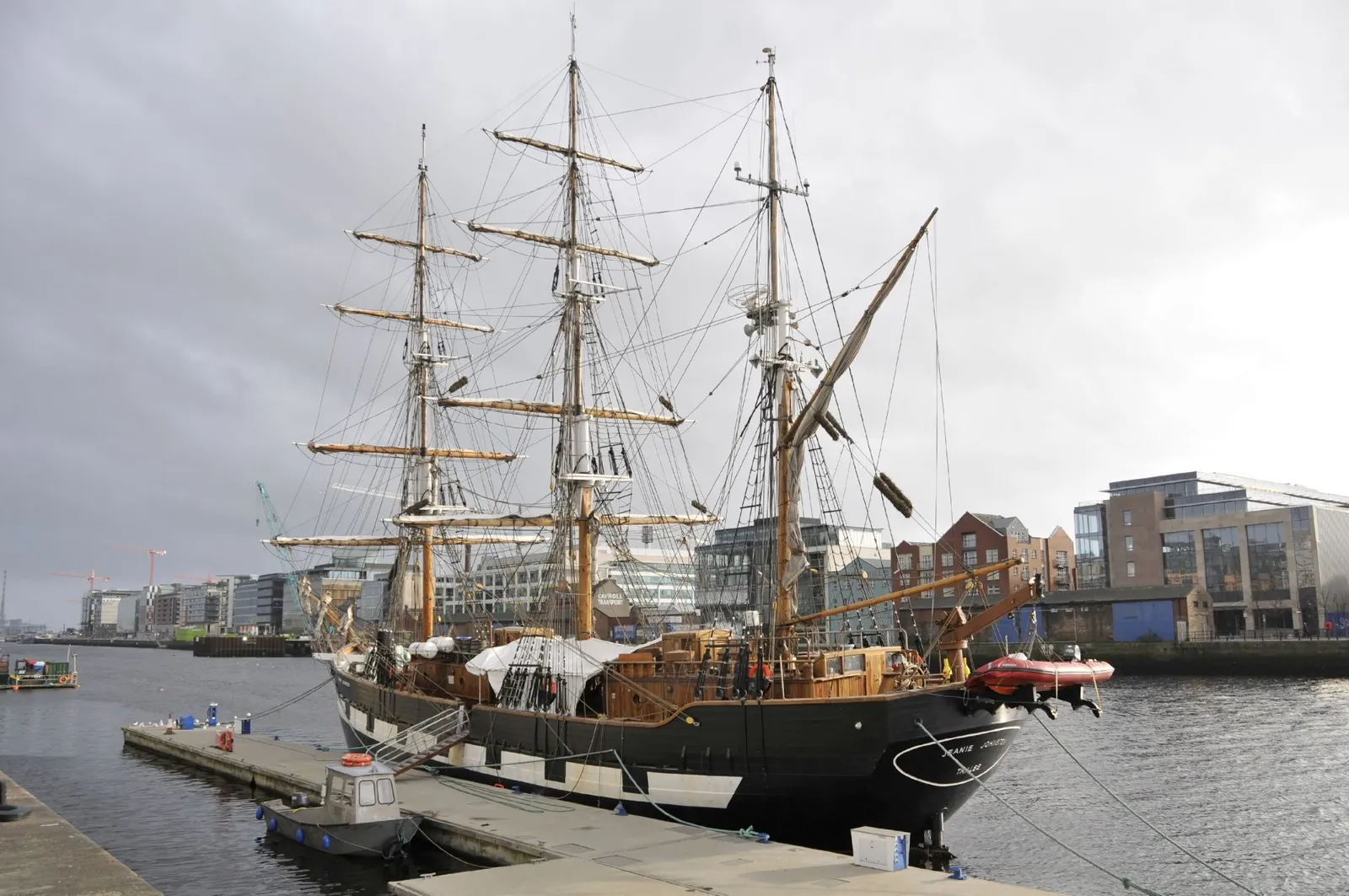
Visits are guided and last about fifty minutes, running every half hour from 10am until the ship closes at 4pm, and most of that time is spent below decks in the space 250 people shared for six weeks. An adult ticket is €16, €13 for students and over-65s, €10.50 for children aged six to twelve. Because the tours run in fixed groups rather than continuously, holding a slot in advance is the difference between walking on and waiting thirty minutes on the quay.
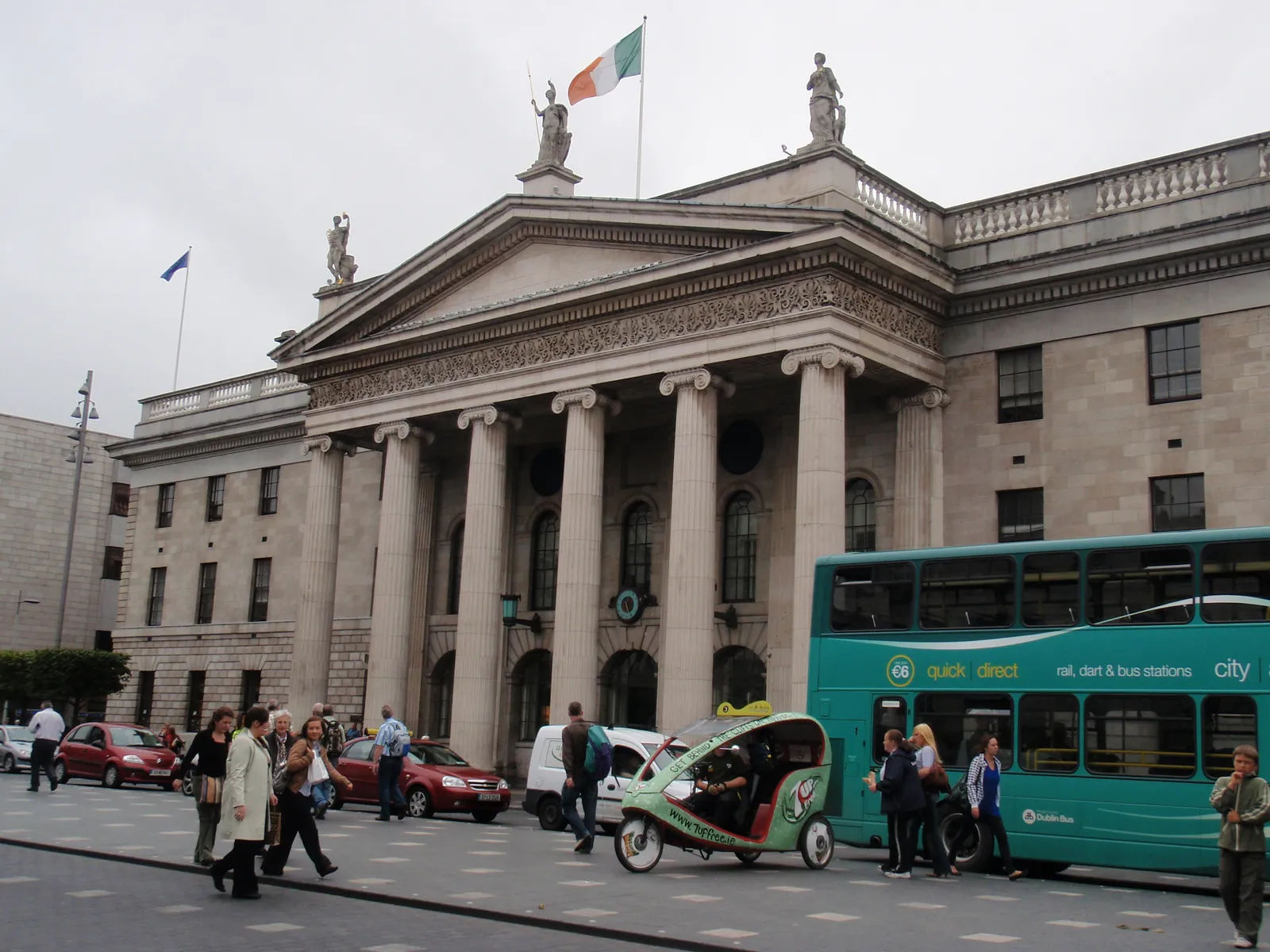
The General Post Office where the 1916 Rising was declared
The General Post Office stands on the west side of O’Connell Street behind a portico of six fluted Ionic columns, opened for business in January 1818 to Francis Johnston’s design, and Patrick Pearse read the Proclamation of the Irish Republic from outside it on Easter Monday 1916. The rebels held the building for the week and the shelling burned it out around them, leaving only the granite front standing; it was not rebuilt until 1929. The bullet marks are still in the columns and the lower stonework, worn by a century of weather but findable if you look along the shafts rather than at them.
It is still a working post office, and the public hall costs nothing to walk into. The museum behind it tells the week through the accounts of rebels, civilians and British soldiers, alongside the original documents and weapons, and an adult ticket is €15, with entry available to book ahead. It runs Monday to Saturday, 10am to 5pm, last admission at 4pm, and it is closed on Sundays and public holidays, which is the trap on a weekend flight day. The whole building is wheelchair accessible with lift access to every floor.
The 1921 fire at James Gandon’s Custom House
James Gandon opened the Custom House on the north quays on 7 November 1791, ten years after work started, on reclaimed ground Dublin Corporation and the city merchants fought him over on the grounds that it was a swamp and would move the axis of the city. It cost £200,000 and it is the long pale front with the green copper dome that everything else on the river gets measured against. Edward Smyth carved fourteen heads along the arcades, one for each of Ireland’s main rivers plus the Atlantic, and picking them out from the quay wall costs nothing.
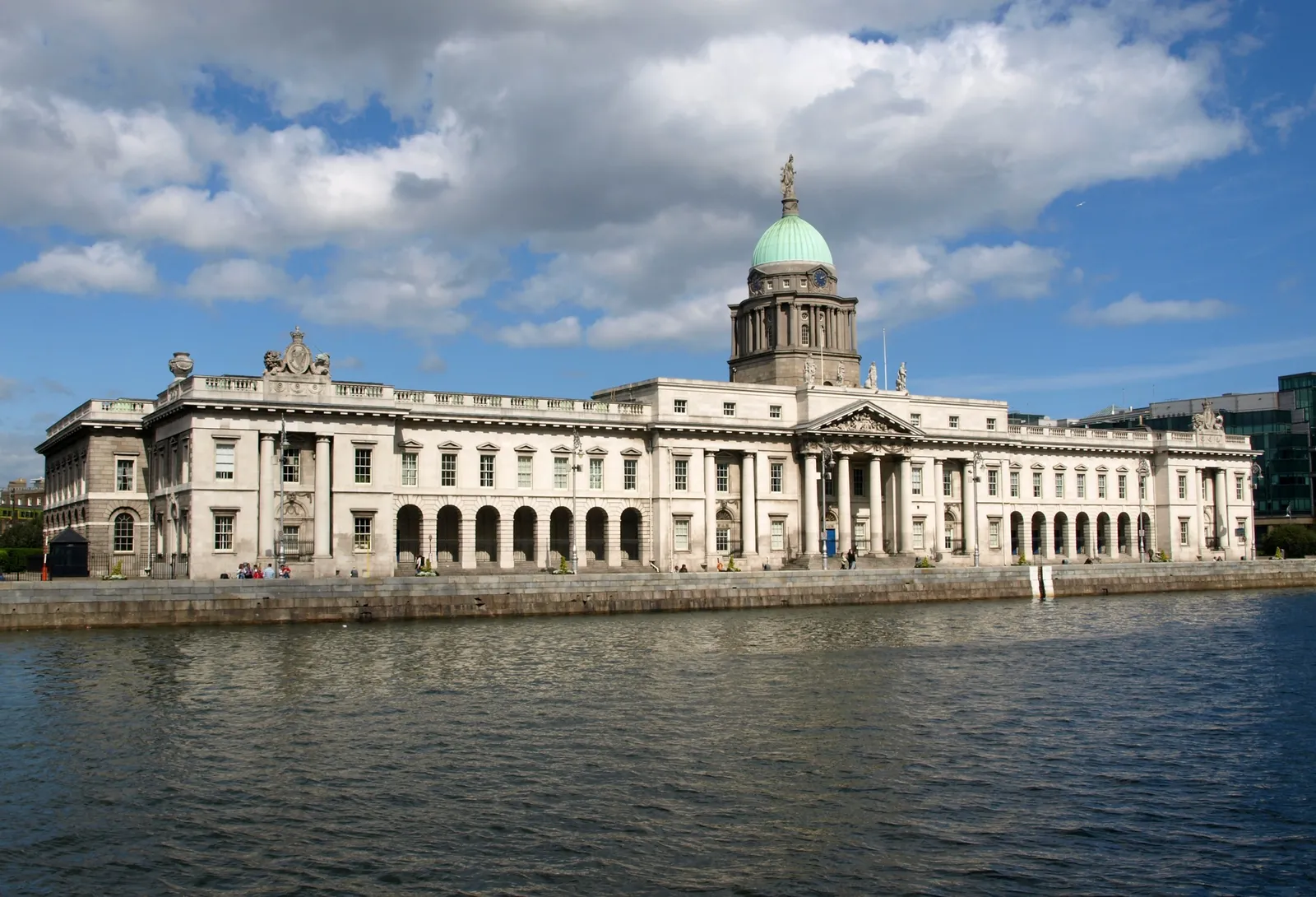
On 25 May 1921 the IRA burned it to wreck the tax and local-government records held inside. Gandon’s interiors went completely, the dome collapsed, and what stands now is a restoration. The visitor centre that opened inside in November 2021 is about exactly that: the controversy over building it, the fire, and the restoration. It runs daily from 9.30am to 5.30pm with last admission at 4.45pm, €6 self-guided or €8 with a guide, and on the first Wednesday of every month it is free to individual visitors and families, with tickets given out at the door rather than online.
Between the station and here, everything is pavement and quay wall, with the concourse at Connolly funnelling coastal-line, intercity and tram passengers through the same doors onto Amiens Street; it is not a stretch to cross twice with a suitcase in tow.
The Samuel Beckett Bridge, a harp laid on its side
Santiago Calatrava’s crossing between North Wall Quay and Sir John Rogerson’s Quay opened on 10 December 2009, and the shape is the point: a single white spar leaning back off the vertical with 31 cables fanning down to the deck, so from the riverbank it reads as a harp lying on its edge, which is the national symbol sitting on the national river.
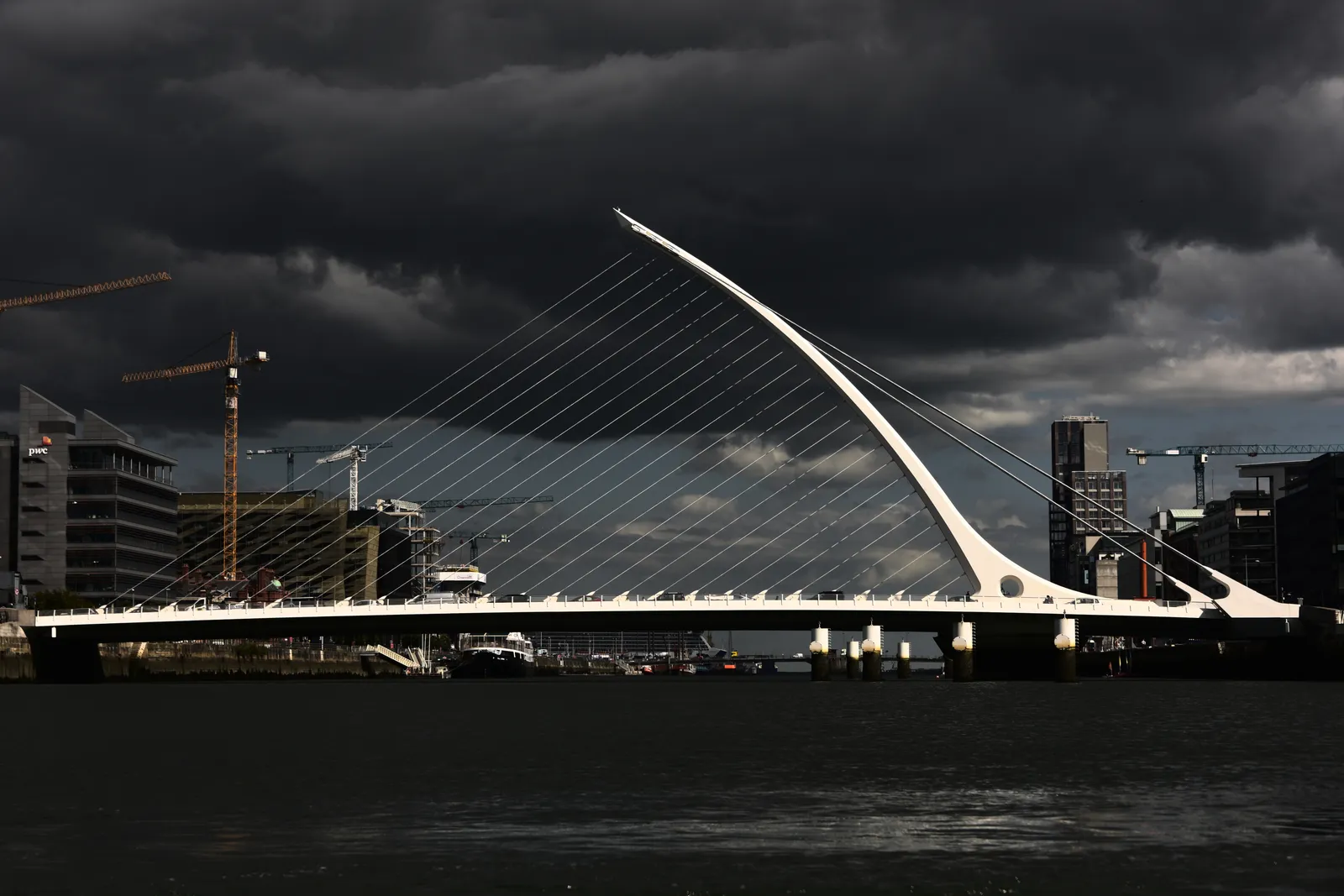
It is 120 metres long and 48 metres high, and the whole deck swings through 90 degrees on a turntable in the base of the pylon to let ships upriver. Crossing it costs nothing and takes two minutes, and the walk out to it along the campshires is flat the entire way, which makes it the natural end of an hour that started at the station. If your free time runs longer than this stretch of the north quays needs, the main Dublin route crosses to the south side for Trinity College, the National Museum on Kildare Street and St Patrick’s Cathedral.
No airport coach calls at Connolly’s own door
Custom House Quay is where the Dublin Airport coaches stop, about seven minutes’ walk south of the station, and that walk is worth building into any plan made from a platform at Connolly. Dublin Express routes 782, 783 and 784 run 102 coaches a day, from €9 one-way booked online, with the first out of Terminal 1 at 03:05 and the last at 00:35. The quickest run through the Dublin Port Tunnel is 14 minutes; 25 to 45 minutes is the honest figure once traffic is in it.
There is no train to the airport from here or from anywhere else in the city, which surprises people arriving at a mainline station expecting a connection. Dublin Airport asks for two hours before a short-haul departure and three before long-haul, and the three-hour figure is real for flights to the United States, where Terminal 2’s preclearance means clearing American immigration and customs before you board.
Frequently asked questions
What is within walking distance of Dublin Connolly Station?
The whole north side of the river, essentially. The Custom House is about seven minutes south on the quays and the General Post Office about eleven minutes west along Talbot Street. The Jeanie Johnston, a replica famine ship run as a museum, is moored a couple of minutes past the Custom House, and the Samuel Beckett Bridge is fifteen minutes out the same way into the docklands. Nothing on that list involves a tram or a bus, and two of the four cost nothing to stand and look at.
Is the GPO Museum open on a Sunday?
No, and this is the one closure that catches people on a flight day. The museum inside the General Post Office runs Monday to Saturday, 10am to 5pm, with last admission at 4pm, and it shuts on Sundays, public holidays and Christmas Eve. The post office counters and the public hall are a separate matter and keep their own retail hours. If your free afternoon lands on a Sunday, the Custom House Visitor Centre is open daily instead, 9.30am to 5.30pm with last admission at 4.45pm.
How long does the Jeanie Johnston tour take?
About fifty minutes, and it is guided rather than self-paced, so it runs to a schedule. Tours leave every half hour from 10am, the last one goes in the afternoon and the ship closes at 4pm. An adult ticket is €16, students and over-65s pay €13, and it is worth holding a slot rather than turning up at the gangway on spec, because a full group means waiting for the next one.
Is there anything near Connolly Station that works with children?
The famine ship is the obvious one, and the pricing helps: €10.50 for a six-to-twelve-year-old and free under five, for fifty minutes of climbing below decks with a guide telling the story of the crossing rather than reading it off a wall. The Custom House Visitor Centre also charges €4 for a child on a guided ticket, and its exterior sculpture, Edward Smyth's fourteen carved river heads, is a decent counting game from the quay wall for nothing at all.
Is there an airport coach from Connolly Station?
Not from the station door. The Dublin Express coaches to Dublin Airport pick up on Custom House Quay, about seven minutes' walk south of Connolly, and the 784 also calls at North Wall Quay and the 3Arena further out in the docklands. Routes 782, 783 and 784 between them run 102 coaches a day from €9 one-way booked online, first out of Terminal 1 at 03:05 and last at 00:35, with the run through the Dublin Port Tunnel taking 14 minutes at its fastest and 25 to 45 minutes at ordinary times. There is no rail link to the airport from Connolly or anywhere else.