Layover Near Dublin Heuston Station
Part of the full Dublin Layover: The Book of Kells From DUB
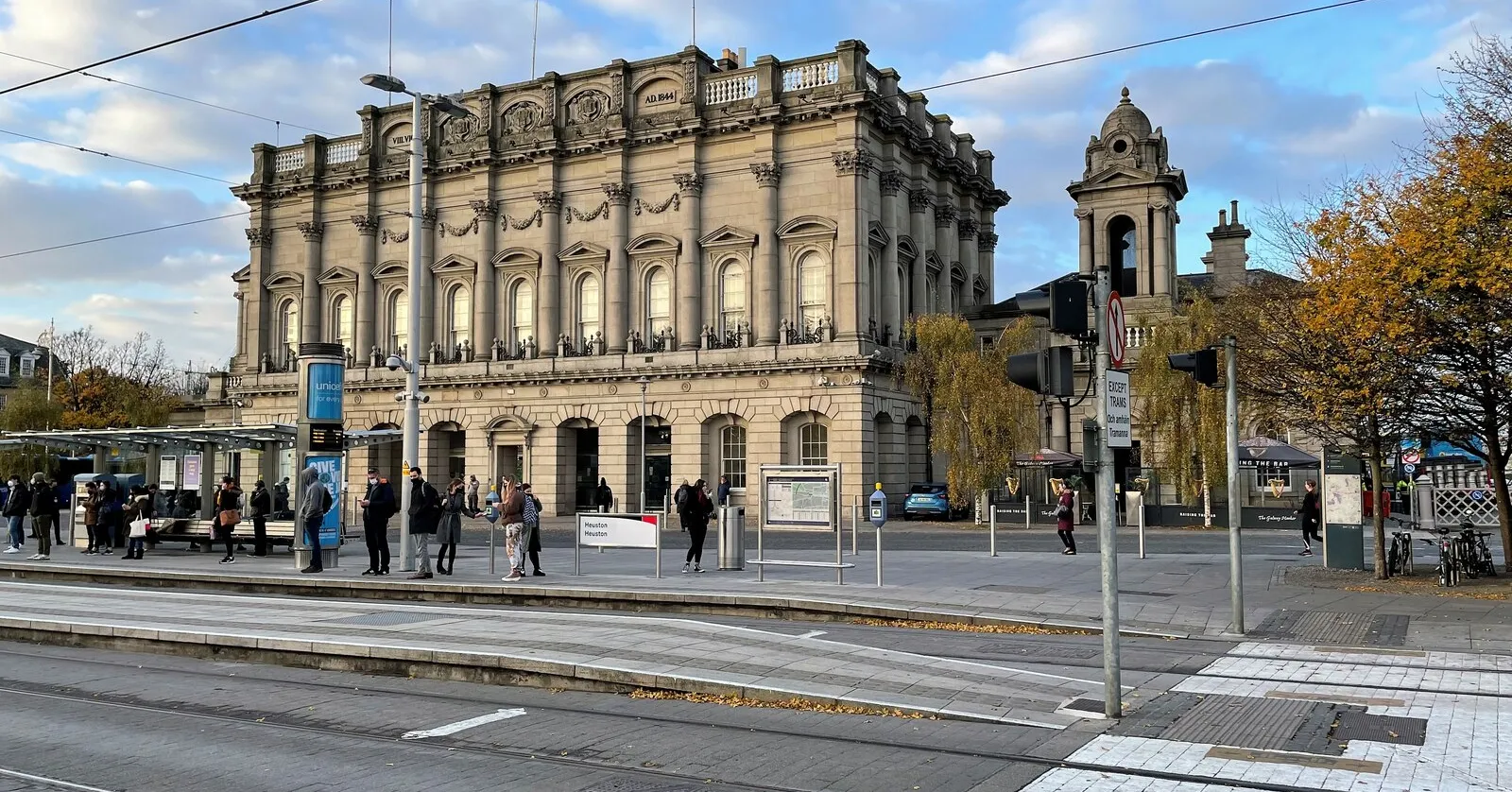
Dublin Heuston Station opens onto the western end of the city, within twenty minutes’ walk of Kilmainham Gaol, the 1680s Royal Hospital and a free national museum inside Collins Barracks.
Heuston Station’s palazzo front on the south quays
Sancton Wood, an English architect who won the commission in 1846, gave the Great Southern and Western Railway something that looks nothing like a railway terminus: a nine-bay block of carved limestone with projecting Corinthian columns, balustrades, swags and urns, and a domed campanile at either end. The train shed by Sir John MacNeill hides behind it. The whole point of the front was to look like an Italian palazzo, and it still does.
It opened on 4 August 1846 as Kingsbridge Station and kept that name for 120 years, until 1966, when it was renamed for Seán Heuston, a Rising leader who was executed in 1916 and who had worked in the offices behind that facade. Trains for Cork, Galway, Limerick and Waterford leave from here, and the tram stop is on the street outside.
The Jameson distillery on Bow Street in Smithfield
John Jameson set up on Bow Street in Smithfield in 1780, and the address has carried his name ever since, which is about fifteen minutes east of Heuston on foot, over the river and into Smithfield. What it is not, any more, is a working distillery: production moved to Midleton in County Cork in 1971, and Bow Street is now a visitor site and a maturation warehouse where casks still sit.
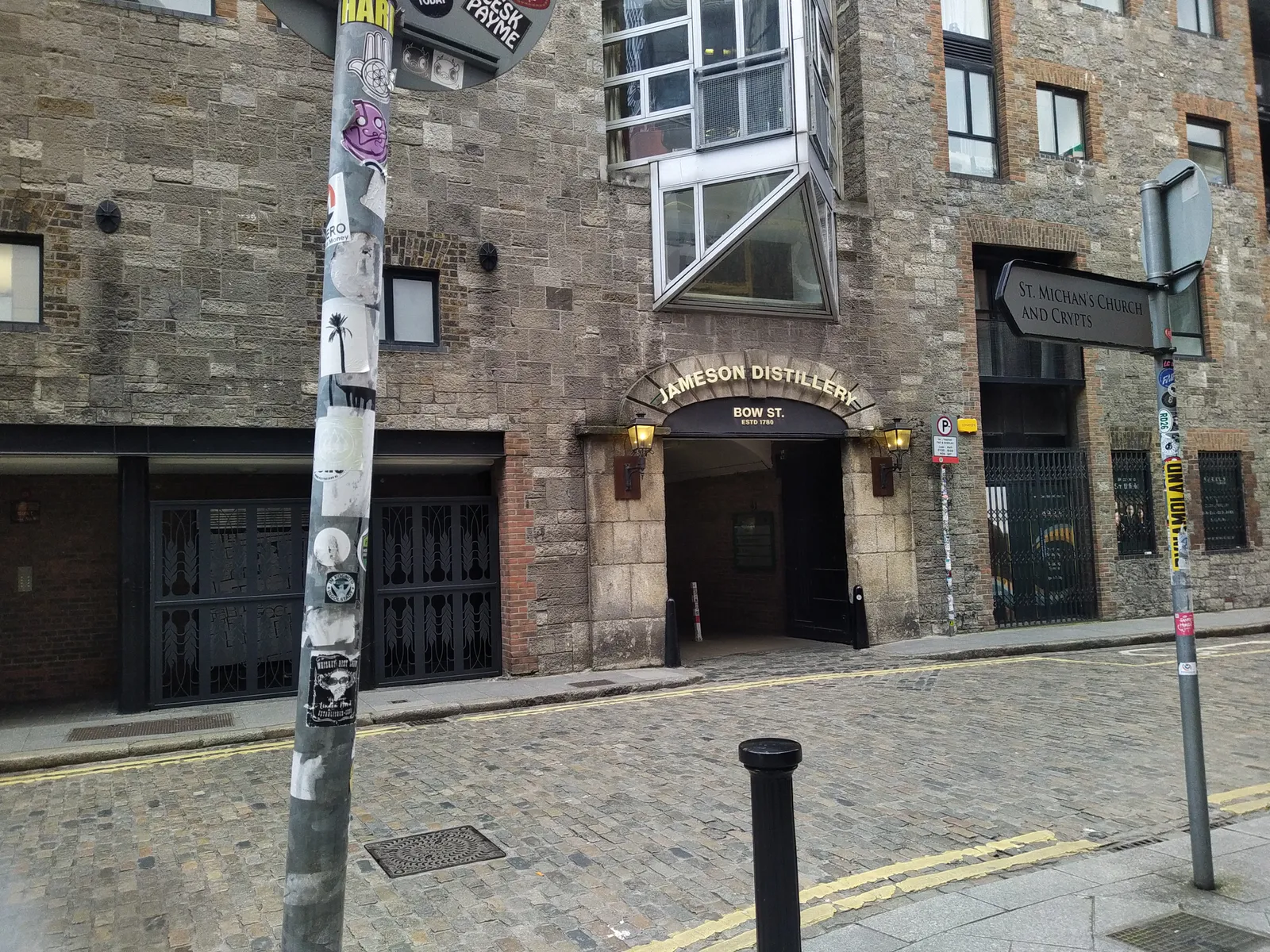
The reason it suits a few free hours is the length. The Bow St. tour runs 40 minutes end to end, which is short for a distillery, and finishes with a comparative tasting against a Scotch and an American whiskey rather than a single pour. An adult ticket is €26, seniors and students €23, and the doors open at 11am, with the last tour at 5.30pm from Monday to Thursday and 6.30pm on Friday and Saturday. Slots fill through the afternoon, so booking a time ahead is worth doing if this is the anchor of your afternoon.
The east wing at Kilmainham Gaol
Kilmainham Gaol opened in 1796 as the County of Dublin Gaol and was decommissioned by the Free State in 1924, and the room everybody comes for is the east wing: a barrel-vaulted hall lit from a glass roof, with three tiers of iron balconies and cell doors ringing an empty stone floor. It was added in the 1860s on the reforming theory that one warder standing in the middle could see every door at once. The older parts of the prison were the opposite of that: men, women and children five to a cell, one candle apiece meant to last a fortnight.
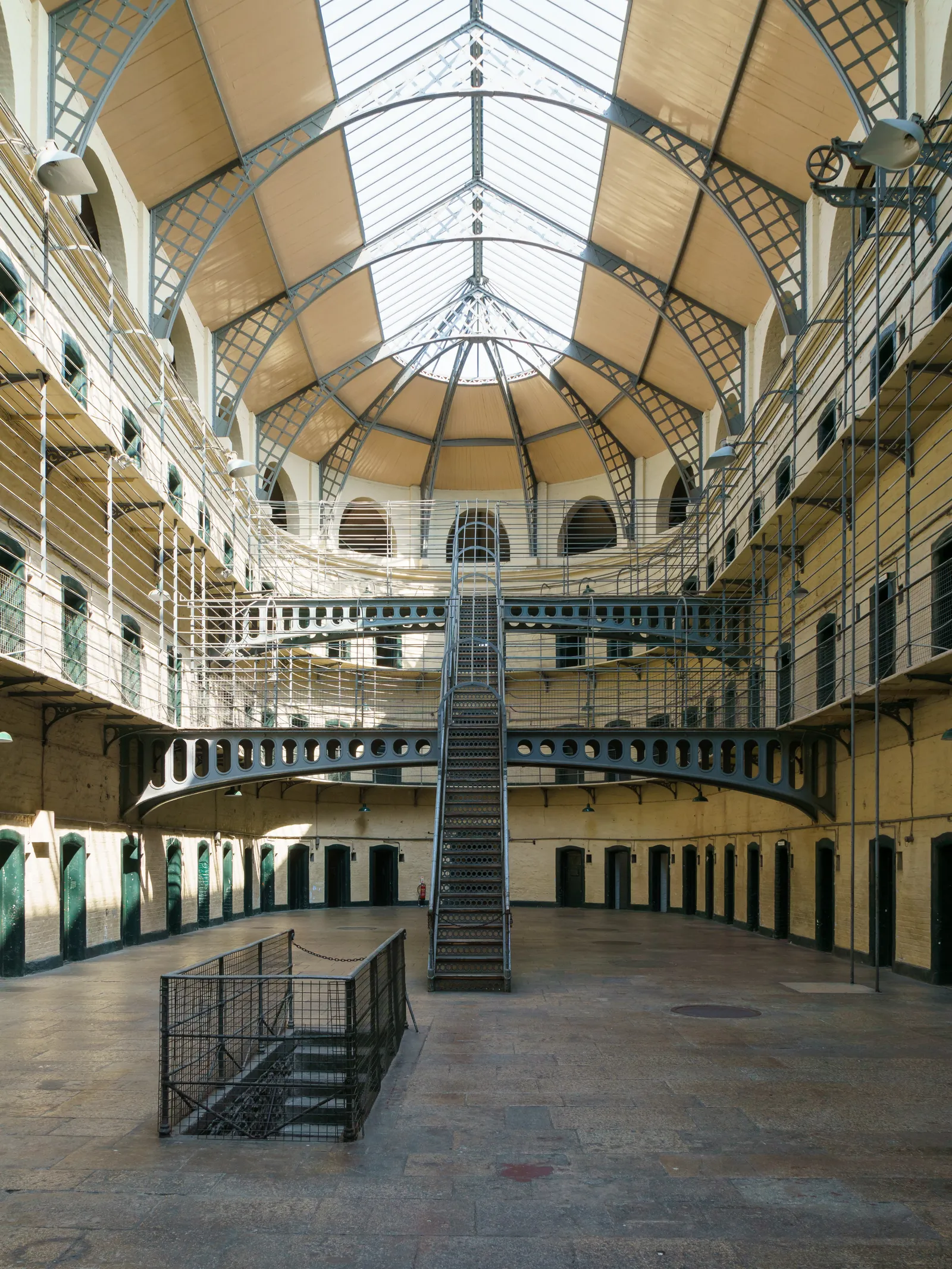
The stonebreakers’ yard at the far end is where fourteen leaders of the 1916 Rising were shot in May of that year, James Connolly last and tied to a chair because his wounds would not let him stand. Entry is by guided tour only, an hour long, €8 for an adult, and it has to be booked in advance: tickets go on sale 28 days ahead and the gaol is explicit that anything bought through a third-party reseller will not get you in. Allow about ninety minutes with the museum, arrive fifteen minutes before your slot, and note that the tour is not recommended for under-sixes and that buggies cannot come on it.
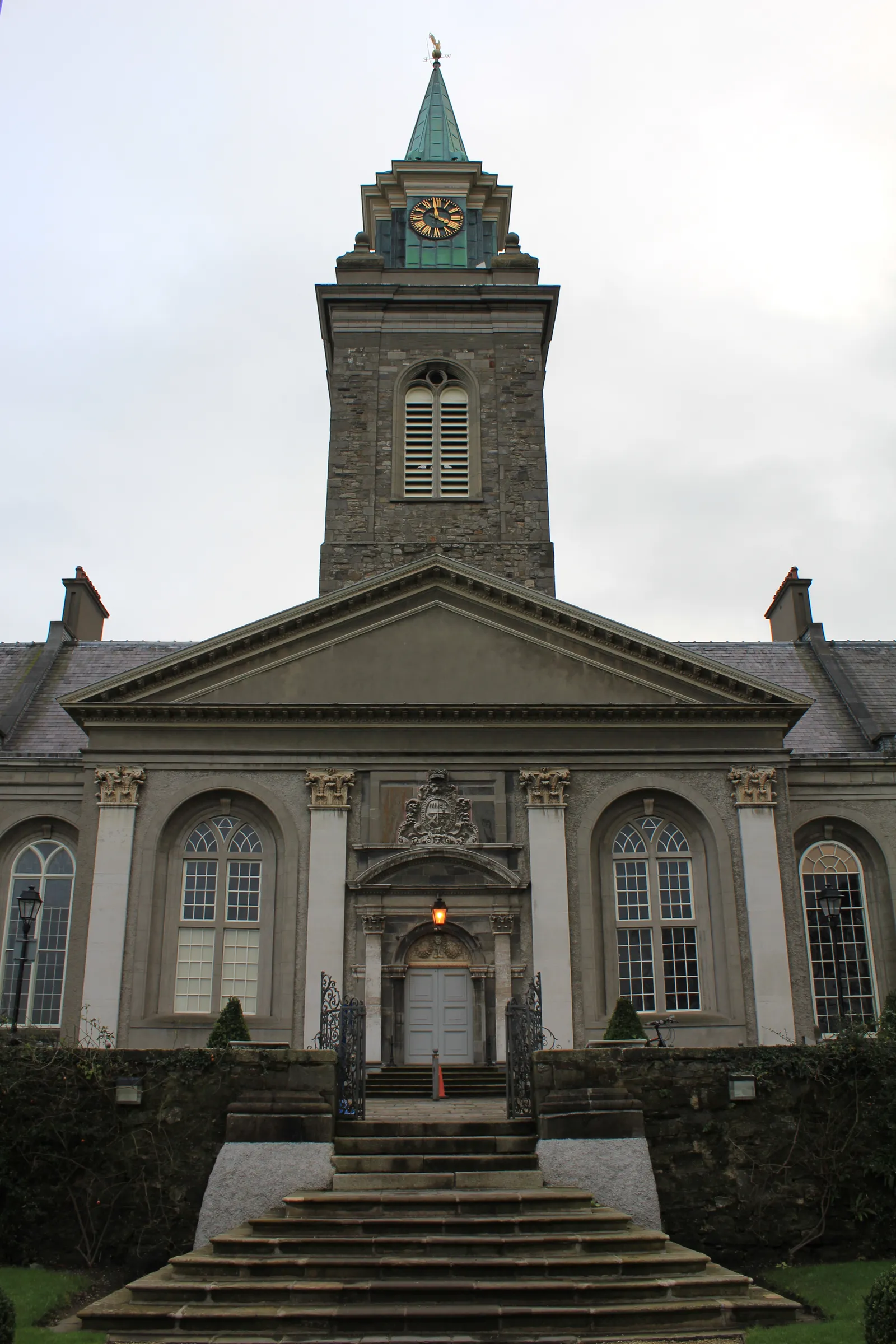
The Royal Hospital Kilmainham stands at the top of Military Road, five minutes east of the gaol, and it is the older and much quieter half of this corner of the city. Sir William Robinson built it between 1679 and 1687 as a home for army pensioners, on the model of Les Invalides in Paris, around a colonnaded courtyard with a clock tower over the entrance front; Christopher Wren’s Royal Hospital Chelsea, begun the year after, was modelled on this one in turn. The Irish Museum of Modern Art has been inside it since 1991 and costs nothing, and the formal gardens and 48 acres of grounds cost nothing either and stay open when the galleries do not.
Everything on this side of the city is an out-and-back from the station rather than a loop, so a suitcase makes the same mile twice, and the gaol’s timed tour leaves no slack for a slow walk out.
The gun-running yacht Asgard at Collins Barracks
Collins Barracks is a plain grey granite quadrangle on Benburb Street, about eight minutes north-east of Heuston, and it was a working barracks from 1702 until 1997, a run of nearly three centuries under British and then Irish garrisons. It was renamed for Michael Collins in 1922, the year he was killed. The National Museum of Ireland took it over for its decorative arts and history collection, and it costs nothing to walk into.
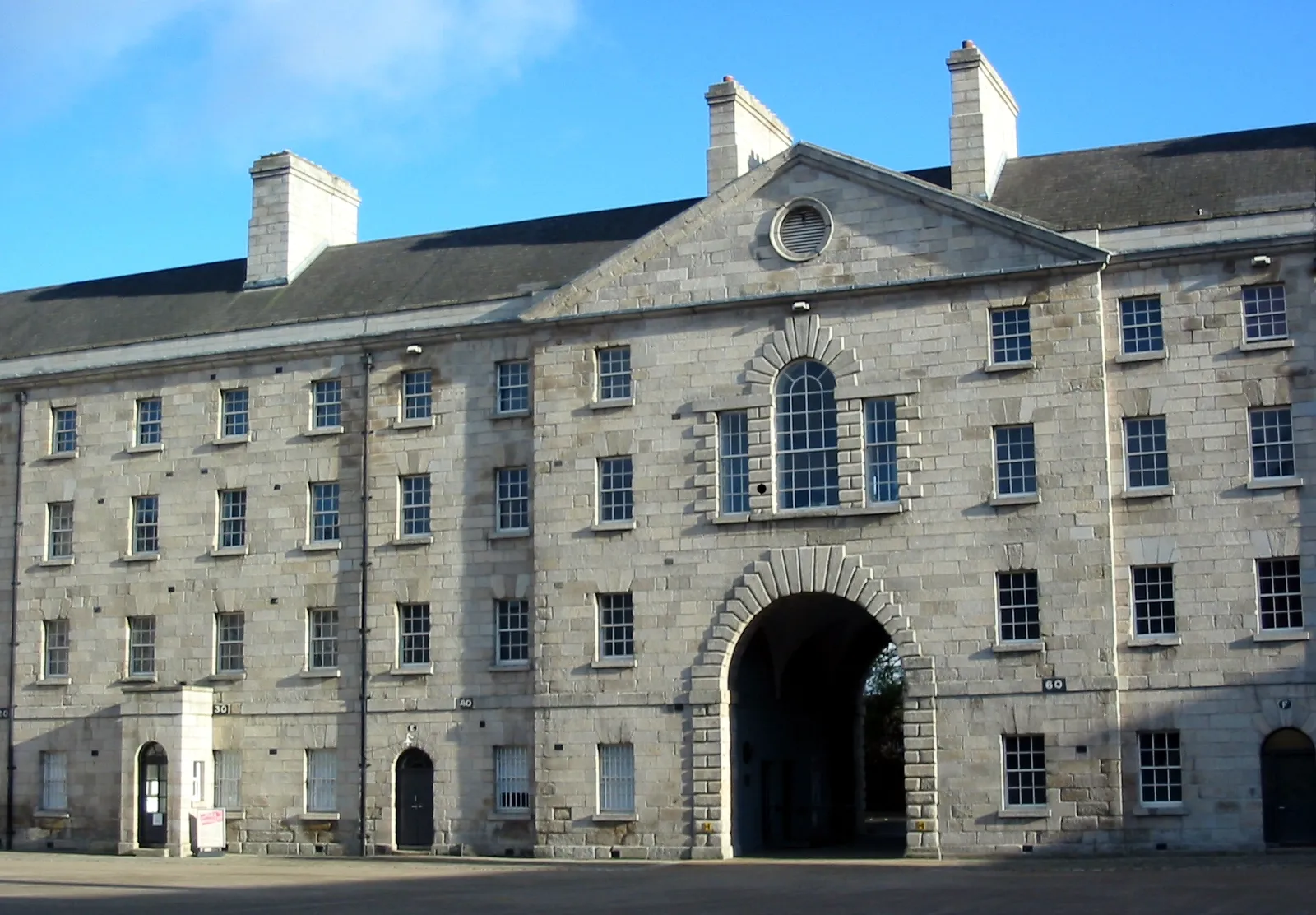
The Asgard is the thing to find. Colin Archer, the Norwegian naval architect, built the yacht in 1905, and in July 1914 Erskine and Molly Childers sailed it into Howth carrying 900 Mauser rifles for the Irish Volunteers, guns that were in use two years later during the Rising. It sits on permanent display, restored, and free like everything else here. The Eileen Gray rooms upstairs are the other reason to come: the Wexford-born designer’s lacquer screens and tubular steel furniture, collected back to the country she left. Hours are Tuesday to Saturday 10am to 5pm and 1pm to 5pm on Sunday and Monday. The archaeology half of the same museum, the bog bodies and the prehistoric gold, is a stop on the central Dublin walk over on Kildare Street instead.
Heuston’s forecourt is an airport coach stop
Route 782 stops at the station on its way along the quays, which puts Dublin Airport on a single ride from the platform you arrived at. Dublin Express runs 102 coaches a day across routes 782, 783 and 784, from €9 one-way booked online, first out of Terminal 1 at 03:05 and last at 00:35, with the Dublin Port Tunnel run taking 14 minutes at its fastest and 25 to 45 minutes when traffic is normal.
No train goes to the airport from Heuston, or from any other station in Dublin, which catches out people arriving on an intercity service expecting to connect. Dublin Airport asks for two hours before short-haul and three before long-haul, and the longer figure is genuinely needed for United States flights, where Terminal 2’s preclearance puts American immigration and customs on this side of the Atlantic.
Frequently asked questions
How far is Kilmainham Gaol from Heuston Station?
About a mile, or twenty minutes on foot, heading west along the south side of the river and up Military Road. The Royal Hospital Kilmainham is roughly two thirds of the way there, so the two work as one trip rather than two. There is also a city bus from outside Heuston that runs to the gaol, and a tram stop about ten minutes south of it, but on a dry day the walk is simpler than working out either.
Can you buy Kilmainham Gaol tickets on the day?
Assume not. Entry is by guided tour only and tickets have to be pre-booked, which is the single most common way people miss it. Tours are released 28 days ahead at midnight Irish time and the popular slots go quickly. The museum is also clear that tickets bought through third parties are not valid: buy them on the gaol's own site or on the Office of Public Works heritage site and nowhere else. Adult entry is €8, students €4, over-60s €6, and under-12s are free but still need a booked ticket.
Is the Jameson distillery on Bow Street still a working distillery?
No, and it has not been since 1971, when production moved to Midleton in County Cork. What survives on Bow Street is the original site with its maturation warehouse, where casks still sit, run as a visitor distillery rather than a still house. That is not a reason to skip it: the tour runs 40 minutes rather than the two hours a working plant usually needs, which is exactly what makes it fit an afternoon with a flight at the end of it, and it closes on a comparative tasting against a Scotch and an American whiskey.
Is the Royal Hospital Kilmainham open on a Monday?
The grounds are, the galleries are not. The modern art museum inside closes every Monday except bank holidays, and runs 10am to 5.30pm Tuesday, Thursday, Friday and Saturday, from 11.30am on Wednesday, with last admission to any gallery at 5.15pm. The courtyard, the formal gardens and the meadows are open regardless, which makes a Monday here a walk rather than a gallery visit. Collins Barracks opens on Mondays, from 1pm to 5pm.
Is there a coach to Dublin Airport from Heuston Station?
Yes, and it stops at the station itself, which is not true of every mainline terminus in the city. Dublin Express route 782 calls at Heuston on its way along the quays, part of a 102-coach daily operation across routes 782, 783 and 784 from €9 one-way booked online, first out of Terminal 1 at 03:05 and last at 00:35. The Dublin Port Tunnel run takes 14 minutes at its quickest and 25 to 45 minutes at normal times. There is no rail link to the airport from Heuston or anywhere else in Dublin.