Budapest Layover: Széchenyi Baths, City Park
Part of the full Budapest Layover: Danube Promenade From BUD
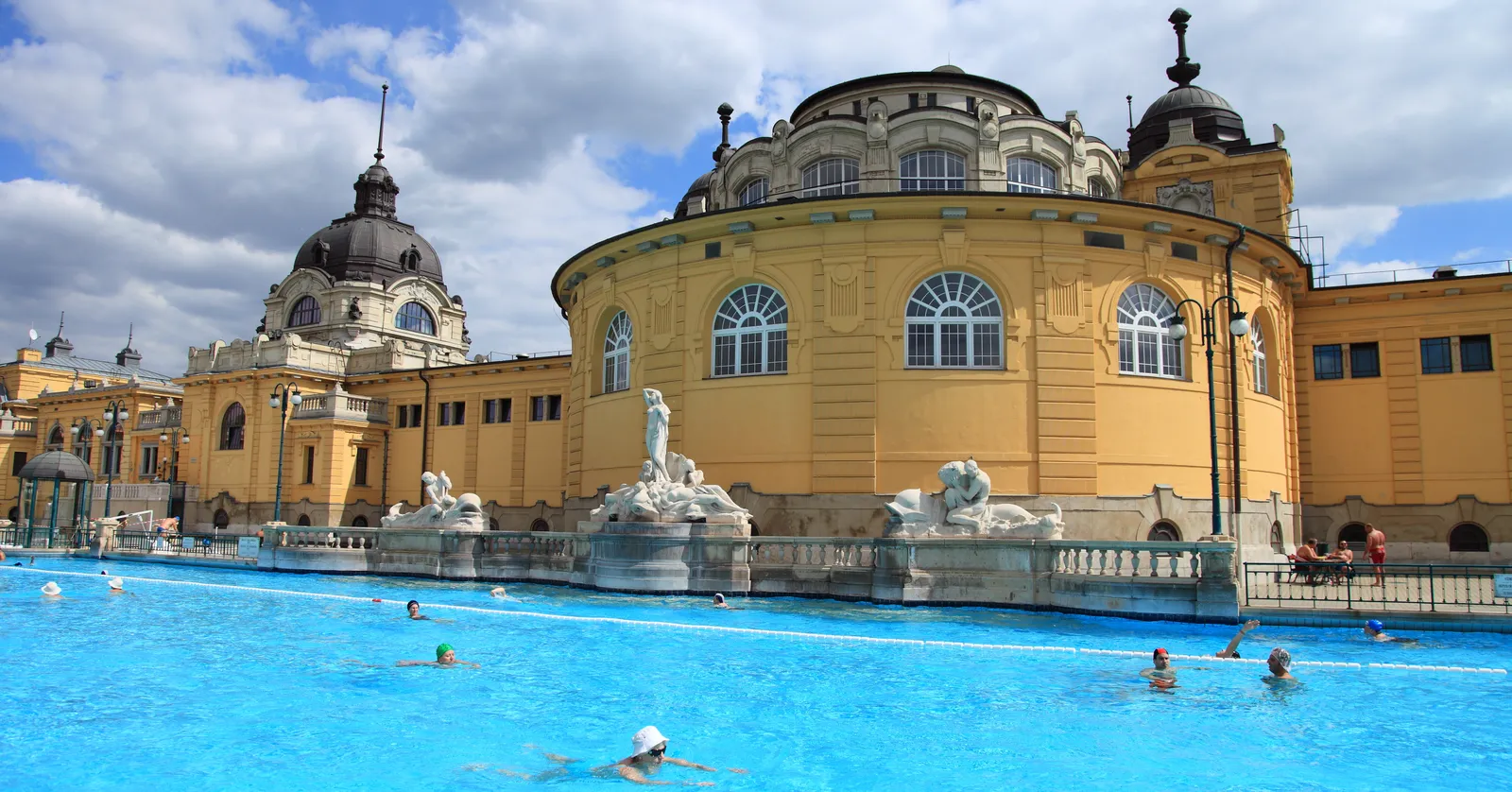
Széchenyi Baths stands inside City Park at the far end of Budapest’s Andrássy Avenue, with three of its eighteen pools out in the open and kept warm all year; the rest of the park around it, Vajdahunyad Castle’s courtyard and Heroes’ Square, costs nothing at all.
The outdoor pools at Széchenyi Baths
The bath opened in 1913 to Győző Czigler’s design and was extended in 1927, which is why the outdoor half looks like a palace with a swimming pool in front of it: an ochre neo-baroque range on three sides, white stone figures along the balustrade, and blue water between them. Of the three open-air pools, the middle one is cool enough for lengths, and the hot one on the side is where the chess players sit, boards floating on the surface, in steam, in February.
Water comes up hot from wells under the park, which is why the outdoor pools work in winter and why the whole complex is legally a medicinal bath rather than a swimming pool. It opens at 7am on weekdays and 8am at weekends, closes at 8pm inside, and keeps the outdoor pools going until 10pm. Entry is around 9,500 forints on a weekday and a little more at the weekend; buying entry before you arrive through a tours and activities platform settles the price and the cabin without queueing at the desk.
One thing this stop is not is a look-around: entry buys a wristband that opens one locker or one small changing cabin, both sized for a change of clothes and a towel, and you are on a wet tiled floor in bare feet for most of the visit.
Vajdahunyad Castle’s courtyard in City Park
South-west of the bath, on an island in the park’s boating lake, stands a castle that was never one. It went up in 1896 in wood and cardboard, as an exhibit for Hungary’s millennium celebrations, assembled from copies of pieces of twenty-one real buildings around the kingdom: a Transylvanian castle’s towers, the Romanesque chapel at Ják, Renaissance and Baroque wings. It proved popular enough that Ignác Alpár rebuilt the whole thing in stone and brick between 1904 and 1908.
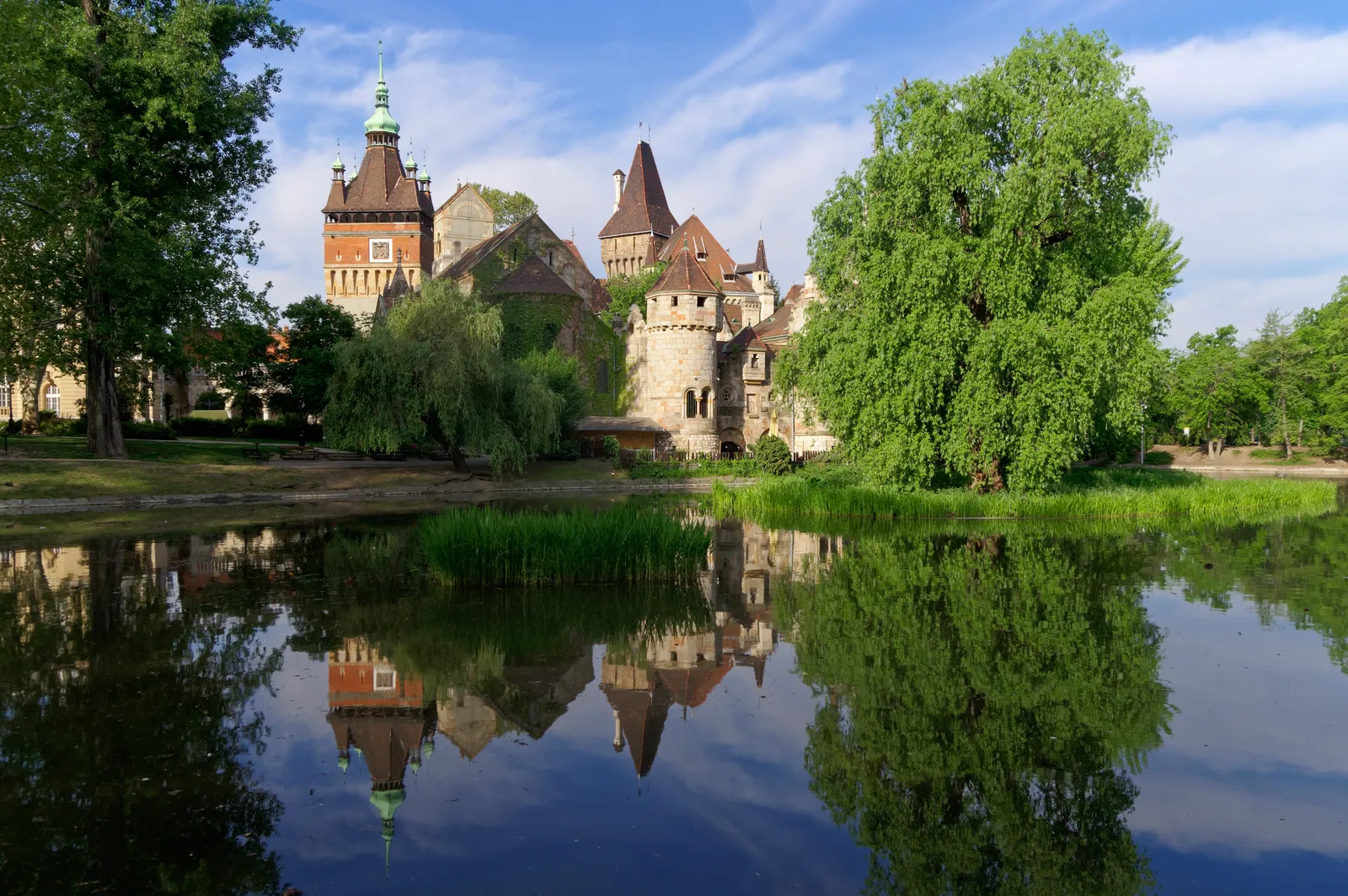
Walking into the courtyard costs nothing. The Hungarian Agricultural Museum inside charges, and in the yard sits Miklós Ligeti’s 1903 statue of Anonymus, the unnamed chronicler of a twelfth-century Hungarian history, hooded, faceless, with a pen worn gold by people rubbing it. The lake in front is boats in summer and an ice rink in winter.
Heroes’ Square at the top of Andrássy Avenue
The park’s entrance is a square of bare paving with a column in the middle of it, about 36 metres tall, carrying the Archangel Gabriel with the Hungarian crown in one hand. Around the base are the seven Magyar chieftains on horseback; behind, two curved colonnades hold fourteen statues of Hungarian kings and princes, with allegorical groups on the roofline above them. It was begun for the same 1896 anniversary and not finished until well into the twentieth century, and the line-up has been rearranged more than once as governments changed their minds about who counted.
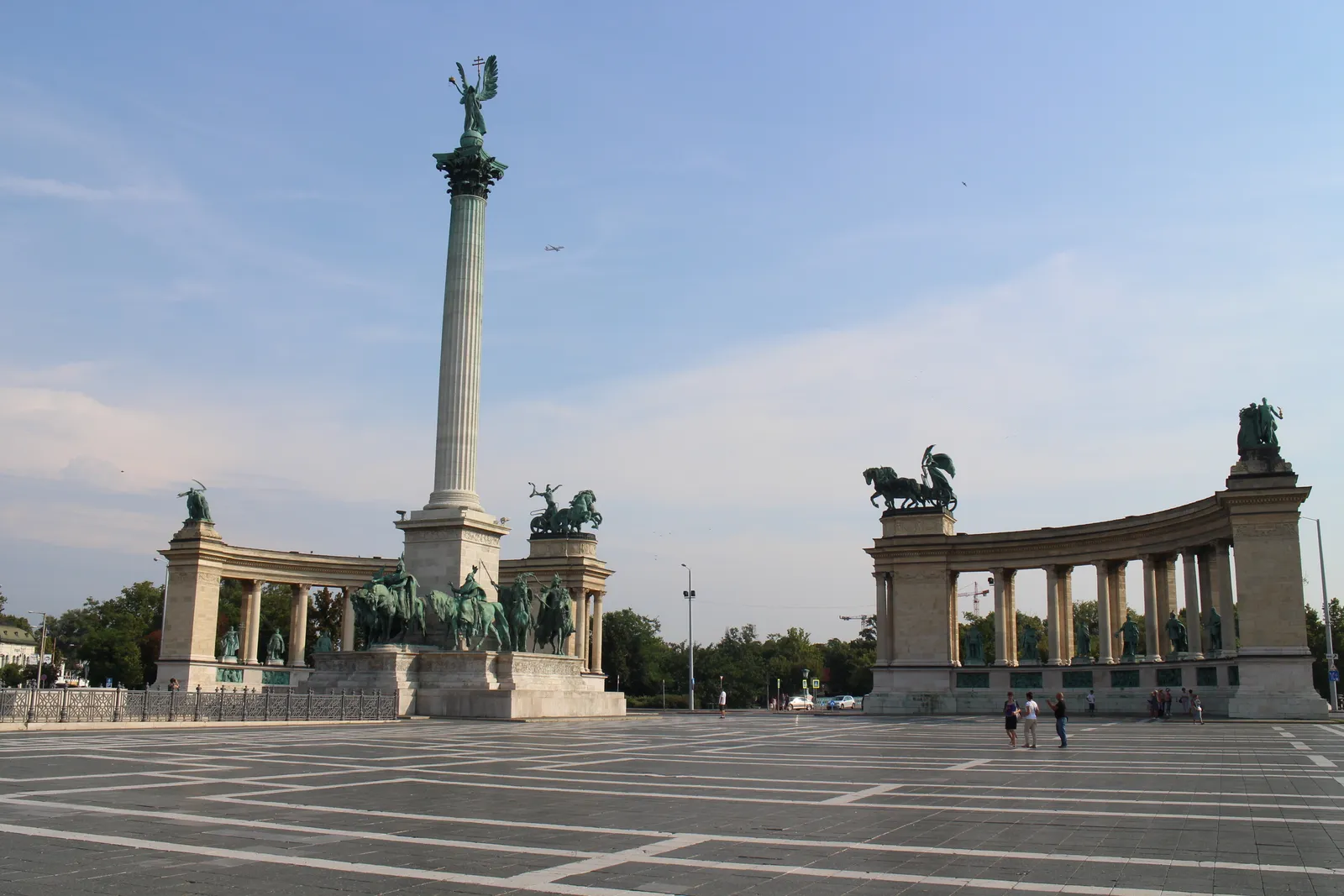
It has no gate and no opening hours. The Museum of Fine Arts on one side and the Kunsthalle on the other both charge, but a third free thing sits a couple of minutes into the park: the Museum of Ethnography, which opened in 2022 with sixty per cent of itself underground and a seven-thousand-square-metre garden on the roof. The roof is a public park in its own right, open around the clock, and the climb up its curved flank puts you level with the treetops, looking back down Andrássy Avenue.
The 1896 Millennium Underground beneath Andrássy Avenue
The line that runs out to the park is a sight in itself. It opened on 3 May 1896, built in 21 months and inaugurated by Franz Joseph, and it was the first electric underground railway on the European mainland, and the second underground railway in Europe after London’s. It celebrates its 130th year in 2026 and has been part of a UNESCO World Heritage listing since 2002.
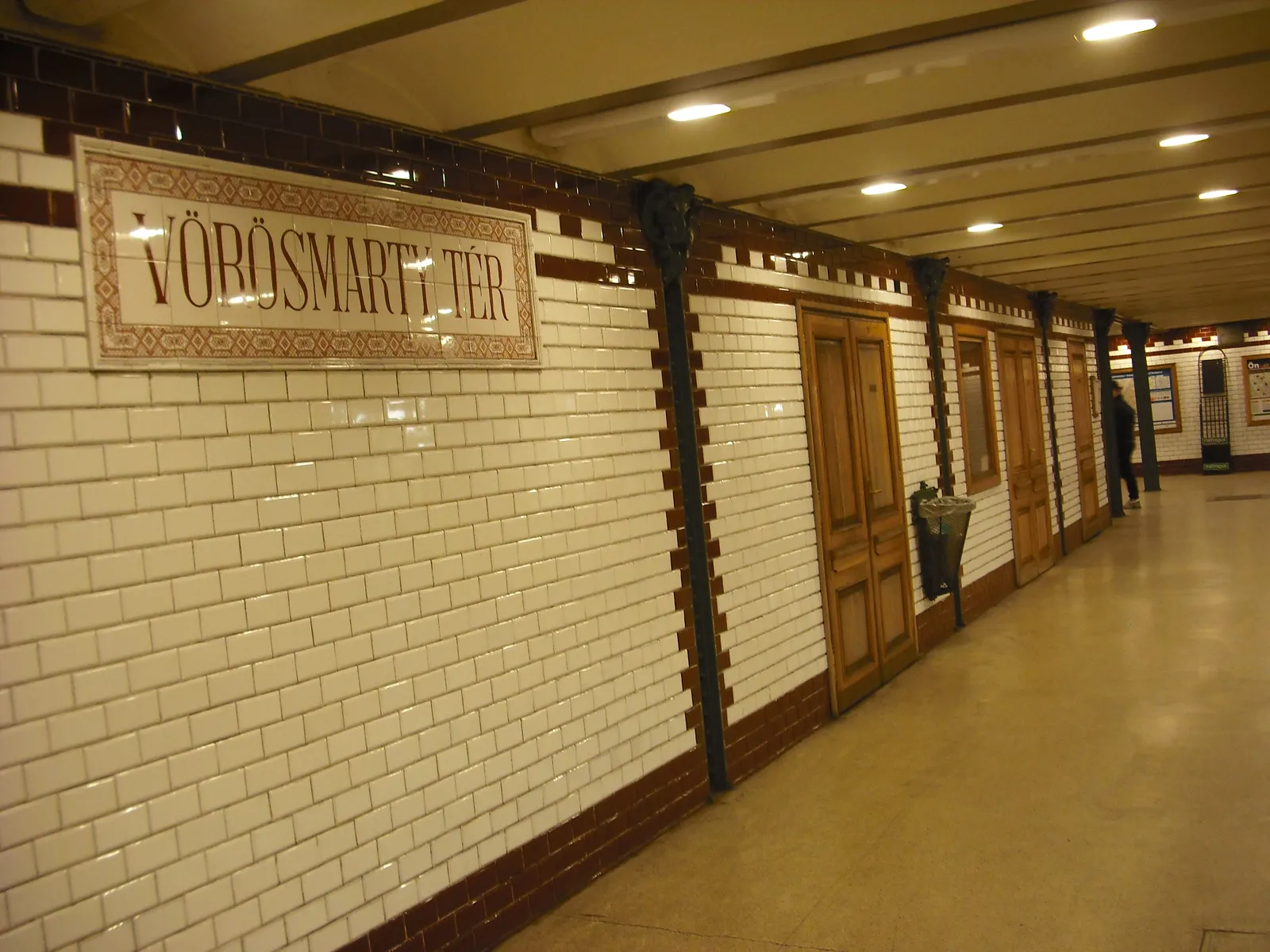
It sits just under the pavement, so the stairs down are short and the platforms feel like a corridor rather than a tunnel: white tiles with a brown band, cast-iron columns, wooden doors, and the station name in tiled lettering on the wall. The carriages are small enough that a tall passenger notices. It runs the length of Andrássy Avenue from the middle of Pest and puts you out at the bath’s own door.
Ordinary Budapest tickets are not valid on the airport bus
Getting out to Budapest Ferenc Liszt International Airport (BUD) from City Park means the 100E airport bus, and it charges its own 2,500-forint fare that a standard single or 90-minute ticket does not cover. It starts from Deák Ferenc tér in central Pest, which metro line M1, the Millennium Underground, reaches in about ten minutes from Széchenyi fürdő. The bus itself is about 40 minutes.
The cheaper way round is metro line M3 to Kőbánya-Kispest and bus 200E from there, which one 850-forint ticket covers end to end but which takes 50 to 60 minutes and stops working when the M3 shuts around 11pm. Allow two and a half hours from the poolside to the gate, which is more than a walking route needs, because getting dry is part of it. If your flight leaves sooner than that, the main Budapest guide has the riverbank version of this afternoon, and there is a Castle Hill route on the other side of the water.
Frequently asked questions
Can children go to Széchenyi Baths?
Not since 1 August 2025. Anyone under 14 is refused entry to Széchenyi Baths in Budapest, whether or not they intend to swim and whether or not an adult is with them, under a national rule on medicinal thermal water. The only exception needs a rheumatologist's or orthopaedic specialist's prescription cleared with the bath in advance. Families travelling together are better off with City Park itself, which is free and has no age rule at all, or with one of the city's non-medicinal swimming pools.
How long does a visit to Széchenyi Baths actually take?
Budget two and a half to three hours from the ticket desk to being dressed and dry again. That covers the queue, changing, the walk out to the outdoor pools, an hour or so in the water, and the long business of drying off and sorting wet swimwear afterwards. It is the single reason this stop needs a longer gap than a walking route around Budapest does, and the reason it is worth arriving with a towel rather than renting one.
Is Heroes' Square free to visit?
Yes, and it never closes. Heroes' Square sits at the top of Andrássy Avenue in Budapest, at the entrance to City Park, and it is open paving with no gate, no ticket and no hours: the Millennium Monument column, the bronze chieftains at its base and the fourteen rulers in the colonnades are all there at four in the morning as much as at noon. The two galleries flanking it, the Museum of Fine Arts and the Kunsthalle, do charge and do keep hours.
Is Széchenyi Baths worth booking in advance?
Yes, on a weekend or any afternoon in high summer, when the ticket queue at the main entrance is the slowest part of the visit. Entry is around 9,500 forints on a weekday and more at weekends, with a private changing cabin costing extra on top of a locker, and a ticket bought ahead through a tours and activities platform fixes the price and the cabin before you get there. On a quiet weekday morning you can walk up and pay at the desk without much waiting.