Budapest Layover Near Buda Castle
Part of the full Budapest Layover: Danube Promenade From BUD
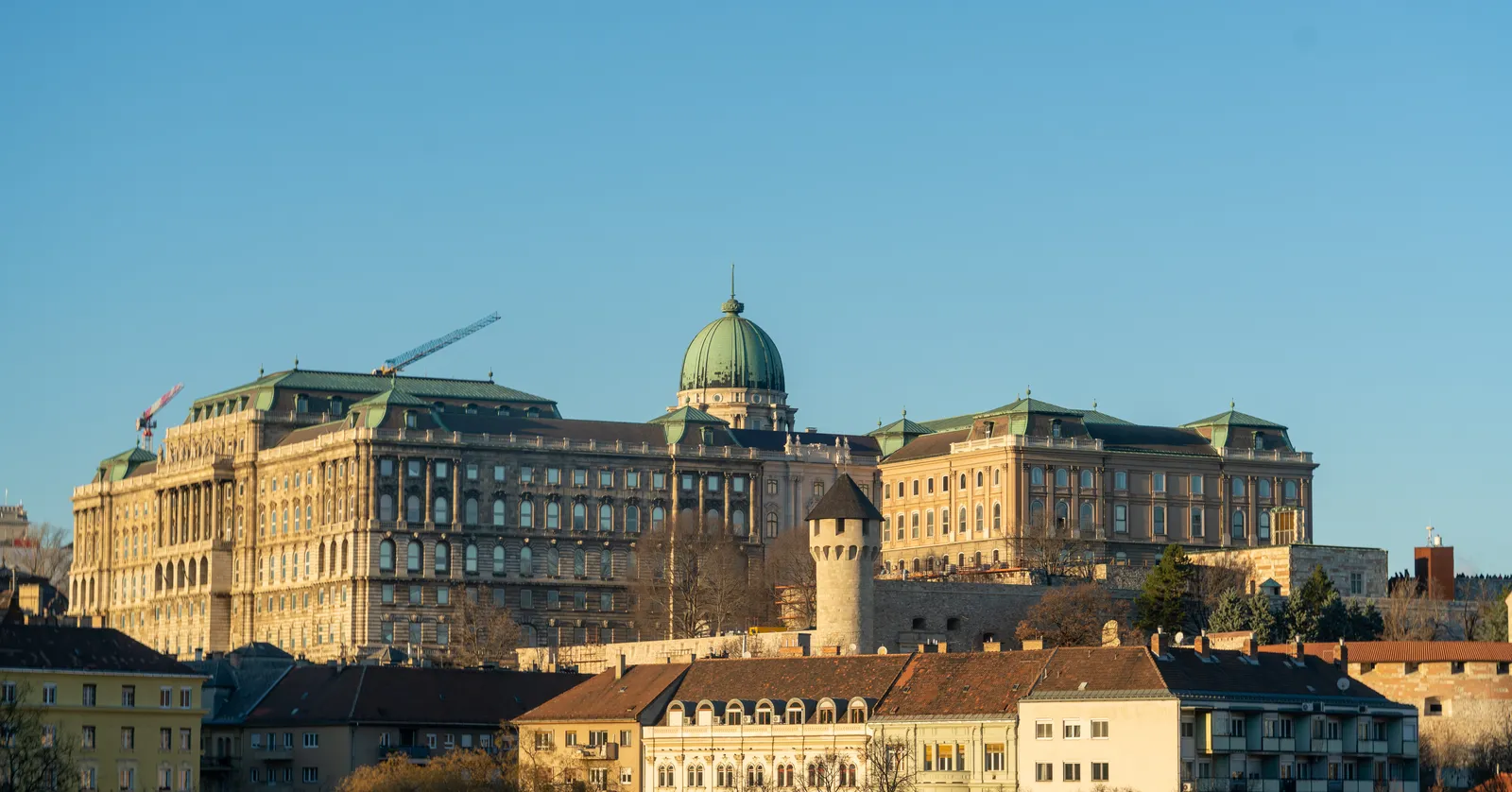
Buda Castle sits on the long ridge above the Danube in Budapest, and its courtyards and river terraces are open ground with no ticket; Matthias Church and its tiled roof stand at the north end of the same hill, and the lower arcade of Fisherman’s Bastion looks across at Pest for nothing.
The free terraces of Buda Castle
The palace covers the southern half of Castle Hill, a range of ochre buildings behind a green dome, and a good deal of it costs nothing: the courtyards between the wings, the Matthias Fountain in the Hunyadi court, and the long terrace on the river side, where the entire Pest embankment lines up in front of you with the Parliament at the far end.
There has been a fortress on this ridge since the thirteenth century and the current shape is mostly Habsburg, mostly nineteenth century, and mostly a reconstruction: the siege of 1944 and 1945 burned the palace out, and what went back up under the socialist government is simplified from what stood before. Rebuilding is still going on, which is why there are usually cranes somewhere in the skyline. Inside the wings are the Hungarian National Gallery and the Budapest History Museum, both ticketed, both fine for an hour if the weather turns.
The Zsolnay tile roof on Matthias Church
Szentháromság tér, at the north end of the hill, has a church on it with a roof of glazed tiles from the Zsolnay works at Pécs, laid in orange, green and white diamonds, running the length of the nave with a carved stone spire beside it.
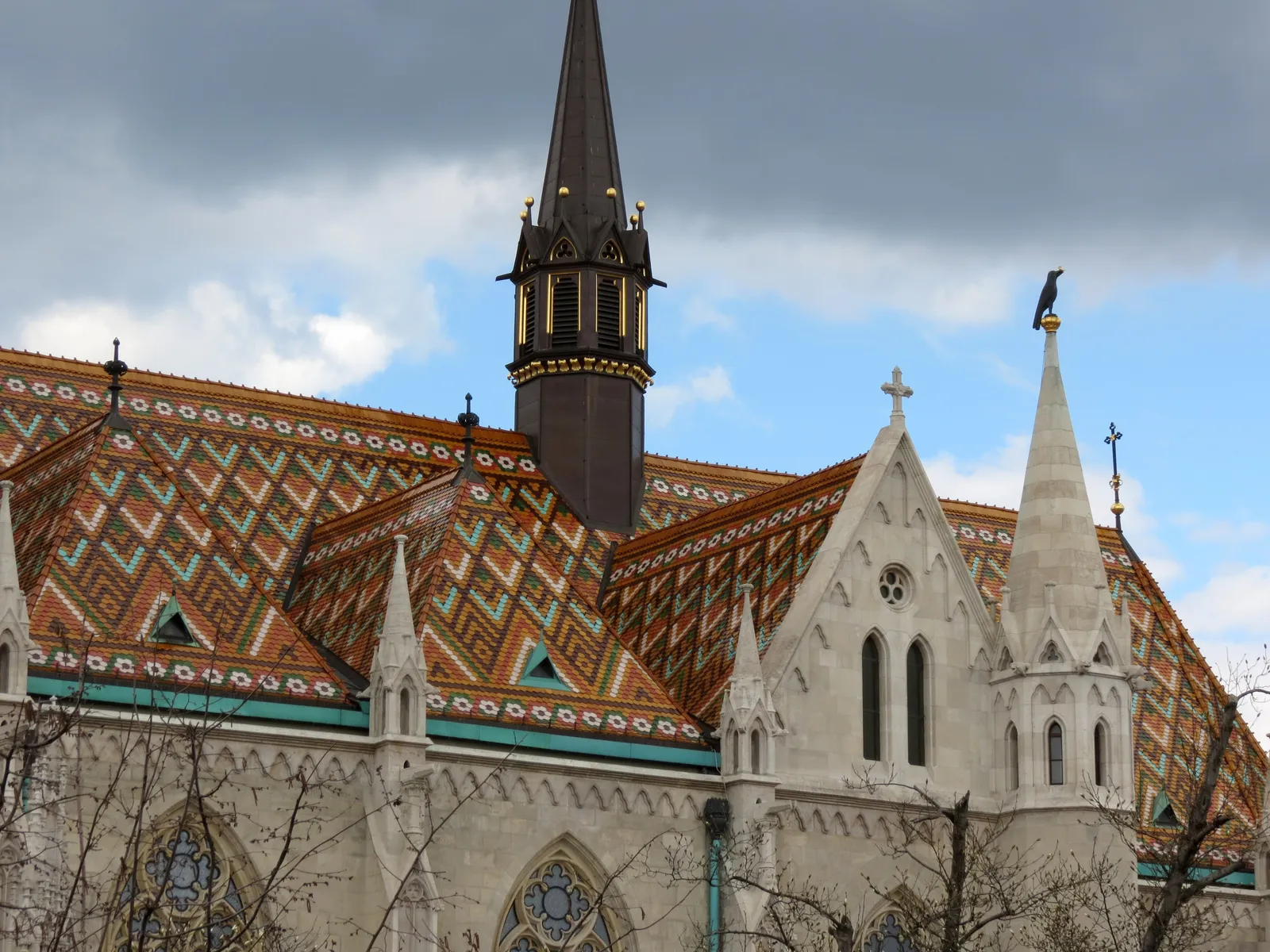
Officially it is the Church of the Assumption; everyone calls it Matthias Church after the king who was married here twice. Frigyes Schulek rebuilt it between 1874 and 1896, and rather than restore it to any one period he treated the surviving medieval fabric as a starting point and invented the rest, which is why the interior is a wall-to-wall painted surface rather than bare Gothic stone. Franz Joseph was crowned here in 1867 and Charles IV in 1916, the last coronation the Habsburgs ever held. Adult entry runs around 3,400 forints, and it shuts to visitors during Mass.
The seven towers of Fisherman’s Bastion
The white stone terrace behind the church was built by the same architect between 1895 and 1902, and it was never a fortification: Schulek designed it as a viewing platform, with seven conical turrets standing for the seven Magyar tribes who arrived in the Carpathian Basin in 895. The name comes from the fishermen’s guild that defended this stretch of wall in the Middle Ages.
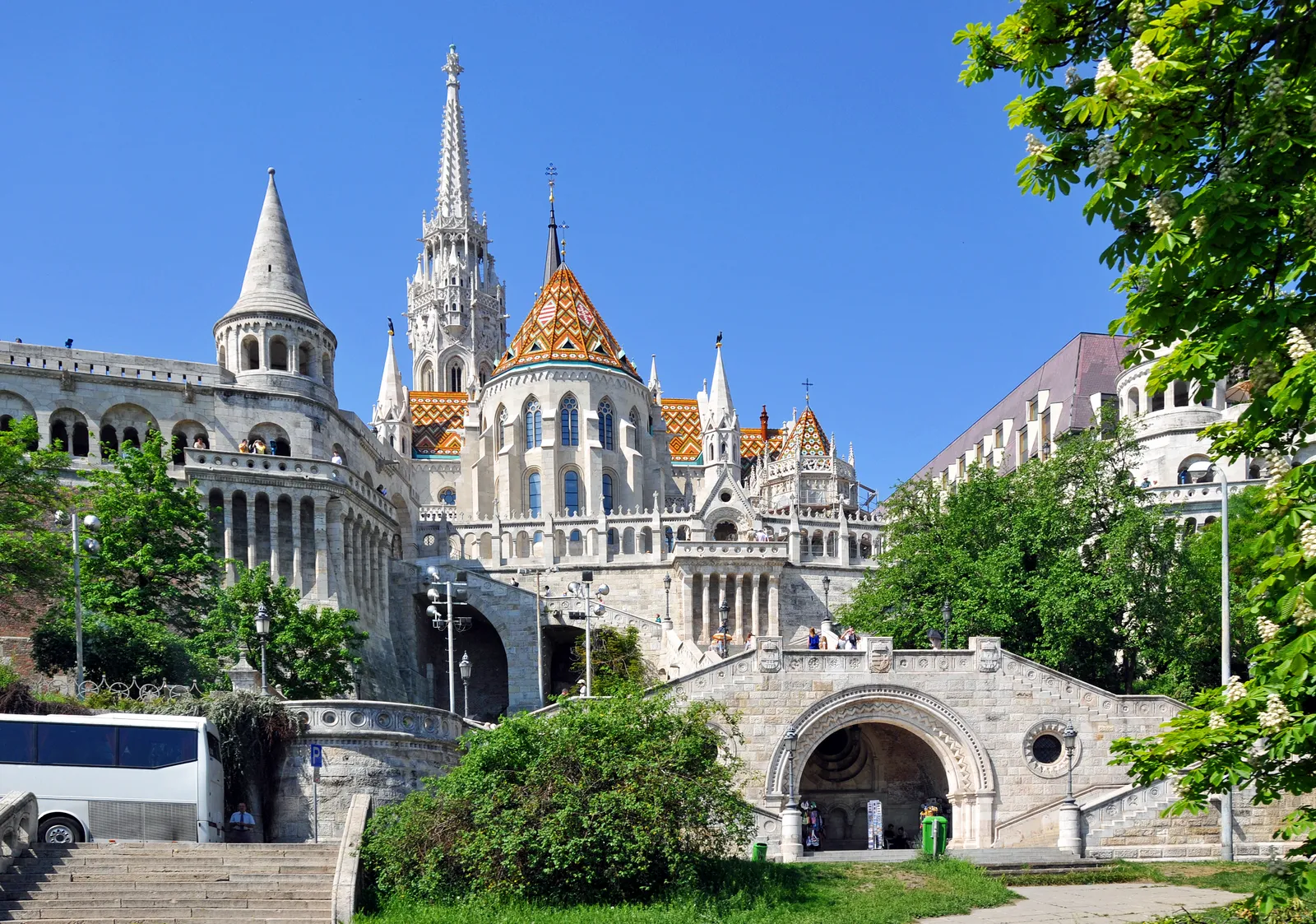
The ticket only applies to the upper towers, and only between 9am and closing. Everything below that, the arcades, the stairs and the long balustrade with the whole of Pest laid out beyond it, is free all day and all night, so an early arrival gets the entire structure for nothing.
The funicular that climbs Castle Hill in 90 seconds
Two wooden cars have been running up the west bank of the Danube from Clark Ádám tér since March 1870, on 95 metres of track that climb 51 metres to the palace terrace. Bombing destroyed the line in the war and it stood derelict for four decades before reopening in 1986; the two iron footbridges that cross above the track were put back in 1983 to the original drawings. The trip takes a minute and a half. It runs 8am to 10pm and shuts for maintenance on alternate Mondays.
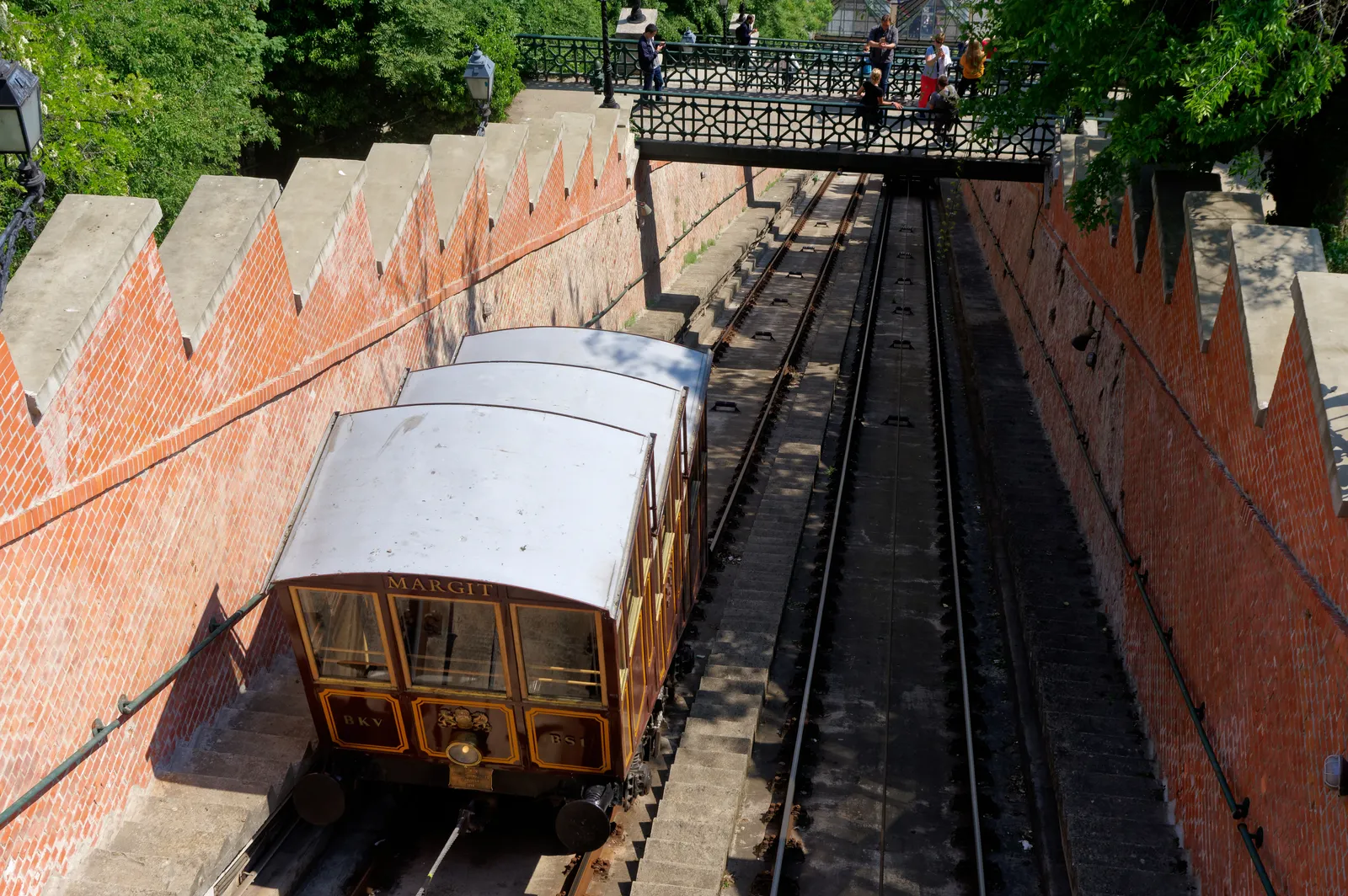
Each car takes 24 people, so the queue at the bottom clears in batches of 24 and builds through the middle of the day, and the alternative is a stepped path up the hillside, which is the choice a suitcase decides for you.
Walking up has one thing going for it beyond the fare. The streets on top, Úri utca in particular, look eighteenth century from the road, but the houses underneath are medieval, and the stone gateways have Gothic seat niches cut into their side walls, sedilia, visible from the pavement as you pass. Nobody is certain what they were for; the usual guess is that servants or coachmen waited in them. There are dozens of them along the district’s streets, and looking costs nothing, which is a decent way to spend the half hour between the palace and the Vienna Gate.
The airport bus never crosses to Buda
Everything that runs out to Budapest Ferenc Liszt International Airport (BUD) starts on the Pest side, so a departure from Castle Hill has two parts. Come down off the north end of the hill to Széll Kálmán tér, ten minutes on foot through the Vienna Gate, and take metro line M2 three stops east under the river to Deák Ferenc tér. The 100E airport bus leaves from there and takes about 40 minutes, with its own 2,500-forint fare that ordinary Budapest tickets do not cover.
Allow around two and a quarter hours from the top of the hill to the gate. If the flight is late enough that you have more than that, the flat, free riverbank on the other side of the water is a different afternoon from this one, and the main Budapest guide covers it; the Nyugati station end of Pest is the version for anyone leaving by train instead.
Frequently asked questions
Is Fisherman's Bastion free?
The lower terraces are free at any hour, and they are where most of the view is. Only the upper towers charge, currently around 1,700 forints for an adult, and only during ticketed hours, which run from 9am to 7pm for most of the year and to 9pm in high summer. Turn up on Castle Hill in Budapest before the booth opens and the whole thing is open ground, which is a genuine argument for making this the first stop of the day rather than the last.
How do I get up to Buda Castle?
Three ways, and none takes long. The funicular from Clark Ádám tér at the Buda end of the Chain Bridge climbs to the palace terrace in 90 seconds, but it has its own fare and no Budapest travel pass covers it. A bus runs up into the district from Széll Kálmán tér, the metro and tram interchange below the north end of the hill. Or walk: the path up from Clark Ádám tér is stepped, and the road up from Széll Kálmán tér through the Vienna Gate is a steady ten minutes on pavement.
Is Castle Hill bearable in summer heat?
The terraces have almost no shade, which is worth planning around in July and August. The cool parts are the arcade under Fisherman's Bastion, the stone interior of Matthias Church, and the museums inside the palace. The hill also empties out noticeably in the early evening, when the low sun is on the Pest facades across the river and the upper towers of the Bastion stop charging for the night.
What does it cost to go inside Matthias Church?
Adult entry is around 3,400 forints, with reductions for students and over-60s and free entry for children under six. It is a working parish church as well as a monument, so it closes to sightseers during Mass, most predictably on Sunday mornings. The roof, which is the thing most people come for, is free: the diamond-patterned Zsolnay tiles read best from Szentháromság tér outside, or from the steps of Fisherman's Bastion next door.