Athens Layover From Piraeus Port: Mikrolimano
Part of the full Athens Layover: Acropolis and Plaka From ATH
Piraeus, the port of Athens, is a peninsula, and the far side of it is nothing like the ferry quay: Mikrolimano is a small fishing harbour under a hill of packed houses, Zea Marina fills the bay the classical navy used, and the archaeological museum a street back holds four bronze statues dug out of the ground here in 1959. Line 3 runs from the port to the airport without a change of train.
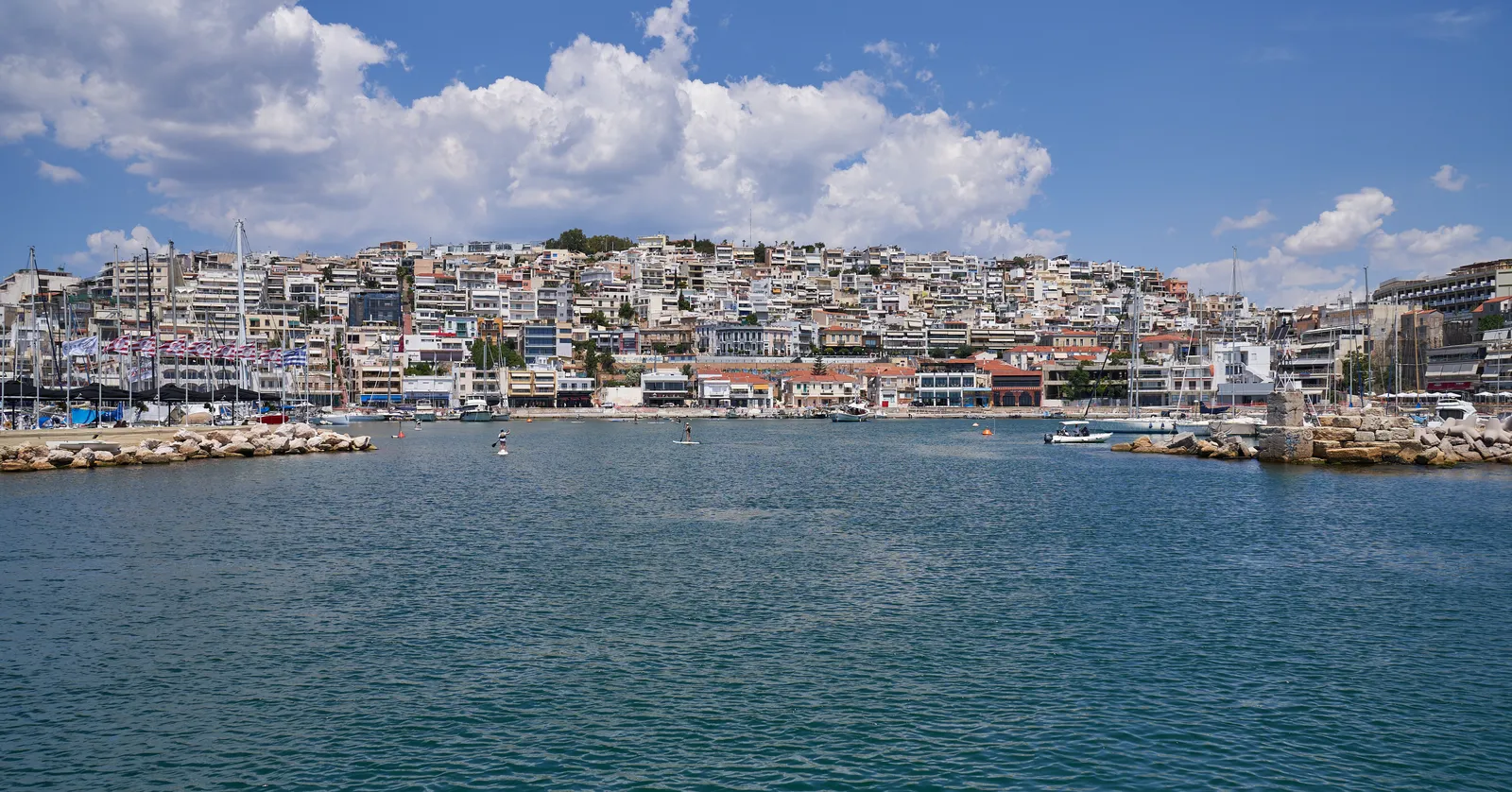
Mikrolimano’s fishing boats under the Kastella hillside
Cross the neck of the peninsula and the container cranes stop. Mikrolimano, which just means “little harbour,” is a near-circular basin small enough to see the whole way round from anywhere on its edge, ringed by moored caiques and small yachts, with tables set out along the quay and the houses of Kastella stacked up the slope behind in yellows and pinks.
It was Munichia in antiquity and it was a naval harbour then too, one of the three Piraeus used. Now the fishing boats are outnumbered by pleasure craft and the quay is a row of fish tavernas, but the shape of the water has not changed.
A ferry bag makes this a different walk than it needs to be: it is around half an hour on foot from the metro, the last stretch across the neck of the peninsula is uphill, and the quays at both harbours are cobbled. Everything on this page is easier once the suitcase is somewhere else.
The classical harbour wall still stands in the water
At the mouth of Mikrolimano, where the basin narrows to a gap you could throw a stone across, there are worn blocks of stone standing just above the waterline on both sides.
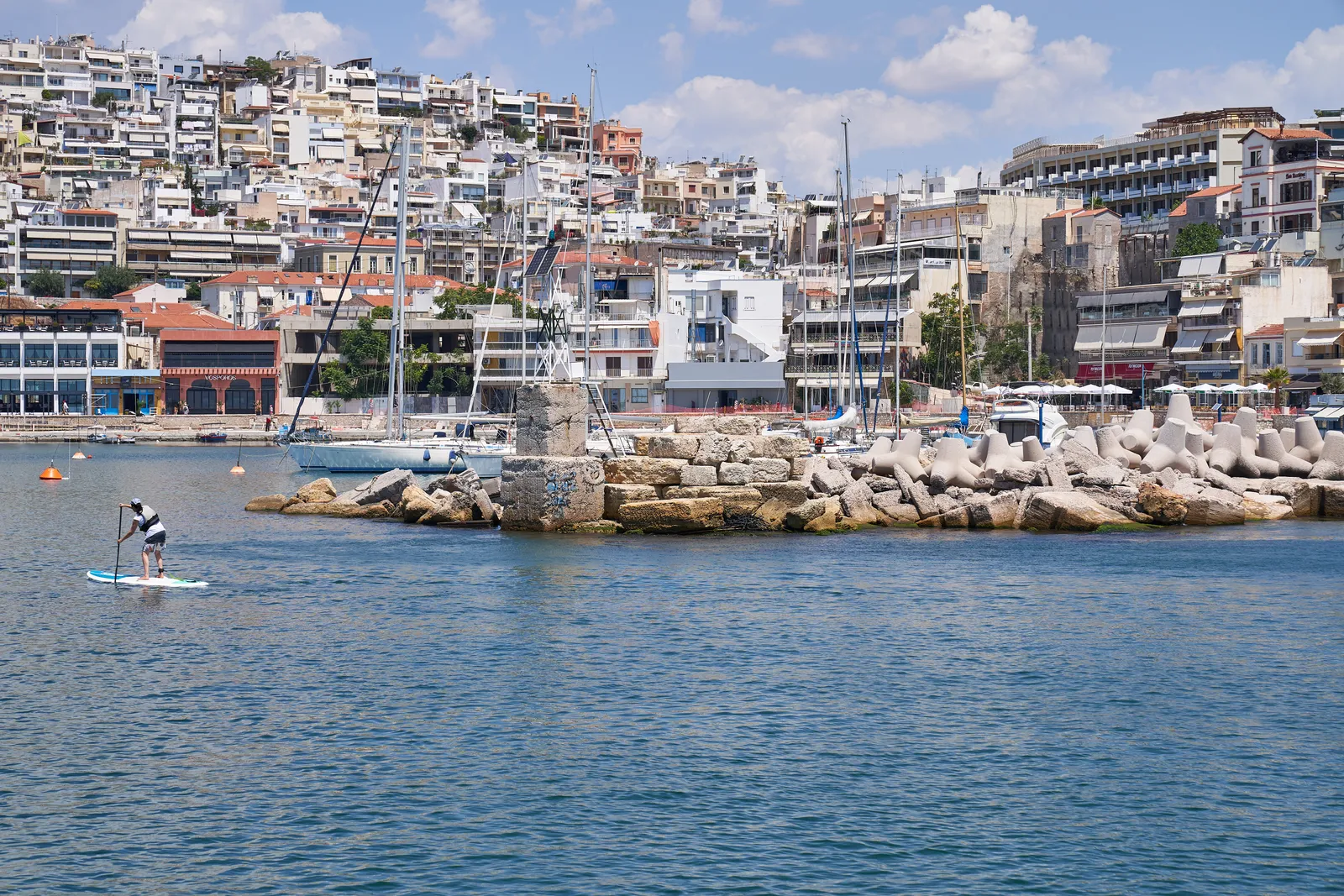
Those are the ends of the ancient moles, and the gap between them is the mouth the Athenians could close off to shut the harbour. Nothing marks them, there is no ticket and no fence, and most of the people eating fifteen metres away have their backs to them.
From here the road climbs Kastella, past 19th-century mansions and steep flights of steps, to the church of Profitis Ilias on the crown of the hill about 90 metres up. The view runs across the whole peninsula, the marinas, the ferry quays, and out over the Saronic Gulf towards Aegina and Salamis, with the Acropolis visible inland on a clear day.
Zea Marina fills the bay the Athenian navy used
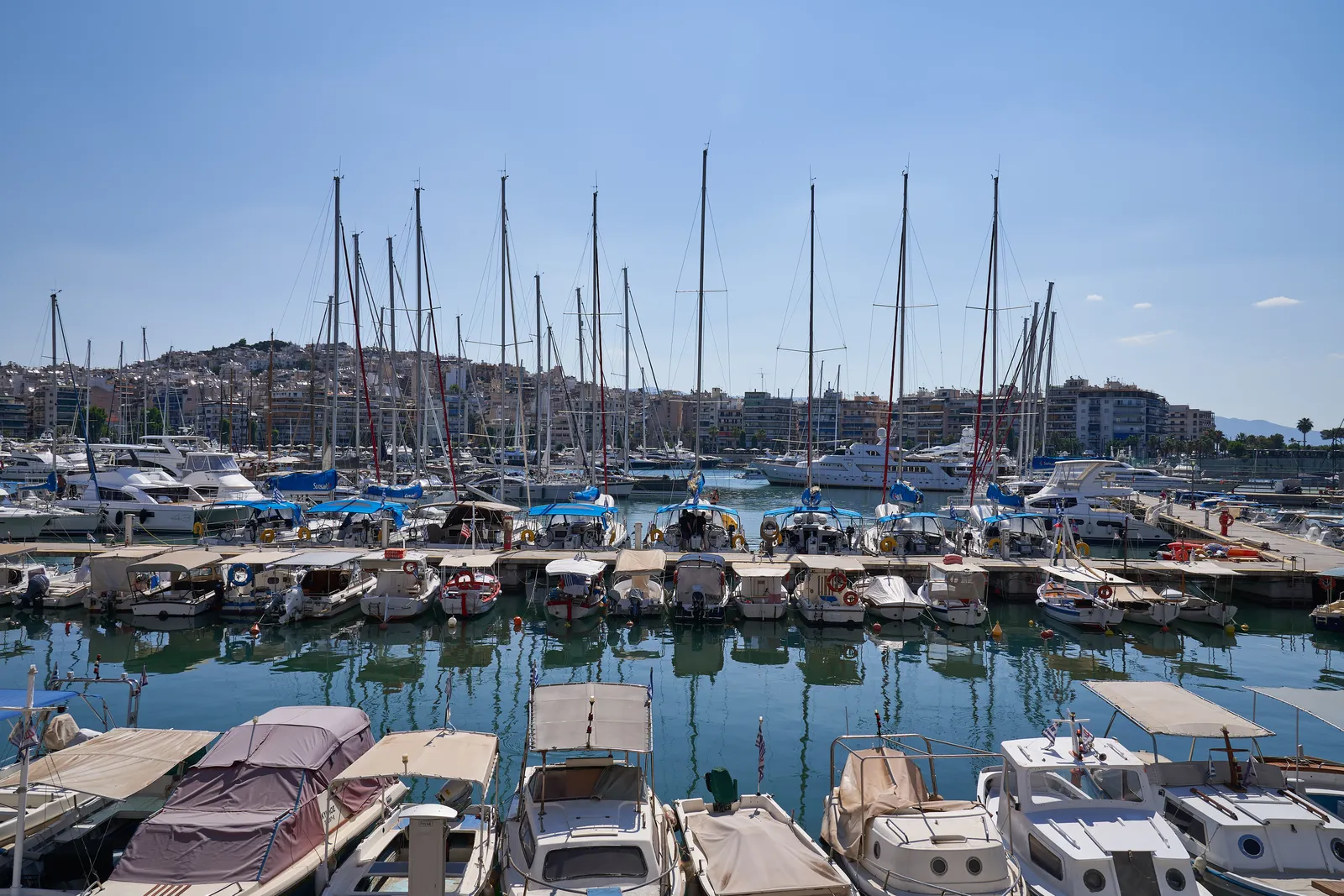
Back down the western slope is a much larger, almost enclosed bay, called Zea on the maps and Pasalimani by everyone in Piraeus. It is now several hundred yachts and a continuous quayside walk, with cafes on the landward arc.
In the 330s BC this bay held 196 shipsheds, roofed slipways that each took one trireme out of the water, and the excavated remains of some of them are still under the modern buildings around the shore. The Danish-led survey that mapped them in the 2000s put the shipshed complex here at over 55,000 square metres, which for a bay this size means the whole rim of it was warship berths.
If you would rather cover this stretch of coast sitting down, there is an open-top bus running the port and the coast road south, bookable through a tours and activities platform, which is a reasonable call in August.
Four bronze statues found together in 1959
In July 1959, works on a Piraeus street turned up a cache buried barely a couple of metres down: a life-size bronze Apollo, a bronze Athena, two bronze Artemis figures and a large tragic mask, all lying together. They are the centrepiece of the Archaeological Museum of Piraeus on Charilaou Trikoupi, a few streets back from Zea.
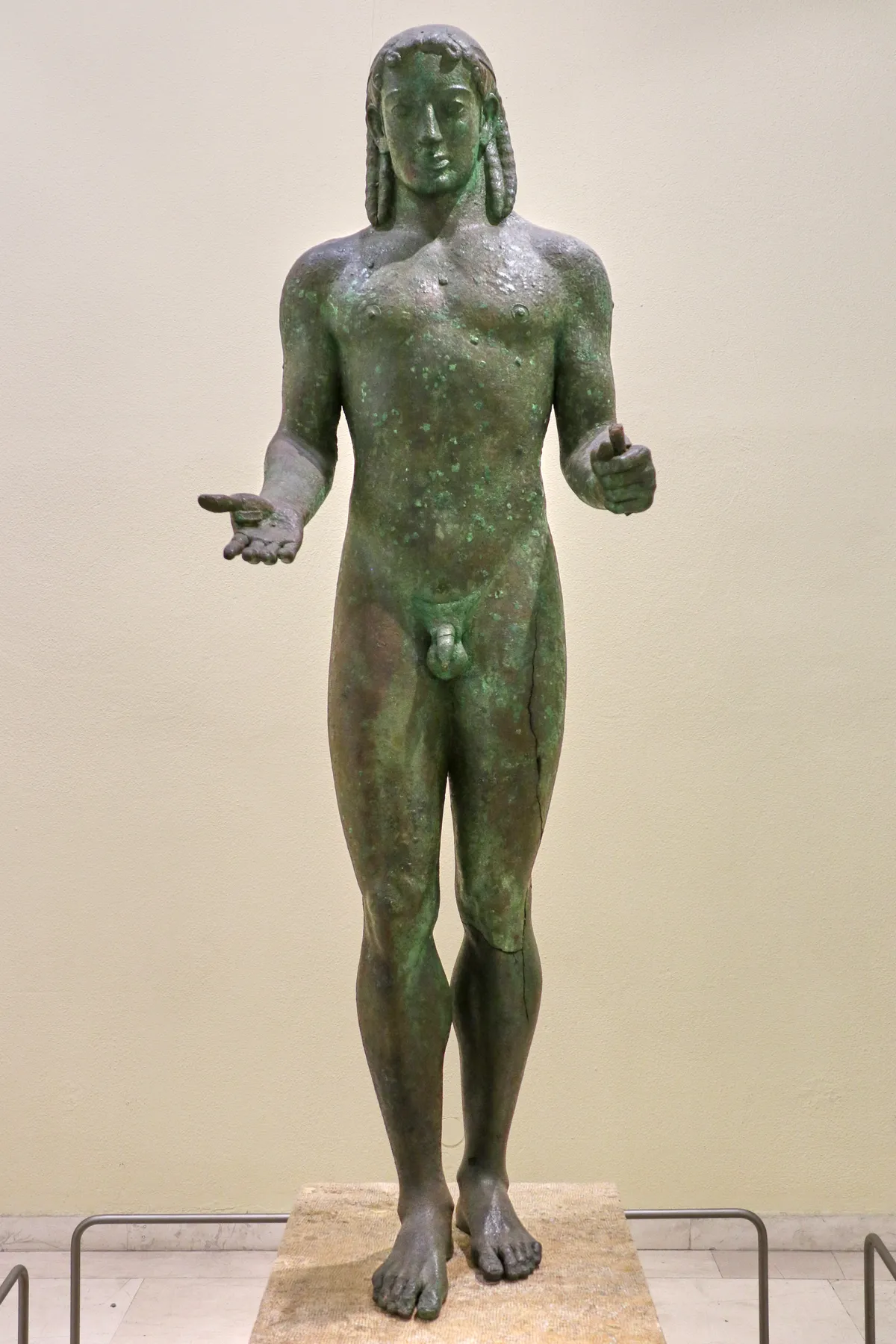
The Apollo is the one that starts arguments. It looks archaic, stiff-legged and formal with a wig of braided hair, and for decades it was read as a rare survival from around 500 BC. Other scholars now put it centuries later, a Hellenistic sculptor working deliberately in an old style, and the case is not closed either way. Standing in front of it knowing that is more interesting than a label would have been.
Ten euros, shut on Tuesdays, and it closes at 3.30pm through the winter, which is the detail worth checking against your boat’s arrival time.
One line, one hour, no change to the airport
Line 3 goes from Piraeus to the airport terminal without a change, in roughly an hour. That is the single practical advantage this port has over arriving anywhere else in Athens, and it is why a ferry day and a flight evening fit together at all.
The frequency is the catch. Only some Line 3 trains run the full distance to the airport, roughly two an hour, and the rest turn back short of it, so the destination board matters more here than the platform. Budget the same two and a half hours from Piraeus that you would from the centre: the ride is longer but the walk at the far end is the same.
If the gap between boat and flight is long enough, the walk through Plaka and the Ancient Agora is the better use of it, and Monastiraki is about twenty minutes up the same line. Under four hours, with a week’s luggage off an island crossing, the headland here is the more honest plan.
Frequently asked questions
How far is the metro station from the ferry gates?
It depends entirely on which gate your boat used. The station sits opposite gates E4 and E5, so from those it is a couple of minutes. From E11 and E12, at the far end of the quay, it is around 1.3 kilometres of open dockside with no shade and heavy vehicle traffic, and E8 and E9 are not much better. Free shuttle buses run along the quay between the gates, and if you have come off an overnight boat with a full-size suitcase they are worth waiting for.
Can I get to the airport from Piraeus without changing lines?
Yes. Line 3 runs the whole way from Piraeus to Athens International Airport with no change, and the ride takes around an hour. The catch is that the through services to the airport are much less frequent than the rest of the line, roughly twice an hour, so check the destination on the platform screen before boarding: a train that says Doukissis Plakentias will leave you short of the terminal.
Is the archaeological museum open on the day I arrive?
Unless it is a Tuesday, probably. It shuts on Tuesdays all year, and otherwise runs 9am to 5pm from April to October and 8.30am to 3.30pm from November to March. Admission is 10 euros. The afternoon close in winter is the one that catches ferry passengers out, because a boat docking at 1pm leaves you very little of it.
Is there anything to do at Piraeus at six in the morning?
The waterfront, and not much else. Ferries from the Cyclades dock through the early morning, and at that hour the museum is shut, the marinas are quiet and the cafes around Mikrolimano have not opened. The walk out to the headland is the only thing genuinely available, and it is a good one at that hour when the light is low and the harbour is still.
I have four hours between the boat and the flight. Where do they go?
Here, on the headland. If the gap is six hours or more the calculation changes: Line 3 reaches Monastiraki in about twenty minutes from here, and the old town under the Acropolis is a fuller afternoon than the headland. Under about four hours it is not worth the round trip with a ferry bag in hand, and Piraeus itself is the better answer.