Larissa Station Layover: Athens' Big Museum
Part of the full Athens Layover: Acropolis and Plaka From ATH
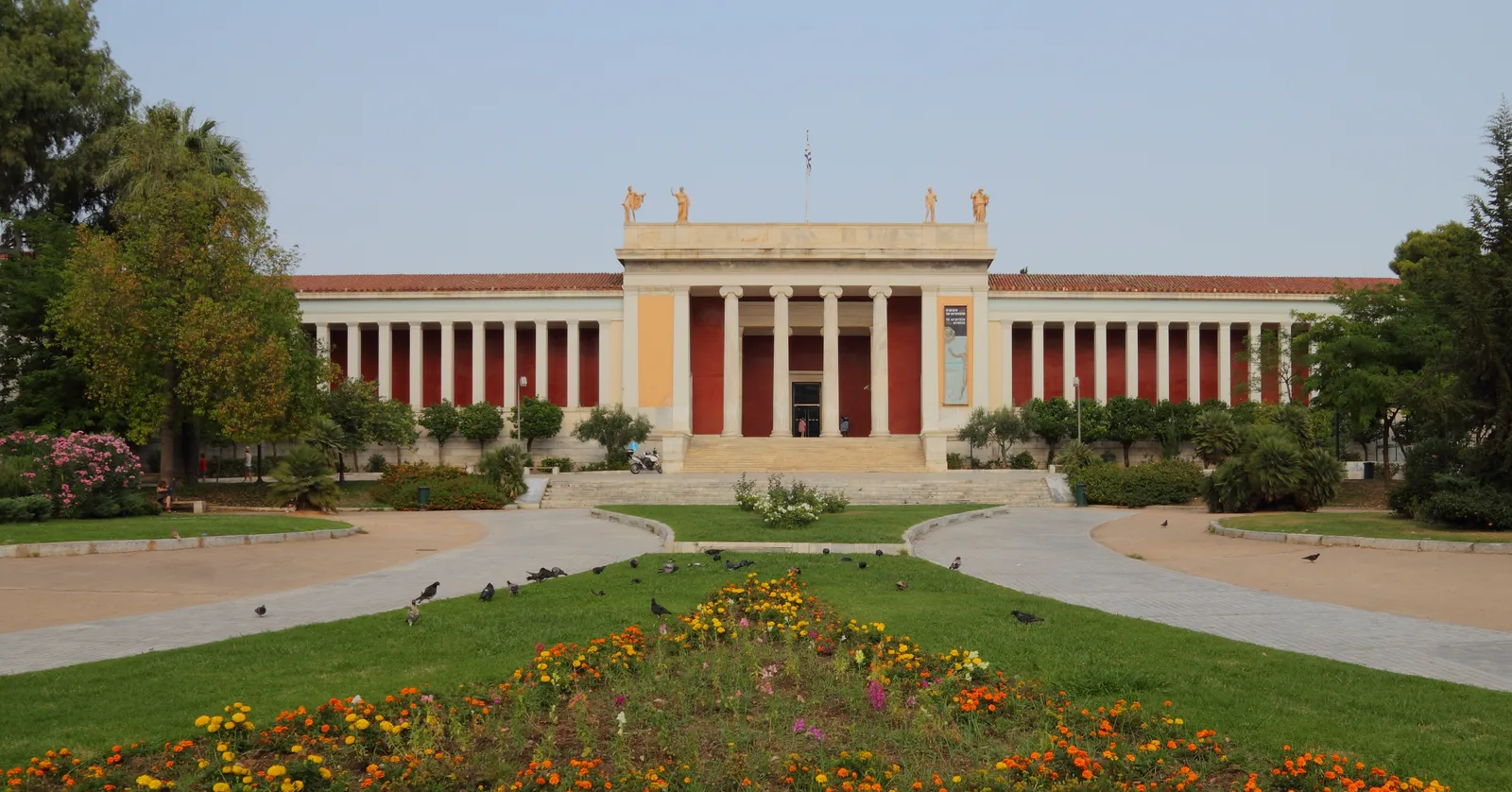
Larissa Station is Athens’ main railway station, north-west of the centre, and about fifteen minutes’ walk east of it stands the National Archaeological Museum, which holds the Antikythera Mechanism, the Mask of Agamemnon and the Artemision bronze in one building. It is the indoor, flat alternative to the old town, and it is on the red metro line rather than the blue one the airport uses.
The National Archaeological Museum holds the Mask of Agamemnon
Twenty euros since the start of 2026, one price all year, and the building itself is a long 19th-century neoclassical block set back behind a garden on Patission street.
In the central hall are the shaft-grave finds Heinrich Schliemann dug out of Mycenae in 1876: beaten gold death masks, inlaid daggers, cups, a whole treasury laid out in cases. Schliemann cabled that he had gazed on the face of Agamemnon. He had not; the mask is now dated roughly three centuries before any Trojan War could plausibly have happened, and the name has stuck to it anyway.
That kind of thing is the museum’s register throughout: dry labels, plain rooms, and objects that no amount of presentation could improve on.
Two stations at Larissa, one above the other
The railway station is a low ochre building with a clock over the door and a taxi rank in front, and the metro station of the same name sits beneath the street alongside it on Line 2.
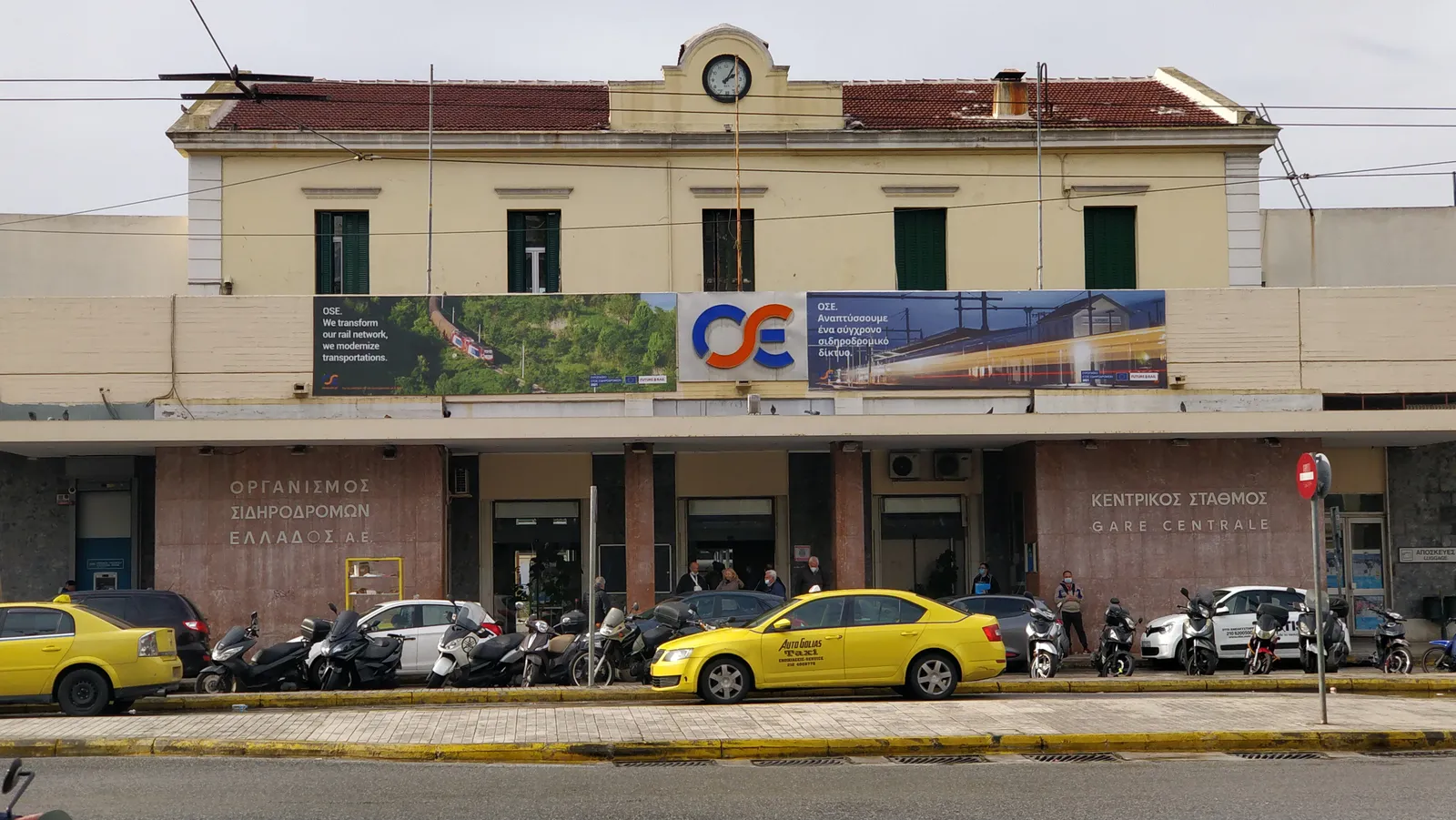
The two are not on one level. Getting between the intercity platforms and the metro means changing level, and while there is a lift, the obvious route is stairs, which is a real consideration after five hours on a train from Thessaloniki with everything you brought. Leave the suitcase at street level and the rest of this is a flat walk.
Tickets for the museum can be bought before you arrive through a tours and activities platform, which is worth doing on a tight afternoon simply to skip the desk.
The corroded gearwork of the Antikythera Mechanism
In a case on the ground floor are three greenish lumps of bronze, the largest about the size of a paperback, with a toothed wheel plainly visible in the corrosion.
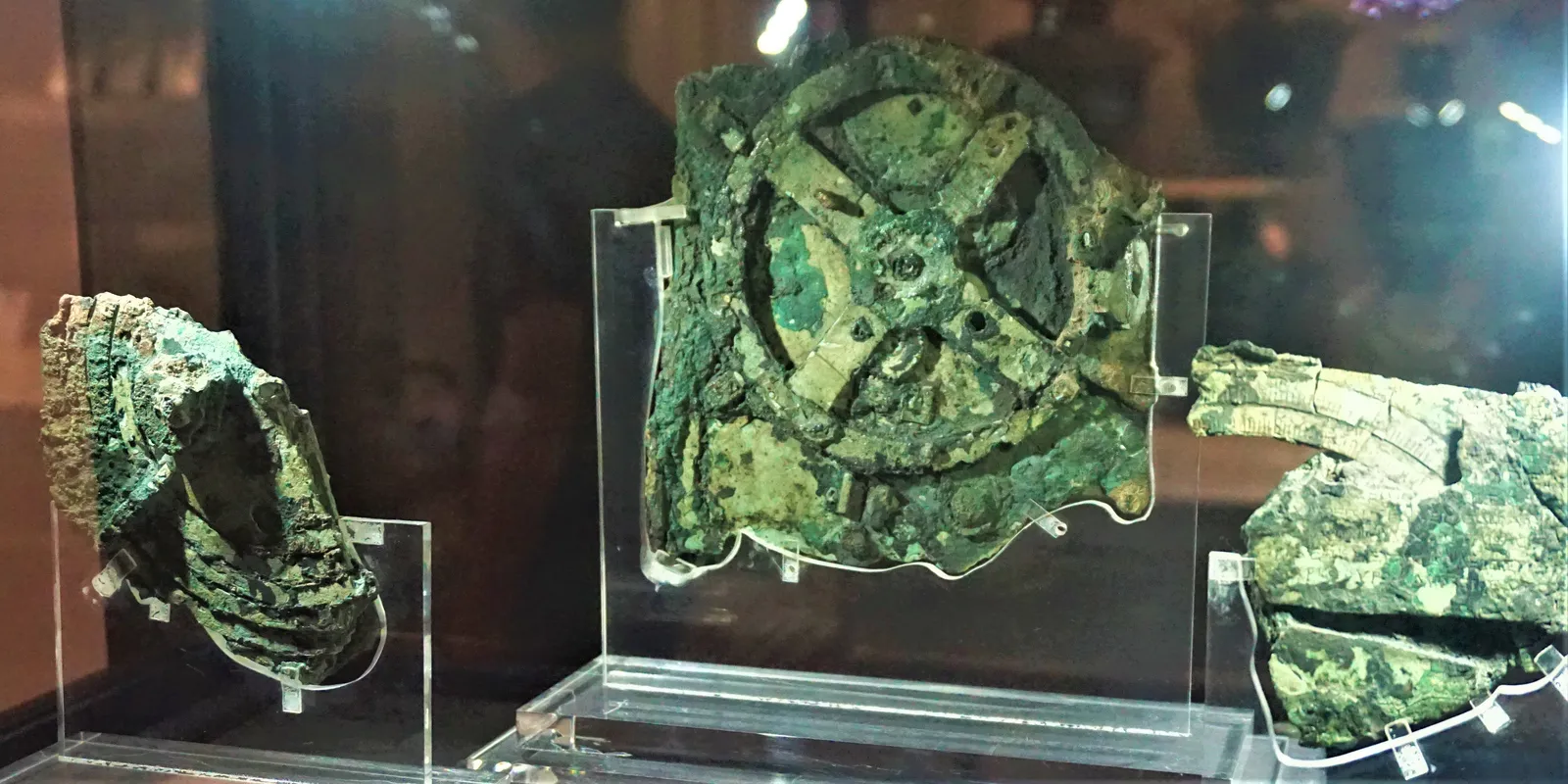
Sponge divers found them in 1901 in a wreck off the island of Antikythera, and it took most of the twentieth century, and eventually X-ray tomography, to establish what they are: the remains of a hand-cranked geared calculator, built somewhere around 150 to 100 BC, that modelled the positions of the sun and the moon, predicted eclipses, and tracked the four-year cycle of the games.
Nothing else of comparable mechanical complexity survives from the ancient world, and nothing like it appears again in the record for well over a thousand years. The case is small and easy to walk past for something that’s the only known device of its kind.
A bronze god pulled out of the sea at Cape Artemision
Two metres of bronze, bearded, mid-stride, left arm pointing dead ahead and right arm drawn back over the shoulder to throw something that is no longer there.
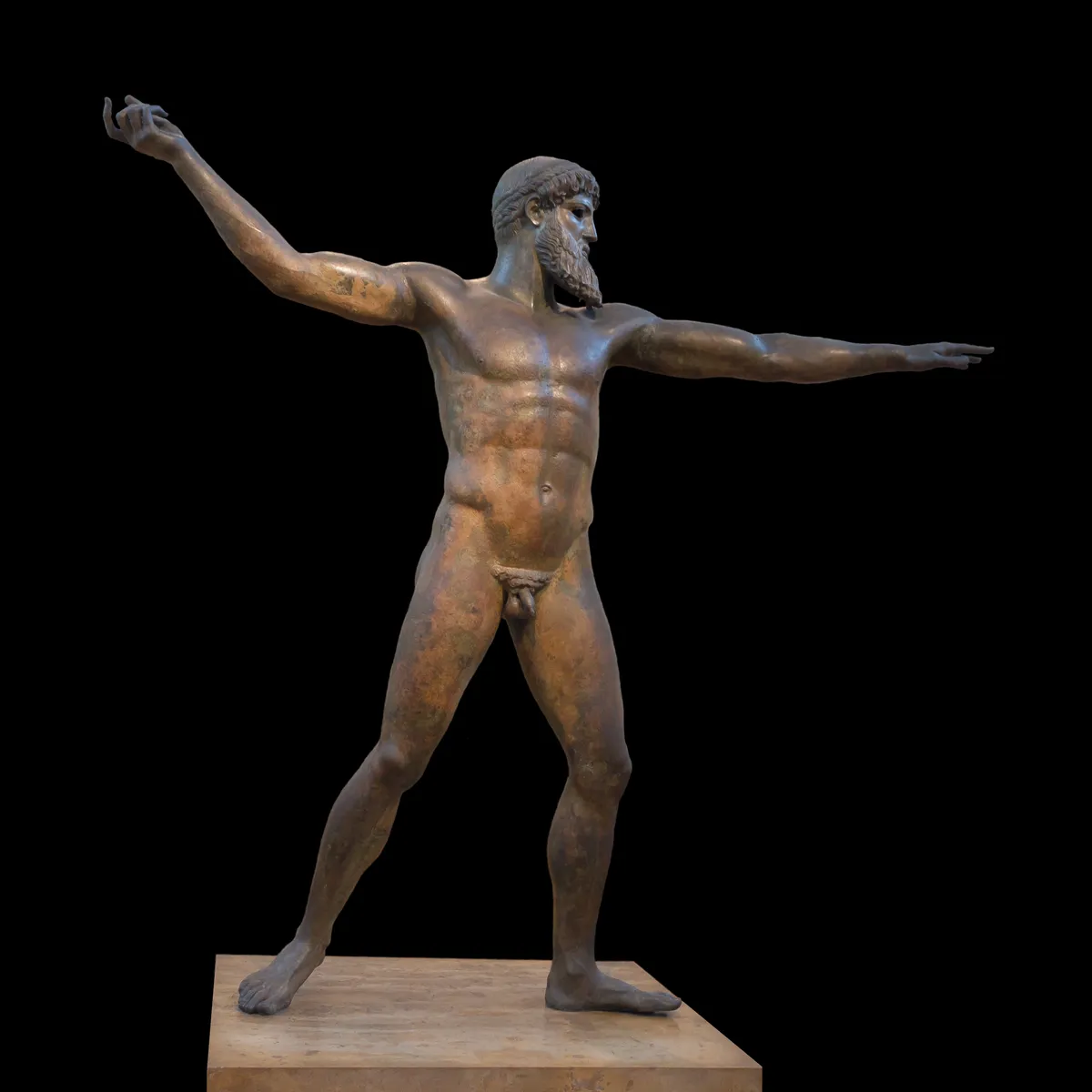
Fishermen snagged it off Cape Artemision in 1926 and divers recovered the rest in 1928. It dates to around 460 BC, and because the missing weapon decides the identity, scholarly opinion has gone back and forth ever since: a thunderbolt makes it Zeus, a trident makes it Poseidon, and most now lean to Zeus. The same wreck gave up the Jockey of Artemision, a bronze horse at full gallop with a small boy on its back, which is in the same museum a few rooms away.
Almost no large Greek bronzes survive, because bronze was worth melting down and statues that stayed on land generally were. The ones that are left are here because a ship went down with them.
Walking back to the station the short way takes you through Metaxourgeio, named for the silk factory on Avdi Square that opened in the 1830s and is now the city’s municipal gallery. Kerameikos, the ancient burial ground twenty minutes further south, has been shut for rebuilding since May 2025 and had not confirmed a reopening by the summer of 2026, so check before you plan around it. And when your train back to the airport line matters more than any of this: Larissa is on the red line, so the airport means a change at Syntagma and then roughly 40 minutes on the blue one, with those services running only about twice an hour.
Frequently asked questions
How long does the museum actually take?
More than you think. This is Greece's national collection of antiquities, and people who try to see all of it spend three or four hours inside. On a few hours before a flight, treat it as three rooms rather than a building: the Mycenaean gold in the central hall, the bronzes, and the Antikythera case. That is about ninety minutes at a reasonable pace and it does not leave you feeling you rushed the whole thing.
What are the opening hours, and is Tuesday different?
Tuesday is different, and it is the detail that catches people. Through the summer season the museum runs 8am to 8pm from Wednesday to Monday but does not open until 1pm on Tuesdays, so a Tuesday morning train arrival has nowhere to go with this plan. Admission is 20 euros, one price all year since the start of 2026.
Is there a step-free way between the trains and the metro?
There is a lift, but the connection is not one continuous level: the intercity platforms and the metro platforms are on different levels and the walk between them involves stairs unless you find it. With a full-size suitcase off a long train that is worth locating before you commit to carrying anything up. It is also why the sensible move is to leave the bag at street level rather than shuttle it between the two.
Is Kerameikos worth walking to from here?
Check before you set off. The ancient burial ground and its museum, about twenty minutes south through Metaxourgeio, closed in May 2025 for a rebuild that was still not confirmed as finished in the summer of 2026. When it is open it costs 8 euros in summer and 4 in winter, and it holds the Dipylon and Sacred Gates and the reconstructed Street of Tombs. Until the Ephorate posts a reopening, do not build an afternoon around it.
Three hours off the train. Is the old town realistic?
If the weather is good, just about. Larissa is two stops from Omonia and the Plaka and Ancient Agora route starts a short ride further on. This side is the better answer when it is raining, when it is 40 degrees, or when a train has just put you here with three hours and no appetite for a hill.