Acropolis Museum Layover: Athens' South Slope
Part of the full Athens Layover: Acropolis and Plaka From ATH
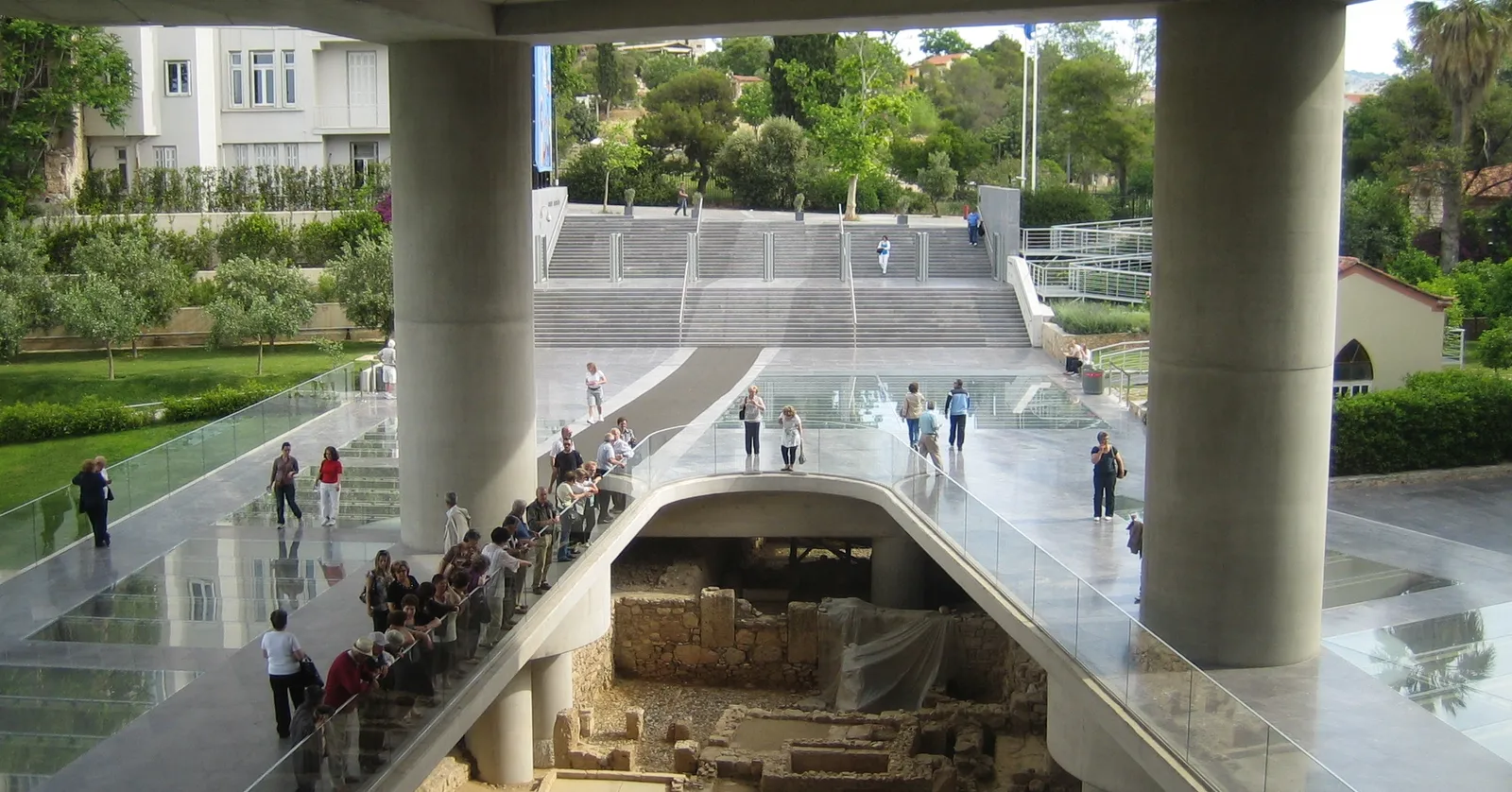
The south side of the Acropolis in Athens is the indoor half of the old centre: the Acropolis Museum, three minutes from Acropolis metro station, with an excavated ancient neighbourhood under its floor and five of the six Erechtheion Caryatids on its second level, and then a traffic-free promenade running past the Odeon of Herodes Atticus at the foot of the rock.
The Acropolis Museum’s top floor faces the real Parthenon
Fifteen euros from April to October, ten through the winter, and no booked time slot, which is the practical difference between this and the rock above it.
The building works upwards through the Acropolis’s own history: the slopes on the ground floor, the archaic sculpture on the first, the Erechtheion room on the second, and then the Parthenon Gallery at the top. That last room is the argument the whole building was designed to make. It is a glass hall built to the Parthenon’s own dimensions and turned to the same compass orientation, so the frieze, the metopes and the pediment figures are mounted in the positions and the order they held on the temple, facing the way they faced. Through the glass, a few hundred metres off and well above you, is the temple itself.
Where a block is a plaster cast rather than the original, it is left visibly white against the weathered marble. There are a lot of them, and that is deliberate.
This is a stop spent standing still in front of cases and walking slowly between floors, which is the one kind of visiting a suitcase parked at your feet makes awkward for everyone around you as well as for you.
Tickets are available in advance with an audio guide attached through a tours and activities platform, which mostly saves the queue at the desk rather than a queue to get in.
An ancient street runs under the museum’s floor
When they dug the foundations here they hit a neighbourhood: streets, courtyard houses, workshops, bathhouses and cisterns, occupied on and off from the fourth millennium BC into the Byzantine centuries. Rather than clear it, the architects stood the museum on concrete pillars threaded down between the walls and left the excavation open underneath.
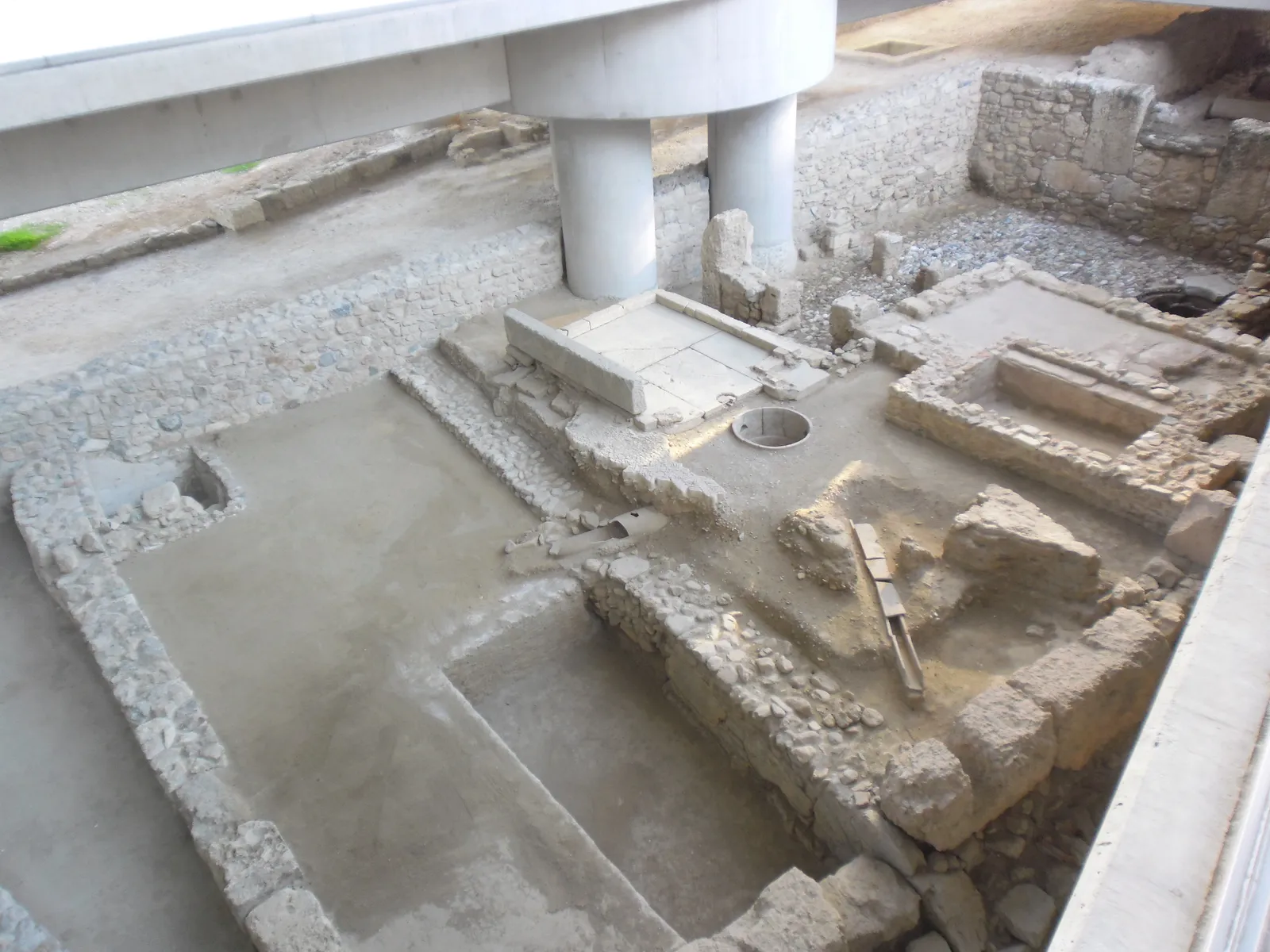
You walk in over it. The entrance ramp and sections of the ground floor are glass, so the ruins are directly beneath your feet as you go through the door, and there are walkways down at the level of the old street. It is the part of the visit people spend least time on and it is the part that most changes how the rest of the building reads.
Five Caryatids and the gap where the sixth stood
On the second floor, six draped women in a row, or rather five, standing on a plinth in the arrangement they held on the south porch of the Erechtheion. They were carved between about 421 and 406 BC, and what is on the building up on the rock now are copies; these are the originals, brought down out of the weather.
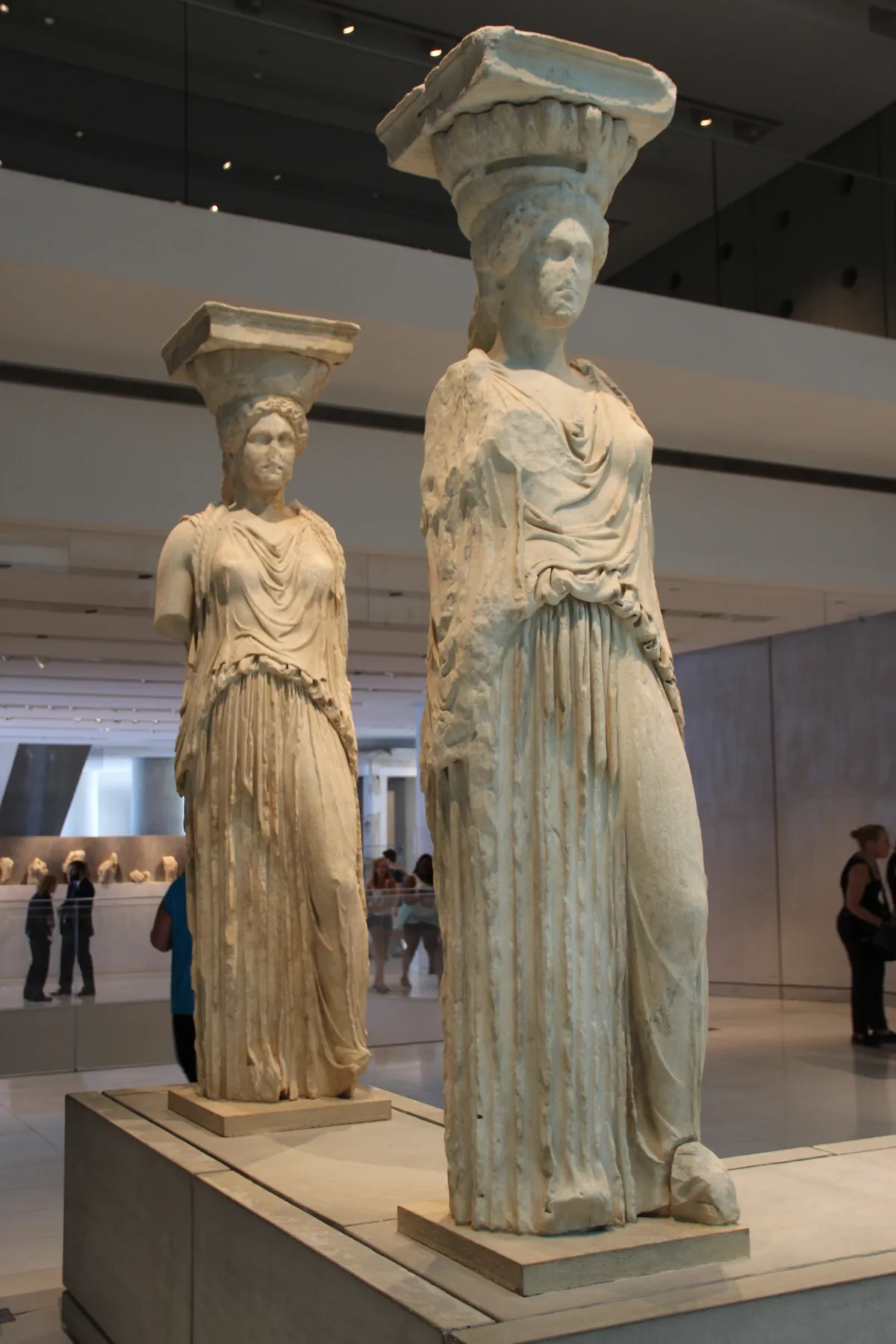
The sixth space is empty. Lord Elgin’s men took that one in 1802 and it is in the British Museum, and the museum here has left her place open rather than fill it with a cast. Looking at the five up close is also the only way to see how much individual carving went into what reads from a distance as six identical columns: the hair alone, braided in a thick rope down each back, is different on every one.
The Odeon of Herodes Atticus fills up every summer
At the western end of the slope is a Roman theatre cut into the hillside, built in 161 AD by Herodes Atticus in memory of his wife, with a stage wall three storeys high in arched tiers and about 5,000 seats.
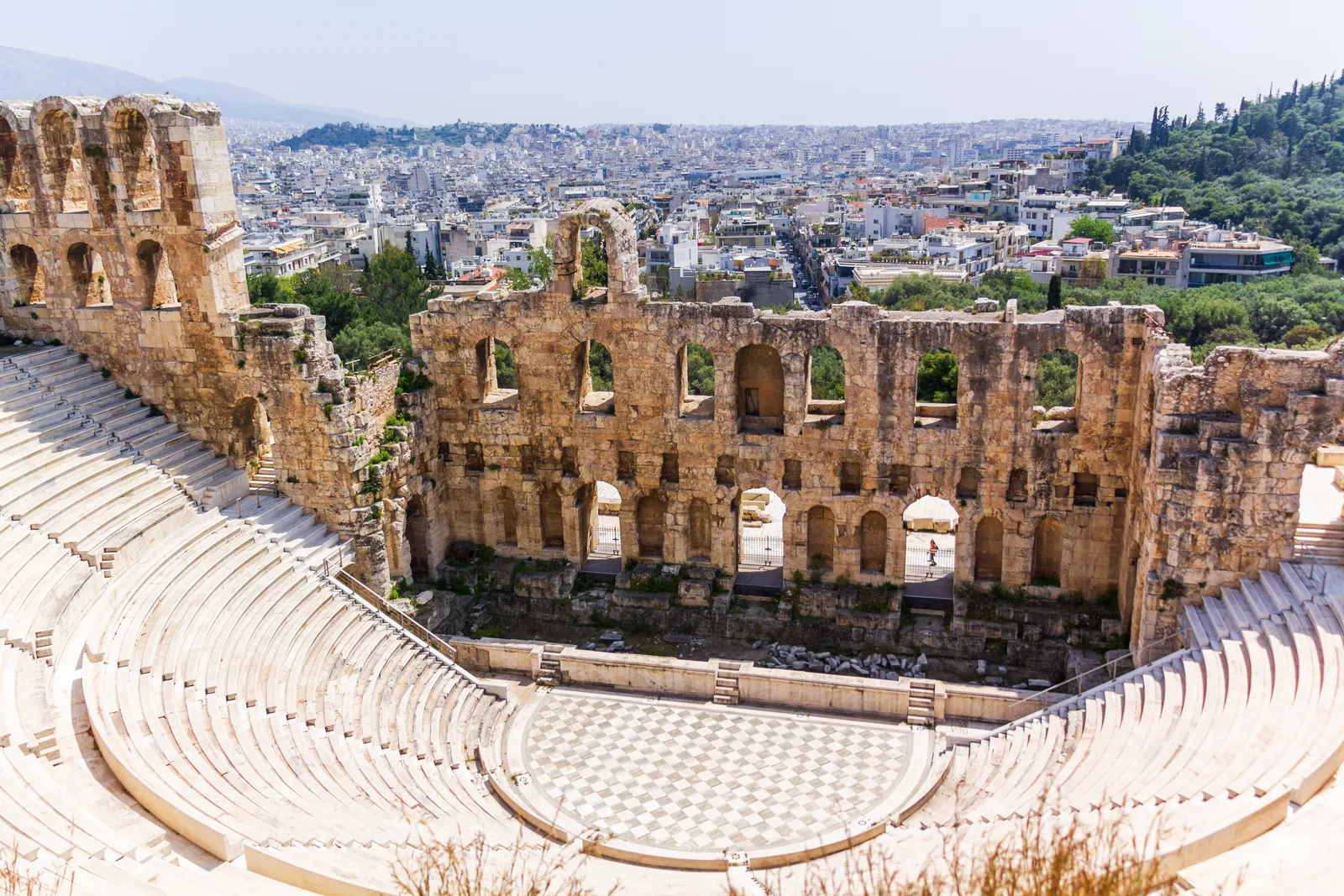
It was restored in the 1950s and it has been the main Athens venue of the Athens and Epidaurus Festival since 1957, which means through the summer it is a working concert hall rather than a ruin: opera, ancient drama, orchestras, the occasional touring act, with the Acropolis lit above the stage wall. Outside performance hours the gates are shut and you look into it from the fence, which is a perfectly good look at it.
Further east along the same slope, inside the Acropolis site and covered by its ticket, is the Theatre of Dionysus, where the plays of Aeschylus, Sophocles and Euripides were first staged.
Dionysiou Areopagitou has no traffic on it at all
The street running along the foot of the south slope was closed to traffic as part of the scheme that stitched the city’s archaeological sites together ahead of the 2004 Olympics, and it is about 830 metres of wide, tree-lined paving with nothing driving on it, from Hadrian’s Arch at the eastern end round to where it meets Apostolou Pavlou below Thissio.
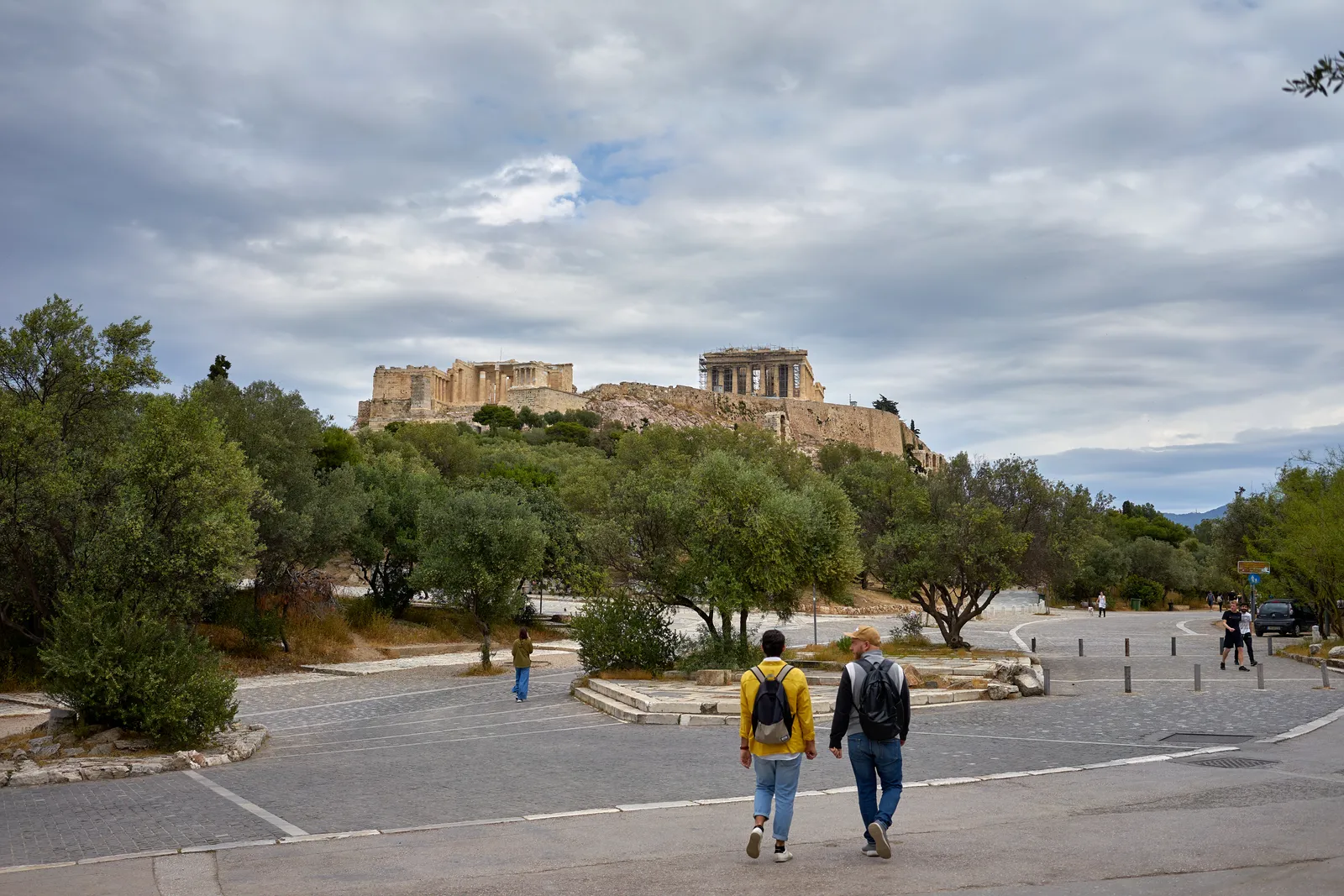
It is the flattest continuous walk in the old centre and the Acropolis is above you the entire way. Behind it, on the museum side, is Koukaki: a residential grid of low apartment blocks and neighbourhood cafes with almost nothing on it aimed at visitors, which is where to go if you want a coffee that is not being sold to you at a monument.
No airport train from Acropolis station without a change
Acropolis station is on Line 2, the red one, and the airport trains run on Line 3. That means one change, at Syntagma, and the transfer there is the tightest part of the trip at commuter hours. Allow the same two and a half hours before departure you would from anywhere else in the centre: one stop up to Syntagma and a change of platform there, then roughly 40 minutes on the blue line, and the through services to the terminal go only about twice an hour.
If it turns out you have longer than you thought, the north side of the same rock is a completely different afternoon, all outdoors and mostly free, and Monastiraki is one stop further on the same blue line you would be changing to anyway.
Frequently asked questions
Does the museum ticket cover the Acropolis too?
No, they are separate and always have been. The museum is 15 euros from April to October and 10 from November to March. Going up the rock itself is 30 euros year-round on a booked time slot. Plenty of people do only the museum, and on a few hours before a flight that is the more sensible half: it is indoors, it is on one site, and it does not need a slot reserved days ahead.
What happens on this side of the Acropolis when it rains?
This is the part of central Athens that copes best with it. The museum is four floors of indoor galleries, and the metro station is a couple of minutes from its door. Dionysiou Areopagitou is the catch: long stretches of the promenade are polished marble slabs, and they get genuinely slippery in the wet, which is worth knowing before you walk it in smooth-soled shoes.
Can I look at the excavation without a museum ticket?
Partly. The forecourt outside the entrance has glass panels set into the walkway, so you can look down into the ruins from the public side before the barrier. Getting in among them, on the walkways at the level of the ancient street, needs the museum ticket.
Is the Odeon open to walk into?
Not usually. It is a working venue rather than a site you tour: the gates open for performances, and the rest of the time you look down into it from the fence on Dionysiou Areopagitou or from the Acropolis slope above, which is where the best view of it is anyway. If you are here between roughly June and August it is worth checking whether anything is on that evening.
Do I need to book the museum ahead?
Not the way the Acropolis above it has to be booked. The museum does not run timed entry slots, so there is no risk of the day selling out from under you, and buying ahead only saves the queue at the ticket desk, which is worth a few minutes on a busy summer afternoon and nothing at all on a wet Tuesday in February.