Athens Layover: Lycabettus Hill and Kolonaki
Part of the full Athens Layover: Acropolis and Plaka From ATH
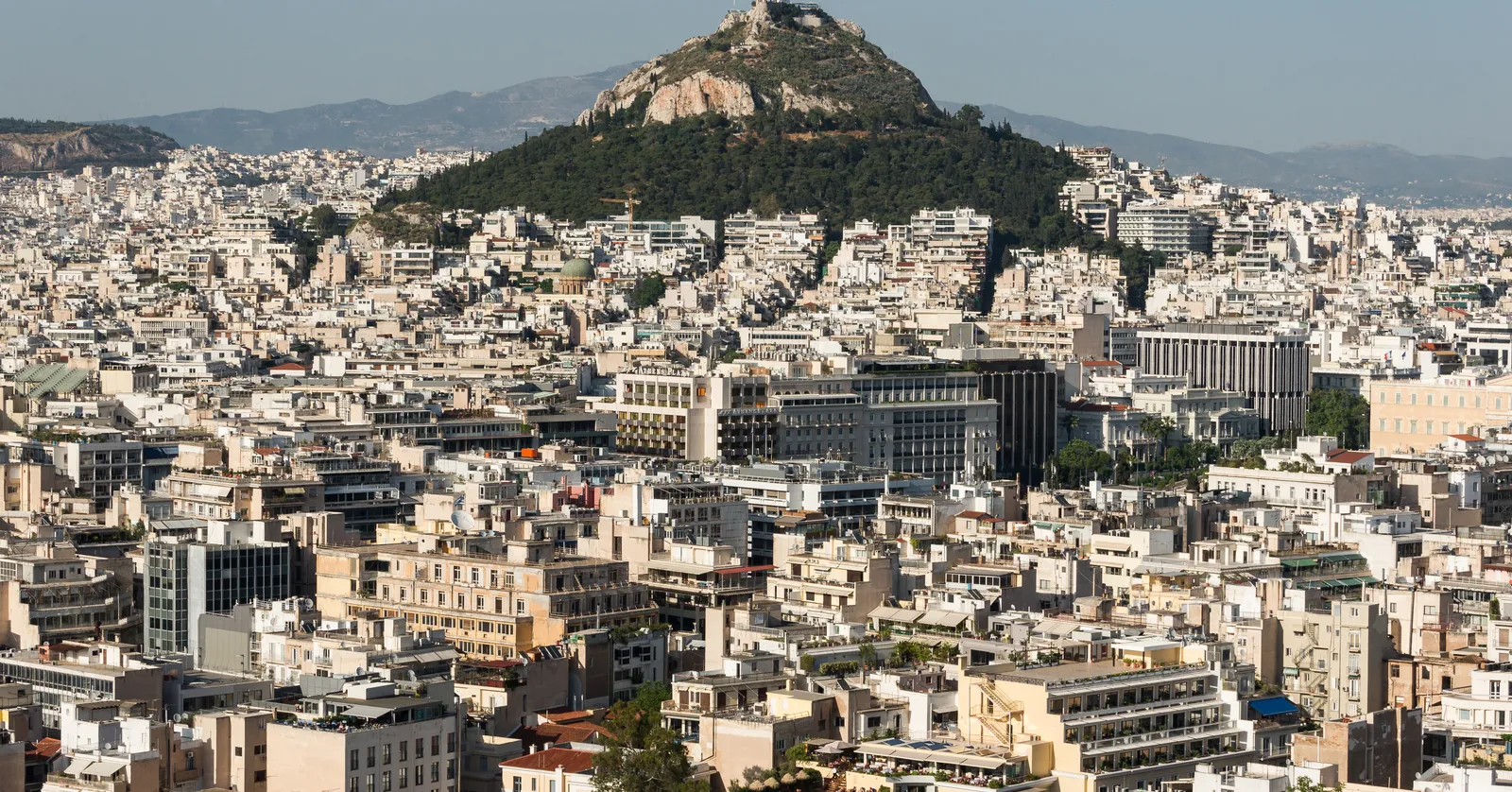
Lycabettus is the wooded cone that sticks up out of the middle of Athens, 277 metres at the summit, and a funicular runs three minutes through the inside of it from Kolonaki to a whitewashed chapel at the top. It is the one place in the city where the Acropolis is below you, and it works on a short evening slot in a way the old town does not.
Lycabettus stands over the flat middle of Athens
Athens is flat and low-built for kilometres in every direction, so a 277-metre limestone cone covered in pines is visible from most of it, and from the top the whole basin resolves at once: the Acropolis in the middle distance, the parliament and the National Garden below, the port at Piraeus and the sea beyond, and the ridge of Hymettus closing the eastern side.
The Athenian version of how it got here is that Athena was carrying a chunk of limestone up to the Acropolis, was given bad news on the way, and dropped it. It is a better story than the geology.
The whitewashed chapel of Agios Georgios on the summit
The highest point carries a small chapel: three arched doorways, a bell cote, a dome, and about as much whitewash as an island church.
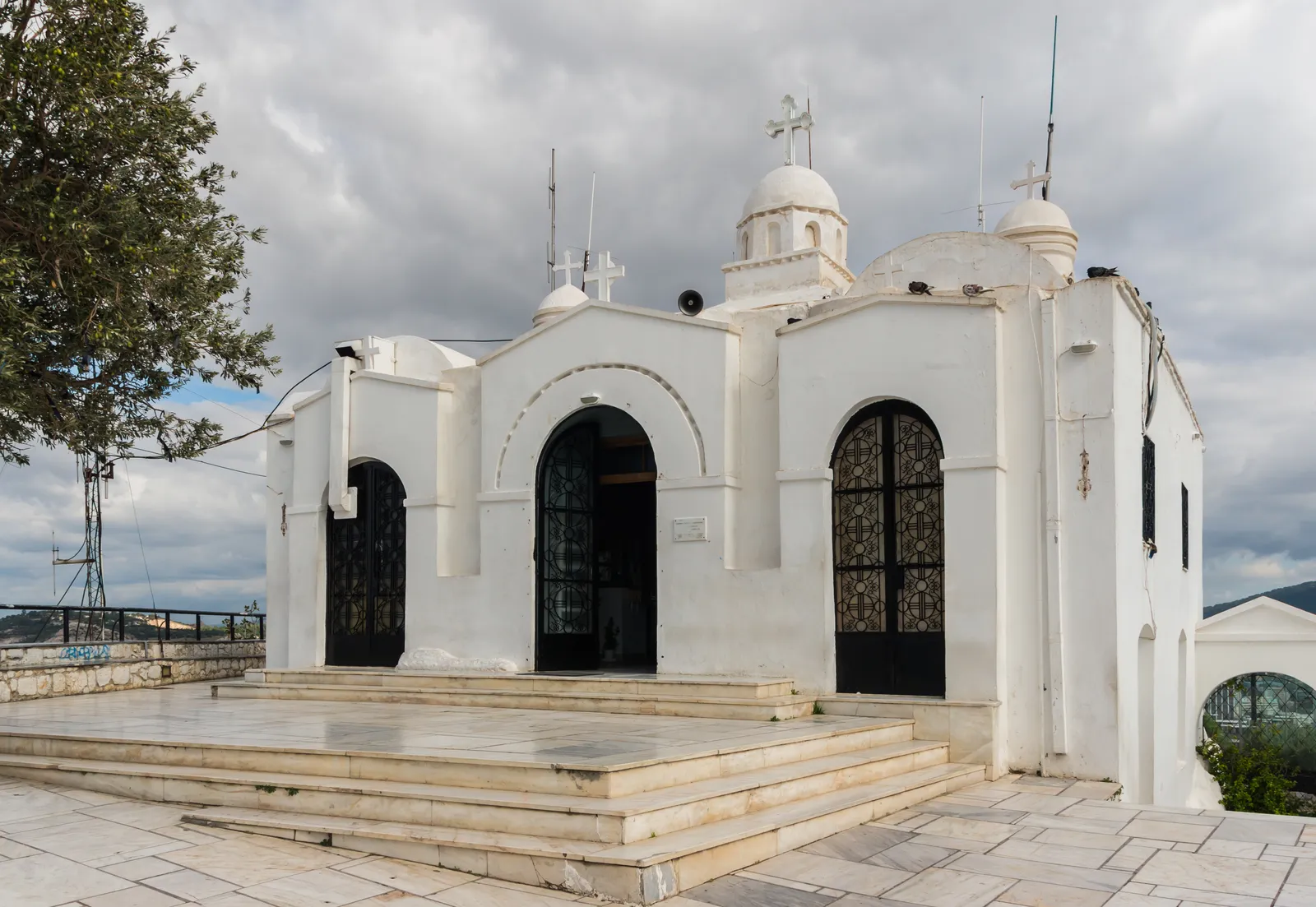
It is open, free, and tiny. The terrace around it does the real work, running the full circle so you can walk from the view of the Acropolis to the view of the sea without going inside anything. There is a cafe and a restaurant on the level below, both priced for the location.
A three-minute funicular through the inside of the hill
The lower station is at the top of Ploutarchou street in Kolonaki, and the ride is entirely in a tunnel bored through the rock, so there is no view on the way up at all: you get in at the bottom, sit in a stepped cabin for three minutes, and step out onto the summit terrace.
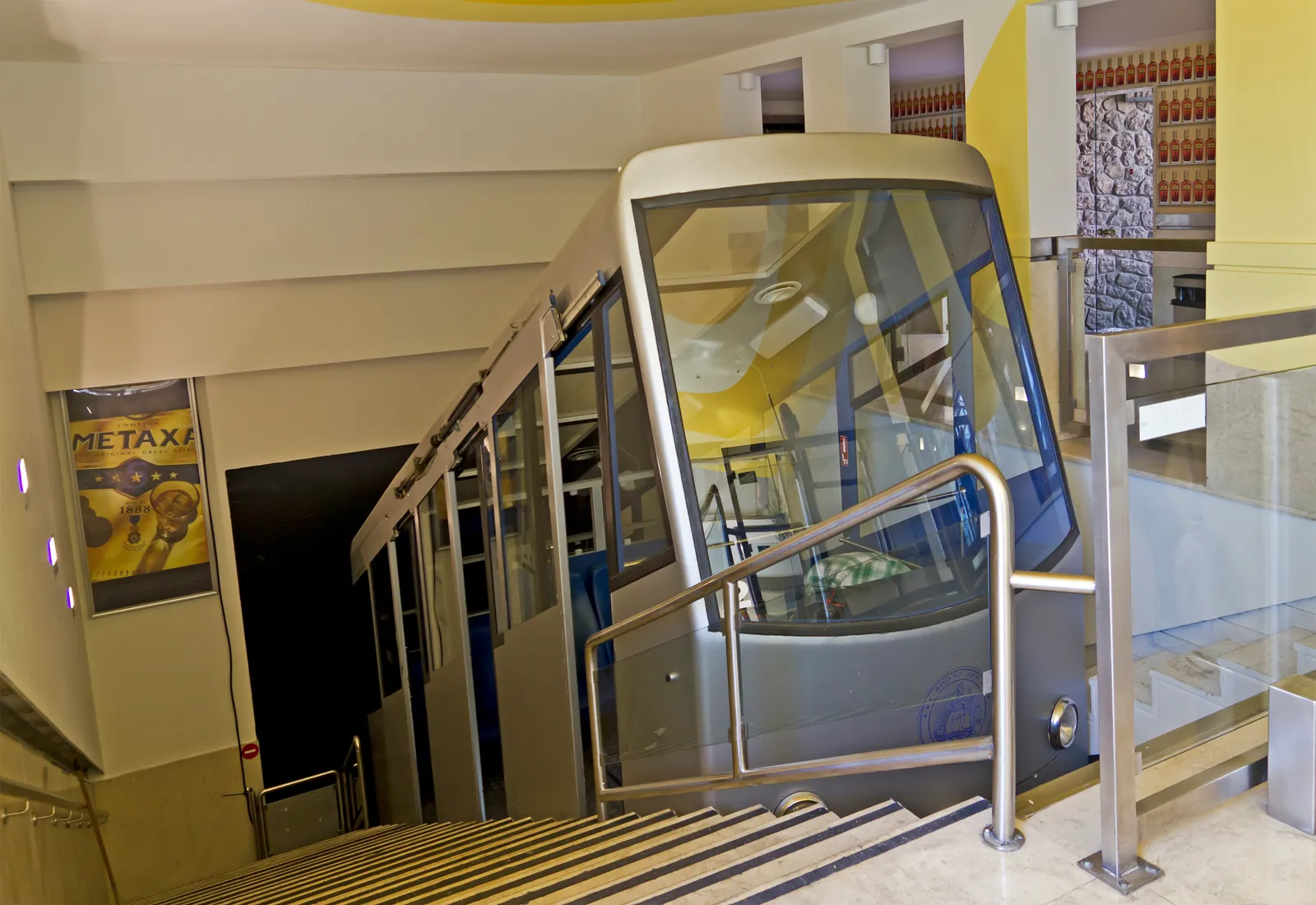
There is nowhere in that cabin to put a suitcase down, and the only other way up is a stepped path through the pines, so what you are carrying decides which of the two you take.
The fare is in the region of 10 euros one way and a few euros more for a return, and it has been revised recently enough that the board at the station is a more reliable source than anything written down. It runs from 9am to the small hours, every half hour when quiet and more often when busy.
The Cycladic art museum in a Kolonaki mansion
At the bottom of the hill, Kolonaki is the expensive quarter: boutiques, small squares, and a lot of people who live here rather than visit. The thing in it worth a ticket is the Museum of Cycladic Art, whose entrance hall is a modern block on Neofytou Douka and whose other half is the Stathatos Mansion, a yellow neoclassical house on the corner of Vasilissis Sofias.
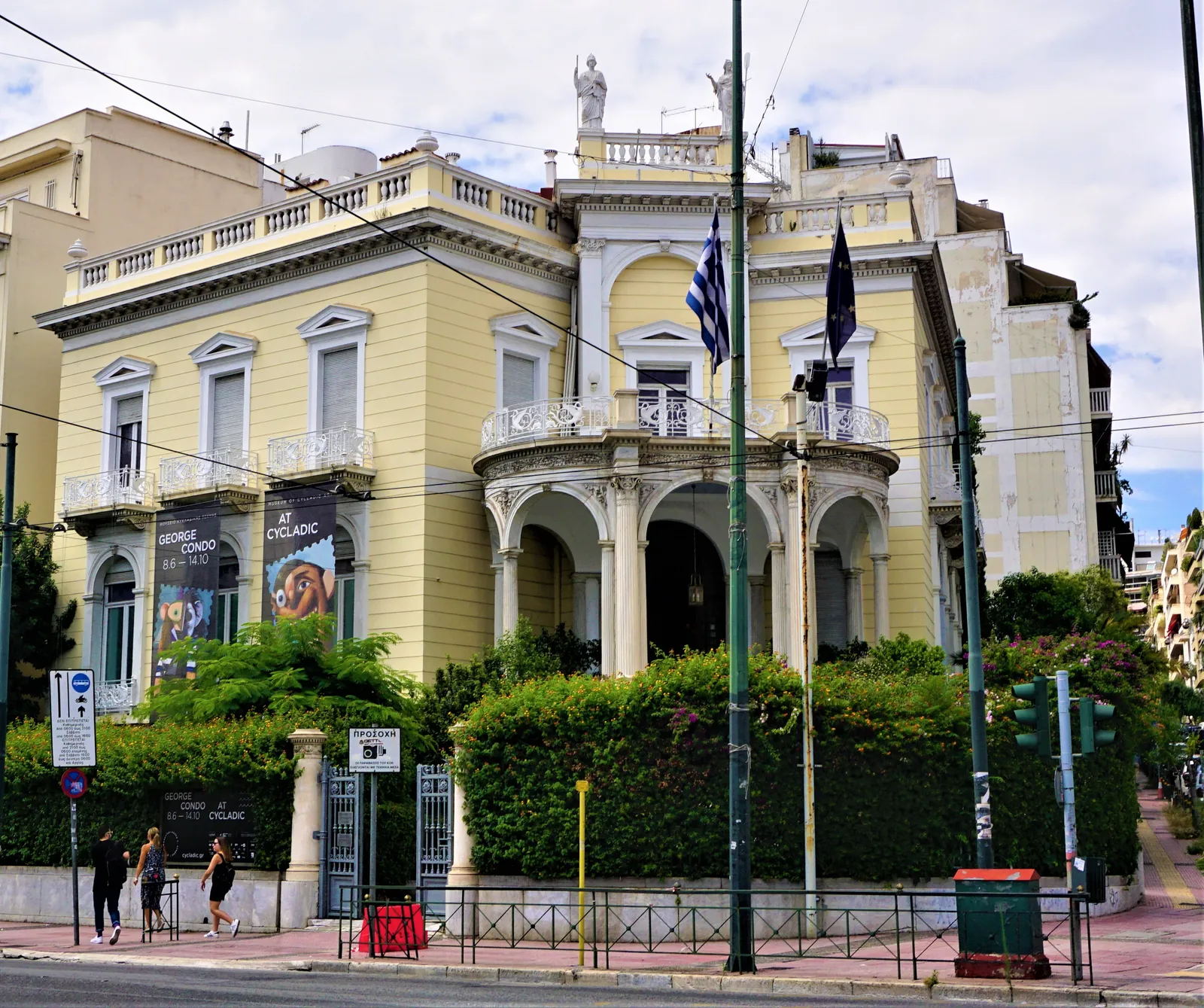
The collection is the marble figurines made in the Cyclades between roughly 3200 and 2000 BC: flat, folded-arm figures with no faces beyond a nose, most of them small enough to hold in two hands, all of them looking like something made a hundred years ago rather than five thousand. Admission is 16 euros and it shuts on Tuesdays, and you can buy the ticket before you go through a tours and activities platform. The Benaki Museum’s main building is ten minutes away on the same avenue.
Evangelismos is the station at the bottom of the hill
There is no metro at Lycabettus itself. Evangelismos on Line 3, the blue line, is the nearest, about ten minutes’ walk downhill from the funicular’s lower station, and it is on the airport line, which is the practical advantage this corner of the city has: no change of train, a little over half an hour, though the through services to the terminal run only about twice an hour.
That combination, one direct line out and a summit you can be standing on twenty minutes after leaving the station, is what makes this a short-slot itinerary rather than an afternoon. If the flight is late enough that the city will be lit when you are up there, it is the better use of two hours than anything at ground level.
Frequently asked questions
What does the funicular cost and how often does it run?
Somewhere around 10 euros one way, with a return a few euros more; the fare has been revised recently and different sources quote different figures, so take the board at the lower station as the answer. It runs every half hour off-peak and as often as every ten minutes when it is busy, from 9am until the small hours, with earlier closing in winter.
Can I walk up instead?
Yes, and it costs nothing. A stepped and switchbacked path climbs through the pines from the Kolonaki side and takes roughly half an hour at a steady pace. It is genuinely steep in places and there is little shade on the upper section, which makes it a poor choice in the middle of a July afternoon and a good one an hour before sunset.
Is the summit worth it if the weather is hazy?
Less than you would hope. The whole point of the climb is the distance: the Acropolis below you, the Attica basin out to the sea at Piraeus, and the Saronic islands on the horizon. Athens gets hazy in high summer and after still weather, and on those days the far half of that view is simply not there. Look at the hill from street level before you pay to go up it.
Is there anything to do at the bottom besides the funicular?
Kolonaki, which is the streets between the hill and the parliament: expensive shops, small squares, and two of the better museums in the city, the Museum of Cycladic Art and the Benaki. It is also the part of central Athens with the least on offer for a visitor in a hurry, so treat it as somewhere to sit for half an hour rather than a second itinerary.
Does this fill a whole afternoon?
No, and it is not meant to. The hill and a coffee in Kolonaki is about two hours. If you have four or more, the walk through Plaka, the Ancient Agora and the Areopagus is the fuller version of an Athens afternoon, and this is what you do when the gap is short or the flight is late enough that you want the city lit up rather than the ruins open.