Helsinki Layover: Suomenlinna Fortress, HEL
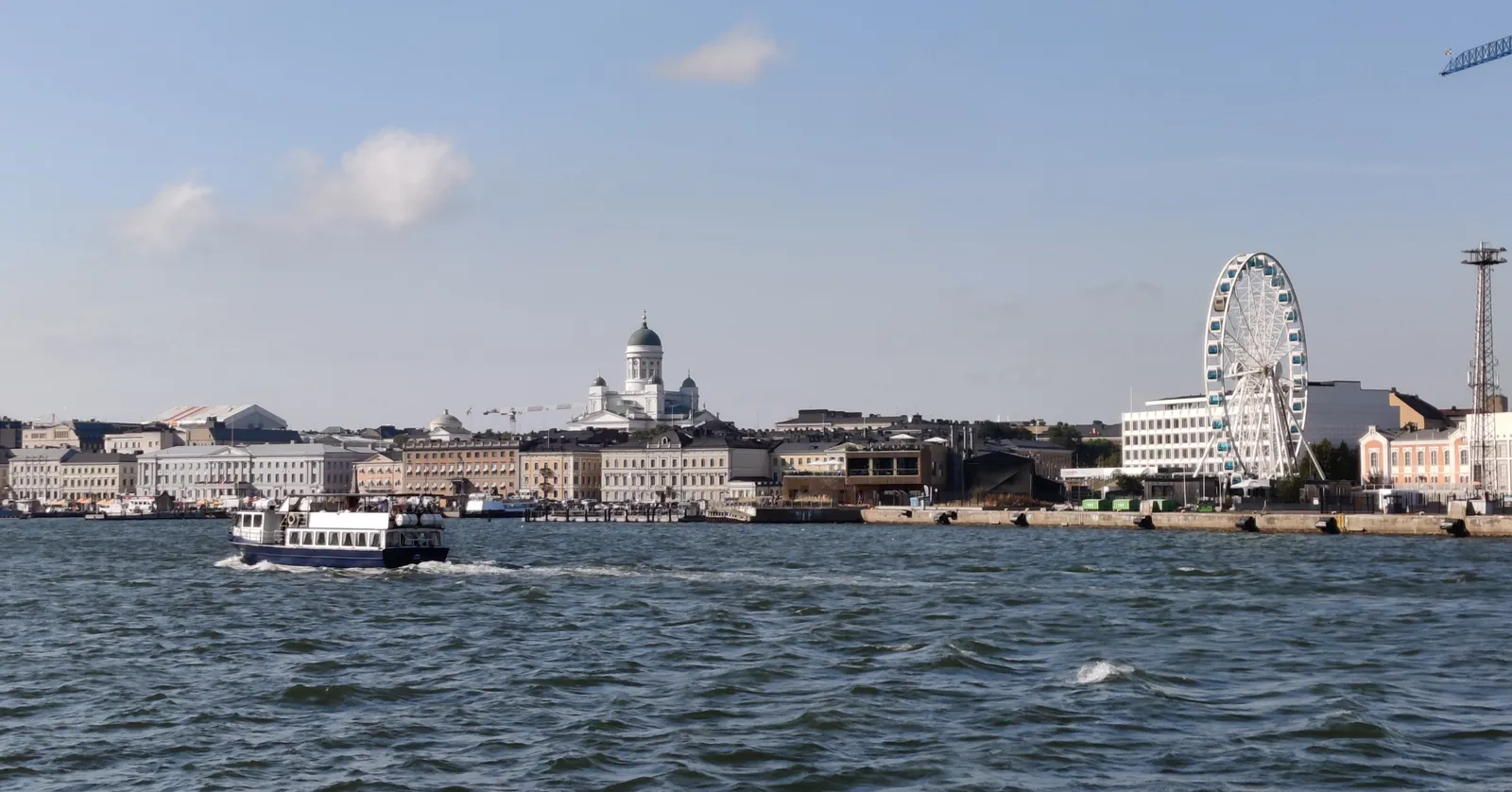
Suomenlinna, a sea fortress spread over a group of islands at the mouth of Helsinki’s harbour, is a fifteen-minute ferry ride from the Market Square on an ordinary public transport ticket, and its ramparts and tunnels cost nothing to walk.
Suomenlinna, a sea fortress built across six islands
Sweden started building it in 1748, when Finland was still Swedish territory and the Russian fleet had made the sea approach to Helsinki look indefensible. Augustin Ehrensvärd, an artillery officer in his late thirties, ran the work, and the bastions went up on eight islands, six of which were fortified. Russia took it in 1808, Finland inherited it in 1918, and UNESCO listed it in 1991. Around 800 people live there now, in the same barracks and officers’ houses, which is why the shop and the school are real rather than staged.
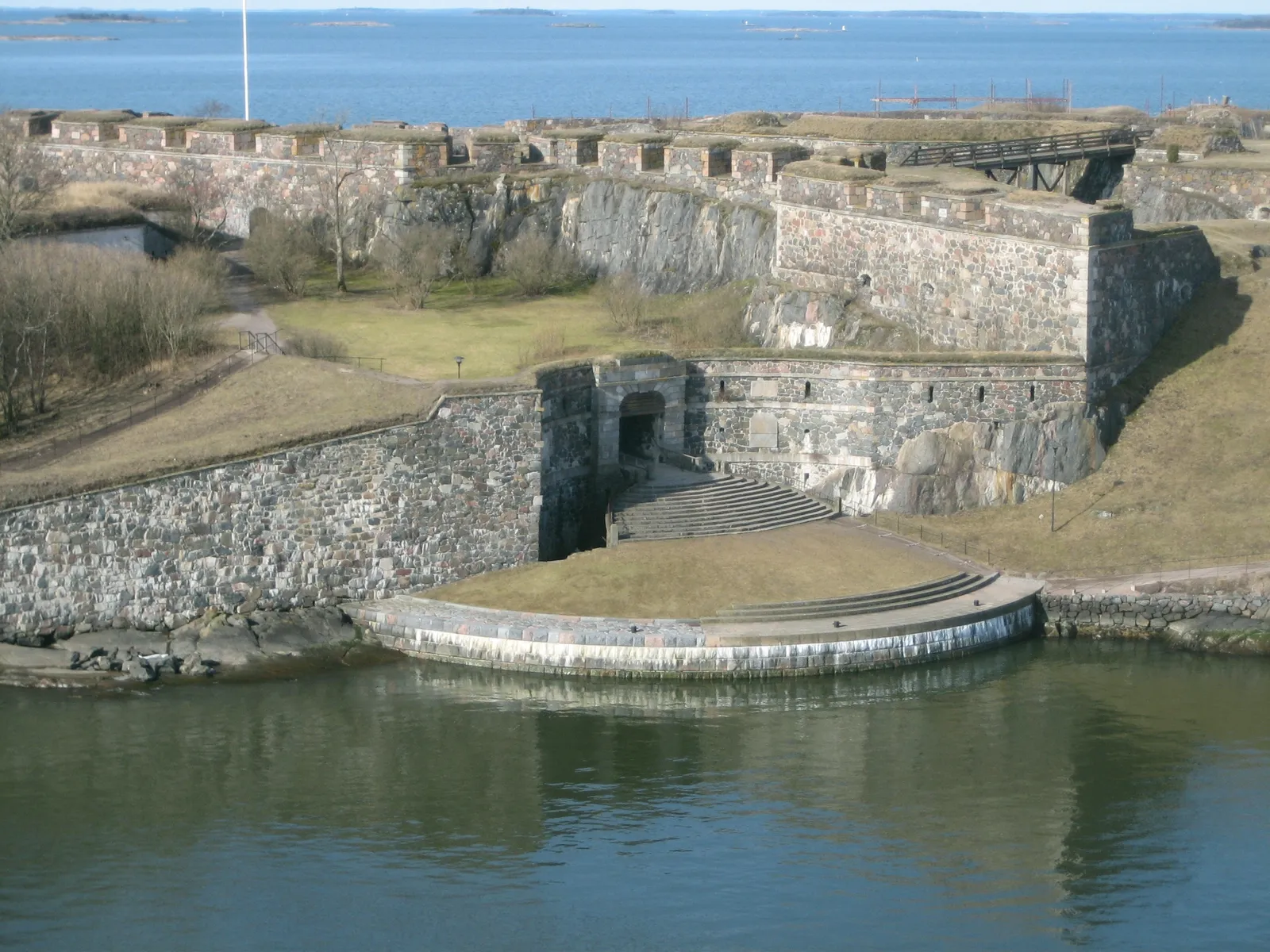
The King’s Gate stands at the southern end of Kustaanmiekka, the outermost island, on the spot where Adolf Frederick of Sweden moored his ship during an inspection in 1752. It was built over 1753 and 1754, given a double drawbridge and a limestone stair down to the water in the 1770s, and it carries a marble plaque with Ehrensvärd’s line to whoever came next: stand here on your own foundation and do not rely on the help of others. The walk out to it from the main pier takes about twenty minutes across the whole length of the fortress, past the dry dock that has been repairing ships since the 1750s.
Only the museums charge. The Suomenlinna Museum, by the main pier, runs a 25-minute film about the fortress on a loop every half hour and costs around 12 euros; a ticket bought in advance is worth having if you are landing on a summer sailing and would rather not queue at the desk. Everything else, the ramparts, the tunnels, the gun emplacements along the Kustaanmiekka shore, is open ground.
Open ground is also the catch: the fortress has no surfaced footpaths across most of it, and the walk out to the King’s Gate crosses earth banks and bare granite that a wheeled suitcase will not roll over.
Temppeliaukio, a church blasted out of a granite outcrop
Timo and Tuomo Suomalainen won the competition for it in 1961 and started excavating in February 1968, cutting a round chamber down into a rock knoll in Töölö rather than building anything on top of it. From the street you see a low ring of wall and a copper disc; from inside, the walls are the quarry face, left rough, with a shallow copper dome floating over them on a ring of narrow skylights.
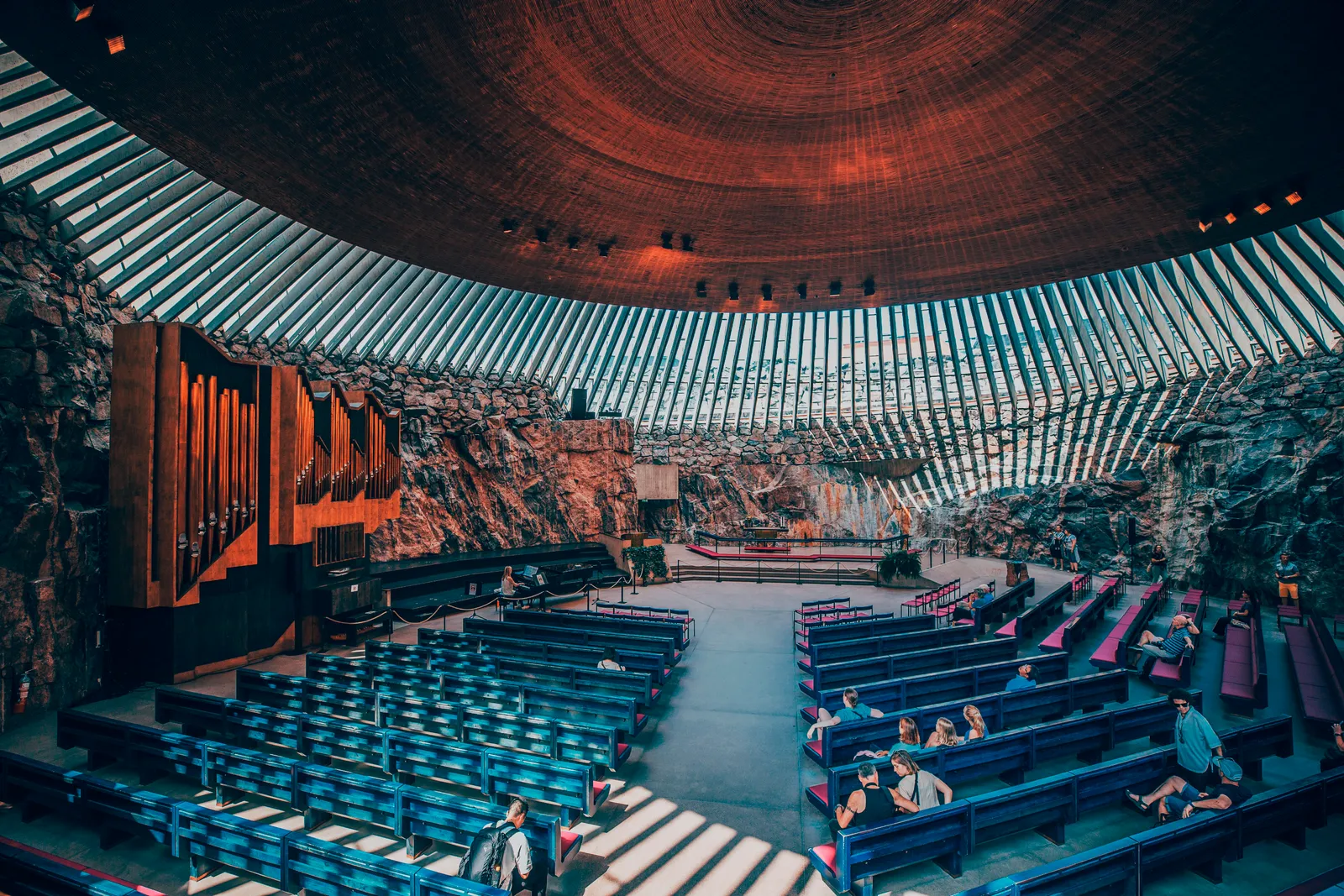
The rock is why concerts fill it. Unworked stone scatters sound instead of bouncing it back flat, and the organ Veikko Virtanen built for the space has 3,001 pipes across 43 stops. Half a million people come through in a year, most of them in the middle of the day, so the first hour after opening is the quiet one.
Admission is 8 euros, under-18s free, and tickets can be bought before you arrive. It is a working parish church, which matters more than the price: it closes to visitors during services and weddings, and the Sunday morning service at ten is free to attend but is not a sightseeing slot. It is about fifteen minutes on foot northwest of the central station, or a few minutes on a tram.
The steps in front of Helsinki Cathedral
Carl Ludvig Engel worked on the cathedral from 1818 until he died in 1840, and it was finished in 1852 by someone else, which is roughly the story of the whole square: a Russian-era plan for a Finnish capital, executed over decades in the same pale neoclassicism. Twelve statues of the apostles stand along the roofline. The guardhouse that used to sit in front of the building was pulled down in the 1840s and replaced by the staircase, and the staircase has been the city’s default meeting point ever since.
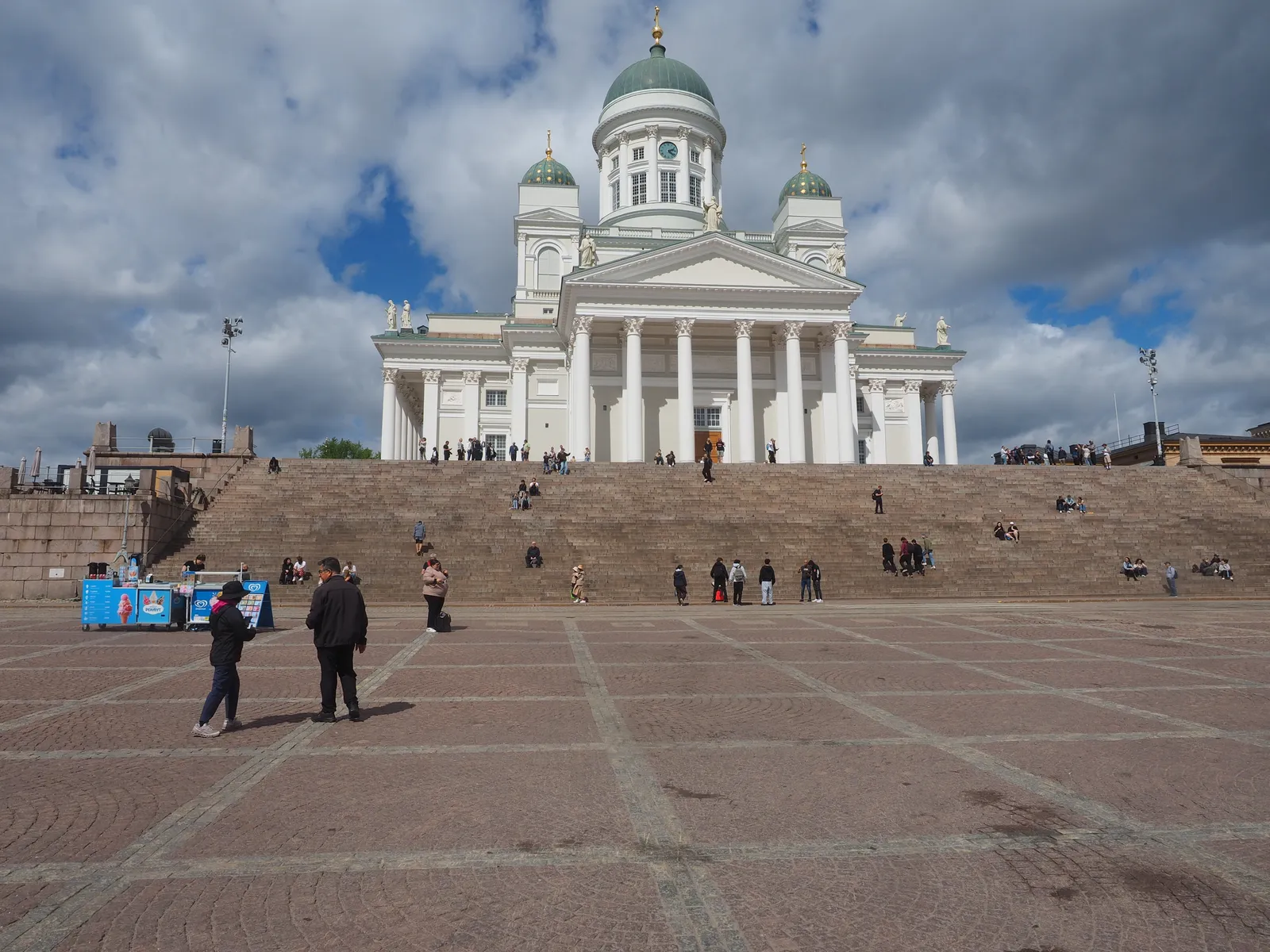
Sitting on them costs nothing. Going inside does: 10 euros through the summer, 8 in September and October, a suggested 8-euro donation over the winter, under-18s free. Whether that is worth it depends on your appetite for a fairly plain white interior, and there is a good free alternative twenty seconds away on the south side of the square, where the Helsinki City Museum at Aleksanterinkatu 16 has never charged for entry. It opens 11am to 7pm on weekdays and 11am to 5pm at weekends.
The Old Market Hall’s timber stalls on the South Harbour quay
Gustaf Nyström designed it, construction ran into a cement shortage, and it finally opened in 1889 as the first covered market in Helsinki, taking the fish and meat trade off the open square next door. The shell is red brick over a cast-iron frame; the stalls inside are dark varnished timber with glass counters and their own hanging lamps, and about twenty of them are still working.
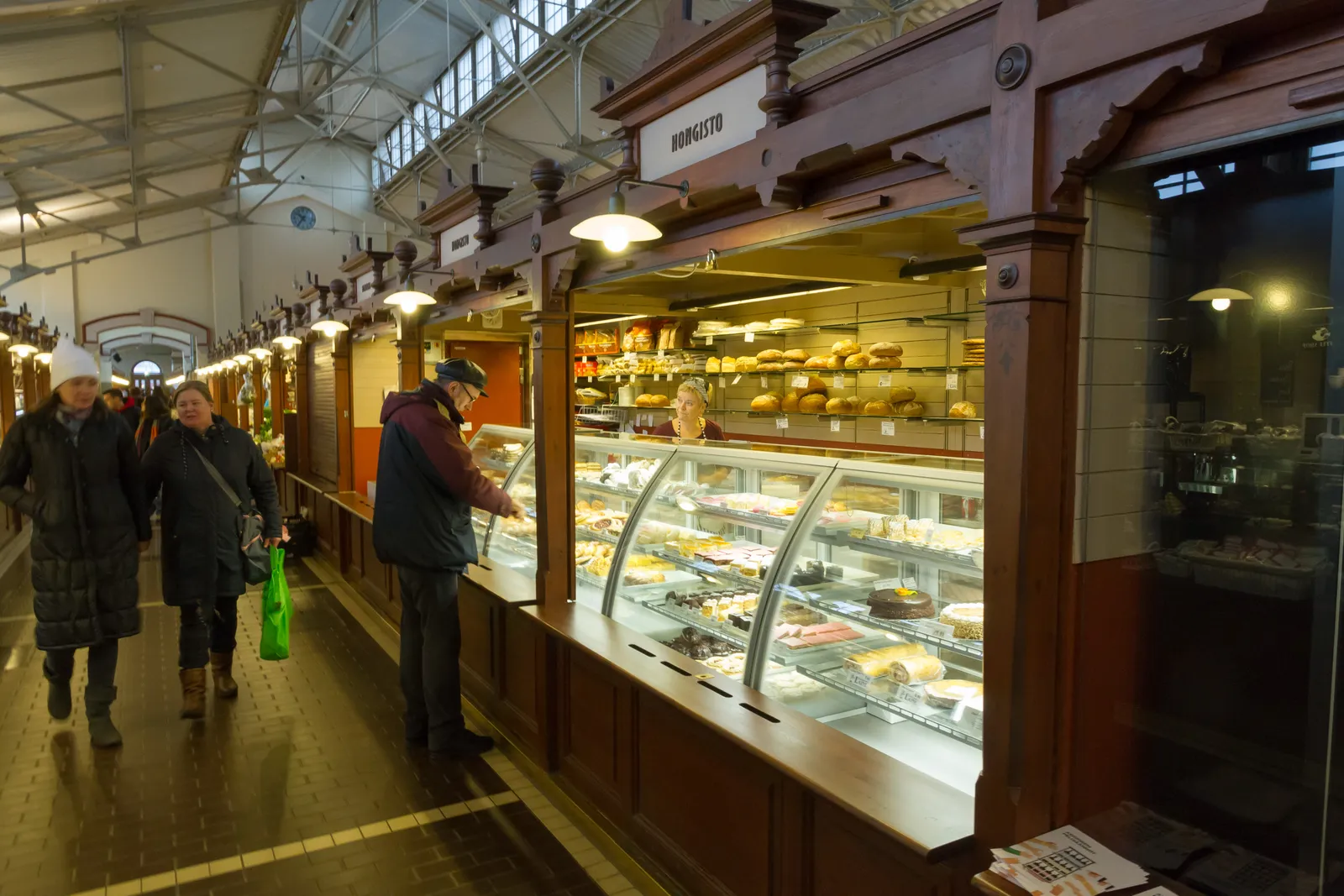
Outside it, the Market Square is still an open-air market rather than a monument, with archipelago potatoes and berries in season and salmon cooked over fire in the colder months. The Suomenlinna ferry leaves from the eastern edge of it, by the Presidential Palace, and the Esplanadi park runs inland from the western edge for a few hundred metres of lime trees and benches.
A hundred metres along the quay from the ferry berth, Allas Sea Pool has three pools built out over the harbour, one of them unheated seawater, and five saunas looking back at the city. Entry is 19 euros on weekdays and 24 from Friday afternoon onward, valid for two hours, and it is worth booking at the weekend. If you are connecting between Helsinki and Stockholm by sea rather than by air, the overnight ferries to Sweden leave from berths within sight of the same water.
The reading floor at Oodi, Helsinki’s central library
Oodi opened on 5 December 2018, the eve of Finland’s independence day, on Kansalaistori square directly opposite Parliament House, which was the point: a 98-million-euro public library placed where it could stare the legislature in the face. ALA Architects won the competition against 543 entries, and the facade is Finnish spruce bent around a long curve, with the ground floor set back under an overhang so the square carries on beneath the building.
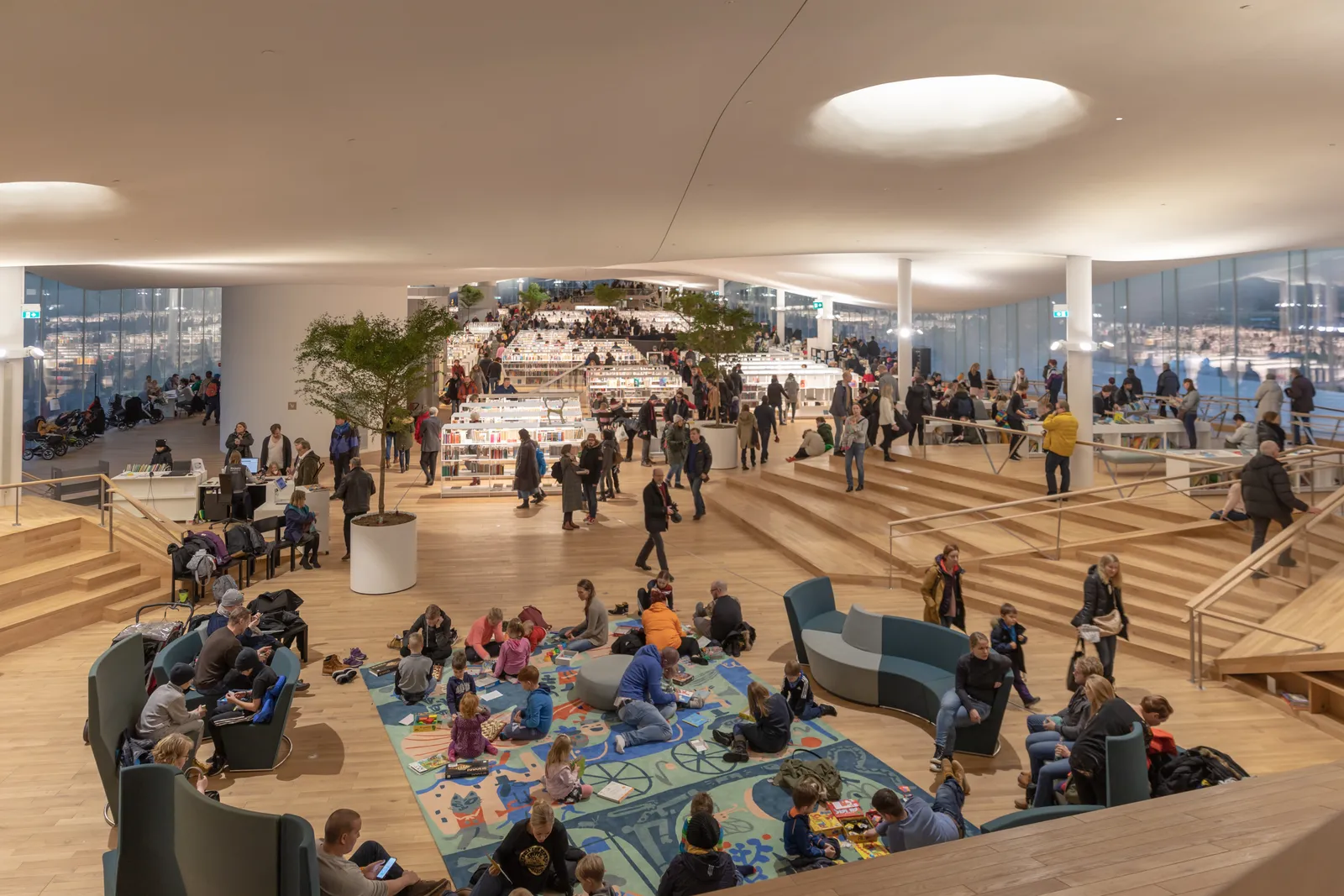
The top floor is the one to go up to: a single open room under a white ceiling that swells and dips, with round skylights punched through it, low shelves rather than stacks, and a glass wall along the south side onto a balcony facing Parliament. There is no ticket desk and nobody asks what you are doing there. It opens 8am to 9pm on weekdays and 10am to 8pm at weekends, so it is still open on a wet evening long after the churches have locked up.
With more than four hours, the other building worth the detour is the university’s main library, the Kaisa House on Kaisaniemenkatu, five minutes east of Oodi. Anttinen Oiva Architects finished it in 2012, and the brick street front, punched with small square windows and two enormous arched openings, hides a white interior of stacked curved galleries around a full-height void. It is an academic library rather than an attraction, so it keeps term-time hours, roughly 10am to 6pm on weekdays and 11am to 5pm on Saturdays, but anyone can walk in, and there is a lift straight up to it from the metro station underneath.
The airport station sits directly under the terminal
Two commuter services run a single loop out of Helsinki Central Railway Station, through the airport and back: the I train goes out the eastern side through Tikkurila, the P train the western side through Myyrmäki, and they meet at the same underground platform beneath the terminal. The eastern way round is the shorter one at about 27 minutes, against roughly 32 the other way, and through most of the day there is a departure about every ten minutes. Renovation work on three stations on the western arm has thinned service on that side until 4 October 2026, after which both directions go back to the full timetable; the eastern route through Tikkurila is unaffected either way.
One ABC-zone ticket covers the ride, the fare band that stretches from the city out to Helsinki Airport: 4.80 euros in 2026 tapping a contactless card at the reader, a little less bought in the app or from a machine beforehand. The same ticket is good on the 600 bus, which leaves from Rautatientori beside the station and takes about 40 minutes, with a 600N overnight after the trains stop.
Budget more than the ride time. The platforms are deep under the terminal and the escalator run up to departures is a long one, so allow around 35 minutes door to door from the centre, and leave central Helsinki roughly two hours before departure to collect a bag, ride out and clear security without hurrying.
Central Helsinki is compact and flat: Senate Square, the Market Square, Oodi and the ferry berth all sit within about two kilometres of each other on level ground. Suomenlinna is the exception, and it is the reason to leave the suitcase on the mainland, because an empty-handed crossing is the difference between walking the full length of Kustaanmiekka to the King’s Gate and turning back at the museum an hour early.
Frequently asked questions
What should I do during a layover in Helsinki?
The ferry out to Suomenlinna is the one stop worth building the day around: a sea fortress begun in 1748 across a group of islands at the harbour mouth, fifteen minutes from the Market Square, whose ramparts and tunnels cost nothing to walk. Back on the mainland, Senate Square and the steps in front of Helsinki Cathedral are five minutes' walk from the pier, the Old Market Hall has been trading on the quay since 1889, and Oodi, the central library, is free and open until nine on weekdays. Temppeliaukio, the church cut into a granite outcrop in Töölö, is the one stop that needs a ticket and closes for services without much warning. Four hours covers the fortress and the square; under three, skip the boat and stay on the peninsula.
Do Helsinki's churches charge admission now?
Most of the landmark ones do. Helsinki Cathedral asks 10 euros in summer, 8 euros through September and October and a suggested 8-euro donation over the winter, with under-18s free throughout. Uspenski Cathedral on Katajanokka introduced a 5-euro adult ticket in May 2025 and is closed on Mondays. Temppeliaukio, the rock church, is 8 euros. The things that still cost nothing are Senate Square and the cathedral steps themselves, the Helsinki City Museum at Aleksanterinkatu 16, Oodi, the Market Square and the Old Market Hall, and the grounds of Suomenlinna once you have paid the ferry fare.
Is Suomenlinna worth the ferry crossing in winter?
The crossing runs all year, through the ice, and the fortress does not shut. What changes is the timetable and the light: boats leave every fifteen to thirty minutes in summer but only every forty to sixty minutes in the cold months, so a missed departure costs the better part of an hour, and the ramparts are dark by mid-afternoon in December. The Suomenlinna Museum keeps to 10.30am to 5pm from September onwards, with last entry half an hour before closing. Tickets are not sold on the boat at any time of year, so buy at the pier machine or in the transport app before you walk down.
Is the bus or the train better for getting to Helsinki Airport?
The train, unless you are starting from the bus stands themselves. Two commuter services, the I and the P, run a loop through the airport from Helsinki Central Railway Station, roughly every ten minutes through the day, and the I train takes the eastern side of the loop through Tikkurila, which is the shorter way round at about 27 minutes. The 600 bus leaves from Rautatientori, the square beside the same station, and takes around 40 minutes, with a 600N running overnight when the trains stop. One ABC-zone ticket, the fare band that reaches Helsinki Airport, is valid on either.
Which parts of central Helsinki are step-free?
Most of the waterfront half. The Market Square, the Esplanadi park, the Old Market Hall and the cobbles of Senate Square are all flat, and Oodi has lifts to both upper floors. Helsinki Cathedral's front staircase is the obvious barrier, but there is a step-free way in through the crypt entrance at Kirkkokatu 18 and a lift up from there. The ferry to Suomenlinna loads over a ramp and carries wheelchair users free, though the fortress itself is 18th-century earthworks with no surfaced footpaths across most of it.