Tikkurila Station, Vantaa: Heureka's Dome
Part of the full Helsinki Layover: Suomenlinna Fortress, HEL
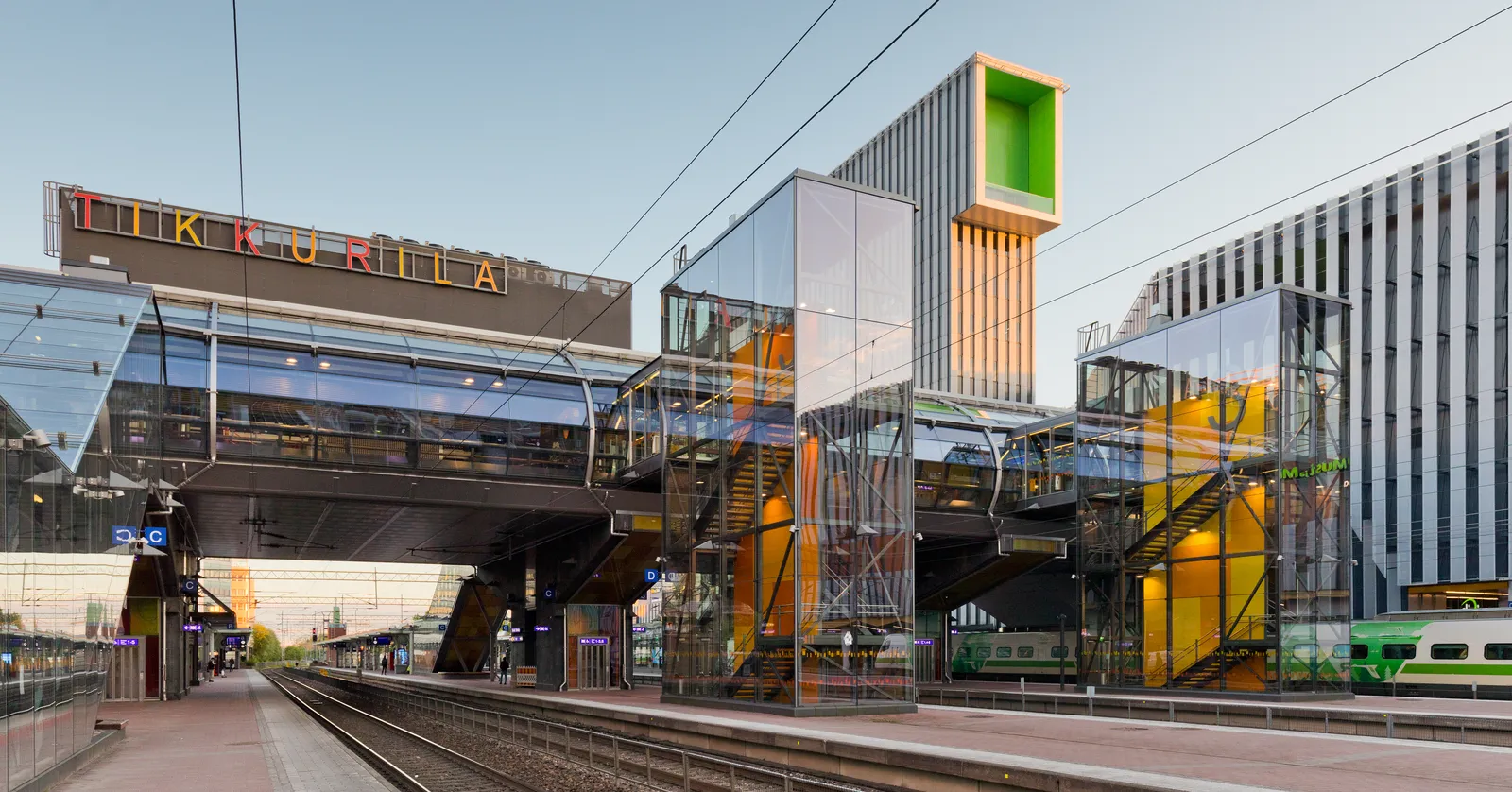
Tikkurila station in Vantaa, sixteen kilometres north of central Helsinki on the main line, stands a few minutes’ walk from Heureka, the Finnish science centre, and three hundred metres from the 1862 brick station house the district grew up around.
Heureka, the Finnish science centre on the Kerava river
Heikkinen-Komonen Architects finished it in 1989, and it is still the largest science centre in the country: exhibition halls full of things to pull, spin and weigh rather than read about, with the shallow dome at the front of the building working as a planetarium rather than an ornament.
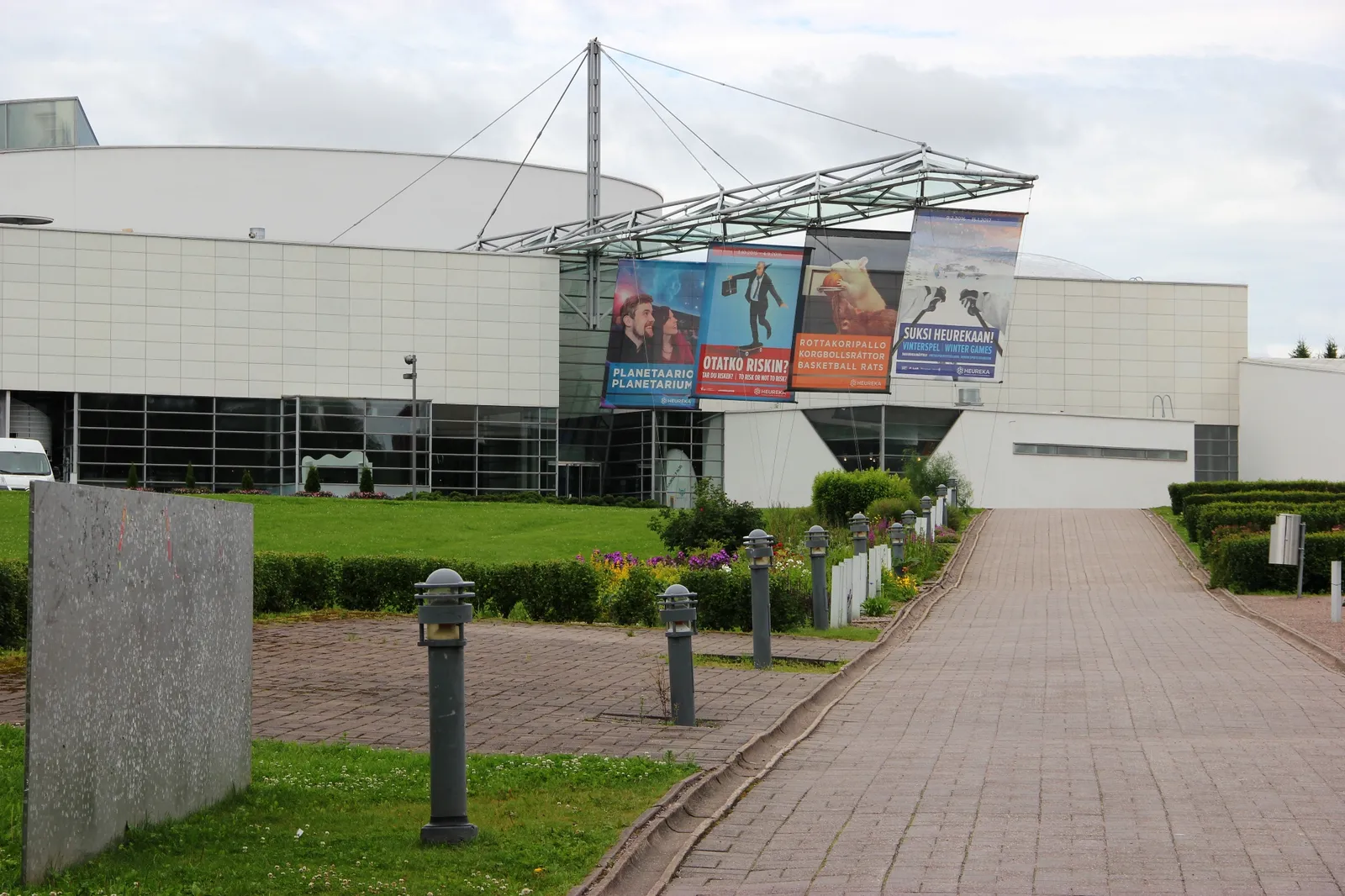
One ticket covers everything on the day: all the exhibitions, the planetarium films, the public science shows, and in summer the outdoor Science Park Galilei behind the building, where the physics and maths pieces are built at the scale of playground equipment. Adults pay 26 euros at the door and 23 booked online, children aged 5 to 17 pay 19 and 16, students and pensioners the same, and under-5s nothing. The doors open at 10am.
The rule worth knowing before you plan around it is that on-site ticket sales stop a full hour before closing. Arriving forty minutes before the doors shut does not get you in at all, which is a different thing from being allowed a short visit.
Long-distance trains and the airport loop share these platforms
Tikkurila is the third-busiest station in Finland, and the complex over the tracks has been the Dixi transport and shopping centre since 2015. Almost everyone passing through is mid-journey rather than setting out, changing between a train from Tampere or Lahti and a flight in one direction or the other, which means the few minutes to Heureka and the three hundred metres to the old station get walked with everything you boarded with.
Finland’s oldest brick station building is now the city museum
Carl Albert Edelfelt designed it in 1862, when the Helsinki to Hämeenlinna line went through and gave this stretch of farmland one of its seven stations, and it is Romanesque revival with the round-arched windows and heavy brick eaves that go with it. The district around it was a market crossroads on the King’s Road before that, named for tikkuri, an old counting word for ten used in the fur trade.
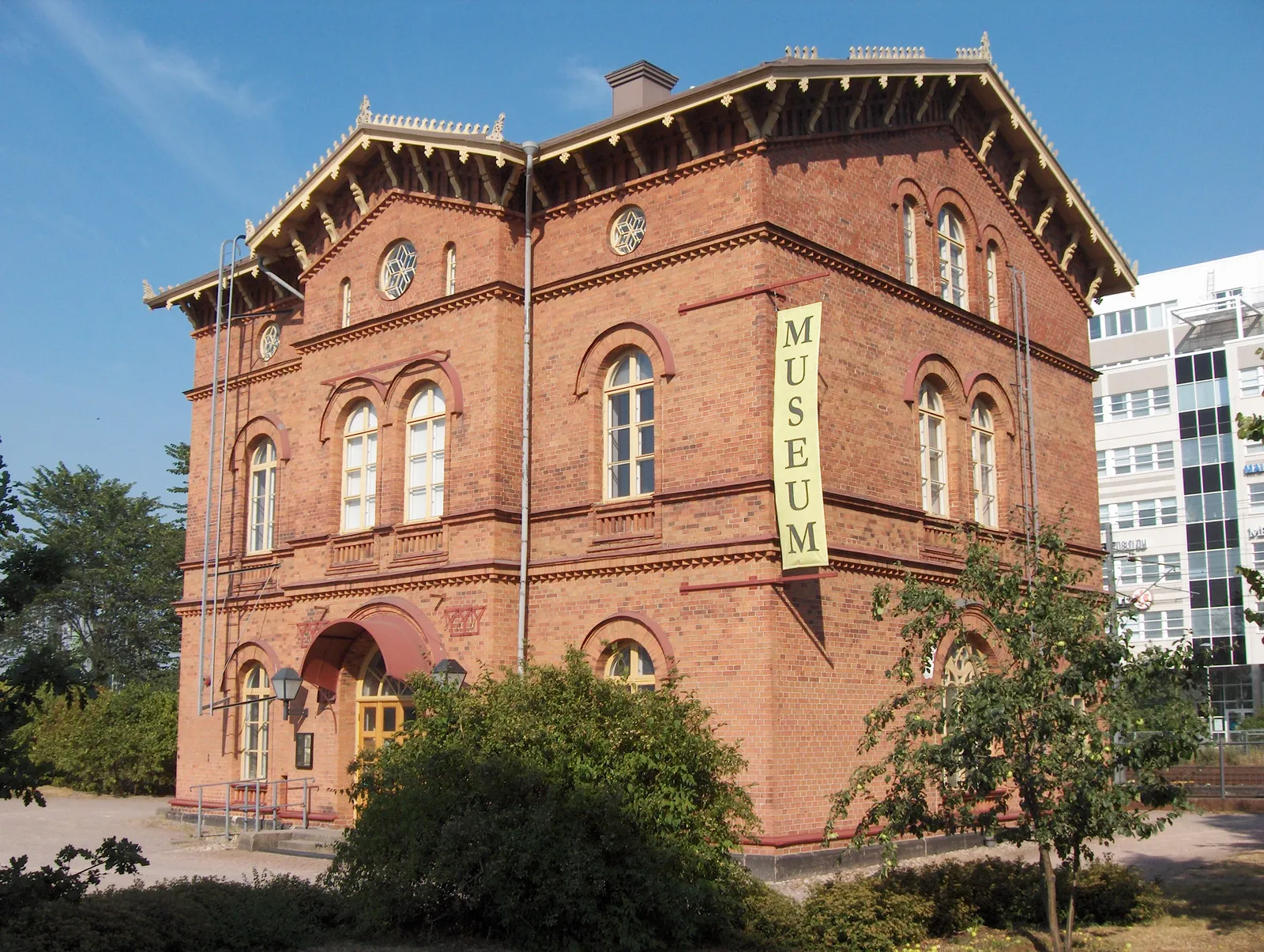
The Vantaa city museum took the building over in the 1970s and has never charged to get in. It is closed for an exhibition change until 26 November 2026 and opens again the following day, Tuesday to Friday from 11am to 6pm and weekends 11am to 4pm, shut on Mondays. While it is closed the building is still the reason to make the three hundred metres, and the brickwork is all on the outside anyway.
Vernissa, a linseed-oil works turned culture house
Vernissa is the Finnish word for linseed oil, which is what this red brick building on the Kerava river produced: mills stood on the site in the late 1800s, the present shape came together between 1912 and 1937, and production stopped in the 1950s. The paint company that carries this district’s name grew out of the same oil-pressing business, which is why a suburb of Vantaa doubles as the name of a paint company.
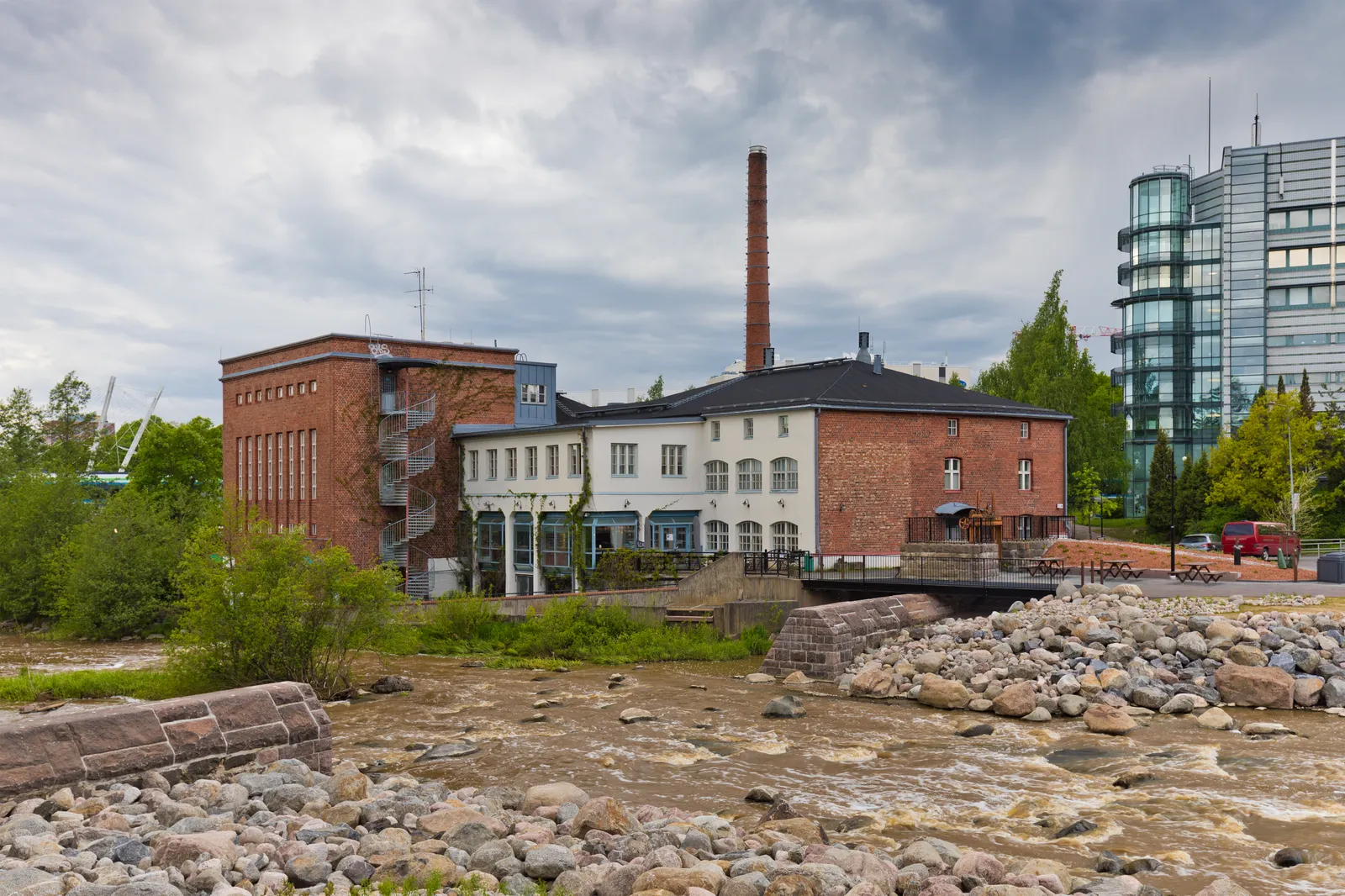
The city bought the empty factory, young people moved into it in the spring of 1985, and it has been a culture house for them ever since, with rehearsal rooms, gigs and workshops that cost nothing to attend. A rebuild running from 2022 to 2025 went with a wider reworking of the riverbank into a park, so the stretch of water in front of the chimney is now a walk rather than a back lot.
The airport is eight minutes up the line
Tikkurila sits on the eastern side of the airport loop, five kilometres out from the terminal, and the ride to Helsinki Airport takes about eight minutes. The I train from Helsinki calls here on its way round; the P train reaches Tikkurila after the airport rather than before it, so from this platform the I is the one you want. Departures run roughly every ten minutes through the day, and one ABC-zone ticket at 4.80 euros in 2026 covers the hop.
Even at eight minutes, the airport platform is deep under the terminal and the climb to departures is long, so allow around twenty minutes from the Tikkurila concourse to the Helsinki Airport check-in desks.
Sixteen kilometres of main line separate this from the harbour and the old town in the main Helsinki guide, which needs most of a day and a ferry. If your wait is short enough that even Tikkurila is a stretch, the things to do around the airport itself start one stop up the same line.
Frequently asked questions
What should I do during a layover near Tikkurila Station in Vantaa?
Heureka, the Finnish science centre, is a few minutes north of the platforms across the Kerava river, with a planetarium and a set of hands-on exhibition halls included in one ticket at 26 euros on the door or 23 booked ahead. Three hundred metres the other way stands the 1862 brick station house that the district grew around, now the free city museum. Vernissa, a linseed-oil works on the riverbank turned into a culture house, closes the loop in an easy walk. Two hours is enough for the science centre alone; on-site ticket sales there stop an hour before closing, which is the detail that catches people arriving late in the day.
How much of Heureka can you actually see in two hours?
Most of a floor and one planetarium film. The ticket covers every exhibition, the planetarium screenings and the public science shows on the day, so the constraint is your own schedule rather than what you paid for, and the centre opens at 10am. Advance booking saves 3 euros a head, 23 instead of 26 for adults and 16 instead of 19 for children aged 5 to 17 and for students and pensioners, with under-5s free. In summer the ticket also includes Science Park Galilei, the outdoor area of oversized physics and maths pieces behind the building.
Is the old Tikkurila station open to go into?
Not at the moment. The 1862 building holds the Vantaa city museum, and the museum is shut for an exhibition change until 26 November 2026, reopening the next day on its usual Tuesday to Friday 11am to 6pm and weekend 11am to 4pm hours, closed Mondays, with free admission throughout. The building is worth the three hundred metres either way: it is the oldest brick-built railway station in Finland, and the brickwork and round-arched windows are all outside.
What is there to do in Tikkurila in the rain?
Heureka is the answer, and it is designed for exactly this: several indoor halls, a planetarium and a covered approach from the street. The complex over the Tikkurila platforms, opened in 2015, has the usual shops and places to sit dry while you wait, and the riverside walk past Vernissa is the part of this trip to give up on in bad weather, since it is an open bank with very little cover between the station and the factory chimney.