Katajanokka, Helsinki: The Icebreaker Quay
Part of the full Helsinki Layover: Suomenlinna Fortress, HEL
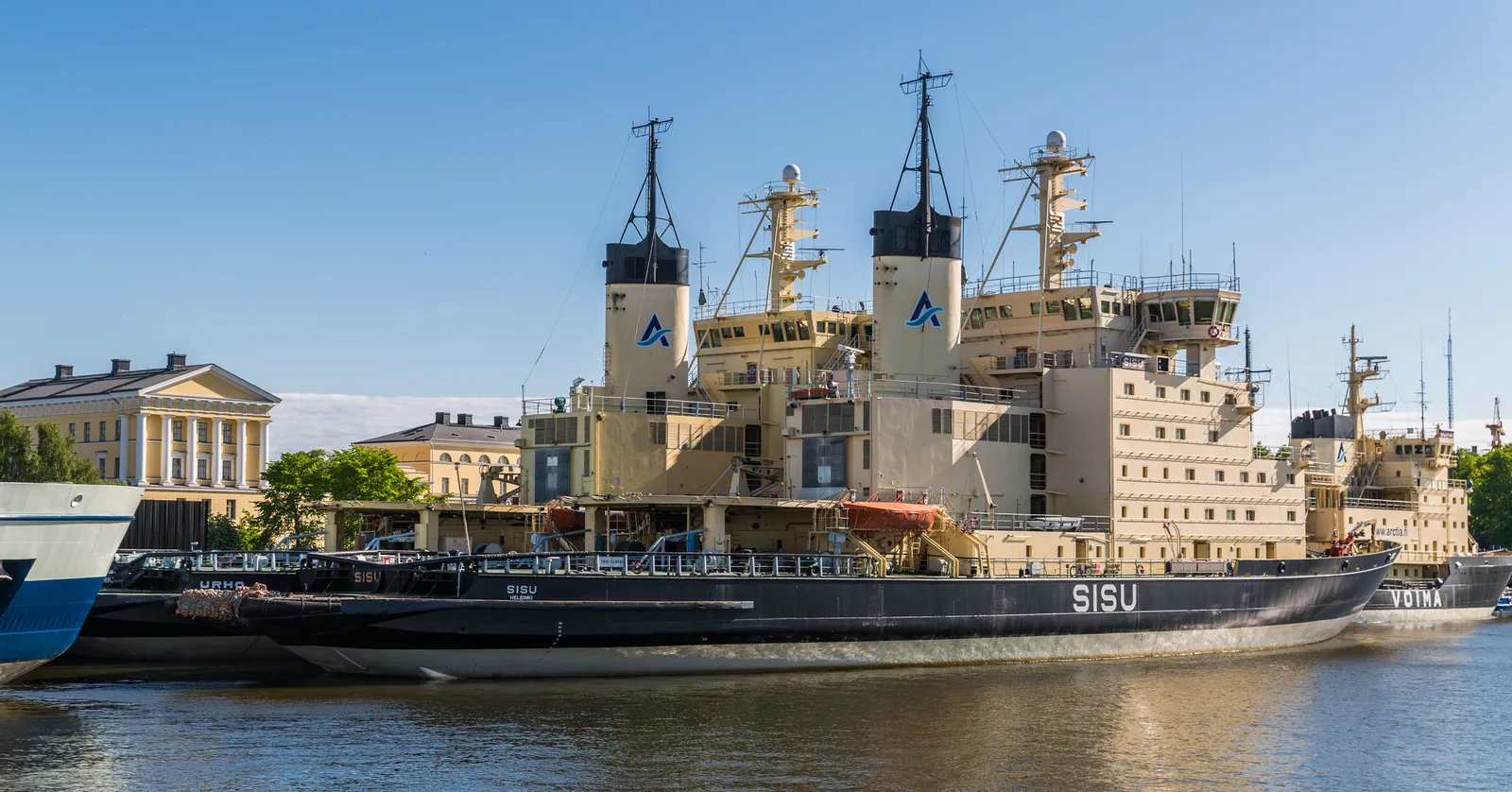
Katajanokka, the island immediately east of Helsinki’s Market Square across a short bridge, has Finland’s icebreaker fleet moored along its north quay for most of the year, Uspenski Cathedral’s gold-crossed domes on the rock above, and a quarter of turreted 1900s apartment blocks behind.
Finland’s icebreakers tie up along Katajanokka’s north quay
Eight of them work the Bay of Bothnia and the northern Baltic through the ice season, and when the water opens they come back here for maintenance. So the quay is at its fullest in summer and can stand empty in the depths of winter, which is the reverse of what most people assume before they walk down. The names are painted large on the bows and read like a list of virtues: Sisu, Urho, Voima, Otso, Kontio. Polaris, the first icebreaker anywhere built to burn liquefied natural gas, joins them between jobs.
Nothing is ticketed and nothing is fenced. It is a working quay with a footpath along it, the ships are tied up two and three deep, and you get close enough to see the scarring along the hulls where the ice has been at them. If you would rather see the same shoreline from the water, the archipelago boats leave from the Market Square jetty a few minutes west and run out past Katajanokka’s eastern point.
Uspenski Cathedral’s thirteen domes on the rock above the harbour
Aleksei Gornostajev designed it and it was finished in 1868, when Finland was a Russian grand duchy and the Orthodox parish wanted something visible from every approach to the harbour. It got it: red brick imported from a demolished fortress, thirteen domes for Christ and the apostles, gold crosses, and a hillside site that puts the whole thing above the roofline of everything around it. It remains the largest Orthodox church in western Europe.
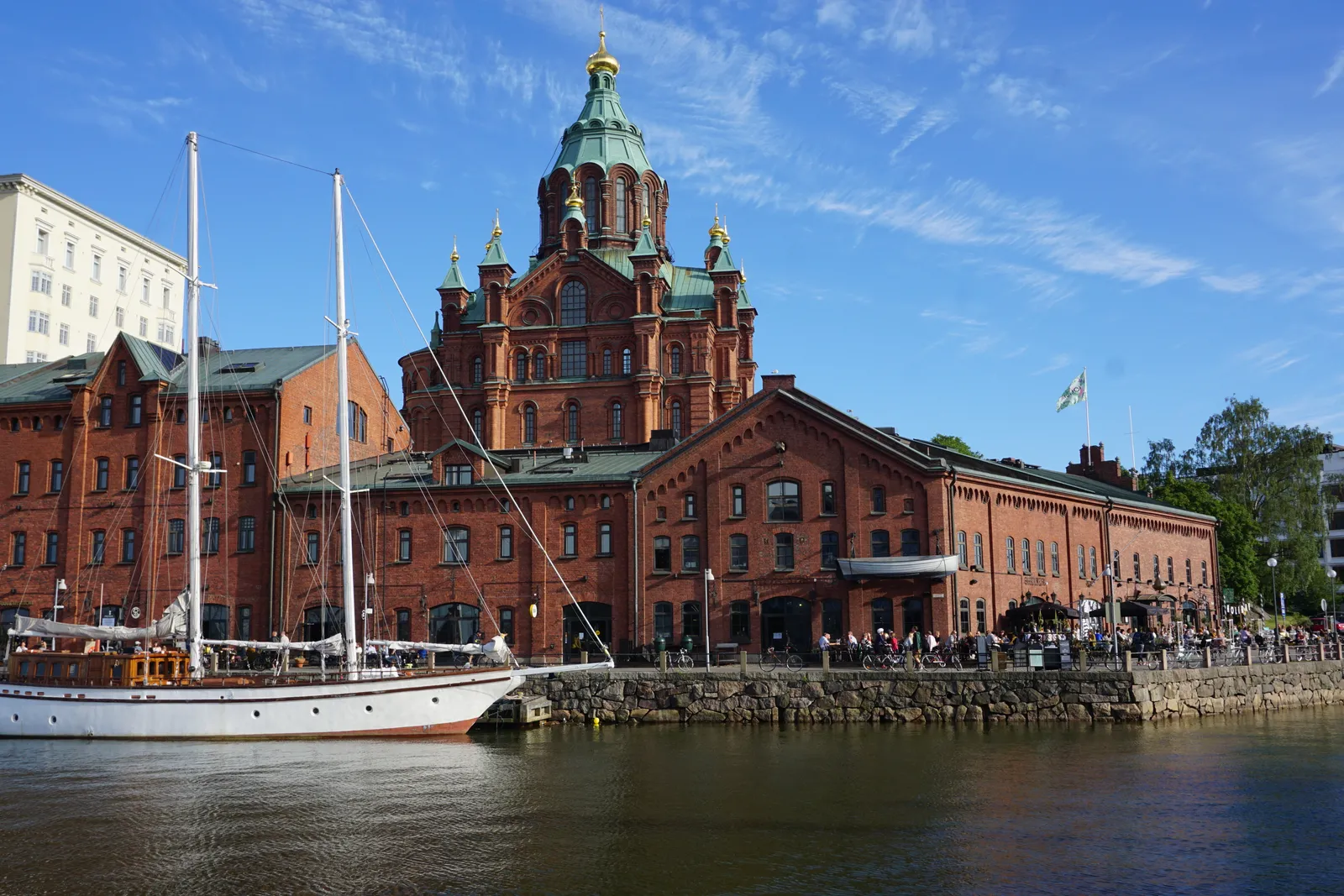
Entry stopped being free in May 2025 and costs 5 euros for adults now, with under-18s free and no charge during services. It opens Tuesday to Friday 10am to 6pm, Saturday 10am to 3pm and Sunday 1pm to 4pm, and shuts entirely on Mondays. The terrace outside is open whenever the street is, and the view from it back across the water to the Market Square is the one most people came up for anyway.
The Jugend quarter around Luotsikatu
Most of the streets inland from the quay were built in a single push between about 1897 and 1912, which is why they look like one idea rather than a century of them: rounded corner bays, small turrets, steep roofs, granite bases, and carved detail wherever a door or a window head gave anyone an excuse.
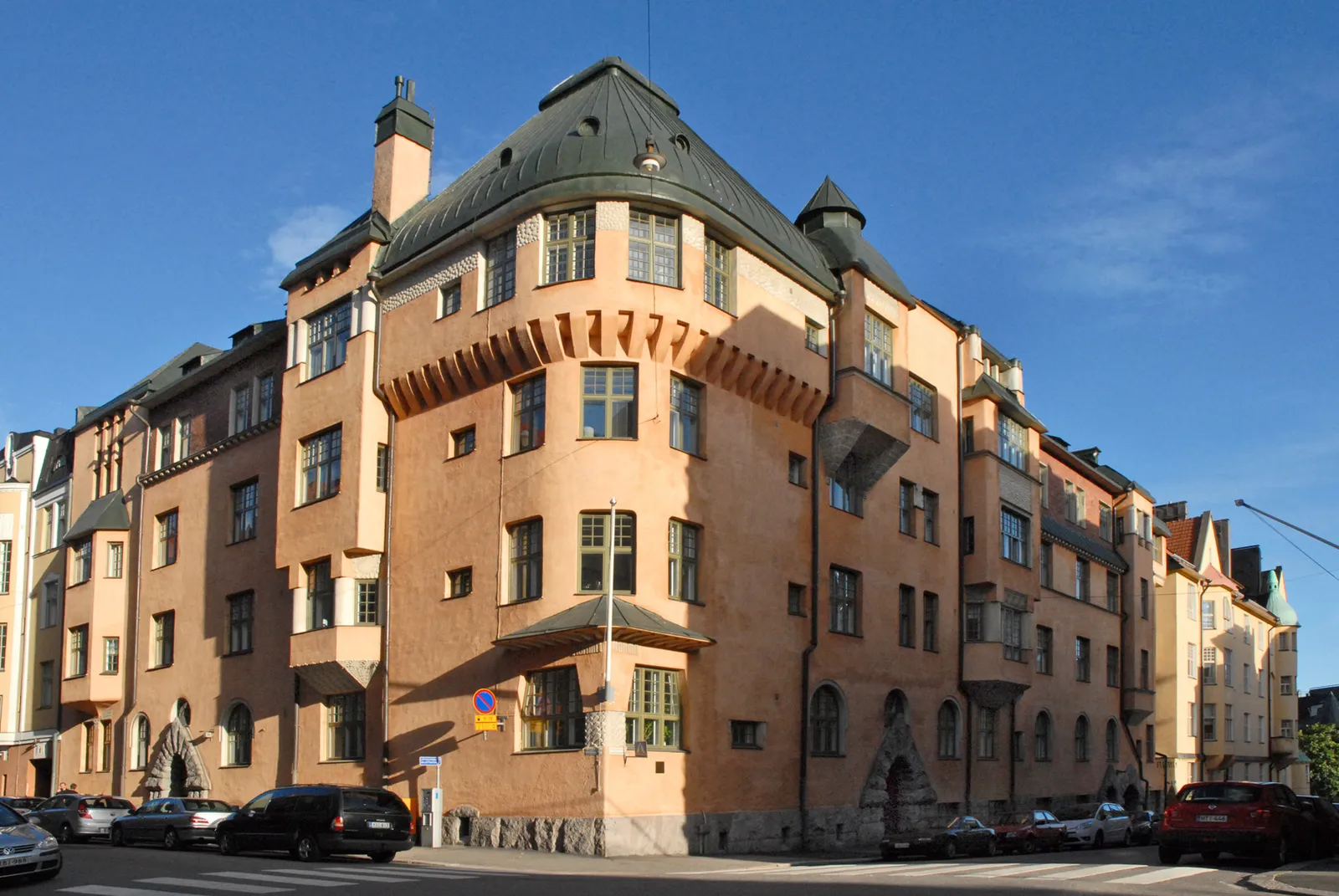
Tallberg House, at the head of Luotsikatu, is the one to find first. Herman Gesellius, Armas Lindgren and Eliel Saarinen were barely out of school when they won the competition for it in the 1890s, and they filled a triangular plot with what amounts to a small castle: a carved wooden door, sunflowers worked into the stonework, and wrought iron pulled into the whiplash curve that the style is known by. These are ordinary apartment buildings with people living in them, so the whole visit happens from the pavement.
Alvar Aalto’s white marble block at the island’s western end
Aalto finished it in 1962 as a paper company’s head office, facing the harbour across from the Market Square, and clad the entire thing in white Carrara marble on an Italian Renaissance palazzo plan. Helsinki has never entirely forgiven him: a low white slab in front of the red brick and gold of the cathedral was a provocation then and still divides opinion.
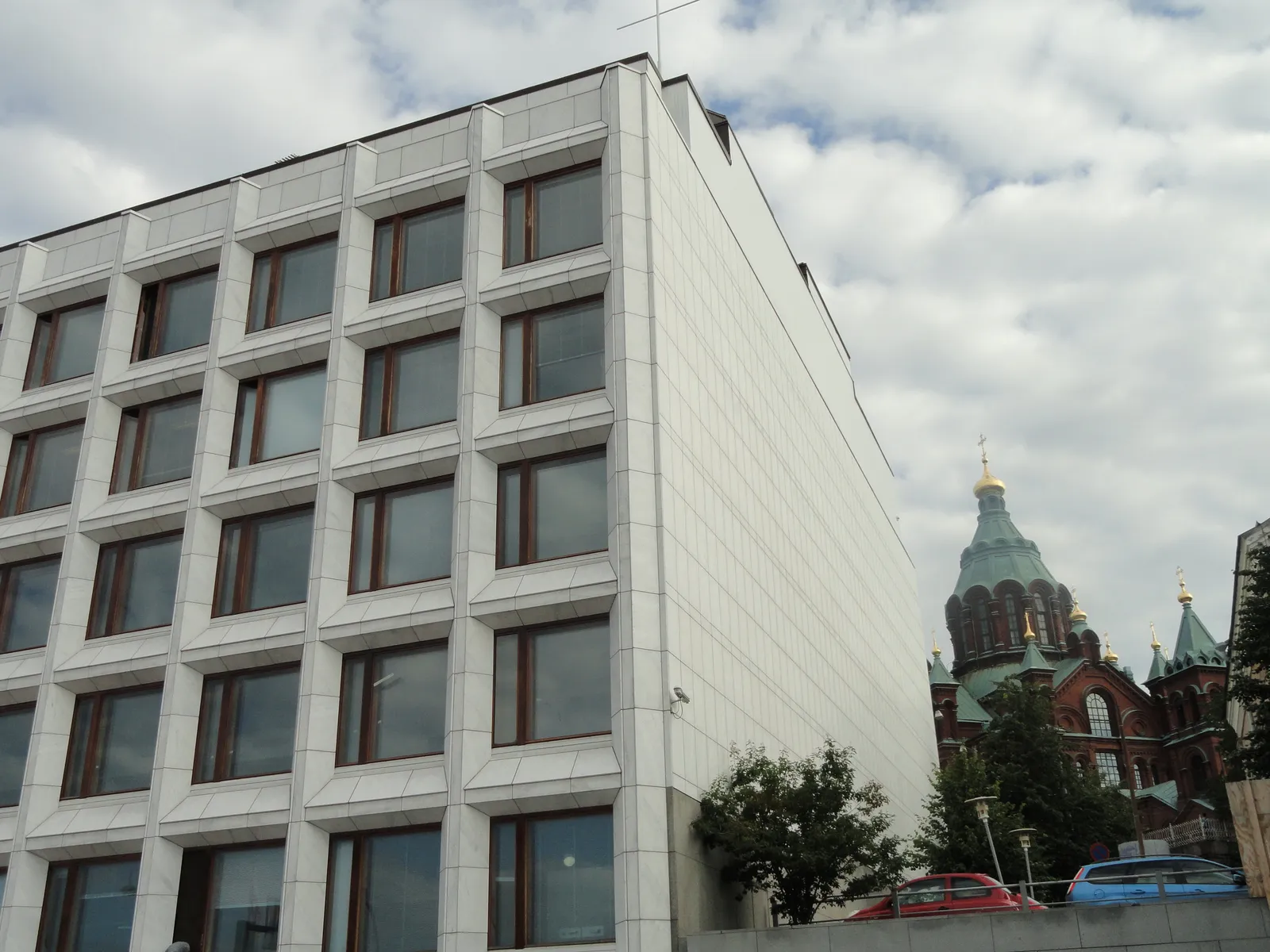
Whatever you make of it, the corner it stands on is where the bridges land, so it is unavoidable on the way in, and the marble does something worth seeing in low winter sun. Behind it the long red brick customs warehouses along the quay have been turned into hotels and event halls without being scrubbed of what they were.
The county prison on Merikasarminkatu has rooms now
It held prisoners from 1837 until 2002, which is most of the time Finland has existed in any form, and it was rebuilt as a hotel in 2007 by knocking two or three cells together to make each room. The perimeter wall, the gate and the plain red brick ranges are all still there.
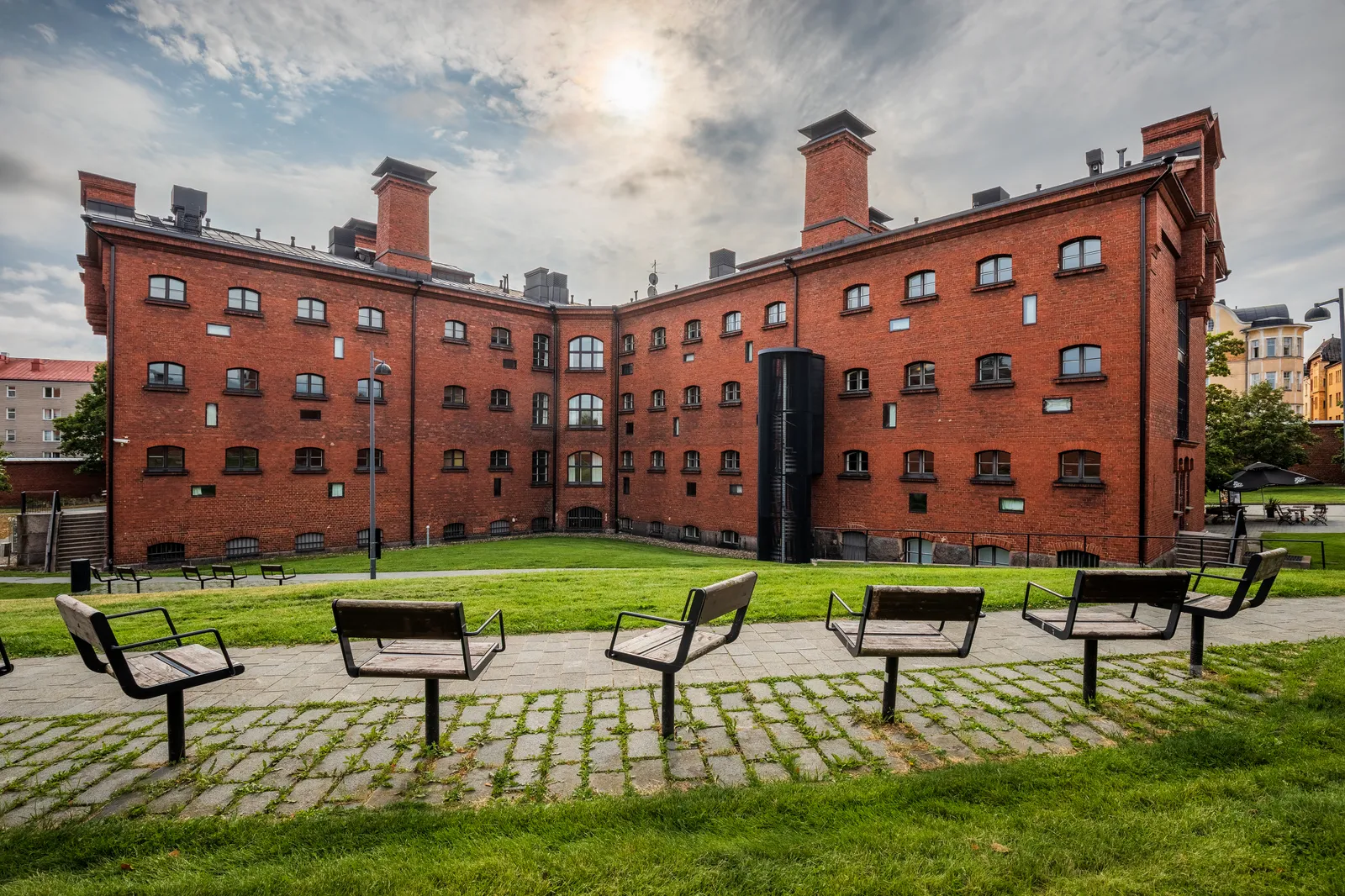
You do not need a booking to walk the grounds or look at the gate from Merikasarminkatu, and the restaurant in the old chapel is open to anyone. One thing the flat harbour map understates: Uspenski stands on a rock outcrop rather than at street level, so the two minutes from the quay up to its terrace climb the whole height of the hill, and anything wheeled goes up and back down again before the rest of the island is even started.
Allow an hour from the island to the departures hall
Katajanokka has no railway of its own. Trams run the length of it, the 5 to the ferry terminal at the far end and the 4 through the middle, and both reach the streets around Helsinki Central Railway Station in about twelve minutes. From there the airport trains leave every ten minutes or so: the I train through Tikkurila on the eastern side of the loop takes about 27 minutes to Helsinki Airport, the P train through Myyrmäki about 32.
One ABC-zone ticket at 4.80 euros in 2026 covers the tram and the train together inside its 90-minute validity. Counting the walk to a tram stop, the change, and the long escalator up from the airport platform, an hour door to door from Katajanokka to the Helsinki Airport departures hall is the honest figure.
This is the slow, residential version of a few hours in Helsinki, all of it at street level and none of it needing a boat. The main Helsinki guide takes the ferry out to the sea fortress instead, which is the better use of a longer wait, and the stops around the central station are the version for anyone who cannot spare the tram ride out here.
Frequently asked questions
What should I do during a layover near Katajanokka in Helsinki?
Walk the north quay first: Finland's icebreakers tie up along it through the warm months, close enough to read the names off the bows. Uspenski Cathedral stands on the rock above, thirteen gold-crossed domes over red brick, 5 euros to go in and closed on Mondays. Inland from there the Jugend quarter around Luotsikatu went up in barely a decade around 1900, turrets and carved doorways on almost every corner, and the old county prison on Merikasarminkatu has been a hotel since 2007. Two hours covers the lot at a walk; the cathedral is the only part that charges.
When are the icebreakers actually in port at Katajanokka?
In summer, which is the opposite of what people expect. The fleet works the Bay of Bothnia and the northern Baltic through the ice season and comes back to the Katajanokka base for maintenance when the water is open, so the quay is at its fullest roughly from late spring to autumn and can be empty in February. Which ships are there changes week to week, but Sisu, Urho, Voima, Otso and Kontio all moor here, and Polaris, the first icebreaker built to run on liquefied natural gas, joins them between deployments. There is no ticket and no viewing platform: it is a public quay you walk along.
Does Uspenski Cathedral charge for entry, and when is it open?
Five euros for adults since May 2025, after more than a century of free entry, with under-18s free and no charge during services. It opens Tuesday to Friday from 10am to 6pm, Saturday 10am to 3pm and Sunday 1pm to 4pm, and it is closed all day Monday, which catches people out more than the price does. Hours move around Holy Week and the Orthodox feast days. The hill it stands on, the terrace and the view back over the harbour cost nothing at any hour.
What is there to do on Katajanokka without spending anything?
Nearly all of it. The icebreaker quay, the Jugend streets around Luotsikatu, the terrace under Uspenski, the white marble office block at the western end of the island and the exterior of the old county prison are all street-level and free, which makes this a cheap two hours by the standards of central Helsinki. The single charge on the walk is the 5-euro cathedral interior, and the ferry terminal cafés on the south side are the fallback if you want to sit down indoors without paying museum prices.