Saigon Railway Station: The Pink Church
Part of the full Ho Chi Minh City in One Day: Old Saigon
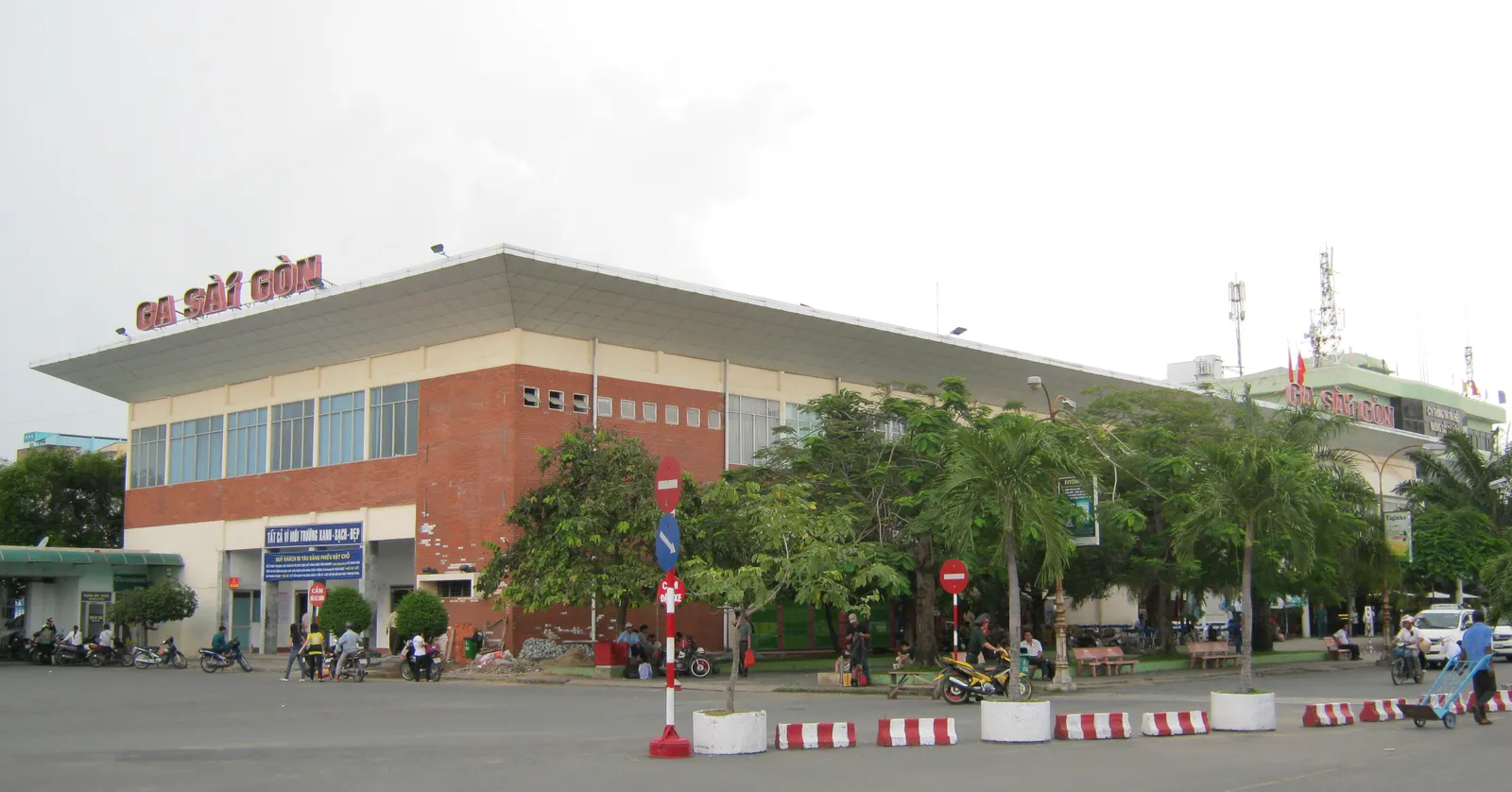
Saigon railway station sits two kilometres from Tan Dinh Church, salmon pink since 1957, a kilometre from the 40-metre stupa at Vinh Nghiem Pagoda, and a few hundred metres from the canal path that runs across the north of Ho Chi Minh City.
Rowed boats work the Nhieu Loc canal between two bridges
The Nhieu Loc-Thi Nghe canal was an open sewer for most of the twentieth century and took a cleanup running into the 2010s to become the thing it is now: still water between two railed embankments, nine bridges across it, and a continuous paved path on both banks under lines of mature trees.
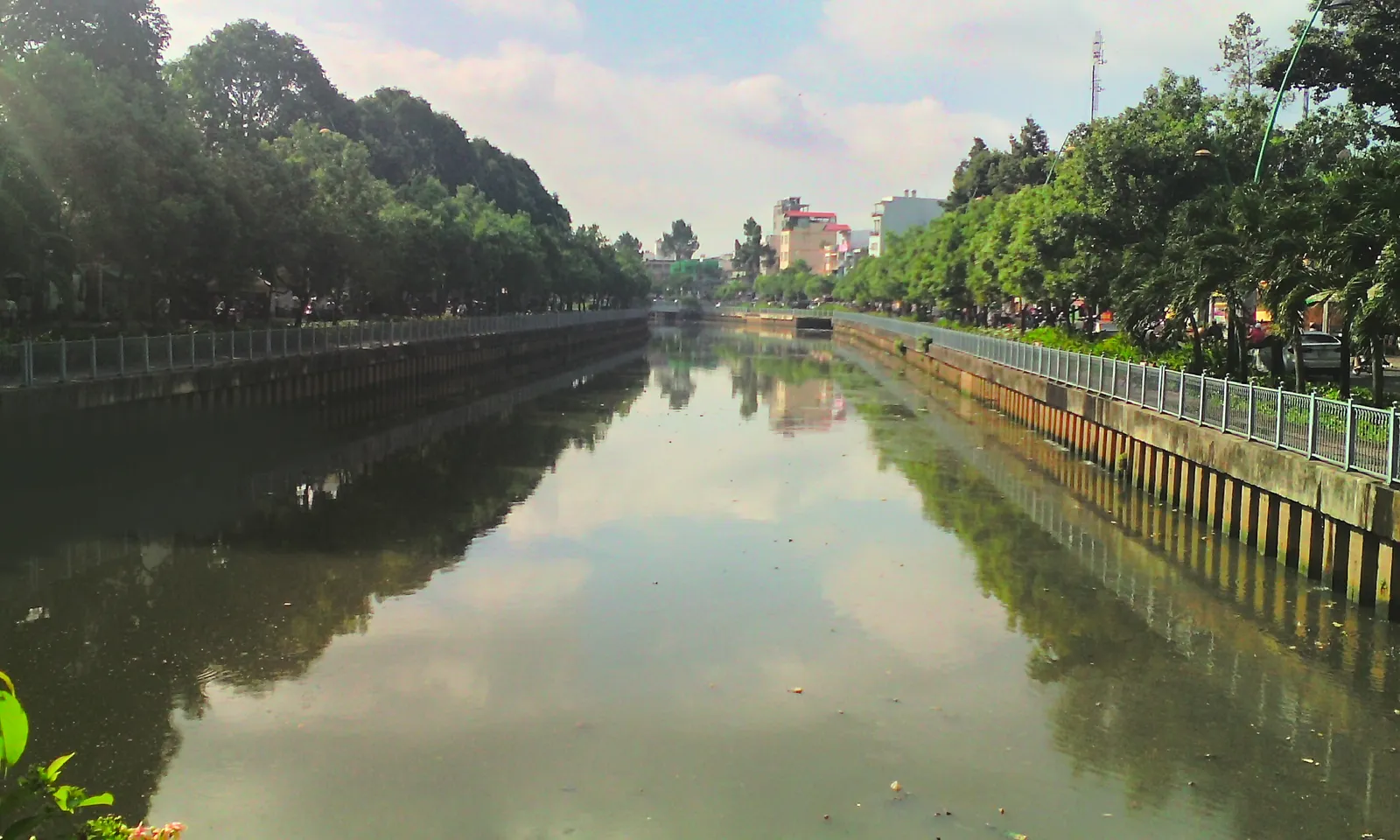
Wooden boats work a stretch of it between a wharf on Hoang Sa by Thi Nghe bridge and a pier by Le Van Sy bridge, the latter about a kilometre from the station, rowed rather than driven, with the guide talking through what the canal used to be. It runs into the evening and the seats are sold ahead on a tours and activities platform, which is worth doing rather than turning up at the wharf, since the boats are small and the sunset slots go first.
Tan Dinh Church has been salmon pink since 1957
The church at 289 Hai Ba Trung was inaugurated in December 1876 and spent its first eighty years looking like every other colonial parish church in the region. A renovation in 1957 painted it salmon pink, inside and out, and nobody has since decided otherwise. What is underneath the colour is modest enough: Gothic arches, Romanesque and Renaissance details, one tall spire over a rose window, on a street of shophouses and fabric shops.
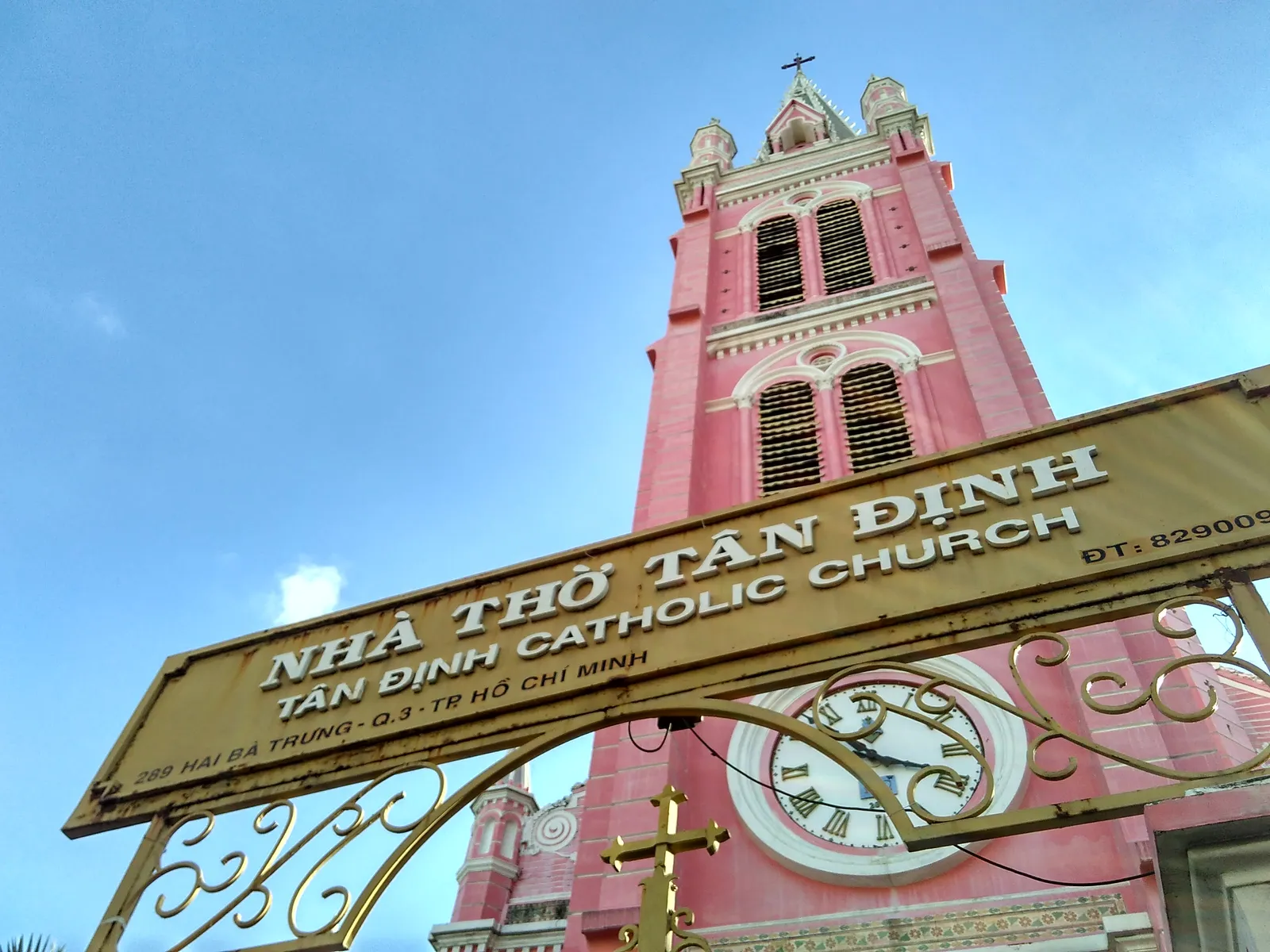
Nothing is charged, either for the forecourt or for going in, but the doors open in two blocks, roughly 8 to noon and 2 to 5, and close to sightseers during mass. Two kilometres east of the station puts it at 25 minutes on foot or five in a car, and the light on the pink is better in the morning than in the flat glare after lunch.
Vinh Nghiem’s stupa runs seven storeys and 40 metres
Vinh Nghiem Pagoda went up at 339 Nam Ky Khoi Nghia between 1964 and 1971: a broad tiled hall behind a three-arched gate, and in the upper courtyard a seven-storey stupa 40 metres tall, dedicated to Avalokitesvara. A second tower, 35 metres and built in stone, was added behind it in 2003.
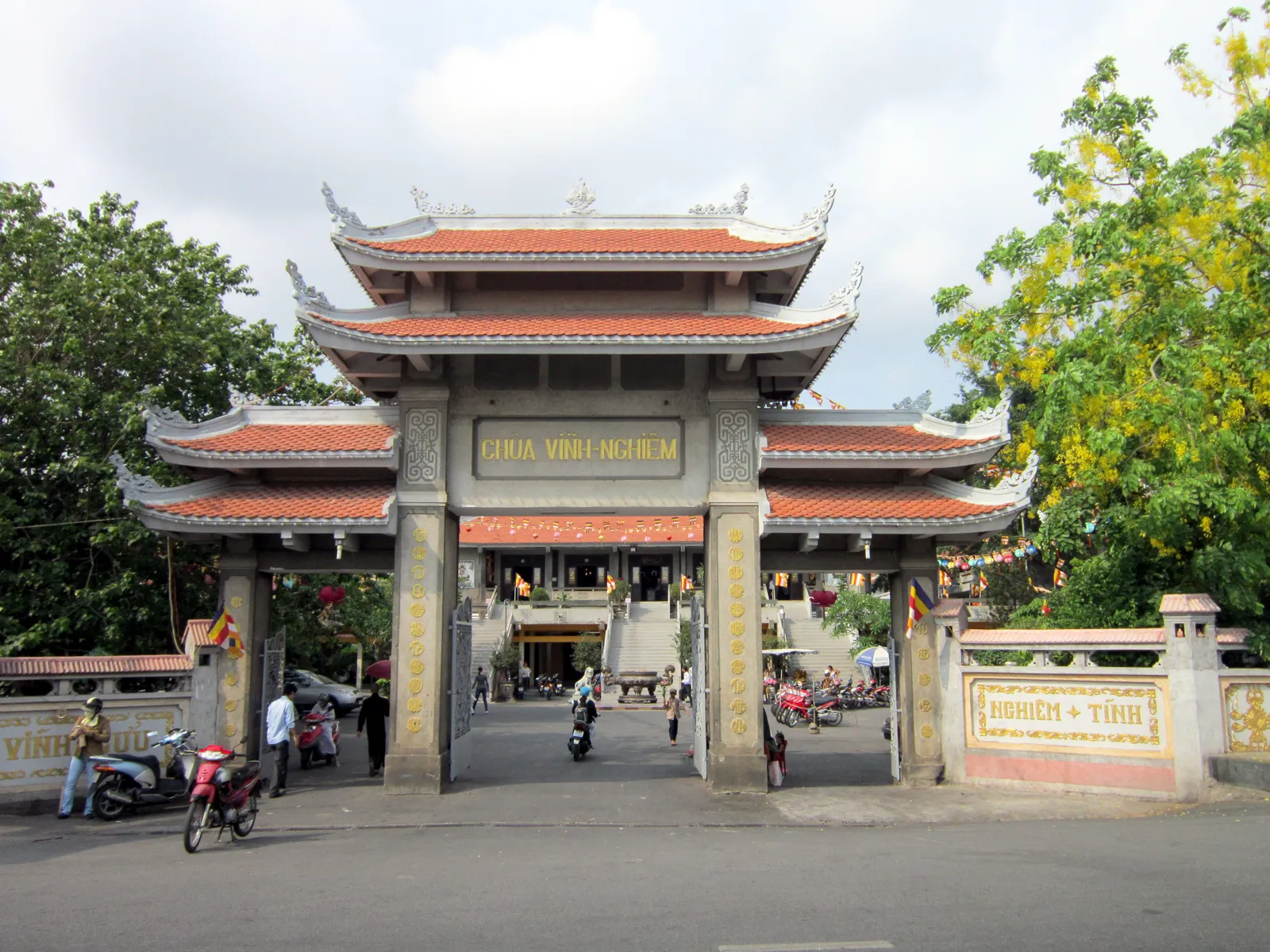
It is a working monastery rather than a monument, so the courtyard fills on the first and fifteenth of the lunar month and is close to empty on an ordinary weekday morning. Entry costs nothing. A kilometre southwest of the station makes it the closest of the three stops, and the shortest commitment: twenty minutes inside is enough.
Saigon station is 1,726 rail kilometres from Hanoi
The station at 1 Nguyen Thong is the southern end of the north-south railway, and it has only stood here since 1983, when the city moved its terminus out to Hoa Hung from the site by the market that the metro now runs under. Through trains to Hanoi take a little over 31 hours, which shapes who is standing on the concourse: most people crossing it have come off a sleeper with a month’s luggage rather than a cabin bag, and the porters at the drop-off zone charge by the trip because of it.
No train from here goes anywhere near the airport
Tan Son Nhat is about six kilometres northwest by road and the railway does not touch it, nor does the metro, which runs east from the market rather than north. The connection is a taxi or ride-hailing car, 20 to 35 minutes depending on how bad Hoang Van Thu is at the time, or bus 152 picked up near Ben Thanh Market, 5,000 dong, stopping outside the international terminal. Leave three hours before an international departure and the traffic stops mattering.
With more than five hours, the colonial core is the better use of them, and the main Ho Chi Minh City guide covers what sits down there, three kilometres south of these platforms.
Frequently asked questions
What should I do during a layover near Saigon Railway Station in Ho Chi Minh City?
Three things sit inside a two-kilometre radius of the platforms. Tan Dinh Church on Hai Ba Trung has been painted salmon pink since a 1957 renovation and costs nothing to stand in front of, though the inside opens only in two blocks, morning and afternoon. Vinh Nghiem Pagoda on Nam Ky Khoi Nghia, finished in 1971, carries a seven-storey stupa 40 metres tall in its upper courtyard. The Nhieu Loc canal runs a few hundred metres north of the station with a paved path along both banks and a rowed boat service between two of its bridges. Three hours covers the church and the pagoda on foot; the boat needs booking and a longer gap.
How far is Saigon railway station from the city centre?
About three kilometres, or ten to twenty minutes by taxi depending on the hour, from the station at 1 Nguyen Thong to Ben Thanh Market. There is no rail or metro connection between the two, because the current station was built out at Hoa Hung in 1983 and the city's one metro line runs east rather than north. Most people take a taxi or a ride-hailing car; the bus network covers it, but with enough stops that the saving is rarely worth it on a timed day.
Can you go inside Tan Dinh Church?
Yes, in two windows: roughly 8am to noon and 2pm to 5pm, and not during mass. There is no admission charge, and the forecourt and the gate are open for photographs regardless of whether the doors are. The pink is the draw and it is genuinely that colour, applied in a 1957 repaint and kept ever since; the church itself was inaugurated in December 1876, so it spent its first eighty years looking like any other colonial parish church.
Is there anything free to do near Saigon railway station?
Most of what is worth walking to. Tan Dinh Church charges nothing, Vinh Nghiem Pagoda charges nothing, and the canal path along Truong Sa and Hoang Sa is a public walkway with benches, exercise frames and a long line of trees. The only stop here that costs anything is the canal boat, so a few hours around this station can be spent without buying a ticket to anything.