Bitexco Tower Layover: Saigon's Riverfront
Part of the full Ho Chi Minh City in One Day: Old Saigon
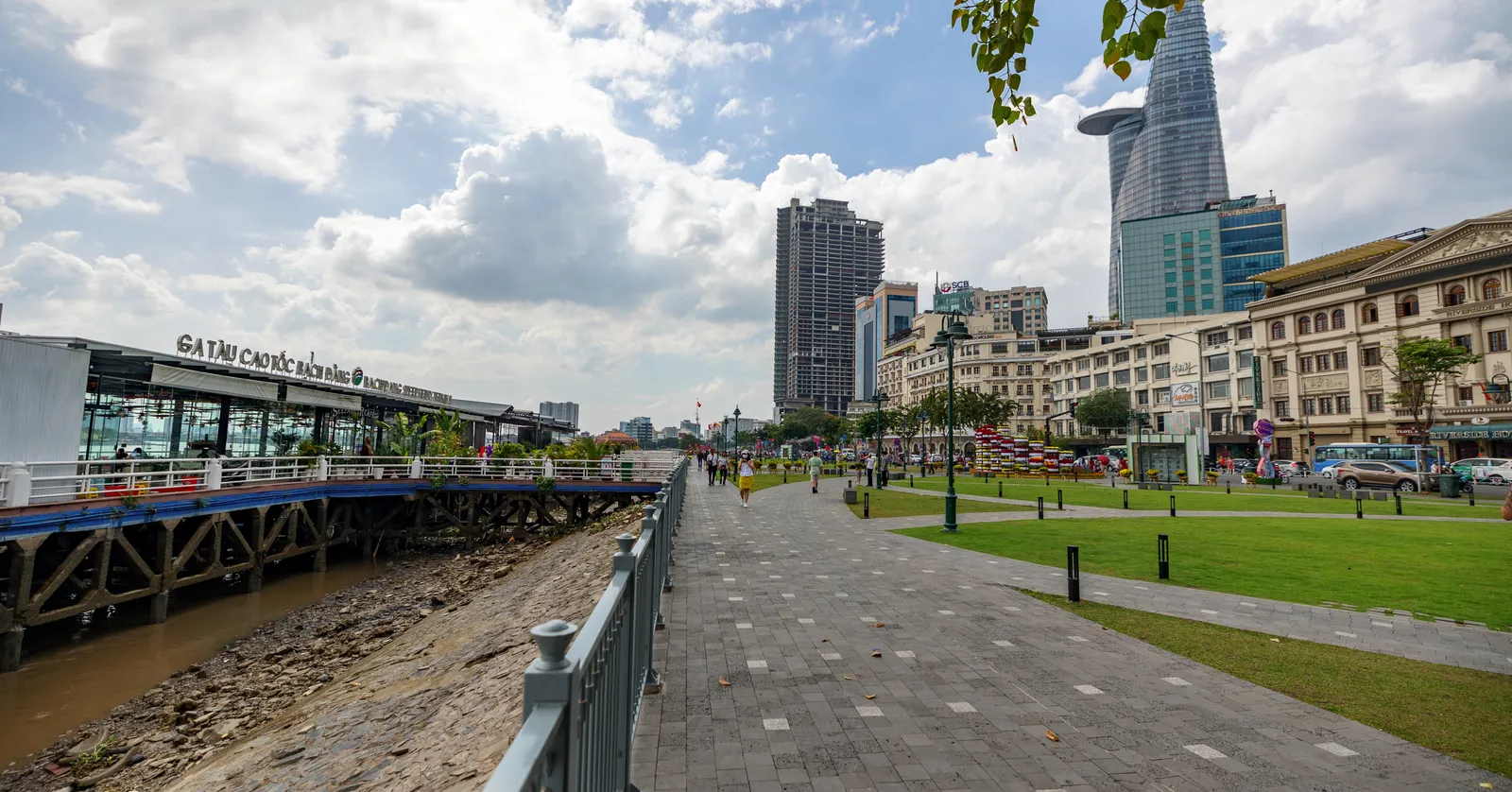
Bitexco Financial Tower stands at 2 Hai Trieu in central Ho Chi Minh City, within a kilometre of an observation floor, two museums in colonial-era buildings and a river boat north to Thu Duc for 15,000 dong.
The Skydeck sits on the 49th floor of Bitexco Financial Tower
Carlos Zapata’s tower opened on 31 October 2010 and rises 262.5 metres, with a helipad cantilevered straight out of the flank rather than sitting on the roof, which is the detail that makes the building recognisable from anywhere on the river. The shape is meant to read as a lotus bud; whether it does is a matter of opinion, but the disc jutting out near the top is unmistakable from street level.
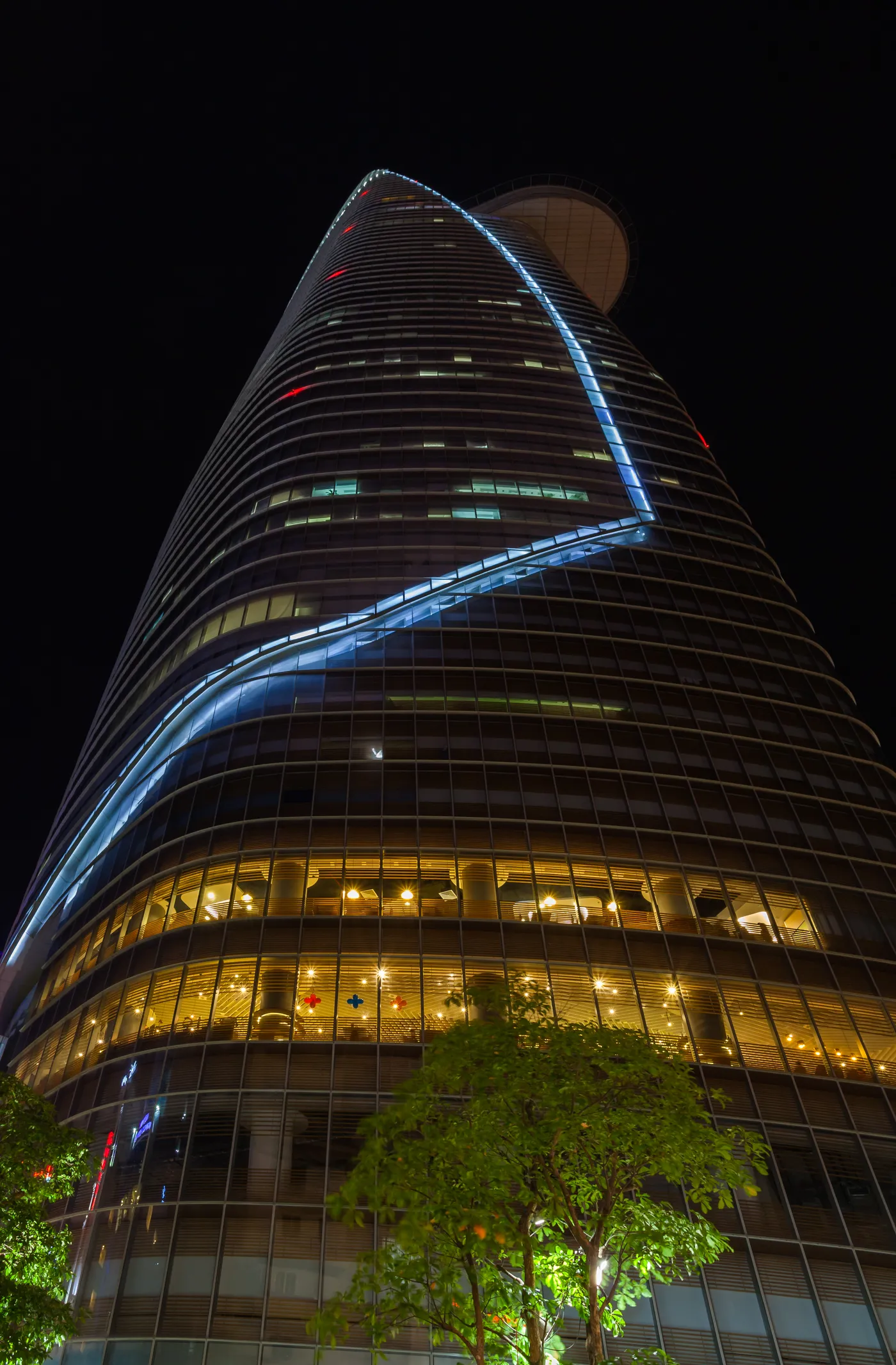
The Skydeck occupies the 49th floor, about 178 metres up, and a standard adult ticket is 240,000 dong. It opens at 9:30 in the morning and closes at 9:30 at night, which on a flight day matters more than the price: the museums below all shut by six, and this does not. Advance admission tickets are sold through a tours and activities platform, worth having in hand for the hour before sunset, when the lift queue is at its longest.
The Museum of Fine Arts fills Hui Bon Hoa’s 1929 mansion
Five minutes west of the tower at 97A Pho Duc Chinh stands a yellow villa built in 1929 for Hui Bon Hoa, among the wealthiest property owners in French Indochina. It became a museum after 1975 and now holds more than 21,000 works, from Nguyen-dynasty painting and lacquer through Vietnamese modernism to wartime sketchwork done in the field.
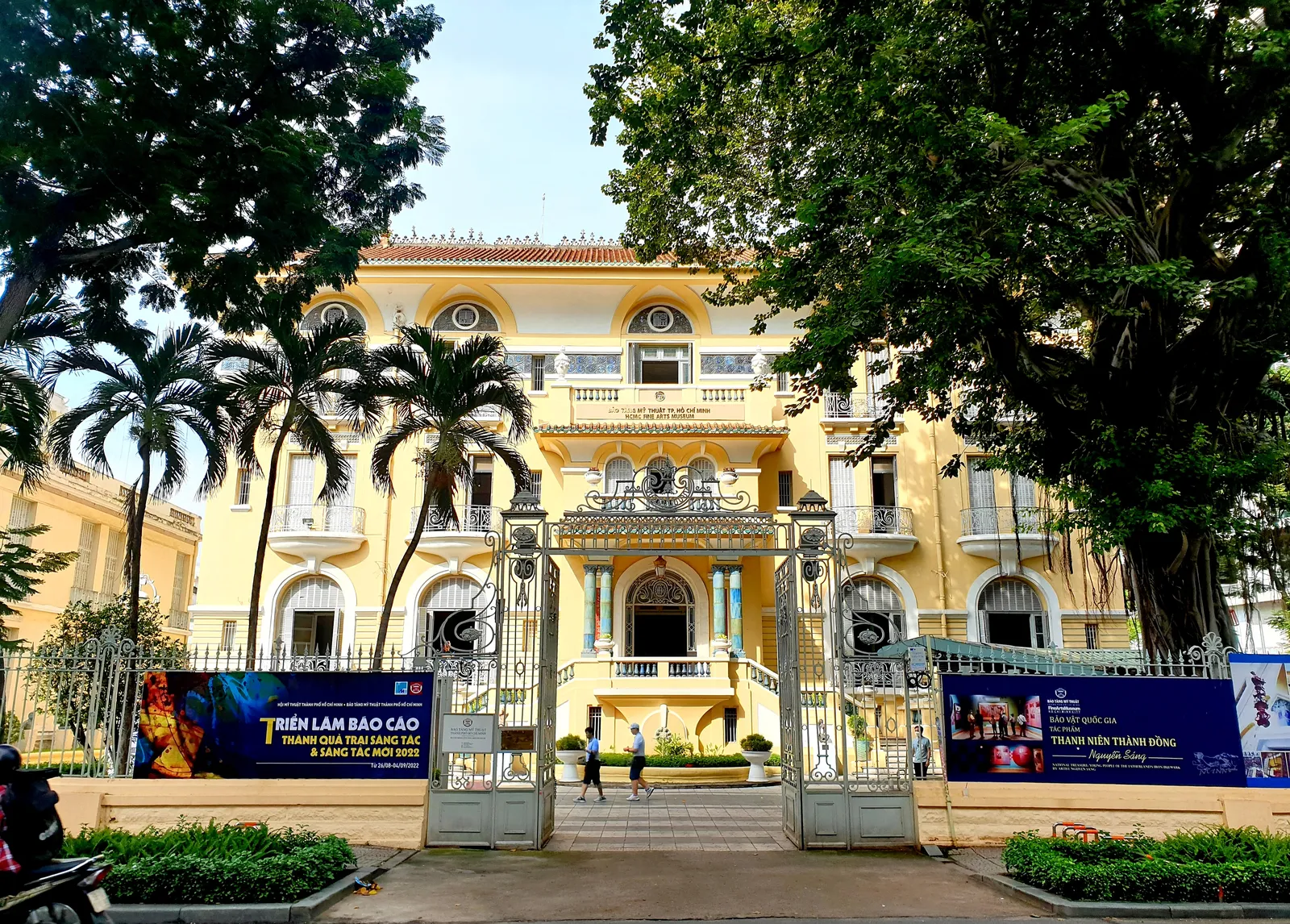
The building competes with the collection: tiled floors, a caged lift, stained glass on the stairs and a courtyard the galleries wrap around. The bronze figure of Quach Dam that once stood in the middle of Binh Tay Market out in Cho Lon ended up here too, after it was removed from the market courtyard in the late 1970s. Entry is 30,000 dong, and it opens 8am to 5pm.
A 1962 bunker sits behind the Museum of Ho Chi Minh City
Gia Long Palace at 65 Ly Tu Trong went up between 1885 and 1890 to a design by Alfred Foulhoux, the colony’s chief architect, as a commercial museum before it became a governor’s residence and, briefly, a presidential one. Ngo Dinh Diem was working from here on the night of 1 November 1963, and left through the tunnels underneath when the coup started.
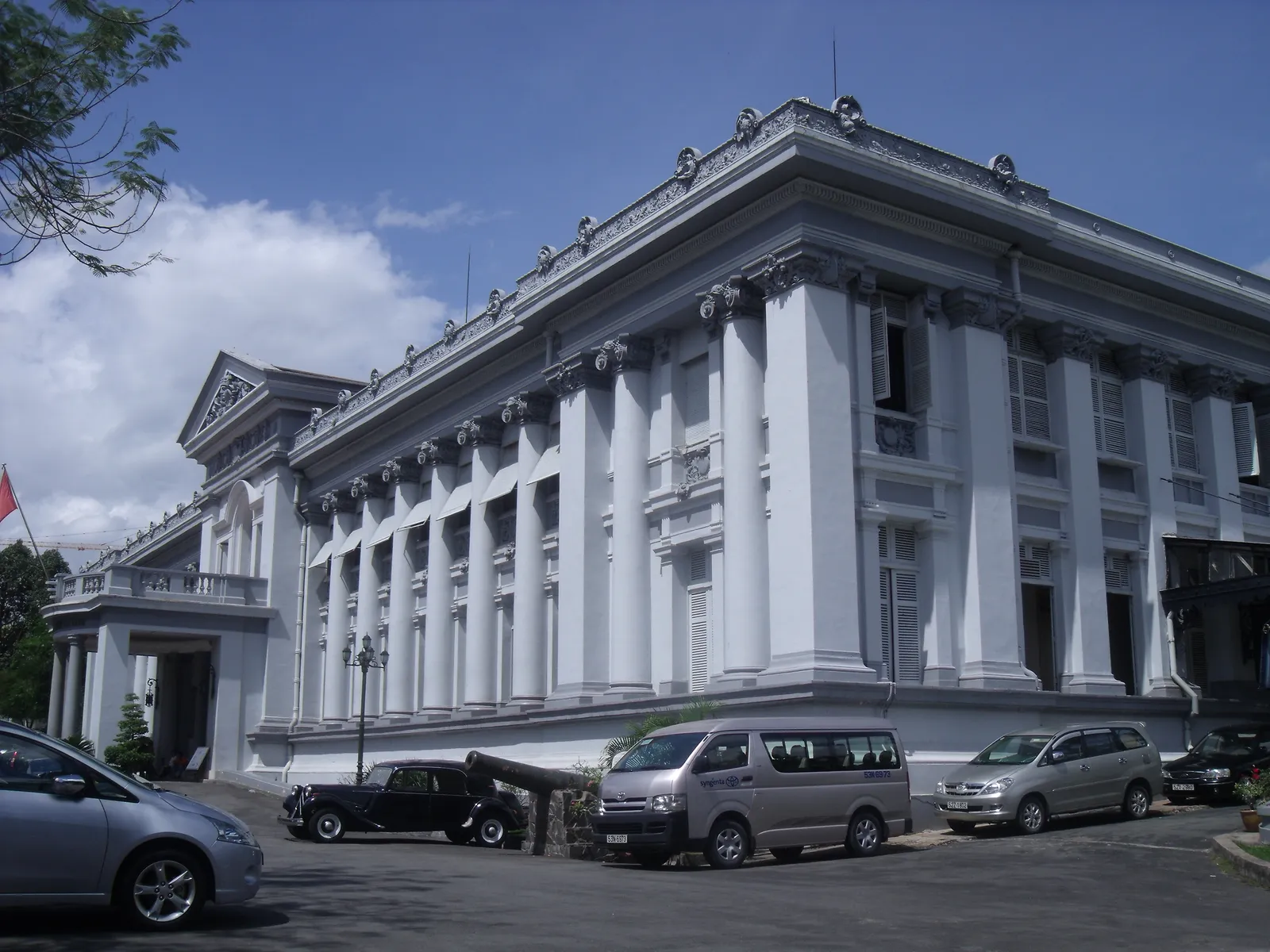
Those tunnels are the reason to come. The bunker complex behind the building was dug in 1962 to a design by Ngo Viet Thu, with a concrete corridor, reinforced rooms and exits into the grounds, and the same 30,000-dong ticket covers it along with the museum upstairs. It opens 7:30am to 6pm daily.
Boats for Thu Duc leave from Bach Dang waterbus station
The wharf sits on the river directly below Ton Duc Thang, its name in tall metal letters over a row of ticket gates, and one route works out of it: 11 kilometres upriver to Linh Dong in Thu Duc, 15,000 dong a ride, roughly 7am to 7pm.
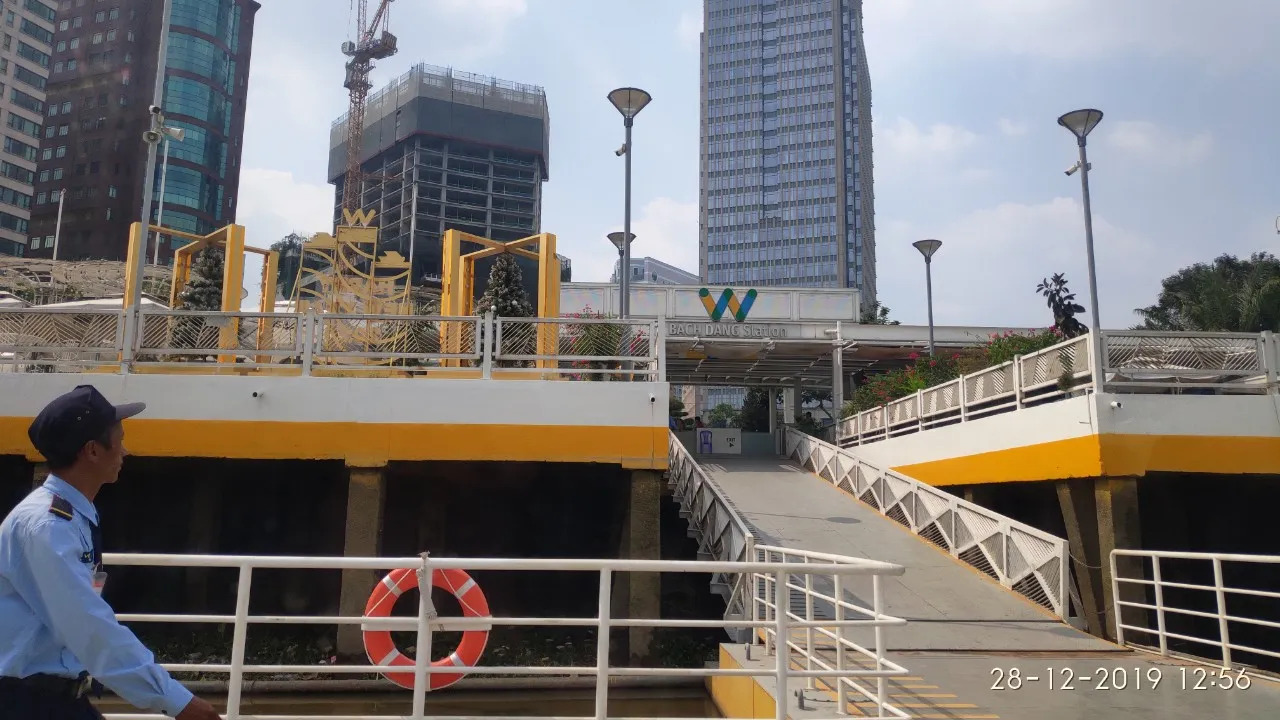
The boats are enclosed and air-conditioned, so this is transport with a view rather than a cruise, and about half an hour each way. If a cruise is what you actually want, a sightseeing boat with an onboard guide leaves from the same wharf and is sold through a tours and activities platform.
Bach Dang wharf park runs along the water below Ton Duc Thang
The strip between the river and the road was rebuilt as a public park: lawns, wide paving, lamp posts, low stone blocks to sit on, and a long uninterrupted line of the water. It is free and open at any hour, which makes it the default place to end up once the ticketed things have closed.
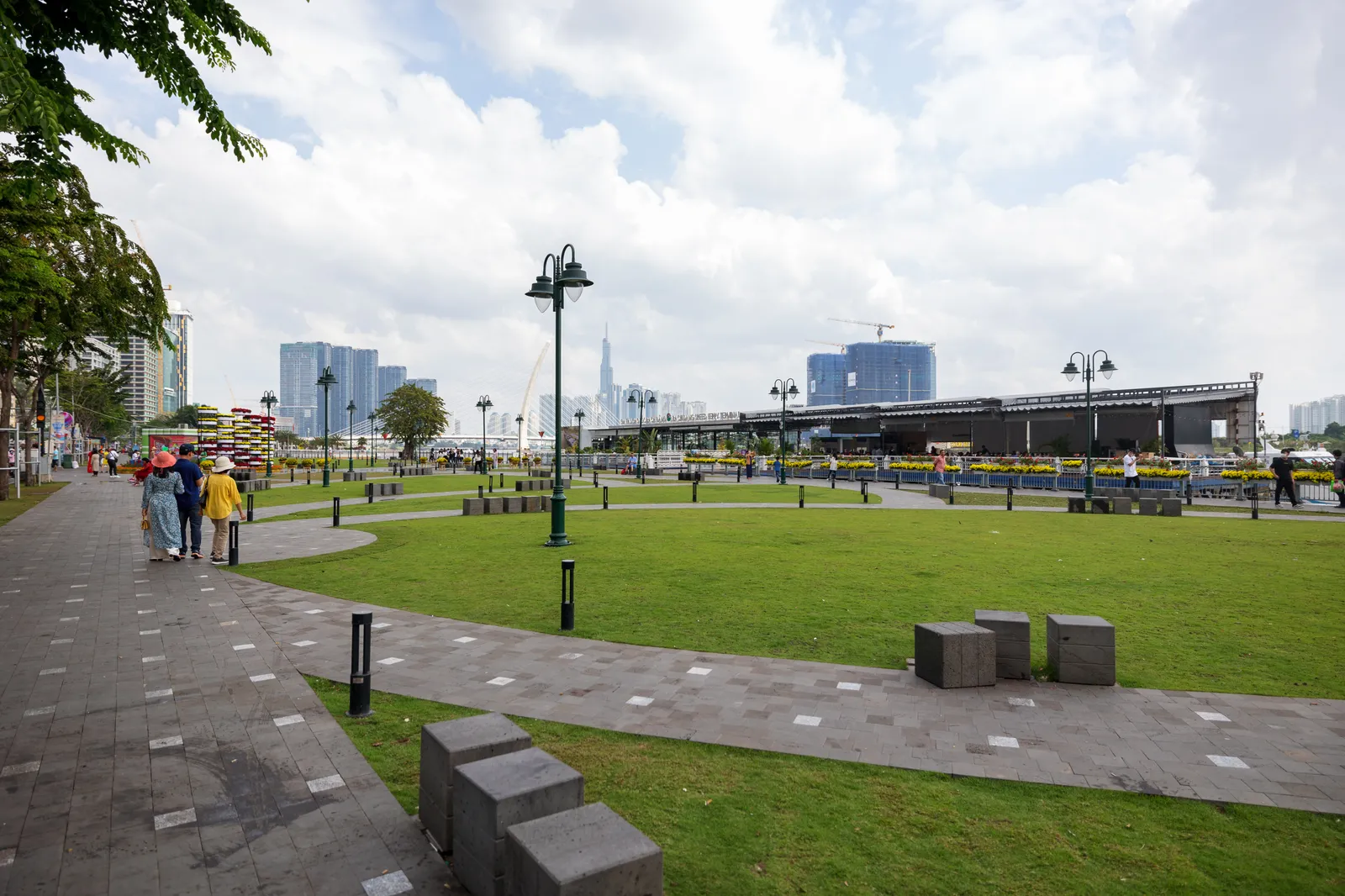
The trees planted along it are still young, so there is almost no shade between the waterbus gates and the carriageway, and dragging a bag down that stretch at two in the afternoon costs more effort than the flat 600 metres suggests.
Nothing on the river runs toward the airport
Tan Son Nhat is eight kilometres northwest and the waterbus goes the other way, up the river into Thu Duc. From here that leaves a taxi or ride-hailing car, 25 to 45 minutes depending on the hour, or a walk of about a kilometre to Ben Thanh Market for bus 152, which costs 5,000 dong and stops outside the international terminal. Three hours between leaving the riverfront and an international departure is enough in any traffic.
The rest of the old centre starts immediately behind the tower and runs inland from there; the main Ho Chi Minh City guide covers that half, which is where the free stops are concentrated.
Frequently asked questions
What should I do during a layover near Bitexco Financial Tower in Ho Chi Minh City?
Four things sit inside a kilometre of the tower's base at 2 Hai Trieu. The Skydeck on the 49th floor costs 240,000 dong and stays open to 9:30 at night. The Museum of Fine Arts, five minutes' walk west, occupies a 1929 mansion built for the property magnate Hui Bon Hoa and charges 30,000 dong. The Museum of Ho Chi Minh City, in the Gia Long Palace of 1890, charges the same and includes the bunker dug behind it in 1962. Bach Dang wharf on the river runs boats north to Thu Duc for 15,000 dong. Three hours covers two of the four without rushing.
How much does the Saigon Skydeck cost and when is it open?
240,000 dong for a standard adult ticket, on the 49th floor of the tower at 2 Hai Trieu, open from 9:30 in the morning until 9:30 at night. The long hours are the useful part on a flight day, because it is one of the few paid sights in the city still selling tickets after the museums have shut. The view runs down the bend of the Saigon River in one direction and across the low roofs of the old centre in the other, and the glass is continuous, so the hour before sunset is the one people queue for.
Is the Saigon waterbus worth taking?
As transport with a view, yes; as a river cruise, it is not trying to be one. One line runs 11 kilometres from Bach Dang wharf up to Linh Dong in Thu Duc for 15,000 dong a ride, on boats that are enclosed and air-conditioned, roughly between 7 in the morning and 7 at night. A one-way trip takes about half an hour and passes under the bridges and along the high-rise bank. There is no commentary and no deck to stand on, which is exactly why it costs what it costs.
Is the riverfront worth walking in the middle of the day?
Not really, in the hot months. Bach Dang park was rebuilt with lawns, paving and young trees, and the young trees are the problem: there is very little shade between the waterbus station and the Ton Duc Thang carriageway, and the paving holds the heat well into the evening. Before nine in the morning and after five in the afternoon the park fills up with people for exactly that reason. In the middle of the day the tower, the museums and the boat are all air-conditioned and the park is not.