Landmark 81 Layover: Binh Thanh, Saigon
Part of the full Ho Chi Minh City in One Day: Old Saigon
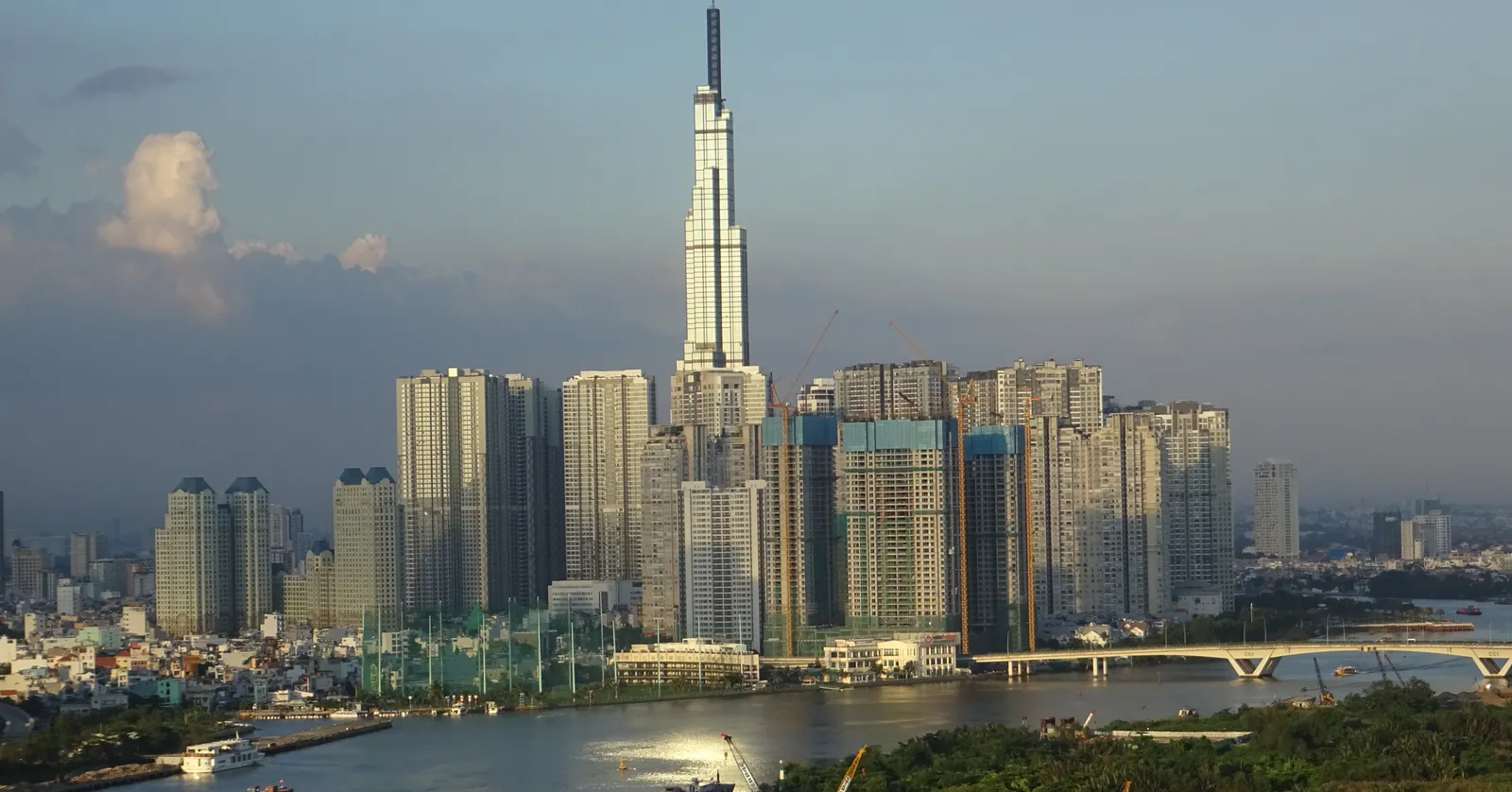
Landmark 81 stands on the Saigon River in Binh Thanh, four kilometres northeast of central Ho Chi Minh City, with an observation deck on its top three floors and a Nguyen-dynasty general’s walled tomb under three kilometres west of it.
SkyView takes the 79th to 81st floors of Landmark 81
The tower runs to 461 metres and is the tallest building in Vietnam, a bundle of stepped shafts that thins into a spire, standing at the river end of the Vinhomes Central Park grounds. The observation floors opened in 2019 and there are three of them, linked by internal stairs, so the visit is a loop rather than a single window.
Weekday entry is 300,000 dong and weekends and public holidays are 500,000, children between 100 and 140 centimetres pay half that on either day, and anyone shorter goes free. Doors open at 10 in the morning and the deck stays open until 9:30 at night, which is the useful part: it is still selling tickets long after the museums downtown have locked up. Tickets are sold in advance through a tours and activities platform.
Getting up there means crossing the retail floors at the base to reach the lift lobby, then working three floors on foot at the top, which is a long way to push a suitcase for a view.
Le Van Duyet’s tomb sits in a walled garden in Ba Chieu
Le Van Duyet was a eunuch general who fought the Tay Son alongside the future emperor Gia Long, then governed the whole south from Gia Dinh until his death in 1832. His successor Minh Mang had the grave desecrated and the family punished; the verdict was reversed decades later and the tomb rebuilt, with repairs continuing as recently as 1998.
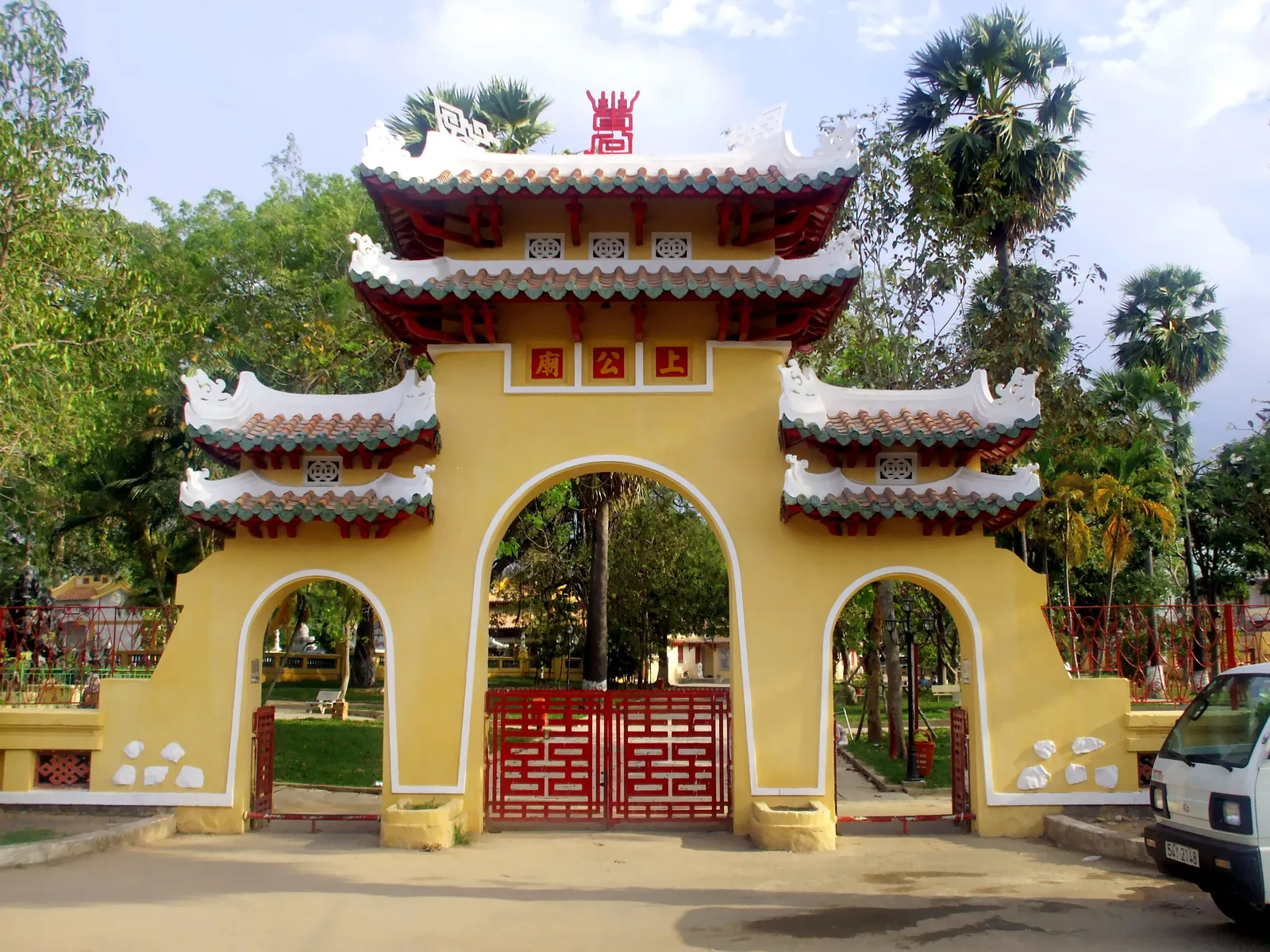
The complex at 1 Vu Tung is entered through a yellow triple-arched gate with three tiers of tiled roof, and inside it is a walled garden rather than a monument: old trees, gravel paths, the grave itself under a low roof, a stele house, and a temple at the back.
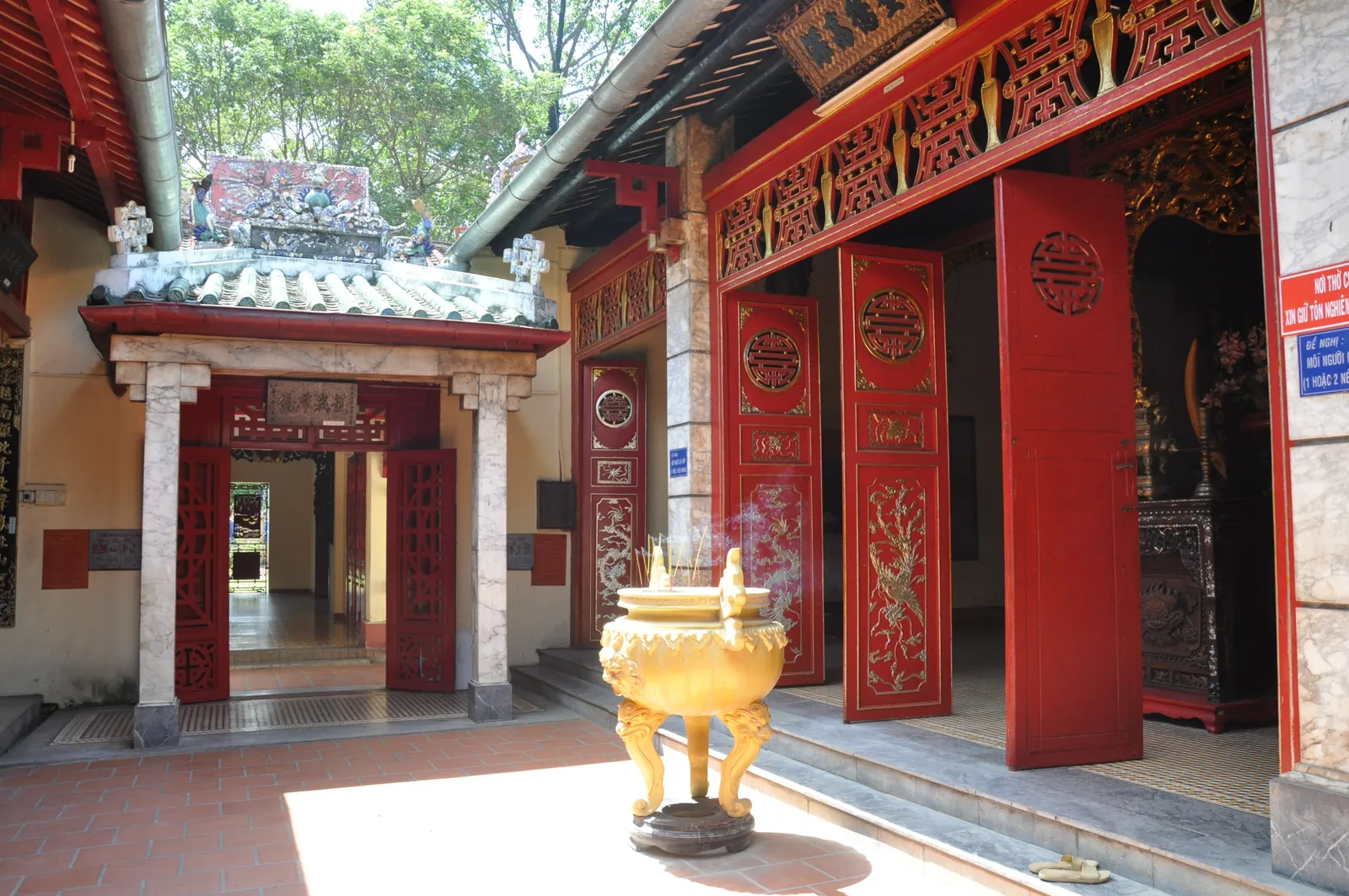
The temple is what makes the stop worth the ride out: red lacquered doors with gold carved panels, bronze urns in the courtyard, side altars stacked with offerings, and people coming in on an ordinary weekday to leave fruit and incense for a man who has been dead for nearly two centuries. Nothing is charged, and the gates are open 7am to 5pm.
Cho Ba Chieu trades produce, not souvenirs
The market that gives this corner of Binh Thanh its name works out of a plain hall on Bach Dang in Ba Chieu, its name in tall red letters along the roofline and the trading spilling out onto every pavement around it.
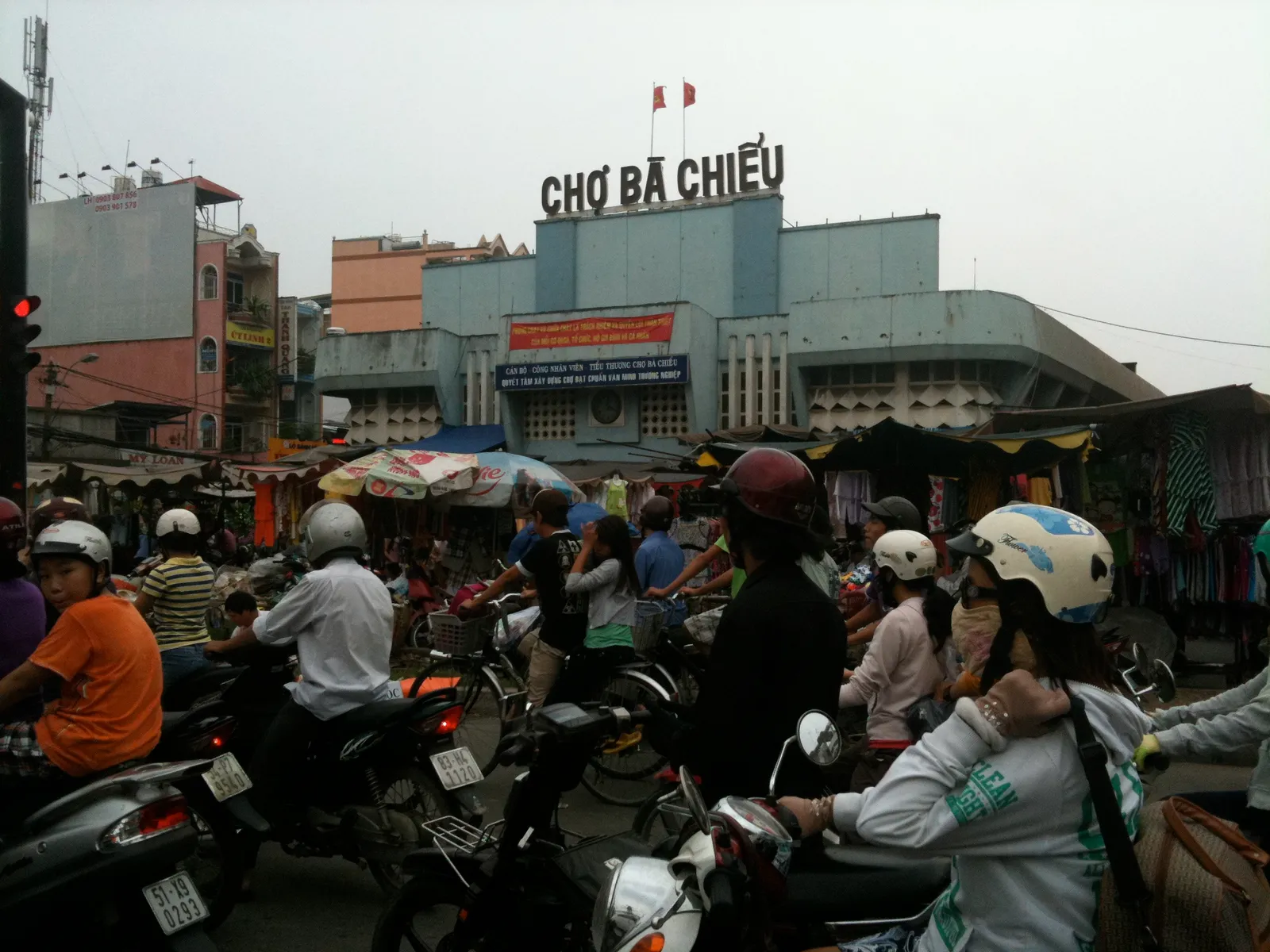
What is on the stalls is household: vegetables, fish, meat, clothing, plastic goods, school things. Almost nobody here is selling to visitors, which is the reason to walk through it rather than a reason not to, and the food stalls around the edges price accordingly.
The metro runs from here, the airport connection does not
Tan Cang station sits on Dien Bien Phu beside the Saigon Bridge, under a kilometre from the tower through the Vinhomes grounds, and puts Ben Thanh station about ten minutes away for between 7,000 and 20,000 dong. Nothing on that line goes to Tan Son Nhat, which is nine kilometres northwest of here: from Ben Thanh, bus 152 costs 5,000 dong and stops outside the international terminal, or a car does the whole run from Binh Thanh in 25 to 45 minutes depending on the hour.
For the older half of the city, the colonial core starts four kilometres southwest and is a different kind of day entirely; the main Ho Chi Minh City guide lays that one out.
Frequently asked questions
What should I do during a layover near Landmark 81 in Ho Chi Minh City?
The tower's own SkyView takes the 79th to 81st floors, 461 metres up, and is open from 10 in the morning to 9:30 at night, which is later than anything else out here. Under three kilometres west, Le Van Duyet's tomb sits in a walled garden in Ba Chieu: a Nguyen-dynasty general's grave, temple halls and a stele house, free and open 7am to 5pm. Cho Ba Chieu, the district's everyday market, trades at the junction beside it. Three hours covers the deck and one of the two; the tomb is the better choice of the pair if you only do one.
How much does Landmark 81 SkyView cost?
300,000 dong for an adult on a weekday and 500,000 on weekends and public holidays, with children between 100 and 140 centimetres tall paying 150,000 or 250,000 on the same split, and anyone under 100 centimetres going free. It opens at 10am and the last visitors go up in the evening, with closing at 9:30pm. Pricing by height rather than age is worth knowing if you are travelling with children, because it is measured at the counter.
Is Le Van Duyet's tomb free to visit?
Yes, and it opens 7am to 5pm at 1 Vu Tung. Le Van Duyet was the general who helped put the Nguyen dynasty on the throne and then governed the south from Gia Dinh; he fell out with the emperor Minh Mang, and his tomb was desecrated after his death in 1832 before being restored later in the century. The walled complex holds the grave itself, a stele house, and a temple where people still come to make offerings, all inside a garden that is several degrees cooler than the street outside.
Can you reach Landmark 81 by metro?
Close to it. Tan Cang station on the city's one metro line stands on Dien Bien Phu beside the Saigon Bridge, a walk of under a kilometre from the tower through the Vinhomes Central Park grounds. It opened with the rest of the line in December 2024. From there it is around ten minutes back into the centre, which makes this the one outlying part of the city where the metro genuinely saves time over a car at rush hour.